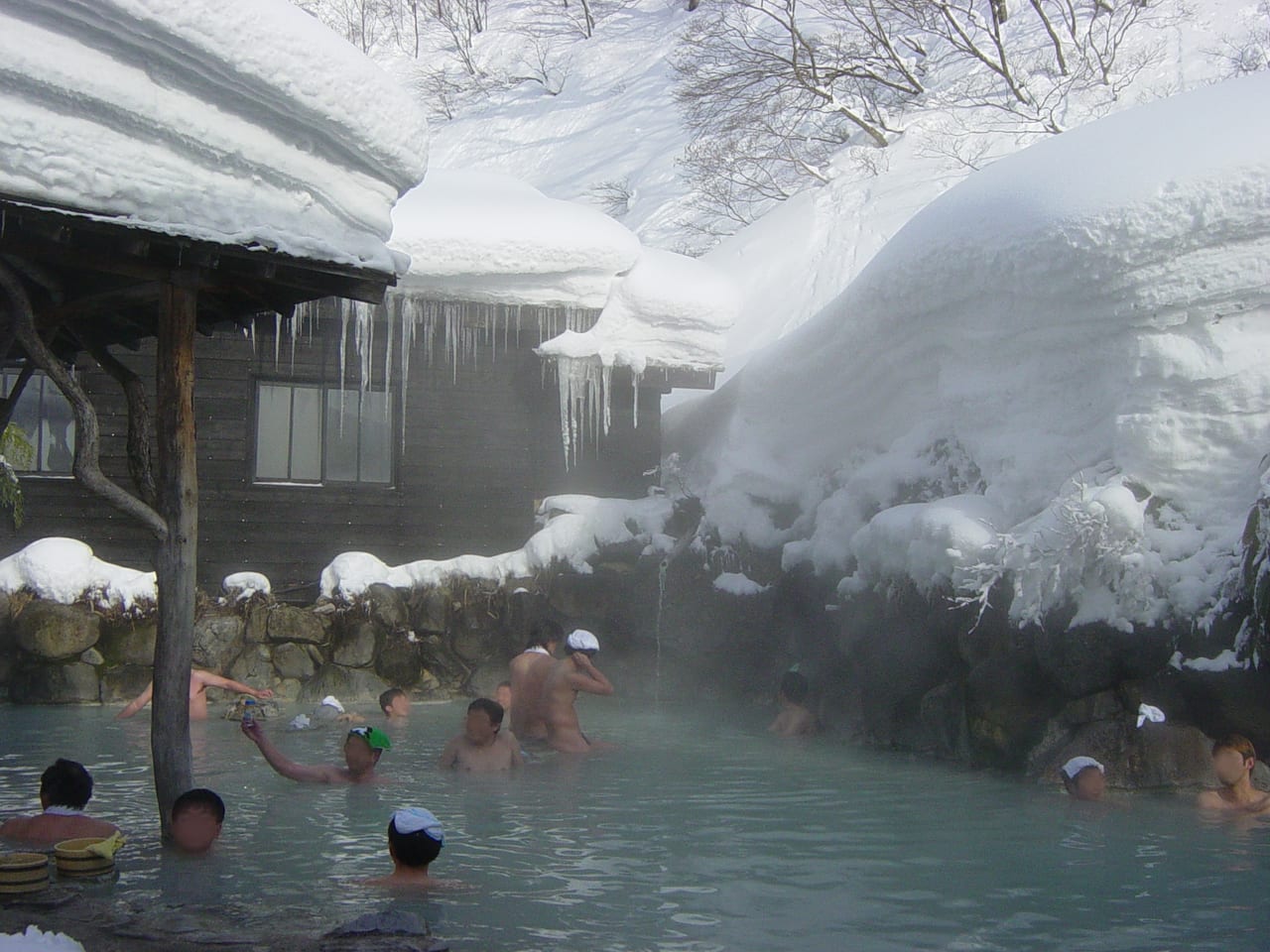
This corner of Akita stitches together two opposite kinds of magic. One is Nyuto Onsen-kyo, Tohoku's most photographed yet genuinely deserving secret hot spring, where Tsuru-no-yu's milky open-air mixed bath is on a lot of bucket lists. The other is the Oga namahage, listed by UNESCO as one of the Raiho-shin rites — the masked New Year's demons that still storm house to house on the peninsula's coast. Between them sits Lake Tazawa, the deepest lake in Japan at 423 meters, a cobalt-blue mirror with a golden statue rising from its shallows. Here is the line that shapes the plan: the Akita Shinkansen "Komachi" reaches Tazawako Station from Tokyo in about three hours, and a 45-minute bus then climbs into Nyuto — no car strictly required. But if you want to add the far-flung Oga Peninsula, a rental car saves a lot of bus-stop waiting. This guide covers the seven inns, the yumeguri-cho pass, Tsuru-no-yu's day-bath rules, Lake Tazawa and the Tatsuko statue, the Oga namahage, and transport and lodging. Kakunodate, on the same Shinkansen line, makes an ideal add-on, and the gateway south is in our Sendai guide.
- Seven Nyuto inns: Tsuru-no-yu, Tae-no-yu, Kanikaba, Ogama, Magoroku, Kuroyu, Kyukamura — Tsuru-no-yu the headliner
- Yumeguri-cho pass ¥2,500 (overnight guests only) covers one bath at each of the seven inns
- Tsuru-no-yu day bath ¥700, 10:00–15:00; the milky open-air bath is mixed-gender and no day visitors at all on Mondays
- Lake Tazawa is 423m deep, Japan's deepest, with the golden Tatsuko statue as its landmark
- Oga namahage are one of the UNESCO-listed Raiho-shin rites; the Namahage + Shinzan Folklore Museum combined ticket is about ¥1,100
- Tokyo → Tazawako ~3h by Komachi, then a ~45-minute bus into Nyuto
📖 Contents
- 1. Why come to this Akita axis
- 2. Nyuto Onsen-kyo: choosing among seven inns
- 3. Tsuru-no-yu: mixed bath & day-visit rules
- 4. The yumeguri-cho seven-bath pass
- 5. Lake Tazawa: Japan's deepest, & the Tatsuko statue
- 6. Oga Peninsula: where to see the namahage
- 7. Transport & lodging (Shinkansen, bus vs. car)
- 8. A three-day plan
- 9. FAQ
Why come to this Akita axis
Honestly, Akita is not a place where sights pile up the moment you step off the train — its pull is depth and singularity, not density. Nyuto Onsen sells a real secret bath: not a touristed, photogenic spa but old, hard-edged onsen with thatched roofs and spring water piped straight in, milky and sulfurous. The Oga namahage sell living folklore — a UNESCO-recognized visiting-deity rite still performed in earnest across Oga's villages every New Year's Eve. And Lake Tazawa ties the trip into a clean line with its improbably deep cobalt water and golden Tatsuko statue. My framing is blunt: this is for travelers who want to soak in a genuine onsen and see genuine Japanese folklore, not for checklist sprinters cramming ten stops a day. If you are willing to slow down and sink into a steaming, milky bath on a snowy night, Akita repays you with something nowhere else gives.
Nyuto Onsen-kyo: choosing among seven inns
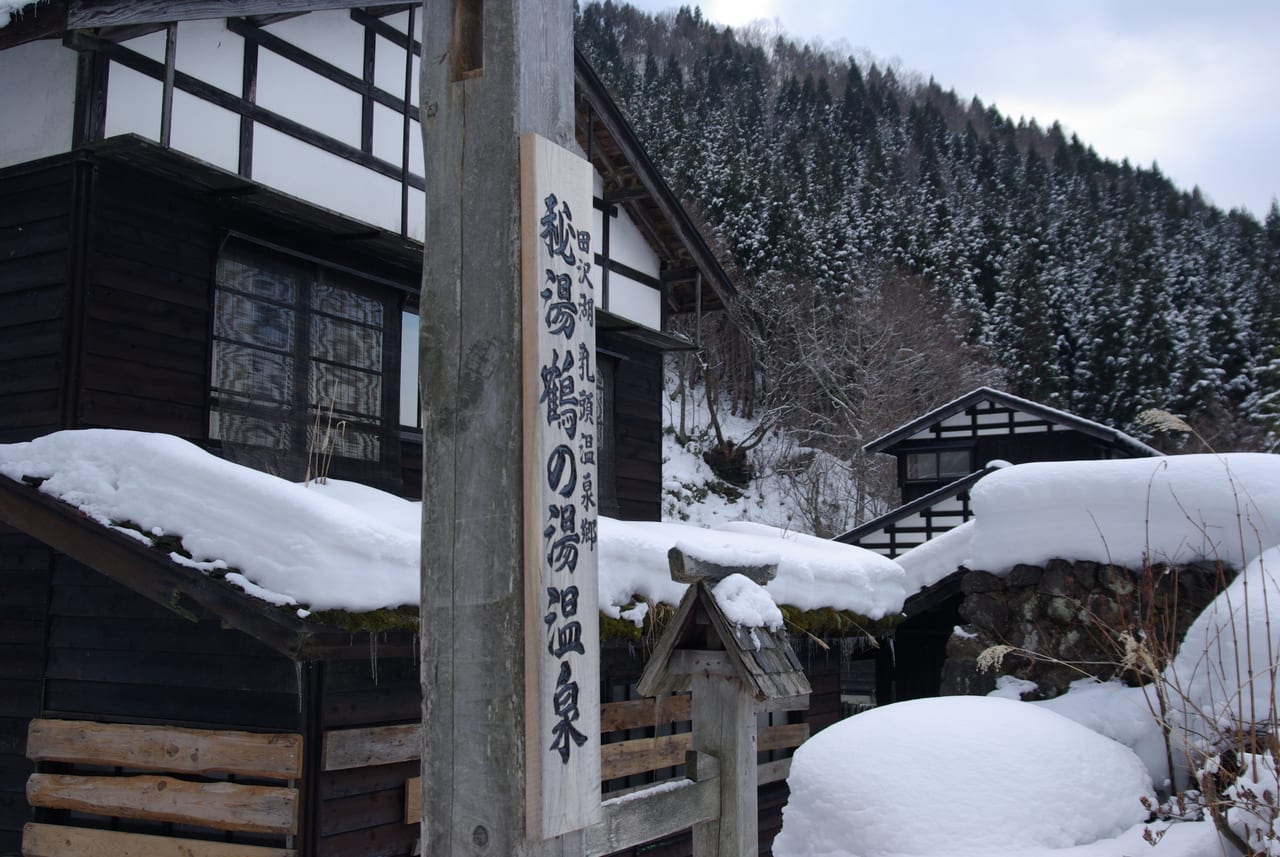
Get the framework first: Nyuto Onsen-kyo is not a single inn but a cooperative of seven independent ones, set in the beech (buna) forest at the foot of Mt. Nyuto inside Towada-Hachimantai National Park. The seven are Tsuru-no-yu, Tae-no-yu, Kanikaba, Ogama, Magoroku, Kuroyu, and Kyukamura Nyuto Onsen-kyo. Each has its own springs and water chemistry, which is what spawned the "seven-bath hopping" tradition (next section). How to choose where to stay, with my take:
- Tsuru-no-yu: the oldest and most famous — thatched main lodge plus the milky mixed open-air bath, the "soak here once in your life" inn. The trade-off is rustic rooms (the main lodge is genuinely old timber) and it is the hardest to book. If you want the unvarnished real thing, this is it.
- Tae-no-yu: two spring types (gold and silver), a women-only outdoor bath, and relatively polished facilities — often the pick for those who want comfort and would rather avoid mixed bathing.
- Kyukamura Nyuto Onsen-kyo: a larger resort-style inn with reliable rooms and meals, good for families and first-timers, and the easiest to reach.
- Kuroyu, Magoroku, Kanikaba, Ogama: more primal and secret-bath in feel — Kuroyu has a dark, muddy character, Magoroku is known as a "medicinal bath" — for the committed onsen obsessive.
My suggestion: first-timers, stay at Tae-no-yu or Kyukamura (comfortable, bookable) and use the yumeguri-cho to day-bathe at Tsuru-no-yu's signature open-air pool — best of both. Onsen diehards who can get a room should just stay in the Tsuru-no-yu main lodge.
Tsuru-no-yu: mixed bath & day-visit rules
Let me lay out the Tsuru-no-yu details everyone wants. Its calling card is the milky-white open-air bath — fine bubbles rise from the bed, the water is opaque enough that you cannot see your own feet, and set against the thatched roof and deep winter snow it is the single most-photographed scene of Tohoku's secret onsen. Two realities to know up front:
- That signature open-air pool is mixed-gender (there is also a women-only outdoor bath and indoor baths). Women uneasy about mixed bathing can use the women-only bath or pick a quieter hour; ask on site about bathing-garment practice, per the facility's rules.
- Day bathing has time and capacity limits. Day admission is ¥700 for adults and ¥300 for children, 10:00–15:00 (last entry earlier; capped and closed early when busy). The key rule: day visitors are not admitted at all on Mondays, shifted to the nearest weekday when Monday is a national holiday — do not plan on a Monday afternoon.
Field tip: day-trippers should arrive at the 10:00 opening, before tour groups roll in and when the snow looks best in morning light. Access-wise, Tsuru-no-yu sits deepest of the seven; after the bus reaches the "Alpa Komakusa" area you often transfer to Tsuru-no-yu's own shuttle (set departure times — confirm with the inn first), so it is not walk-up-anytime like the other six. Build in that connection time. One more practical point worth flagging: the water here is a true sulfur spring, milky and strongly scented, and it will dull silver jewelry and can mark light-colored towels, so leave the good towel at home and bring a cheap one you do not mind discoloring. And because the open-air pool is opaque, the floor underfoot is uneven natural stone — step in slowly rather than wading, especially with the snow and ice around the rim in winter.
The yumeguri-cho seven-bath pass
The best-value, most fun way to do Nyuto is the yumeguri-cho seven-bath circuit. It is a passbook costing ¥2,500 (¥1,000 for children), sold only to overnight guests at each inn's desk, cash only. With it you bathe once at each of the seven inns — collecting seven different spring waters in one go, which for an onsen lover is the proper way to do Nyuto and cheaper than buying each day-bath ticket.
It usually also includes rides on the "yumeguri-go" shuttle bus, so you can move between the scattered inns without arranging each leg yourself (the operating season and frequency are nudged yearly, so go by the on-site timetable). If you are staying one night, want to dip into just one or two baths, and are not chasing all seven, there is a cheaper "yumeguri map" at around ¥1,000, but cross-inn bathing is then paid per inn. My call is simple: if you are staying a night in Nyuto and came for the onsen, just buy the yumeguri-cho — seven baths in one sweep is what makes the trip count.
Lake Tazawa: Japan's deepest, & the Tatsuko statue
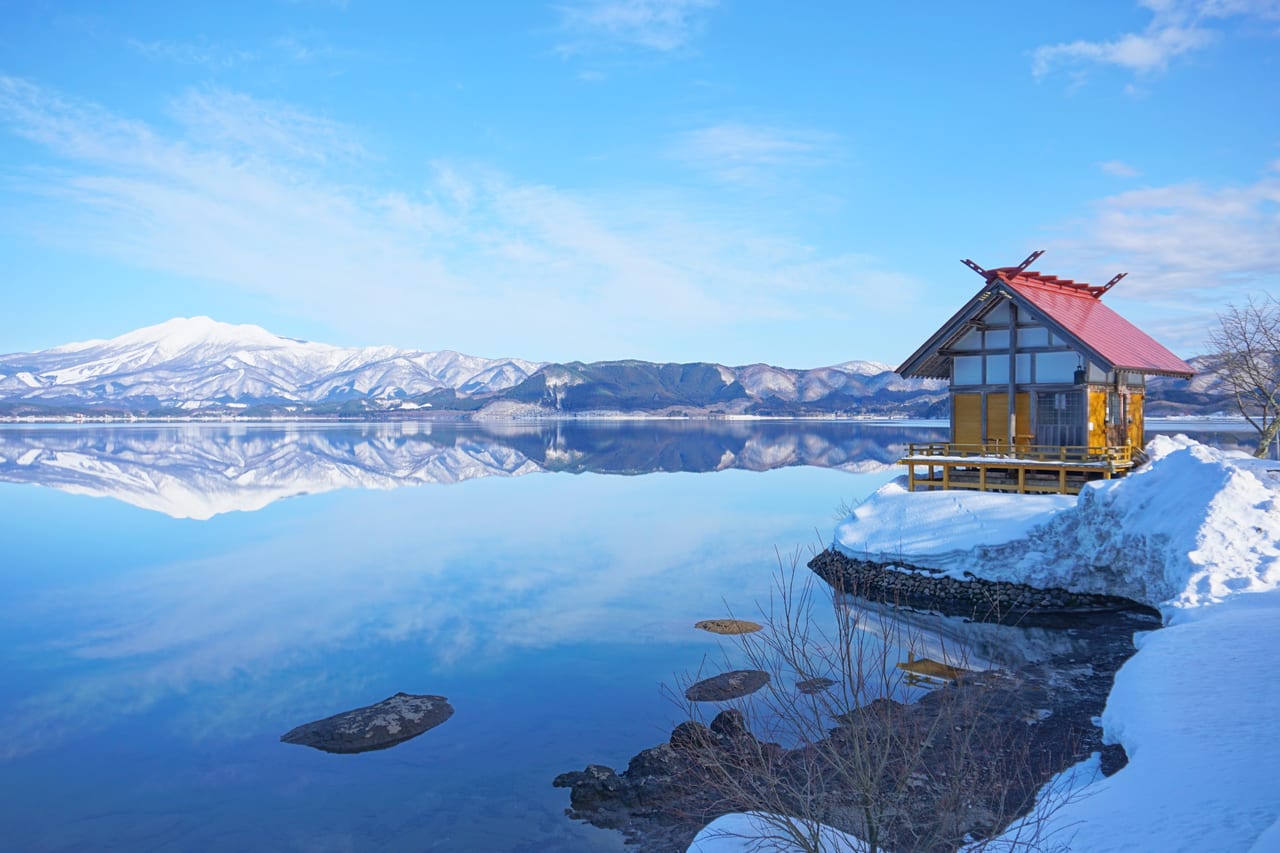
Heading downhill toward Tazawako Station you meet Lake Tazawa — the deepest lake in Japan, with a maximum depth of about 423 meters (among the deepest worldwide). Nearly circular, roughly 6 km across, it never freezes and holds a deep cobalt-to-lapis hue, one of Japan's hundred landscapes. Its most iconic landmark is the golden Tatsuko statue on the western "Katajiri" shore.
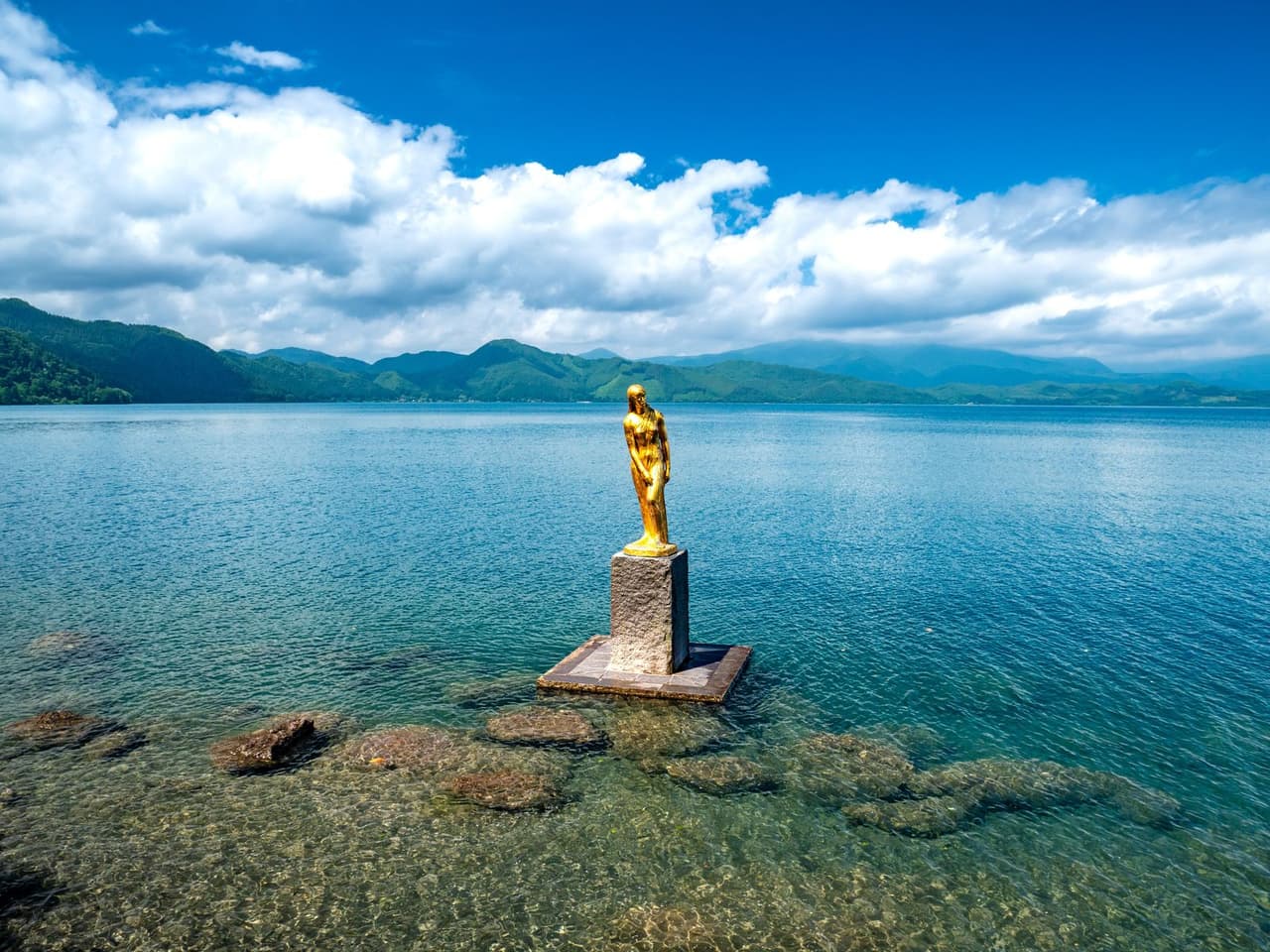
The statue carries a melancholy legend: the local maiden Tatsuko, desperate to keep her beauty and youth, drank spring water until she turned into a dragon and sank into Lake Tazawa to become its guardian. The 1968 gilded figure stands in shallows so clear you can see the lakebed, mountains ringing the far shore — the gold against the blue photographs beautifully. Practically, the lake loop is about 20 km, best by car or rental bike; smaller stops like Gozanoishi Shrine and Ukiki Shrine (Kansa-gu) line the shore. Tazawa and Nyuto are in the same city (Semboku), downhill from the springs, so they pair perfectly — many people stay in Nyuto and visit the lake and Tatsuko statue by day.
Two things to know if you rent a bike for the loop. Bicycles ride on the left in Japan, and the lakeshore road is shared with cars and full of blind bends, so riding against traffic is genuinely dangerous. Since April 1, 2026, bicycle offences carry blue-ticket fixed penalties for riders aged 16 and up, and the one that catches people out here is riding without lights, at ¥5,000 — mountain dusk arrives faster than you expect. A helmet is a duty of effort, not a fine. See Japan's cycling rules in brief.
Oga Peninsula: where to see the namahage
What lifts this Akita trip to another level is the Oga Peninsula's namahage — the peninsula's New Year's Eve "visiting deity" rite. Figures in red or blue ogre masks and straw capes, carrying wooden blades and pails, burst into homes on New Year's Eve roaring "Are there crying children here? Any lazy ones?", driving out idleness and misfortune and praying for a safe, abundant year. They genuinely scare children, and that is the point — a centuries-old ritual that delivers household discipline "in the name of the gods." They were inscribed on the UNESCO Intangible Cultural Heritage list in 2018 (as part of "Raiho-shin, ritual visits of deities in masks and costumes") and are a nationally designated Important Intangible Folk Cultural Property.
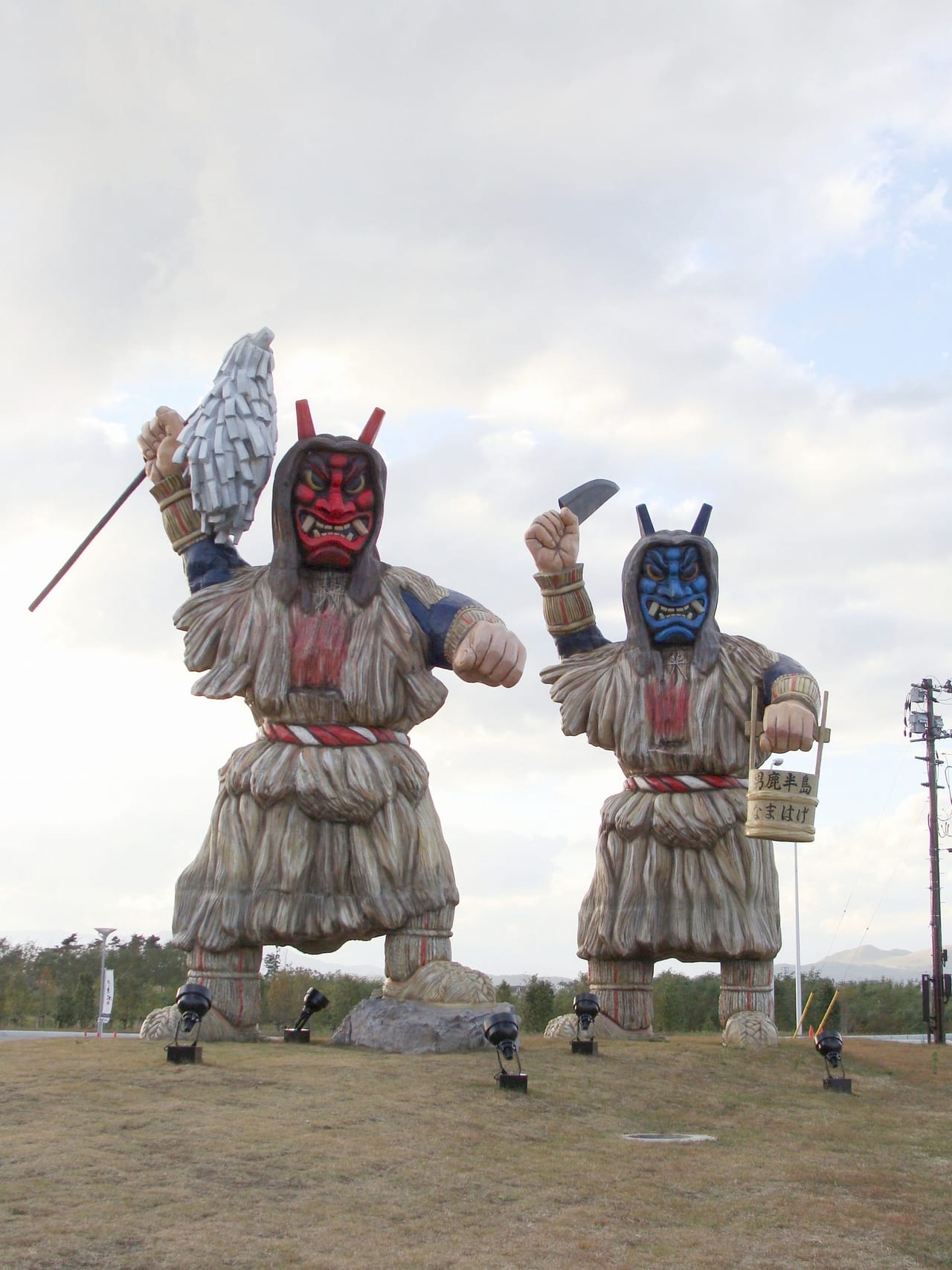
The real rite happens only on New Year's Eve, but to experience it on a normal day, head to two adjacent sites:
- Namahage Museum: displays over a hundred genuine masks and capes actually used in the villages — every hamlet's design differs, and lined up together they are striking, with the custom's history explained. Admission about ¥660 adults.
- Oga Shinzan Folklore Museum: inside an old farmhouse it re-enacts the New Year's Eve house visit — the demons really do break in, circle the room hunting for people, and trade lines with the host; intensely immersive, and the only place to see the "performed" namahage up close on a normal day. The combined ticket with the Namahage Museum is about ¥1,100 adults.
One honest logistics note: the Oga Peninsula is on the western coast near Akita City, far from Nyuto/Tazawa (not on the same axis), and bus connections are sparse. Plan Oga as a separate leg in and out of Akita City, or drive it as a day return. If you only have time for Nyuto plus Tazawa, leave Oga for a dedicated trip rather than forcing it in. If you can time it, the peninsula also runs regular namahage demonstration events through the year (the Namahage Museum and Shinzan area stage them on set dates, and the big winter "Namahage Sedo Festival" in February pairs the demons with bonfires and drumming) — worth checking the schedule before you lock dates, because seeing a live performance lands very differently from reading masks behind glass. Beyond the demons, Oga is a genuinely scenic drive: the coastline at Cape Nyudozaki and the geothermal Oga Onsen-kyo make the long leg out feel less like a detour and more like its own day.
Transport & lodging (Shinkansen, bus vs. car)
Read this before building the itinerary. Getting in is the Akita Shinkansen "Komachi":
- Tokyo → Tazawako Station: by Komachi in about 2h50m–3h (the Komachi runs Tokyo–Akita in roughly 3h40m; Tazawako is an intermediate stop). Tazawako Station is the gateway to both Nyuto and the lake.
- Tazawako Station → Nyuto Onsen-kyo: transfer to the Ugo Kotsu Nyuto Line bus, about 45–50 minutes, stopping at the lakeshore, Mizusawa Onsen, Kyukamura, and more. Note: Tsuru-no-yu sits deepest; after the bus reaches the "Alpa Komakusa" area you often transfer to Tsuru-no-yu's own shuttle (set times — confirm with the inn), not walk-up-anytime.
- Oga Peninsula: a different direction, usually reached from Akita City (JR Oga Line to Oga Station, then bus or taxi to the Namahage Museum area), with sparse buses — a rental car is by far the easiest way to get deep into Oga.
So the practical conclusion: for Nyuto plus Lake Tazawa, Shinkansen plus bus is entirely doable, no car needed; but to add Oga or to circle the lake freely, a rental car saves a lot of waiting. If the wider Tohoku trip leans on the Shinkansen and JR, run the break-even math in our JR Pass guide first (the Akita Shinkansen is JR East territory).
Core lodging advice: stay a night in Nyuto Onsen-kyo. The reason — once day-trippers clear out in the evening, only overnight guests get the steaming milky bath to themselves on a quiet snowy night, the very best of Nyuto, which a day return completely misses. Of the seven, Tae-no-yu and Kyukamura are easier to book and more comfortable; the Tsuru-no-yu main lodge has the most character but is the hardest to land (book months ahead in peak). For pre-trip weather and packing — Tohoku winters are bitter with heavy snow — read our Japan packing & weather guide. The Tokyo end and in/out logistics are in our Tokyo 5-day itinerary.
A three-day plan
Here is the same content shaped into a route that flows (built around Nyuto + Lake Tazawa + Kakunodate; add Oga as a separate leg if time allows):
- Day 1 (into the mountains + secret bath): Komachi from Tokyo to Tazawako (~3h) → Nyuto Line bus into Nyuto Onsen-kyo, check into Tae-no-yu or Kyukamura → afternoon, start the seven-bath circuit with the yumeguri-cho, day-bathe at Tsuru-no-yu's signature mixed open-air pool (avoid Monday) → back to the inn for its own bath on a snowy night, dinner of local mountain vegetables and Akita home cooking.
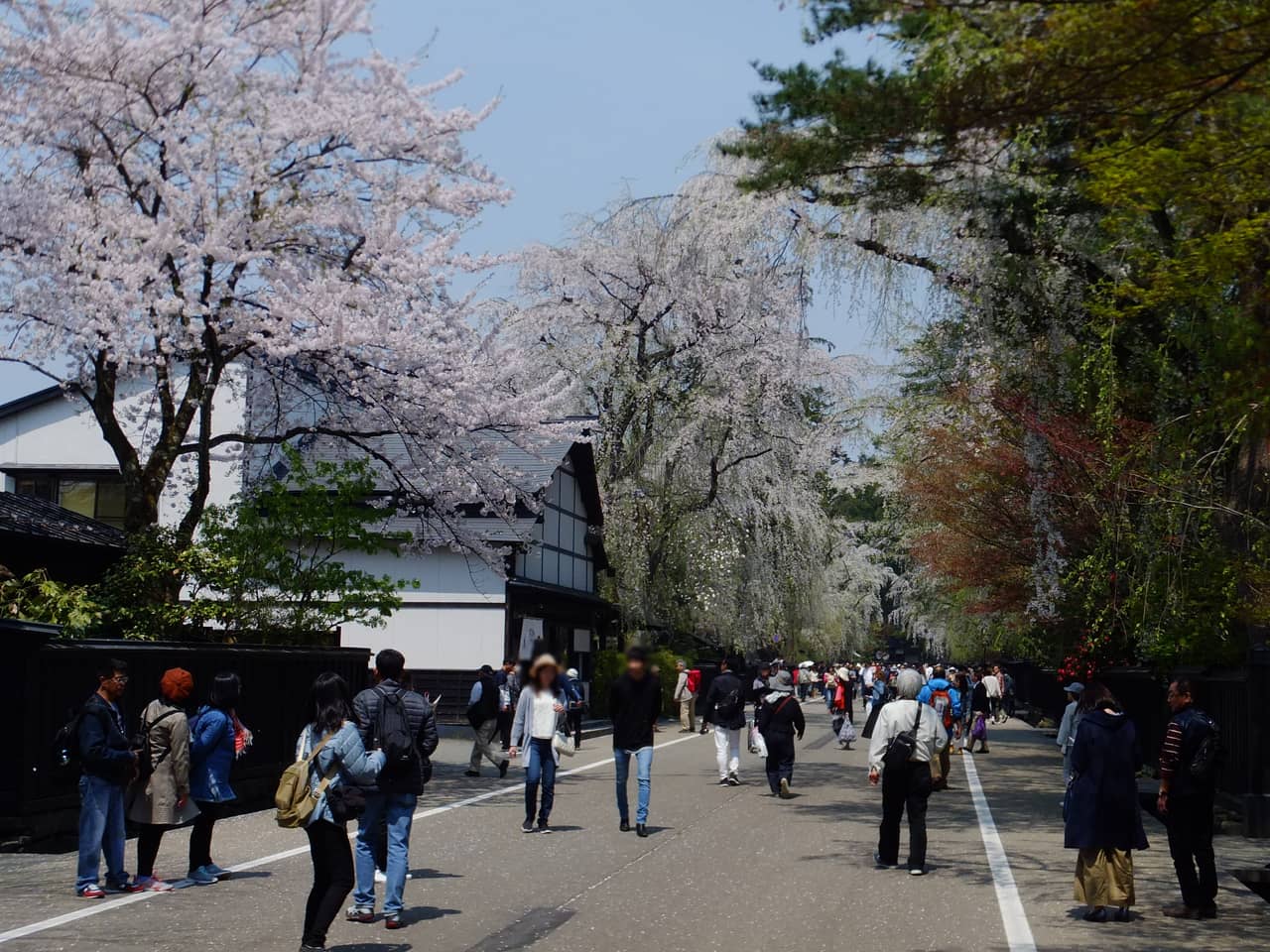
- Day 2 (lake loop + samurai district): morning, finish the remaining baths → descend to Lake Tazawa for the golden Tatsuko statue and a loop of the shore (rental bike or car) → afternoon, one stop by Komachi to Kakunodate for the Bukeyashiki street, black fences, and weeping cherries (if in season) → back to Nyuto or stay near Tazawa/Kakunodate.
- Day 3 (add on by time): if time allows, add the Oga Peninsula from the Akita City side for the namahage at the Namahage Museum and Shinzan Folklore Museum → Komachi back to Tokyo from Akita Station; if short on time, skip Oga for next trip and head home from Kakunodate or Tazawa after Day 2.
With only two days, I would focus on Nyuto plus Lake Tazawa (the secret bath plus Japan's deepest lake) and leave Oga and Kakunodate for a return; trying to do all three gets bottlenecked on Oga's distant transport. The single most worthwhile thing on this Akita axis is always sinking into Tsuru-no-yu's milky open-air bath on a snowy night — everything else is a bonus.
FAQ
- Q1:How many inns are in Nyuto Onsen-kyo, and which one is Tsuru-no-yu?
- The Nyuto Onsen cooperative has seven inns: Tsuru-no-yu, Tae-no-yu, Kanikaba, Ogama, Magoroku, Kuroyu, and Kyukamura Nyuto Onsen-kyo. Each draws on a different spring source, which is exactly why "seven-bath hopping" exists here. The most famous — and the one on every magazine cover — is Tsuru-no-yu, the oldest inn of the group, where a thatched-roof main lodge sits beside a milky-white, mixed open-air bath that has become the defining image of Tohoku's secret onsen. If you can only soak at one, Tsuru-no-yu is the near-universal pick by reputation; if you want more comfort or a women-only outdoor bath, Tae-no-yu and Kyukamura are the commonly recommended alternatives.
- Q2:Can you bathe at Tsuru-no-yu without staying? How much is a day visit?
- Yes — Tsuru-no-yu offers day bathing. Day admission is ¥700 for adults and ¥300 for children, 10:00–15:00 (last entry earlier; capped and closed early when busy). Two things matter most: first, the famous milky open-air bath is mixed-gender (there is a separate women-only outdoor bath), so weigh that in advance; second, day visitors are not admitted at all on Mondays (bath cleaning), shifted to the nearest weekday when Monday is a holiday. To day-visit Tsuru-no-yu, avoid Mondays and arrive right at the 10:00 opening for the fewest people. To soak all seven baths properly, though, stay a night in Nyuto.
- Q3:What is the yumeguri-cho (seven-bath hopping pass), and how much is it?
- The yumeguri-cho is Nyuto Onsen-kyo's seven-bath hopping passbook. It costs ¥2,500 (¥1,000 for children), is sold only to overnight guests at each inn's front desk, and is cash-only. With it you may bathe once at each of the seven member inns — collecting seven different spring waters in one trip, which works out cheaper than buying each day-bath ticket separately. A "yumeguri-go" shuttle links the scattered inns; the official site posts separate regular-season and winter timetables, so check the one for your dates. If you only want to dip into one or two without staying, there is a cheaper "yumeguri map" around ¥1,000, but cross-inn bathing is then paid per inn — to do all seven, stay a night and buy the passbook.
- Q4:What is there to see at Lake Tazawa, and where is the golden Tatsuko statue?
- Lake Tazawa is the deepest lake in Japan, with a maximum depth of about 423 meters (and among the deepest in the world). It never freezes and holds a strikingly deep cobalt blue, one of Japan's hundred landscapes. Its signature landmark is the golden Tatsuko statue on the shore — erected in 1968, drawn from the local legend of Princess Tatsuko, who, seeking eternal beauty, turned into a dragon and sank to become the lake's guardian. The gilded figure standing in the crystal-clear shallows against the ringing mountains is Lake Tazawa's classic shot. The statue is on the western "Katajiri" side, reachable by bus or car; the lake loop runs about 20 km, best done by rental bike or car. It sits downhill from Nyuto in the same city (Semboku), so the two pair naturally.
- Q5:What are the Oga namahage demons, and where can you see them?
- The namahage are New Year's "visiting deity" demons of the Oga Peninsula — figures in red or blue ogre masks and straw capes who, on New Year's Eve, storm house to house roaring "Are there any crying children? Any lazy ones here?", driving out idleness and misfortune. They were inscribed on the UNESCO Intangible Cultural Heritage list in 2018 (as part of "Raiho-shin, ritual visits of deities in masks and costumes") and are a nationally designated Important Intangible Folk Cultural Property. To experience them on a normal day, visit two adjacent sites: the Namahage Museum (over a hundred genuine village masks on display, about ¥660 adults) and the neighboring Oga Shinzan Folklore Museum, which re-enacts the New Year's Eve house visit inside an old farmhouse (combined ticket about ¥1,100 adults). Oga is far from Nyuto/Tazawa on the western coast, so plan it as a separate leg, usually in and out of Akita City.
- Q6:How do you get to Nyuto Onsen from Tokyo? Do you need a car?
- Getting in is the Akita Shinkansen "Komachi": Tokyo → Tazawako Station in about 2h50m–3h (the Komachi runs Tokyo–Akita in roughly 3h40m; Tazawako is en route). From there transfer to the Ugo Kotsu Nyuto Line bus, about 45–50 minutes up to Nyuto Onsen-kyo, stopping at the lakeshore, Kyukamura, and the inns. You do not strictly need a car for the Nyuto–Tazawa axis — buses cover it and Nyuto inns often connect with a shuttle. But buses to the Oga namahage are sparse, so to add Oga or to circle the lake freely, a rental car is far easier. If the wider trip leans on the Shinkansen, weigh it with our JR Pass guide. Kakunodate, the samurai district on the same Akita Shinkansen line, pairs perfectly — see our Kakunodate guide.
Related reading:
Kakunodate Guide 2027: Samurai District, Weeping Cherries & Lake Tazawa
Akita's little Kyoto of Tohoku — the black-fenced samurai district, 162 weeping-cherry natural monuments, the riverbank cherry tunnel and Japan's deepest Lake Tazawa.
Sendai Travel Guide 2027: Matsushima, Aoba Castle, Zuihoden & Gyutan
Tohoku's gateway and City of Trees — Matsushima of the Three Views, Date Masamune's Aoba Castle ruins and Zuihoden, Jozenji-dori, gyutan and zunda.
JR Pass 2026: Is It Still Worth It?
Four real routes calculated, six alternatives that may beat the Pass.