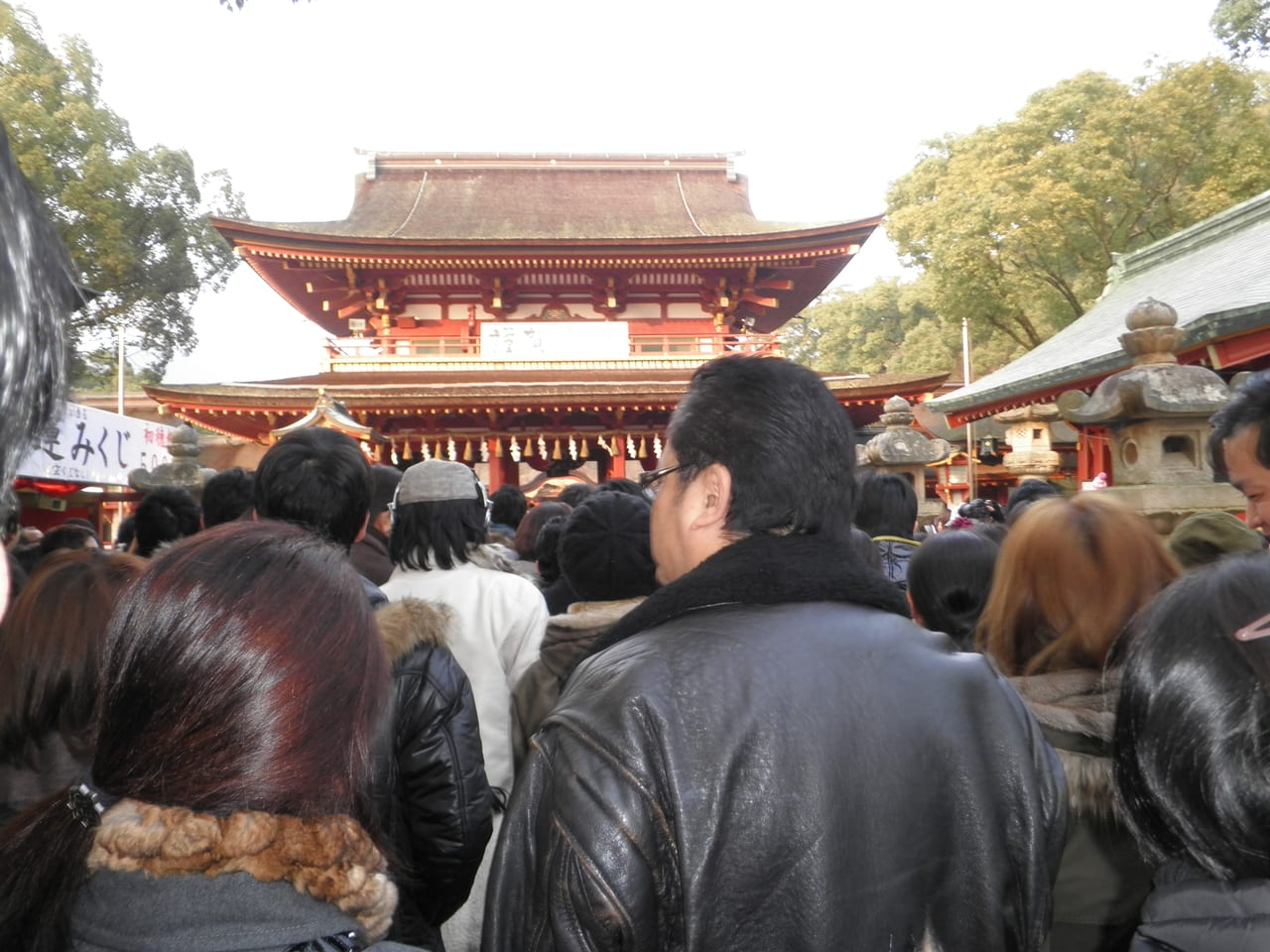
Dazaifu Tenmangu is the head shrine of Sugawara no Michizane — the deified "god of learning" — and the head of some 10,000 Tenmangu shrines across Japan. It's also Kyushu's most popular day trip from Fukuoka: just 26 minutes and ¥480 one way by Nishitetsu train from Tenjin. Its once-in-124-years main hall restoration is now complete, and worship in front of the main hall resumed on September 19, 2026; the tree-roofed temporary shrine used during the works closed in May and is being taken down. This guide covers the grounds, the connected Kyushu National Museum, umegae mochi and the Kengo Kuma Starbucks on the approach, plus transit and a half-day plan. For the city itself, see our Fukuoka travel guide.
- Free to enter the grounds; only the Treasure Hall (¥500) and Kanko Museum (¥200) charge. Allow 1.5–2 hours.
- Main hall restoration complete: the deity returned on May 16, 2026, and front worship resumed Sept 19; the temporary shrine is closed and being dismantled, and prayer ceremonies moved to the Seishinkan Gishikiden.
- Kyushu National Museum connects by escalator tunnel; Cultural Exchange Exhibition ¥700 — a great rainy-day backup.
- The approach: ¥150 grilled umegae mochi and the photogenic Kengo Kuma Starbucks.
- Access: Nishitetsu Tenjin→Dazaifu, 26 min ¥480, or the direct "Tabito" liner bus from Hakata/airport.
📖 Contents
Why visit Dazaifu Tenmangu
Sugawara no Michizane (845–903) was a Heian-era scholar and statesman who, after his death, came to be venerated as Tenjin, the god of learning. For Japanese visitors this is the place to pray for exam success — around entrance-exam season the votive-tablet walls fill with ema asking to pass, a genuinely striking sight. Together with Kitano Tenmangu in Kyoto, it stands as one of the two head shrines of the entire Tenmangu network, effectively the spiritual headquarters of academic prayer.
But Dazaifu isn't only for students. For independent travelers its real appeal is being close enough to Fukuoka to do as a half day while packing in three experiences at once: a historic shrine, a national museum, and a characterful approach lined with food and a famous café. That "short, dense, photogenic" combination makes it the easiest and best-value side trip on any Fukuoka itinerary.
Is Dazaifu Tenmangu still under renovation?
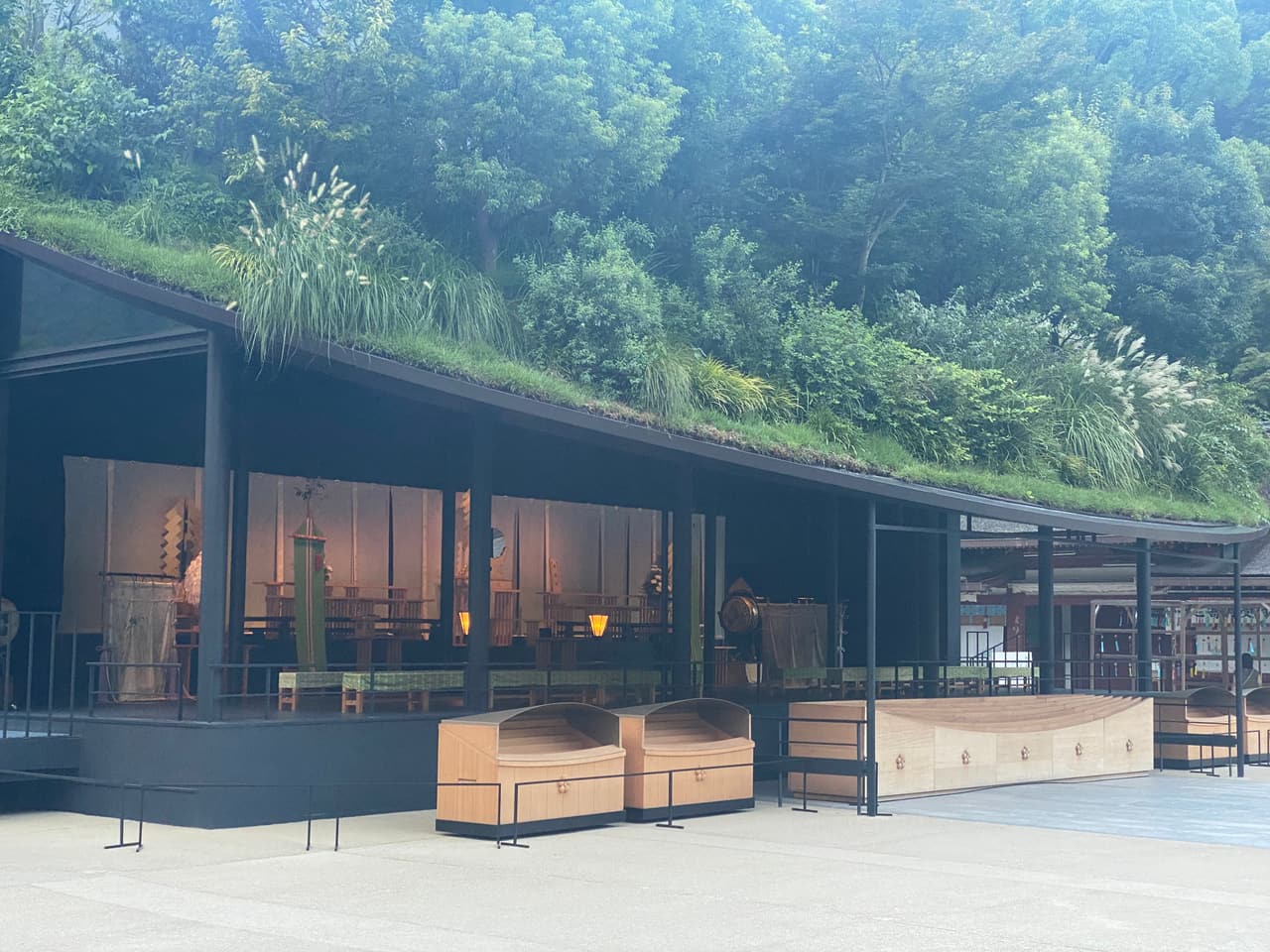
No — the main hall restoration is finished, and worship in front of the main hall resumed on September 19, 2026. This once-in-124-years restoration had closed the front of the main hall to worshippers since spring 2023, so the reopening comes after about three and a half years. On May 16, 2026, the shrine held the Shosenza-sai ceremony to move the deity from the temporary shrine back into the main hall. The work was timed for the 2027 grand festival, held once every 25 years, marking 1,125 years since Michizane's death.
The temporary shrine is gone. Sou Fujimoto's kariden, the one with trees growing on its roof, closed to worshippers on May 16 and is now being dismantled; the shrine hasn't announced when that will finish. The trees from its roof are to be replanted in the shrine's Tenjin no Mori grove. If photos of the kariden are what drew you here, what you'll find now is the restored main hall.
Prayer ceremonies moved to the Seishinkan Gishikiden. If you want a priest to perform a prayer ceremony (kigan) for you, since May 17 these are held in the Seishinkan Gishikiden hall, 9:00–16:30. Individuals don't need a reservation — apply on the day at the prayer reception desk inside the Romon gate.
Next up, the Romon gate and the surrounding corridors will get new cypress-bark roofs; the shrine hasn't announced a start date.
On the grounds: gate, sacred ox, bridges, plum trees
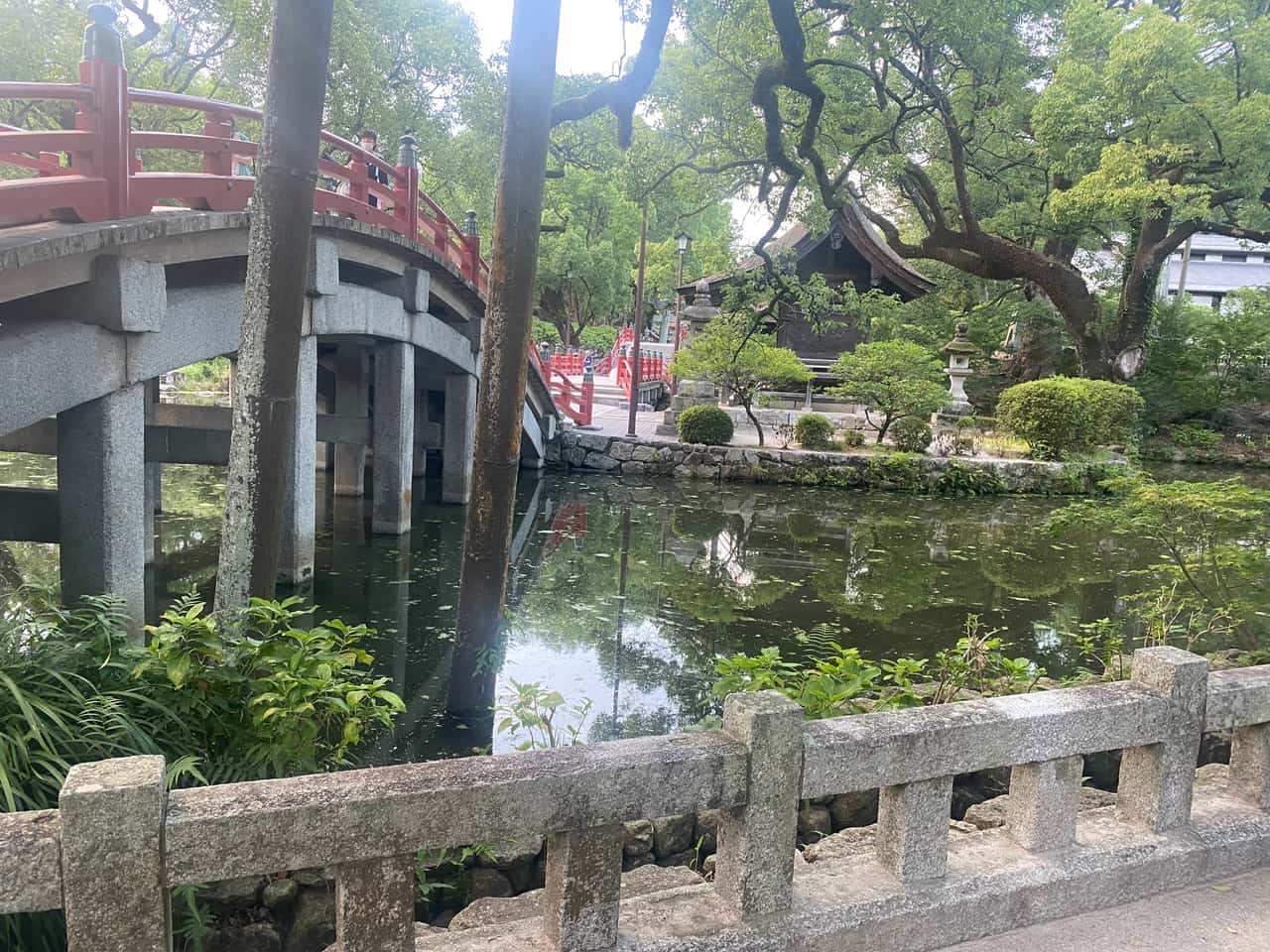
Walking in from the approach, a few things to look for along the way:
- The bridges and Shinji Pond: the pond is shaped like the character for "heart" (shin), and three bridges span it — two arched "taiko" bridges with a flat one between, representing past, present and future. Crossing all three is said to purify you before you pray, and it's the most photogenic stretch.
- The sacred ox: the grounds hold several reclining bronze oxen, the ox being Tenjin's messenger. Rubbing the ox's head is said to make you smarter, so every head is polished bright — expect a queue of students and parents.
- The Romon gate: the vermilion two-story gate is the landmark of the grounds (and this article's cover image); it looks different front and back, so walk around it.
- The flying plum and the plum groves: the "tobiume" tree to the right of the main hall is the one said to have flown overnight, and reportedly the first to bloom each year. The shrine has around 6,000 plum trees of more than 200 varieties, flowering from late January into early March — plum season is Dazaifu at its most beautiful. To compare admission and festival periods at plum gardens across Japan, see when plum blossoms bloom in Japan.
When to go, and how to dodge the crowds
If you can choose your timing, two windows stand out. Plum season, late January into early March, is Dazaifu at its peak — thousands of trees in bloom and the famous flying plum among the first to open; cold but worth it. Autumn, mid-to-late November, brings strong foliage on the grounds and around nearby Kamado Shrine. The flip side is the crowd calendar: the shrine is busiest during exam season (roughly January to early March, overlapping plum blossom) and on weekends, when both students praying for success and blossom viewers converge. To avoid the crush, arrive close to opening on a weekday — the approach is calm in the early morning and the light on the Romon gate is best then — and save the museum and café for late morning once the tour groups roll in. Avoid New Year's first three days unless you specifically want the hatsumode atmosphere, when the grounds are shoulder-to-shoulder.
Kyushu National Museum
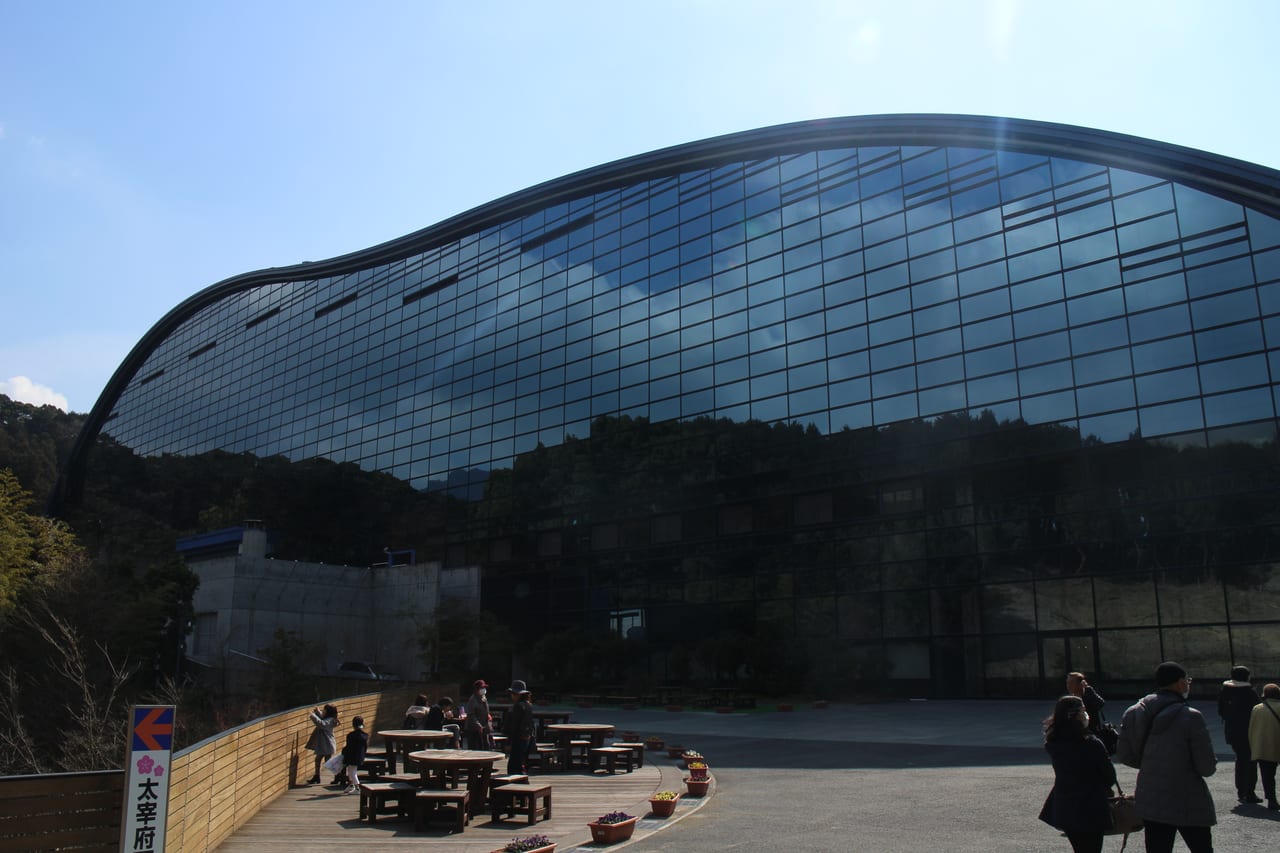
Many visitors don't realize the Kyushu National Museum sits right beside Dazaifu Tenmangu — Japan's fourth national museum, opened in 2005, themed around "the formation of Japanese culture viewed through Asian history." Best of all, an escalator-and-walkway tunnel connects it directly from the shrine grounds, so you don't step out and catch transport — it's an effortless add-on.
The permanent Cultural Exchange Exhibition is ¥700 for adults, ¥350 for university students, and free for under-18 and 70+, with the third-floor special exhibitions charged separately. The 160-meter, glass-clad wave of a building is a talking point in itself; if you like historical artifacts, or rain pushes you indoors, the museum fills out a half day nicely. Pressed for time and here purely to pray? Skipping it costs you nothing — it comes down to your pace that day.
The approach: umegae mochi and the Kengo Kuma Starbucks
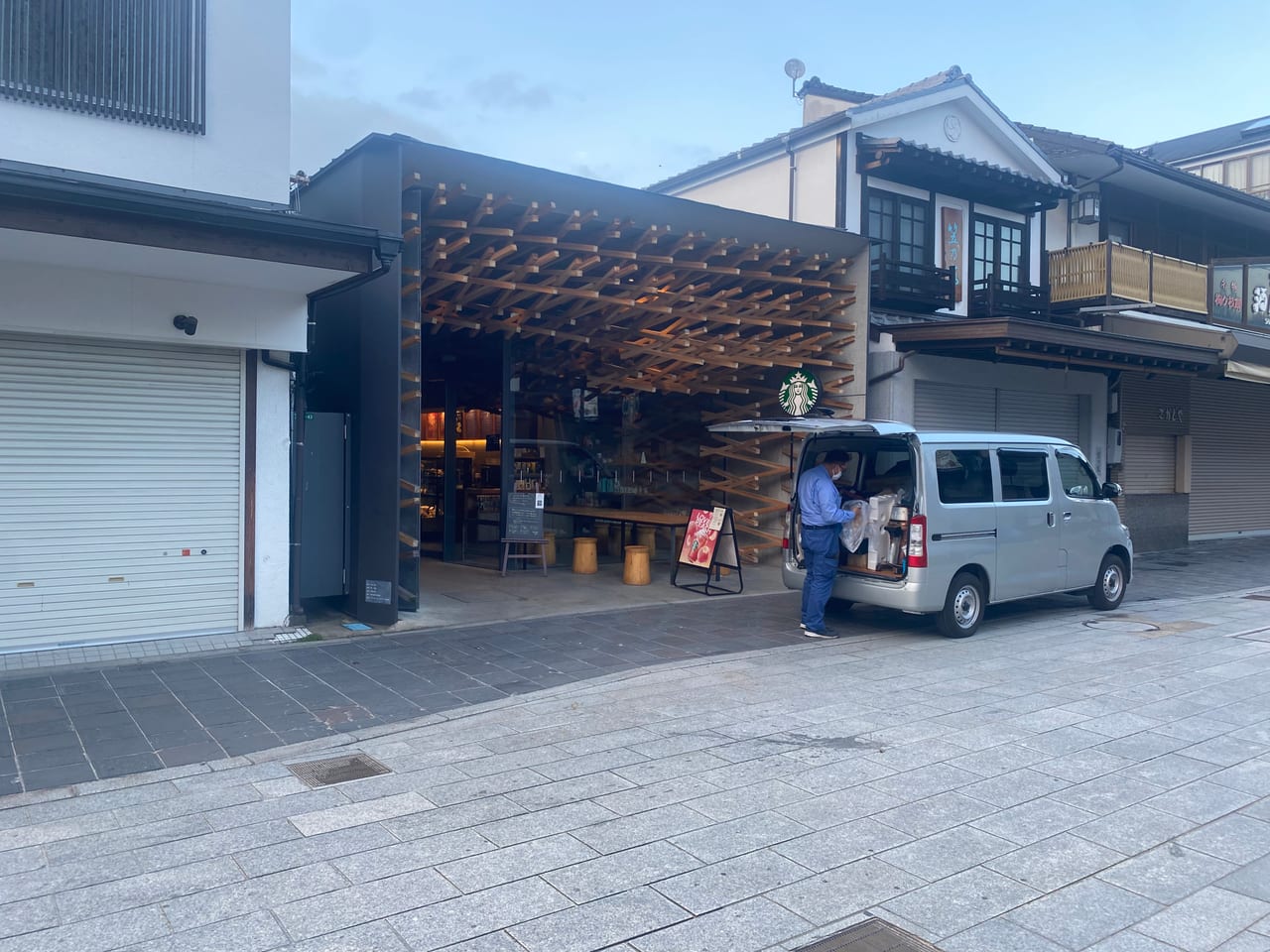
The approach (sando) from Nishitetsu Dazaifu Station to the shrine is short, but it's one of the highlights. The number-one local snack is umegae mochi — a plum-branch-shaped rice cake, grilled until lightly charred, filled with red bean paste; eaten hot it's crisp outside and soft within, about ¥150 (¥180 at some shops). Kasanoya and Yasutake are long-running stalls along the approach; buy one hot and finish it right by the shopfront before moving on (the local custom is to eat where you bought it, not while walking), or buy a box as a souvenir.
Don't miss the Starbucks Dazaifu Tenmangu Omotesando midway along. Designed by Kengo Kuma — the architect behind Tokyo's new National Stadium — its interior weaves around 2,000 diagonally interlocked cedar sticks into a three-dimensional lattice tunnel, the wood grain running from the entrance deep inside. It's one of Starbucks' few genuinely architectural store designs, worth stepping into for a photo even if you skip the coffee. Save the eating and photos for the way back, then drift down to the station after the shrine.
Nearby add-ons and a caution
With more time, two spots near Dazaifu are worth weighing:
- Kamado Shrine: at the foot of Mt. Homan, it surged in popularity because it shares a name with "Kamado Tanjiro," the Demon Slayer protagonist (to be clear, the shrine itself has never officially endorsed that connection — it's purely the name). It's a genuine old shrine for matchmaking and warding off misfortune, lovely in autumn foliage, reachable from Tenmangu on the community "Mahoroba" bus.
- Komyozenji: Dazaifu's celebrated dry-landscape moss garden, once a favorite among photographers. But note —it has been closed to general visitors since 2018 (with photography banned since 2016) over garden restoration and visitor-conduct problems, and whether it reopens in 2025–2026 is unclear. Don't pencil it into your plan; confirm with Dazaifu tourist information (tel. 092-925-1880) before going so you don't make a wasted trip.
To range a little farther, Dazaifu sits in Fukuoka Prefecture right next to Saga — a quick transfer from Nishitetsu Futsukaichi or Hakata reaches the porcelain town of Arita, Karatsu and Ureshino Onsen, all doable in a day and an easy add-on after Dazaifu.
Getting there and a half-day plan
How to get there: the main way is the Nishitetsu train. From Nishitetsu Fukuoka (Tenjin), take the Tenjin Omuta Line to Nishitetsu Futsukaichi, transfer to the Dazaifu Line, and reach Dazaifu Station in about 26 minutes for ¥480 one way (the fare after the April 2026 revision). From Hakata, ride the Fukuoka City subway to Tenjin first (~5 min, ¥210) and transfer. If you'd rather not change trains, the "Dazaifu Liner Bus Tabito" runs direct from Hakata Bus Terminal and Fukuoka Airport to Dazaifu in roughly 40–45 minutes, frequently and without reservations. Nishitetsu also sells a Dazaifu-only Dazaifu Sansaku Ticket: a Tenjin ⇔ Dazaifu round trip plus a voucher for one umegae mochi, valid for two days from first use, with free on-and-off at Tofuro-mae, Nishitetsu Futsukaichi and Nishitetsu Gojo — handy if you'll also stop at Futsukaichi. Check the current price on Nishitetsu's page.
Is the Dazaifu–Yanagawa Sightseeing Ticket worth it? It's Nishitetsu's bundle for pairing Dazaifu with Yanagawa: the train loop from Tenjin (or Yakuin) through both towns, a Yanagawa punt-boat ride, and discount coupons in both towns, valid for two days from first use — so you can even stay a night in Dazaifu or Yanagawa before heading back. It's built for people who'll also ride the boats in Yanagawa on the same trip; if Dazaifu is your only stop, a regular round-trip fare is all you need, and there's no point bending your day around the pass. If you do add Yanagawa, boat reception closes in the afternoon (officially 15:00, with different hours in July–September), so I'd do Yanagawa first and stop at Dazaifu on the way back. Both Nishitetsu and KKday sell it; the difference is where you pick the ticket up:
| Where to buy | How you get the ticket | What's included |
|---|---|---|
| Nishitetsu direct: paper ticket at the Tenjin or Yakuin station window, or a digital ticket (the my route app only accepts sign-ups from a few countries; Paymul runs in a browser) | Paper on the spot; the digital ticket is a QR code on your phone, no exchange needed | Train + boat + coupons |
| KKday Dazaifu–Yanagawa ticket | E-voucher; exchange it for the physical ticket at the Nishitetsu Fukuoka (Tenjin) or Yakuin station window | Train + boat + coupons, plus one umegae mochi voucher |
| KKday Dazaifu–Yanagawa ticket (airport pickup) | Exchange at the HIS counter, 1F international arrivals hall, Fukuoka Airport; no changes or refunds after exchange | Train + boat + coupons, plus one umegae mochi |
Where to stay and prep: Dazaifu is a half-day outing, so for overnights it's still most convenient to base in central Fukuoka (Hakata or Tenjin), with easy access to Dazaifu, the city and the rest of Kyushu. For Kyushu weather and packing see our Japan weather and clothing guide, and for pre-trip basics like customs and tax-free shopping, our Japan pre-departure essentials.
A half-day plan (starting from Tenjin):
- Morning Nishitetsu to Dazaifu Station → stroll the approach (note the umegae mochi shop for the way back) → cross the taiko bridges and Shinji Pond into the grounds.
- Pray at the main hall, rub the sacred ox, see the Romon gate and the flying plum → take the escalator tunnel into the Kyushu National Museum (decide on the Cultural Exchange Exhibition by interest).
- On the way back, eat freshly grilled umegae mochi on the approach and step into the Kengo Kuma Starbucks for a photo and a rest → Nishitetsu back to Fukuoka, then pick up the city in the evening (Nakasu yatai, Tenjin shopping).
Dazaifu makes an ideal warm-up first stop on a Kyushu loop — base in Fukuoka, half a day at Dazaifu and half in the city, then push on to Yufuin, Beppu or Kumamoto the next day. The full rail loop is in our Kyushu 3-day rail itinerary, and whether a JR Kyushu pass pays off is covered in our JR Pass guide.
Frequently Asked Questions
- Q1:Is there an entry fee, and how long do I need?
- Entry to the grounds is free — only the Treasure Hall (Homotsuden, ¥500 adults) and the Kanko Historical Museum (¥200 adults) charge separately, and most visitors skip both. With the Romon gate, the main hall, the sacred ox, the bridges and an approach stroll, allow 1.5–2 hours; add the Kyushu National Museum and you want a half day. It pairs naturally with Fukuoka as "1 day in the city + a half day at Dazaifu."
- Q2:Is Dazaifu Tenmangu still under renovation? Can I see the main hall?
- Yes, you can — the restoration is finished. The deity was moved back into the main hall on May 16, 2026, and worship in front of the main hall resumed on September 19, 2026, for the first time since spring 2023. Sou Fujimoto's temporary shrine closed to worshippers and is being dismantled; prayer ceremonies (kigan) now take place at the Seishinkan Gishikiden — see the renovation section above.
- Q3:How do I get there from Fukuoka (Hakata / Tenjin), and what does it cost?
- The main route is the Nishitetsu train: from Nishitetsu Fukuoka (Tenjin), take the Tenjin Omuta Line to Nishitetsu Futsukaichi, transfer to the Dazaifu Line, and reach Dazaifu Station in about 26 minutes for ¥480 one way (after the April 2026 fare revision). From Hakata, ride the subway to Tenjin first (~5 min, ¥210). If you'd rather not transfer, the "Dazaifu Liner Bus Tabito" runs direct from Hakata Bus Terminal and Fukuoka Airport. Frequent service, no reservation needed — an easy round trip in a day.
- Q4:Is the Kyushu National Museum worth it?
- Depends on your interests. The Kyushu National Museum is Japan's fourth national museum (opened 2005), and an escalator tunnel connects it directly from the shrine grounds — no separate trip needed. Its theme is the history of cultural exchange across Asia. The permanent Cultural Exchange Exhibition is ¥700 for adults (¥350 university students; free for under-18 and 70+), with special exhibitions priced separately. Great for history lovers or a rainy-day indoor option; skip it if you're here purely to pray. The huge wave-shaped glass building is worth a look from outside regardless.
- Q5:What should I eat and see on the approach (sando)?
- The approach from Nishitetsu Dazaifu Station to the shrine is short but excellent. The signature snack is umegae mochi — a plum-branch-shaped grilled rice cake filled with red bean paste, best eaten hot off the griddle, about ¥150 each (¥180 at some shops); Kasanoya and Yasutake are long-established stalls. Midway sits a much-photographed Starbucks Dazaifu Tenmangu Omotesando, designed by architect Kengo Kuma with around 2,000 cedar sticks woven into a lattice tunnel — a rare "architectural" Starbucks well worth a look even if you don't order.
- Q6:What else can I combine nearby?
- Two options: (1) Kamado Shrine at the foot of Mt. Homan became a fan pilgrimage spot because it shares a name with the Demon Slayer protagonist (to be clear, the shrine has never officially endorsed that link); it's a lovely old shrine for matchmaking and warding off misfortune, pretty in autumn, reachable by the community "Mahoroba" bus. (2) Komyozenji, a famous moss-and-dry-landscape temple, but be warned — it has been closed to general visitors since 2018 (photography banned since 2016) due to garden restoration and visitor-conduct issues, and whether it reopens in 2025–2026 is unclear. Don't build it into your plan; confirm with Dazaifu tourist info first.