If you are already planning Kamakura, do not treat Enoshima as an optional add-on you will "get to if there is time" — it deserves a full afternoon, right through to sunset. Enoshima is a small hill-island a short bridge-walk from Enoshima Station, and packed onto it are Enoshima Shrine (dedicated to the sea goddess Benzaiten), the Sea Candle observation tower over Sagami Bay, and the Iwaya sea-caves carved into the island's back cliffs. Its real trump card, though, is the view: the island faces southwest, so on a clear day the sunset and the silhouette of Mount Fuji share the same frame — something central Kamakura simply cannot give you. This guide covers how to get onto the island, how to choose between the three passes everyone confuses (Noriori-kun, the Enoshima 1day, and the Odakyu Free Pass), the walking route through the shrine's three halls, whether the Sea Candle and Iwaya are worth your money, how to reach the Slam Dunk railroad crossing and the photo etiquette that now applies, and the raw-shirasu closed season that trips up so many visitors. My core advice up front: Kamakura in the morning, Enoshima in the afternoon through sunset — run it that way and you claim the golden hour at both. For the big picture on the Great Buddha and Hasedera, start with our full Kamakura day trip guide; this piece is all about Enoshima.
- The island and worship are free; only the attractions charge: shrine grounds free, Hoanden viewing ¥200, Sea Candle ¥800, Iwaya caves ¥500
- Three passes, three different jobs: Noriori-kun ¥800 (Enoden rides), Enoshima 1day ¥1,550 (attraction bundle), Odakyu Free Pass ¥810 from Fujisawa / ¥1,640 from Shinjuku (transport)
- The Slam Dunk crossing is not on the island: it is beside Enoden's Kamakurakokomae station — quietest at dawn, and mind the photo etiquette
- Time the sunset-and-Fuji shot: late autumn to winter (Nov–Feb) gives the clearest air; Chigogafuchi and the Sea Candle deck are the best spots
- Raw shirasu has a closed season: Jan 1 – Mar 10 you can only get the boiled (kama-age) version
📖 Contents
- 1. Enoshima vs Kamakura: which deserves more time?
- 2. Getting there & the three passes explained
- 3. Enoshima Shrine: the three halls, Hoanden & goshuin
- 4. What is worth it: Sea Candle, Iwaya, Chigogafuchi
- 5. Slam Dunk railroad crossing: how to get there
- 6. What to eat: nama-shirasu-don & veteran shops
- 7. A half-day route & FAQ
Enoshima vs Kamakura: which deserves more time?
Plenty of people slot Enoshima in as "let's take a quick look after Kamakura" and burn through it in an hour. I think that is a waste. Enoshima is a complete little sightseeing island that concentrates a shrine, an observation deck, sea-caves, seafood and a sunset onto one hill — to do it properly, give it three to four hours and walk right through to dusk. And to answer the "vs Kamakura" question directly: this is not really a competition, because the two are so different that you want both. Kamakura is the samurai old capital — history, Zen, the weight of the first shogunate. Enoshima is island faith and the open sea. In a single day you collect two completely different versions of Japan, "old capital" and "coast," and that contrast is exactly what makes this route so good.
The heart of the island is Enoshima Shrine, dedicated to Benzaiten, the goddess of the sea (and of music and fortune). It is made up of three sub-shrines — Hetsunomiya, Nakatsunomiya and Okutsunomiya — and it is often counted among Japan's three great Benzaiten shrines, though that grouping is a popular saying rather than an official designation, so take it as folklore. One founding legend traces the shrine back to the reign of Emperor Kinmei (traditionally 552), but that is legend, not documented history; the better-attested official record is that Minamoto no Sanetomo founded Hetsunomiya in 1206. You do not need to memorize the dates — the point is simply that Enoshima has been a sacred place of sea-worship for centuries, and travellers have climbed that sloping approach one step at a time for eight hundred years.
So why do I insist on "Kamakura in the morning, Enoshima in the afternoon"? It comes down to light and crowds. Kamakura's Tsurugaoka Hachimangu and the Great Buddha open early and are free or cheap, so going first thing lets you beat the first wave of tour groups (I lay out the shrine's timing in our Tsurugaoka Hachimangu guide). By the time you shift to Enoshima around midday, you have a full afternoon to climb the island slowly, worship at the shrine, ride up the tower and explore the caves — and you save the best part, the sunset and the Fuji silhouette, for the very end. This order lets you eat the golden hour at both places. Reverse it and Enoshima has no sunset while Kamakura fills with crowds — you lose at both ends.
Getting there & the three passes explained
There are two main ways onto Enoshima; let me give you the choice first, then unpack the passes. To blitz Enoshima straight from central Tokyo, the Odakyu line is easiest: ride from Shinjuku all the way to "Katase-Enoshima" station (the ornate one that looks like a sea-dragon palace), and it is a few minutes' walk to the head of the Enoshima bridge. If you follow my recommended "Kamakura morning + Enoshima afternoon" route, you will usually take the JR line into Kamakura first, then ride the Enoden (Enoshima Electric Railway) west toward Fujisawa and get off at "Enoshima" station — this old tram running along the coast is a sight in itself, and it passes the Slam Dunk crossing at Kamakurakokomae on the way. Take the Enoden from Kamakura toward Fujisawa and get off at Enoshima Station; exact minute-by-minute journey times vary a little between apps, so I will not pin a number here — check the current timetable on the day.
Now for the three tickets people mix up the most. Their names all involve Enoshima, but one covers transport, one also covers transport, and one actually covers the island's attractions — completely different jobs. Look at the table first, then hear my picks (fares verified against official sources on 2026-07-15):
| Ticket | Adult price | What it covers | Best for |
|---|---|---|---|
| Noriori-kun (Enoden day pass) | ¥800 (child ¥400) | Unlimited rides on the whole Enoden line + perks at 55 shops | Already in Kamakura, hopping on/off at Hase, Kamakurakokomae, Enoshima |
| Odakyu Enoshima-Kamakura Free Pass | From Fujisawa ¥810 / from Shinjuku ¥1,640 | Odakyu round trip + unlimited rides on the whole Enoden line | Coming straight from central Tokyo (Shinjuku), riding the Enoden all day |
| Enoshima 1day (attraction bundle) | ¥1,550 (child ¥700) | Four island attractions: Escar + Sea Candle + Iwaya + Cocking Garden | Doing all the island attractions and wanting to save on entry |
My picks are blunt. Straight from Shinjuku for a full Enoshima day: buy the Odakyu Free Pass from Shinjuku (¥1,640) — it ties the Odakyu round trip and unlimited Enoden rides together, and as long as you make three or four stops along the Enoden (Kamakura, Hase, Enoshima) that day, it almost always pays for itself. Following my preferred "JR into Kamakura, Enoshima in the afternoon" route: buy Noriori-kun (¥800) — its value is not a simple round trip from Kamakura to Enoshima (tapping an IC card segment by segment may not cost more than that), but that you will hop on and off at Hase (Great Buddha, Hasedera) and Kamakurakokomae; three or more boardings and it pays off, plus you get the shop perks along the line.
As for the Enoshima 1day (¥1,550), it is a different animal from the other two — it does not carry you to Enoshima; it saves you money on the attractions once you are on the island. Run the numbers and it is obvious: if you plan to ride the Escar (all three sections, ¥500) + go up the Sea Candle (¥800) + walk the Iwaya caves (¥500), paying separately comes to ¥1,800, whereas the bundle at ¥1,550 also throws in the Cocking Garden — so you save about ¥250 and cover all three on one ticket. The rule of thumb is simple: buy the bundle if you will do all three attractions; if you just want to worship at the shrine and maybe ride the tower, paying separately is no worse. One note: there is an official night add-on version, "Enoshima 1day + Night," but it is not sold year-round — only during illuminations and events — so do not count on it always being available.
Enoshima Shrine: the three halls, Hoanden & goshuin
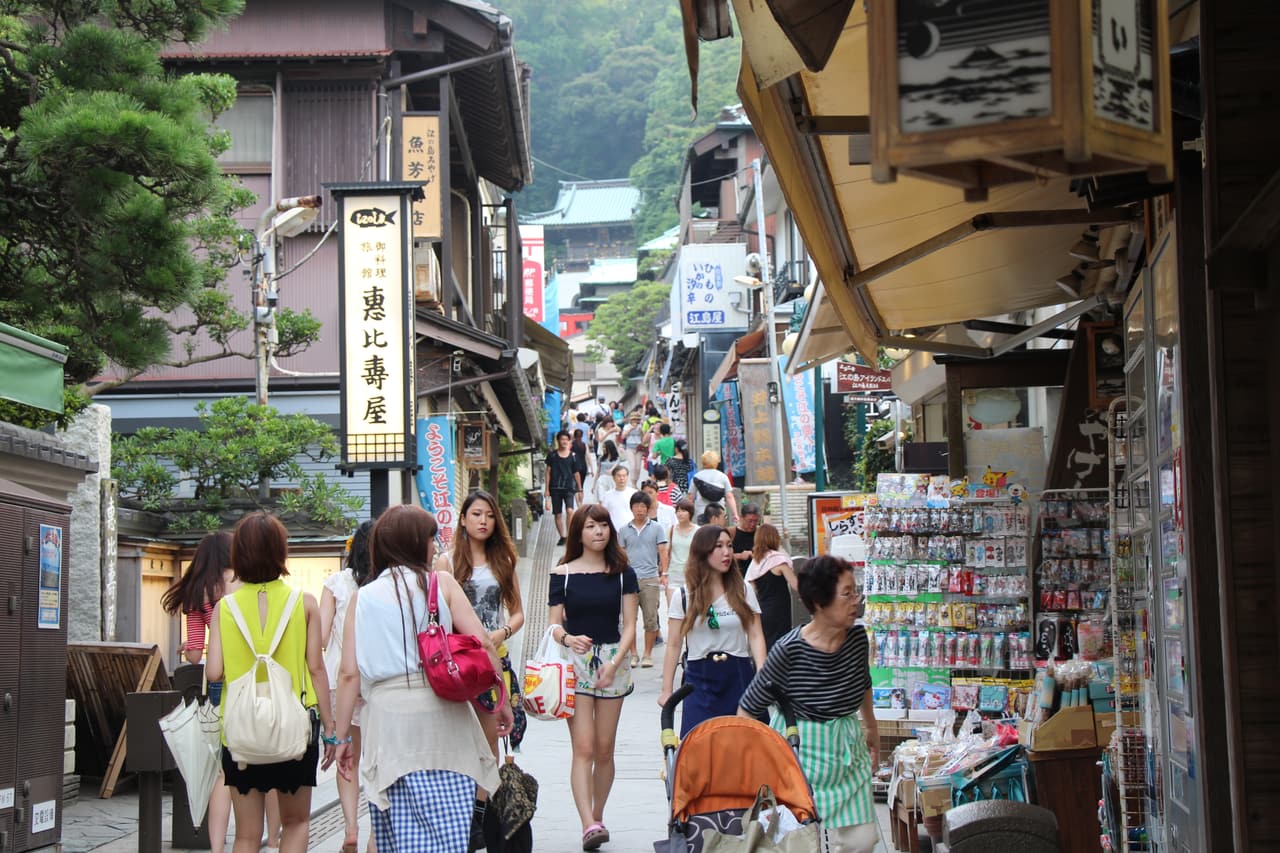
Cross the Enoshima bridge, walk into the lively Benzaiten Nakamise-dori shopping street (both sides packed with grilled turban shells, octopus crackers and souvenirs), and the vermilion torii at the far end is the entrance to Enoshima Shrine. The shrine is made of three sub-shrines, arranged from lowest to highest — which happens to be exactly your climbing route — so I will order them the way you actually walk.
Hetsunomiya: the lowest and first of the three, and the core of your visit. Per Fujisawa City tourism information, Hetsunomiya's grounds are open for worship 8:30–17:00. The key sight here is the neighbouring Hoanden — an octagonal hall enshrining two Benzaiten figures: the "Myoon Benzaiten" cradling a biwa lute (the famous nude Benzaiten) and the eight-armed Benzaiten. To go inside and see them you buy a separate viewing ticket: adults ¥200 (junior/senior-high students ¥100, elementary students ¥50), viewing hours 8:30–16:30. Well worth it if you like Buddhist statuary or want to pray for fortune and the arts; if you are just passing to pray, free worship in the grounds is plenty. Beside Hetsunomiya is the Zeniarai (coin-washing) basin of the White Dragon deity, where you wash coins in a bamboo basket to pray for money luck — a popular little ritual here.
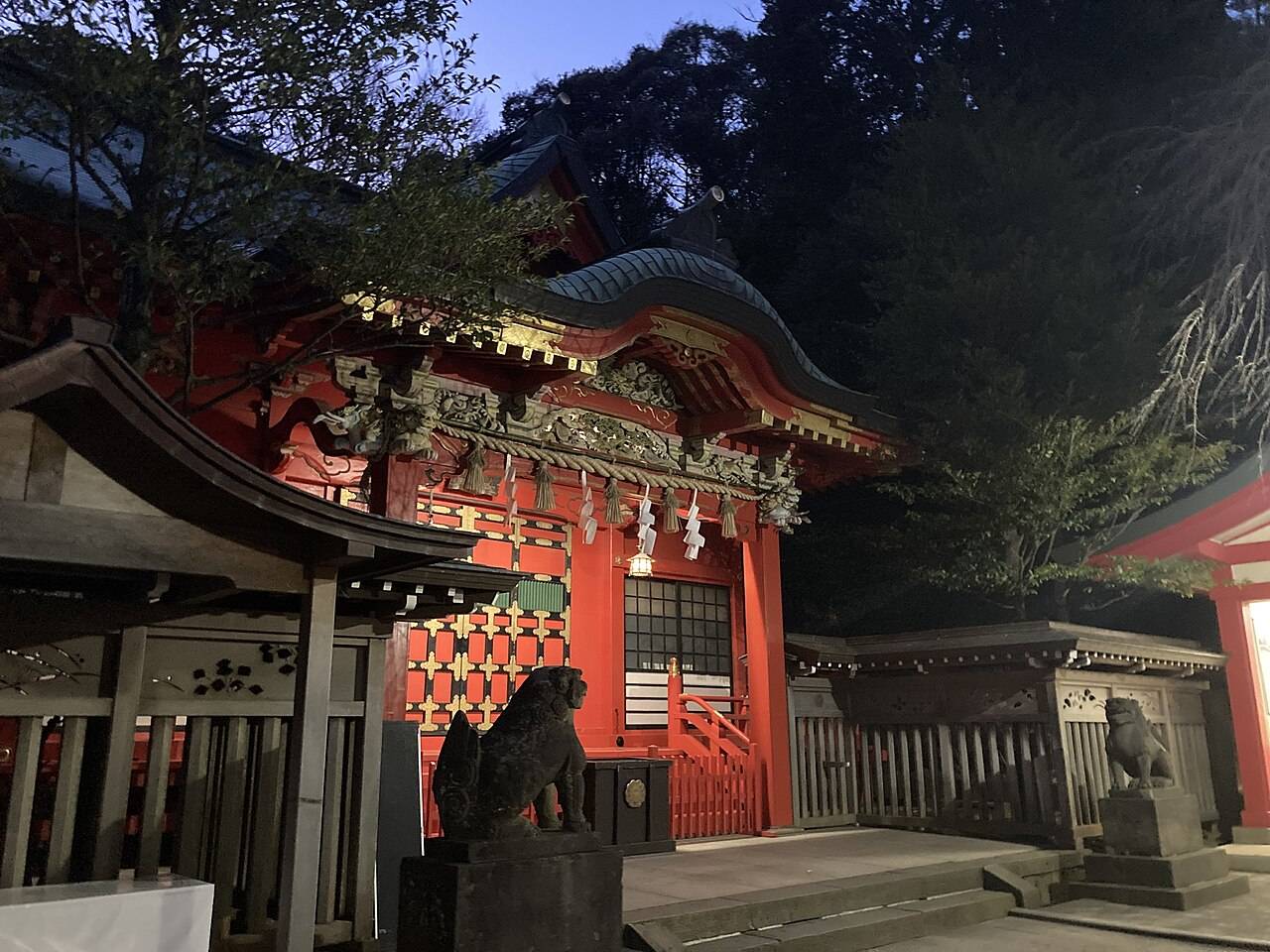
Continue uphill from Hetsunomiya to Nakatsunomiya, its vermilion hall vivid against the greenery; the views begin to open here over Katase beach. Push on toward the summit and the far side to reach Okutsunomiya, the deepest and most tranquil of the three, whose worship-hall ceiling holds a famous painting of the "turtle that glares from every angle" (it seems to stare at you no matter where you stand) — worth looking up for. Near Okutsunomiya is the well-known Ryuren-no-Kane (the Bell of Dragon Love), where couples ring the bell together and hang a padlock inscribed with their names to pray for a good match — the sea view is lovely, and it is a classic Enoshima date spot.
On the goshuin (the calligraphic shrine seal you collect in a special book): these shrine spots all offer them, but I have to be honest about one thing — Enoshima Shrine does not publish an official goshuin offering fee (hatsuhoryo) or exact desk hours. I will not pass off the figures floating around online as official, so treat the offering and cut-off time as "confirm at the desk on the day," and bring small coins to be safe. For an unhurried goshuin, avoid the weekend-afternoon peak and come early. Enoshima Shrine issues several stamps — see how to buy a goshuin book and follow shrine etiquette, and for making the island the closing stop of a day of collecting, follow the Kamakura-to-Enoshima goshuin route. And as mentioned above, the "552 / Emperor Kinmei founding" story and the "three great Benzaiten" grouping are both legend rather than official fact — enjoy them as folklore.
What is worth it: Sea Candle, Iwaya, Chigogafuchi
Once you have worshipped, a few more sights on the island cost money or leg-work. I will give you my honest take — not everything is a must.
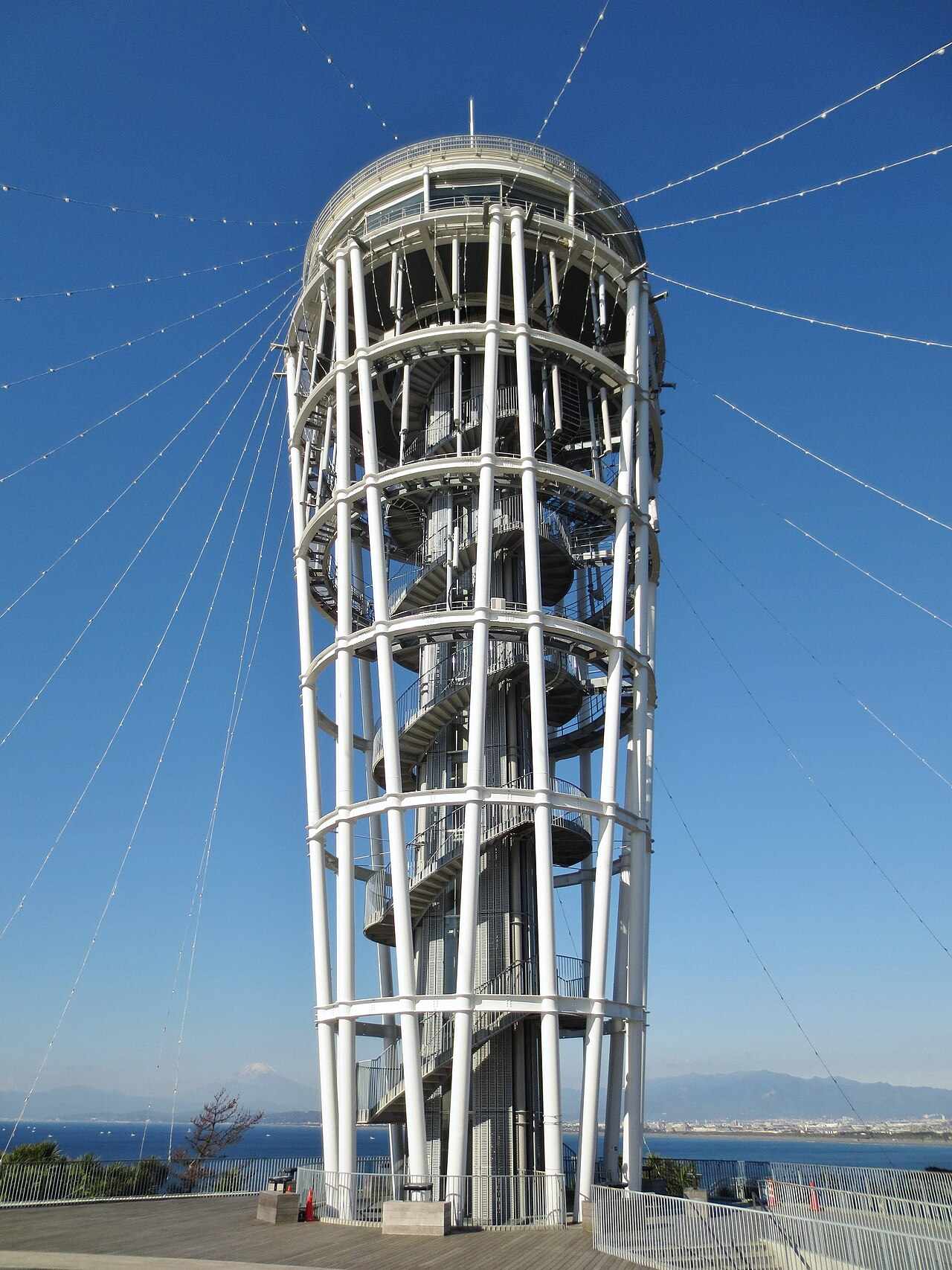
Sea Candle observation tower (worth it, especially at dusk): the white observation tower stands inside the Samuel Cocking Garden at the island's summit, and from the top you get a 360-degree view over Sagami Bay — on a clear day you can see the silhouette of Mount Fuji. Tickets are adults ¥800 (children ¥400), and it is open until 20:00 with last entry 19:30, so its greatest value is going up at dusk to watch the sunset and staying for the after-dark illumination. A word on the garden itself: daytime entry (9:00–17:00) is free, and only after 17:00 (when there is no event) does it charge — adults ¥500 / children ¥250 — with different ticket types during winter illuminations and other night events. So in daytime you can wander the garden for free and just buy the Sea Candle to go up the tower.
Iwaya sea-caves (worth it, but check the sea): cut down from Okutsunomiya to the sea-cliffs on the island's back side and you reach the Iwaya (First and Second caves) — grottoes carved out by centuries of waves. Inside they are dim; you are handed a candle to light the way, and deep in there are stone Buddhas and relics of Benzaiten worship, giving it a real air of exploration. Tickets are general ¥500 (elementary students ¥200), open 9:00–17:00 (adjusted slightly by season). One important thing: the Iwaya hugs the sea, and in rough conditions (strong wind, high waves) it closes without notice — the officials do not publish a specific wind-speed or wave-height threshold, so you cannot predict it in advance. Check the "today's opening hours" field on the Fujisawa tourism site before you go; do not trek all the way down only to find it shut.
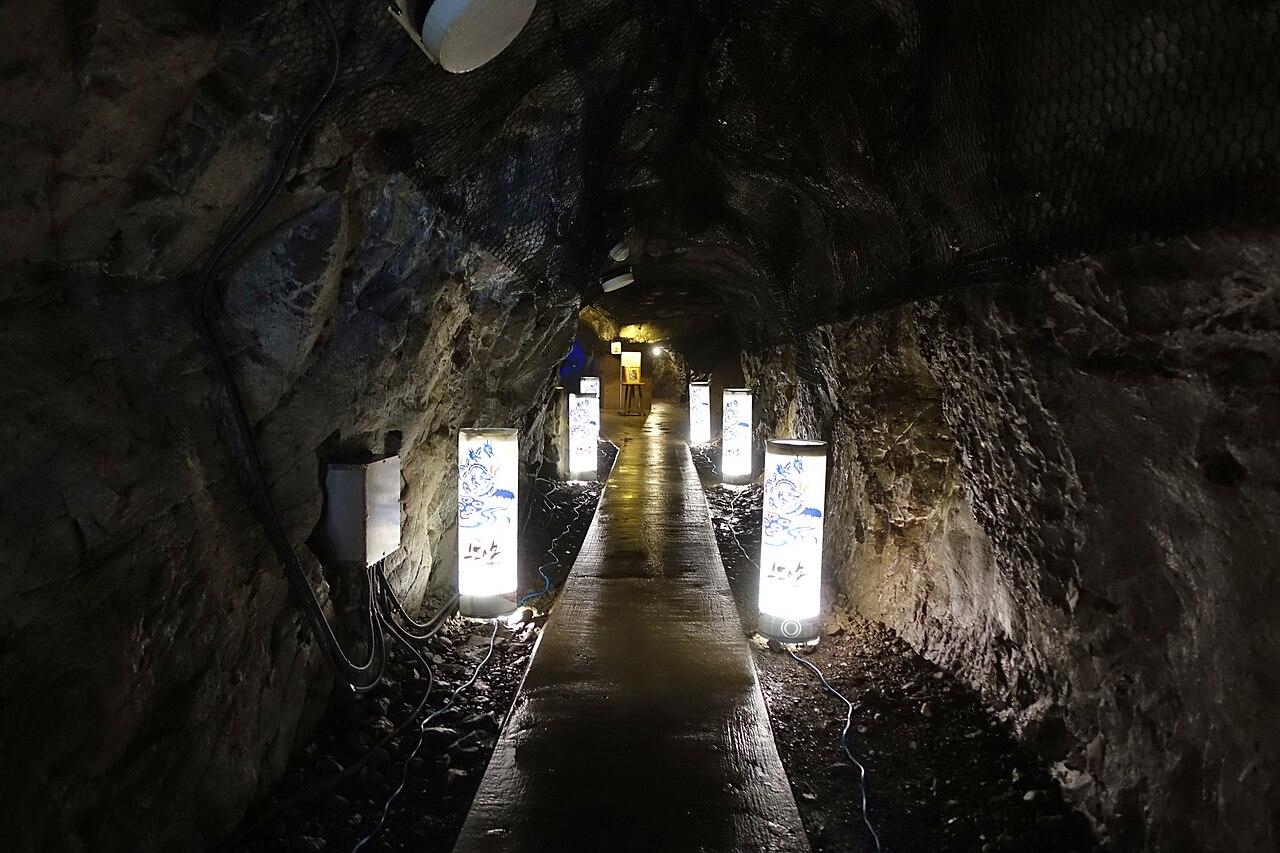
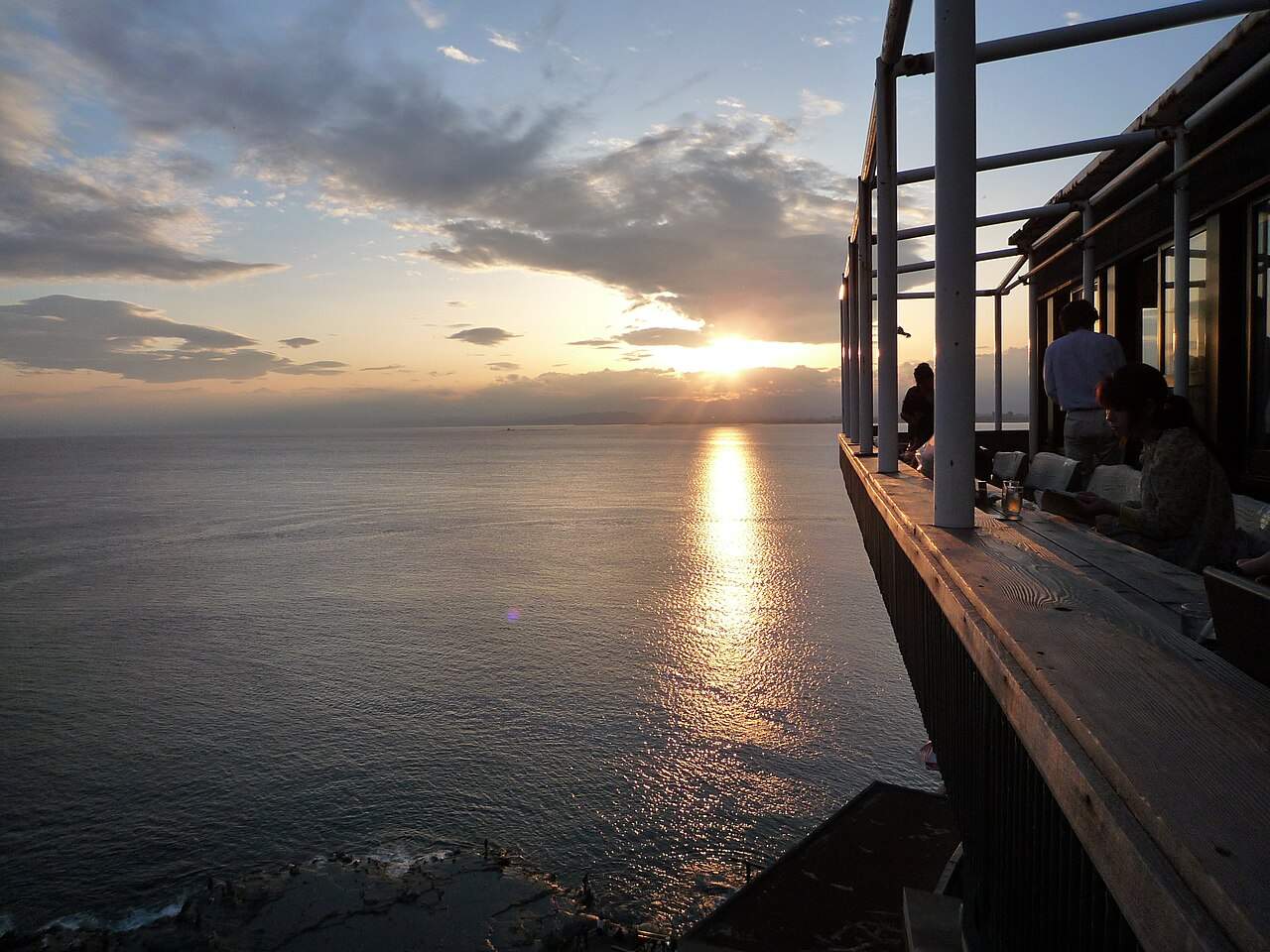
Chigogafuchi (free, and a must): the rock shelf just in front of the Iwaya entrance is the island's deepest, most sea-facing point; at low tide you can walk out onto the rocks facing the open expanse of Sagami Bay. This is one of the best sunset spots on the whole island — and it is free. Sitting on the rocks at dusk as the sun sinks into the sea with Mount Fuji floating on the horizon is the most iconic Enoshima scene there is. On a clear day, I would save the very end of the day for this. As for whether the Escar escalator is worth it: it only goes up (you still walk down), so it is purely trading money for leg-work — buy it (or the Enoshima 1day that includes it) if you dread the climb or have older relatives or kids along; if your legs are fine, skip it and walk, and you will actually see more along the way.
Slam Dunk railroad crossing: how to get there
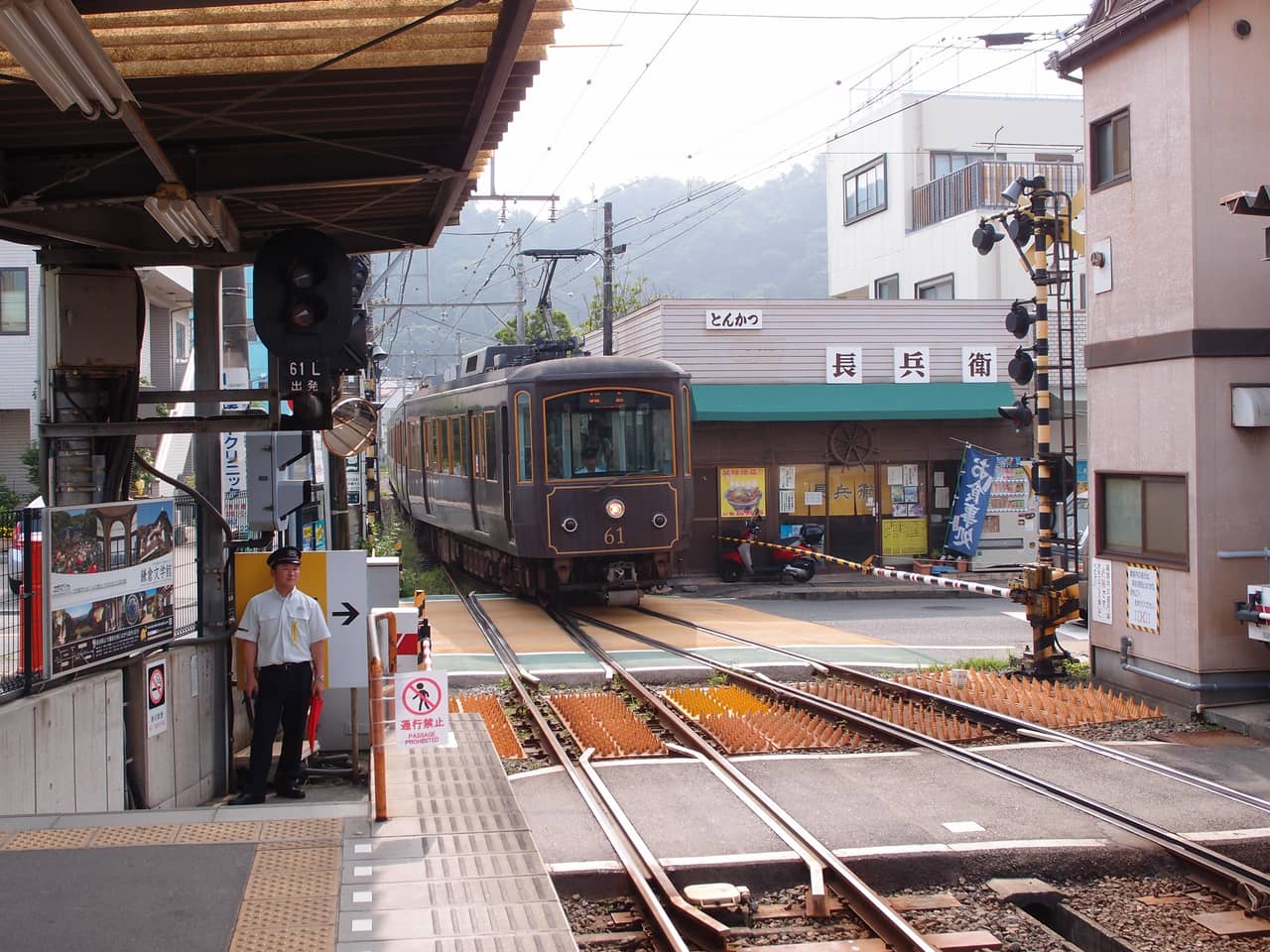
When people think of the Enoshima area, what many actually want to visit is the Kamakurakokomae railroad crossing from Slam Dunk. First, clear up the most common misconception: this crossing is not on Enoshima island — it is beside Enoden's "Kamakurakokomae" station. Ride a few stops from Enoshima Station toward Kamakura, and as you step out of the station it is right there on the sea-facing slope. It is the real-life model for the anime's opening scene, where Sakuragi and Haruko wave to each other across the crossing as a train passes, with the blue Shonan coast behind — the train, the crossing and the sea together are recognizable in a heartbeat.
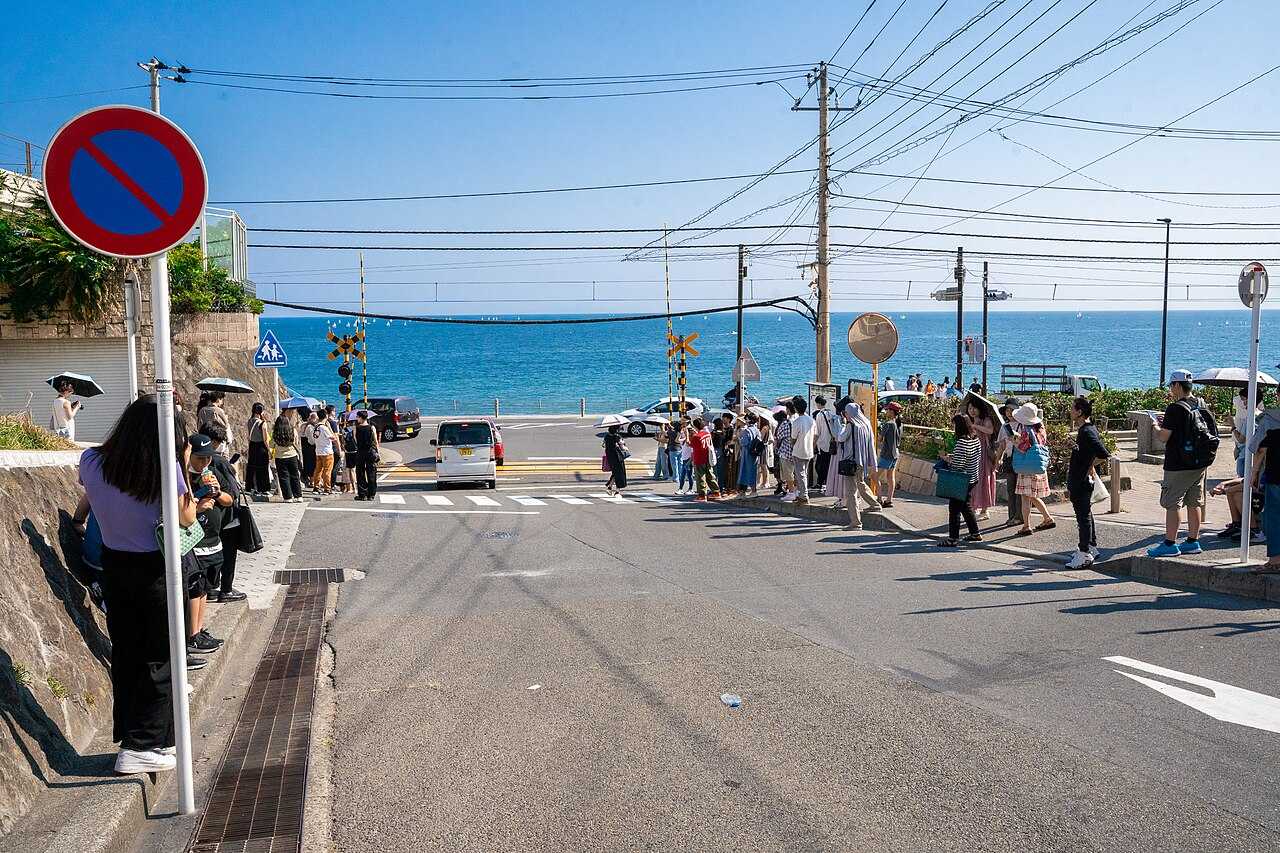
Precisely because it is so famous, crowds and etiquette are the things to flag. For a clean shot, come at dawn — the closer to midday and the weekend afternoon, the more the crossing fills with people holding up phones to wait for a train, often queuing for a good angle. On etiquette, per verification: Kamakura City introduced a "manners ordinance" in 2019 (which, per news reports, carries no penalties), urging visitors not to loiter for photos in the roadway or around the tracks; and in September 2025 the city ran a multi-day crowd-control trial, steering photographers into a designated area and posting city staff to keep order — per city data, about 9,490 people used the designated photo zone over those days. So please: do not stand in the roadway or on the tracks, do not block locals or traffic, do not enter private front gardens, and take your rubbish with you. This is where local residents live their daily lives — enjoy it, but leave them some room.
Worth adding: the Enoshima area is not just Slam Dunk — it is also a key setting for the anime Rascal Does Not Dream of Bunny Girl Senpai, with Katase-Enoshima station, the Enoshima bridge and island scenes appearing again and again, which is part of why Enoshima is listed as No. 68 among Japan's 88 anime pilgrimage sites. If you are here for the anime scenes, it is well worth building the surroundings into your route — the full pilgrimage map is in our 88 anime pilgrimage sites guide.
If you would rather not stitch the transport together yourself, Trip.com runs a one-day tour that bundles the Slam Dunk crossing area, Enoshima and Yokohama's night view with all transfers included: Slam Dunk Kamakura + Enoshima + Yokohama day tour →
What to eat: nama-shirasu-don & veteran shops
Enoshima's signature food is shirasu (whitebait), and above all the nama-shirasu-don — fresh raw whitebait so delicate you can really only eat it at the source, laid glistening over rice with grated ginger, spring onion and shiso, a little soy poured over. It is the thing to eat here. But there is a trap you need to know first: raw shirasu has a closed fishing season.
Per the Shonan Shirasu association (the Kanagawa prefectural shirasu boat-seine fishery council), the fishery is closed every year from January 1 to March 10, and during that window you cannot get it raw at all — shops can only serve boiled (kama-age) shirasu. Even in the open season, if the weather and sea are bad and the boats stay in port, there will be no raw catch that day; most shops post a "nama-shirasu available / sold out" sign by the door. So the conclusion: to eat nama-shirasu-don, avoid January to early March, come on a clear day, and arrive around lunch before it sells out. Here are a few veteran shops, with my take and Google Maps links (hours and prices change — confirm on the spot):
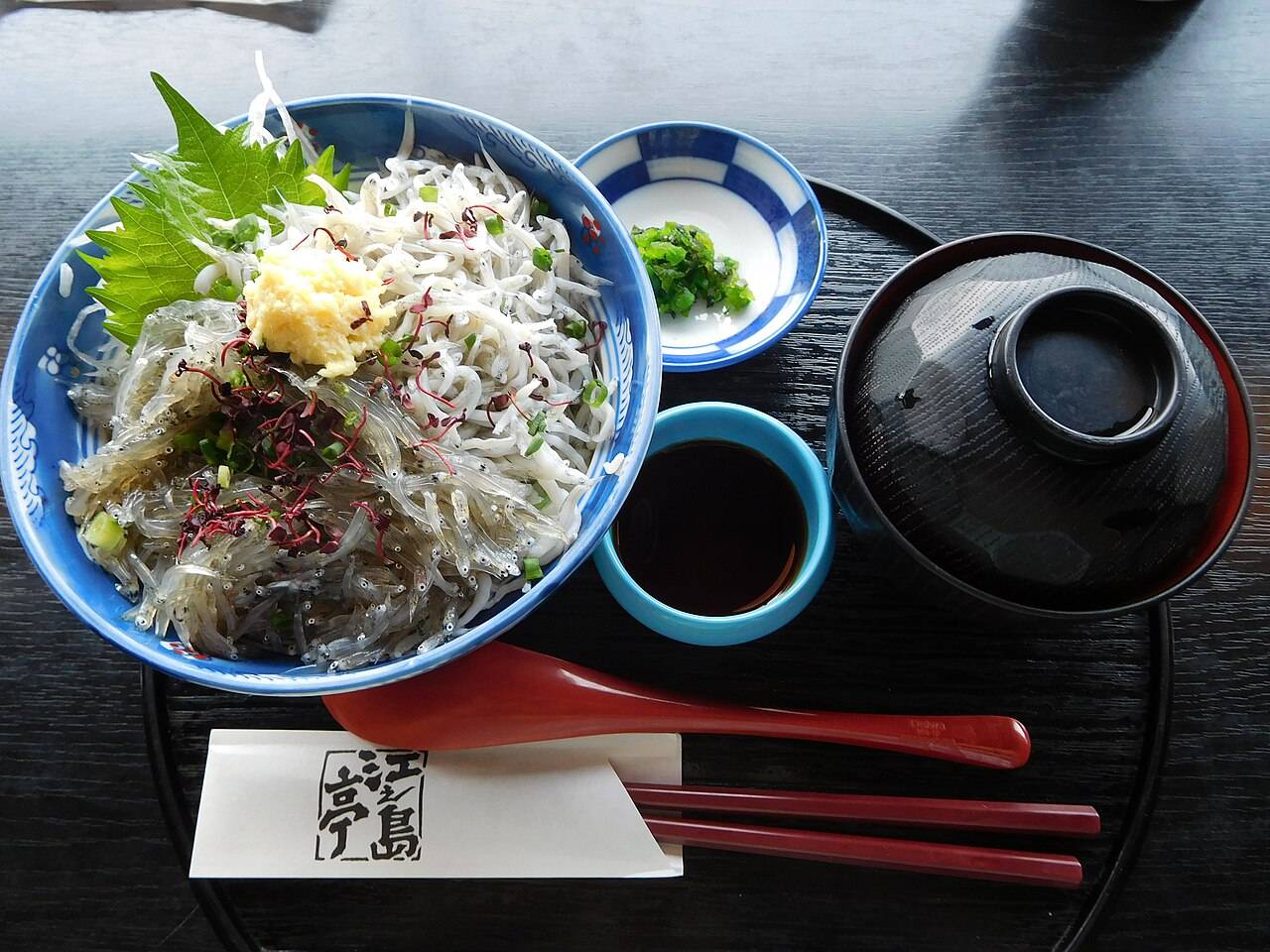
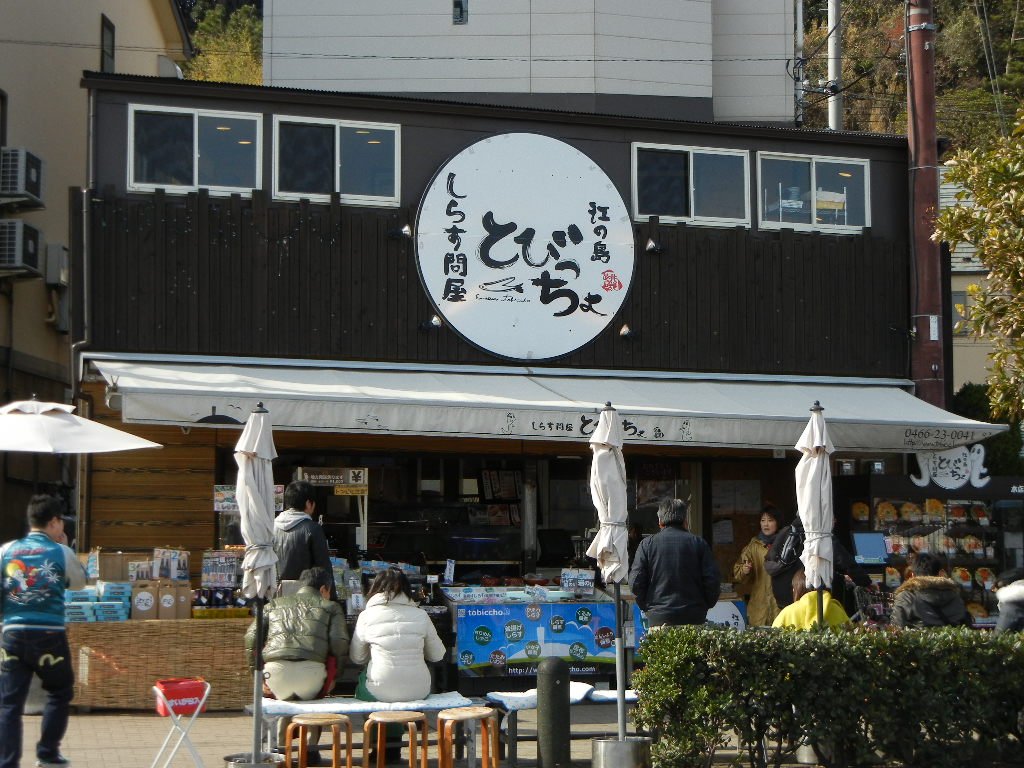
- Tobiccho Honten (とびっちょ 本店) — the definitive Enoshima shirasu-don name, on Benzaiten Nakamise-dori; its two-tone bowl of raw and boiled shirasu is the signature, and it queues hard on weekends, so come early and take a number. (Google Maps)
- Uomitei (魚見亭) — a veteran shop beside Chigogafuchi at the island's deepest point; its big draw is eating a seafood bowl with the sea view right there, especially fine at dusk with the sunset — ideal to slot in after climbing the island, right before the sunset. (Google Maps)
- Kaisaku (貝作) — for freshly grilled turban shells (sazae), clams and other charcoal-grilled seafood; there is plenty beyond shirasu, good for a few people to share over a beer. (Google Maps)
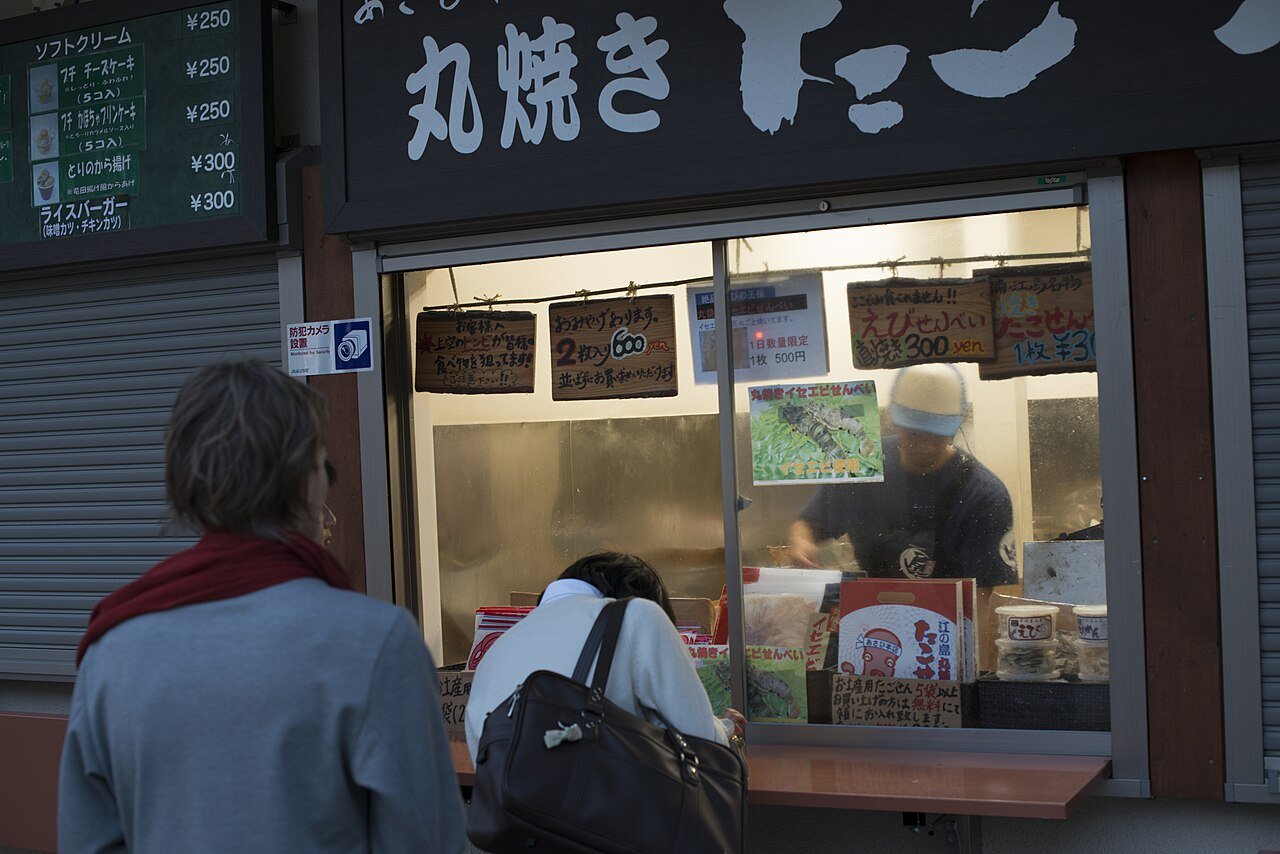
- Asahi Honten (あさひ本店, tako-senbei) — Enoshima's famous "octopus cracker," a whole octopus pressed into one giant thin, crisp cracker; the poster child of Nakamise-dori's queue snacks, best eaten fresh and hot right by the shop, and the longest line on the street is usually this one. (Google Maps)
- Kinokuniya Honten (紀の国屋本店, meoto-manju) — a classic Enoshima souvenir, the red-and-white paired "meoto-manju" filled with red-bean paste, symbolizing marital harmony — a cheerful gift to bring back and share. (Google Maps)
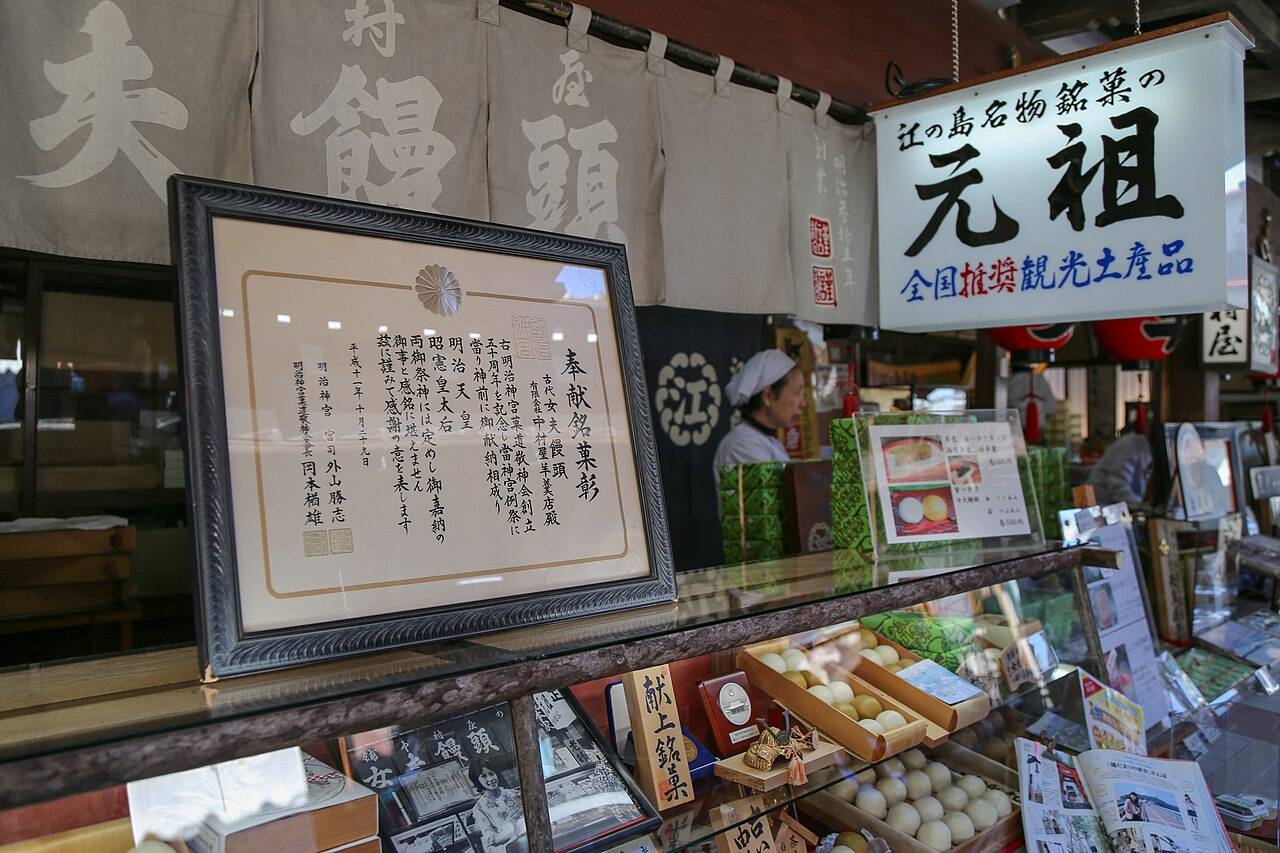
- Nakamuraya Yokanten (中村屋羊羹店) — the veteran shop that originated Enoshima's nori (seaweed) yokan, and the one shop on this list we have actually bought from: the yokan we carried home was good enough to earn this specific call-out. If you want a souvenir that is not another cookie tin, make it this one. (Google Maps)
A half-day route & FAQ
Here is all of the above shaped into one smooth half-day-to-full-day route. It runs on my recommended "Kamakura morning + Enoshima afternoon through sunset" spine, with the Enoshima leg about four hours:
- ~12:30, off at Enoshima Station: finished in Kamakura, ride the Enoden to Enoshima Station, walk the bridge onto the island, and handle lunch on Benzaiten Nakamise-dori (Tobiccho's nama-shirasu-don, or Asahi's octopus cracker, finished by the shopfront before you walk on).
- 13:00–14:30, the three shrine halls: worship at Hetsunomiya, step into the Hoanden to see Benzaiten (viewing ¥200), wash coins at the White Dragon basin, climb to Nakatsunomiya and Okutsunomiya, and swing by the Bell of Dragon Love. Ride the Escar if you dread the climb.
- 14:30–16:00, summit & the back of the island: wander the Samuel Cocking Garden (free in daytime), walk the Iwaya caves (¥500, but first check whether they are closed for sea conditions), and out to Chigogafuchi to face the sea.
- 16:30–sunset, Sea Candle & the golden hour: go up the Sea Candle tower at dusk (¥800, last entry 19:30), or wait on the Chigogafuchi rock shelf for the sunset and the Fuji silhouette — save the best shot for last.
- Heading back: ride the Enoden toward Kamakura; the Slam Dunk crossing at Kamakurakokomae thins out by evening, so you can hop off for one last sea-view shot on the way.
A few flexible reminders to close on: the sunset-and-Fuji shot has the best odds in late autumn to winter (Nov–Feb) when the air is clearest — but that is exactly when the raw-shirasu closed season (Jan 1 – Mar 10) falls, so you cannot have both. Want nama-shirasu, come from mid-March through autumn; chasing the Fuji silhouette, come in winter — decide what you want most from this trip. On a rainy day, Enoshima's slopes and sea views take a big hit, so it is smarter to push Enoshima back and do indoor sights in Kamakura or Tokyo first. For how to fit this Kamakura-and-Enoshima day into the whole Tokyo trip, come back to our 5-day Tokyo trip planner.
One last option for anyone who does not want to plan transfers: travelling with kids or older family, or just after a switch-off day, there is a guided day tour covering the Enoden ride, the Great Buddha, Komachi-dori and Enoshima: Kamakura & Enoshima day tour with Enoden ride →
Frequently Asked Questions
- Q1:Is Enoshima worth visiting?
- Yes — and I would give it a full afternoon rather than a rushed hour. Walking onto the island and worshipping at Enoshima Shrine are both free: the bridge across is free, the shrine grounds are free, and you can climb the island, pray at all three halls and watch the sunset without spending a yen. What you pay for are the individual attractions — the Hoanden shrine viewing (adults ¥200), the Sea Candle observation tower (adults ¥800) and the Iwaya sea-caves (general ¥500) — plus the optional "Escar" paid escalator if you would rather not climb. If you plan to do all three attractions, a combined pass works out cheaper than paying separately (see the passes section below). For how the whole day threads together with Kamakura, see our full Kamakura day trip guide.
- Q2:Which pass should I choose — Enoshima 1day, Noriori-kun, or the Odakyu Free Pass?
- These three are constantly confused, so keep them straight. Noriori-kun (¥800) is a one-day unlimited-ride ticket for the whole Enoden line (with discount perks at 55 shops along it) — good if you are already in Kamakura and will hop on and off between Hase, Kamakurakokomae and Enoshima. The Odakyu "Enoshima-Kamakura Free Pass" bundles a round trip on the Odakyu line with unlimited Enoden rides — ¥810 from Fujisawa, ¥1,640 from Shinjuku — and is the cheapest way to blitz Enoshima straight from central Tokyo. The Enoshima 1day (¥1,550) is not a transport ticket at all — it is an attraction bundle (Escar + Sea Candle + Iwaya + Cocking Garden) that only pays off if you do all of them. My pick: come in by JR to Kamakura, spend the morning there, then use Noriori-kun; go straight from Shinjuku and buy the Odakyu Free Pass. For how the whole Tokyo trip fits together, see our 5-day Tokyo trip planner.
- Q3:Is the Slam Dunk railroad crossing on Enoshima island, and how do I get there?
- This is the single most common mix-up: the Kamakurakokomae crossing is not on Enoshima island. It is beside Enoden's "Kamakurakokomae" station — ride a few stops from Enoshima Station toward Kamakura and it is right there on the sea-facing slope as you leave the station. It is the real-life model for the Slam Dunk opening scene, where Sakuragi and Haruko wave to each other across the tracks, so anime fans treat it as a must-visit. It is quietest at dawn and gets steadily more crowded toward midday, with people lining up to shoot the moment a train passes. On etiquette: Kamakura City introduced a "manners ordinance" in 2019 (no penalties, per news reports), and in September 2025 the city ran a crowd-control trial that steered photographers into a designated area — so do not stand in the roadway or on the tracks, do not block traffic, and do not enter private front gardens. For more anime locations, see our 88 anime pilgrimage sites map.
- Q4:Can I do Kamakura and Enoshima in one day?
- Absolutely — that is exactly how I would build the day, and the two make a great pair because they are so different: Kamakura is the samurai old capital of history and Zen temples, while Enoshima is island shrine-worship and sea views. My order is Kamakura in the morning, Enoshima in the afternoon through sunset. Kamakura's big sights (Tsurugaoka Hachimangu, the Great Buddha) open early and are free or cheap, so go at dawn to beat the first tour groups; then ride the Enoden west and spend the afternoon climbing Enoshima, saving the sunset and the Mount Fuji silhouette for last. Run it the other way and you get no sunset at Enoshima and packed crowds in Kamakura. Budget roughly a morning for Kamakura and about four hours for Enoshima. The Enoden ride between them is part of the fun — it hugs the coast and passes the Slam Dunk crossing on the way.
- Q5:When can I not get raw shirasu (nama-shirasu)?
- Shirasu are tiny whitebait, and the raw version — nama-shirasu-don, served glistening over rice — is Enoshima's signature dish. But it depends on the day's catch, and the one guaranteed gap is the closed fishing season: per the Shonan Shirasu association (the Kanagawa prefectural shirasu boat-seine fishery council), the fishery is closed every year from January 1 to March 10, and during that window shops can only serve boiled (kama-age) shirasu, never raw. Even in the open season, bad weather can keep the boats in port, so shops post a daily "nama-shirasu available / sold out" notice. The takeaway: to eat it raw, avoid January to early March, come on a clear day, and arrive around lunch before it sells out. See the food section below for which veteran shops are worth the wait.
- Q6:Do I need cash on Enoshima?
- Yes — carry cash and small coins. The train and the passes take tap-and-go IC cards (Suica, Pasmo) fine, but on the island itself many small shrine desks, food stalls, souvenir counters and the older shops are cash-first, and you cannot count on cards or QR pay everywhere. This matters most for the goshuin (the calligraphic shrine seal collected in a book) and omikuji paper fortunes at the shrine, and for the street-food stalls on the approach. One honest caveat: the goshuin offering fee is not published on the shrine's official website, so treat it as "confirm at the desk on the day" and keep coins handy. Having some yen in your pocket keeps the whole afternoon frictionless.
Related reading:
Kamakura Day Trip 2026: Great Buddha, Hasedera & Enoden
About 57 minutes from Tokyo on the JR Yokosuka Line — the Great Buddha you can step inside, Hasedera in hydrangea season, and the Enoden out to Enoshima.
Tsurugaoka Hachimangu Guide 2026: Goshuin, Hours & More
Free to visit year-round, 6am–8pm, with the goshuin fee confirmed at the desk — plus the Sept 14–16 grand festival's yabusame archery and Komachi-dori's best snack stops.
Tokyo 5-day itinerary 2026
A clear 5-day plan: Shinjuku base, two zones per day, honest budget.