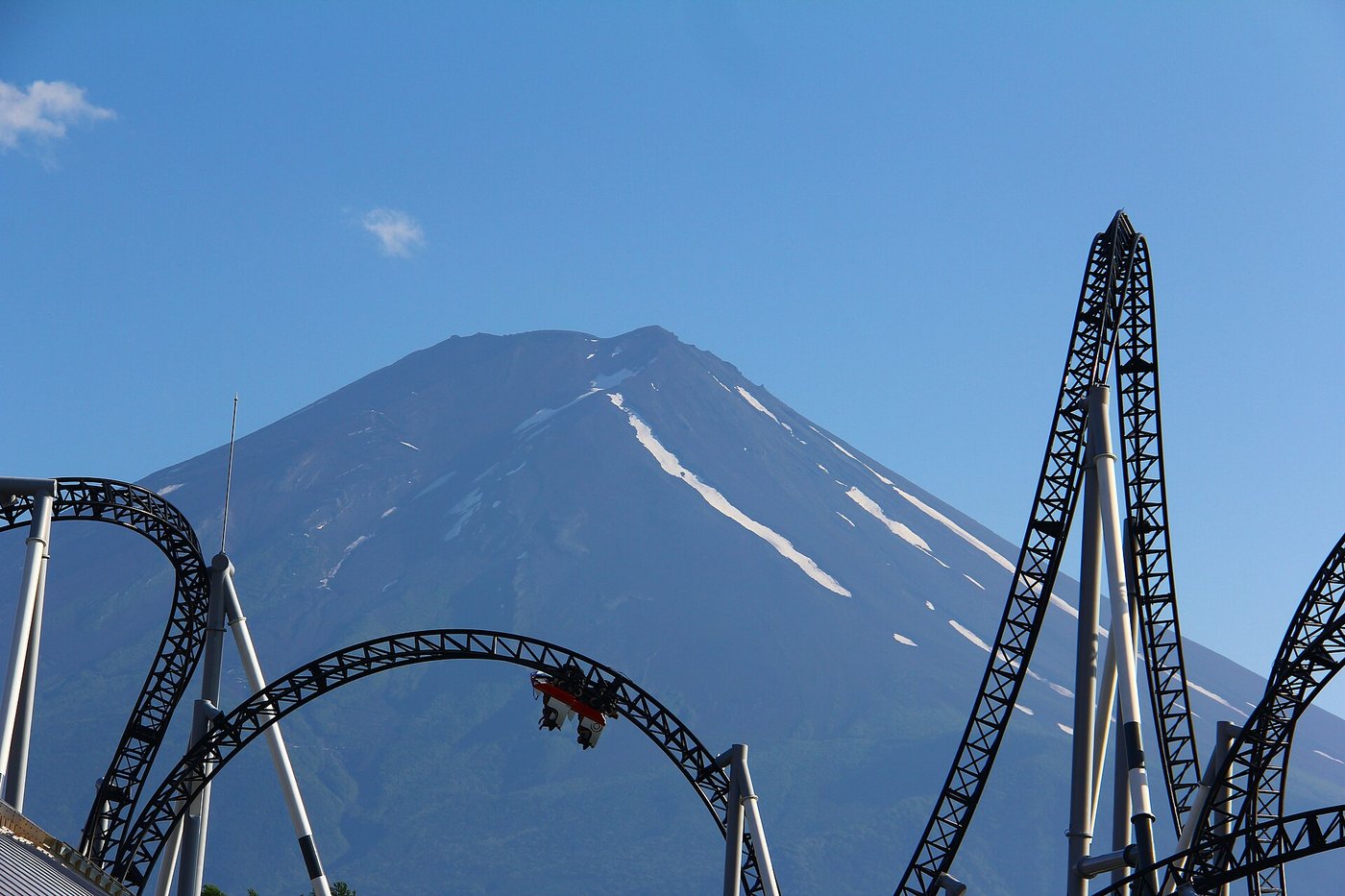
Here's the thing most people get wrong: admission to Fuji-Q Highland is free. Since 2018, this Kawaguchiko-side park — famous for four Guinness-record roller coasters — has run a "free entry plus pay-per-attraction" system, so walking in to photograph the coasters against Mount Fuji or browse the shops costs nothing. What you pay for is riding, and the pricing here comes in three layers, which is exactly where people miscalculate. This guide lays out all three (free entry / single tickets or Free Pass / priority pass), explains the dynamic 1-Day Pass from ¥6,000–7,900 for adults, sets the record straight on the Do-Dodonpa coaster that closed for good in 2024 and the current big four, then adds a ride-height table, the priority-pass and timed-ticket traps, the family-friendly Thomas Land setup, and a straight verdict on whether coaster-averse visitors should buy a Free Pass at all. All prices and rules are official, verified July 2026.
📍 Fuji-Q Highland sits right beside Lake Kawaguchiko. For how to get there from Tokyo (Limited Express Fuji Excursion, highway bus, JR to Fujikyuko Line), see the Tokyo to Mt. Fuji access guide; to pair it with the lake, the Kachi Kachi Ropeway stacks lake and Fuji in one frame, and the free lakeside Fuji shot is at Oishi Park.
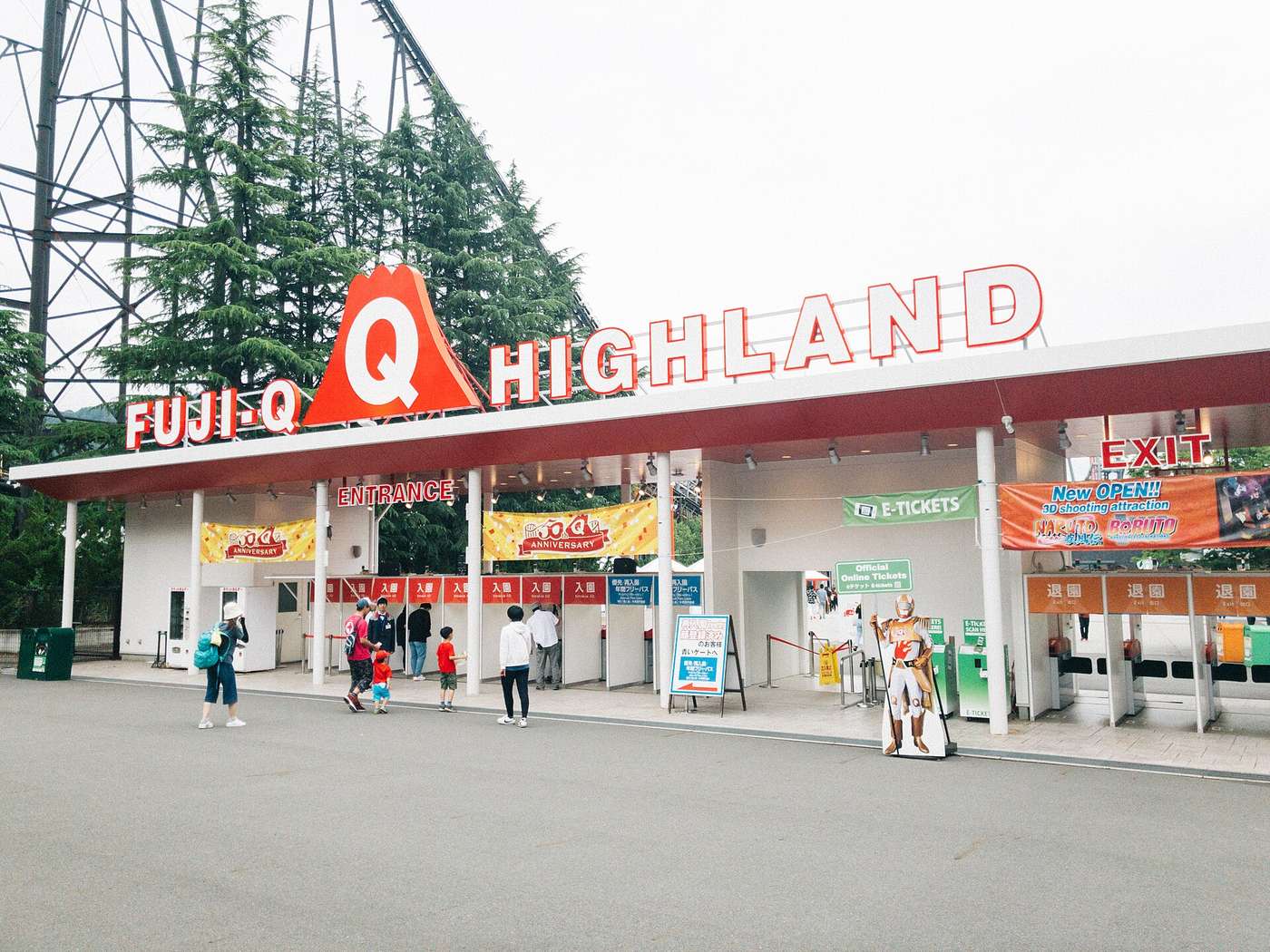
- Entry is free: walk in and take photos for free; you just claim a free entry pass and register your face
- Don't confuse the three layers: free entry → pay to ride (singles or Free Pass) → pay AGAIN for a priority pass to skip lines
- The 1-Day Pass is dynamic: adults from ¥6,000–7,900, up to ¥7,900 on peak dates — don't treat one figure as the price
- Do-Dodonpa is gone: officially retired in March 2024; the big four are now FUJIYAMA / Eejanaika / Takabisha / ZOKKON
- Coaster-averse? Buy singles: a Free Pass only pays off if you'll ride three or more coasters
📖 Table of Contents (click to expand)
- The three pricing layers: free entry, single tickets, priority pass
- Dynamic 1-Day Pass pricing: from ~¥6,000 to ¥7,900
- The big four coasters and Do-Dodonpa's closure
- Ticket comparison: 1-day / afternoon / Thomas / night / singles
- Priority pass and timed-ticket strategy
- Height limits, Thomas Land, and family tickets
- Access: getting to Fuji-Q Highland
- Should you buy a Free Pass? The honest call
- FAQ
The three pricing layers: free entry, single tickets, priority pass
What trips people up at Fuji-Q isn't the prices themselves — it's not grasping how many layers you pay for. Break it into three and, once you hold this order, none of the ticket types will confuse you:
- Layer 1 — Entry: free. The official line is: "Even if you don't ride any thrill attractions, admission to the park is free." You need a free entry pass, obtained two ways: register your face in advance the day before, or grab a QR code on the day and register at the gate. Just walking in to take photos, browse the shops, or eat costs nothing at this layer.
- Layer 2 — Riding: single tickets or a Free Pass, pick one. To actually ride, you pay. Either buy each ride separately (the four big coasters are a flat ¥2,000 each) or buy a 1-Day Free Pass for unlimited rides on eligible attractions. The operator's advice: three or more attractions and the Free Pass is cheaper.
- Layer 3 — Skipping lines: a priority pass (an extra purchase). This is the most-misunderstood layer. A Free Pass does NOT mean skipping queues — to jump the long lines at popular coasters you buy a separate priority pass, a third charge on top of Layer 2.
Why spell this out first? Because so many people assume "a Free Pass means smooth sailing," then find on arrival that popular rides still run 60–90 minutes and the priority pass costs extra. Lock in the three layers and you can actually work out what this trip will cost. If you'd rather not queue at the ticket counter in peak season and prefer to pay by card in advance, Trip.com sells Fuji-Q tickets you can show at the gate: Fuji-Q Highland tickets on Trip.com →
Dynamic 1-Day Pass pricing: from ~¥6,000 to ¥7,900
Start with the most useful ticket, the 1-Day Free Pass. Key concept: Fuji-Q's 1-Day Pass is explicitly "dynamic priced" — it floats with the date, and July through September each have their own monthly price-list PDF. So any guide telling you the pass "is ¥X" is off; the right move is to anchor the floor and the ceiling.
Per the official ticket page, verified July 2026, an adult (18–64) 1-Day Pass runs ¥6,000–7,900 — that is, from about ¥6,000, rising to ¥7,900 on the pricier days. Other tiers: junior/senior-high students ¥5,500–7,400, elementary students ¥4,400–5,100, and toddlers (age 1+) plus seniors (65+) both at ¥2,100–2,600.
My advice: budget with the "from ~¥6,000, up to ¥7,900" range rather than fixing on a middle number. Weekdays and off-season sit near the floor; weekends, holidays, and summer peak days climb. If you need the exact price for a specific day, checking that month's official price-list PDF before you go is the only reliable way — this guide won't invent a single-day figure.
The big four coasters and Do-Dodonpa's closure
First, a point where old guides will actively mislead you: Do-Dodonpa can no longer be ridden. It was suspended after an August 2021 launch-acceleration accident, and following a Ministry of Land, Infrastructure and Transport investigation, Fujikyuko officially announced its closure on March 13, 2024 — not "under maintenance," not "paused," but retired, with the revival plan cancelled. The stated reason: no way could be established to fully eliminate the risk and guarantee safe operation. Including its predecessor, it had served roughly 9.3 million riders since 2001. So if you see any article still pushing "ride the world's fastest-launching Dodonpa," that's outdated.
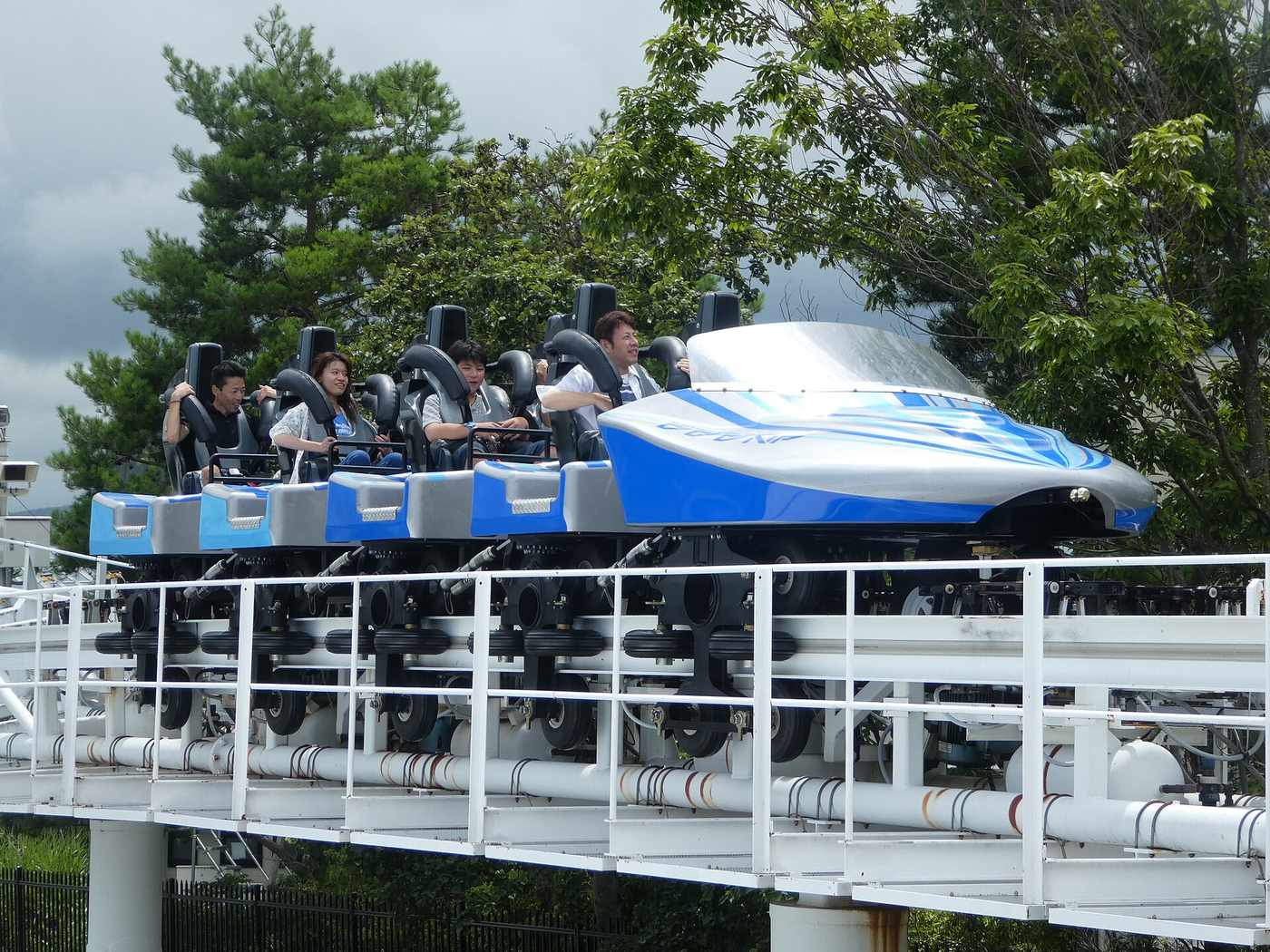
The current signature coasters on the official attractions page are four: FUJIYAMA, Eejanaika, Takabisha, and ZOKKON. ZOKKON, a motorcycle-style linear-launch coaster that opened on July 20, 2023, is widely regarded as the "new fourth" filling Dodonpa's slot (that "new four" framing follows the official current lineup and media reports; the operator doesn't literally declare "ZOKKON is the fourth," so I'll keep it to "widely paired as such"). Here are all four with their height gates, age limits, and single-ride prices in one table:
| Coaster | Height limit | Age limit | Single ride |
|---|---|---|---|
| FUJIYAMA (opened 1996) | 110cm+ (110–130cm needs a junior-high-or-older companion) | up to 64 (preschoolers need a companion) | ¥2,000 |
| Eejanaika | 125–200cm | up to 54 (preschoolers need a companion) | ¥2,000 |
| Takabisha (2011, 121° Guinness drop) | 125cm+ | up to 54 | ¥2,000 |
| ZOKKON (opened 2023, motorcycle-style) | 120–195cm | up to 64 | ¥2,000 |
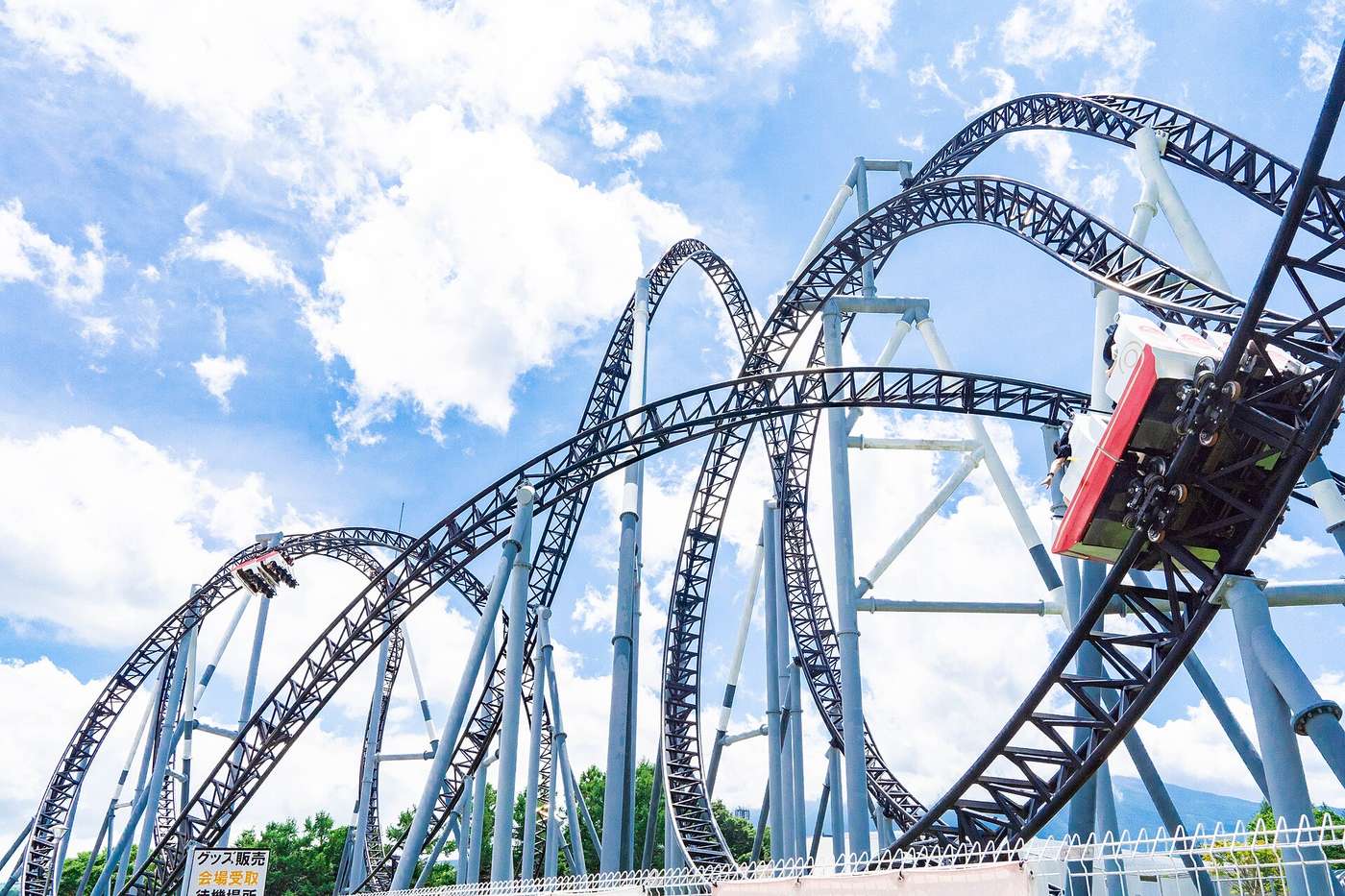
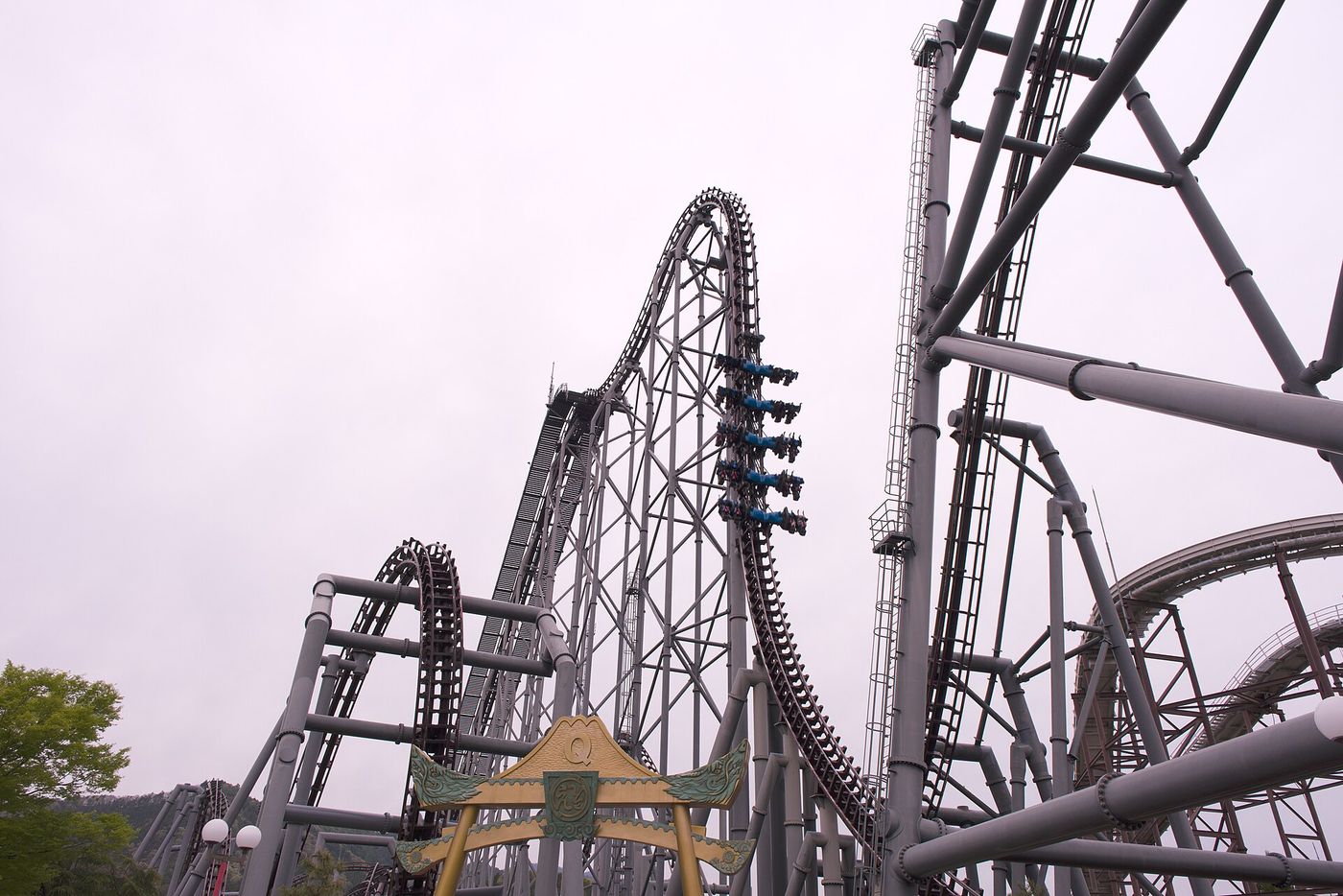
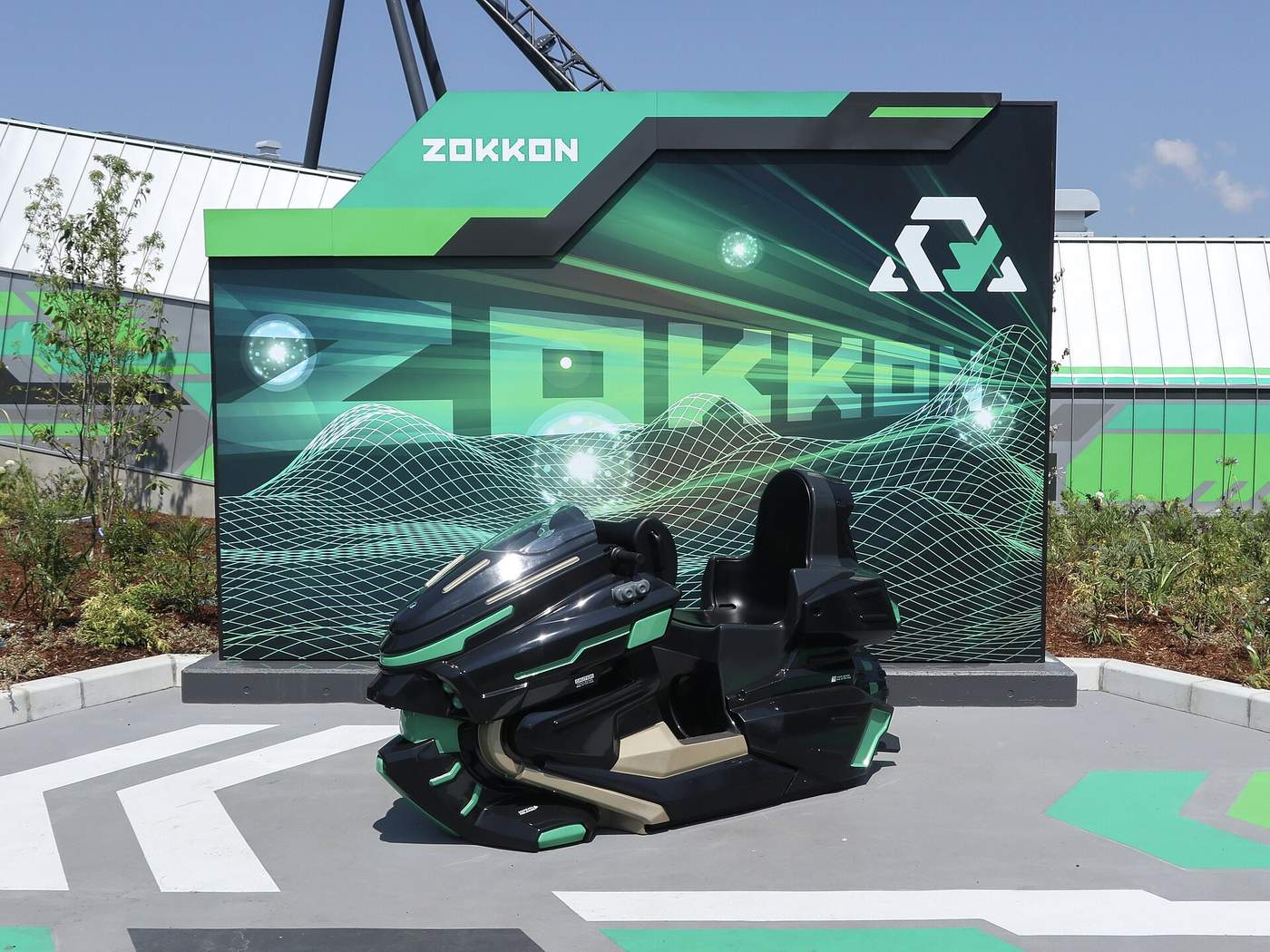
You can see FUJIYAMA is the most lenient (rideable from 110cm with a companion), while Eejanaika and Takabisha are the strictest (from 125cm). Families with children should measure height first — a few centimeters is the difference between "can ride" and "wasted trip," which is why I put the height gates in a table for parents to check before setting out.
Ticket comparison: 1-day / afternoon / Thomas / night / singles
Fuji-Q has more ticket types than most parks, so here's a horizontal comparison — match yourself by "what time you arrive, how much you'll ride, whether you have kids" (adult prices, floating with dynamic pricing, ranges verified July 2026):
| Ticket | Adult price (range) | When / scope | Best for |
|---|---|---|---|
| 1-Day Free Pass | ¥6,000–7,900 | All day, unlimited eligible rides | Three-plus rides, a full day in the park |
| Afternoon Pass | ¥4,100–6,000 | Unlimited from 13:00 | Morning at the lake, park in the afternoon |
| Thomas Land Pass | ¥3,000–3,500 | 12 Thomas Land rides, unlimited | Families with toddlers, no thrill rides |
| Sunset ★ Night Pass | ¥3,700 / 4,000 (two tiers) | From 16:00, only on days open past 19:00, sold on-site from 16:00 only | Evening drop-in, night photos |
| Single-ride ticket | Big four ¥2,000 each | Pay per ride | One or two rides, coaster-averse |
| Annual Pass | ¥26,300 (fixed) | Whole year | Local regulars |
A few real-world notes: the Afternoon Pass floor of ¥4,100 is meaningfully below the day pass, so if you spend the morning on the Kawaguchiko lakeshore (Oishi Park, the ropeway) and only enter Fuji-Q after lunch, it's a sensible saving. The Sunset ★ Night Pass has strings attached — it only exists on days the park stays open past 19:00, and it's sold on-site from 16:00 only, not online in advance, so anyone chasing it must confirm that day's hours first. The full single-ticket bands are: the big four and Attack on Titan ¥2,000; the flight theater, Naruto 3D, pizza pendulum, etc. around ¥1,500; the ninja training hall, phantom theater, etc. ¥1,000; the big Ferris wheel, swing ride, etc. ¥800. The haunted "Super Scary Labyrinth" is a special case: ¥4,000 with a 1-day/afternoon pass, ¥8,000 without, up to 4 people per group.
Two online-only tickets are also worth knowing: the "1-Day Pass with priority-entry perk" lets you enter before opening time and ride the big coasters in a priority window, plus the online-only Annual Pass. The park's wording is "online only", not "official site only" — you genuinely cannot buy them at the gate, but online is not limited to the park's own site: the priority-entry version is sold on KKday, Klook and Trip.com too.
Three channels carry the day pass. Know each one's trap before you tap the price on the card:
- KKday: the headline "from" price on the product card and search results is the Afternoon Pass (entry from 13:00), not the day pass — open the options and switch to "1-Day Pass" to see that fare. It is a two-step e-ticket: scan the QR at the gate machine for a physical ticket, then complete face recognition. It excludes the third-layer extras — the Haunted Hospital, FUJIYAMA-Walk/Slider, the Ninja Village theatre — matching the three-layer structure above. Fuji-Q Highland tickets on KKday →
- Klook: one of its four options is a "3-attraction pass + round-trip bus", which is not a Free Pass — three rides only. For unlimited riding, pick the 1-Day Pass. The early-entry version is here too. Fuji-Q Highland tickets on Klook →
- Trip.com: its attraction page lists the age-banded fares and the direct-bus bundles in one place. Fuji-Q 1-Day Pass on Trip.com →
One last note, following the same "don't treat a mid-range figure as a fixed rate" rule: the park prices by the day, while the channels' day passes are mostly open-dated vouchers valid around 90 days. Those are two different pricing models, so any figure you see is only that day's. Check the option terms at checkout for peak-date surcharges or blackout dates.
Priority pass and timed-ticket strategy
This section is the guide's key trap-avoidance, and where most people stumble on arrival. As covered above, the priority pass is the third pricing layer, separate from the Free Pass — its job is to let you skip the long lines at popular attractions. It covers these 12:
- FUJIYAMA, ZOKKON, Takabisha, Eejanaika (the four big coasters)
- Pizza pendulum, Nagashimasuka surf-flume, Tekkotsu-banchō, Tentekomai
- The flight theater, Attack on Titan THE RIDE, Naruto 3D shooting dojo, the Fortress of Despair
Purchase rules: buy online or via the app from 18:00 three days before your visit, up to 60 minutes before your chosen time slot on the day; on-site ticket machines and info counters also sell them, but daily stock is limited and advance sales selling out can mean none left on the day. You can buy up to 10 at once. Honest disclosure here: the operator only states the priority-pass price "varies by ride and season" and publishes no fixed price list, so this guide won't quote a set figure — go by the screen when you buy. Two more warnings: even with a pass you may still wait up to about 30 minutes (the operator says so), and priority passes can't be changed once purchased.
A subtler trap is the "timed ticket." Three attractions — the Super Scary Labyrinth, FUJIYAMA Walk, and FUJIYAMA Slider — cannot be entered with an unlimited pass alone; you must separately buy a timed ticket (also on sale online from 18:00 three days ahead). In other words, even with a Free Pass, these three need their own ticket handling. Plenty of people assume a Free Pass rides everything and then hit a wall at these three — knowing in advance lets you plan around it.
Height limits, Thomas Land, and family tickets
Fuji-Q isn't only a thrill mecca — it's genuinely family-friendly, but only if you know how to match tickets. The four-coaster height table above already applies (FUJIYAMA from 110cm, the rest 120–125cm); small children can't ride the thrill attractions, so those families should put budget into the two family zones below rather than forcing an adult Free Pass.
Thomas Land — free to enter, ¥500 per ride. Key concept: Thomas Land is free to enter, on the same pay-per-attraction basis as the main park, with 12 rides at ¥500 each (since July 2024). Doing many of them, buy the Thomas Land Pass (adult/junior-high ¥3,000–3,500, elementary ¥2,500–2,800, toddler/senior ¥2,000–2,300) for unlimited rides; only three or four rides and paying ¥500 each is cheaper. The zone has restaurants, cafés, shops, a nursing room, and children's toilets, so restocking with small kids is easy.
Lisa & Gaspard Town — also free to enter. This zone is likewise free to enter: the Lisa & Gaspard museum is free, while the mirror maze and carousel are ¥800 each. It's a French-picture-book-styled photo area, good for slowing down with children.
Maternity ticket and eligible attractions. Fuji-Q offers a 1-Day maternity ticket at ¥2,100–2,600 (bought on-site, present a maternal-and-child handbook), with an official list of 7 usable attractions: two Thomas Land rides, the big Ferris wheel, the flight theater's wheelchair area, the Attack on Titan wheelchair area, the ninja photo studio, and the FUJIYAMA Tower Sky Deck. There's also a disability-handbook 1-Day ticket (on-site only) at roughly ¥3,000–4,000 for adults, with one companion (junior-high or older) getting the same discount. These are all handled on-site, so have your documents ready before you go.
Access: getting to Fuji-Q Highland
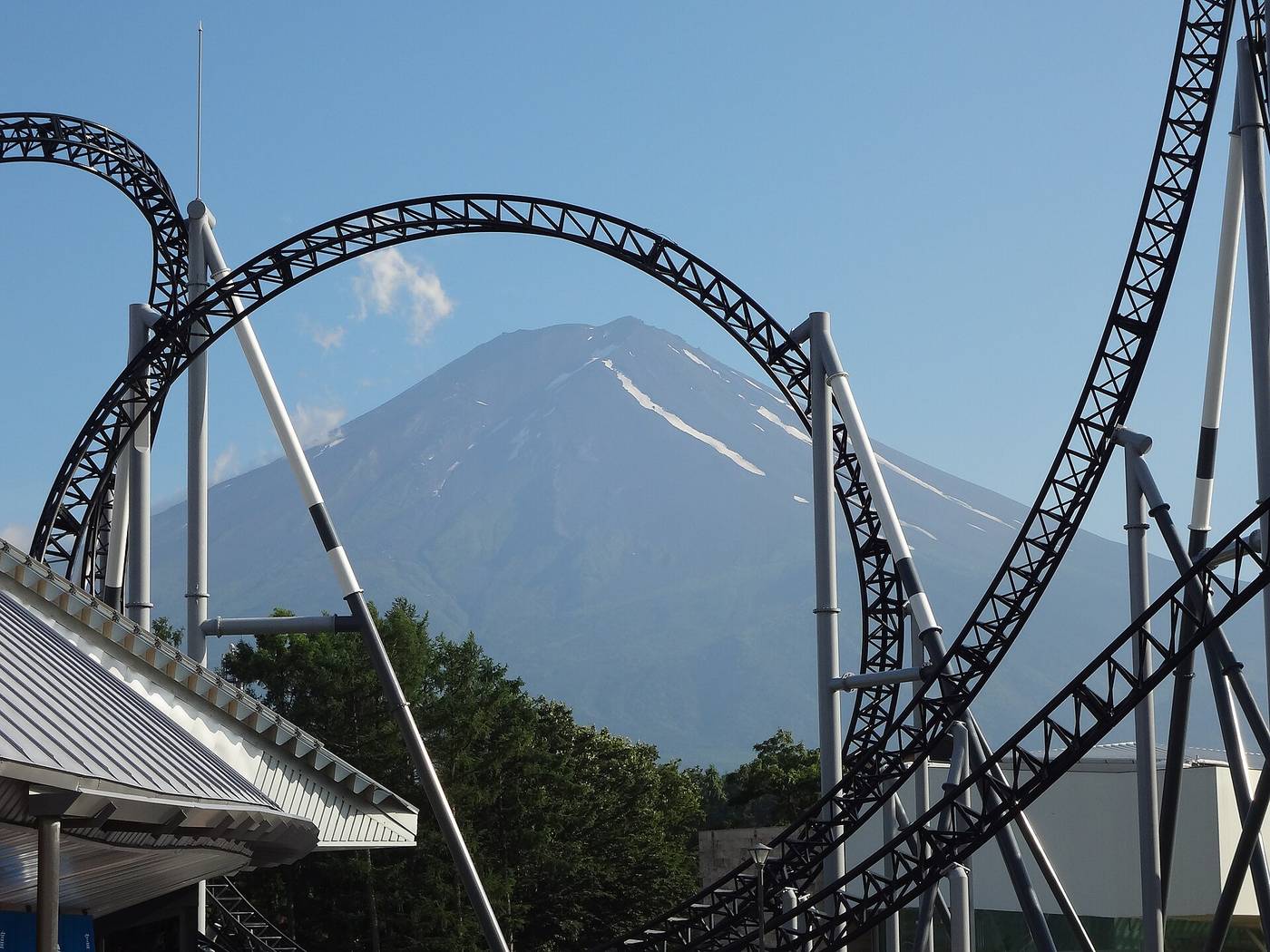
Fuji-Q Highland is in Fujiyoshida, Yamanashi, right beside Lake Kawaguchiko. Two main routes from Tokyo:
- Shinjuku highway bus (the most direct): the Shinjuku ⇄ Fuji-Q Highland / Kawaguchiko–Yamanakako line, about ¥2,000–2,200 one way, around 1 hour 40 minutes, with frequent departures (every 10 minutes to 1 hour, about 49 runs a day both ways), Suica/PASMO accepted. It's jointly run by Fujikyu Bus, Fuji Express, and Keio Bus, and it drops you at the park gate with no transfers — the easiest option with luggage or kids.
- Rail (Fujikyuko Line): transfer from the JR Chuo Line at Otsuki to the Fujikyuko Line; Otsuki to Fuji-Q Highland Station is about 45–64 minutes (by train type, including the Fuji Excursion limited express). From Tokyo you can take the direct Fuji Excursion. Fuji-Q Highland Station is right beside the park — step off and you're there.
One very useful routing detail: Fuji-Q Highland Station and Kawaguchiko Station are on the same Fujikyuko Line, just one stop apart, about 2–3 minutes by train. That means Fuji-Q pairs effortlessly with the Kawaguchiko sights for one day — do Fuji-Q in the morning, then a 2-minute train ride to the lakeshore to take the Kachi Kachi Ropeway and stack lake and Fuji in one frame, or to Oishi Park for a free Fuji composition, all entirely doable. For the full comparison and booking of Tokyo-end options (limited express, highway bus, JR transfer), see the Tokyo to Mt. Fuji access guide.
One note on hours: Fuji-Q's opening hours swing a lot by date — weekdays are often 09:00–17:00, while weekends and peak days may extend to 18:00, 19:00, or even 20:00, and the operator explicitly states hours "may change without notice depending on crowds." Anyone planning night rides or chasing the night pass must check that month's official calendar before setting out rather than treating one day's hours as year-round.
Should you buy a Free Pass? The honest call
Here's the clear call, no "depends on you" filler. The core question is one line: how many coasters will you ride back to back? Three is the dividing line.
Coaster-averse, or only one or two rides — buy single tickets. A Free Pass's value rides entirely on "unlimited thrill rides," at ~¥6,000+ for adults; if you'll only do the flight theater (¥1,500), the big Ferris wheel (¥800), plus a couple of gentle rides, singles usually add up to under ¥3,000, and forcing a Free Pass wastes half the money. These visitors clearly save with single tickets — spend the difference on the park's signature Takabisha baked-chocolate souvenir instead, more worthwhile.
Three or more coasters — buy the Free Pass. The four big coasters are ¥2,000 each, so three rides is ¥6,000, already at the Free Pass floor, and the fourth or fifth ride is pure gain. If you love thrill rides and plan to spend all day in the park, a Free Pass is nearly a must-buy. Want to skip the long lines at popular rides on top of that? Then weigh adding a priority pass (remember, that's the third layer, a separate cost).
Families with small children — skip the adult Free Pass, center it on Thomas Land. If your children are too short for the big four, a Free Pass means nothing to them; adults taking turns on singles while the kids ride Thomas Land (¥500 each or a Thomas Land Pass) is the cheapest, most sensible setup for these families.
And "is it worth a dedicated trip"? If you're already coming to the Fuji / Kawaguchiko area and love coasters, Fuji-Q is absolutely worth a day — four world-record coasters, free entry so you can soak up the atmosphere at zero cost, and an easy pairing with the Kawaguchiko sights. But if you're coaster-averse and not traveling with kids, frankly Fuji-Q isn't a must — you'd be better giving the time to lakeside Oishi Park or the Kachi Kachi Ropeway. To skip arranging your own transport and string Fuji-Q with Kawaguchiko into one day, Trip.com also has ticket-inclusive options to compare: Fuji-Q Highland tickets & sets on Trip.com →
Frequently Asked Questions
- Q1:How much does Fuji-Q Highland cost, and is there an admission fee?
- Admission itself is free — this is what most people get wrong. Since 2018 Fuji-Q has run a "free entry plus pay-per-attraction" system, so you can walk in, take photos of the coasters against Mount Fuji, and browse without paying (you just claim a free entry pass and do a quick face registration). You only pay to ride: either buy single-ride tickets — the four big coasters are a flat ¥2,000 each — or buy a 1-Day Free Pass for unlimited rides on eligible attractions, roughly ¥6,000 and up, rising to ¥7,900 on peak dates. The operator's own rule of thumb: three or more attractions and the Free Pass wins; one or two rides and single tickets are cheaper.
- Q2:Can I still ride Do-Dodonpa? What are the four big coasters now?
- No. Do-Dodonpa was suspended after an August 2021 launch-acceleration accident, and following a Ministry of Land, Infrastructure and Transport investigation, Fujikyuko officially announced its permanent closure on March 13, 2024 — not "under maintenance" but retired for good, because a way to fully eliminate the risk and guarantee safe operation could not be established. Including its predecessor, it had served roughly 9.3 million riders since 2001. So any guide still pitching "ride the world's fastest-launching Dodonpa" is out of date. The current signature coasters on the official attractions page are FUJIYAMA, Eejanaika, Takabisha, and ZOKKON; ZOKKON, a motorcycle-style coaster that opened in July 2023, is widely seen as the "new fourth" replacing Dodonpa.
- Q3:What is the priority pass? Does a Free Pass mean I skip the lines?
- This is the most-confused point. Fuji-Q has three pricing layers: free entry → pay to ride via single tickets or a Free Pass → pay AGAIN for a priority pass to skip queues. So a Free Pass does not mean no waiting — the priority pass is a separate third charge. It covers 12 popular attractions and goes on sale online and via the app from 18:00 three days before your visit, with limited on-site machines too; you can buy up to 10 at once and daily stock is capped. The operator only says the price "varies by ride and season" and publishes no fixed price list, so this guide won't quote a priority-pass price — check the screen when you buy. Note you may still wait up to about 30 minutes even with a pass, and purchases can't be changed.
- Q4:Is Fuji-Q good for kids? Do I need a separate ticket for Thomas Land?
- Very much so — Fuji-Q is more family-friendly than its coaster reputation suggests. Both Thomas Land and Lisa & Gaspard Town are free to enter, on the same pay-per-attraction basis as the main park: Thomas Land has 12 rides at ¥500 each (since July 2024), so if you'll do many, the Thomas Land Pass (adult/junior-high ¥3,000–3,500) is better value; the Lisa & Gaspard museum is free, and the mirror maze and carousel are ¥800 each. Just note the four big coasters have height gates (FUJIYAMA from 110cm, the rest 120–125cm), so small children can't ride the thrill attractions — for those families, budgeting for Thomas Land beats buying an adult Free Pass.
- Q5:If I don't like roller coasters, should I even buy a Free Pass?
- Honestly, most people who dislike coasters shouldn't. A Free Pass is worth it only for unlimited thrill rides, and it's ~¥6,000+ for adults; if you'll only do the flight theater (¥1,500), the big Ferris wheel (¥800), or a couple of gentle rides, single tickets usually add up to under ¥3,000 — clearly cheaper. Flip it around: ride three or more coasters and the Free Pass starts paying off, since the four big coasters are ¥2,000 each, so three rides = ¥6,000, already at the Free Pass floor, and more rides mean more savings. The test is simple: honestly count how many thrill rides you'll actually do — three is the break-even line, below it buy singles, above it buy the Free Pass.
Read next
Kachi Kachi Ropeway: fares, passes & is it worth it?
3 minutes up Mt. Tenjo for the lake-and-Fuji frame — fares, four official passes, the ¥500 swing, and the 40-min hike down.
Oishi Park: lavender & kokia calendar, access guide
The free Fuji-and-flowers spot on Kawaguchiko — official bloom calendar, lavender and kokia timing, and access.
Tokyo to Mt. Fuji day trip guide
Kawaguchiko, Oshino Hakkai, Arakurayama — bus times, prices, must-knows.
📊 See the 2026 Price Index (JR Pass, DPA, eSIM, Airport Transport) →