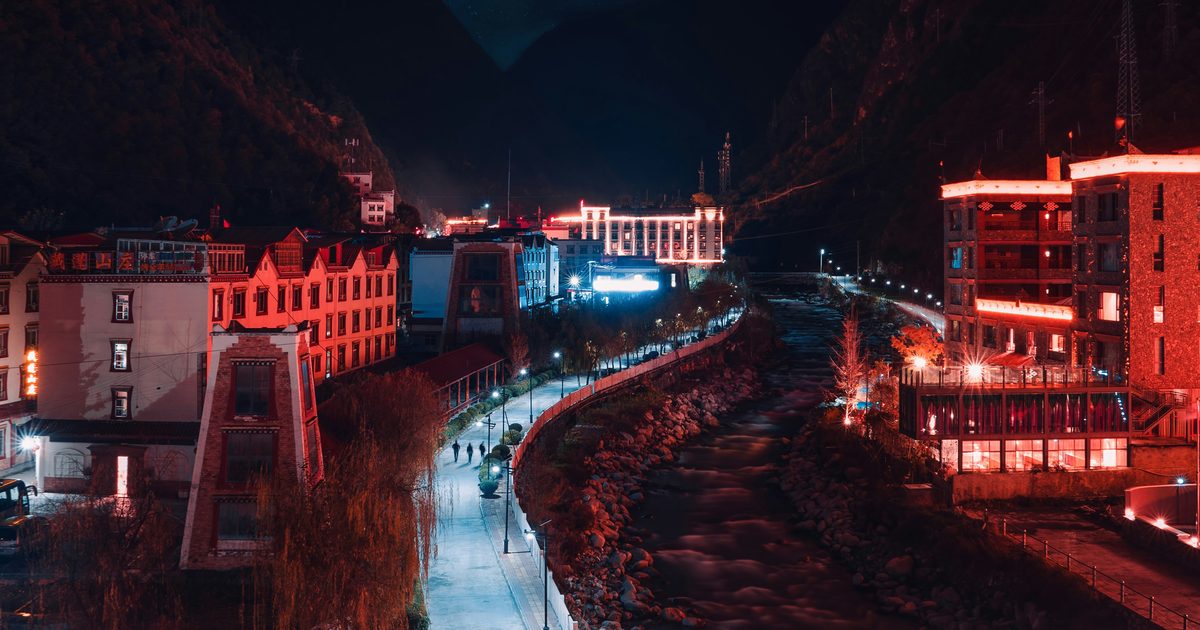
Ginzan Onsen's actual product isn't the wooden street by day. It's the hours after dark, when the gas lamps along the river are lit and the village turns into a 1920s Taisho-era scene. Winter sunset in Yamagata falls around 16:28, so darkness isn't the hard part — the return leg is. The last bus from Ginzan to Oishida departs 18:21 and arrives 18:57, too late to reach Tokyo the same night. This guide uses the Obanazawa City bus timetable, all 13 ryokan's official rate sheets, and Tohoku tourism-association visitor data to settle the day-trip-vs-overnight question, plus a copyable 24-hour overnight schedule and a four-stage booking playbook.
- Verdict: If your visit centres on Ginzan itself, overnight is essentially mandatory. The day-trip math fails on every dimension except cost.
- The hidden overnight bonus: after 16:30 the buses leave and the street drops to about 250 people — the two-hour window of empty, gaslit Taisho-era atmosphere that ryokan guests own exclusively.
- Total transit from Tokyo: 3.5 hours each way (Tsubasa shinkansen to Oishida, then 40-minute Obanazawa City bus). Reserved seat plus bus runs ¥13,260 per person.
- Booking strategy: 13 ryokan, ~220 beds total in the village, 4-6 months ahead minimum. Notoya for the Spirited-Away aesthetic, Fujiya for Kengo Kuma design, Kosenkaku for value.
- Two-person, one-night budget: roughly ¥110,000 from Tokyo, including transit, ryokan with two meals, food and souvenirs. Pure day trip saves about ¥35,000 but is the wrong question.
- Best windows: late January through mid-February for the snow + gas-lamp signature shot; mid-October to mid-November for foliage. Avoid May Golden Week and August summer-holiday peak.
Table of Contents (click to expand)
- 5-second decision table: who should overnight, who shouldn't go at all
- Ginzan's crowd rhythm: four windows nobody talks about
- Transit from Tokyo, Sendai and Yamagata, with real numbers
- The day-trip itinerary: timetable and 5 pitfalls
- The overnight itinerary: 14:30 arrival to 10:00 checkout
- 13 ryokan compared: the three you should target first
- A four-stage booking strategy (including cancellation hunting)
- Budget breakdown across three scenarios
- Chained itineraries: Sendai, Yamadera, Zao
- Month-by-month verdict: when to actually go
- Five mistakes Ginzan visitors most commonly make
- 14-day pre-departure checklist
5-second decision table: who should overnight, who shouldn't go at all
Whether Ginzan is worth the overnight depends sharply on traveller profile. The mapping below draws on the bus timetable's constraints, the 220-bed ryokan inventory, and the most consistent traveller reports from forums and reviews:
| Traveller profile | Recommendation | Reason |
|---|---|---|
| First Japan trip, 7-day itinerary | Skip Ginzan; go to Hakone or Izu instead | 3.5 hours each way is too much friction; Tokyo-region onsen towns offer similar Taisho atmosphere closer to base |
| 3+ Japan trips, hunting unusual angles | Overnight (strongly) | 80% of Ginzan's value lives between dusk and 21:00; without an overnight you are watching the clock for the last bus |
| Tohoku 3-5 day loop (Sendai/Yamagata/Zao) | Overnight, slot in | Geography lines up neatly with Yamadera, Zao and Kaminoyama; the detour cost is near zero |
| Photographer chasing magazine-cover shots | Overnight, possibly two nights | Three windows you must shoot: blue hour around sunset (about 16:00–16:40 in late December), the lit street after dark, empty street after 21:30 — impossible without staying |
| Travelling with elders or small kids | Overnight at a street-side ryokan | Round-trip in one day is exhausting; staying lets you walk the street at your own pace and ride the in-house elevator |
| Backpacker / tight budget | Day trip, or sleep in Oishida instead | Ryokan from ¥22,000/person is steep; an Oishida business hotel at ¥4,500/person plus a long day in Ginzan is the budget hack |
The unwritten rule under this table: what you are paying for is not the onsen, it is the late-Taisho time-slip — and that time-slip only manifests after dark. By daylight Ginzan is just a narrow tourist street with a curry-bread bakery, indistinguishable from countless other shopping arcades in Japan.
Ginzan's crowd rhythm: four windows nobody talks about
Ginzan's crowd flow is set by two timetables: the Hanagasa Bus route service's arrival and departure pattern, and the 13 ryokan's 15:00 check-in / 10:00 check-out cycle. Overlay them and four distinct windows emerge:
① 11:00–14:30 — bus-tour peak (avoid if you have a choice)
This is when Ginzan looks like a market. Tour coaches from Sendai, Yamagata and Zao all unload in this window, joining day-trippers who arrived from Tokyo on the morning Tsubasa. The main street is visibly crowded and the photo queue at the small bridge in front of Notoya can hit 30 minutes. If you are doing a day trip, this is the only Ginzan you will ever see.
② 14:30–16:30 — the cooling-off window
Return buses depart at 13:25, 14:55 and 16:35, with a final service at 18:21. Street density drops noticeably. You can finally photograph clean stretches of the street, but the daylight is still too flat for the magazine shot — the magic needs the gas-lamp glow.
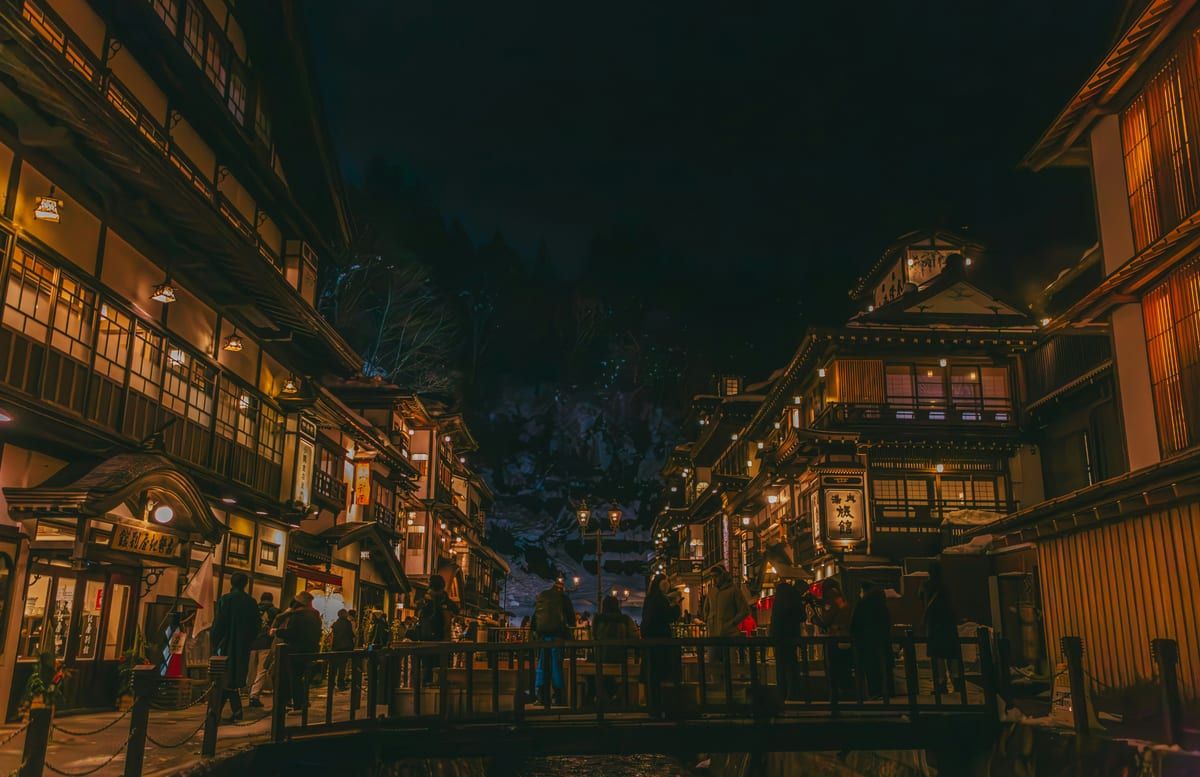
③ 16:30–21:00 — overnight-guest-only golden hours (the actual product)
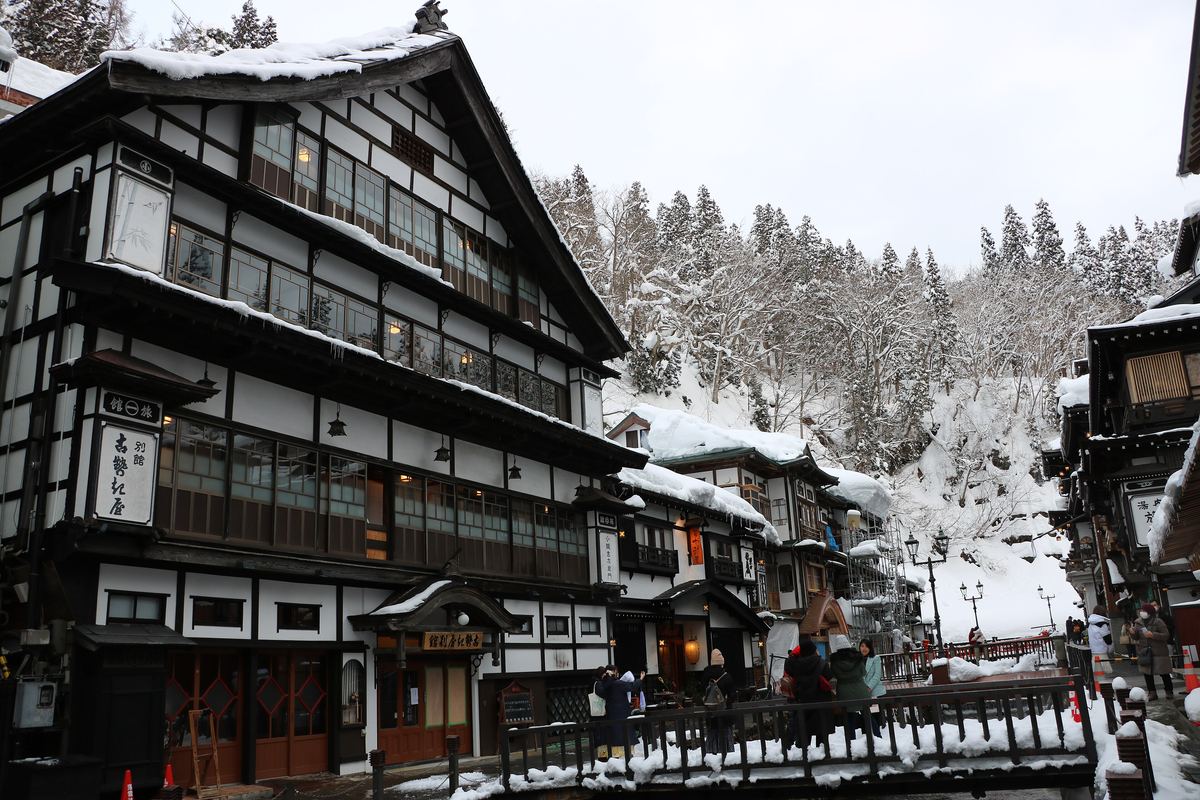
This is what Ginzan is famous for. Day-trippers are gone. About 220 ryokan guests are loose on the street. The operator says the street begins to dim an hour before sunset; once the gas lamps are lit the village turns into the 1920s. No official lighting time has ever been published, so watch the sky rather than the clock. This is the photo you have seen on Pinterest, in the Asahi travel magazines, on Lonely Planet. Foot traffic stays sparse, and every composition stays reachable.
④ 21:00–08:30 next day — late-night and dawn (the secret window)
After dinner around 21:00 most ryokan close their main doors and the street holds only a handful of night-walkers. If snow is falling, gas-lamp light reflecting off icicles dripping from wooden eaves becomes a near-sacred photographic situation. The 06:30–08:30 dawn window before breakfast is the other secret: same empty street, with clean morning light that solves the low-light problems of evening shooting. River reflections, snow-laden roofs, no people. If you know one thing about photographing Ginzan, it is this — book a sunrise alarm.
Transit from Tokyo, Sendai and Yamagata, with real numbers
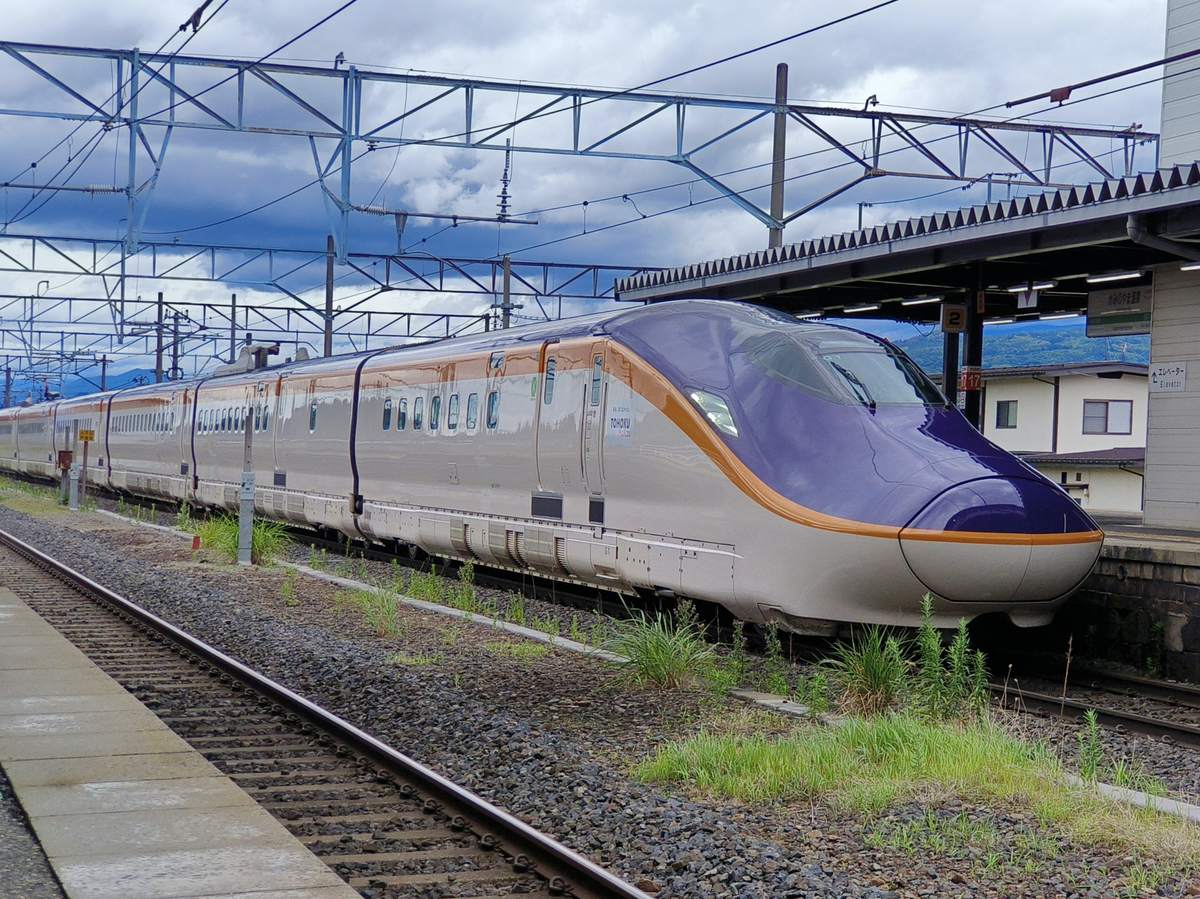
Ginzan has no train station of its own. The nearest JR stop is Oishida, and every route ends with a 40-minute local bus into the valley.
From Tokyo (the standard route)
- Tokyo Station → Oishida via Yamagata Shinkansen Tsubasa: ~3 hours, ¥12,540 unreserved or ¥13,260 reserved
- Oishida → Ginzan Onsen via Hanagasa Bus local service (Ginzan-onsen-yuki): about 36 minutes, ¥1,000 one way, cash only (no IC cards, ¥1,000 notes only for change)
- Total: 3h40, about ¥13,260 per person each way
- Tsubasa runs roughly hourly — check the timetable, there is no fallback if you miss your train
From Sendai (essential for any Tohoku loop)
- Sendai → Oishida via JR Senzan Line to Yamagata (1h20) plus Ou Main Line to Oishida (45 min): 2h05, ¥3,080
- Total: about ¥4,100 per person including the local bus into Ginzan
- Sendai hotels are dramatically cheaper than ryokan; a Sendai night before Ginzan compresses the budget significantly
From Yamagata (the closest big station)
- Yamagata → Oishida via Ou Main Line: 45 minutes, ¥860
- Total: 1h25, ¥1,580 per person
- Best paired with Zao skiing, Yamadera hiking, Yonezawa beef
Does the JR Pass make sense?
Yes, conditionally. The pass itself has changed, though. The JR East Pass (Tohoku Area) was withdrawn on March 13, 2026 and folded into a single JR EAST PASS covering all of JR East (5 days ¥35,000, 10 days ¥50,000). The Tsubasa is still covered. Note the validity is consecutive days, not a flexible window. If your itinerary includes Sendai, Aomori, Morioka or other Tohoku stops, the Pass beats individual tickets. For a pure Tokyo–Ginzan round trip, point-to-point tickets are cheaper. Our full breakdown of when the Pass earns its price lives in the JR Pass 2026 complete guide — see the Tohoku route section.
The day-trip itinerary: timetable and 5 pitfalls
The standard Tokyo day-trip schedule, built from the Yamagata Shinkansen Tsubasa timetable and the Hanagasa Bus route timetable:
- 06:30 Meet at Tokyo Station, grab ekiben breakfast
- 07:08 Tsubasa 137 departs
- 10:09 Arrive Oishida (note: for unreserved seats, queue 30 minutes early)
- 10:25 Local bus to Ginzan Onsen
- 11:05 Arrive Ginzan
- 11:15–13:00 Walk the street, photograph Notoya, lunch (curry bread + soba)
- 13:00–14:00 Hike out to Shirogane Falls (15 min one-way, snow boots required in winter)
- 14:00–14:30 Coffee, souvenir shopping
- 14:55 Bus back to Oishida (this one does not connect to the Tokyo-bound Yamagata Shinkansen; take the 13:25 if you must catch it)
- 15:31 Arrive Oishida (one vending machine, no food)
- 15:51 Tsubasa 144 back to Tokyo
- 19:04 Arrive Tokyo Station
Total day cost: ¥13,260 × 2 + local bus ¥1,000 × 4 + ¥2,500 food = roughly ¥33,000 for two people.
Want to stay until after dark? Only the 16:35 and the 18:21 remain, and the 18:21 puts you in Oishida at 18:57 — too late for Tokyo. If you want the gas lamps but not a Ginzan ryokan, sleep in Oishida or Yamagata City and return the next day.
Five day-trip pitfalls
- Missing the timetable for the last bus. Afternoon departures are 13:25, 14:55, 16:35 and a final 18:21, so a miss costs you over an hour. The published timetable only runs to 24 October 2026; the winter schedule is issued separately, so re-check before you travel.
- The crowd makes photography impossible. The bridge in front of Notoya has a 30-minute queue; the experience density rivals Disneyland.
- You miss the gas lamps. Anyone catching a same-day train back to Tokyo leaves while it is still light.
- Oishida Station has nothing. One vending machine. Plan to eat in Ginzan or on the train; do not assume the station has options.
- Shirogane Falls path ices over. December–March, the boardwalk is hazardous without microspikes — every winter someone falls.
The overnight itinerary: 14:30 arrival to 10:00 checkout
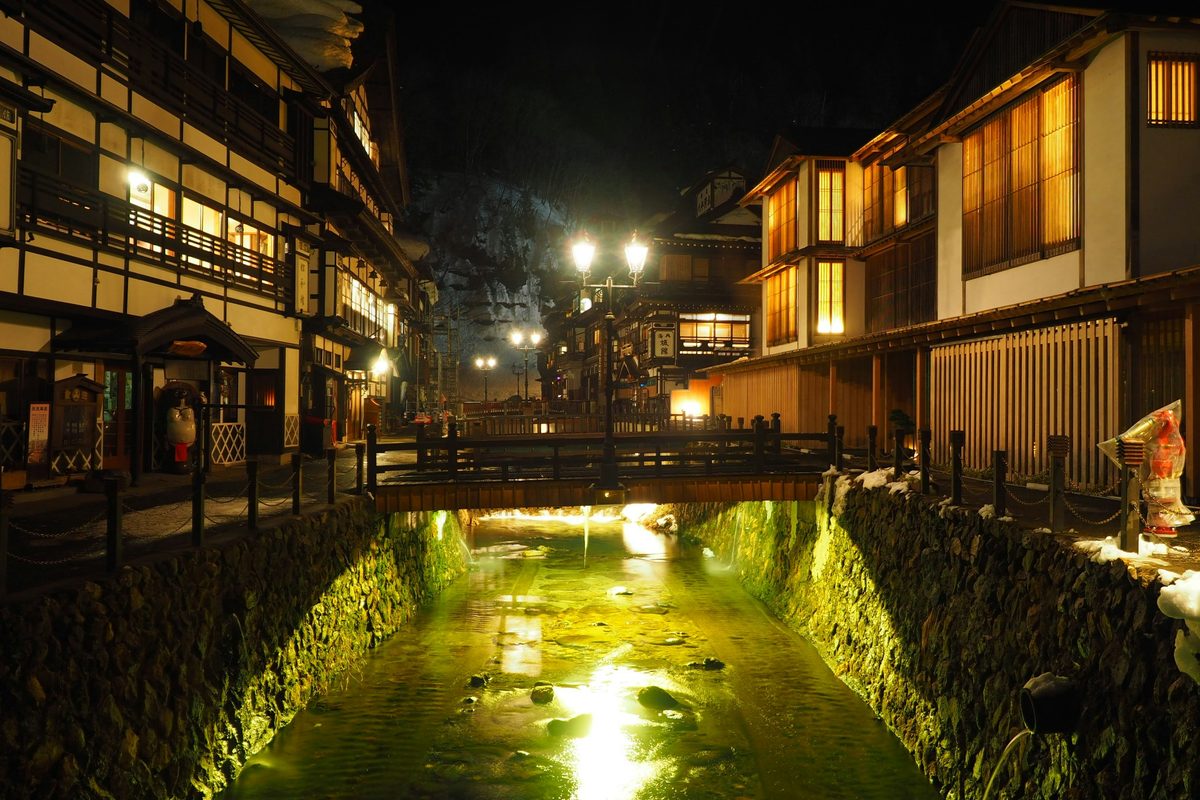
The version that justifies the trip — daytime is the warm-up, night and dawn are the main course. The schedule below is built around 15:00 ryokan check-in / 10:00 checkout, the standard 18:00–19:30 ryokan dinner window, and a late-December sunset of 16:28 in Yamagata:
- 09:00 Tokyo Station, ekiben and coffee
- 09:36 Tsubasa 139 departs
- 12:39 Arrive Oishida; lunch at Matsumi sushi by the station (¥1,800)
- 14:00 Bus to Ginzan
- 14:40 Arrive Ginzan; drop bags at Notoya (check-in opens 15:00)
- 14:40–15:20 Walk the daytime version of the street, buy curry bread, get the white-snow shots while it is still light
- 15:20–15:40 Check in, change into yukata, confirm dinner timing
- 15:40–16:30 Out for the blue-hour shot (sunset 16:28 in late December, 16:59 at the end of January — shift later by month)
- 16:30 onward The gas lamps are lit; the stretch before full darkness shoots best
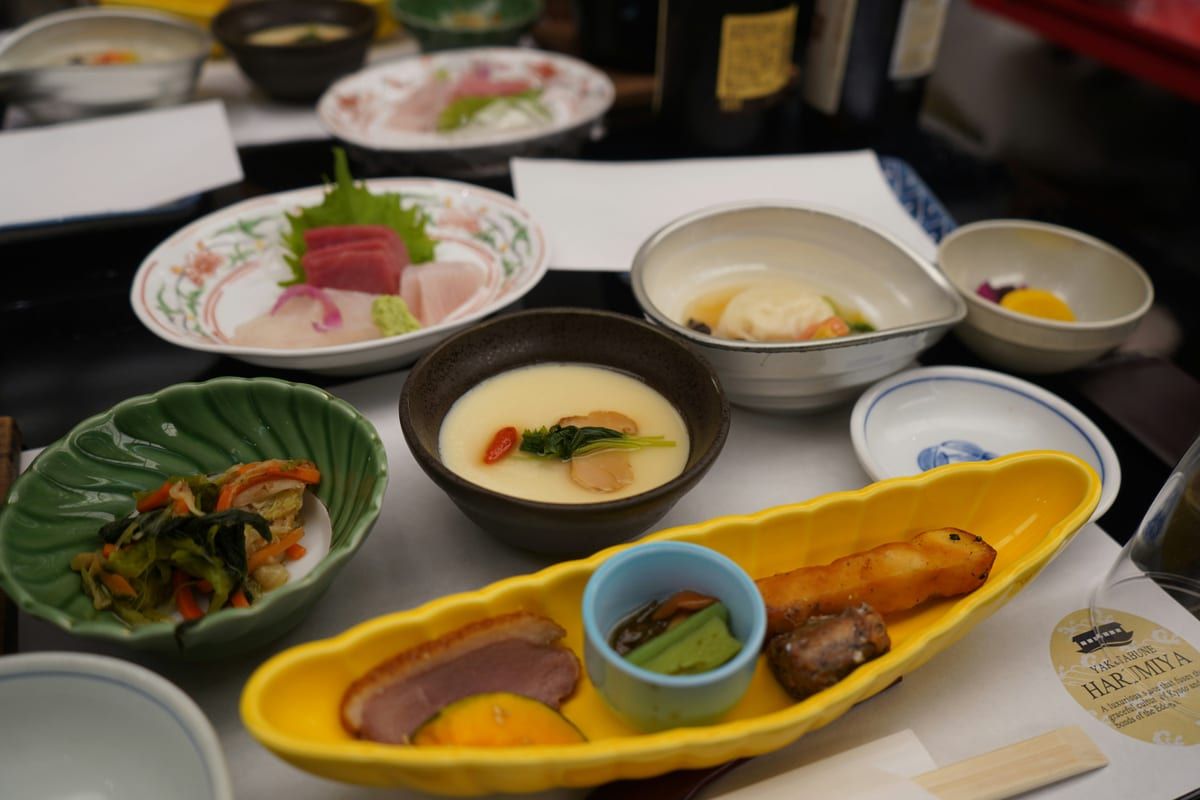
- 18:00–19:30 Ryokan dinner: 11-course Yamagata-beef kaiseki
- 19:30–21:00 Out again for the post-dinner empty-street walk
- 21:00–22:30 Back to the ryokan for the private kashikiri-buro bath
- 06:30 Sunrise alarm; dawn photography on a near-empty street
- 08:00–09:30 Ryokan breakfast: country-style spread with local rice
- 10:00 Check out; 10:50 bus to Oishida
- 13:55 Back at Tokyo Station
The principle here: treat daytime as warm-up, treat night and dawn as the main course. Compared to the day-trip version, the overnight delivers an extra 14 hours of "no-tourist Ginzan" — which is what you came for whether or not you knew it. If it's your first time in a traditional ryokan and you're unsure of the main-bath and kaiseki etiquette, the bathing and ryokan sections of our Japan etiquette guide will save you some awkwardness.
13 ryokan compared: the three you should target first
The 200-metre street is lined with 13 traditional inns (plus 2 day-only bathhouses). Every property is a century or more old. The three with the best demand-to-price ratio:
📌 Comparing Ginzan against Japan's other top-tier onsen ryokans — Hakone Gora Kadan (Michelin 3 Key), Yufuin Tamanoyu, Kusatsu Naraya, Kurokawa Shinmeikan — and why Notoya is Ginzan's "heritage tier" pick versus Kosekiya Bekkan as the "first-timer friendly" alternative, see 5 Best Japanese Onsen Ryokans 2026. If you have tattoos and worry about being turned away from a Ginzan inn's main bath, prioritise a room with a private kashikiri bath — the workarounds are in our onsen with tattoos guide.
| Ryokan | Founded | Rooms | Per person, 2 meals | Why it stands out | Trade-offs |
|---|---|---|---|---|---|
| Notoya | 1892 | 15 | ¥28,000–42,000 | The Spirited Away–coded inn; iconic four-storey wooden tower | Hardest to book; highest price; older interiors |
| Fujiya | 1923 | 8 | ¥45,000–65,000 | Kengo Kuma 2006 redesign; eight private bath rooms; design-led | Premium pricing; not kid-friendly |
| Kosenkaku | 1895 | 9 | ¥22,000–32,000 | Best kote-e (traditional plaster relief) facade; strongest value | No elevator; you carry bags up 2-3 flights |
The other ten ryokan (Eizawa Heihachi, Takimikan, Ginzanso, Izunohana and others) sit in similar price and experience bands; the differences are mostly aesthetic. Our progression suggestion: first visit, target Notoya for the iconic value; second visit, switch to Fujiya for the design experience; on a tight budget, choose Kosenkaku — the price-to-atmosphere ratio is the best in the village.
The fastest path to a booking
Most Ginzan ryokan accept reservations only via their own websites or Japanese OTAs, so international travellers usually hit a wall. The most accessible approach is to start with Trip.com's Obanazawa City hotel and ryokan inventory, which covers Ginzan Onsen properties in English. Agoda's Obanazawa page works too: checked on 9 September 2026, it lists Ginzanso (9.0 from 117 reviews), Kosekiya Bekkan, Honkan Kosekiya and Fujiya Inn — all among the thirteen this article counts: Agoda — Obanazawa accommodation →The two carry different inventory, so nothing showing on one does not mean nothing on the other. If neither has a room, pivot to Rakuten Travel — and correct one assumption first. Rakuten Travel does not require Japanese. Its international site runs in English, prices in your own currency, and has a page for Ginzan Onsen specifically. What it is actually good for is not what you would expect, though; see stage 2 below. If you are pairing Ginzan with a Sendai night to soften the budget, Trip.com Sendai hotel search lists business hotels at ¥7,500–12,000 — by far the cheapest way to spend the night before or after Ginzan.
A four-stage booking strategy (including cancellation hunting)
Notoya and Fujiya are essentially "sold out the day they open" in peak windows (January–February for snow, July–August for summer holiday, December for Christmas). The four-stage playbook below is built from each ryokan's official release schedule and the booking patterns reported across travel forums:
Stage 1 — 6 to 4 months out (the prime window)
- Each ryokan opens its own window: Notoya at roughly 6 months, Fujiya at 4 months. Set calendar reminders three days before each opening date.
- Notoya's website is Japanese-only but the booking flow is mechanical — Google Translate handles it.
- Most properties pre-authorise 30% on a credit card; use a card with no foreign-transaction fees and ideally with overseas-spend cashback.
Stage 2 — 4 to 2 months out (cancellation hunting)
- Refresh each ryokan website weekly. Cancellation policies vary, but most release inventory at the 30-day mark.
- Run parallel watches on Rakuten Travel, Jalan and Agoda — each occasionally surfaces inventory the others lack. Leave Booking.com out of this one: its Obanazawa page lists a single B&B and no Ginzan ryokan, and a search for Ginzan Onsen there resolves to Takayama in Gifu Prefecture.
- Use Rakuten Travel here, not six months out. Its international site only loads inventory a few months ahead: checked on 8 September 2026, the Ginzan Onsen area page showed one property for a date a week away (about NT$11,277) and nothing at all for mid-October, mid-November, or a weekday in June 2027 — and that is the channel's horizon rather than the village selling out, because Zao Onsen, which has far more hotels, was equally empty in June 2027 and showed eighteen properties a week out. Treat it as a weekly sweep for cancellations: Rakuten Travel — Ginzan Onsen accommodation →Expect fewer than the thirteen ryokan this article counts, since several take bookings only by phone or on their own site.
- Search Twitter/X for the #銀山温泉 hashtag; ryokan sometimes announce last-minute openings on social before listing them on OTAs.
Stage 3 — 2 weeks to 7 days out (the last drop)
- The 14-day mark is the typical free-cancellation deadline; expect a final wave of releases.
- If still nothing, switch to a Hotel Oishida by the station or a Yamagata-area business hotel and visit Ginzan on a partial-day basis.
Stage 4 — same-day fallbacks
- Ginzan has 2 day-only bath houses (Shiroganeyu and Omokageyu), ¥500–800 entry — at least you can soak.
- The last bus back to Oishida departs Ginzan at 18:21 and arrives 18:57; the 36-minute ride is enough for a short nap.
Budget breakdown across three scenarios
Two travellers from Tokyo, three real-world scenarios:
| Scenario | Transit | Lodging | Food | Total |
|---|---|---|---|---|
| Pure day trip | ¥30,520 (shinkansen + route bus, both ways) | — | ¥3,000 | ¥33,520 |
| Overnight (Kosenkaku, mid room) | ¥30,520 | ¥44,000 | ¥6,000 | ¥80,520 |
| Overnight (Fujiya, premium) | ¥30,520 | ¥110,000 | ¥6,000 | ¥146,520 |
Key observation: the gap between day trip and Kosenkaku overnight is about ¥47,000. For that money you gain (1) the after-dark gas-lamp hours without watching the clock, (2) a Yamagata-beef kaiseki dinner, (3) the in-house onsen and private bath, (4) the dawn empty-street window the next morning, (5) a full-service ryokan experience. Per "hour of meaningful experience," the overnight is actually cheaper than the day trip (28 hours vs 5 hours).
One often-missed cost: connectivity. Ginzan sits in a valley and signal is patchy on parts of the street; ryokan WiFi is typically only stable in the lobby. Activate an eSIM before you leave so dawn photography expeditions don't strand you without Google Maps. Yamagata's mountain terrain is one of the areas where docomo's coverage advantage over SoftBank shows up most clearly — our comparison lives in Japan eSIM 2026: 5 brands compared. KKday's Japan eSIM is a common SoftBank-network option with English and Chinese customer support, useful if you want non-English help when something breaks.
Chained itineraries: Sendai, Yamadera, Zao
Ginzan itself takes 5–6 hours of focused walking, or 24 hours including an overnight. Flying to Japan just for it is poor cost-per-minute. Three proven chained loops:
3-day classic: Sendai + Ginzan + Yamadera
- Day 1: Tokyo → Sendai (gyutan dinner, Ichibancho evening walk)
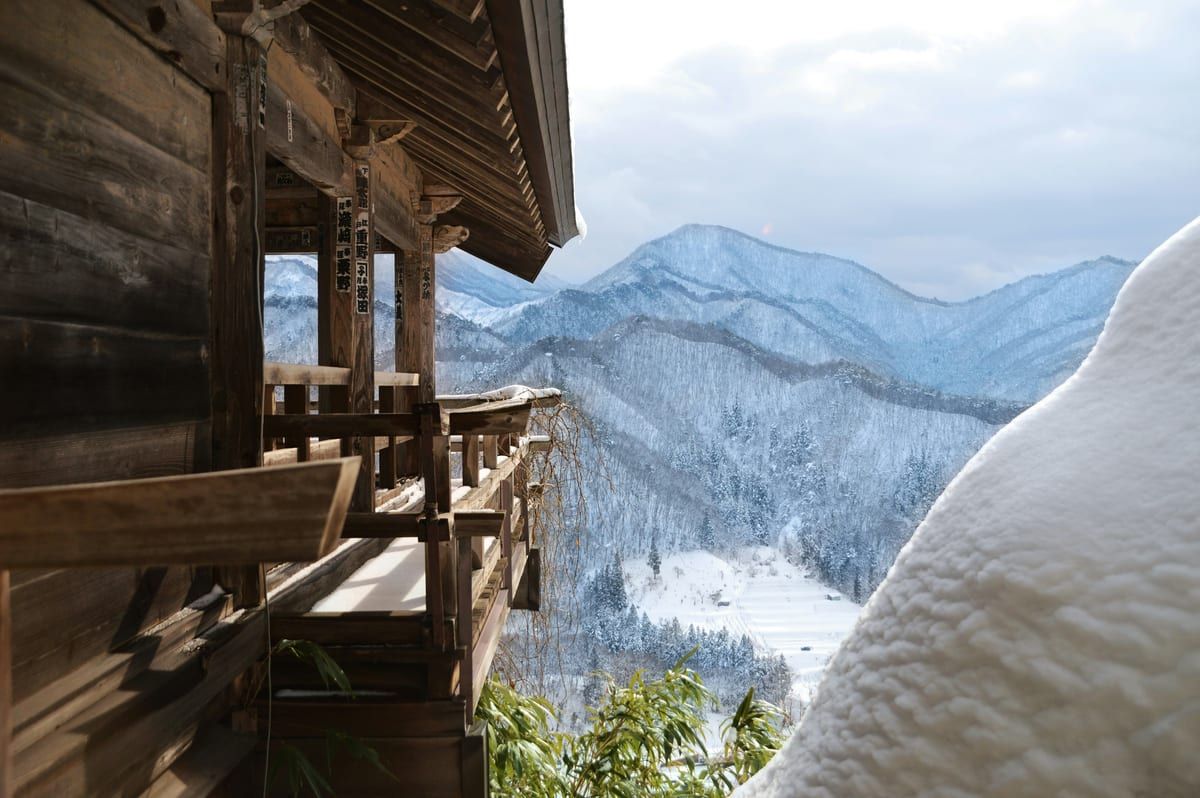
- Day 2: Sendai → Yamadera (1,015 stone steps to the cliff temple) → Oishida → Ginzan (overnight at Notoya)
- Day 3: Ginzan → Yamagata (Yonezawa beef lunch) → Tokyo
Zao, also in Yamagata, is worth its own trip for the winter snow monsters and the Okama crater and Yamadera in the warmer months — see our Yamagata Zao snow monsters and Yamadera guide — or, if you are travelling in summer or autumn and the crater lake is the whole point, go straight to when Okama is open and how to get up there.
4-day winter deep cut: Zao skiing + Ginzan
- Day 1: Tokyo → Yamagata → Zao Onsen (overnight + night ski-tour of the snow monsters)
- Day 2: Full-day skiing + juhyo (snow monster) tour
- Day 3: Zao → Yamagata → Oishida → Ginzan (overnight at Fujiya)
- Day 4: Ginzan dawn photography → Yamagata Yonezawa beef lunch → Tokyo
5-day Tohoku loop: Sendai → Hiraizumi → Ginzan → Yamagata → Yonezawa
- Best for JR East Pass 5-day holders; most complete cultural arc
- Pairs the Hiraizumi UNESCO temples with Ginzan's preserved Taisho townscape — two world-heritage textures in one trip
Tokyo to Sendai is 1h30 on the Tohoku Shinkansen at ¥11,410. Sendai as a base unlocks cheaper hotels, broader restaurant choice, and a 2-hour proximity to Ginzan. The advice we keep giving: do not visit Ginzan as a single-purpose trip — anchor it to a 3-day Tohoku loop minimum.
Month-by-month verdict: when to actually go
Ginzan is open year-round but the experience varies sharply. Twelve months of field notes:
| Month | Weather | Crowds | Score | Notes |
|---|---|---|---|---|
| January | −5°C / 1m+ snow | Med | ★★★★★ | Snow-viewing onsen light-up programme; peak experience |
| February | −3°C / 1.2m snow | High | ★★★★★ | Maximum snow depth; best gas-lamp visuals |
| March | 3°C / residual snow | Low | ★★★★ | Quieter, snow + early spring |
| April | 10°C | Low | ★★★ | Cheapest off-season window |
| May | 17°C / Golden Week | Highest | ★★ | Avoid Golden Week (29 Apr – 5 May) |
| June | 20°C / rainy season | Low | ★★★ | New green; gas lamps reflect beautifully on wet pavement |
| July | 27°C / Hanagasa Festival end-month | High | ★★★ | Summer holiday density rising |
| August | 30°C+ | Highest | ★★ | Hottest, most crowded; avoid |
| September | 22°C | Med | ★★★★ | Early autumn; pre-foliage value window |
| October | 14°C | Med | ★★★★★ | Foliage start; high value |
| November | 7°C | Med | ★★★★★ | Foliage peak + chance of first snow |
| December | 0°C / first snows | High | ★★★★★ | Christmas–New Year snowscape |
Best windows: late January through mid-February (snow-viewing onsen light-up), and late October through mid-November (foliage). Avoid: Golden Week in early May, and August summer-holiday peak. For Tohoku-region clothing strategy across each month, see Japan Weather by Month 2026: 4-Region Quick Table — the Tohoku row covers temperatures and layering recommendations through the year. If milky secret onsen like Ginzan are your thing, don't miss neighboring Akita's Nyuto Onsen and Lake Tazawa guide.
Five mistakes Ginzan visitors most commonly make
Five patterns surface repeatedly across travel forum reports and ryokan FAQs. All five are avoidable with one piece of pre-trip homework:
① Treating the day trip as "seeing Ginzan." Daytime crowds make photography essentially impossible, and day-trippers are on the return train before the lamps matter. The core experience of Ginzan lives between dusk and 21:00 — day-tripping pays for a full ticket and walks out at intermission.
② Booking without checking elevator status and floor. Several Ginzan ryokan — Notoya included — have rooms (such as the iconic four-storey wooden tower) with no elevator access and steep historic wooden stairs. Travellers with heavy luggage or older companions get caught out. Before booking, confirm elevator availability and room floor; or contact the ryokan for help with luggage.
③ Accepting the default 18:00 dinner. Most ryokan default to 18:00 dinners, which collapses the prime gas-lamp window — in winter the street is at its best right around that hour. Request a 19:30 dinner at booking, or ask the ryokan to send a bento to your room. Most properties accommodate timing requests if you ask at booking, but rarely on check-in.
④ Skipping microspikes in winter. The narrow stone bridge in front of Notoya is the village's iconic photo location and it ices over from December through March. Falls are common every winter. Carry simple microspikes or crampons (a Daiso ¥110 pair is enough); the cost-to-protection ratio is unbeatable.
⑤ Underestimating cash needs in the village. Most ryokan accept credit cards, but the curry-bread bakery, tofu shop, and small sake brewery on the street are cash-only. The village's ATM options are limited and often don't accept foreign cards. Load up at the 7-Eleven ATM at Oishida Station — at least ¥30,000 per person — before you board the bus into Ginzan.
14-day pre-departure checklist
- [ ] Ryokan confirmation email saved offline (with cancellation policy PDF)
- [ ] Round-trip Yamagata Shinkansen Tsubasa tickets (reserved seats recommended)
- [ ] Oishida–Ginzan local bus timetable screenshotted offline
- [ ] Snow boots or microspikes (essential November–March)
- [ ] Down parka + thermal base layer + beanie + insulated gloves (Tohoku averages −5°C in January)
- [ ] At least 8 hand warmers (one hour of night shooting freezes hands without them)
- [ ] ¥30,000 cash per person (street vendors are cash-only)
- [ ] Japan eSIM activated (mountain-valley signal is patchy)
- [ ] 20,000 mAh power bank (cold + dim light shooting drains batteries fast)
- [ ] Camera weather-sealed bag or phone waterproof case (snow falls directly on gear)
Tohoku winter dress requires more layering than Tokyo or Kyoto — the gap can be 10°C. The "below −5°C" layering combinations, four-region clothing strategy, and full four-season packing lists are in our What to Wear in Japan complete pillar guide, including specific brand recommendations for base layers, gloves and footwear.
Read next
Shirakawa-go Illumination 2027: Dates & Booking
Four 2027 dates, 17:30–19:30, fully reservation-only.
Hokkaido JR Pass Complete Guide 2026
Five routes recalculated with 2026 fares — all-reserved limited expresses and the post-2024 Furano line closure change the math.
Japan Weather by Month 2026: 4-Region Quick Table
Hokkaido to Okinawa monthly temps, rain, what to wear — one table, 30-second lookup.