One small IC card rides almost every train, subway and bus in Japan — and taps to pay for a drink at the konbini too. It is the single best thing to sort on day one of any Japan trip. But three questions trip people up: what is the actual difference between Suica, ICOCA and PASMO? Weren't they suspended in 2023 — can I still buy one? And if I have an iPhone, should I bother with a card at all? Here is the whole picture: the three cards are 95% identical, the chip-shortage suspension was lifted in March 2025, and for iPhone users the smartest move may be to never pick up a card in the first place.
The headline first: for almost every visitor, one card is enough and it barely matters which you get. Since 2013, Japan's ten major IC cards have been nationally interoperable — a card bought in Tokyo works in Osaka, a card bought in Kansai works in Sapporo. The real decision isn't "which card" but "physical card vs Welcome Suica vs mobile". This guide walks you through it in exactly that order.
- One card is enough — Suica / ICOCA / PASMO are nationally interoperable and 95% identical. First stop East Japan: Suica. First stop Kansai: ICOCA. Use it the whole trip.
- The suspension is over — unregistered standard Suica/PASMO, paused in the 2023 chip shortage, resumed unrestricted sale on 1 March 2025. Plastic cards are available.
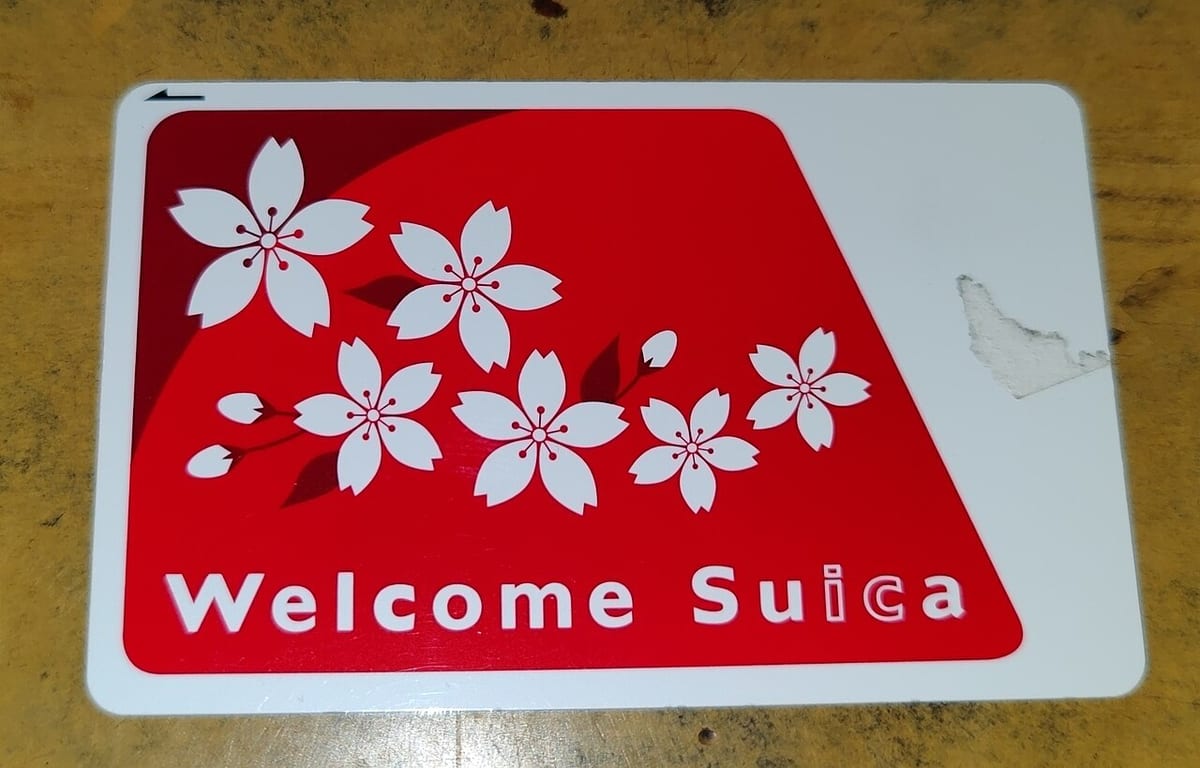
- Welcome Suica — tourist edition, no 500-yen deposit, picked up at the airport, but valid 28 days with a non-refundable balance. Regular cards: 500-yen deposit, no expiry, refundable.
- iPhone? Use Mobile Suica — added in Apple Wallet, topped up by overseas credit card, no Japanese SIM, no deposit, no expiry. Most overseas Android phones can't add it.
- More than transit — pay at konbini, vending machines and restaurants; balance caps at 20,000 yen.
Table of Contents
- One Card Nationwide: How Interoperability Works
- Suica vs ICOCA vs PASMO: The Real Differences
- The 2023 Chip Shortage: Can You Buy One Now?
- Welcome Suica: The No-Deposit Tourist Card
- Mobile Suica / ICOCA / PASMO: Skip the Card
- Buying, Charging & the Balance Cap
- Refunds: You Can't Refund Across Regions
- Konbini & E-Money Uses
- Kids' Cards & Day Passes
- The one thing an IC card cannot do
- Can I just tap my credit card at the gate?
- Which Card for Which Trip? Decision Table
- Frequently Asked Questions
One Card Nationwide: How Interoperability Works
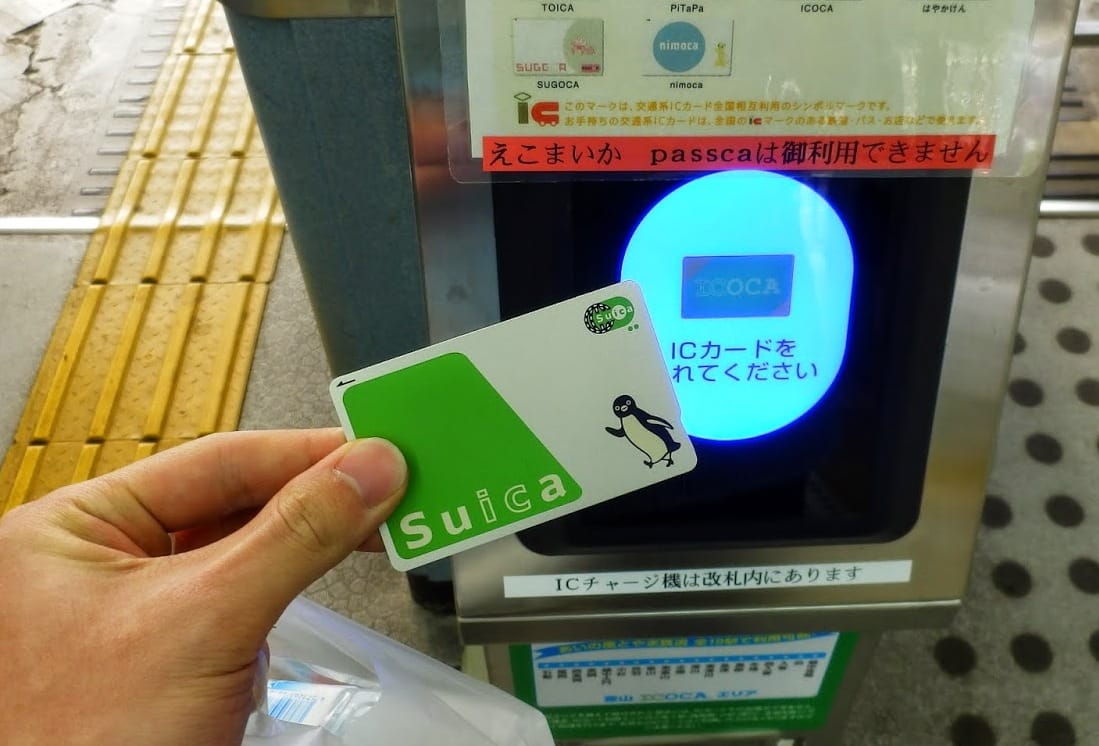
In 2026, the biggest advantage of a Japanese IC card isn't just convenience — it's that one card does everything. According to official records, since March 2013 Japan's ten major transit IC cards have been nationally interoperable: Suica, PASMO, ICOCA, Kitaca, TOICA, manaca, SUGOCA, nimoca, Hayakaken and PiTaPa. That means:
- a Suica bought in Tokyo works on trains and buses in Osaka, Kyoto, Fukuoka and Sapporo;
- an ICOCA bought in Kansai sails through Tokyo gates and pays at Tokyo konbini;
- almost every JR line, private railway, subway and city bus accepts the system.
The technology behind it is FeliCa, Sony's contactless chip — fast, and it reads even through a card sleeve. For tourists, the upshot is that you do not need to buy a new card in every city: use the same one for the whole trip. The one minor exception is PiTaPa (a Kansai postpaid card requiring a Japanese application), which tourists don't use anyway.
Suica vs ICOCA vs PASMO: The Real Differences
If they're all interoperable, how do the three differ? Honestly, for a tourist the differences are small enough to ignore. It comes down to the issuing company, the home region, the card art, and a few local-only services.
| Item | Suica | ICOCA | PASMO |
|---|---|---|---|
| Issuer | JR East | JR West | Tokyo private/subway alliance |
| Home turf | Tokyo, Tohoku, Hokkaido (JR East) | Osaka, Kyoto, Kansai | Greater Tokyo private/subway |
| Nationally interoperable | ✅ | ✅ | ✅ |
| Konbini payment | ✅ | ✅ | ✅ |
| First-purchase price | ¥2,000 | ¥2,000 | 2,000 yen (incl. 500-yen deposit) |
| Mobile version | ✅ (iPhone / some Android) | ✅ launched 2023 | ✅ (more limited) |
| Tourist edition | Welcome Suica (no deposit) | — (Kansai had ICOCA combos) | PASMO PASSPORT (ended Oct 2024) |
So how to choose? Just go by your first stop:
- First stop Tokyo / East Japan → Suica or Welcome Suica. Arriving via Narita/Haneda, the airport sells them and the handoff is seamless — see our Tokyo airport transport guide.
- First stop Osaka / Kyoto / Kansai → ICOCA. Most natural arriving at Kansai Airport — if you ride HARUKA from there, see our HARUKA e-ticket guide.
- Have an iPhone → open Mobile Suica and skip the counter queue entirely (see below).
Don't agonise over "I'm going to Kansai so I must use ICOCA" — your Suica works in Kansai just fine. Pick one, use it the whole trip; that's the simplest, lowest-risk approach.
The 2023 Chip Shortage: Can You Buy One Now?
This is the most-asked question of 2024–2026 and the one where you'll see the most outdated information, so read carefully.
In June 2023, facing a global semiconductor chip shortage, JR East and PASMO suspended sales of the unregistered (no-name) standard Suica and PASMO. For a while only registered "My Suica" cards, commuter passes and Welcome Suica remained available. That suspension is where the belief that you "can't buy a card in Japan right now" comes from.
That has long since changed. Per official notices and media reporting:
- From September 2024, plastic Suica and PASMO returned to station ticket machines;
- from 1 March 2025, unregistered standard Suica and PASMO resumed unrestricted sale;
- as of 2026, standard cards, Welcome Suica and the mobile versions are all available, with supply stable.
Welcome Suica: The No-Deposit Tourist Card
Welcome Suica is JR East's red-and-white edition made for short-term overseas visitors. Its core selling point is no 500-yen deposit — handy if you're here once and don't want to return to a counter for 500 yen. The essentials:
- Price: ¥0 (the whole amount becomes usable value, since there is no deposit)
- Validity: 28 days from first use (then it expires)
- Balance cap: 20,000 yen, refillable at machines marked with the Welcome Suica logo
- Refund: balance is non-refundable, and there is no deposit to recover — spend it down before you leave
- Where to get it: Narita Terminal 1 and Terminal 2·3 stations, Haneda Terminal 3 (Tokyo Monorail), Welcome Suica vending machines, JR East Travel Service Centers, JAPAN RAIL CAFÉ and more
One thing to note: PASMO used to offer a tourist card too — the PASMO PASSPORT — but it ended in October 2024. The only physical "tourist-specific" card now is Welcome Suica. So if you want a no-deposit card you can grab at the airport, Welcome Suica is currently the only choice.
Mobile Suica / ICOCA / PASMO: Skip the Card
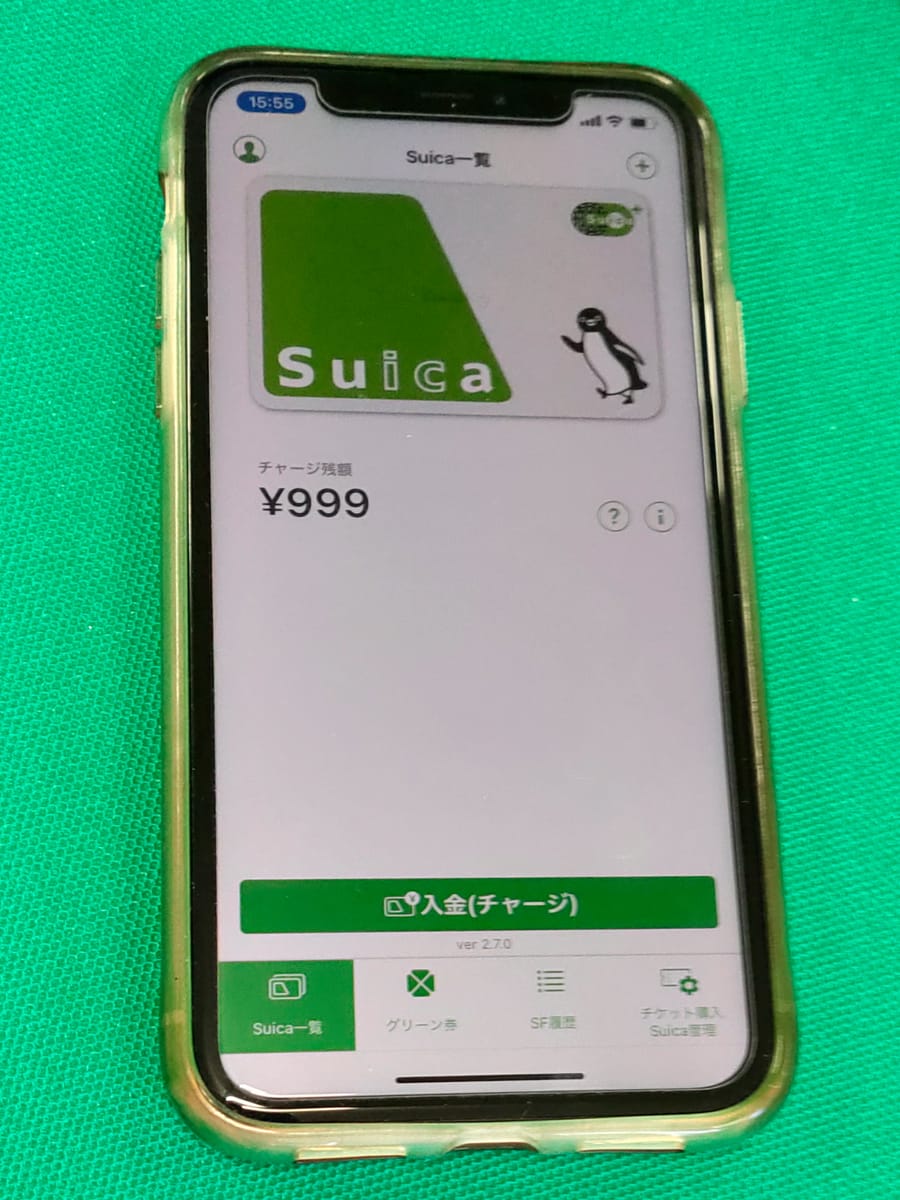
If you use an iPhone, Mobile Suica is almost certainly the smartest choice: no counter queue, no deposit, no expiring balance, and you top up by tapping a credit card in your phone. Setup is simple: open Apple Wallet → add card → Transit Card → Suica → set a first top-up amount → pay with a card in Apple Pay. Then your phone taps you through the gate.
- iPhone (Mobile Suica): top pick. Most overseas Visa/Mastercard cards reload it (a few cards occasionally fail — switch to another in Apple Pay). No Japanese SIM, no physical card, no deposit, no expiry.
- Mobile ICOCA: launched 2023, currently supports iPhone and some Japan-spec Android — useful for Kansai travellers.
- Mobile PASMO: exists too, but compatible devices are more limited.
- Android (overseas phones): Mobile Suica needs a Japanese FeliCa (Osaifu-Keitai) chip, which most overseas-bought Android phones lack, so it usually can't be added — these users should get a physical card or Welcome Suica.
As an aside, JR East also offers a Welcome Suica Mobile app for overseas visitors (iPhone 8 and later), valid for a generous 180 days versus the physical Welcome Suica's 28. For most iPhone users, though, the standard Mobile Suica in Apple Wallet is smooth enough that the separate app isn't necessary.
Topping up Mobile Suica happens in Wallet with your credit card, and that step needs data; for how to sort mobile data, see our Japan eSIM recommendations.
Buying, Charging & the Balance Cap
Where to buy
- Airports: JR service centres and ticket machines at Narita, Haneda and Kansai (Welcome Suica is East-Japan airports only).
- Stations: multilingual machines at JR/private-railway stations — choose "IC card → purchase".
- Phone: iPhone users add it directly in Apple Wallet, no physical location needed.
How to charge (top up)
- Station ticket/fare-adjustment machines: choose "charge", insert the card, feed in cash — the standard way.
- Konbini: 7-Eleven, FamilyMart and Lawson counters all top up — say "Suica charge".
- Phone: top up by credit card in the app / Apple Wallet, no machine required.
- Note: machine top-ups are mostly cash-only (some newer ones take cards), so keep some yen handy. Minimum is around 500 yen.
The balance caps at 20,000 yen — if it won't add, it's full. Most travellers load 2,000–3,000 yen at a time and refill as needed; don't overload at the start (especially Welcome Suica, whose balance is non-refundable — loading more than you'll spend is just wasted).
Refunds: You Can't Refund Across Regions
Want your money back at the end? The rules:
- Regular Suica / PASMO / ICOCA: refund at the issuing company's station window — you get the 500-yen deposit plus your balance, but the balance carries a 220-yen handling fee (waived if the balance is under 220 yen — you just get the deposit).
- No cross-region refunds: refund a Suica in JR East territory and an ICOCA in JR West territory. Carry a Kansai ICOCA back to Tokyo and the window won't take it.
- Welcome Suica: balance non-refundable, no deposit — spend it down at konbini and vending machines before you fly.
Konbini & E-Money Uses
The hidden value of an IC card is as an e-money wallet. It's not only a train ticket: 7-Eleven, FamilyMart, Lawson and other konbini, plus countless vending machines, restaurants, drugstores and station shops accept Suica/ICOCA. The real-world benefits for tourists:
- No counting coins: Japanese coinage has many denominations; a tap skips the change-fumbling entirely.
- Vending machines are instant: most station and street machines accept it — tap, grab your cold drink in summer, go.
- Just say "Suica": at the till, name the card or tap it on the reader.
A practical habit worth forming: top up a little more than you need for transit, because that same balance quietly handles your snacks, coffees and station-locker fees throughout the day. Many travellers find their IC card becomes their default for anything under a couple of thousand yen, with the credit card reserved for the big stuff. It also sidesteps the awkward moment of counting unfamiliar coins at a busy konbini counter while a queue forms behind you — one tap and you're done. The reader at the till usually beeps and shows your remaining balance, so you always know where you stand.
Remember the 20,000-yen balance cap — for large purchases (hotels, expensive goods) use a credit card. For how Japan's whole payment mix (cash, credit card, IC card, QR codes) fits together, our Japan payment guide breaks it down — read it alongside this before you go.
Kids' Cards & Day Passes
Families can get a children's IC card (kodomo): for ages 6–11, it automatically deducts the half-price child fare, sparing you from buying a child ticket at every station. You register it at a station window with proof of the child's age (a passport works). For family trips it's far less hassle than queuing for child singles each time.
IC cards and day passes aren't mutually exclusive — combine them. On a subway-heavy sightseeing day, a day pass (like the Tokyo Metro 24-hour ticket) is better value; on other days, the IC card charges per distance. The rule of thumb: many rides on one system in a day → day pass; scattered cross-system hops → IC card. For how this dovetails with long-distance travel, see our JR Pass vs regional passes comparison — a pass for the long legs plus an IC card in the cities is usually the smartest combination.
The one thing an IC card cannot do: alternative transport during a suspension
This guide has recommended IC cards throughout, so here is the honest limit — a boundary, not a reversal. When a Japanese rail line goes down, operators run furikae yuso, alternative transport: your existing ticket gets you around the outage on a rival line at no extra cost. Riding on IC card stored value is the one method that does not qualify.
That is not a rumour; four operators state it outright. We re-checked JR East's official FAQ no. 1202 on 13 August 2026 (published 25 July 2023, updated 4 March 2024):
Ordinary tickets, commuter passes, discount tickets and coupon tickets covering the affected section are eligible. A Suica commuter pass used within its commuter section is eligible, but travel paid from the stored-value balance on a Suica or similar IC card is not eligible.
Tokyo Metro, Tobu and Keio say the same, and Tokyo Metro supplies the reason, which is easier to remember than the rule itself: "we have not collected a fare to your destination at the point of entry" — when you tap in, the system does not yet know where you are going and has not taken a through fare, so your journey section is undetermined and there is nothing to convert into a ticket on another line. Kintetsu's PDF blocks one more method that matters to visitors: contactless credit-card payment is also excluded.
| How you paid | Alternative transport during a suspension |
|---|---|
| Paper ordinary ticket, bought before the outage | ✅ Yes (within the printed section) |
| Day passes, coupon tickets, discount tickets | ✅ Yes |
| Commuter pass, magnetic or IC, within its section | ✅ Yes |
| Suica / ICOCA / PASMO stored value | ❌ No (JR East, Tokyo Metro, Tobu, Keio all state this) |
| Contactless credit card | ❌ No (per Kintetsu) |
What to do with that in practice: keep using the IC card for everyday travel — its convenience was never resting on this. But one situation is worth changing your behaviour for: when a typhoon or heavy snow is forecast and you are about to ride a long stretch that would be painful to lose, a paper ticket is the safer buy. That is close to the only moment this guide would tell you not to tap. What to do the moment a line does go down — refund rules, when the limited-express supplement comes back, and what to say at the counter — is in our guide to Japanese train delays and suspensions.
Can I just tap my credit card at the gate?
In Tokyo: on the subway yes, on JR no. JR East's own FAQ no. 3954, published 26 December 2025, says it does not support contactless credit-card payment (対応しておりません) and spells out the scope: not at ticket windows, not at ticket machines, and not at the automatic fare gates on the way in or out. So the Yamanote Line, the Chuo Line, the Keiyo Line out to Disney, and the JR routes from Narita and Haneda are all closed to it.
The subway side opened up on 25 March 2026. A joint notice from Odakyu and the other operators lays it out: the six that already ran the service (Keio, Keikyu, Seibu, Tokyu, Toei, Yokohama Minatomirai) plus five newcomers (Odakyu, Odakyu Hakone, Sagami Railway, Tokyo Metro, Tobu) now interoperate across 11 operators, 54 lines and 729 stations. That includes every Tokyo Metro station and every Toei subway station (boarding at Nakano excepted).
Stack those two facts and you get the combination Tokyo visitors actually run into: on the same day, your card opens the subway gate and bounces off the Yamanote gate. Most Tokyo itineraries use both.
Where it works right now
| What you're riding | Contactless card | Source |
|---|---|---|
| JR East (Yamanote, Chuo, Keiyo, JR routes from Narita/Haneda) | 🔴 No | FAQ 3954 — not even at ticket machines |
| Tokyo Metro, all lines; Toei subway, all lines | 🟢 Yes | From 25 Mar 2026; 11 operators, 729 stations |
| Keikyu, Keio, Tokyu, Seibu, Tobu, Odakyu, Sotetsu | 🟢 Yes | Same 11-operator group |
| Keisei (including Skyliner), Tokyo Monorail | 🔴 No | Neither is in the group |
| Osaka Metro, all lines; Osaka City Bus | 🟢 Yes | Official page |
| Nankai (including Rapi:t) | 🟢 Yes | 97 of 105 stations, per the company's release |
| Kyoto Municipal Subway and Kyoto City Bus | 🔴 No | The city states outright that credit cards cannot be used on the subway |
| Fukuoka City Subway | 🟢 Yes | All 36 stations, with a daily cap — see below |
| JR Kyushu | 🟡 Fukuoka only, 50 stations | Not on Shinkansen or Shinkansen transfer gates; Oita and Kagoshima end in autumn 2026 |
| JR West | ⚪ Couldn't find any | Nothing on the corporate site, ICOCA pages or English ticket pages — that is us not finding it, not the company denying it |
| Kumamoto buses, Kumamoto Electric Railway, Kumamoto tram | 🟢 Yes | On the buses and the electric railway it is the only card that works — see below |
Fukuoka deserves its own look. The city subway caps contactless fares at ¥640 a day and ¥12,570 a month, so tapping your way around turns into a day pass on its own; and it charges a child fare (¥320 daily cap for children and disability discounts) — of the operators in this section only Fukuoka and Kumamoto below do; everywhere else charges every rider the adult fare.
Kumamoto: Suica bounces, the credit card is what works
In Kumamoto, whether a Suica works depends on whether you board a tram or a bus. Kyushu Sanko Bus, Sanko Bus, Kumamoto Electric Railway, Kumamoto Toshi Bus and Kumamoto Bus dropped nationwide transit IC cards on 15 November 2024 and switched to contactless credit cards. There was a gap in between: for the three months from 16 November 2024 to 23 February 2025 the only options onboard were cash and the local Kumamon IC card, with contactless going live properly on 24 February 2025. The tram did not follow. Kumamoto City Transportation Bureau's page, last updated 31 August 2026, states that on the tram 「Suicaなどの全国交通系ICカード…も引き続きご利用いただけます」 — nationwide IC cards still work.
| What you're riding | Suica / ICOCA | Contactless card |
|---|---|---|
| Kumamoto tram (castle, Karashimacho, Kumamoto Station) | 🟢 Yes | 🟢 Yes (tap only when you get off) |
| Kumamoto city buses | 🔴 No | 🟢 Yes (tap on and tap off) |
| Kumamoto Electric Railway | 🔴 No | 🟢 Yes |
| Aso Kumamoto Airport limousine bus | 🔴 No | 🟢 Yes |
| Hinokuni-go coach (Kumamoto ⇔ Fukuoka) | 🔴 No | 🟡 Only on Kyushu Sanko Bus departures |
| Kyushu Odan bus (Kumamoto ⇔ Aso, Kurokawa, Yufuin, Beppu) | 🔴 No | 🟢 Yes |
| Aso mountain line, crater line and crater shuttle | 🔴 No | 🟢 Yes |
Note that Kumamoto's contactless rules are the opposite of everyone else's: the official FAQ says one card can pay for several people (tell the driver before you tap on the way off), and it does handle child and disability-discount fares. The rule in the paragraph above — adult fare only, outside Fukuoka — does not hold here.
Three more things worth knowing before you board:
- Cash gives no change from a note. The official wording is 紙幣でのお支払いによるお釣りは出ません — use the changer on board to break a note first.
- UnionPay debit cards are not accepted, and neither are QUICPay, iD or similar e-money. The credit side takes Visa, Mastercard, JCB, American Express, Diners Club, Discover and UnionPay credit, with no pre-registration.
- The Kumamon IC card is not worth buying for a trip. Higo Bank announced on 31 August 2026 that sales stop on 31 March 2027 and transit and retail use stops on 30 September 2027, with refunds only in person at a branch and only from 15 December 2027. The card Kumamoto told everyone to switch to in 2024 is itself on a countdown.
So should you still get an IC card?
Yes. Look at the table first: all of JR in Tokyo and everything inside Kyoto are closed to contactless, and either one is enough to strand you mid-itinerary. Then look at four limits that apply no matter whose card you tap:
- No child fares outside Fukuoka and Kumamoto. Travelling with kids means paying adult fare for each of them.
- Not eligible for alternative transport during a suspension — same as riding on IC card balance, for the reason in the section above.
- No fare adjustment, no platform-ticket use, no combining with a commuter pass.
- Ride past the covered area and the whole trip is void from your boarding station. The official example is transferring from the Toei subway onto a Keisei line.
One correction to something I had assumed: a credit card obviously buys things in Japan, and every operator says so plainly. What an IC card still has to itself is station vending machines, coin lockers where the card is the key, onboard sales, and nationwide interoperability itself. The Suica you tap in Fukuoka works the same in Sapporo, Sendai, Nagoya and Osaka (Kumamoto's buses being the exception above) — contactless is still being switched on one operator at a time.
The practical answer: pick one IC card as your main payment method, and treat contactless as your backup for the day you forget to top up. If you truly only ride Tokyo subways and private lines and never touch JR, you can skip the card — but that itinerary is rarer than it sounds.
Which Card for Which Trip? Decision Table
| Your situation | Recommended | Why |
|---|---|---|
| You have an iPhone | Mobile Suica | No card pickup, no deposit, credit-card top-up, balance never expires |
| First stop Tokyo/East Japan, trip ≤ 4 weeks | Welcome Suica | Airport pickup, no 500-yen deposit — just spend the balance down |
| First stop Kansai (Osaka/Kyoto) | ICOCA | Most natural at Kansai Airport; works nationwide anyway |
| Repeat visitor / want to keep the card | Regular Suica or ICOCA | No expiry, balance kept forever, reuse next trip |
| Overseas Android, no FeliCa | Physical card / Welcome Suica | Mobile Suica usually can't be added; get a physical card |
| Tokyo subways and private lines only, never JR | You can skip the card | 11 operators interoperate from 25 Mar 2026 — tap a credit card. No child fares though |
| Travelling with kids aged 6–11 | Children's IC card | Auto half-fare, no child tickets at every station |
In one line: iPhone? Use Mobile Suica. Otherwise grab a Suica or ICOCA by first stop and use it the whole trip. There's little to research, because nationwide interoperability solved "which card" years ago.
One Last Piece of Advice
One rule that only became true on 14 March 2026: within JR East, an IC fare is now always lower than or equal to the paper fare. That fare revision changed paper-ticket yen rounding from round-to-nearest to round-up, and JR East states the consequence outright (with a few children's sections excepted). It was not guaranteed before. For how much each section rose, see our JR East 2026 fare revision breakdown.
An IC card is the kind of small thing you settle on day one — and once you do, every train ride, drink and gate for the rest of the trip just flows. Remember three things: (1) one card is enough, it works nationwide; (2) the 2023 suspension is long over, so standard cards, Welcome Suica and mobile are all available now; (3) iPhone users should just open Mobile Suica. Get the card sorted and you've removed one of the most common snags in a Japan trip. For the rest of your pre-trip prep, pair this with our Japan trip essentials checklist and the Visit Japan Web entry guide.
Frequently Asked Questions
- Q1:Suica vs ICOCA vs PASMO — what is the difference, and do I only need one?
- For almost every tourist, one card is all you need, and it barely matters which. Suica (JR East), ICOCA (JR West) and PASMO (Tokyo private/subway lines) do essentially the same thing, and since 2013 the ten major Japanese IC cards (these three plus Kitaca, TOICA, manaca, SUGOCA, nimoca, Hayakaken and PiTaPa) have been nationally interoperable — a Suica bought in Tokyo works in Osaka, Kyoto, Fukuoka and Hokkaido, and vice versa. The only differences are the issuing company, the card design and a few local-only services. There is one named exception worth remembering: Kumamoto's route buses, airport limousine, Kyushu Odan coaches and the Kumamoto Electric Railway stopped accepting nationwide transit IC cards on 15 November 2024 (the Kumamoto tram still takes them) — there you tap a contactless credit card or pay cash. Simple rule: if your first stop is Tokyo / East Japan, get a Suica or Welcome Suica; if it is Kansai, get an ICOCA — then use that one card for the whole trip.
- Q2:I heard Suica and PASMO were suspended in 2023 — can I still buy one in 2026?
- Yes — sales are back to normal. In June 2023, a global semiconductor chip shortage led JR East and PASMO to suspend sales of the unregistered (no-name) standard cards, leaving only registered "My Suica", commuter passes and Welcome Suica available. Supply has since recovered: per official and media reporting, plastic cards began returning to station kiosks from September 2024, and unregistered standard Suica and PASMO resumed unrestricted sale from 1 March 2025. So in 2026 the standard cards, Welcome Suica and the mobile versions are all available. Note the distinction: this was a card-supply issue, not a transport issue — even if a particular card is briefly out of stock, you can always use Mobile Suica or buy a single-ride ticket. Getting around was never affected.
- Q3:Welcome Suica vs regular Suica — which should a tourist buy?
- Welcome Suica is JR East's version for short-term overseas visitors, and its big advantage is no 500-yen deposit. You pick it up at Narita, Haneda and JR East Travel Service Centers. The trade-offs: it is valid for only 28 days, and the balance is non-refundable (there is also no deposit to get back, since none is charged). A regular Suica costs ¥2,000 (a 500-yen refundable deposit plus 1,500 yen of usable value), but it never expires and you can refund the deposit and balance (a 220-yen handling fee applies). Choose Welcome Suica if your trip is four weeks or less and you would rather not return to a counter for 500 yen; choose a regular card if you visit Japan often and want to keep it. Honestly, iPhone users should just use Mobile Suica and skip the physical card entirely.
- Q4:Can foreigners use Mobile Suica / Mobile ICOCA, and do I need a Japanese phone number?
- For iPhone users, Mobile Suica is the easiest option of all. Add Suica straight into Apple Wallet, top it up with an overseas credit card, and you need no Japanese phone number, no physical card, no deposit, and the balance never expires. Most overseas Visa/Mastercard cards can reload it (a few cards occasionally have issues — switch to another card in Apple Pay if so). Android is trickier: Mobile Suica needs a Japanese FeliCa (Osaifu-Keitai) chip, which most overseas-bought Android phones lack, so it usually cannot be added. Mobile ICOCA launched in 2023 and currently supports iPhone and some Japan-spec Android. In short: iPhone, use Mobile Suica; overseas Android, get a physical card or Welcome Suica.
- Q5:Can I use an IC card at convenience stores and vending machines?
- Yes, and it is one of the best parts. An IC card is also an e-money wallet: 7-Eleven, FamilyMart, Lawson and other konbini, plus countless vending machines, restaurants, drugstores and station shops accept Suica/ICOCA — just say "Suica" at the till or tap the card on the reader. For travellers that means no fumbling with coins and a drink bought with a single tap. One limit to know: the IC card balance caps at 20,000 yen, so put large purchases (hotels, expensive goods) on a credit card. For how all of Japan's payment methods fit together, see our Japan payment guide.
- Q6:How do I charge an IC card, and how do refunds work?
- Charging (top-up): station ticket/fare-adjustment machines and konbini counters all add value — choose "charge", insert the card and feed in cash (most machines are cash-only; some newer ones take cards). Minimum is around 500 yen; you can top up to 20,000 yen. Refunds: a regular Suica/PASMO/ICOCA can be refunded at the issuing company's station window — you get the 500-yen deposit plus your balance, but the balance refund carries a 220-yen handling fee (waived if the balance is under 220 yen). You cannot refund across regions: refund a Suica in JR East territory and an ICOCA in JR West territory. Welcome Suica balances are non-refundable, so spend the balance down before you fly home rather than leaving money on the card.
Read next
Paying in Japan 2026: Cash, Card, IC or QR? Full Guide
Japan is 58% cashless now, but shrines, small shops and rural towns still want yen. How much to carry, where to withdraw at 7-Eleven and Japan Post ATMs, and the best exchange route.
Narita & Haneda to Tokyo: Complete Transit Guide 2026
Six options compared (N'EX, Skyliner, Limousine, Keikyu, Monorail) — pick by destination.
Japan trip prep checklist
eSIM, Visit Japan Web, tax-free, insurance — done in one read.