If Hiroshima and Miyajima are the "Sanyo" face of the Chugoku region, then Izumo Taisha is the soul of the other side — San'in. It is Japan's most famous head shrine of the god of bonds and relationships, and worship here is unlike anywhere else: instead of two claps, Izumo uses "two bows, four claps, one bow". Stranger still, in the old lunar October all of Japan's gods are believed to leave their own shrines and gather at Izumo to settle the year's matches — a month Izumo calls "Kamiarizuki." And if you are wondering whether the 2026 festival dates are out: yes, the shrine has published them — the gods land at Inasa Beach on November 18 and the rites run through November 25, with the full schedule table in section 3 below. This guide covers the correct way to worship, the 5-ton shimenawa rope at the Kaguraden, how to reach San'in, and the Matsue and Lake Shinji extensions. It is the San'in counterpart to our Sanyo guides for Hiroshima and Miyajima.
- Head shrine of the god of bonds: the deity Okuninushi governs matchmaking and all kinds of connection
- Worship is two bows, four claps, one bow: clap four times, unlike most shrines
- Kamiari-sai 2026 dates are official: Nov 18 welcoming rite at Inasa Beach → Nov 19, 23, 25 Kamiari-sai → Nov 25 farewell rite
- Giant shimenawa: 13.6 m long, 5.2 tons, at the Kaguraden — the signature shot
- Pair with Matsue: National Treasure castle, Lake Shinji sunset, Adachi Museum — a "San'in two days"
📖 Contents
Why visit Izumo Taisha
Izumo Taisha sits at the very top tier of Japanese shrines. Its founding reaches back to the age of myth, and it stands with Ise Jingu as one of the two most important shrines in the Japanese imagination — Ise enshrines Amaterasu, Izumo enshrines Okuninushi-no-Okami. For travelers, Izumo's appeal has three layers: the matchmaking faith (Japan's most famous shrine for good bonds), the unusual ancient rite (two bows, four claps), and Kamiarizuki, a special season found only here. It lies in San'in and takes a little detour to reach — but precisely because of that, the atmosphere is more solemn and serene than the busier grand shrines, and the pine-lined approach feels especially still. Approach it as "the other face of Chugoku" and your picture of the region is far more complete than Sanyo alone.
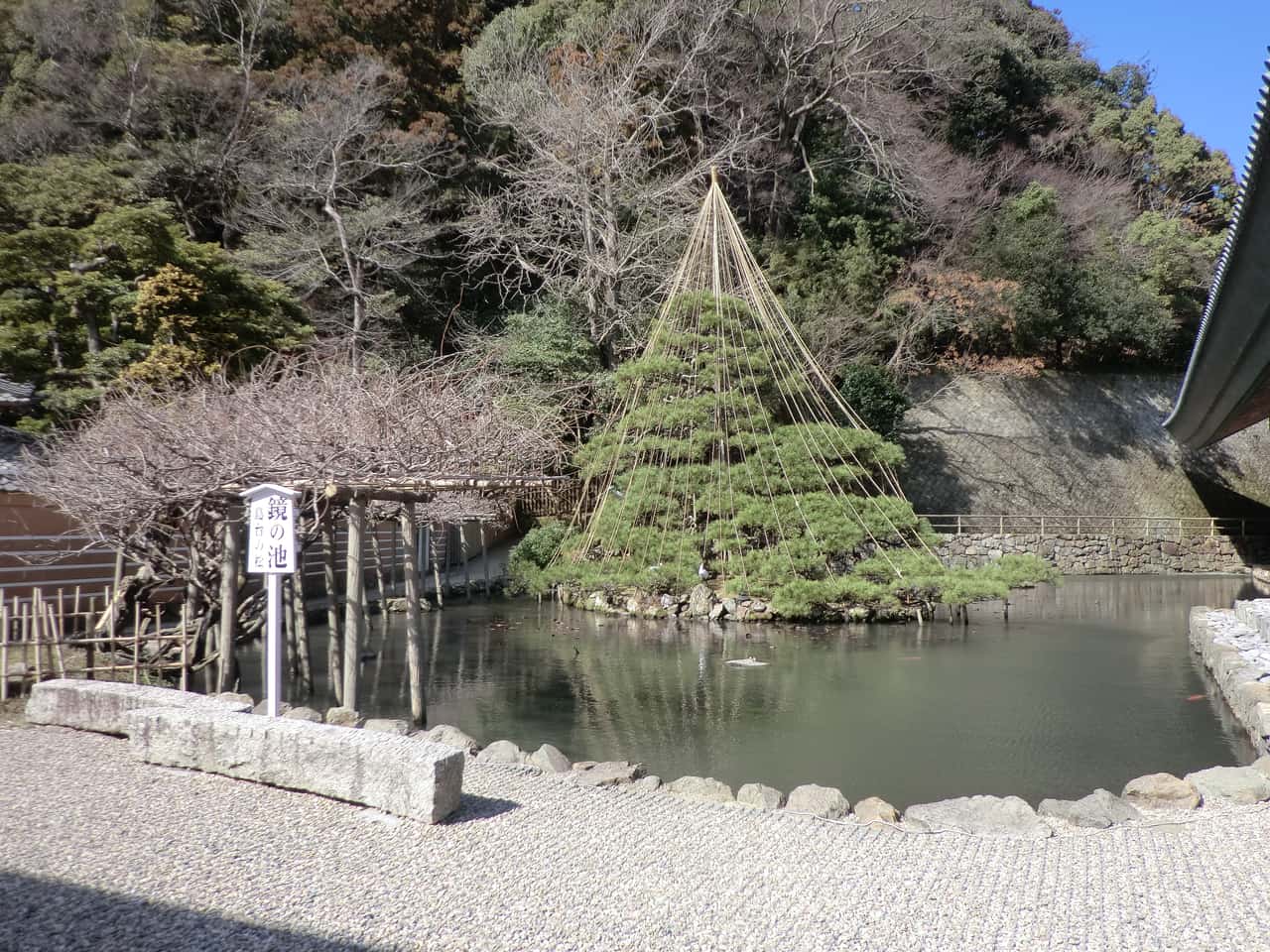
The god of bonds and "four claps"
Izumo's enshrined deity, Okuninushi-no-Okami, is the chief of the earthly gods in Japanese myth and is revered as the god of "en" — bonds. That "en" is not only romance but every kind of good connection, between people, between a person and their work, between a person and opportunity, so what people come to pray for is good ties in the broadest sense. That is why Izumo Taisha is nationally famous and draws huge numbers of worshippers year after year.
The one thing to remember when worshipping: Izumo Taisha uses "two bows, four claps, one bow" — two bows, four claps, then one bow. Ordinary shrines clap twice; Izumo's four claps are its own ancient rite, the "four" said to pun on "shiawase" (happiness) and to signal doubled respect (major festivals can reach eight claps). At the worship hall, do not reflexively clap twice — clap a full four times. The order on entering is: purify first at the Harae-no-Yashiro, then proceed along the pine approach to the worship hall.
If you want the reasoning behind all of that — why four claps, why the Harae-no-Yashiro comes first — there is a guided walk of the grounds on sale: GetYourGuide's Izumo Taisha guided grounds walk (about 1.5–2 hours, from US$45) is a small private tour running from the idea of the sacred boundary through the meaning of the purification basin and the myth of Okuninushi ceding the land, ending at the auxiliary shrines where the gods lodge during Kamiarizuki. ⚠️ Three things to weigh first: it is run in English only (there is no other language option, which also means no companion who needs one); worship at Izumo Taisha is free, so the fee buys interpretation, not entry; and the tour is new enough that it carries no reviews yet, so there is nothing to check the guiding against. My call is narrow — it earns its price if you have already walked a few major shrines and want the mythological layer. If this is your first visit and you mainly want to worship properly, the order above is all you need.
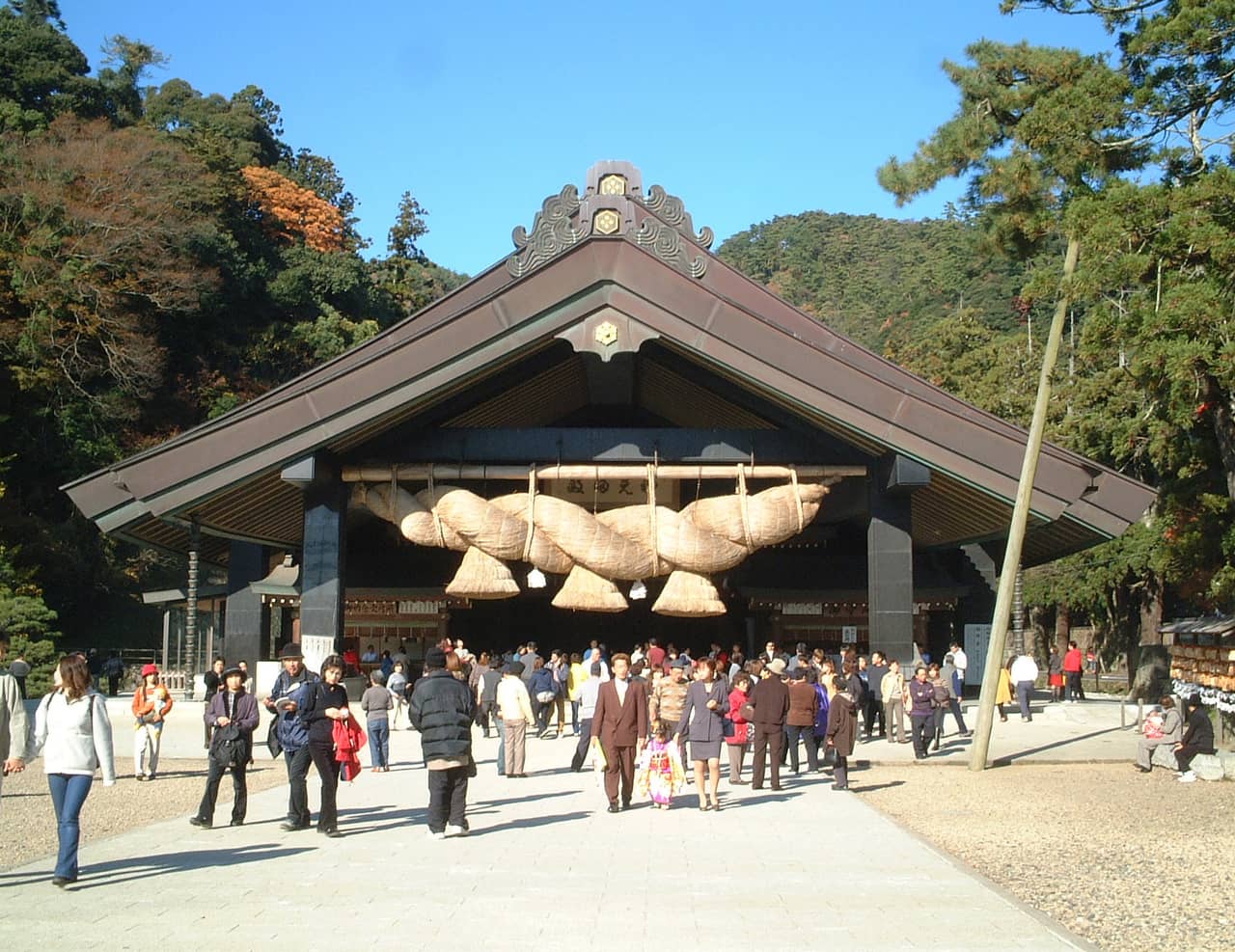
Do not rush off after worshipping — two more spots are worth your time. One is the approach street, Shinmon-dori, from Izumo-Taisha-mae station up to the torii, packed with Izumo specialties: Izumo soba is a must, traditionally served as "warigo soba" in three stacked lacquer dishes with sauce poured down through them; for something sweet, hot red-bean zenzai is said to originate from the "kamiari-mochi" of Izumo's Kamiarizuki. The other is Inasa-no-Hama, the beach west of the shrine where the gods are said to come ashore during Kamiarizuki — a renowned matchmaking power spot, lovely at dusk with the islet of Bentenjima silhouetted against the sunset.
There is a charming local custom tied to that beach: many worshippers scoop a handful of sand from Inasa-no-Hama, bring it to the Soga-no-Yashiro behind the main hall, and exchange it for the shrine's protective sand to take home for good fortune — so the "correct" Izumo pilgrimage actually starts at the beach before the shrine. On timing more broadly, Izumo rewards an unhurried, early start in any season: spring and autumn are the most comfortable for walking the long approach, summer mornings beat the heat, and winter brings a quiet, austere mood (and the Kamiarizuki rites in lunar October). Whenever you come, arriving near the 6 a.m. opening gives you the pine approach almost to yourself.
Which omamori is worth buying: the en-musubi thread and office hours
Izumo's most distinctive amulet is the "en-musubi no ito" — a skein of red and white silk thread. What makes it unusual is that you are meant to use it up: cut lengths and sew them into clothes you actually wear, braid them into a bracelet, or share strands with friends to spread the good bonds. Most omamori are sealed pouches you must never open; this one is designed for the opposite, and that alone makes it the souvenir I would pick from Izumo. The classic sealed en-musubi charm exists too, and the zero-yen option is the sand exchange described above — carrying your own handful from Inasa Beach to the Soga-no-Yashiro is arguably the most ceremonial of the three.
Hours, per the shrine's official notice from May 2026: the main amulet office runs 8:30–16:30, with simplified windows added early and late (6:30–8:30 and 16:30–19:00) — so an early-morning worshipper can collect an omamori without waiting around. Two timing traps: the Soga-no-Yashiro sits behind the main hall, and the area behind the honden closes after 16:30, so do not leave the sand exchange for dusk; and during Kamiarizuki the amulet lines get seriously long — one more argument for arriving at opening time and doing worship, omamori, and the shimenawa photo in one sweep.
Kamiarizuki & the Kamiari Festival 2026: the month the gods gather
This is one of Izumo's most beguiling legends. In lunar October, the rest of Japan calls the month "Kannazuki" (the month without gods), because all the country's deities are said to leave their own shrines and gather at Izumo Taisha for a great council deciding the coming year's matches and bonds; only in Izumo is the month instead called "Kamiarizuki" (the month with gods).
📍 This section is the condensed version. For the full rite-by-rite schedule (including the Ryujashin-ko Taisai on Nov 19 and the three rites stacked on Nov 23), the three hard rules for watching the night ritual, the current state of Enmusubi Taisai applications, how Sata and Mankusen shrines run on two different calendars, the Kamiarizuki-only "Ryujasama" goshuin, and why the gods do not actually leave Izumo until December 4, see our Izumo Kamiarizuki guide 2026.
During Kamiarizuki (falling around November in the modern calendar, shifting yearly with the lunar date), Izumo holds a sequence of rites — the seaside Kamimukae-sai welcoming the gods ashore at Inasa-no-Hama, followed by the Kamiari-sai and others — the most solemn and crowded time of year, when pilgrims come specifically to pray for good bonds. If you want the most "Izumo" version of Izumo, come during Kamiarizuki; in exchange, expect crowds and book lodging early. Visit off-season and it is quiet and easy, with a cool, austere dignity all its own.
Kamiari Festival 2026: the full official schedule
The question everyone asks first: is it worth planning around, and when exactly is it? Izumo Taisha's official festival calendar for 2026 (Reiwa 8) is already published, and the dates matter because the festival follows the lunar calendar — the welcoming rite is fixed on the night of the 10th day of lunar October, so the Gregorian dates shift every year. In 2025 the rites fell in late November through early December; in 2026 they land more than a week earlier, so never reuse last year's dates. Lunar October 2026 begins on November 9, and the core rites cluster on November 18–25:
| Rite | 2026 date & time | Location | For visitors |
|---|---|---|---|
| Kamimukae ritual & Kamimukae-sai | Wed Nov 18, 7:00 p.m. | Inasa Beach → Kaguraden | Watchable from outside the sacred cordon (etiquette below) |
| Kamiari-sai | Thu Nov 19 (9:00 a.m.), Mon Nov 23 & Wed Nov 25 (10:00 a.m.) | Main hall | The rites themselves are closed; the grounds stay open for normal worship |
| Enmusubi Taisai | Mon Nov 23 & Wed Nov 25, 10:00 a.m. | Main hall | Advance application required (see below) |
| Karasade-sai (farewell rite) | Wed Nov 25, 4:00 p.m. | Worship hall | Grounds open; you can feel the send-off atmosphere |
| Second Karasade-sai | Fri Dec 4, 4:00 p.m. | Grounds | A priests-only rite, not a spectator event |
Two scheduling traps worth flagging. First, November 23 is Labor Thanksgiving Day, a Japanese national holiday, and it doubles up with Kamiari-sai plus the Enmusubi Taisai — expect the heaviest crowds and parking pressure of the whole period, which makes the Ichibata Railway a far smarter way in than a car. Second, if you are committed to the November 18 night ritual, book lodging in Izumo two to three months out — that evening is one of the hardest nights of the year to find a room near the shrine. Booking.com's Izumo city listings put the town's ryokan and hotels on one page. No rates are quoted here, because that is a live inventory page and it changes daily — its job is to get you looking early, not to prove rooms are still open. Leave November 18 late and the answer keeps sliding toward Matsue.
Watching the Kamimukae ritual: night etiquette
At 7 p.m. on November 18, a sacred fire is lit on Inasa Beach and a rope cordon marks off the ritual ground; the priests set out the ryujin, the dragon-serpent deity who guides the eight million gods ashore. The beach ceremony runs about 20–30 minutes, after which the procession walks the "Kamimukae-no-michi" road escorting the gods back to the shrine, where the Kamimukae-sai continues at the Kaguraden. Per Shimane Prefecture's official tourism guidance, the rules are short but firm:
- No flash photography during the ritual — the shrine states plainly that flash interferes with the rite, so plan your night shots without it;
- Do not step on the straw mats laid on the sand — they are the gods' pathway, walk around them;
- This is not a tourist event — there is no spectator seating and no commentary; keep quiet, stay outside the cordon, and follow the locals' lead.
Practical advice: to stand anywhere near the cordon, arrive around 5 p.m. — the beach packs out after dark — and dress for a raw Sea of Japan night in November, which feels close to midwinter; gloves and a windproof layer are not optional. For the baseline shrine manners this builds on, see our shrine etiquette walkthrough.
Inside the grounds during Kamiari-sai: the Jukusha and the Enmusubi Taisai
During Kamiarizuki, a pair of buildings most visitors normally walk straight past become the main event. Flanking the main hall to the east and west are two long, narrow rows of doors — the Jukusha, literally "nineteen shrines," which serve as the visiting gods' dormitories. The rest of the year those nineteen doors per row stay shut; during Kamiari-sai they are all opened, and the Jukusha draw some of the longest worship lines on the grounds. The picture is irresistible: the gods debate the year's bonds at the upper shrine (Kaminomiya) by day, then come back to their dormitory rooms at night — worth seeing with the doors open at least once.
The Enmusubi Taisai (10 a.m. on November 23 and 25 in 2026) is the rite that bond-seekers most want to join, held inside the main hall. Know that you cannot simply show up: in recent years it has required an advance application by return-reply postcard, with a lottery when oversubscribed, and the details are posted on Izumo Taisha's website roughly a month before the festival — if you are serious, start watching the official site from mid-October. Miss the draw and the day is far from wasted: the grounds, the Jukusha, and the Kaguraden are all open for normal worship, and the Kamiarizuki atmosphere costs nothing.
The giant shimenawa and the main hall
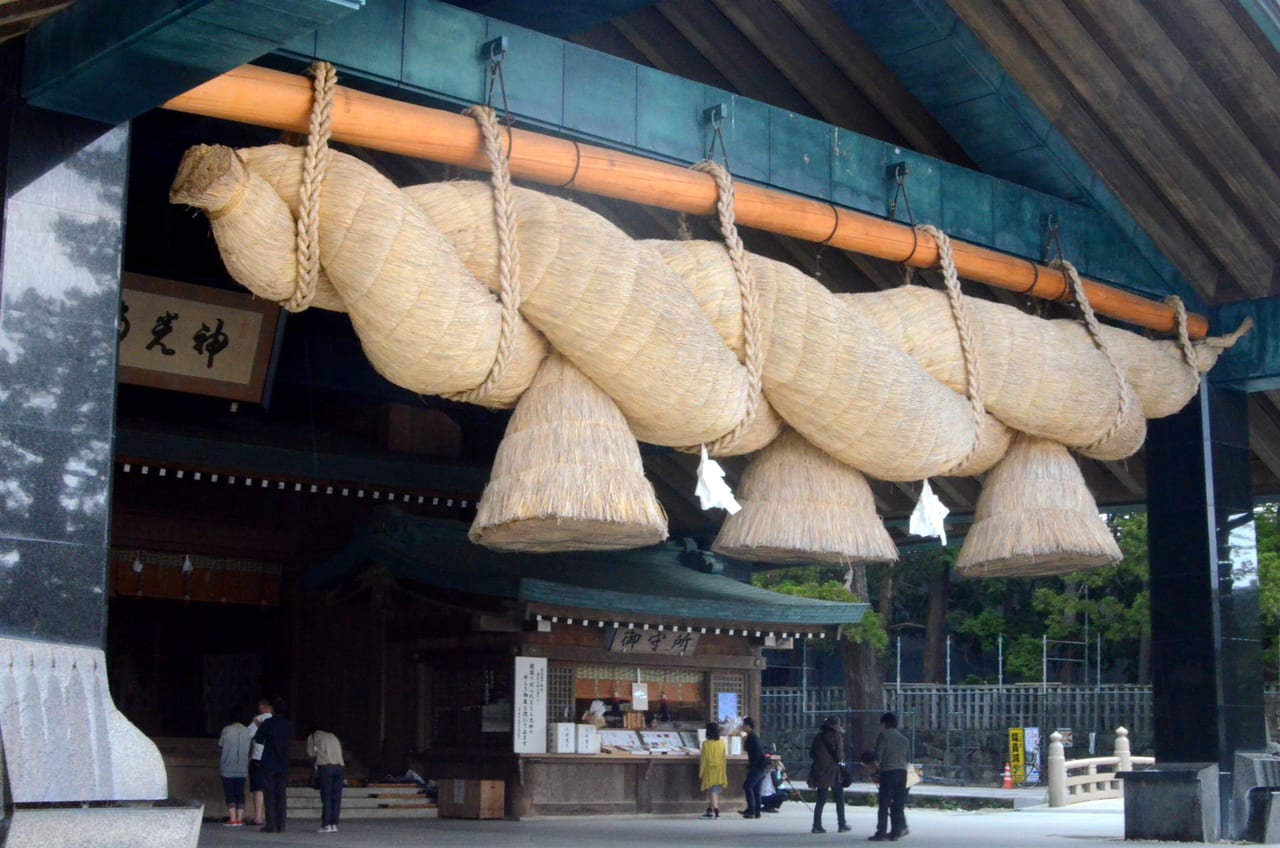
Izumo Taisha's signature image is the giant shimenawa (sacred straw rope). It hangs in front of the Kaguraden — note, not the main hall, which many people misremember — woven from rice straw, about 13.6 meters long and 5.2 tons, one of the largest in Japan and genuinely awe-inspiring from beneath. It is the shot everyone comes to take.
As for the main hall (honden), it is a National Treasure in one of Japan's oldest shrine styles, "Taisha-zukuri," standing about 24 meters tall; legend holds that the ancient honden was astonishingly taller still (some accounts say dozens of meters), and recent archaeology uncovering enormous pillar bases has given that legend new plausibility. Note that the honden interior is not open to the public — ordinary worship is at the worship hall and Yatsuashimon gate, and you admire the honden's exterior and the "chigi" finials on its roof. The adjacent Shimane Museum of Ancient Izumo displays those giant pillar bases and excavated bronzes, well worth a look to understand the Izumo myths — but check before you build a day around it: the museum has been closed since April 1, 2025 for seismic retrofitting and related work, with reopening scheduled for September 2026. The word used is "scheduled," not confirmed, so verify on the museum's own site.
Getting to Izumo (San'in transport)
Izumo is in San'in, not on the Sanyo Shinkansen — the key thing to understand when planning, because access is completely different from the Hiroshima side:
- Rail: the limited express "Yakumo" from Okayama to Izumoshi Station takes about 3 hours — Okayama connects to the Sanyo Shinkansen, so "Shinkansen to Okayama, then Yakumo to Izumo" is the common route. From Tokyo, the dreamy overnight sleeper "Sunrise Izumo" runs direct — a bucket-list train for rail fans.
- Air: Izumo (Enmusubi) Airport has flights to/from Tokyo (Haneda) and Osaka — the quickest option if time is tight.
- From Izumoshi Station: transfer to the Ichibata Railway to Izumo-Taisha-mae and walk about 7 minutes (the lively Shinmon-dori approach), or take an Ichibata bus (~25 min) straight to the shrine. Current Ichibata fares are ¥550 one way from Dentetsu-Izumoshi to Izumo-Taisha-mae (the post-March 2025 revision — older English pages still quoting ¥500 are out of date) and ¥900 one way from Matsue Shinjiko Onsen.
If you're doing the two-day Izumo-plus-Matsue loop described below, price the Ichibata one-day free pass at ¥1,800 first: it covers the whole network for the calendar day, and a single Matsue-to-Izumo-Taisha-mae round trip (¥900 ×2) already pays for it. Buy it at the counter at Izumo-Taisha-mae, Dentetsu-Izumoshi, Kawato, Unshu-Hirata or Matsue Shinjiko Onsen — no advance booking needed. One correction worth flagging: the "Enmusubi Perfect Ticket" (3-day, ¥4,000) stopped being sold on September 30, 2023; this one-day pass is its replacement.
The long-haul leg is a separate calculation. Because Izumo sits in San'in, the Sanyo regional passes mostly do not reach it — the ticket that covers both the Yakumo and the Sunrise Izumo is the nationwide JR Pass. It is also the most expensive rail ticket in Japan, so buying it purely for an Okayama-Izumo round trip loses money; whether it works depends entirely on the rest of your route — run the numbers with our JR Pass guide. ⚠️ One date to know: the physical pass sold through overseas agent channels is scheduled to rise on October 1, 2026 (7-day: ¥50,000 → ¥53,000), so don't budget from the old figure if you're travelling after that.
Pairing with Matsue and Lake Shinji
Once you are in San'in, it is well worth adding Matsue — about 26 minutes by train from Izumoshi. Matsue's three highlights:
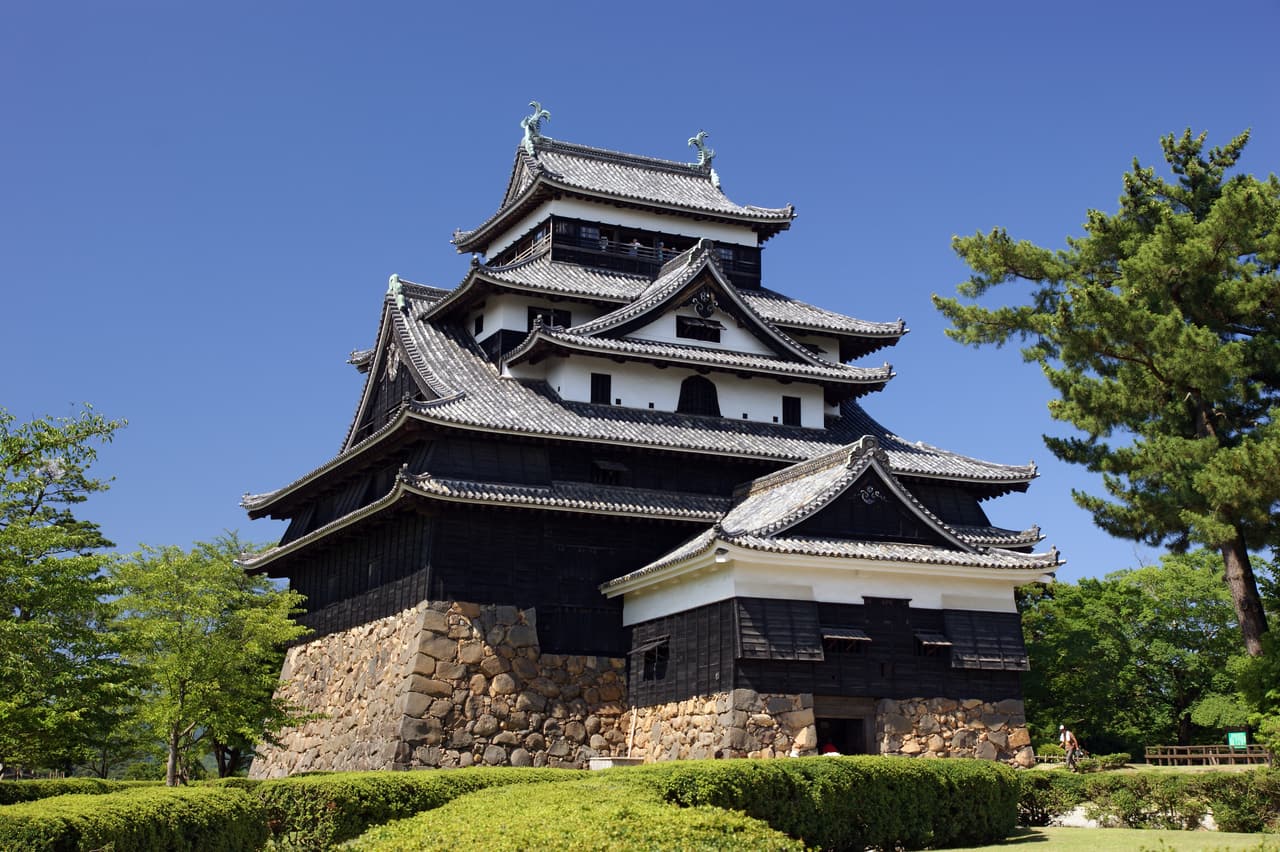
- Matsue Castle: one of only five National Treasure castle keeps in Japan (designated in 2015), its black keep nicknamed the "Plover Castle," a genuine survivor that keeps its Edo-period form rather than a concrete rebuild. Admission ¥680 for adults (foreign visitors often get half off), open 8:30–18:30 (Apr–Sep) / 8:30–17:00 (Oct–Mar). You can also take a "Horikawa" pleasure boat around the moat.
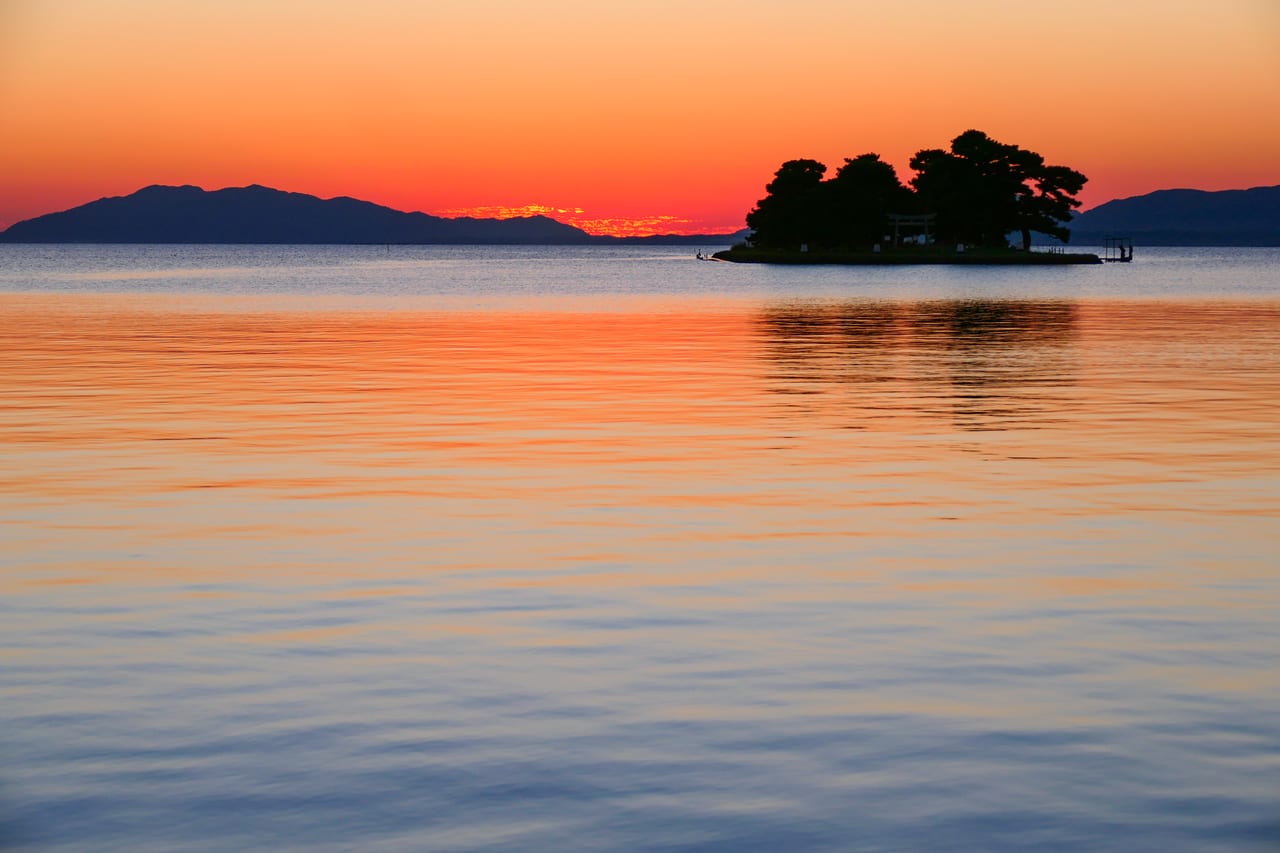
- Lake Shinji sunset: Matsue sits on Lake Shinji, and the silhouette of Yomegashima islet against the setting sun is a "top 100 sunset of Japan" — an evening by the lakeshore is Matsue's signature experience.
- Adachi Museum of Art: in Yasugi near Matsue, famous for a garden rated Japan's best year after year, framed through windows like living paintings — not to be missed if you love Japanese gardens.
A two-day Izumo + Matsue route
- Day 1 (Izumo): arrive in Izumo (by Yakumo or air) → Ichibata Railway to Izumo-Taisha-mae → early worship at Izumo Taisha (Harae-no-Yashiro → worship hall, two bows four claps → the great shimenawa at the Kaguraden) → the Shimane Museum of Ancient Izumo (currently closed, reopening scheduled for September 2026 — verify first; if still shut, spend the time walking to Inasa Beach instead) → Izumo soba and matchmaking charms on Shinmon-dori → move to Matsue for the night.
- Day 2 (Matsue): climb the National Treasure keep of Matsue Castle and take the Horikawa moat boat → lunch → the Adachi Museum of Art's Japan-best garden (or the Lafcadio Hearn residence in town) → the Lake Shinji sunset at dusk → head home or onward.
Izumo + Matsue make a tidy "San'in two days"; further east along the same San'in line lies Tottori, where the dramatic Tottori Sand Dunes are a natural extension if you have an extra day. If you are already doing Sanyo's Hiroshima and Miyajima, you can ride the Yakumo up from Okayama and link Sanyo and San'in into a longer Chugoku loop, whose western end in Yamaguchi holds scenery like the Tsunoshima Bridge and Motonosumi Shrine. For the whole region at a glance, see our Chugoku guides.
FAQ
- Q1:Why is the worship at Izumo Taisha "two bows, four claps, one bow"?
- Most Japanese shrines use "two bows, two claps, one bow," but Izumo Taisha is special: two bows, four claps, one bow — you clap four times. This is Izumo's own ancient rite; the "four" is said to evoke "shiawase" (happiness) and to double the respect shown to the deity (at major festivals it can even be eight claps). So at the worship hall, remember to clap four times, not two. The enshrined deity is Okuninushi-no-Okami, who governs "en" — bonds and relationships, not only romantic ones but all good connections between people and opportunities — making this Japan's most famous shrine for matchmaking.
- Q2:What is "Kamiarizuki," and which month is most special?
- In the old lunar calendar, October is usually called "Kannazuki" (the month without gods), because all of Japan's deities are said to leave their own shrines and gather at Izumo Taisha to discuss the year's matches and bonds; but in Izumo, the same month is instead called "Kamiarizuki" (the month with gods). During Kamiarizuki (roughly November by the modern calendar, varying yearly with the lunar date — in 2026 the rites run November 18–25), Izumo holds a series of rites — the Kamimukae-sai welcoming the gods ashore, then the Kamiari-sai — the most solemn and crowded time of year, drawing pilgrims seeking good bonds. For the most "Izumo" experience, come then; just expect crowds and tighter lodging. For the full picture — rite-by-rite dates, night ritual etiquette, the three shrines running on three different calendars, and the Kamiarizuki-only goshuin — see our Izumo Kamiarizuki guide.
- Q3:When is the Kamiari Festival at Izumo Taisha in 2026?
- Izumo Taisha's official 2026 (Reiwa 8) festival calendar is published: the Kamimukae welcoming ritual takes place at Inasa Beach at 7 p.m. on Wednesday, November 18, 2026, followed by the Kamiari-sai at the main hall on November 19 (9 a.m.), 23, and 25 (10 a.m.), the Enmusubi Taisai on November 23 and 25 (advance application required), and the Karasade-sai farewell rite at 4 p.m. on November 25, with a second Karasade-sai on December 4. The festival follows the 10th day of lunar October, so the Gregorian dates shift every year — 2025's rites fell in late November to early December — so always check which year a schedule refers to. For the full rite-by-rite schedule, viewing etiquette and how to apply for the Enmusubi Taisai, see our dedicated Izumo Kamiarizuki guide.
- Q4:Can visitors watch the Kamimukae night ritual, and what are the rules?
- Yes — the ritual at Inasa Beach is open to the public from outside the roped-off sacred area, but Shimane's official tourism guidance is clear that it is a religious rite, not a tourist event: there is no spectator seating, flash photography during the ritual is prohibited, and the straw mats laid on the sand are the gods' pathway and must not be stepped on. The beach ceremony lasts about 20–30 minutes, then the procession escorts the gods along the Kamimukae-no-michi road back to the Kaguraden for the Kamimukae-sai. Arrive around 5 p.m. for a spot near the cordon, and dress warmly — a November night on the Sea of Japan coast is bitterly cold.
- Q5:What is that giant rope at Izumo Taisha, and where do I see it?
- It is a shimenawa (sacred straw rope). The great shimenawa in front of the Kaguraden (not the main hall — a common mix-up) is one of the largest in Japan, about 13.6 meters long and 5.2 tons, woven from rice straw and genuinely imposing — one of Izumo's signature sights. Note the worship hall in front of the main hall also has a shimenawa, but the Kaguraden one is the biggest. Also note that the main hall (honden, a National Treasure in the ancient Taisha-zukuri style) is not open to the public; ordinary worship is done at the worship hall and the Yatsuashimon gate, and you admire the honden from the outside.
- Q6:How do I get to Izumo from Okayama, Osaka, or Tokyo?
- Izumo is in San'in, not on the Sanyo Shinkansen, so access differs from the Hiroshima side: (1) Rail — the limited express "Yakumo" from Okayama to Izumoshi Station takes about 3 hours (Okayama connects to the Sanyo Shinkansen, so "Shinkansen to Okayama, then Yakumo" is the common route); from Tokyo, the overnight sleeper "Sunrise Izumo" runs direct, a rail-fan favorite. (2) Air — Izumo (Enmusubi) Airport has flights to/from Tokyo and Osaka, the fastest option. From Izumoshi Station, take the Ichibata Railway to Izumo-Taisha-mae (7-minute walk) or an Ichibata bus (~25 min). On whether a JR Pass pays off, see our JR Pass guide.
- Q7:How long does Izumo need, and where can I pair it with?
- Izumo Taisha itself — the approach, the Kaguraden, the honden exterior, and the adjacent Shimane Museum of Ancient Izumo (note: the museum has been closed since April 1, 2025 for seismic retrofitting, with reopening scheduled for September 2026 — check its official site before you go) — takes about half a day; the Shinmon-dori approach has Izumo soba, sweet zenzai, and matchmaking charms to browse. The top pairing is Matsue — about 26 minutes by train from Izumoshi — with one of Japan's five National Treasure castle keeps (Matsue Castle), the Lake Shinji sunset (a "top 100" sunset), and the world-famous Adachi Museum of Art nearby (its garden is rated Japan's best year after year). Izumo + Matsue make a tidy "San'in two days," and link with Sanyo's Hiroshima and Miyajima for a longer Chugoku loop.
- Q8:Any order or tips for worshipping at Izumo Taisha?
- A few tips for a smoother visit: (1) Entering the grounds you pass a rare downhill approach lined with pines (the "Matsu-no-Sando"); walk the side paths rather than straight down the center, which is more proper. (2) Purify first at the Harae-no-Yashiro, then proceed to the worship hall. (3) At the worship hall, remember two bows, four claps, one bow. (4) For matchmaking, worship in turn at the Kaguraden and around the honden, and pick up an en-musubi charm at the office. (5) The shrine has long hours (from 6 a.m. into the evening, open year-round), so an early visit means fewer people, better light, and the most serene atmosphere — worship first, then brunch along the approach.
Related reading:
Hiroshima Guide 2026: Peace Park, Okonomiyaki & Miyajima
Chugoku's gateway — 1.5 hr from Shin-Osaka by Shinkansen, the World Heritage A-Bomb Dome, layered okonomiyaki, and a Miyajima day trip.
Okayama & Kurashiki Guide 2026: Korakuen, Bikan & Denim
Korakuen (one of Japan's three great gardens), the white-walled Kurashiki Bikan quarter and Kojima denim — the best stop on the Sanyo Line.
JR Pass 2026: Is It Still Worth It?
Four real routes calculated, six alternatives that may beat the Pass.