🔄 Update log (2 revisions — click to expand)
- :For 2026 the per-spot forecast comes from WeatherNews alone: round 1 was published 2026-09-03, with per-spot dates on the spot pages, which change without notice (20 Kyoto spots each moved a day earlier during late September). The tenki.jp peak-forecast page still shows the 2025 round 3; Walkerplus republishes WeatherNews.
- :Autumn-foliage living page created with historical-average peak windows from tenki.jp / Weathernews / Walkerplus (Murodo peaks late Sept, Kyushu mid-to-late Nov). Official 2026 forecasts begin ~September; this table will be updated then.
By late September the summit of Mt. Kurodake in Hokkaido is already half red; in early December the night maples at Kyoto’s Eikando are still at their fullest. That 67-day gap is the truth about Japan’s autumn: it isn’t a season, it’s a three-month relay of color sweeping 22 degrees of latitude from north to south. This guide compresses the peak windows for Japan’s five great foliage regions, six timing lessons that actually change a trip, and the cross-region transport math into one copy-ready national calendar — so you never fly to Kyoto to find it still green, or wait for the most beautiful week only to discover every room is gone.
- The front moves north-to-south over three months: Hokkaido Sep 25 → Tohoku Oct 15 → Kanto/Chubu Oct 25 → Kyoto Nov 22 → Kyushu Dec 5.
- The first 2026 forecast is out and the whole country runs late — WeatherNews published on Sep 3 with dates for roughly 1,200 spots; tenki.jp still has no 2026 forecast, only a daily colour-status tracker. The table below is a historical average, so shift it later.
- Kyoto’s peak fortnight is the priciest lodging window of Japan’s year — book 4–5 star hotels 12 weeks ahead; other regions have room 8 weeks out.
- Cross-region trips favor the 7-day nationwide JR Pass (saves ¥10,000+); single-region trips favor a regional pass.
- 6:30 am is the most underrated window for foreign visitors — every marquee spot is empty and back-lit before 9:00.
📖 Contents (tap to expand)
- 1. Foliage front 101: why it takes three months
- 2. The five-region peak calendar
- 3. Hokkaido (Sep 25–Oct 25): Japan’s earliest front
- 4. Tohoku (Oct 15–Nov 10): Oirase and Lake Towada
- 5. Kanto + Chubu (Oct 25–Nov 25): Nikko, Hakone, Kawaguchiko, Tokyo ginkgo
- 6. Kansai (Nov 15–Dec 7): Kyoto’s two authoritative weeks
- 7. Kyushu (Nov 20–Dec 15): the last front in Japan
- 8. Booking timing: the 12-week rule
- 9. Light and crowd strategy
- 10. Five nationwide beginner mistakes
- 11. FAQ
Foliage front 101: why it takes three months
Japan’s koyo “peak” isn’t set by the calendar month — it’s triggered by a physiological threshold: five consecutive days with a minimum temperature below 8°C. Once night temperatures drop under 8°C and chlorophyll breaks down faster than anthocyanins form, the leaves start to turn. That threshold marches from Daisetsuzan in Hokkaido (late September) all the way south to Yabakei in Kyushu (mid-December), passing through five distinct regions, each with a completely different peak week.
Bear in mind the peak shifts a few days each year with the weather — typically ±3–5 days. The first 2026 forecast is already out: WeatherNews published its first peak-foliage round on September 3, and the national verdict is “later or slightly later than normal”, because mean temperatures are forecast above normal across eastern and western Japan for the whole autumn, and in northern Japan from late September onward. Leaf condition is better than last year everywhere except Kyushu, which had a hot, dry summer. The other independent forecaster, the Japan Weather Association (tenki.jp), now publishes a daily colour-status update but still has no 2026 peak-foliage forecast. WeatherNews has not announced when a second round lands either, so treat any specific update date as unconfirmed.
One thing to settle first: there is only one forecast on the table right now. The genuinely independent sources are WeatherNews and the Japan Weather Association (tenki.jp); the Walkerplus national article that went up on September 4 is a republication of the WeatherNews first round, credited in its own source line — and the tenki.jp forecast page still shows the 2025 third round, so there is nothing to cross-check against. The reliable rhythm: book hotels and flights against the historical windows below and leave a few days of slack at the back end, then look up your specific temple or gorge on the WeatherNews spot pages for its 2026 forecast date — not its calendar page, which shows the 2004–2025 average, and not the “average-year peak” on a Walkerplus spot page, which carries no 2026 per-spot dates at all.
Still weighing whether autumn is even the right season for your trip — versus cherry-blossom or winter? Settle the big question first with our guide to the best time to visit Japan, then come back to pick your foliage week.
One reminder: every “best week” below is a five-year rolling average. Always make a final check two weeks before departure. Here is what each site is actually for:
- WeatherNews: published its first 2026 round on September 3, with a date for each of roughly 1,200 spots — the dates live on the individual spot pages, while the calendar page shows the 2004–2025 average. It also carries daily colour-status updates, best for “has it actually turned yet?”
- tenki.jp (Japan Weather Association): the other independent forecast. Its daily colour-status tracker is running, so use it for “where has actually turned”; its 2026 peak-foliage forecast is not out — the forecast page currently shows the 2025 third round, so do not read those dates as this year's.
- Walkerplus: republishes the WeatherNews forecast (credited in its source line); its spot pages carry only average-year timing and a daily colour status, no 2026 per-spot dates.
The five-region peak calendar
The table below is the historical-average peak window for all five regions, ordered north to south by latitude, with each region’s top four spots and recommended transport as your timeline backbone. For a spot-level comparison with official source links, see the “Peak timing by region & official forecast rounds” table just below.
| Region | Peak window | Top spots (with estimated peak date) | Recommended transport |
|---|---|---|---|
| Hokkaido | Sep 25–Oct 25 | Mt. Kurodake (Daisetsuzan) (Sep 25) , Sounkyo Gorge (Oct 5) , Jozankei (Oct 15) , Tokachidake Bogakudai (Sep 30) | Fly into Sapporo (CTS), then JR + local bus. Self-drive lets you chain Biei + Furano in 3 days. |
| Tohoku | Oct 15–Nov 10 | Oirase Stream (Oct 25) , Lake Towada (Oct 25) , Hachimantai (Oct 10) , Naruko Gorge (Nov 5) | The Tohoku-area JR East Pass was withdrawn on 13 Mar 2026; the successor JR EAST PASS covers the whole JR East network (5-day / 10-day). Recompute the break-even if you are only riding Sendai↔Aomori. Self-drive offers the most flexibility. |
| Kanto & Chubu | Oct 25–Nov 25 | Nikko: Lake Chuzenji + Irohazaka (Oct 25) , Hakone: Sengokuhara + Lake Ashi (Nov 10) , Kawaguchiko Maple Corridor (Nov 15) , Tokyo: Meiji Jingu Gaien Ginkgo (Nov 25) | Nikko: Tobu Nikko Pass. Hakone: Hakone Free Pass. Kawaguchiko: Fujikyu Railway or Fuji day tour. Tokyo: bus + Yamanote. |
| Kansai | Nov 15–Dec 7 | Tofukuji (Kyoto) (Nov 25) , Eikando (Kyoto) (Nov 28) , Arashiyama (Kyoto) (Nov 22) , Nara: Wakakusayama + Kasuga Shrine (Nov 25) | Kyoto: Subway & Bus 1-Day Pass (¥1,100); the ¥700 city-bus-only pass was discontinued in March 2024. Best lodging: Karasuma / Kyoto Station — avoid Higashiyama / Gion. |
| Kyushu | Nov 20–Dec 15 | Yabakei (Nov 25) , Kuju Yume Otsurihashi Bridge (Nov 20) , Aso Outer Rim (Nov 30) | JR Kyushu Pass (Northern 3-day, ¥10,000) + Yufuin no Mori + Aso Boy. Fly in via Fukuoka, out via Kumamoto. |
| Region | Start of color | Peak color | vs average |
|---|---|---|---|
| Murodo, Tateyama (2,450m) | 9/4 前後起 | 9/23 前後 | 10-yr avg |
| Mt. Kurodake (Daisetsuzan) | 9 月上旬起(山頂) | 9 月中旬–10 月中旬 | historical avg |
| Jozankei | — | 10 月上旬–中旬 | historical avg |
| Kamikochi | — | 10 月上旬–11 月上旬 | historical avg |
| Oirase Stream | — | 10 月中旬–11 月上旬 | historical avg |
| Nikko / Lake Chuzenji | — | 10 月中旬–11 月上旬 | historical avg |
| Hokkaido Univ. Ginkgo Avenue | — | 10 月下旬–11 月上旬 | historical avg |
| Kawaguchiko Maple Corridor | — | 11 月上旬–下旬 | historical avg |
| Kyoto: Takao / Jingoji | — | 11 月上旬–下旬 | historical avg |
| Kyoto: Eikando | — | 11 月中旬–下旬 | historical avg |
| Kyoto: Tofukuji / Arashiyama | — | 11 月中旬–12 月上旬 | historical avg |
| Yabakei (Oita) | — | 10 月下旬–11 月中旬 | historical avg |
| Miyajima Momijidani (Hiroshima) | — | 11 月中旬–下旬 | historical avg |
| Takachiho Gorge (Miyazaki) | — | 11 月中旬–下旬 | historical avg |
- Weathernews koyo— Round 1 published 2026-09-03 (per-spot dates on spot pages)
- Japan Weather Assoc. tenki.jp (koyo)— Daily colour-change status only; its peak-forecast page still shows the 2025 round 3 (checked 2026-09-26)
- Walkerplus koyo— Republishes the Weathernews round 1 (not independent)
All dates come from official forecasts or JMA historical averages — not on-site observation.
A cross-region trip (say Tokyo → Nikko → Sendai → Kyoto) usually runs 7 days or more, and that’s where the the nationwide 7-day JR Pass can save ¥10,000–15,000. If you’re only touring a single region, buy a regional pass instead.
Hokkaido (Sep 25–Oct 25): Japan’s earliest front
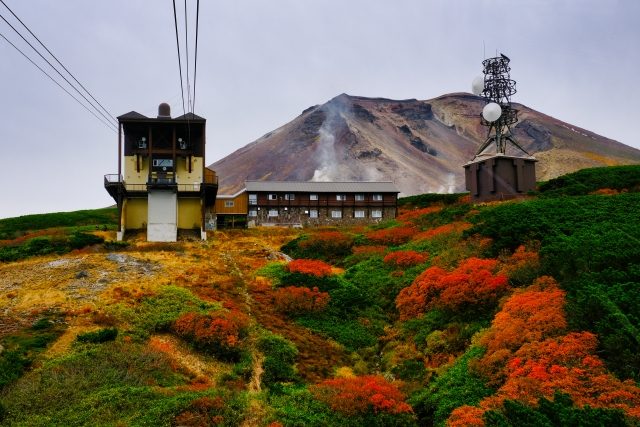
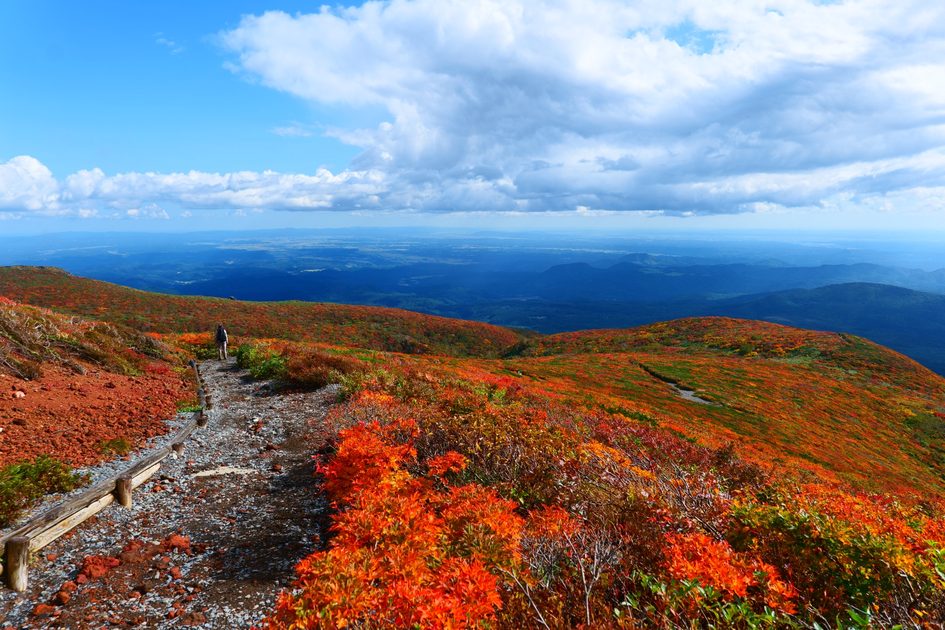
Hokkaido foliage is the sprint type — Mt. Kurodake starts in late September, reaches Sounkyo within 10 days, then Jozankei and the Sapporo fringe 10 days after that. The whole peak lasts only about 30 days: the early stretch in the mountains, the later stretch in the onsen towns.
The 2026 season has already started, and the official verdict is that it started slightly late. At 16:02 on September 2, 2026, the Japan Weather Association’s Hokkaido branch published a forecaster’s note: the alpine shrubs near the Kurodake summit began turning red that day, which the association called a slightly later start than an average year. Colour moves down from the summit over roughly a month and a half, and in 2026 it is expected to reach the Sounkyo gorge in the first half to middle of October. The same note gives the threshold it works from — foliage advances once minimum temperatures fall below 8°C, and takes about three weeks to colour fully — plus the normal maple dates for Kushiro (October 16) and Muroran (November 7). The line that matters most is the last one: on the latest long-range outlook, Hokkaido temperatures this autumn are forecast above normal, so peak may run late — though warmer air also means autumn arrives slowly and there may be more good foliage-viewing weather. If you have booked the Kurodake summit for late September, leave yourself a few days of slack at the back end.
Read that note for what it is: a Hokkaido-only colour-change observation, not the first national peak forecast. The same site’s peak-foliage page still says 2026 data starts around late September. Do not carry “it is running late” across to Honshu or Kyushu — for those regions there is no current-year forecast at all yet.
Four Hokkaido spots and when they peak
- Mt. Kurodake, Daisetsuzan (around Sep 25): Japan’s earliest foliage line. Take the Kurodake ropeway and chairlift straight to 1,520 m — the combination of a maple sea and a snow-dusted crater isn’t found anywhere else. Summit dawn temperatures run 3–5°C in late September, so pack gloves and a warm layer. Full ropeway combos, Sounkyo lodging and peak-week timing are in our Hokkaido Daisetsuzan foliage guide.
- Sounkyo Gorge (around Oct 5): Ryusei and Ginga Falls plus columnar-basalt cliffs framing the gorge maples, best paired with an onsen overnight. Stay inside Sounkyo Onsen village; even off-peak, expect about ¥18,000/night (twin, with breakfast and dinner).
- Jozankei (around Oct 15): suburban foliage one hour from Sapporo. The Futami Suspension Bridge looking down into the Toyohira River gorge is the signature frame, walkable in half a day. ⚠️ Futami Park is under river-works construction from September 24, 2026 to the end of March 2027 and the construction area inside the park is closed to entry; the bridge is still reachable via the official pedestrian detour (open from October 1, closed through winter).
- Tokachidake Bogakudai (around Sep 30): golden larches + volcanic terrain + distant snow peaks — a photographer’s secret. About 30 minutes by car from Biei.
Transport and lodging
Sapporo is the easiest gateway (4 hours direct from Taipei); use JR plus local buses in the city. For Mt. Kurodake, a rental car is best — pick up in either Asahikawa or Sapporo, and put both pickup points side by side on DiscoverCars before you commit, because the two often price quite differently. It is a comparison aggregator rather than a rental company, so the actual contract and insurance terms come from whichever local supplier you end up booking. Compare Sapporo hotels with Trip.com’s Sapporo hotel search; weekday rates run about ¥10,000–15,000 and double on weekends. To drive the full Daisetsuzan + Furano + Biei loop, see our Hokkaido Central-East autumn drive; non-drivers should read the Hokkaido JR Pass guide.
Tohoku (Oct 15–Nov 10): Oirase and Lake Towada
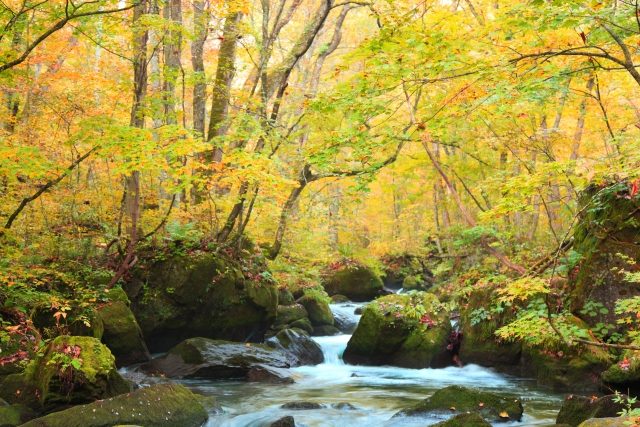
Tohoku is the home of trail-type foliage — the foliage walks most worth doing on foot cluster here. The trade-off is relatively remote access: 3 hours by Shinkansen from Tokyo to Hachinohe, then another 75 minutes by bus to Oirase.
Four Tohoku spots and when they peak
- Oirase Stream (around Oct 25): a 14 km streamside trail where light, water and maples line up like nowhere else — a perennial entrant on Japan’s Top-100 foliage list. Walk it in reverse, from Nenokuchi toward the Yakeyama end; side light from 2–4 pm is most flattering, and that window most reliably yields a full back-lit wall of red. Section-by-section trail tips, bus connections and lodging are in our Oirase Stream foliage guide.
- Lake Towada (around Oct 25): a caldera lake ringed by maples; the best experience is the cruise from Nenokuchi to Yasumiya (50 min, ¥1,500), with uninterrupted foliage from the deck.
- Hachimantai (around Oct 10): the Aspite Line drive, with a maple tunnel on either side, is the top pick for road-trippers. 1.5 hours by rental car from Morioka to the summit lookout.
- Naruko Gorge (around Nov 5): the classic composition of a V-cut gorge and the Ofukazawa Bridge. Two hours by Shinkansen + bus from Sendai, doable as a day trip.
Transport and lodging
One thing to update first: the Tohoku-area JR East Pass no longer exists. It was withdrawn on 13 March 2026 and replaced the next day by a single JR EAST PASS covering the whole JR East network — ¥35,000 for five days, ¥50,000 for ten. Both the price and the coverage changed, so the old advice that it is the cheapest way to see Tohoku in autumn no longer carries over: if you are only riding Sendai↔Aomori, work out the break-even against the new price rather than assuming it pays off. Compare Sendai hotels with Trip.com’s Sendai search; for a small Yamagata onsen detour, Ginzan Onsen is close by — see Ginzan Onsen: day trip vs. overnight. For using Sendai as a base (gyutan, Matsushima), see our Sendai guide; and the World Heritage stop of Hiraizumi en route, where Chusonji's Tsukimizaka approach is lovely in autumn, is in our Hiraizumi guide.
If you are not driving, there is a ready-made option here: a day tour from Aomori Station covering Oirase Gorge, Lake Towada and the Hakkoda Ropeway in one run, with the Towada sightseeing boat fare included and a substitute stop at Jigoku-numa and Sukayu when the ropeway is suspended; it operates Mondays, Wednesdays, Fridays and Sundays. Check how it actually moves before you book, though. The operator states plainly that the 9 km from Ishigedo to Nenokuchi is covered by vehicle, with no walking as a rule — so if walking that stretch along the stream is the point of your trip, this is the wrong purchase. Take the JR bus instead and plan the legs yourself using our Oirase Gorge bus and walking guide.
Kanto + Chubu (Oct 25–Nov 25): Nikko, Hakone, Kawaguchiko, Tokyo ginkgo
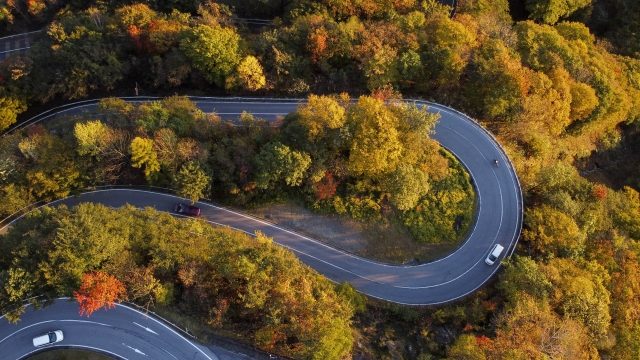
This is the region with the most choice and the fiercest competition. Within one month Nikko, Hakone, Kawaguchiko, Kamikochi, Tateyama-Kurobe and Tokyo’s ginkgo all peak — but weekend crowds are brutal; Irohazaka can jam for 2 hours. Plan weekdays.
Four Kanto and Chubu spots and when they peak
- Nikko: Lake Chuzenji + Irohazaka (around Oct 25): drive the 48-bend Irohazaka switchback and the whole hillside is on fire. The Akechidaira lookout over Lake Chuzenji + Kegon Falls is the golden foliage-photography combo. Two hours by Tobu Nikko Line limited express from Asakusa. Alternative viewpoints, Irohazaka crowd-timing and the Tobu pass math are in our Nikko Chuzenji autumn guide.
- Hakone Sengokuhara + Lake Ashi (around Nov 10): pampas-grass plains with maples plus a pirate-ship view of Mt. Fuji — the top suburban pick at 90 minutes from Tokyo. The Hakone Free Pass (2-day, ¥7,100) covers the mountain railway, ropeway and pirate ship.
- Kawaguchiko Maple Corridor (around Nov 15): Maple Festival illuminations + a reflected Mt. Fuji, a November-only combo. 1.5 hours by highway bus from Shinjuku to Kawaguchiko Station, then the loop bus to the corridor. For a spot-by-spot peak-timing table and the ropeway-vs-lakefront call, see our Kawaguchiko autumn guide.
- Tokyo: Meiji Jingu Gaien ginkgo (around Nov 25): a 300 m golden ginkgo avenue, Tokyo’s latest and grandest fall scene. Five minutes’ walk from Aoyama-itchome. Crowds are enormous on weekends; weekday mornings 9–10 am are most comfortable. The full Tokyo ginkgo route — Gaien plus Showa Kinen Park and Kaichi-dori — is in our Tokyo ginkgo guide.
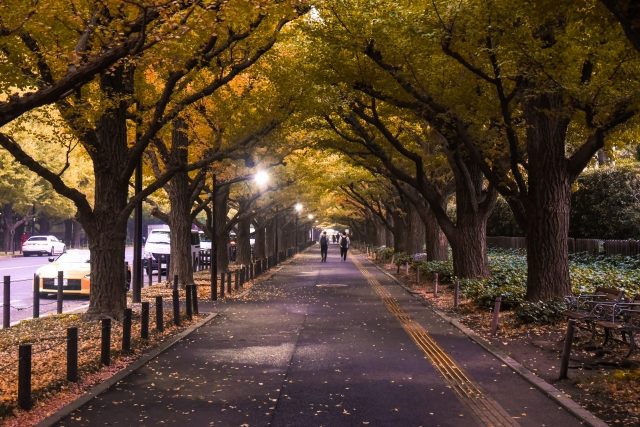
Kawaguchiko bonus: the easiest Mt. Fuji day trip
The simplest way to chain Kawaguchiko + Mt. Fuji 5th Station + Oshino Hakkai in one day is a tour departing from Ginza: KKday Mt. Fuji day tour (from Ginza). Per the operators’ official itineraries, these coaches typically stop right by the Kawaguchiko Maple Corridor, saving you luggage transfers and timetable-juggling. For a full transport comparison, see Tokyo to Mt. Fuji day-trip guide.
Korankei, central Nagoya and Hakone: three foliage deep-dives worth a full day each
Aichi’s Korankei is the most classic maple sea near Nagoya — roughly 3,000 trees across 11 maple species line the Tomoe River and Mt. Iimori, plus a streamside night illumination you rarely see elsewhere. By the Japan Weather Association’s long-run records the peak lands mid-to-late November, and the evening light-up runs only during November’s Momiji Festival, glowing from sunset until 21:00. The exact festival dates are usually published only close to the season, so confirm with the Asuke Tourism Association before you go. Korankei itself is free to enter; the main cost is parking (¥1,000 per standard car) — there is a separate write-up on Korankei’s peak week, evening light-up hours and the Meitetsu connection. But Korankei is not the whole of Nagoya's autumn — the city itself peaks later (the JMA normal for Nagoya maples is November 28), and Shirotori Garden and the Higashiyama botanical section hold their colour into early December, so anyone reaching Chubu in early December should read how Nagoya's ticket prices and peak dates diverged for 2026 instead.
Hakone foliage isn’t a single date — it’s an elevation gradient. The high peaks of Mt. Kamiyama and Mt. Kintoki turn first in late October; the mid-elevation belt around Sengokuhara, Lake Ashi and Moto-Hakone follows in early November; the lower onsen districts of Gora and Miyanoshita run mid-to-late November; and Hakone-Yumoto closes things out into early December. The same Hakone trip shows you a different band of color depending on which day you go — for the full “which elevation, which week” breakdown see Hakone’s elevation-by-elevation timing and route.
Korankei Autumn Foliage 2026: Peak Timing & Access
Nagoya-area top foliage spot: peak dates, night illumination, and the bus transfer decoded.
Nagoya Autumn Foliage 2026: Which Garden Is Worth It?
The October price rise skipped two of the gardens, so the one with the most maples is also the cheapest. The city peaks one to two weeks after Korankei — by early December, Korankei is bare.
Hakone Autumn Foliage 2026: Timing by Elevation
Lake Ashi peaks two weeks before Gora: an elevation-by-elevation timing table plus a Free Pass route.
Kansai (Nov 15–Dec 7): Kyoto’s two authoritative weeks
In Kansai, foliage means Kyoto. The other spots (Nara, Himeji’s Mt. Shosha, Osaka Castle Park) are worth adding but can’t replace it. Kyoto’s peak fortnight is the priciest two weeks of Japan’s year — a 4-star room in the Karasuma area can jump from ¥16,000 to ¥42,000 — but Tofukuji’s Tsutenkyo Bridge, the night maples at Eikando, and dawn in Arashiyama during those two weeks really are irreplaceable.
Three top Kyoto spots
- Tofukuji Tsutenkyo Bridge (around Nov 25): 2,000 maples below the bridge merge into a single sea of red — Kyoto’s most jaw-dropping foliage view. In the autumn period (Nov 14 – Dec 6) Tsutenkyo opens at 8:30 at ¥1,000 for adults, so arriving 15 minutes early puts you in with the first group; outside those dates it opens at 9:00 and drops to ¥600. Note too that the combined ticket is not sold during the autumn period, so adding the Hojo garden means buying separately.
- Eikando (around Nov 28): a must for night illuminations, with Kyoto’s richest layering of light and shadow. Entry from 17:30; arrive before 17:00 to be safe.
- Arashiyama (around Nov 22): Togetsukyo Bridge + the bamboo grove + the Sagano Scenic Railway. 6:30 am is the soul window — after 10:00 the tour groups pour in and the bamboo grove means a 20-minute photo queue.
Nara bonus: a day trip from Kyoto
Kyoto to Nara is 45 minutes by JR rapid; maples + deer + Kasuga Shrine fill a single day. The view over the city’s foliage from the top of Mt. Wakakusa is worth the climb. And when Kyoto’s peak-week crowds get unbearable, Osaka’s Minoo Falls and Katsuoji make a surprisingly calm plan B — routes and fees are in our Osaka & Nara autumn guide.
Lodging strategy
Peak-week Kyoto hotels are the most expensive of the year. Favor Karasuma (where the Tozai and Karasuma subway lines cross) and compare with Trip.com’s Kyoto search, booking 12 weeks out. On a tighter budget, switch to Osaka’s Umeda — a ¥600 highway bus gets you to Kyoto in an hour. For the full 3-day Kyoto route and all 18 spots, see the Kyoto autumn foliage guide.
Kyushu (Nov 20–Dec 15): the last front in Japan
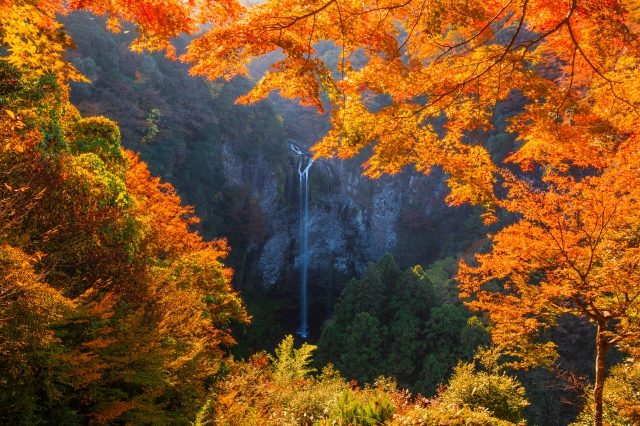
When Kyoto’s maples have fallen, Kyushu is just getting started. Yabakei, the Kuju Yume Otsurihashi Bridge and the Aso outer rim hold color into mid-December — the savior for “make-up exam” travelers. Missed Kyoto? Fly to Fukuoka and you’re still in time.
Three Kyushu spots and when they peak
- Yabakei (around Nov 25): Ao-no-Domon Tunnel + the Kyoshuho cliffs, Kyushu’s top fall spot. Two hours by car from Fukuoka or Beppu.
- Kuju Yume Otsurihashi Bridge (around Nov 20): Japan’s tallest pedestrian suspension bridge (173 m) with a valley of foliage below. The view straight down is staggering.
- Aso Outer Rim (around Nov 30): the Kusasenri → Aso Shrine drive, where volcanic terrain meets golden leaves for the most dramatic scenery.
Transport and itinerary
The JR Kyushu Pass (Northern 3-day, ¥15,000), paired with the Yufuin no Mori and Aso Boy trains, makes Fukuoka-in, Kumamoto-out the smoothest loop. For a full 3-day rail itinerary costed out, see Kyushu 3-day rail journey; for the drive-vs-rail verdict on Mifuneyama, Unzen and the other scattered foliage spots, see the Kyushu autumn guide.
Booking timing: the 12-week rule
The booking order for a foliage trip is “reserve hot small towns first, big metros later.” The reason: large metros (Tokyo, Fukuoka, Sendai) have plenty of rooms and stay bookable 4–6 weeks out, but hot small towns (Kyoto peak week, the Kawaguchiko lakefront, Yufuin onsen) have a fixed, limited room supply — so the earlier the better.
Booking timeline
| Lead time | Action | Why |
|---|---|---|
| 12 weeks | Book Kyoto peak-week hotels, Kawaguchiko lakefront inns, Yufuin onsen | Highest demand of the year — pricier / unbookable the closer you get |
| 8 weeks | Book metro hotels (Tokyo, Fukuoka, Sendai, Sapporo) | Plenty of rooms, but the good ones get swept up |
| 8 weeks | Buy flights (early-bird gap ¥10,000–20,000) | Foliage season isn’t a low season for airfares |
| 4 weeks | Reserve limited tickets online: Sagano Railway, Shirakawa-go buses (Kyoto night illuminations need no booking) | Counters often sell out by 9:00 |
| 2 weeks | Check your spot's 2026 forecast date on its WeatherNews spot page (tenki.jp gives you today's colour status only — its forecast page is still the 2025 edition) | The national call this year is “later or slightly later than normal” — shift the historical averages back and fine-tune your spot order |
| 1 week | Buy eSIM, waterproof shoes, light down | eSIMs sell out on the ground during peak week |
On flights, Taipei→Tokyo in foliage season commonly runs ¥18,000–25,000 round trip; compare TPE→TYO fares on Trip.com for the fastest read. For Kyushu fly into Fukuoka, for Tohoku fly into Sendai — both beat routing via Haneda and connecting domestically.
Light and crowd strategy
At the same spot, arriving two hours earlier gives you a different photograph altogether. This is the single most important decision of a foliage trip.
Three golden windows
- Dawn 6:30–9:00: nearly every marquee spot is empty, with raking light and the most beautiful back-lit leaves. Applies to Kyoto’s Arashiyama, Kiyomizu and Tofukuji; Nikko’s Lake Chuzenji; the Kawaguchiko Maple Corridor. The early alarm hurts, but the payoff is huge.
- Afternoon 14:00–16:30: outdoor trail spots like Oirase Stream, the Hachimantai drive and the Aso outer rim are best in afternoon side light. For mountain spots, time the sunset (sunset is around 16:30 in November, 17:00 in October).
- Night maples: Kyoto’s Eikando, Kiyomizu, Kodaiji, Kitano Tenmangu and other temples run evening illuminations with different dates and prices — Kiyomizu only Nov 21–30. For each temple’s dates and whether to reserve, see Kyoto night foliage 2026. Shoot in the last 30 minutes before closing, when the crowds thin.
Weekday vs. weekend
The structure around Lake Chuzenji is simple: Irohazaka is the only road up and down, lakeside parking is limited, and on a peak-week weekend both fill at once. The call: avoid weekends if you can; if you must drive up, check the NEXCO Central traffic forecast before you leave. If a weekend is unavoidable, schedule every “needs a car” spot for Sunday afternoon, once the crowds have dispersed.
Five nationwide beginner mistakes
- Thinking “November = foliage month.” Hokkaido starts in late September; Kyushu doesn’t peak until December. Without checking the local peak week, you can land somewhere fully green or fully bare.
- Scheduling famous temples in the afternoon. Kyoto’s Kiyomizu and Tofukuji; Nikko’s Toshogu; Meiji Jingu Gaien — all peak with crowds in the afternoon, and all you’ll photograph is heads. Go with the first morning group instead.
- Booking lodging only 4 weeks out. Hot spots like Kyoto peak week, the Kawaguchiko lakefront and Yufuin onsen need booking 8–12 weeks ahead. Wait until 4 weeks and you’ll find no rooms or doubled rates.
- No rainy-day backup. Central Japan has a 30–40% rain probability in November. Check the week ahead; above 60%, push trail spots later and pull indoor temples earlier.
- Packing five spots into one day. Foliage season means slow transport and big crowds; 3–4 spots a day is the ceiling. Cram five and each becomes a blur — and you’ll be too exhausted to go out for dinner.
Those are the foliage-specific traps; the cross-season ones every first-timer hits — wrong currency exchange, fumbling IC cards, over-packing the schedule, booking too late — are collected in our first-timer mistakes in Japan guide, worth reading alongside this if it’s your first trip.
Frequently Asked Questions
- Q1:When does autumn foliage peak in Japan — earliest and latest?
- Earliest is Mt. Kurodake in Hokkaido’s Daisetsuzan range, which starts in late September. Latest is Kyushu (Yabakei, the Aso outer rim), which holds color into mid-December. That’s a roughly three-month window: Hokkaido late Sept, Tohoku mid-Oct, Kanto/Chubu late Oct to mid-Nov, Kyoto late Nov, Kyushu early-to-mid December.
- Q2:Will the 2026 peak differ much from previous years?
- Yes, and the direction is clear: later than a normal year. WeatherNews published its first 2026 peak-foliage forecast on September 3, 2026, covering roughly 1,200 spots nationwide with a specific date for each one, and its national verdict is “later or slightly later than normal” — mean temperatures are forecast above normal across eastern and western Japan for the whole autumn, and in northern Japan from late September, and warmer air slows the colour change. Leaf condition is better than last year everywhere except Kyushu, which had a hot, dry summer. The other independent forecaster, the Japan Weather Association (tenki.jp), now runs a daily colour-status tracker showing where the leaves have actually turned, but it has published no 2026 peak-foliage forecast — its forecast page still carries the 2025 third round, even though the breadcrumb above it reads 2026, so it is easy to misread the year. That leaves only one forecast on the table and nothing to cross-check against. For the date at your specific temple or gorge, use the WeatherNews spot pages — not its calendar page, which shows the 2004–2025 average. The Walkerplus national article that went up on September 4 is a republication of the WeatherNews first round (it says so in its own source line), and its spot pages carry only average-year timing plus a daily colour-status update, no 2026 per-spot dates. WeatherNews has not announced a date for a second round.
- Q3:If I can only pick one region, which is most worth it?
- It depends on your style. For photography and quieter trails, Tohoku’s Oirase Stream (around Oct 25). For classic Japanese aesthetics, Kyoto’s Arashiyama and Tofukuji (around Nov 25). For city convenience plus a dream backdrop, Kawaguchiko’s Maple Corridor with Mt. Fuji (around Nov 15). To catch the very first wave, Hokkaido’s Sounkyo Gorge (around Oct 5). On a fixed budget with only 4–5 days, Kyoto plus Osaka is the easiest combination to pull off.
- Q4:How far ahead do I really need to book accommodation?
- Kyoto’s peak fortnight (roughly Nov 22–Dec 5) is the single most expensive lodging window of Japan’s entire year — pricier than cherry-blossom season. Book 4–5 star hotels 12 weeks out; even 3-star, book 8 weeks ahead. Nikko, Kawaguchiko and Yufuin want 8–10 weeks. Hokkaido’s Daisetsuzan is the exception — because visitors are mostly hikers, rooms are often available 4–6 weeks out. The same room can cost 2.5× more during peak week, so avoid weekends where you can.
- Q5:Is a nationwide JR Pass worth it for a foliage trip?
- It comes down to routing. If you’re crossing regions in 7 days — say Tokyo → Nikko → Tohoku → Kyoto — the 7-day nationwide JR Pass at ¥50,000 typically saves ¥10,000–15,000. If you’re staying inside Kansai, or only touring one region like Tohoku, a regional pass wins. Our JR Pass guide has four real itineraries costed line by line.
- Q6:Is shooting foliage in the rain a disaster or a hidden opportunity?
- Rain is often an opportunity. Wet maple leaves look far deeper in colour, and reflections at Eikando, Oirase Stream, and below Tofukuji’s Tsutenkyo Bridge look more dramatic. The downsides: the Sagano Scenic Railway suspends more often in rain, and night-illumination queues soak your shoes. Check the week’s rain probability — above 60%, push trail-style spots later and pull indoor temple visits earlier.
- Q7:Traveling with elderly parents or young kids — how should the plan change?
- Three principles. First, drop spots that require steep climbs (Kiyomizu’s stone steps, parts of the Irohazaka trails). Second, do just one night-illumination rather than two, to avoid standing in 30–60 minute queues. Third, choose restaurants that take online reservations to skip 40-minute waits. Nikko, Kawaguchiko and central Kyoto all have gentle, level foliage routes far better suited to families than mountain spots.
🏨 Foliage-week ryokan booking is the hardest of the year — marquee inns like Notoya, Tamanoyu and Gora Kadan sell out the moment reservations open six months ahead. Read 5 best Japan onsen ryokan 2026 for the booking timeline, or browse the Japan hotels page to filter foliage-region stays by area.
Read next
Hokkaido Daisetsuzan Autumn 2026: Japan’s Earliest Foliage
Mt. Kurodake ropeway, Sounkyo basalt gorge, Jozankei — chase Japan’s earliest foliage in late September.
Hokkaido Central-East 5-Day Autumn Drive 2026 Guide
Six weeks of foliage across 600 km — 3-rental comparison, toll math, central-east loop.
Tohoku Oirase Stream 2026: 14 km Walking Trail Guide
Japan’s Top-100 foliage stream: reverse-walk strategy, Lake Towada cruise, JR East Pass math.
📊 See the 2026 Price Index (JR Pass, DPA, eSIM, Airport Transport) →