A Japanese emergency room routinely bills a foreign visitor tens of thousands of yen for a sprained ankle and an X-ray, and an afternoon of Google Maps on default roaming can cost more than a week of data bought properly. Neither is an exotic scenario; both are ordinary and both are avoidable for a few thousand yen spent before you fly. Every item on this checklist earns its place by preventing a specific, documented cost — set out in the order you actually need to deal with them.
- Get an eSIM over pocket Wi-Fi: 40% cheaper, no deposit, no airport kiosk, no battery to charge.
- Travel insurance is essential: Japanese ER starts at ¥30,000; a ¥1,800/week policy covers medical, flight delay, and lost baggage.
- Fill out Visit Japan Web: Saves 20–40 minutes of paper forms at immigration and customs. One QR code, shown twice — at the immigration counter, then at customs.
- Carry ¥15,000–¥20,000 cash: Card acceptance has improved, but shrines, small shops, and vending machines still prefer cash.
- Tax-free threshold: ¥5,000 per store per day (consumables and goods are calculated separately).
If you only have ten minutes: buy an eSIM, get travel insurance with trip-delay coverage, fill out Visit Japan Web, bring ¥20,000 cash for Day 1, and download Google Maps offline for your destination cities. Everything else is optimisation.
Table of Contents (click to expand)
- 1. Connectivity: eSIM is the 2026 default
- 2. Travel insurance: the non-negotiable ¥2,000 bet
- 3. Visit Japan Web: the 10-minute form that saves 20-40 minutes
- 4. Cash, card or Suica: the 2026 ratio
- 5. Luggage: the 25-in, 29-in strategy
- 6. Five apps to install before the flight
- 7. Where to stay: three filters that always work
- 8. Tax-free shopping: the ¥5,000 rule, and what changes on 1 November 2026
- 9. Peak seasons to schedule around
- 10. The 72-hour pre-departure checklist
- Seasonal packing: what to actually bring
- The konbini starter pack
- A quick ryokan and onsen primer
- Two common mistakes and their fixes
- One last principle: leave gaps
1. Connectivity: eSIM is the 2026 default
In 2020 the answer was pocket Wi-Fi. In 2026 it is eSIM, and it is not close. A Japan eSIM now costs less than pocket Wi-Fi rental, activates at the airport gate, has no deposit, no return kiosk, no battery to charge, and no second device to lose. The only reasons to still use pocket Wi-Fi are (a) a group of 3+ who plan to stay close to one device, or (b) a phone older than an iPhone XS / Samsung Galaxy S20 FE that doesn't support eSIM.
| Option | 5-day price | Pros | Cons |
|---|---|---|---|
| eSIM (unlimited) | ¥1,200–¥2,400 | Instant activation, no deposit, no hardware | Older phones unsupported, solo data only |
| Physical SIM | ¥1,650–3,000 | Any phone with a SIM tray | Must swap home SIM, easy to lose |
| Pocket Wi-Fi | ¥3,000–5,000 | Shareable, unlimited | Charging, deposit, airport return required |
| Carrier roaming | ¥1,500/day + | Zero setup | 5x cost of eSIM for anything over 2 days |
Five Japan eSIM brands compared by published coverage, pricing tiers, customer-service language and install flow. Full breakdown in the eSIM head-to-head review.
Japan unlimited eSIM (5–30 day options)
QR code delivered in minutes. SoftBank + KDDI backhaul, which holds up well across rural Hokkaido.
Get Japan eSIM →2. Travel insurance: the non-negotiable ¥2,000 bet
Japanese medical bills are shocking when you see them up close. An emergency-room visit starts at around ¥30,000 for the consultation alone; imaging adds ¥20,000; an inpatient night is ¥50,000 and up. A sprained knee on the Fushimi Inari steps can run ¥270,000 between taxi, imaging and crutches — the kind of ordinary mishap that's far from rare. A ¥1,800 insurance policy would cover the lot.
The three coverage tiers that actually pay out:
- Medical: at least ¥15,000,000. Lower limits look cheaper but quickly run out for anything involving hospitalisation.
- Trip delay: 4-hour trigger. Typhoon season (September–October) delivers real delays. A 4-hour trigger means your airport hotel, dinner and toiletries are covered.
- Baggage delay: 6-hour trigger. Covers the cost of buying emergency clothes and toiletries while your bag catches up.
Credit-card-embedded insurance usually fails on one of these three — most commonly on medical limits. Read the fine print before relying on it.
For policy details — how much medical cover to carry, and what to check before ski, hiking or driving days — see our complete Japan travel insurance guide.
3. Visit Japan Web: the 10-minute form that saves 20-40 minutes
Visit Japan Web is Japan's digital immigration and customs declaration system. It merges the two paper forms you used to fill out on the plane into one QR code. Seven airports — New Chitose, Narita, Haneda, Chubu, Kansai, Fukuoka and Naha — also run customs electronic declaration gates you walk straight through once the customs terminal has read your code. During peak arrival waves the whole thing saves 20–40 minutes versus writing and queueing with paper.
Fill it out any time you like — the system accepts an arrival date as far ahead as 31 December of the following year, and the QR code has no published expiry. You'll need: your passport, your flight number, your first-night hotel address in Japan, and a phone camera to scan the passport photo page. At the airport, open the site offline (it caches the QR — there is no app, despite what the name suggests), show the code to the immigration officer, then show it again at customs. Show it on your own phone or tablet: that is what the Digital Agency requires, so a printout is not a backup.
One gotcha: if you change your first-night hotel after registering, log back in and update. The address on the form must match where you will sleep on Night 1.
4. Cash, card or Suica: the 2026 ratio
Japan has rewritten its payment landscape in three years. The "Japan is cash-only" reputation is now half-true. Our current target ratio: 30% cash, 50% credit card, 20% IC card (Suica/Pasmo).
Card works: chain restaurants, department stores, most hotels, major museums, Shinkansen tickets, taxis in big cities, any retailer showing a Visa/Mastercard/JCB sticker at the door.
Cash only: shrines and temples (offerings, goshuin books), mom-and-pop ramen shops, outdoor markets, some taxis in smaller cities, some ryokan additional fees.
IC card (fastest): konbini, trains, buses, vending machines, coin lockers, most chain cafés. Apple Pay Suica and Google Wallet Suica both work on iPhone 8+ and most modern Android — you never need to touch the physical card.
For withdrawing cash, Seven Bank ATMs inside 7-Eleven give the best exchange rate and accept nearly every foreign card. Japan Post ATMs are second best and have the widest rural coverage.
5. Luggage: the 25-in, 29-in strategy
Japan's transit system is not generous to oversized bags. Shinkansen luggage racks fit 29-inch suitcases only in the rear "oversized baggage" row, which you must reserve in advance as of May 2020. Narrow taxi trunks in Kyoto, tight hotel elevators in Shinjuku, and metro turnstiles that genuinely do not fit a 32-inch spinner make the 29-inch the practical upper ceiling.
A smart packing strategy: fly in with a 25-inch suitcase (light, easier on trains), and nest a folded 29-inch duffel or lightweight second case inside it. Fill the 29-inch on the way home with shopping. This sidesteps the "overweight on arrival" problem and keeps you nimble on travel days.
What to look for in a case: for a Japan trip the feature that actually earns its keep is the expandable zip gusset — it buys you extra capacity on the way home without paying for another checked bag. Beyond that: double TSA locks, true 360-degree spinner wheels, an empty weight under 4.5 kg (10 lb), and a matte hardshell rather than gloss, which shows every scuff. We do not recommend specific models — luggage pricing and model numbers turn over faster than we can keep verified.
6. Five apps to install before the flight
- Google Maps — Download offline maps for Tokyo, Osaka and Kyoto. Transit directions in Japan are the most accurate of any country we've tested.
- Navitime Transit (for Japan Travel) — More accurate than Google for last-train times, Shinkansen reservations and express-vs-local filtering. The free version is enough.
- Visit Japan Web — The digital immigration system covered above.
- Tabelog — Japan's trusted restaurant review app. A Tabelog 3.5 is genuinely better than a Google 4.5 in most cities.
- LINE — Japan's dominant messenger. Some ryokan reservations, izakaya booking bots and after-hours hotel communications run on LINE-only channels.
For setup steps, which offline packs to download, and a few translation and IC-card apps that only matter once you land, see the full Japan travel apps guide — ten minutes the night before and your phone is ready. While you are in there, settle one thing no app controls: whether a roaming handset actually receives Japan's earthquake early warning. Plenty of visitors assume theirs does.
7. Where to stay: three filters that always work
Picking a Japan hotel is paralysing because there are too many good options. We cut through it with three hard filters:
- ≤ 5 minutes from a station entrance. In hot/cold/rainy weather, the difference between 4 minutes and 12 minutes is the difference between loving your hotel and resenting it.
- Has an elevator. Many older Japanese hotels are stairs-only. With a suitcase, this is a deal-breaker.
- Free cancellation. Book early for choice, keep the option to re-optimise later.
Neighbourhood defaults that rarely disappoint: Tokyo — Shinjuku, Tokyo Station or Ueno. Osaka — Namba or Umeda. Kyoto — Kyoto Station or Kawaramachi. Sapporo — within 10 minutes walk of Sapporo Station.
Japan hotels with free cancellation
200+ airlines and OTAs in one search; calendar view finds the cheapest dates fast. TWD display and Chinese-language support for Taiwan readers.
Search Japan hotels →8. Tax-free shopping: the ¥5,000 rule, and what changes on 1 November 2026
Foreign tourists can shop tax-free (consumption tax is 10%, or 8% on food and drink) at participating stores when the daily total at that store reaches ¥5,000 pre-tax. That threshold survives the reform untouched, and it is still judged on the pre-tax figure. Everything after it changes, and the switch is triggered by the date you buy, not the date you fly. There is no overlapping transition period.
Up to 31 October 2026: present your physical passport (not a photo) at the register or the tax-free counter and the tax comes off on the spot. Consumables (food, drink, cosmetics, supplements) and general goods (electronics, clothes) are counted separately, consumables get sealed in a bag you cannot open in Japan, and you do nothing at the airport. Most chains — BIC Camera, Don Quijote, Matsumoto Kiyoshi, Uniqlo, department stores — handle it at a dedicated counter after normal checkout; independent shops vary, so look for the Japan. Tax-free Shop logo at the entrance.
From 1 November 2026: the same shops charge you the tax-inclusive price and you get the money back later. The general-goods/consumables split, the ¥500,000 consumables cap and the sealed bags are all abolished, so everything you buy at one store counts toward the same ¥5,000. In exchange you pick up an airport step: within 90 days of purchase, at departure, you scan your passport at a self-service kiosk in the international departures hall — before you check your bags and before security, which is the opposite of where people expect it. A green result ends it in seconds; a red result sends you to a customs desk with the goods. The airport does not pay you — the shop, or a refund operator it hires, does, using the payment details you register in store. Two traps worth carrying in your head: a bag once checked in cannot be retrieved, and customs checks one receipt at a time, so a single missing item voids that whole receipt. Keep the packaging and the receipts. Full walkthrough in our pay-first, refund-later guide.
One more money tip: on top of tax-free, most of these chains let you stack a "passport coupon" for another 5–7%. See our coupons hub for every store's real scan coupon, or the full Japan discount coupons guide.
9. Peak seasons to schedule around
Three domestic travel peaks when even a loose itinerary gets hard:
- Golden Week (late April to early May): four national holidays in seven days. Hotels double in price, Shinkansen sell out, Kyoto becomes a slow-moving selfie stick.
- Obon (mid-August, usually Aug 13–16): the ancestral festival return-to-hometown migration. Inverse of Golden Week — cities empty, rural Japan jams up, and prices on the routes out of Tokyo spike.
- New Year (December 29 to January 3): Japan shuts. Many restaurants and family-owned shops close. Trains and flights are full, temples at midnight on New Year's Eve are joyous but standing-room-only.
International peaks to budget for: cherry blossom (late March–first week of April) and autumn leaves (mid- to late November). Both windows are short and crowded; build a ±10-day window if the photos are the whole point.
10. The 72-hour pre-departure checklist
- Passport valid 6+ months from entry date
- Visit Japan Web filled and QR screenshot saved offline
- Flight, hotel, insurance confirmations printed or saved to phone
- Credit card activated for international use (call issuer if unsure)
- eSIM QR received and — ideally — installed but not activated
- Suica added to Apple Pay / Google Wallet
- Google Maps offline areas downloaded
- Navitime and Tabelog installed
- Power adapter packed (Type A is the native Japan plug)
- ¥15,000–¥20,000 cash for Day 1
- Portable phone battery (at least 10,000 mAh)
- Small foldable bag for shopping and trash (there are very few public bins in Japan)
Seasonal packing: what to actually bring
Japan is not one climate. Sapporo in January and Naha in January differ by 25°C. Pack for the city you'll spend the most nights in, and add one layer for the outliers.
Spring (March–May): temperatures swing 8–20°C between morning and afternoon. A packable down jacket, a light sweater and a pair of jeans cover nearly everything. Rain jacket for April showers. Sunglasses — sakura season is deceptively bright.
Summer (June–August): humidity is the enemy, not heat. Moisture-wicking t-shirts, quick-dry underwear, a small hand towel (Japanese public restrooms often lack paper towels, and locals carry one), a hat and a compact umbrella that doubles as sun parasol. Rainy season (mid-June to mid-July) needs genuine rain gear, not a windbreaker.
Autumn (September–November): the most forgiving season. Jeans and a light jacket by day, a scarf after sunset. Typhoon season runs September into early October — check forecasts 72 hours before any mountain or coastal day trip.
Winter (December–February): drier and clearer than most visitors expect, but cold. Merino base layer, a wool sweater, a mid-weight down jacket (not a heavy ski parka unless you're heading to Hokkaido), gloves and a beanie. Heattech from Uniqlo is genuinely the cheapest performance base layer you can buy — stock up in Japan rather than packing from home.
For region-by-region clothing strategy that goes deeper than this checklist — Hokkaido polar gear, Kyoto basin summer heat, Okinawa subtropical packing, full four-season packing lists — see our companion pillar: What to Wear in Japan: 4 Regions × 4 Seasons Packing Guide.
If your itinerary includes a night at a traditional onsen ryokan — Ginzan, Hakone, Yufuin, Kusatsu, Kurokawa, how to pick between them, when reservations open, why some inns sell out 6 months ahead — see our companion guide: 5 Best Japanese Onsen Ryokans 2026. Booking.com works fine for business hotels, but ryokans release their best rooms only through official systems and Ikyu — pick the wrong channel and you miss every good room.
The konbini starter pack
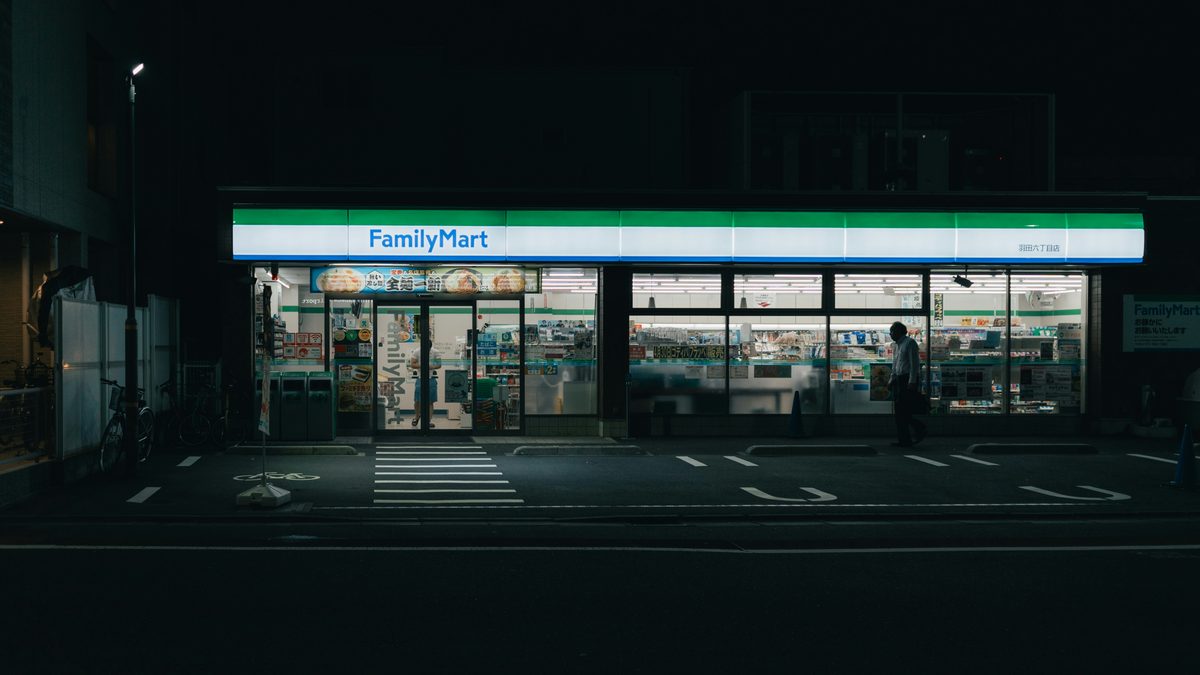
Japanese convenience stores (7-Eleven, FamilyMart, Lawson) are not the gas-station afterthoughts you know from home. They are the unofficial travel-support network of every trip: ATM, printer, package drop-off, tax counter, 3 am ramen shop, and first-aid stocker, all behind the same automatic doors.
The items we reach for every single trip:
- Onigiri (rice balls): ¥150–¥250, 300 calories of breakfast in one hand. Tuna mayo, salmon and pickled plum (umeboshi) are the safe starts.
- Seven Premium egg sandwich: the internet loves it for a reason. It is a genuinely good ¥350 breakfast.
- Hot oden in winter: self-serve from the counter hot case. Point at a daikon and a fish cake and you have a ¥400 meal.
- Family Mart fried chicken (Famichiki): the single item most repeat visitors smuggle into their daily rhythm.
- Cold brew coffee (Boss, Suntory): vending machine or fridge. Better and cheaper than any café chain.
- Pocari Sweat or Aquarius: electrolyte drinks, essential in summer humidity.
- Adhesive bandages and blister plasters: you will blister. Brand name: Band-Aid Kizupower or Hydrocolloid 絆創膏.
Seven Bank ATMs inside 7-Eleven are the best foreign-card ATMs in Japan. Lawson ATMs are a close second and are the only ones reliably open in smaller towns.
A quick ryokan and onsen primer
If your itinerary includes even one night in a traditional ryokan or a day trip to an onsen town (Hakone, Kusatsu, Noboribetsu, Kurokawa), a ten-minute read on etiquette saves an uncomfortable hour on the floor.
Check-in rhythm: most ryokan check-in is 3–4 pm with a welcome tea and sweet. Dinner is served in your room or a private dining room at a fixed time (usually 6 or 6:30 pm). Breakfast is similarly scheduled — this is not a hotel where you drift down at 10 am.
Shoes off at the genkan (entry step): the moment you step inside the main door, shoes come off. Slippers are provided. Remove the slippers again before stepping onto tatami mats.
Yukata: the cotton robe in your room is for wearing around the ryokan, to dinner, and to the onsen. Left side wrapped over right (right over left is for funerals — this is the one that catches people). Tie the obi belt at the front or side.
Onsen etiquette: wash thoroughly at the seated showers before entering the bath. No swimsuits. Do not submerge the small towel in the water — fold it and place it on your head or the bath edge. Tattoos: many traditional onsen still bar them; a tattoo-friendly list is maintained at tattoofriendly.jp. Soak for 10–15 minutes, cool off, re-enter if you want. Drink water — onsen dehydrate you faster than you think.
Three common mistakes and their fixes
These trip up nearly everyone on the packing front; for the wider list of things that catch first-time visitors off guard — over-packed days, fumbling train transfers, queuing for the wrong things — read our rundown of the most common first-timer mistakes in Japan.
Mistake: Bringing a high-wattage hair dryer or flat iron from home.
Fix: Japanese outlets are 100V (vs 120V US, 230V EU). High-wattage heating appliances underperform or trip the breaker. Most hotels supply one; for ryokan and Airbnb, buy a cheap Panasonic dryer at any BIC Camera for ¥3,000.
Mistake: Assuming you can pay everywhere with card.
Fix: Shrines, small ramen shops, some taxis and nearly all vending machines still need cash or IC card. Load ¥3,000 onto Apple Pay Suica as a minimum floor — it opens 90% of vending machines, convenience stores and metro gates.
Mistake: Assuming Japan has one national smoking rule.
Fix: Street smoking is governed by each municipality's own ordinance, so walking through three Tokyo wards in a day can mean three different rule sets — some issue on-the-spot fines, some ban it ward-wide with no penalty at all, and some enforce only inside designated zones. Indoors, the legally required sign at the entrance settles it, and certain signs mean the whole venue is a smoking area that under-20s cannot legally enter. Full ward-by-ward breakdown in our Japan smoking rules guide.
One last principle: leave gaps
The best Japan memories are almost never the ticketed ones. They are the small stuff — a convenience-store onigiri eaten on a riverbank at 4 pm, the farmland sliding past a limited-express window, a nod from an izakaya owner when you finish a drink you didn't plan to order. Over-scheduling crowds these out.
A planning habit worth stealing: leave at least two unstructured half-days per week of travel. It feels wasteful on the spreadsheet and tends to be the best line item on the whole trip.
Next Reads
Best eSIM for Japan 2026: 5 Brands Compared
Airalo, Ubigi, KKday, Holafly and Jetfi compared on coverage, price and speed. Honest ranking.
Visit Japan Web Guide 2026
Immigration in ten minutes. The tax-free QR stands in for your passport in the shop — it is not what the airport kiosk reads.
Japan Tax-Free Nov 2026: New Airport Refund Rules
The kiosk reads your passport, not a QR — landside, before bag drop. One receipt, all or nothing.