The internet has argued for years about whether you still need cash in Japan, and the honest answer is simple: yes, but not much of it. According to METI (Japan's Ministry of Economy, Trade and Industry, March 2026 release), the country's cashless payment ratio reached 58% in 2025 — in cities, convenience stores, chain restaurants, department stores and stations take cards or contactless almost without exception. But the moment you buy a charm at a shrine, toss a coin into the offering box, eat at a tiny rural diner, or browse a market stall, you'll hit a cash-only moment.
This is the complete payment picture for first-time-to-intermediate visitors: how much cash to carry, where to withdraw yen most easily, the cheapest way to exchange money, which cards actually work, whether tourists can use PayPay, what's happening with the 2026 tax-free reform, and the perennial question of tipping. By the end you'll have a clean "cards first, cash as buffer, ATM top-ups" setup — no need to lug a fat stack of yen from home.
- Carry some cash, not a pile — about 20,000-30,000 yen per person for a 5-7 day trip; shrines, small shops and stalls stay cash-only.
- Best place to withdraw — Seven Bank ATMs in 7-Eleven and Japan Post ATMs accept foreign cards, run 24/7, with English menus and a 100,000 yen per-withdrawal cap.
- Cheapest exchange combo — change a little at home for arrival, then withdraw from ATMs in Japan; airport cash counters are the worst.
- Cards depend on the network — Visa/Mastercard widest, JCB good in Japan, Amex patchy; main Visa/MC + backup JCB.
- Tax-free switched on 1 Nov + no tipping — threshold still 5,000 yen pre-tax; from 1 Nov 2026 you pay the tax and the shop refunds it after the departure check, with no transition period and the purchase date deciding which system applies; Japan has no tipping culture.
📖 Table of contents (tap to expand)
- Is Japan still a cash country? What the 2025 data says
- How much cash to carry, and where it's cash-only
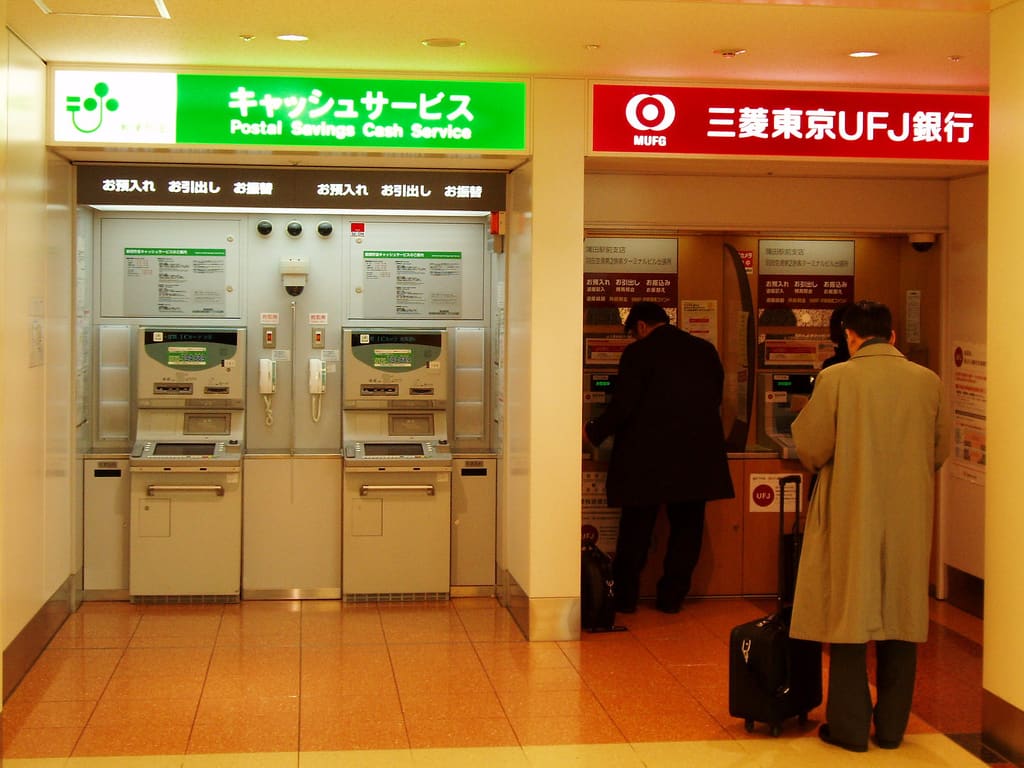
- Withdrawing yen: 7-Eleven and Japan Post ATMs
- Currency exchange: airport, home bank or ATM
- Credit cards: what works and the fees
- PayPay and QR payments: can tourists use them?
- IC cards: the underrated small-payment tool
- Tax-free shopping and the 2026 refund reform
- Tipping: you never tip in Japan
- Quick table: how to choose a payment method
- FAQ
Is Japan still a cash country? What the 2025 data says
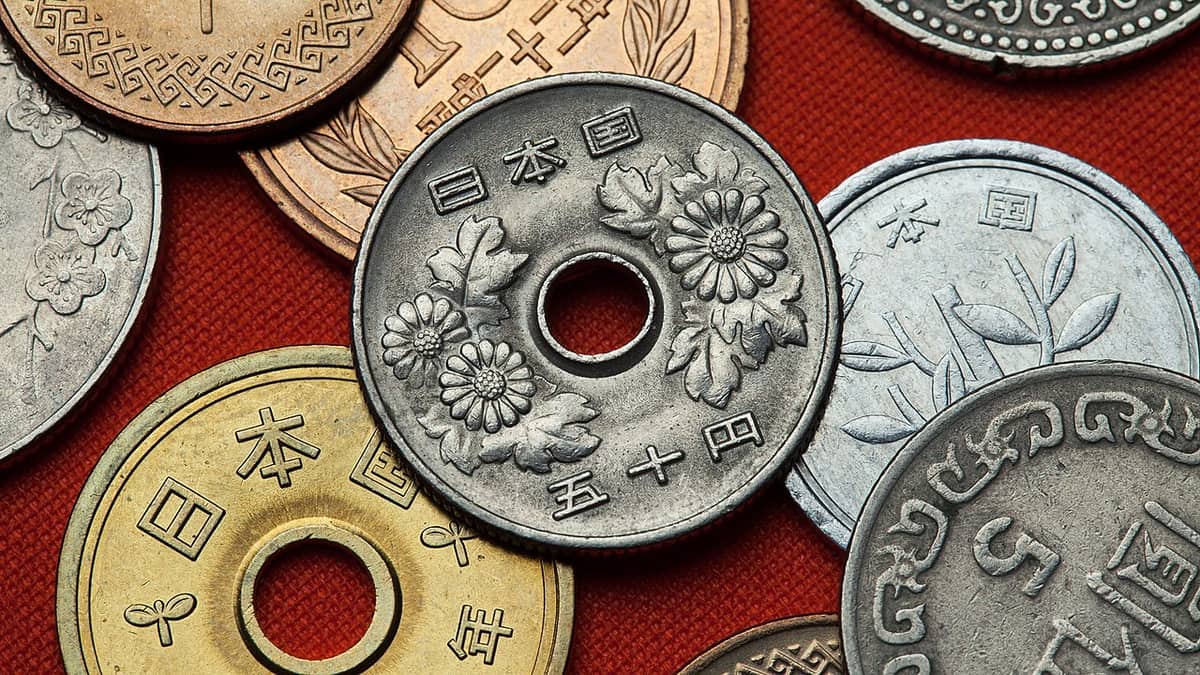
The "Japan loves cash" stereotype is fading fast, but it hasn't disappeared. According to METI's March 2026 figures, Japan's cashless payment ratio hit 58% in 2025, with credit cards making up the overwhelming majority, followed by QR-code payments, electronic money and debit cards. The government's long-term target is 80% cashless, with an interim goal of 65% by 2030 — the direction is clear: every visit, a few more places take cards.
But flip that 58% around and it means more than four out of every ten yen spent is still cash. Japan's cash resilience clusters in a few settings: religion and tradition (shrine offerings, charms, goshuin seals), owner-run small shops and diners, traditional markets and festival stalls, some local buses and taxis, and the meal-ticket machines at ramen shops (some take cash only). So it isn't a yes/no question about carrying cash — it's a ratio question: cards as the backbone, cash as the buffer.
How much cash to carry, and where it's cash-only
First-timers tend to make one of two mistakes: either changing far too much at home (you exchange 80,000 yen, use half, and lose on the spread changing it back), or trusting "Japan is futuristic, cards everywhere" and then standing at a shrine with no coins. A smarter framing:
- One person, 5-7 days: carry 20,000-30,000 yen as a buffer, lead with cards, use cash for small purchases, top up at an ATM when low.
- Rural / island / hot-spring-heavy trips: go higher — fewer card terminals and sparser ATMs — maybe 40,000 yen+.
- Pure city (mostly central Tokyo/Osaka): 15,000-20,000 yen is usually plenty; cards handle most of it.
Where do you genuinely need cash? These are the moments that trip visitors up:
- Shrines and temples: offerings, charms and goshuin seals are almost always cash (and you'll want small coins and notes). Shrine offices are cash-only — goshuin fees and why you need coins explains the drill.
- Traditional markets, festival stalls, street food: mostly cash only.
- Owner-run diners and old ramen shops with ticket machines: some take cash or notes only.
- Local buses and some taxis: increasingly IC/card-friendly, but rural ones can be cash only.
- Coin lockers, laundromats, older vending machines: newer ones take IC/QR, but old models eat coins only.
Withdrawing yen: 7-Eleven and Japan Post ATMs
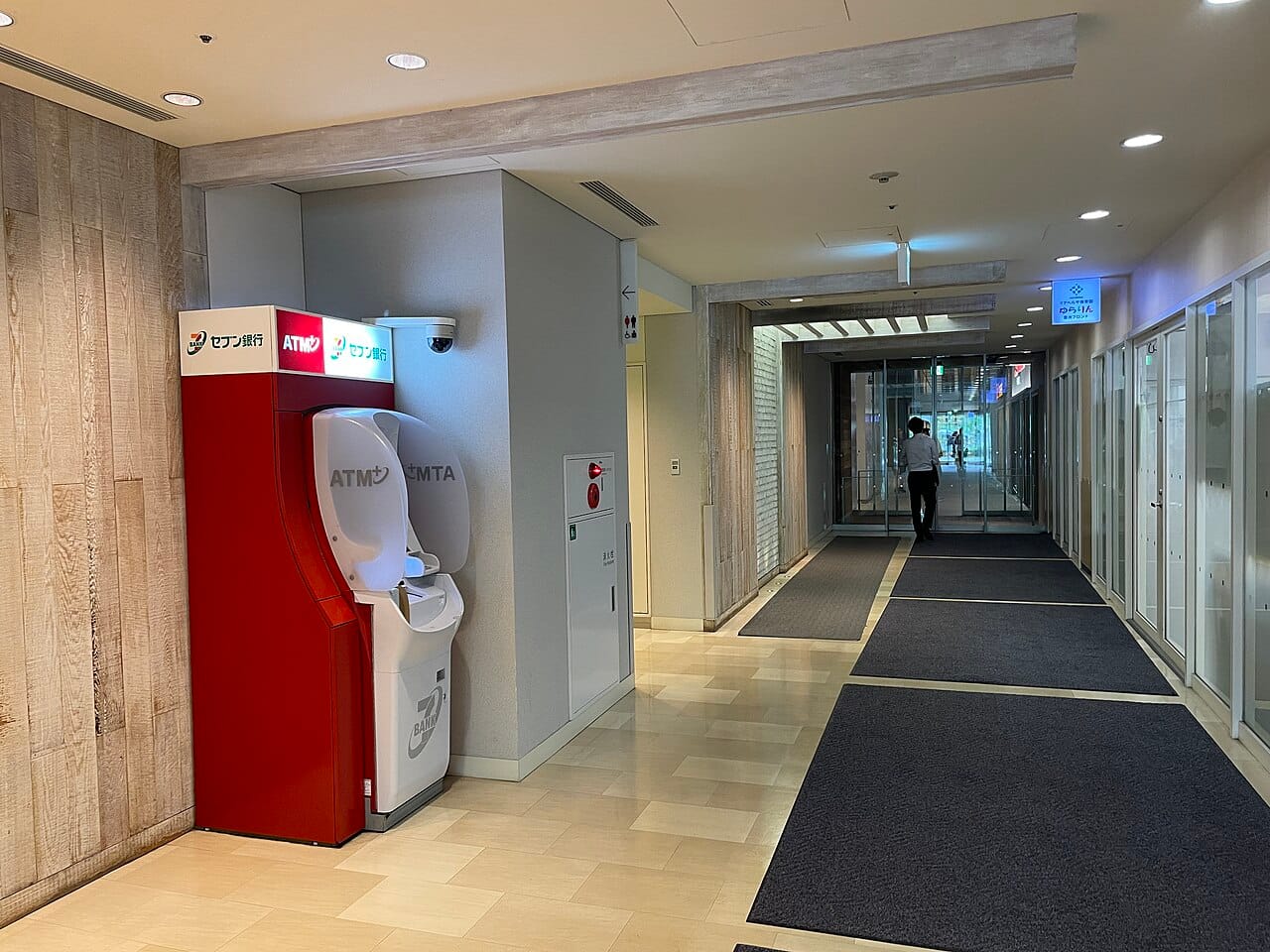
For pulling out yen, two names matter most: the Seven Bank ATM (inside 7-Eleven) and the Japan Post Bank (Yucho) ATM. Both explicitly accept overseas-issued debit and credit cards, and both are dense and easy to find.
Seven Bank ATMs (inside 7-Eleven)
- Locations and hours: per Seven Bank's official information, 28,000+ machines across Japan, in 7-Elevens, airports, stations and commercial facilities — running 24 hours a day, year-round.
- Cards accepted: Visa, Plus, Mastercard, Maestro, Cirrus, UnionPay, American Express and JCB cards issued abroad.
- Menu: multilingual including English; the flow is intuitive.
- Withdrawal cap: 100,000 yen per withdrawal for overseas cards (30,000 yen for magnetic-stripe transactions).
Japan Post Bank (Yucho) ATMs
- Coverage: in post offices and some FamilyMart stores, with strong rural reach — a great companion once you leave the big cities.
- Cards accepted: also supports Visa/Plus, Mastercard/Cirrus, UnionPay, JCB, American Express and other foreign cards.
- Note: Yucho ATM hours vary by branch and may close late at night; the 7-Eleven ATM is the truly 24/7 pick.
Currency exchange: airport, home bank or ATM
There are many ways to get yen, and they differ a lot in cost. Here's the verdict, best to worst:
| Method | Rate / cost | Best used for |
|---|---|---|
| Home bank (counter or online) | Relatively good rate; some online exchange offers discounts | Your first cash on arrival (transport, first meal) |
| ATM withdrawal in Japan (foreign card) | Visa/MC daily rate, usually good, but a bank foreign-withdrawal fee applies | Topping up cash mid-trip, as needed |
| Card payments (foreign transaction) | Daily rate + roughly 1.5% foreign transaction fee | Larger, card-friendly spending (lodging, shopping, dining) |
| Exchange counters at Japanese airports/cities | Worst rates, wide spreads | Emergencies only — avoid otherwise |
In practice the cheapest combination is: change a small amount at home for arrival + withdraw cash from ATMs in Japan + put larger spending on cards. Two hidden costs to watch: (1) your home card's foreign-withdrawal fee is usually a flat fee plus a percentage, so withdrawing more at once (say 30,000-50,000 yen) beats taking out 10,000 yen repeatedly; (2) the foreign transaction fee on card spending is typically around 1.5% — if you hold a no-foreign-fee card, overseas spending is even cheaper.
Credit cards: what works and the fees
Card acceptance in Japanese cities is genuinely high, but not every card is equally useful — the network matters:
- Visa, Mastercard: widest acceptance — basically anywhere that takes cards. Carry one of these as your main card.
- JCB: a Japanese brand with solid domestic acceptance, ideal as a backup.
- American Express, Diners: patchier — big chains usually take them, but small independent shops and old restaurants often don't. Don't make it your only card.
A few practical notes on cards:
- Contactless is common: many shops take Visa Touch, Mastercard Contactless, Apple Pay and Google Pay, so adding a card to your phone works even for small amounts.
- "Pay in one go" phrasing: staff may ask "ikkai-barai?" (single payment vs instalments) — answer "ikkatsu" for a single payment.
- Foreign transaction fee: overseas card spending usually carries about 1.5% (by issuer); a no-foreign-fee card makes a Japan trip cheaper.
- Redundancy matters: carry at least two cards on different networks (e.g. a Visa plus a JCB) in case one gets flagged or declined.
PayPay and QR payments: can tourists use them?
PayPay is Japan's biggest QR-code wallet, and its acceptance codes are stuck up everywhere. But for short-term visitors there's a key limit to state up front: registering for PayPay directly needs a Japanese phone number and a Japanese bank account, so you can't simply open your own PayPay account.
Does that mean tourists can't use it at all? Not quite. Per PayPay's official announcements, PayPay now lets users of many overseas e-wallets pay at PayPay merchants — covering payment services from major source markets such as Taiwan, Hong Kong, South Korea, mainland China and Thailand (via Alipay+ and similar cross-border links). So if you already have a cross-border wallet at home, you can scan a PayPay acceptance code at a participating shop and it draws from your overseas wallet.
IC cards: the underrated small-payment tool
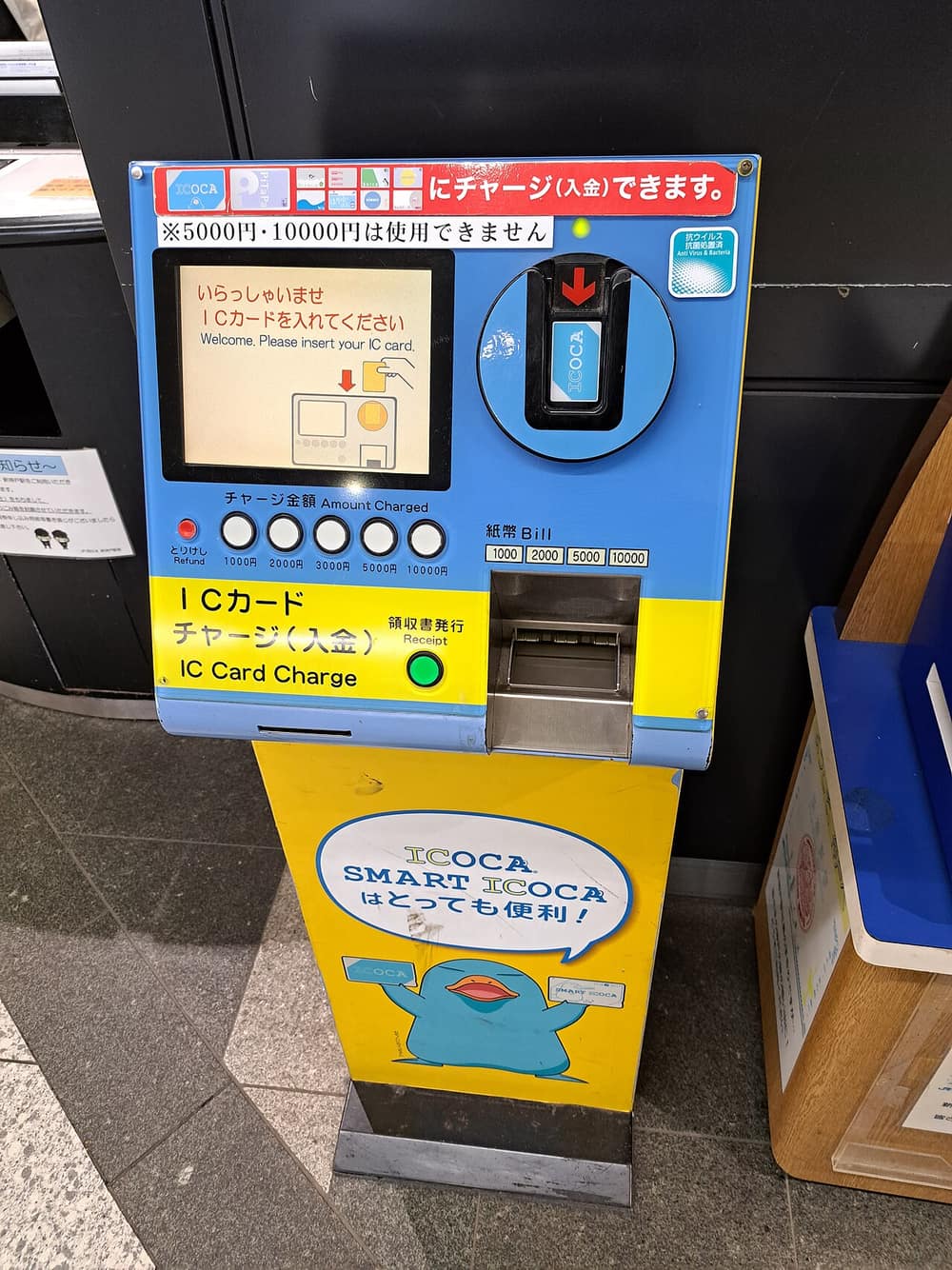
Many people assume transit IC cards like Suica and ICOCA are only for trains. In fact they're one of the smoothest small-payment tools in Japan. Once you've loaded value, you can tap to pay at convenience stores, station shops, vending machines, lockers and plenty of restaurants and drugstores — no fumbling for coins, no signature. Perfect for travellers who don't want to carry much cash but keep hitting small amounts.
- Uses: trains/buses + convenience stores + vending machines + lockers + tap-to-pay at many restaurants and drugstores.
- Topping up: at station machines and convenience stores (usually cash top-up); reload when empty.
- Going mobile: on iPhone you can add Suica to Apple Wallet and tap with your phone, reloading online — no physical card needed.
Choosing between an IC card, day passes and other transit tickets is a topic of its own — see our full Suica / ICOCA IC card guide. If you'll be paying at convenience stores a lot, pair it with the Japan convenience store guide to handle the small-payment piece cleanly.
Tax-free shopping and the 2026 refund reform
Foreign visitors can avoid Japan's 10% consumption tax on shopping, but how you avoid it changed on 1 November 2026. Get the test straight first: it runs on the date you buy, not the date you fly out. Buy on 31 October and leave on 5 November and that receipt is still on the old system; buy on 1 November and it is on the new one. Officially there is no transition period.
On or before 31 October 2026, the shop deducts the tax at the till: spend ¥5,000 or more (pre-tax) at one shop on one day, show your passport, and you check out at the tax-free price. General goods (electronics, clothing, sundries) and consumables (food, cosmetics, medicine) each had their own calculation rules and packaging restrictions.
From 1 November 2026 it becomes a refund system, and the general-goods/consumables split and the sealed-packaging rule for consumables are both abolished. The flow has three parts. You pay the tax-included price at the till and register a refund method (a credit card, for example) with the shop at that moment. On departure you go to a tax-free terminal in the international departures hall, before the security checkpoint — which also means before you check your bags — and scan your passport so customs can confirm the goods are leaving with you. Once that clears, the tax is repaid by the shop or the refund operator it uses; the airport itself pays nothing. The threshold is unchanged at ¥5,000 pre-tax, same store, same day, and the new system adds a deadline: the goods must leave Japan within 90 days of the purchase date.
For payment planning, the new system is money you front: that 10% sits on your card statement or in your cash for the whole trip and only comes back after the departure check — and there is no official figure for how long it takes to land. On fees the government has answered: whether the traveller or the shop bears the refund handling fee is "not specifically prescribed" — other countries usually put it on the traveller, it notes — and the government itself charges nothing. The rate is left to the shop and its refund operator, so ask at the till. Budget as if the 10% goes out first and comes back later.
Tipping: you never tip in Japan
This is the easy one: Japan has no tipping culture — you don't tip, and you shouldn't. Restaurants, taxis, hotels, salons: the figure on the bill is the full amount you owe. Pushing extra money on staff usually just causes confusion, and they may even chase you down to return it.
- Restaurants: no tip. Some upscale places add a service charge (about 10%), but that's built into the bill, not a tip — just pay it.
- Taxis: no tip. Pay the meter; you'll get change.
- Hotels: no tip. Luxury ryokan have a "kokorozuke" gratuity tradition, but it's a cultural nicety, not expected — ordinary travellers can skip it entirely.
Take the budget you'd have tipped and spend it on an extra wagashi or a charm instead — better for you and the shop.
Quick table: how to choose a payment method
| Method | Acceptance | Best for | Watch out |
|---|---|---|---|
| Cash | Universal | Shrines, small shops, stalls, rural, lockers | Carry 20,000-30,000 yen buffer; don't overdo it |
| Card (Visa/MC) | High in cities | Lodging, shopping, chain dining, big amounts | ~1.5% foreign fee; a no-fee card saves more |
| Card (JCB) | Good domestically | Backup card; strong in Japan | Amex is patchy — don't rely on it alone |
| IC card (Suica/ICOCA) | High in cities, expanding | Transit + konbini + vending + small amounts | Needs top-up; sparser in the countryside |
| QR (PayPay etc.) | Expanding | Backstop if you hold a cross-border wallet | Direct sign-up needs a JP number; not essential |
| ATM withdrawal | 7-Eleven/Post accept foreign cards | Topping up cash mid-trip | Enable overseas withdrawals, 4-digit PIN, pick JPY |
One last piece of advice
Paying in Japan isn't really complicated — what trips people up is the false "all cash vs all card" binary. The right mindset is layered: big amounts on cards (Visa/MC main + JCB backup), small amounts by IC-card tap, cash as the buffer (shrines, small shops, stalls), and a 7-Eleven Seven Bank ATM whenever the cash runs low. Sort three things before you fly — enable your credit card's overseas features, enable foreign ATM withdrawals on your debit card (4-digit PIN), and grab an IC card — then just avoid airport cash exchange and always pick yen (JPY) at terminals and ATMs. Set that up and you'll almost never be stuck unable to pay. For the full pre-trip checklist, see our Japan travel essentials guide and the Visit Japan Web entry guide.
FAQ
- Q1:How much cash should I carry in Japan, and can I just use a card everywhere?
- You cannot go fully cashless, but you don't need a huge stack either. According to METI (Japan's Ministry of Economy, Trade and Industry, March 2026 release), the cashless payment ratio reached 58% in 2025 — in cities, convenience stores, chain restaurants, department stores and stations almost all take cards or contactless. But shrines (offerings and charms), small rural eateries, traditional market stalls, some taxis and many ramen-shop ticket machines are still cash-only. A practical rule for one person on a 5-7 day trip: carry about 20,000-30,000 yen as a buffer, lead with cards, top up cash from a 7-Eleven ATM when you run low. No need to change a big pile of yen back home.
- Q2:Where is the easiest place to withdraw yen, and will my foreign card work?
- The two go-to options are the Seven Bank ATM inside 7-Eleven and Japan Post Bank (Yucho) ATMs, both of which explicitly accept overseas-issued cards. Per Seven Bank's official information, its 28,000+ ATMs across Japan accept Visa, Plus, Mastercard, Maestro, Cirrus, UnionPay, American Express and JCB cards issued abroad, run 24 hours a day, offer multilingual menus (including English), and cap each withdrawal at 100,000 yen. Your home debit/credit card works as long as it carries a Visa/Plus or Mastercard/Cirrus mark and overseas withdrawals are enabled. Before you fly, enable international withdrawals with your bank and confirm your PIN is 4 digits.
- Q3:What is the best way to get yen — airport, home bank, or ATM?
- The cheapest combination is usually a small amount changed before you travel (enough for arrival transport and your first meal) plus ATM withdrawals once in Japan. Currency-exchange counters at Japanese airports and in city centres tend to give the worst rates with wide spreads. ATM withdrawals use the Visa/Mastercard daily rate, which usually beats cash exchange, though watch your bank's foreign-withdrawal fee (a flat fee plus a percentage). The single worst option is exchanging cash notes at a Japanese airport. My approach: change a little at home for arrival, then withdraw from ATMs and pay by card in Japan.
- Q4:Can tourists use PayPay in Japan, and do you need a Japanese phone number?
- Registering for PayPay directly requires a Japanese phone number and a Japanese bank account, so short-term visitors generally cannot open their own PayPay account. There is a workaround, though: per PayPay's official announcements, PayPay now lets users of many overseas e-wallets pay at PayPay merchants — covering payment services from Taiwan, Hong Kong, South Korea, mainland China, Thailand and other major source markets (via Alipay+ and similar cross-border links). In other words, if you already have a cross-border wallet at home, you can scan a PayPay code at the till and it draws from your overseas wallet. For most visitors, though, a card + cash + IC card combo already covers everything.
- Q5:Is credit card acceptance good in Japan? Will JCB or Amex get declined?
- Acceptance is high in cities, but it depends on the network. Visa and Mastercard are accepted most widely — basically anywhere that takes cards. JCB (a Japanese brand) actually has solid domestic acceptance and makes a great backup. American Express and Diners are patchier; big chains take them, but small owner-run restaurants and shops often don't. Carry a Visa or Mastercard as your main card and a JCB as backup. Contactless (Visa Touch, Apple Pay, Google Pay) is common, so adding a card to your phone is handy even for small amounts. If asked "ikkai-barai?" (pay in one go vs instalments), answer "ikkatsu" for a single payment.
- Q6:How does tax-free shopping work in Japan, and what is changing in 2026?
- There are two systems, split on 1 November 2026, and the test is the date you buy — not the date you fly home. Bought on or before 31 October 2026: the shop deducts the tax at the till. Spend 5,000 yen or more (pre-tax) at one store on one day, show your passport, and you check out at the tax-free price. Bought on or after 1 November 2026: it becomes a refund system. You pay the tax-included price at the till and register a refund method (a credit card, for example) with the shop right there. On the way home you go to a tax-free terminal in the international departures hall — before security and before you check your bags — and scan your passport so customs can confirm you are taking the goods out. Once that clears, the tax is paid back by the shop or the refund operator it uses; the airport does not hand you money. Officially there is no transition period. The 5,000 yen pre-tax, same-store-same-day threshold is unchanged, but the new system adds a deadline: the goods must leave Japan within 90 days of purchase. There is no official figure for how long the refund takes to land. On fees the government has answered: whether the traveller or the shop bears the refund handling fee is "not specifically prescribed", with an official note that travellers usually bear it in other countries, and the government itself charges nothing. The rate is left to the shop and its refund operator, so ask at the till. Full walkthrough in our step-by-step guide to the 2026 refund system.
- Q7:Do I tip in Japan — restaurants, taxis, hotels?
- No. Japan has no tipping culture, and trying to tip usually causes confusion — staff may chase you down to return the money. Restaurants, taxis, hotels and salons: the bill is the full amount you owe. Some high-end restaurants and ryokan add a service charge (about 10%), but that's already built into the bill, not a tip — just pay it. The one quasi-exception is the traditional 'kokorozuke' gratuity at a luxury ryokan, but it's a cultural nicety, not expected, and ordinary travellers can skip it entirely. Spend the money you'd have tipped on an extra wagashi instead.
Read next
Japan Tax-Free Nov 2026: New Airport Refund Rules
The kiosk reads your passport, not a QR — landside, before bag drop. One receipt, all or nothing.
Suica vs ICOCA vs PASMO 2026: Which IC Card to Buy?
The chip shortage is over — unregistered Suica and PASMO went back on sale in March 2025, alongside the deposit-free Welcome Suica and phone options. Which to pick, and how they differ.
Japan trip prep checklist
eSIM, Visit Japan Web, tax-free, insurance — done in one read.