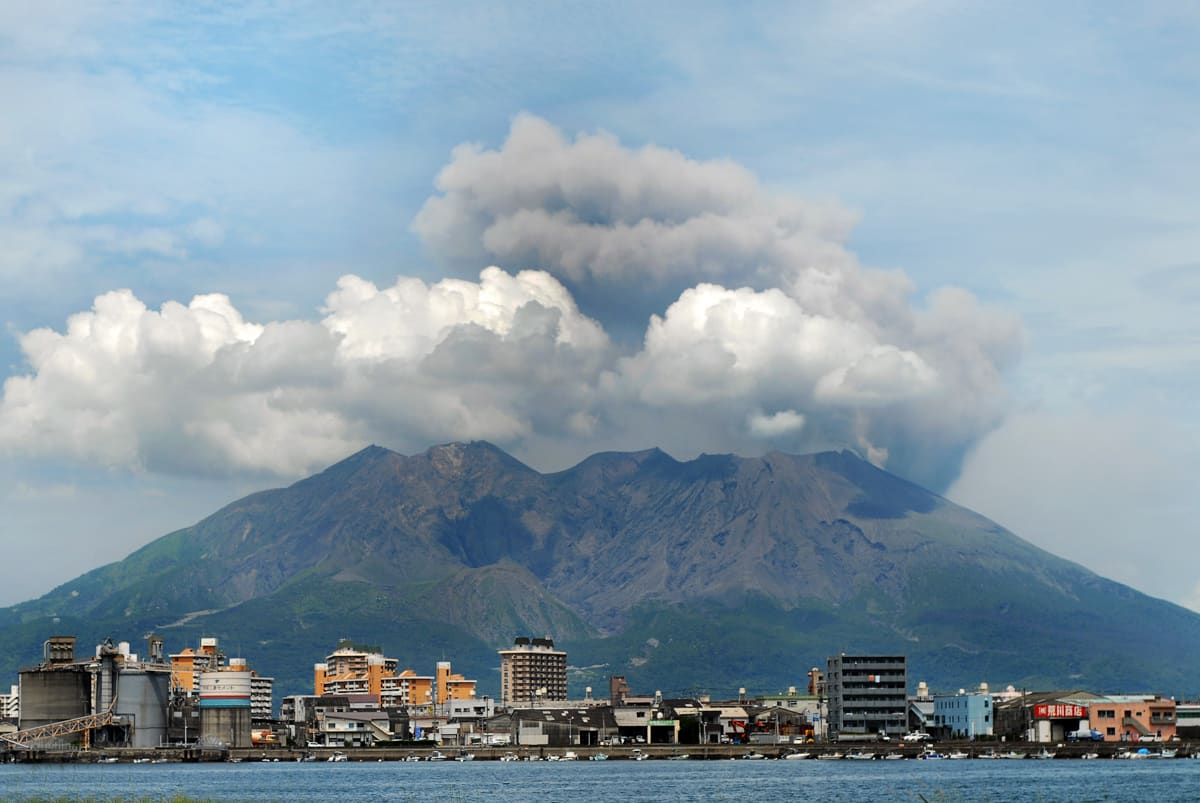
The Sakurajima ferry from Kagoshima Port takes about 15 minutes and costs ¥250 one way for an adult; you don't buy a ticket before boarding, you pay at Sakurajima Port, and Suica works. But "the ferry runs 24 hours" is no longer true: since 1 October 2025 it runs only from 4:00 to 23:30, and both terminals close after the last boat. Here's how paying works, when boats run, the island loop bus day ticket, whether the CUTE pass is worth it, and the volcano alert level as of 14 September 2026.
- No longer 24 hours: 4:00–23:30 since 1 Oct 2025; 94 sailings on weekdays, 104 on weekends and holidays
- Pay at Sakurajima Port: ¥250 adult one way; transit IC cards and credit cards accepted
- Island bus day ticket sold on board: Sakurajima Island View, ¥500 adult, every 30 minutes, about 55 minutes per loop
- Ferry plus island bus only? Skip CUTE: separate tickets are cheaper
- Volcano: eruption alert Level 3 since 27 July 2022; the alert zone is about 2 km around the two craters
Table of contents
- 1. Can you visit Sakurajima now?
- 2. How does the Sakurajima ferry work?
- 3. How much is it, and can you pay by card or Suica?
- 4. When do boats run?
- 5. Is the CUTE pass worth it?
- 6. How do you get around the island?
- 7. Which two official pages to check before you go
- 8. From Kagoshima-Chuo Station to the ferry terminal
- 9. On your own or a half-day tour?
- 10. FAQ
Can you visit Sakurajima now?
Yes, by ferry; the volcano is at eruption alert Level 3, with the alert zone about 2 km around the Minamidake summit crater and Showa crater. The ferry officially operates every day of the year; for same-day weather cancellations, check the ferry bureau's official social media.
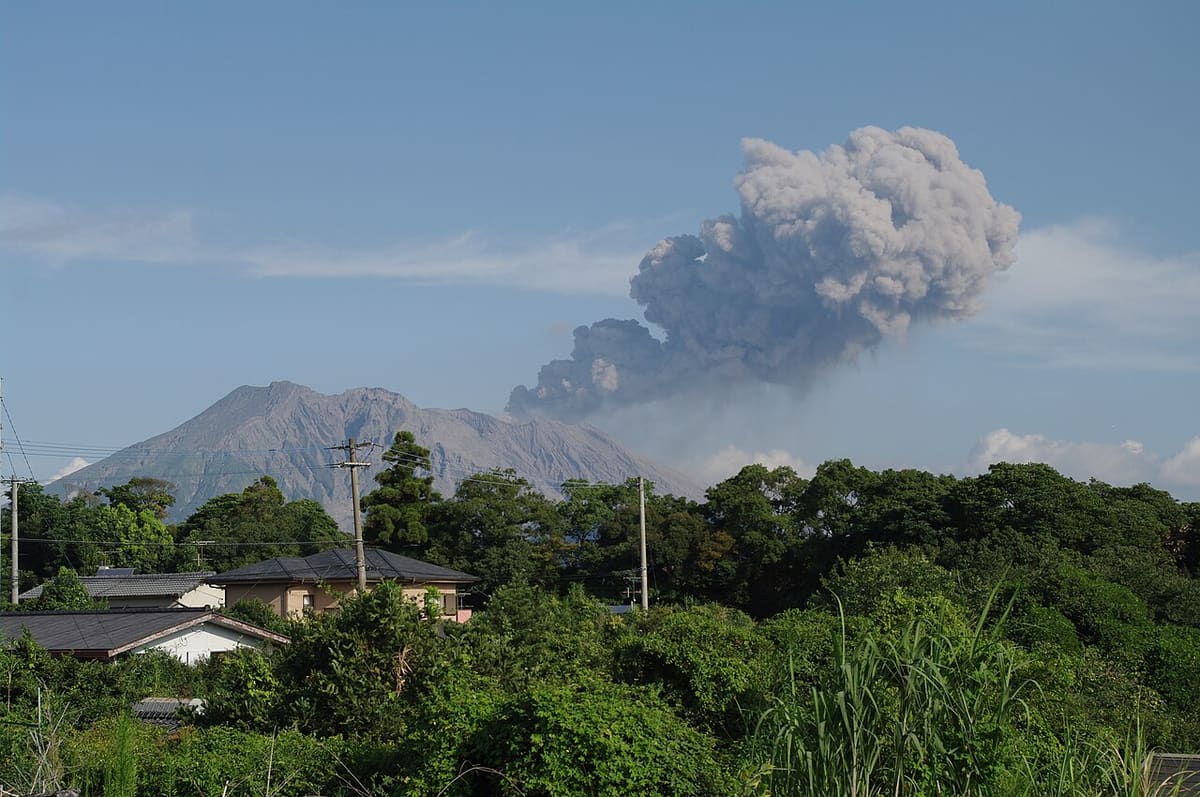
According to the Japan Meteorological Agency, at 20:00 on 27 July 2022 Sakurajima's alert level was lowered from Level 5 (evacuate) to Level 3 (entry restrictions), and it has stayed at Level 3 since. The bulletin issued at 16:00 on 14 September 2026 still shows Level 3 in effect.
The agency asks people to watch for three things:
- Within about 2 km of the two craters, large ballistic rocks and pyroclastic flows during eruptions
- Downwind, not only ash but small volcanic stones can be carried a long way
- Strong air shocks from explosions that can break window glass
The same 14 September bulletin reported 6 eruptions at the Minamidake summit crater during that period, a plume up to 2,500 m above the rim and large rocks reaching about 600 m from the crater; GNSS data show slight extension on some baselines on the island since around May 2026, thought to reflect inflation of the volcano. These numbers change with every bulletin, so check the agency's latest one before you go.
Whether island facilities such as the Yunohira Observatory and the foot bath are currently open was not confirmed for this guide; check before you go.
How does the Sakurajima ferry work?
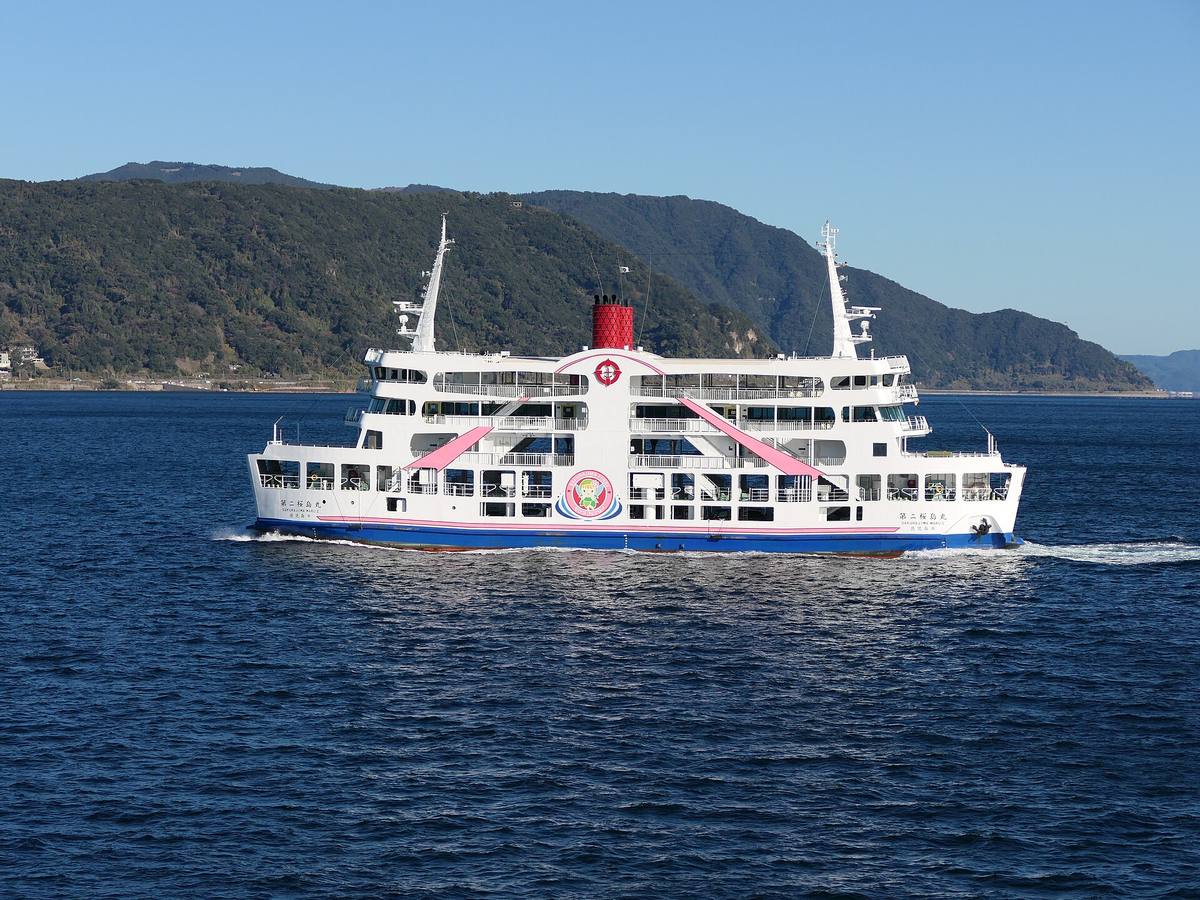
Board directly at the Sakurajima ferry terminal at Kagoshima Port; you reach Sakurajima Port in about 15 minutes and pay there. The official crossing time is about 15 minutes, stretching to around 20 in poor weather or sea conditions.
The ferry bureau states that fares for passengers and vehicles alike are paid at Sakurajima Port. So leaving from the city side you don't queue for a ticket; you pay on arrival. Coming back from Sakurajima, you pay at Sakurajima Port before boarding, and boarding closes 30 seconds before departure there.
How much is it, and can you pay by card or Suica?
Adults pay ¥250 one way, and both Suica and credit cards work.
| Ticket | Price | Notes |
|---|---|---|
| Adult one way | ¥250 | Paid at Sakurajima Port |
| Child (age 1 to elementary school) one way | ¥130 | One preschool child free per accompanying adult |
| Digital round trip, adult (junior high and up) | ¥500 | Sold in the Kyushu MaaS app my route; same as two one-ways |
| Convenience-store discount ticket, adult one way | ¥240 | Valid one month from purchase; no refund if sailings are cancelled for weather |
- Credit cards: JCB, VISA, MasterCard, AMEX, DINERS, DISCOVER, UnionPay
- Transit IC cards: Kitaca, PASMO, Suica, manaca, TOICA, ICOCA, Hayakaken, nimoca, SUGOCA (no top-ups)
- Contactless: tap payment with VISA and others at the Sakurajima Port gate since 10 March 2025; the bureau's contactless page says Mastercard support is still being prepared
The saving is tiny, so as a visitor I'd just tap an IC card rather than fetch a discount ticket from a convenience store. Holders of a valid SUNQ Pass ride without paying a separate fare.
When do boats run?
From 4:00 to 23:30: 94 sailings on weekdays and 104 on weekends and national holidays. The ferry used to run 24 hours; from 1 October 2025 it stopped the sailings from midnight through the 3 a.m. hour and introduced a new timetable the same day.
After the last boat, the Sakurajima Port terminal, the Kagoshima Port Sakurajima ferry terminal and the toll booths all close, and you can't wait inside. Coming back from Sakurajima in the evening, I'd aim for at least one boat before the last.
For exact departure times, see the timetable PDFs on the ferry bureau's site, one for weekdays and one for weekends and holidays. Long weekends can bring special timetables: for example, 20–22 September 2026 run on a special timetable, while 19 and 23 September run on the weekend and holiday timetable. For same-day cancellations, the bureau points to its official social media.
Is the CUTE pass worth it?
Not if you only ride the ferry both ways and the island bus: separate tickets are cheaper. Consider it only if you'll also ride several trams or city buses in Kagoshima that day.
CUTE is Kagoshima's day pass, covering unlimited rides on city buses, trams, the Kagoshima City View sightseeing bus, the Sakurajima Island View bus and the Sakurajima ferry.
| CUTE | Adult (junior high and up) | Child |
|---|---|---|
| 1-day | ¥1,400 | ¥700 |
| 2-day | ¥2,100 | ¥1,050 |
For a Sakurajima day: two ferry crossings at ¥250 each plus an Island View day ticket at ¥500 still come to less than the CUTE 1-day pass at ¥1,400. The difference has to be made up by tram, bus and City View rides in the city, so count how many you'll take before buying.
CUTE is now a digital ticket, sold in the Kyushu MaaS app my route, the Kagoshima app Wakuwaku, or at counters. Show the active ticket to the crew when you get off; on the ferry, show it to staff at Sakurajima Port. It can't be changed or refunded.
How do you get around the island?
Take the Sakurajima Island View bus: a loop of about 55 minutes from Sakurajima Port, every 30 minutes from 9:30 to 16:30, with a ¥500 adult day ticket sold on board.
It's the Kagoshima City Transportation Bureau's island loop bus; with the dedicated day ticket (adults ¥500, elementary school and younger ¥250) you can hop on and off at every stop. Besides the bus itself, it's sold at the Kagoshima-Chuo Station tourist information center, Sakurajima Port tourist information, the ferry bureau sales counter, the Sakurajima Visitor Center, Rainbow Sakurajima and the bureau's Sakurajima office.
The loop runs in this order:
- Sakurajima Port
- Hinoshima Megumi-kan
- Rainbow Sakurajima
- Visitor Center
- Karasujima Observation Point
- Akamizu Observation Plaza
- International Sabo Center (only buses leaving Sakurajima Port at half past the hour)
- Akamizu Yunohira-guchi
- Yunohira Observatory
- Oushu Elementary School
- Back to Sakurajima Port
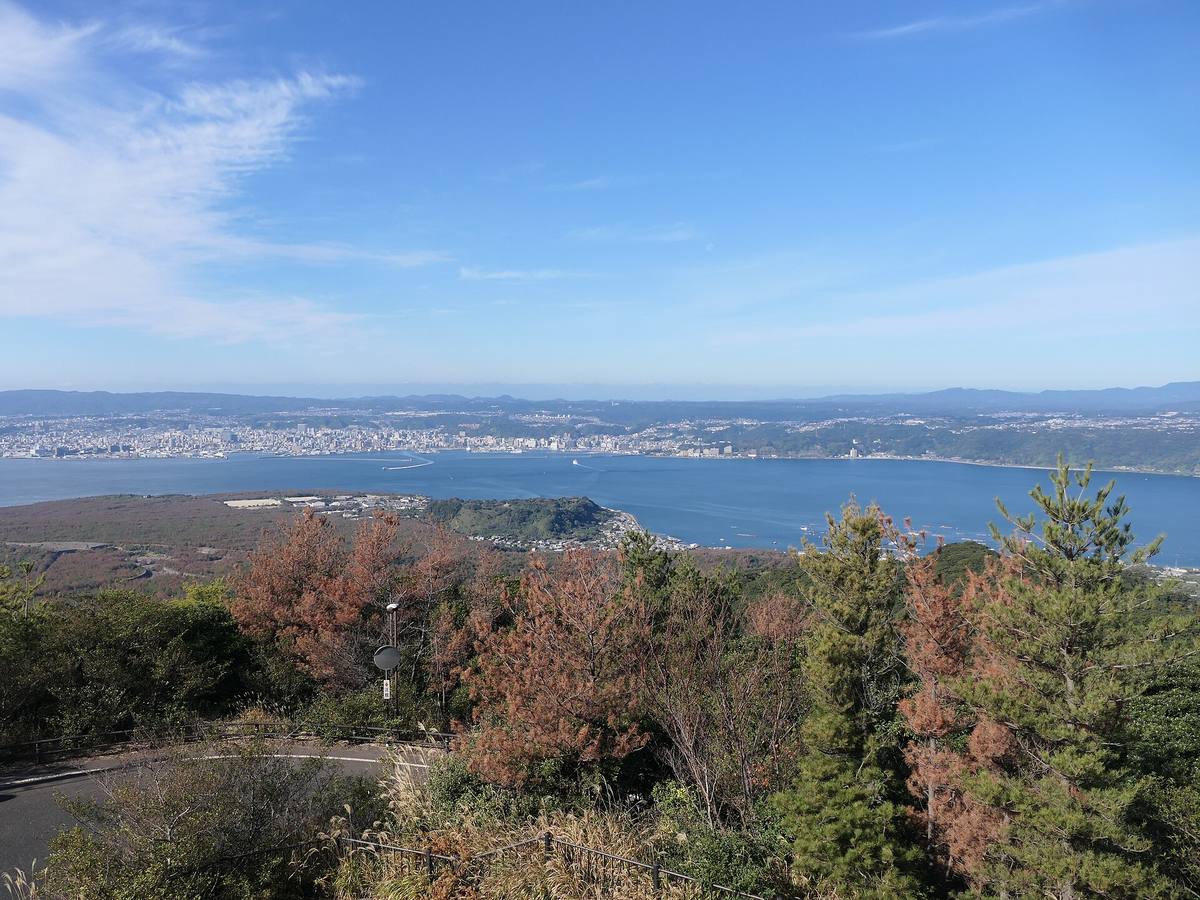
The bureau describes Yunohira Observatory as 373 m up and the closest point to the crater, with views over Kinko Bay and the city. That is promotional wording; no official distance to the crater is given, and its current opening status should be checked before you go.
With buses every 30 minutes, getting off at a stop means a half-hour wait for the next one, so time your stop against the schedule.
Which two official pages to check before you go
The Japan Meteorological Agency's Sakurajima activity page, and the Sakurajima ferry's official social media. The first gives the alert level and latest bulletin; the second tells you whether boats are running that day.
Ash falls with the wind, and the agency warns that downwind areas can get small stones as well as ash, so note which side of the island the wind is blowing toward. On a Sakurajima day I'd bring a cap and skip light-coloured clothes.
From Kagoshima-Chuo Station to the ferry terminal
Take the Kagoshima City View bus or a city bus to Kagoshima Suizokukan-mae (Sakurajima Sanbashi), then walk one minute. Both buses are covered by CUTE.
Coming from Fukuoka or Kumamoto: Kagoshima City's official tourism site posted a notice on 30 July 2026 about the Reiwa 8 Kumamoto earthquake saying hotels and attractions in the city are operating normally and pointing travellers to the Kagoshima Prefecture tourism site for the latest transport information. Rail and shinkansen status is outside what this guide verified, so check JR Kyushu before travelling. For a rail loop, see our Kyushu 3-day rail itinerary; for the current situation at Kumamoto, see Is Kumamoto Castle open?
On your own or a half-day tour?
On your own is enough: the ferry needs no booking, you pay at Sakurajima Port, and the island bus day ticket is sold on board, so there's nothing you must book in advance. A half-day tour only makes sense if you want a guide and don't want to plan around bus times. Wherever you see "Sakurajima ferry, 24 hours," go by the ferry bureau's 4:00–23:30.
Back in the city, the Shimazu family garden Sengan-en and the Shiroyama Observatory fit into the same day; check their sites for prices and hours. For Ibusuki's sand baths to the south and Kirishima to the north, see our Ibusuki and Kirishima guide; to continue to Yakushima, see our Yakushima guide.
Frequently Asked Questions
- Q1:Do I need to buy a Sakurajima ferry ticket in advance?
- No. Kagoshima City Ferry Bureau states that fares on the scheduled route are always paid at Sakurajima Port, so from Kagoshima Port you simply board. Sakurajima Port takes credit cards, transit IC cards and cash. Boarding at Sakurajima Port closes 30 seconds before departure.
- Q2:Does the Sakurajima ferry run 24 hours?
- Not any more. From 1 October 2025 the ferry dropped its sailings from midnight to the 3 a.m. hour and now runs from 4:00 to 23:30. After the last boat leaves, both ferry terminals and the toll booths close, and you cannot wait or stay inside.
- Q3:How much is the Sakurajima ferry, and can I use Suica?
- Adults ¥250 one way, children (age 1 to elementary school) ¥130; each accompanying adult can take one preschool child free. Suica works: the official list includes Kitaca, PASMO, Suica, manaca, TOICA, ICOCA, Hayakaken, nimoca and SUGOCA, and credit cards are accepted too, but you cannot top up IC cards there.
- Q4:Can I visit Sakurajima right now?
- You can take the ferry to the island, but the volcano is at eruption alert Level 3 (entry restrictions): the Japan Meteorological Agency lowered it from Level 5 to 3 on 27 July 2022 and it has stayed there, with the 14 September 2026 16:00 bulletin still showing it in effect. The alert zone is roughly 2 km around the Minamidake summit crater and Showa crater. Check Kagoshima City notices separately for whether the island's observatories and foot bath are open.
- Q5:How much is the Island View bus day ticket, and where do I buy it?
- Adults ¥500, elementary school and younger ¥250, hop on and off at any stop. You can buy it on the bus, and also at the Kagoshima-Chuo Station tourist information center, Sakurajima Port tourist information and the Sakurajima Visitor Center. The loop from Sakurajima Port takes about 55 minutes, every 30 minutes from 9:30 to 16:30.
- Q6:What does the CUTE pass cover, and is it worth it?
- The CUTE 1-day pass is ¥1,400 for adults and covers unlimited rides that day on Kagoshima city buses, trams, the City View bus, the Sakurajima Island View bus and the Sakurajima ferry. It is now a digital ticket sold in the my route and Wakuwaku apps or at counters, and it is non-refundable. If you only ride the ferry both ways plus the island bus, separate tickets are cheaper; it pays off only if you also ride several trams or city buses that day.