If Kamakura gives you time for exactly one stop, make it Tsurugaoka Hachimangu — and not because it is the prettiest shrine, but because it is the reason the city looks the way it does. This is the clan shrine Minamoto no Yoritomo moved to its current spot in 1180 to serve as the guardian deity of the Kamakura shogunate, and the town's dead-straight main avenue was carved to aim at its great torii. Better still, the grounds are open 6:00–20:00 year-round and free to enter, so early risers get the great staircase to themselves before the tour buses arrive. This guide covers opening hours and the one thing on site that charges, how the goshuin desk works (and why I will not quote you a price the shrine does not publish), the annual festival calendar — the Sept 14–16 Reitaisai and its yabusame, the August Bonbori Matsuri, the April Kamakura Matsuri — plus which Komachi-dori shops are worth it and a half-day route. To fold the Great Buddha and Hasedera into the same day, start with our Kamakura day trip guide; this piece is all about the shrine itself.
- Kamakura's spiritual heart, and free: Yoritomo's 1180 guardian shrine, grounds open 6:00–20:00 year-round at no charge
- Only the museum charges: the Tsurugaoka Museum runs adults ¥1,500 (floats by exhibition); everything else on the grounds is free
- Goshuin fee is not officially published: confirm the offering and cut-off at the desk on the day, carry coins, dodge the peaks
- Festival is fixed Sept 14–16: the yabusame horseback archery on Sept 16 is the day to plan for (no start time listed — check on site)
- Pair it with Komachi-dori: Toshimaya's dove-shaped Hato Sable ties to Hachiman's messenger; graze the rest
📖 Contents
- 1. Why Tsurugaoka Hachimangu comes first in Kamakura
- 2. Hours, tickets & getting there
- 3. Inside the grounds: main hall, dance stage, ginkgo, Masako stone
- 4. Goshuin, amulets & the dove motif
- 5. The festival calendar: Reitaisai, Bonbori, Kamakura Matsuri
- 6. What to eat on Komachi-dori
- 7. A half-day route & FAQ
Why Tsurugaoka Hachimangu comes first in Kamakura
Most visitors think of the Great Buddha as Kamakura's icon, but the thing that actually shaped the city is Tsurugaoka Hachimangu. The story starts in 1180: that year Minamoto no Yoritomo raised his army, made Kamakura his base, and moved the Hachiman deity — enshrined generations earlier by his ancestor Minamoto no Yoriyoshi from Kyoto's Iwashimizu Hachimangu — to its present hilltop as the guardian shrine of samurai government. Then he did something that still defines Kamakura today: he cut a dead-straight approach from the seaside first torii aiming right at the shrine. That road is today's Wakamiya-oji, with the raised dankazura promenade running up its center. In other words, the city's central axis was drawn for the shrine — and when you stand on the great staircase and look back toward the sea, you are looking at the urban plan of Japan's first samurai capital.
That is exactly why I would make it your first stop. Understand the shrine and everything else — the Great Buddha, Hasedera, the Zen temples — reads more clearly as the legacy of a "samurai old capital" rather than a second Kyoto. And unlike Kyoto's temples, where you pay at gate after gate, Hachimangu's grounds are free and open early, which makes it an ideal opener: come at dawn to feel the bones of the city, then walk toward Hase for the sea and the Buddha. The routing flows naturally.
Let me answer the objection head-on, because it is the most common one: "shouldn't the Great Buddha be first?" Honestly — if you have two hours total, will probably never come back, and want the single most striking photo, go to the Buddha and ignore me. But give Kamakura half a day or more and I will keep putting Hachimangu first, and the deciding factor is timing: the shrine opens at 6 a.m. and is free, while the Great Buddha does not open until 8 — so before 8 a.m. you can have Hachimangu's grounds nearly to yourself while everyone else stands outside a closed gate. Move on to Hase after 10 and you slip past the first wave of tour groups; run the order the other way and you eat the crowds at both. In the end, Hachimangu's edge was never architectural shock value (next to Kyoto's temples it is not a stunner) — it is the stack of meaning, timing, and position. That is why this guide says "first stop," not "the only stop worth making," and that distinction is exactly why I am comfortable putting it first.
The one story you cannot skip is the great ginkgo. The famous tree beside the main staircase was long linked to Kugyo's ambush of the third shogun Minamoto no Sanetomo, and it is one of the stages of the Shizuka Gozen legend. Sadly it toppled in a strong gale before dawn on March 10, 2010 — but the shrine transplanted the trunk to one side as a sacred tree, and new shoots (hikobae) sprouting from the original stump keep growing, so the old giant lives on in another form. The official guide never certifies the "a thousand years old" claim attached to it, so take that as folklore. That tree is a neat symbol of Kamakura, where history is still standing in front of you.
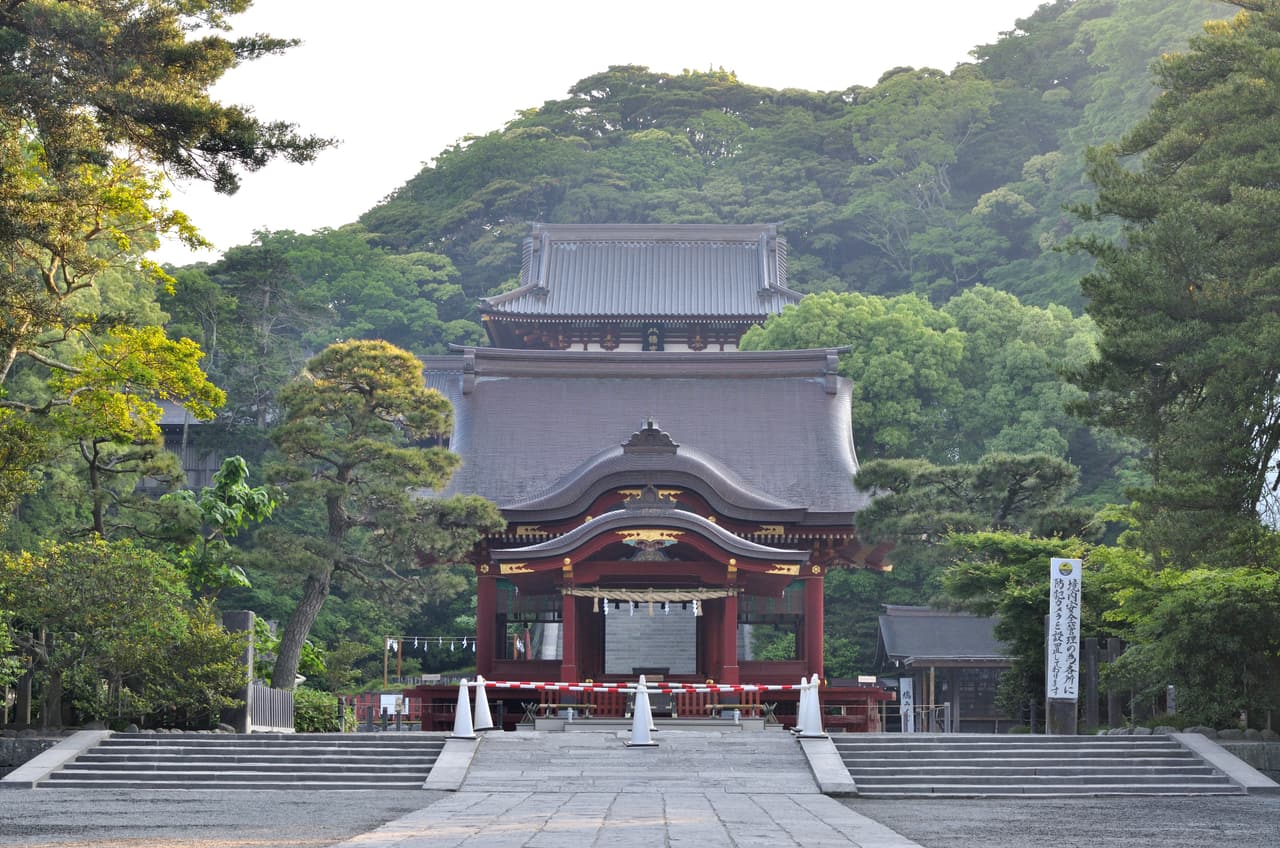
Hours, tickets & getting there
Here is the practical timetable up front. The following is compiled from the official Tsurugaoka Hachimangu access page and the Tsurugaoka Museum's official notices (verified 2026-07-14); check the official pages again before you set out:
| Item | Hours / cost | Notes |
|---|---|---|
| Grounds / main hall | 6:00–20:00 year-round | No listed summer/winter difference; free (¥0) |
| Prayer ritual (gokito) reception | 8:30–16:30 | Special New Year hours are announced separately and were not yet posted at verification |
| Goshuin desk | Within grounds hours | Offering fee not officially published — confirm at the desk on the day |
| Tsurugaoka Museum | 10:00–16:30 (last entry before closing) | Adults ¥1,500, students ¥800 (floats by exhibition) |
Keeping "the grounds" and "the museum" separate matters: walking through the torii, praying at the main hall, circling the Genpei ponds, and seeing the dance stage all cost nothing; the only ticket on site is for the Kamakura Bunkakan Tsurugaoka Museum, beside the Heike Pond on the left as you approach, a building designed by architect Junzo Sakakura that was formerly the Kanagawa Prefectural Museum of Modern Art. Its ticket floats with each special exhibition — there is no fixed list price. At verification the current summer show was priced at adults ¥1,500 and elementary/junior-high students ¥800; the next exhibition may adjust it. Go in if you like modern architecture or the running theme; otherwise it is skippable. It closes Mondays (open if a holiday falls on one), during exhibition changeovers, and over the New Year.
Getting there is simple: about a 10-minute walk from the east exit of JR Kamakura Station, or a 10-minute walk from Enoden's Kamakura Station. From Tokyo, take the JR Yokosuka Line — Tokyo Station to Kamakura Station is roughly an hour direct (details in our Kamakura day trip guide). From the station there are two ways up to the shrine, and here is my take: if you want to shoot the city axis and feel the "approach aimed at the shrine," take central Wakamiya-oji (the dankazura) — green and open, with the long, dignified view; if you want to browse and snack, take the parallel Komachi-dori, wall-to-wall shops. My routing tip: go up via Wakamiya-oji (quiet, ceremonial, the fullest sense of the great torii's approach) and come back down Komachi-dori to eat and browse — one loop, no backtracking, both versions of Kamakura in a single trip.
Inside the grounds: main hall, dance stage, ginkgo, Masako stone
Past the third torii, the sights line up roughly along one central axis. I have ordered them the way you actually walk them.
The Maiden (lower worship hall): the open-sided building you meet before the staircase is the Maiden, built on the former site of the "Wakamiya corridor" where, by legend, Shizuka Gozen danced. Shizuka was the beloved of Minamoto no Yoshitsune, and the story goes that, forced to perform for Yoritomo here, she sang of her longing for Yoshitsune and enraged him — one of Kamakura's most famous tales of love and rivalry. Today the Maiden hosts Shinto weddings and festival performances; with luck you will catch a bride in white shiromuku, an unexpectedly lovely sight.
The great staircase and main hall: climb the steep stone stairway above the Maiden and you reach the vermilion tower gate and main hall enshrining the Hachiman deity (Emperor Ojin and two other kami). Beside the steps is the ginkgo site mentioned above — the transplanted sacred tree and its new shoots side by side. Turn around from here and Wakamiya-oji runs straight out to the sea: the best angle for the city axis. Look up at the gate's "Hachimangu" plaque, too, and you will notice the character for "eight" (hachi) is drawn as two doves facing each other — the shrine's classic Easter egg, since the dove is Hachiman's messenger.
The Genpei ponds and the Masako stone: below the main hall lie two ponds, collectively the Genpei ponds, dug on the orders of Yoritomo's wife, Hojo Masako. They hold a very Kamakura political metaphor: by the widely-told story, the Minamoto (Genji) pond was given three islands ("three," san, punning on san = "birth/prosperity") and the Taira (Heike) pond four ("four," shi, punning on shi = "death," hinting at the Taira's downfall) — building your enemy's ruin into the garden itself, which fits the ruthless character of a samurai capital (this is popular lore, so take it lightly). Beside the Genji pond stands the Hataage Benzaiten shrine, and next to it a pair of upright stones known as the Masako stones. By long traveler tradition people pray there for good marriage partners, marital harmony, and safe childbirth — a folk belief rather than an official list of blessings, so visit sincerely rather than expecting a guarantee.
Goshuin, amulets & the dove motif
Plenty of people come to Hachimangu for the goshuin and the dove-themed charms. Here I need to be upfront, because this is the part of the article that calls for the most care: the shrine's official website does not publish the goshuin offering fee (hatsuhoryo), nor a firm reception time. Under the "prayers and charms" menu there are only three sub-pages — prayers, life ceremonies, amulets — and no dedicated goshuin page. So this guide will not quote you a figure. Treat the offering and the cut-off time as "confirm at the desk on the day," and bring small coins and cash to be safe. The desk is generally beside the main hall and open within grounds hours; for a relaxed, well-drawn goshuin, avoid the New Year (hatsumode) and mid-September festival peaks and go on a weekday morning. If this is your first goshuin, start with our complete goshuin starter guide before you queue — and to fold Hachimangu into a full day of collecting, the Kita-Kamakura-to-Enoshima stamp route is already mapped out.
Why do doves keep appearing on the charms? Because the dove (hato) has long been seen as Hachiman's messenger. Look up at that "Hachimangu" plaque on the tower gate and you will find the "eight" made of two facing doves — the shrine's signature detail that many people photograph without noticing. The official amulets page confirms a "Hato-suzu-mamori" (a dove-shaped bell charm), listing its name and origin, but it does not show a price, so again, confirm on the spot. As for the "hato-mikuji" (dove-shaped fortune) that travelers often mention, honestly I cannot find that product name on the official pages — it may be an unofficial nickname or a desk-only item. If you see it in person, enjoy it as a cute keepsake, but let the posted price be your guide; I am not going to invent a number.
A quick note on fortune-slip etiquette: if you draw a bad-luck slip (kyo), the grounds have a designated box (kyo-mikuji-osame-bako) where you can tie it off and leave the misfortune behind before heading home — a common practice at Japanese shrines. Hachimangu's grounds are large, with many sub-shrines and desks, so if you are not rushing, these small details are where the real flavor is.
The festival calendar: Reitaisai, Bonbori, Kamakura Matsuri
Tsurugaoka Hachimangu has three festivals worth reshaping a trip around — all sharply time-sensitive. Here is a table to compare them, then a rundown of each. Dates are verified against the official annual events page and the National Astronomical Observatory of Japan calendar (2026-07-14):
| Festival | 2026 dates | Highlight | 2027 announced? |
|---|---|---|---|
| Reitaisai (grand festival) | Sept 14 eve rite · Sept 15 grand festival & procession · Sept 16 yabusame | The shrine's biggest festival; the Sept 16 yabusame is the standout | Same fixed dates every year |
| Bonbori Matsuri | Aug 6 (day before Risshu) – Aug 9, 4 days | Hundreds of hand-painted paper lanterns light the grounds at night | Set by the "day before Risshu" rule, recalculated each year |
| Kamakura Matsuri | Apr 12 procession & Shizuka's dance · Apr 18–19 open-air tea · Apr 19 grand rite & yabusame (68th, 2026) | Spring citywide festival; Shizuka's dance and yabusame at the shrine | Not yet announced (usually confirmed early in the year) |
| Hatsumode (New Year) | From Jan 1 | One of Kanagawa's biggest crowds; late night to dawn is busiest | New Year special hours announced separately |
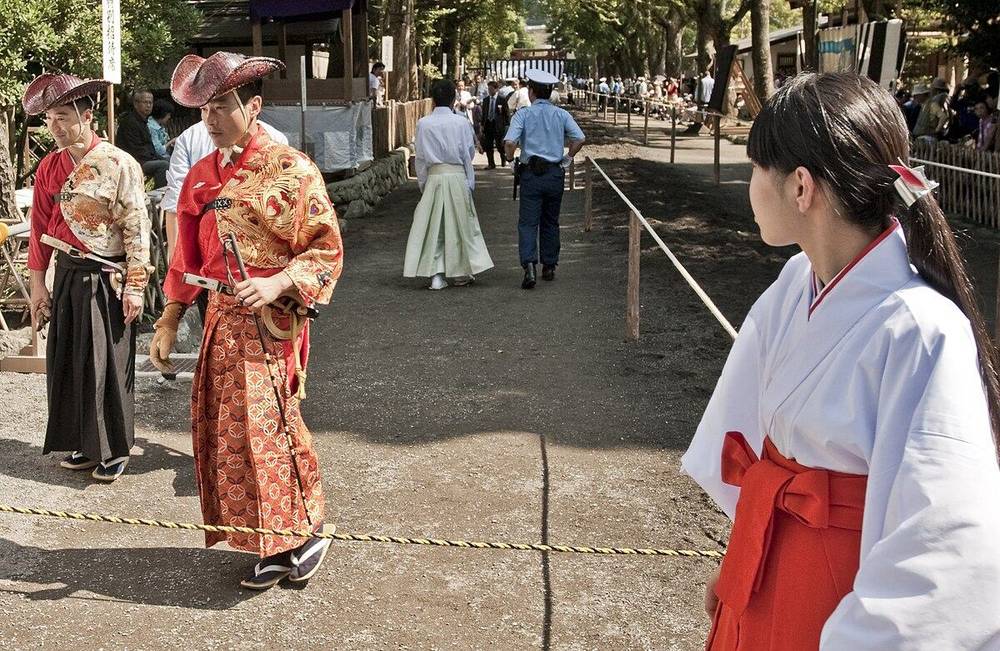
The Reitaisai (Sept 14–16) is the main event, and note it lands on those same three fixed dates every year — it does not float. The one to plan for is the yabusame on Sept 16: archers in Kamakura-warrior dress gallop the track and loose arrows at three targets in sequence from horseback, reviving an 800-year-old skill, and the crowd roars at each hit. The one caveat: the official page lists only the date, not a start time for the yabusame. Spots along the track are limited, so arrive early and confirm the posted time on site. If you are in the Kanto region those days, it is well worth a dedicated trip into Kamakura — see how to slot it in via our 5-day Tokyo itinerary.
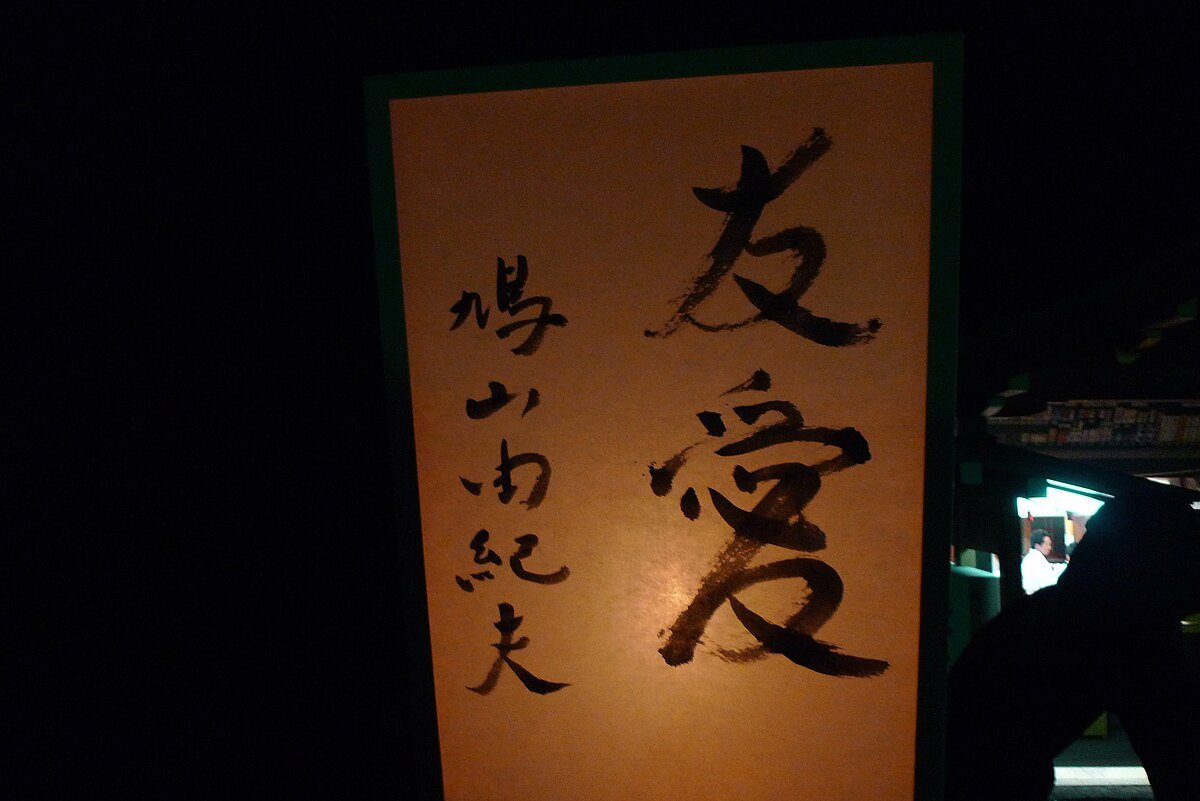
Bonbori Matsuri is a summer-only night scene: for three to four days around Risshu (the start of autumn by the old calendar), hundreds of paper lanterns (bonbori) hand-painted by writers and notables line the approach and glow after dark, a completely different mood from daytime. Because Risshu falls on Aug 7 in 2026, the festival runs Aug 6 to Aug 9, four days. Kamakura Matsuri, meanwhile, is the spring citywide festival, with Shizuka's dance and yabusame likewise held at the shrine; the 2026 edition (the 68th) wrapped up in April, and the 2027 dates have not been officially announced. By custom it lands somewhere between the second and third Sunday of April, but wait for the official notice rather than copying last year's dates.
What to eat on Komachi-dori
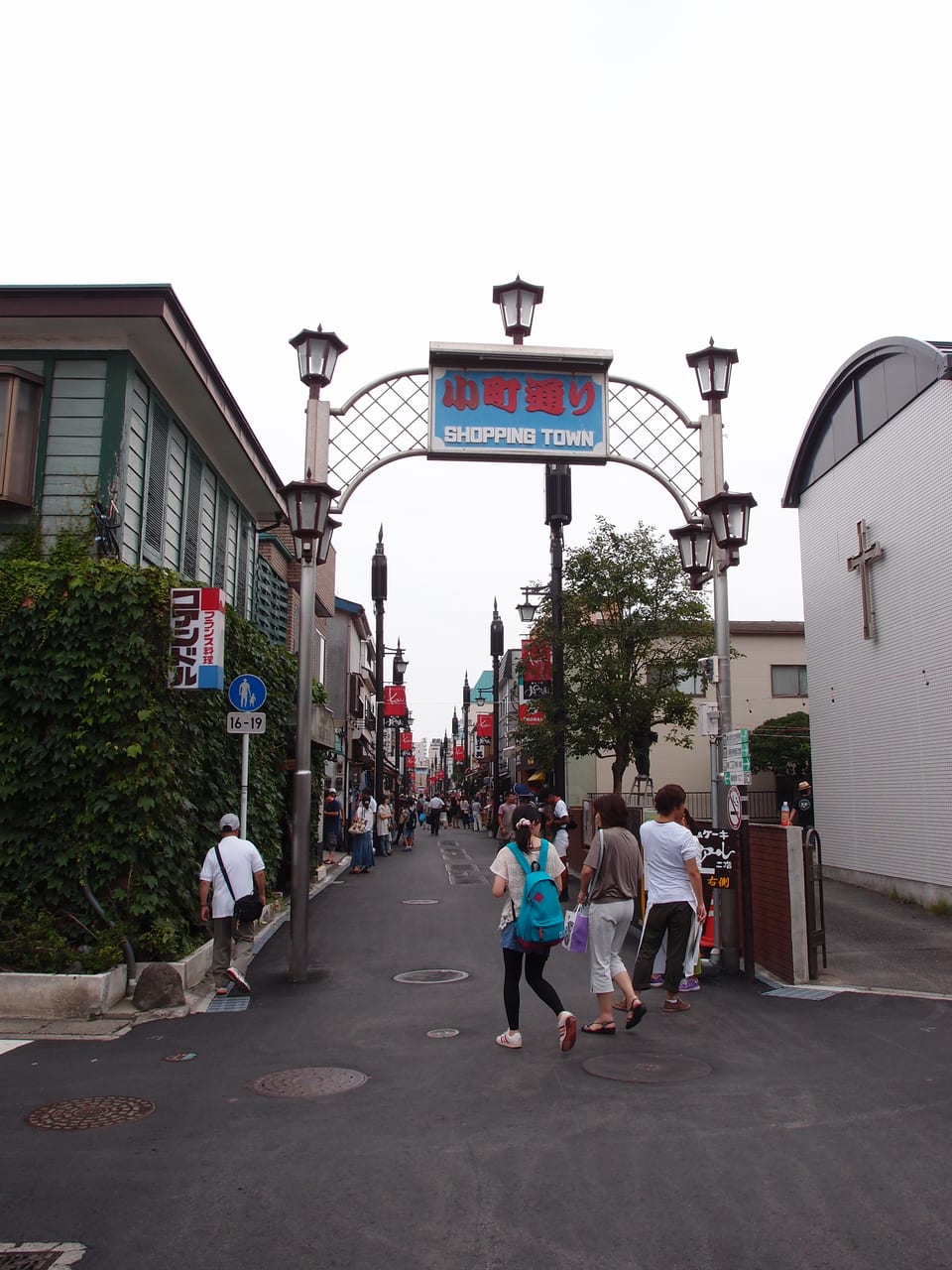
After the shrine, the standard finish is to head back down Komachi-dori (Komachi-dori shopping street), browsing and snacking. It runs parallel to Wakamiya-oji from the shrine end to Kamakura Station, packed with wagashi, senbei crackers, croquettes, matcha, and every kind of snack. It is touristy and shoulder-to-shoulder on weekends — do not expect calm — but it is the easiest place to handle lunch and souvenirs. Here are a few long-standing shops with my honest take (hours and prices shift, so confirm on the spot):
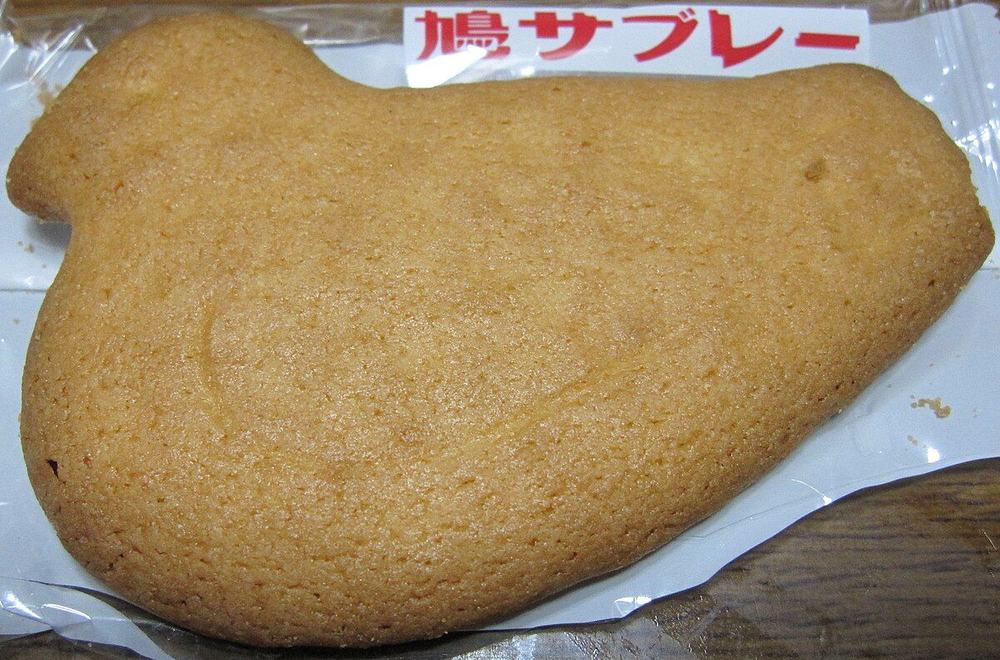
- Toshimaya (Hato Sable) — the must-buy when you visit Hachimangu. Founded in 1894, its signature "Hato Sable" is a dove-shaped butter cookie, echoing the dove as Hachiman's messenger — the souvenir with the best story to it. The main shop is on Wakamiya-oji, and you can buy it right at the Komachi-dori end. (Google Maps)
- Iwata Coffee — for sitting down and resting your feet, this old coffee house is known for its absurdly thick hotcakes (pancakes), a soothing pairing with a coffee after all that walking. It queues on weekends; skip if you are short on time. (Google Maps)
- Coquelicot Crepes — Kamakura's veteran crepe stand, plain and honest rather than an over-the-top dessert — order one and finish it by the stand before you move on (Kamakura's manners ordinance asks visitors not to eat while walking on Komachi-dori). I would pick it over the pop-up viral stalls. (Google Maps)
- Kamakura Goro — a wagashi institution; its signature "Hangetsu" and similar sweets travel well, a good second choice when you want a gift beyond Hato Sable. (Google Maps)
- Kamakura New German — a Western-style confectioner whose signature "Kamakura Custer" is a soft custard-cream cake, good for an afternoon break or to take back to the hotel. (Google Maps)
- Dankazura Kosuzu — a soba house on Wakamiya-oji (the dankazura); if you want to sit down for a proper meal rather than graze, its soba and warabi-mochi are a reliable choice. (Google Maps)
As for the parade of viral soft-serve, deep-fried snacks, and fresh-grilled crackers along the way, price and quality vary a lot, so my advice is to snack on them idly rather than queue half an hour for a photo. Save your budget and your stomach for the veteran shops above and this Kamakura meal will be more worth it.
A half-day route & FAQ
Here is all of the above shaped into a no-backtracking half-day, in and out of Kamakura Station, about 3–4 hours — and easy to extend toward Hase and the Great Buddha for a full day:
- 08:30–09:00, leave Kamakura Station: out the east exit, go up via central Wakamiya-oji (the dankazura) — quiet and open in the early morning, with the most striking straight-on view of the great torii.
- 09:00–10:30, Tsurugaoka Hachimangu: see the Maiden and the site of Shizuka's dance, climb the great staircase to pray at the main hall and see the ginkgo site, then turn to take in the city axis; drop down to the Genji pond for the Masako stones and Hataage Benzaiten; collect a goshuin and look at the Hato-suzu charm at the desk beside the main hall (confirm the offering on the day).
- 10:30–12:00, Komachi-dori: come back down Komachi-dori, browsing and eating for lunch — buy Hato Sable at Toshimaya, or sit down at Iwata Coffee for the thick hotcakes, snacking your way back to Kamakura Station.
- Afternoon extension: with time, change at Kamakura Station to the Enoden for Hase to see the Great Buddha and Hasedera, joining this shrine half-day into a full Kamakura day (full version linked below).
- One more stop: from Hase the same Enoden line rides straight out to Enoshima for a sunset finish — see our Enoshima day trip breakdown for the full rundown.
Prefer not to handle the trains yourself? Trip.com runs a guided day tour from Tokyo covering Tsurugaoka Hachimangu, Komachi-dori, the Enoden and Enoshima in one loop: Tokyo-departure Kamakura + Enoshima day tour →
A few flexible reminders: to catch the yabusame (Sept 16) or the Bonbori Matsuri (August), aim your trip at those exact days and leave time to stake out a spot on site; hatsumode (Jan 1) draws enormous crowds and the shrine announces special New Year hours separately, so if you bring kids or older relatives, be ready to queue. Kamakura also pairs beautifully with the neighboring port city — the JR Yokosuka Line stops at Yokohama on the way in, so on the way back it is easy to break the journey at Yokohama's Minato Mirai and Chinatown for dinner and a harbor skyline, pairing a "samurai old capital with a port-city night." For how the whole Tokyo trip fits together, come back to our 5-day Tokyo itinerary.
FAQ
- Q1:Is Tsurugaoka Hachimangu worth visiting?
- Yes — and if you only have time for one stop in Kamakura, I would make it this one. Tsurugaoka Hachimangu is not just another pretty shrine; it is the clan shrine that Minamoto no Yoritomo moved here in 1180 to be the guardian deity of the Kamakura shogunate, and the entire city was literally laid out to face it. The dead-straight Wakamiya-oji avenue aims right at its great torii, so standing on the top staircase and looking back toward the sea, you are seeing the town plan of Japan's first samurai capital. It is also free and opens early (6 a.m.), which makes it a perfect first stop before the tour groups arrive. Understand the shrine first and the Great Buddha, Hasedera, and the Zen temples all make more sense — that is why I put it at the front of our full Kamakura day-trip route.
- Q2:How do I get a goshuin at Tsurugaoka Hachimangu if I don't speak Japanese?
- You do not need any Japanese. Head to the goshuin desk (jusho) beside the main hall, wait your turn, and hand over your goshuincho (stamp book) open to a fresh page — pointing works fine. Here is the honest part I have to flag: the shrine's official website does not publish the goshuin offering fee (hatsuhoryo) or a firm cut-off time. Its "prayers and charms" menu only lists prayers, life ceremonies, and amulets — there is no goshuin page — so I will not quote you a figure that could be wrong. Treat the price and closing time as "confirm on the day" at the desk, and carry small coins and cash (many shrine desks do not take cards). Go on a weekday morning and avoid the New Year and mid-September festival peaks, and you will get a calm, unhurried stamp. For where the shrine sits in a wider trip, see our 5-day Tokyo trip planner.
- Q3:What are Tsurugaoka Hachimangu's opening hours, and does it cost anything?
- Walking the grounds — the great staircase, the Genpei ponds, the dance stage, the main hall — is completely free — no ticket required. Per the official access page the grounds are open 6:00–20:00 year-round, with no listed summer/winter difference. If you want a formal prayer ritual (gokito), that reception runs on a separate schedule of 8:30–16:30. The one thing on site that does charge is the Kamakura Bunkakan Tsurugaoka Museum, beside the Heike Pond, on the left as you approach; its ticket floats with each special exhibition — at the time of writing, adults ¥1,500 and elementary/junior-high students ¥800 — so check the current notice before you go. To thread the shrine together with the Great Buddha and Hasedera into one day, see how to fold in the Great Buddha and Hasedera.
- Q4:When is the Tsurugaoka Hachimangu festival and the yabusame?
- The shrine's annual grand festival (Reitaisai) falls on fixed dates every year, not floating ones: Sept 14 (eve festival), Sept 15 (grand festival and portable-shrine procession), and Sept 16 (yabusame horseback archery and the cricket-release rite), and 2026 follows the same calendar. The highlight is the yabusame on Sept 16 — riders in Kamakura-era samurai dress gallop down a track loosing three arrows at three targets from horseback, reviving an 800-year-old martial art. One caveat: the official calendar lists the date but not a start time for the yabusame, so on the day you should confirm the posted time on site and stake out a spot along the track early. If you are near Tokyo those days, Kamakura is well worth the trip — see how this fits a 5-day Tokyo trip.
- Q5:Didn't the giant ginkgo tree fall down? What is left to see?
- It did. The famous great ginkgo beside the main staircase — the tree tied in legend to Shizuka Gozen and to Kugyo's ambush of the shogun Minamoto no Sanetomo — toppled in a strong gale before dawn on March 10, 2010, so the old giant you may have read about is gone in its original form. But it did not truly die: the shrine transplanted the trunk to one side as a sacred tree, and new shoots (hikobae) sprouting from the original stump are still growing, so the tree lives on in another form — which is actually a quiet highlight now. Part of the fallen trunk is displayed inside the Tsurugaoka Museum's cafe-shop. One myth to retire: the official guide never certifies a "thousand-year-old" age for this tree, so treat that as folklore. For Kamakura's wider sights, see our complete Kamakura itinerary.
- Q6:Which Komachi-dori shops are worth it, and which can I skip?
- Komachi-dori is Kamakura's busiest food street — touristy, packed on weekends, but the easiest place to grab lunch and souvenirs. The one buy that ties back to the shrine is Toshimaya's "Hato Sable", a dove-shaped butter cookie from an 1894 shop — the dove is Hachiman's messenger, so it is the souvenir with a story. To sit down, the old coffee house Iwata Coffee is known for its towering pancakes; for a quick bite eaten by the stand, pick Coquelicot's crepes, Kamakura Goro wagashi, or Kamakura New German's custard cake. The parade of viral soft-serve and deep-fried stalls varies wildly in price and quality — I would snack on them idly rather than queue. Prices and hours shift, so confirm on the spot. If you are pairing Kamakura with the neighboring port city, our Yokohama guide makes an easy add-on on the way back.
Related reading:
Kamakura Day Trip 2026: Great Buddha, Hasedera & Enoden
About 57 minutes from Tokyo on the JR Yokosuka Line — the Great Buddha you can step inside, Hasedera in hydrangea season, and the Enoden out to Enoshima.
Tokyo 5-day itinerary 2026
A clear 5-day plan: Shinjuku base, two zones per day, honest budget.
Yokohama Day Trip 2026: Chinatown, Minato Mirai & More
30 minutes direct from Shibuya: Japan's largest Chinatown, the Minato Mirai night skyline, the Red Brick Warehouse, Sankeien, and Yamashita Park.