The easiest mistake with Kawaguchiko foliage is treating it as one spot you visit on a single good weekend. The truth: the 2026 forecast does not put the lakeshore at peak until November 17, the Tenjoyama ropeway lookout can hold color into early December, and the Chureito Pagoda side has no official peak week at all. Three headline spots, three different timings, three different ways in — understand the differences and you will not blindly pick one day and miss half of it. This guide lays the spots into a location-by-location timing table, pins the Momiji Festival illumination dates, settles the Momiji Corridor vs Oishi Park question, weighs whether the ropeway is worth it, compares the Fujikaiyu limited express vs the highway bus vs the Fujikyuko Line for getting there, and shows how to dodge the sightseeing-bus crowds in foliage season.
📍 For the full 5-region Japan koyo timing map, see Japan Autumn Foliage 2026. This article is the Fuji Five Lakes deep-dive; for how to get from Tokyo to the Mt. Fuji area with all transport compared, see Tokyo to Mt. Fuji transport guide.
- The spots do not peak in sync: lakeshore forecast at peak from Nov 17 with leaf fall from Nov 30, Tenjoyama ropeway lookout early Nov into early Dec, Chureito and the Oishi Park kochia with no official date — do not use one set of dates for all of them
- For 2026, target Nov 17–29: inside the forecast peak and inside the Momiji Festival run, so full color by day and illumination at night
- Momiji Corridor vs Oishi Park: corridor for the red-tunnel and night maples, Oishi Park for the big Mt. Fuji composition
- How I would choose transport: comfort-first grab a Fujikaiyu reserved seat (only 4 round trips a day, book early); budget-first take the highway bus (¥2,200+, frequent but traffic-prone)
- Momiji Festival 2026: Nov 7 (Sat) – Nov 29 (Sun), lights from sunset to 21:00: a week shorter than last year and the lights go off 30 minutes earlier; daytime hours and admission are not announced, so do not carry last year's over
📖 Table of Contents (click to expand)
- Kawaguchiko foliage 2026: when does each spot turn?
- Kawaguchiko Momiji Festival 2026: which dates, and how late are the lights on?
- Momiji Corridor vs Oishi Park: which north-shore spot
- The Tenjoyama ropeway: is it worth it, fares and timing
- Arakurayama Sengen Park: the pagoda-and-Fuji shot
- Getting there: Fujikaiyu vs highway bus vs Fujikyuko Line
- Routing and crowds: how to ride the sightseeing bus
- FAQ
Kawaguchiko foliage 2026: when does each spot turn?
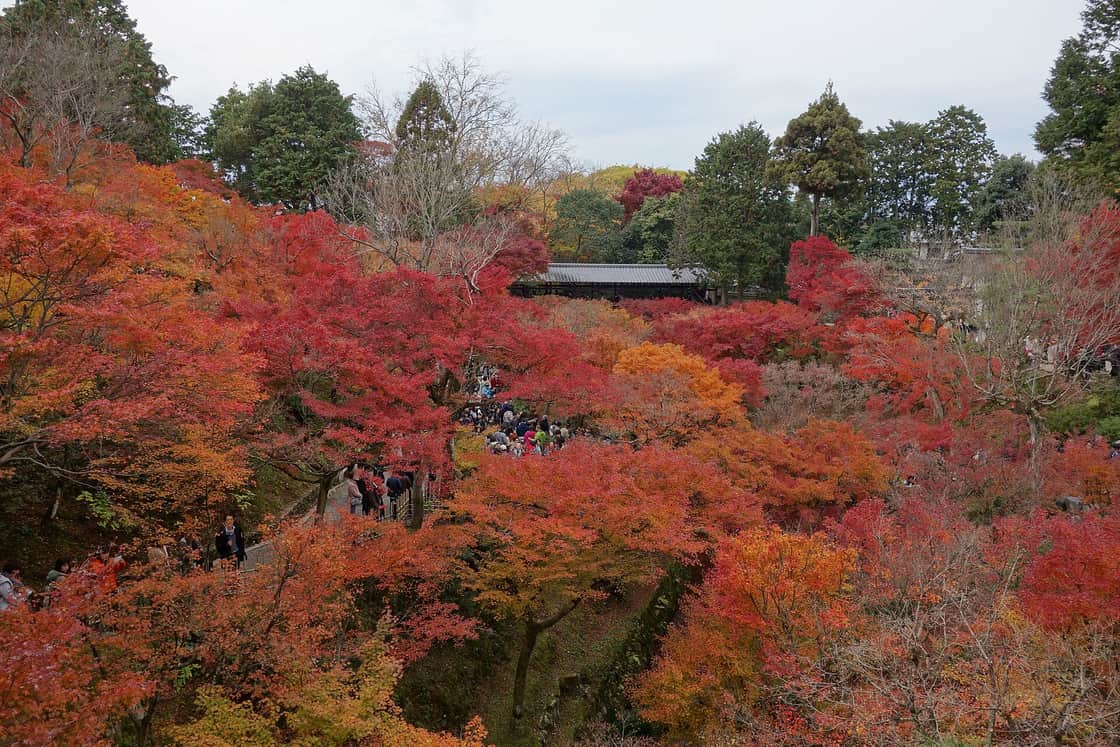
In 2026 the lakeshore does not reach peak until around November 17, roughly ten days later than the lakeshore's usual "early-to-mid November". Weathernews published its first forecast round on September 3 and puts the Kawaguchiko lakeshore (the Momiji Corridor stretch) at peak from November 17, with leaf fall from November 30. Foliage across the Koshin region this year is running "later than or slightly later than average", mostly because temperatures have stayed high into autumn.
The Fujikawaguchiko tourism association, meanwhile, still gives "early to mid November" as the best stretch for the 400 to 500 maples around the lakeshore as a whole, while the Weathernews date counts from the day most of the leaves have turned. The two are about ten days apart for reasons of definition, not error, so do not average them: pick by whether you want fully red trees or a good walk in autumn colour.
Then stop treating "Kawaguchiko foliage" as one date — it is three timings that do not sync. The north-shore Momiji Corridor and Oishi Park, the Tenjoyama ropeway lookout, and Arakurayama Sengen Park across in Fujiyoshida sit at different heights with different trees, and the official data on them varies wildly in precision. Force one set of dates onto all of them and you get a mismatch: lakeside red while the ropeway top is not in, or lakeside dropping while the ropeway top peaks.
| Spot | 2026 forecast (Weathernews, Sep 3) | Official conventional window | Source |
|---|---|---|---|
| Momiji Corridor / lakeshore | Peak from Nov 17, leaf fall from Nov 30 | Best stretch early–mid November | Weathernews / Fujikawaguchiko Tourism |
| Oishi Park (kochia) | No forecast | No official date; only "reddens in autumn" | Fujikawaguchiko Tourism |
| Tenjoyama ropeway lookout | No forecast | Early November–early December | Yamanashi official tourism |
| Arakurayama Sengen Park (Chureito) | No forecast | No precise peak week; qualitative note only | Fujiyoshida tourism |
If the trip covers more than Kawaguchiko, the rest of the Fuji Five Lakes and Yamanashi forecast helps you order the days:
| Spot | 2026 peak from | Leaf fall from |
|---|---|---|
| Lake Yamanaka Hana no Miyako Park | Nov 9 | Not given |
| Lake Yamanaka | Nov 10 | Nov 20 |
| Lake Motosu | Nov 11 | Not given |
| Mitake Shosenkyo Gorge | Nov 13 | Nov 28 |
| Koyodai (Narusawa) | Nov 14 | Nov 30 |
| Kawaguchiko lakeshore | Nov 17 | Nov 30 |
| Fuji Subaru Line (toward 5th Station) | No forecast this year | Usually mid-Oct to early Nov |
How to read the two tables: the Fuji Five Lakes turn from higher ground downward, so Lake Yamanaka goes around November 10, the Kawaguchiko lakeshore a week later, and the Fuji Subaru Line up toward the 5th Station as early as mid-October. Want two lakes in one trip? Mid-November gives you the best chance of catching both. The Tenjoyama ropeway lookout has no day-level forecast this year, but its conventional window is the longest and latest, marked into early December, so it adds a wave once the lakeshore starts dropping at the end of November. Oishi Park kochia and the Chureito foliage have no official dates; check the current condition on the Fujikawaguchiko tourism site before you go.
To get both full colour and the evening illumination, go between November 17 and November 29. That stretch sits inside this year's forecast peak and inside the Momiji Festival run (Nov 7–29) — the only overlap. Forecasts get revised as temperatures move, so check the Weathernews Kawaguchiko lakeshore page again about two weeks out.
Kawaguchiko Momiji Festival 2026: which dates, and how late are the lights on?
The 2026 Fuji-Kawaguchiko Momiji Festival runs November 7 (Saturday) to November 29 (Sunday), with evening illumination from sunset to 21:00, at a venue listed as the "Momiji Festival special venue." Those are the dates the Fujikawaguchiko town tourism association posted on July 10, 2026 (fujisan.ne.jp). The venue is on the north shore along the Nashikawa stream near the Kubota Itchiku Art Museum — the Momiji Corridor stretch.
| Item | 2026 (town tourism association notice) | 2025, 27th edition (last year's run) |
|---|---|---|
| Dates | Nov 7 (Sat) – Nov 29 (Sun) | Nov 1 (Sat) – Nov 30 (Sun) |
| Evening illumination | Sunset – 21:00 | Sunset – 21:30 |
| Daytime hours | Not stated | 09:00–19:00 |
| Admission | Not stated | Free |
| Venue | "Momiji Festival special venue" | Around the Nashikawa stream on the lakeshore |
Compared with last year, the run is a week shorter and the lights go off 30 minutes earlier. Put your evening between November 7 and 29 for night maples — but note the lakeshore is not forecast to be at peak until November 17, so go in the first half of the run and the lights are on while the trees are not there yet. Daytime hours and admission are not in the 2026 notice, so do not carry over last year's 09:00 to 19:00.
Momiji Corridor vs Oishi Park: which north-shore spot
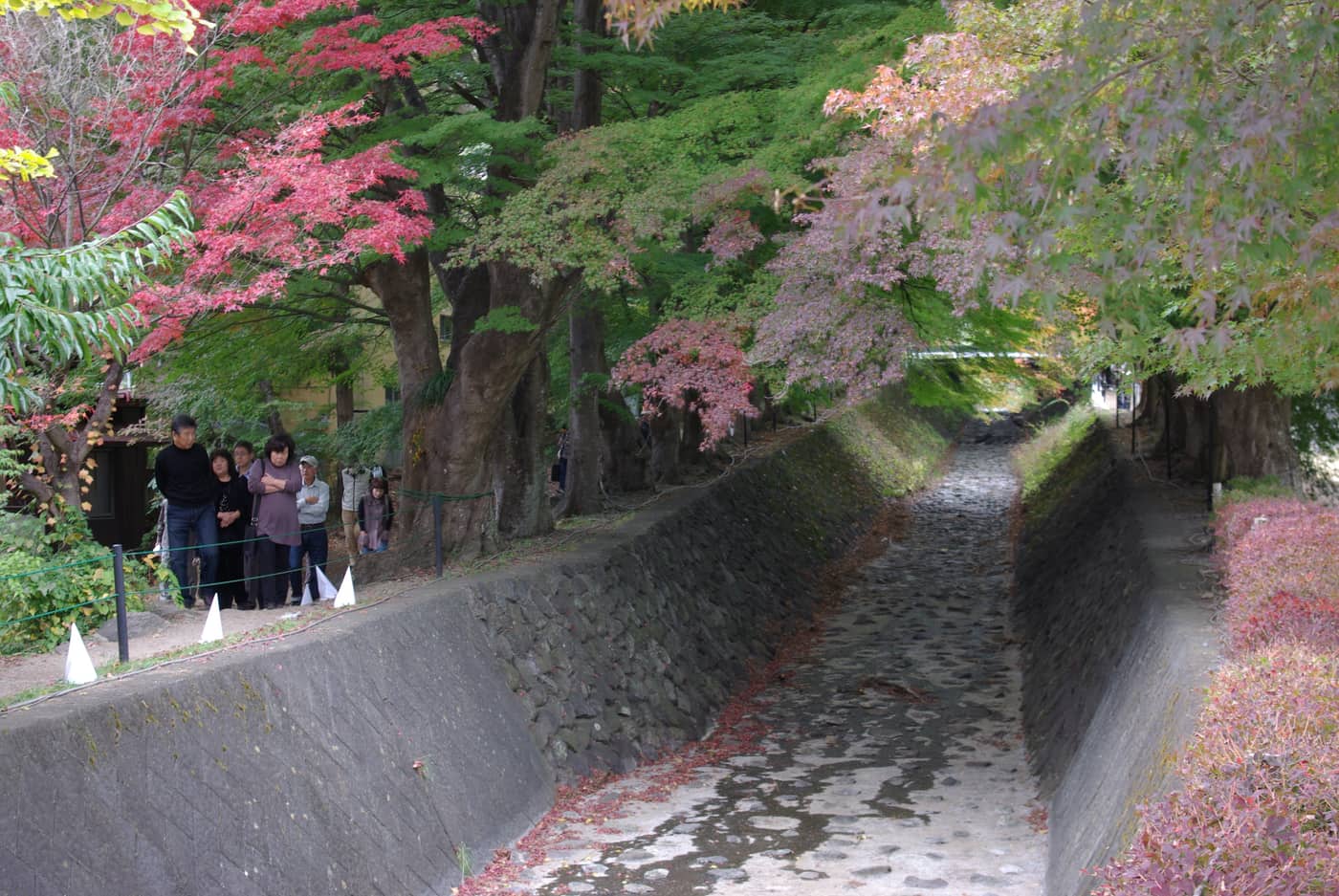
These two north-shore spots get lumped together, but they are two different experiences, and with limited time I would choose by what you want to shoot.
The Momiji Corridor is the core venue of the Fuji-Kawaguchiko Momiji Festival, on the north shore along the Nashikawa stream near the Kubota Itchiku Art Museum. Per the Fujikawaguchiko tourism association there are 400 to 500 maples around the lakeshore, and this stretch lines them along the Nashikawa stream into a red tunnel. Its value is density and atmosphere: you walk in and the maples close over you, and during the festival there is evening illumination (the 2026 notice gives sunset to 21:00; see the section above), which deepens the red. Choose this for a foliage-tunnel shot or night maples.
Oishi Park plays a completely different game. It is an open lakeside garden — per the Fujikawaguchiko tourism body it is open year-round and free, with parking for 100-plus cars and room for large buses, so it is easy by car too. Its signature is the foreground-plus-Lake-Kawaguchi-plus-Mt.-Fuji big view: when the kochia reddens, red bushes fill the foreground with Fuji beyond, a popular Instagram composition. Note the official page only says it "reddens in autumn" with no precise date, so do not treat it as a spot you can pin to a day — check the current condition before you go. Choose this for a Mt. Fuji composition and an easy stroll with older travelers or kids.
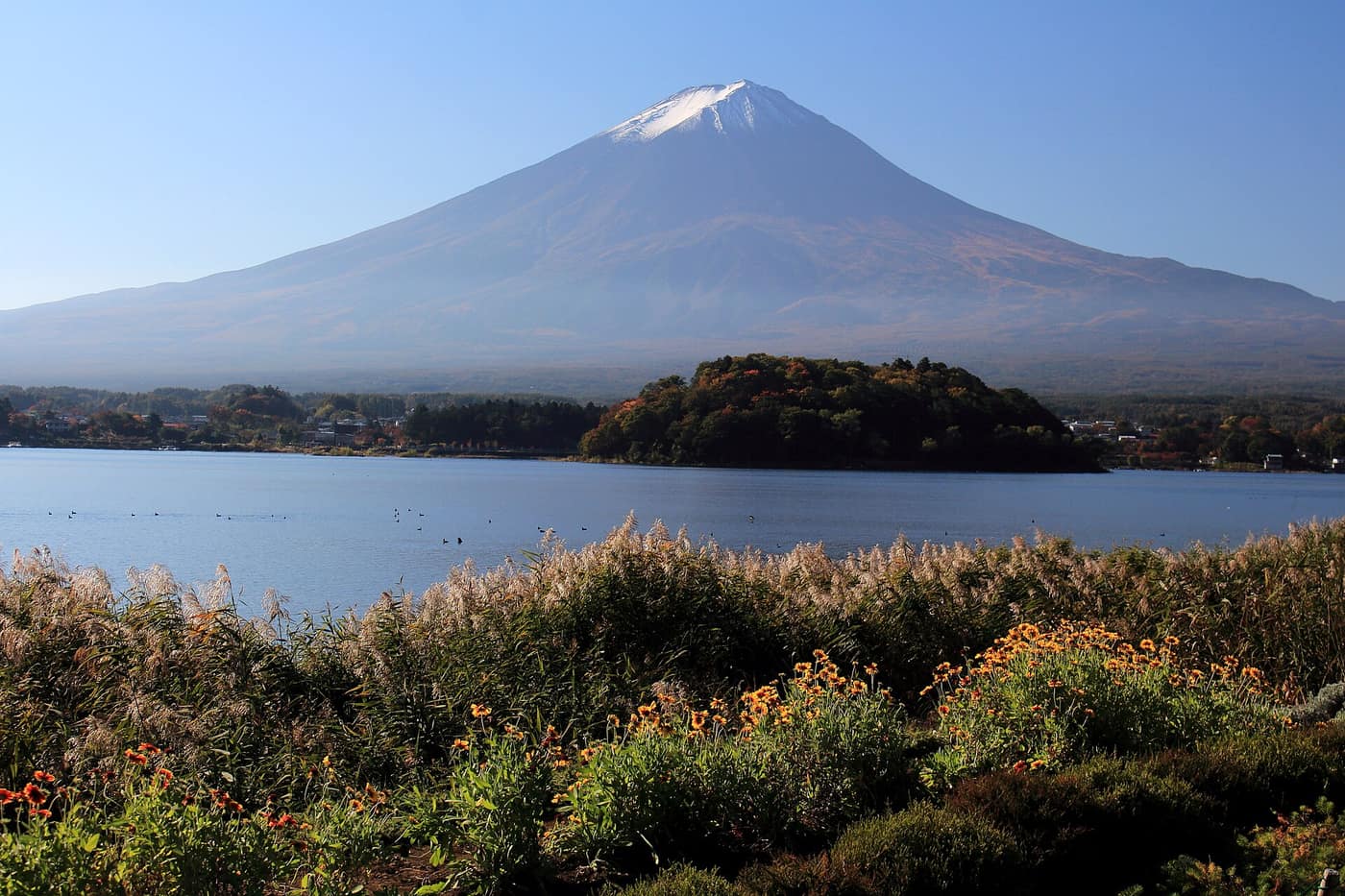
My call is simple: only one, pick the corridor for foliage atmosphere and night maples, Oishi Park for the Fuji composition. With time for both, do Oishi Park in the early morning (calm water and a clearer Fuji when there is no wind), then the corridor at dusk for the illumination, banking both the big Fuji view and the night foliage tunnel in one day. Both sit on the Red Line sightseeing bus, so they string together neatly (routing details in the transport section below).
Beyond the two free spots, the north shore has a paid attraction that suits autumn well: the Kawaguchiko Music Forest Museum, a European garden with music boxes framed against Mt. Fuji — in autumn the garden pairs with foliage, and on a windless morning you can catch Fuji reflected on the lake. Adult admission is ¥1,800. If you want the ticket locked in before you go, KKday sells the official e-ticket (scan the voucher at the gate, no paper exchange): Kawaguchiko Music Forest tickets on KKday →⚠️ It is calendar-based pricing rather than a flat discount, so check it against the official admission for your date first — and online tickets cannot be cancelled or changed.
The Tenjoyama ropeway: is it worth it, fares and timing
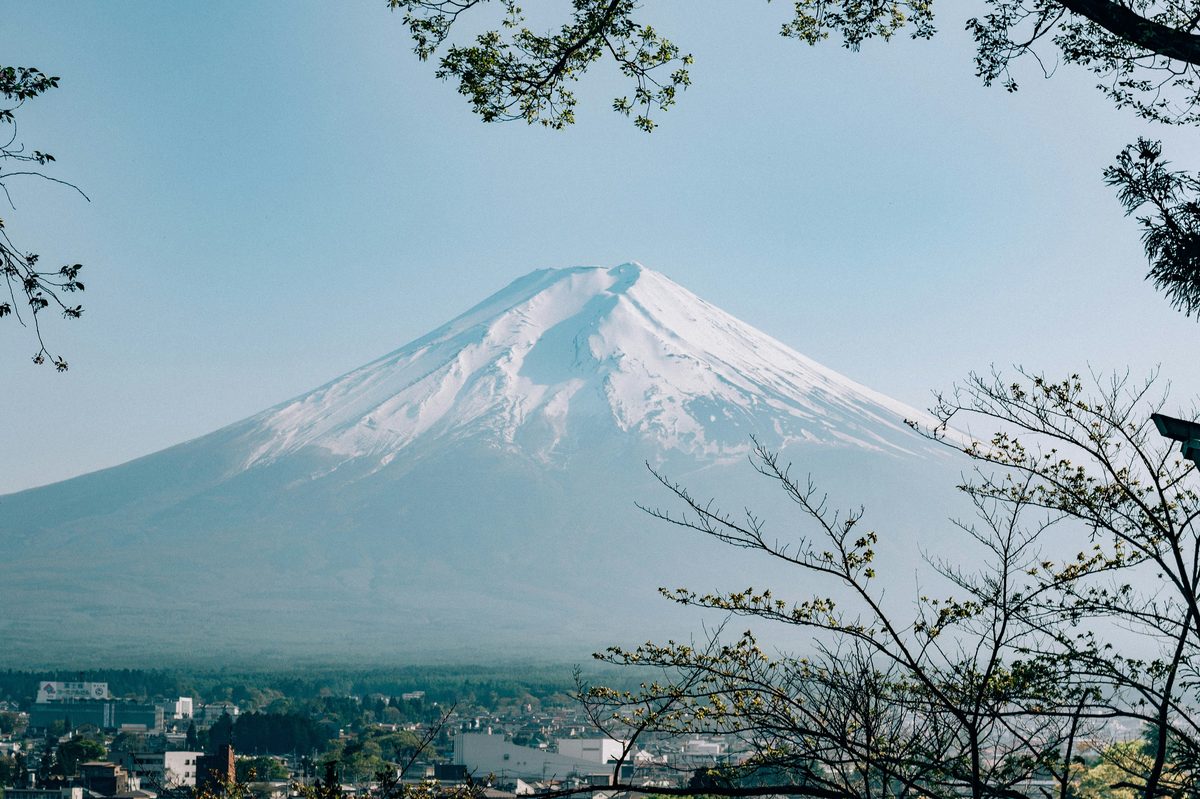
The Kawaguchiko Tenjoyama Park ropeway is officially the Mt. Fuji Panoramic Ropeway, nicknamed the "Kachi Kachi Yama Ropeway" after the folktale. It lifts you from the lakeside to the Tenjoyama lookout, a good angle for getting the lake and the mountain into one frame.
Fares and hours first. Per the official ticket page, a round-trip is ¥1,000 adult and ¥500 child; one-way is ¥600 adult and ¥300 child. Hours are 8:30 to 17:00 in the normal season (last descent 17:20), extended to 8:30 to 18:00 in summer from July 20 to August 31 (last descent 18:20). It is at 1163-1 Asakawa, Fujikawaguchiko, about 10 minutes by bus, 15 minutes on foot, or 5 minutes by taxi from Kawaguchiko Station. The 900-yen round-trip that floats around online is the group rate for 15 or more, not an old individual price — individual round-trips are 1,000 yen.
So is it worth it? My take is very much so on a clear day, and skip it on a bad one. Its biggest draw is the lookout's foliage window — per the Yamanashi official tourism site, early November into early December, the longest and latest-fading of the three spots. In other words, once the lakeshore starts dropping at the end of November, the ropeway top can still add a wave of foliage plus a Fuji vista — that timing gap is its value. But the ride is short and the fare is not cheap, so if thick cloud swallows Fuji the value drops, and on those days I would spend the budget walking the lakeside instead. Buying on site is perfectly fine; if you would rather skip the ticket-machine queue in peak season or pay by card ahead of time, Trip.com sells a round-trip e-ticket: Trip.com Mt. Fuji Panoramic Ropeway ticket →
If you would rather not work out transfers and timetables and just want a day that covers Kawaguchiko, the ropeway, and nearby spots, KKday runs a Mt. Fuji day tour from Tokyo that includes the Tenjoyama ropeway with door-to-door transport: Kawaguchiko Tenjoyama ropeway day tour. This suits travelers who do not want to arrange transit or who have older companions or kids; if you were planning to go independently and want a flexible lakeside route, riding the sightseeing bus yourself is cheaper. For the summit's scenic swing, Usagi Shrine, teahouse menu, the four official combo passes and the hike-down route, see the dedicated Kachi Kachi ropeway guide.
Arakurayama Sengen Park: the pagoda-and-Fuji shot
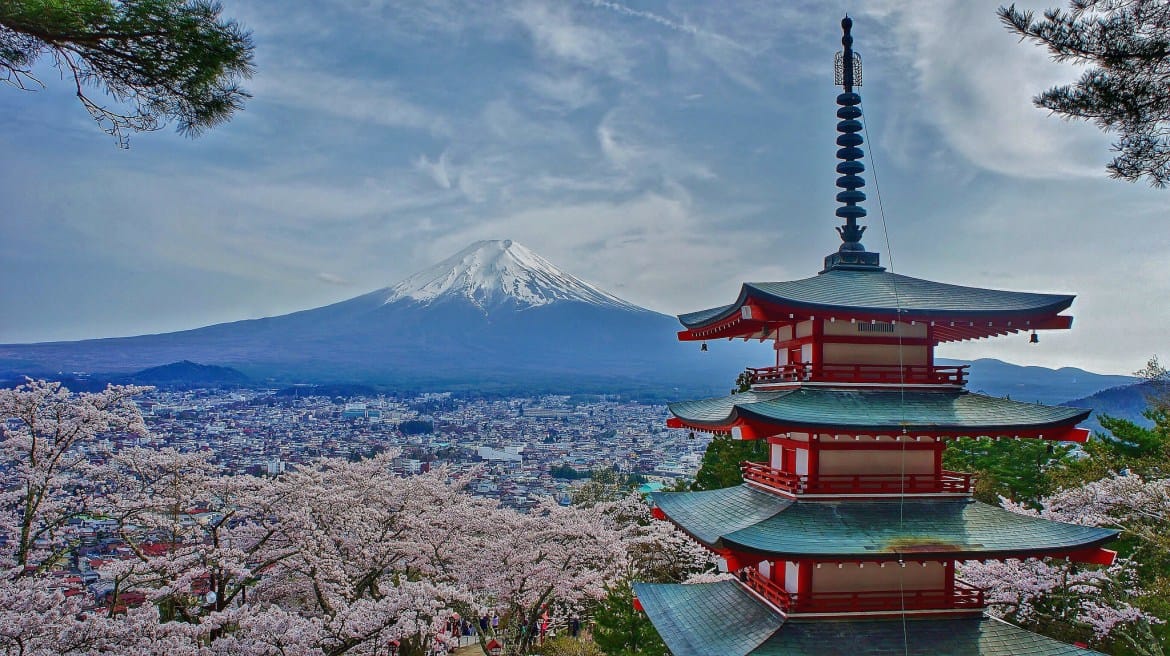
If you have seen the Japanese postcard shot of a five-story pagoda, blossoms or foliage, and Mt. Fuji all in one frame, that is usually the Chureito Pagoda at Arakurayama Sengen Park. Strictly it is not on the Kawaguchiko shore but across in Fujiyoshida, though many people route it into the same trip, so I cover it here.
The practical barrier first. To get the shot with the pagoda and Fuji you climb the 398-step Sakuya-hime staircase from the park entrance to the platform — all stone steps, so pace it with older or bad-kneed companions. The park itself is open 24 hours and free to enter, but all parking is paid: P1 is 1,500 yen for six hours, P2 to P3 are 1,000 yen for six hours, and P4 is 1,500 yen for cars and 750 yen for motorcycles. The nearest station is Shimo-Yoshida on the Fujikyuko Line, and the official pages disagree on walking time (some say about 10 minutes, others about 25 to 30, likely measuring from the entrance versus the pagoda), so budget about 20 to 30 minutes including the stairs to be safe.
On foliage timing I will be honest: the official page gives no precise peak week here, only a qualitative note that autumn color is appealing. It has no day-level forecast the way the lakeshore does, so I will not hand you a falsely precise date. In practice, track the lakeshore's mid-to-late-November rhythm and judge the trees on site; and if your priority is the pagoda-and-Fuji composition itself, a clear day with good Fuji visibility matters more than whether the maples are fully open — afternoon cloud is common, so come in the morning for a much better chance at a clear Fuji. For the full stair logistics, shooting windows, goshuin situation, and the 2026 cherry-festival cancellation, see our dedicated Chureito Pagoda deep-dive.
Getting there: Fujikaiyu vs highway bus vs Fujikyuko Line
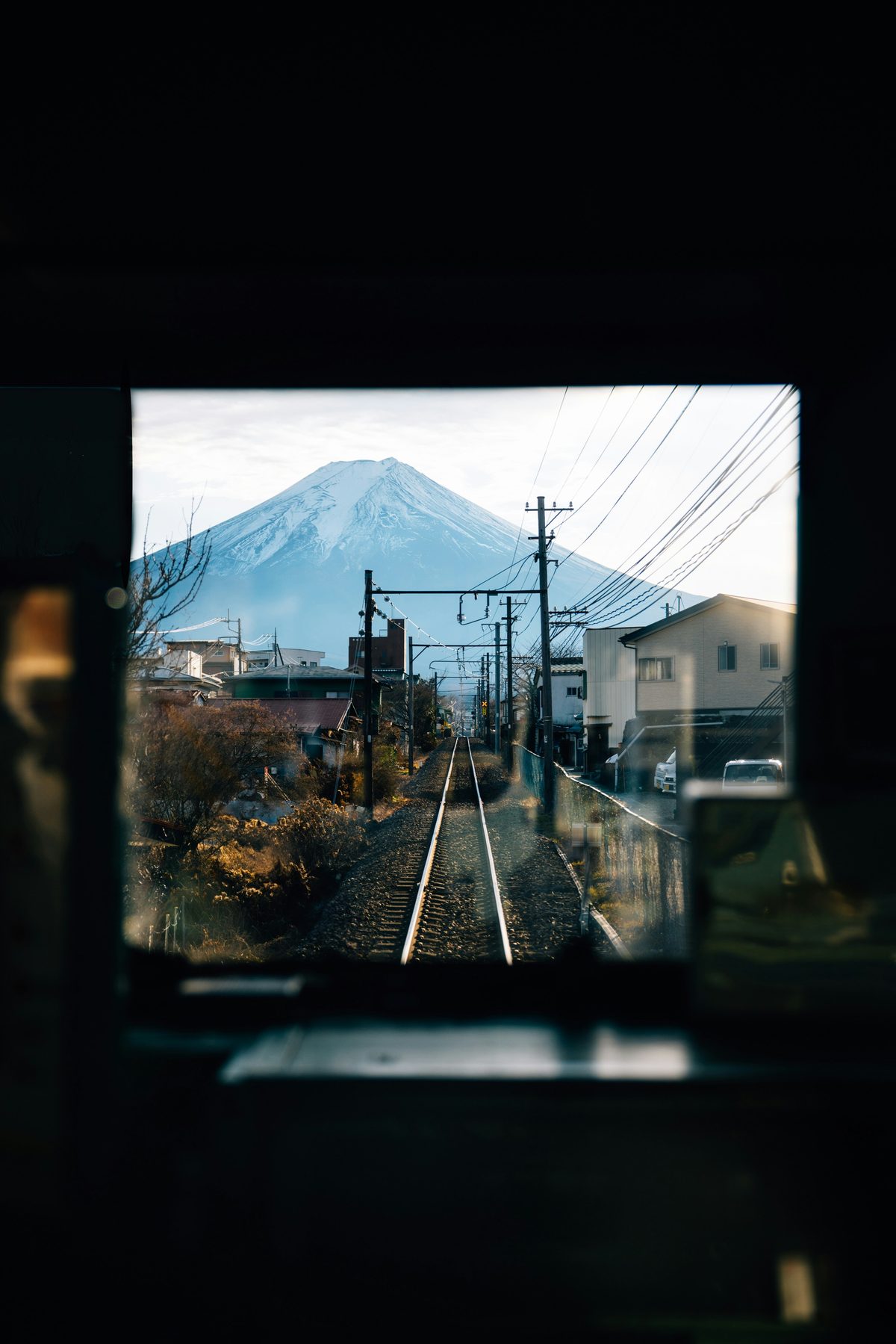
From Shinjuku to Kawaguchiko there are three main ways: the direct Fujikaiyu limited express, the highway bus, and the JR Chuo Line transferring to the Fujikyuko Line. Here are the checked numbers in one table:
| Option | Fare | Time | Frequency | My call |
|---|---|---|---|---|
| Fujikaiyu (direct limited express) | ¥4,200 (reserved, incl. ltd-exp fee) | Fastest ~1 hr 53–54 min | 4 round trips/day (+1 on summer weekends, Jul 4–Sep 27) | Most comfortable, but few trips — book early in peak |
| Highway bus (Shinjuku → Kawaguchiko Stn) | ¥2,200+ (night bus extra) | ~1 hr 30 min–1 hr 45 min | Frequent (per Fujikyu Travel timetable) | Cheapest and flexible, but traffic-prone |
| JR Chuo Line + Fujikyuko Line (transfer at Otsuki) | Fujikyuko leg (Otsuki–Kawaguchiko) ¥1,170 + JR Chuo Line fare separate | Depends on connections | Per JR and Fujikyuko schedules | Best for JR Pass holders — pass covers the Chuo Line leg |
How to choose? My read: fixed itinerary and want comfort, grab a Fujikaiyu reserved seat — no transfer, most comfortable, but only 4 round trips a day, so reserved seats sell out fast in peak foliage season and you must book early; the operator also recommends the reserved-seat ticket to guarantee a seat. Budget-first, flexible, and not afraid of traffic, the highway bus wins — noticeably cheaper and frequent, but it runs the expressway, so times stretch on long weekends, with the official window already a 1 hour 30 minute to 1 hour 45 minute range. JR Pass holders should take the JR Chuo Line to Otsuki and transfer to the Fujikyuko Line: the Otsuki-to-Kawaguchiko leg is ¥1,170 adult and ¥590 child, with the Chuo Line leg covered by the pass, likely the cheapest overall.
One practical note: checking live ropeway status, matching Fuji visibility for the day, and rerouting on the fly all need data, but signal comes and goes in the mountains around Fuji. Set up an unlimited eSIM before you fly and connect on landing; for how the five main eSIMs compare, see the Japan eSIM guide. For the full Tokyo-to-Mt.-Fuji transport comparison (including the 5th Station bus and area lodging), see the Tokyo to Mt. Fuji transport guide.
Routing and crowds: how to ride the sightseeing bus
Once at Kawaguchiko Station, the workhorse for linking lakeside spots is the Kawaguchiko Red Line sightseeing bus. It runs from the station around the north and south shore spots every 15 minutes from 09:00 to 17:45. On fares, the adult 1-day pass is ¥1,500 and child ¥750; the 2-day pass is ¥2,000 adult and ¥1,000 child. Both foliage spots are on the line: the Momiji Corridor nearest stop is Kubota Itchiku Art Museum (about a 20-to-25-minute walk to the venue area), and Oishi Park is the Kawaguchiko Natural Living Center stop (about 30 minutes from the station).
Is the 1-day pass worth it? My read: ride more than two or three segments and it beats buying single legs, and it saves fumbling coins at each stop; but if you only make one out-and-back to a single spot, single tickets may be enough.
Two keys to beating the crowds. First, do the weather-dependent spots like Oishi Park and the Fuji vista first thing — the water is calmer and Fuji clearer with no morning wind, and afternoon cloud often hides Fuji, killing the reflection. Putting the most weather-sensitive shot in the morning is my top move. Second, avoid peak weekends if you can: on a peak-foliage Saturday or Sunday the sightseeing-bus queue at the station, the Oishi Park parking, and lakeside restaurants are all packed, and a weekday feels far looser. A smooth one-day order: Oishi Park early for the big Fuji view, the Red Line to other north-shore spots including the Music Forest Museum (closed Tuesdays and Wednesdays as a rule), then the Momiji Corridor at dusk for the illumination, banking both the Fuji view and the night foliage tunnel.
Want to add other Fuji-area options? Fuji-Q Highland is right by Kawaguchiko Station, good for a half to full day with kids or coaster fans; its 1-day passport is dynamically priced and rises in peak season (the deep-dive explains the three-layer ticket system), so check Fuji-Q Highland tickets on Trip.com →. The same trip pairs well with Hakone, where the foliage turns in layers up one mountain — a very different playbook from Kawaguchiko; see the Hakone autumn guide. For a city-side autumn shot in Tokyo, see the Tokyo ginkgo avenues guide.
Frequently Asked Questions
- Q1:When is Kawaguchiko autumn foliage at its best in 2026?
- For 2026 the safest week is November 17 to November 29. Weathernews, in its first forecast round published September 3, puts the Kawaguchiko lakeshore at peak from November 17 with leaf fall from November 30, and the Momiji Festival runs to November 29 — that overlap is the only window with both full color and evening illumination. The spots around the lake do not sync: the Tenjoyama ropeway lookout has an official conventional window of early November into early December and fades last, so it can add a wave after the lakeshore drops; Arakurayama Sengen Park (Chureito) and the Oishi Park kochia have no official dates at all. Koshin region foliage this year is running "later than or slightly later than average", and the forecast is revised as temperatures move, so recheck about two weeks before you travel.
- Q2:What are the Fuji-Kawaguchiko Momiji Festival 2026 dates, and is the Momiji Corridor free?
- In 2026 it runs November 7 (Saturday) to November 29 (Sunday), with evening illumination from sunset to 21:00, at the "Momiji Festival special venue" on the north shore along the Nashikawa stream near the Kubota Itchiku Art Museum. Last year's 27th edition ran November 1 to November 30 with illumination to 21:30, daytime opening 09:00 to 19:00 and free admission; the 2026 notice gives no daytime hours or admission fee, so do not carry last year's figures over. The Momiji Corridor itself is free.
- Q3:Momiji Corridor vs Oishi Park: which should I pick?
- Both sit on the north shore along the Red Line sightseeing bus, but they deliver different pictures, so pick by what you want to shoot. The Momiji Corridor is a stretch of maples lined along the Nashikawa stream into a red tunnel you walk through, plus evening illumination during the festival — it is about density and atmosphere, best for a foliage-tunnel shot or night maples. Oishi Park is an open lakeside garden built for the foreground-plus-Lake-Kawaguchi-plus-Mt.-Fuji big view: when the kochia turns red the round bushes fill the foreground with Fuji beyond, best for a Mt. Fuji composition and an easy stroll with older travelers or kids. If you can only do one, choose the corridor for foliage atmosphere and Oishi Park for the Fuji view. With time for both, do Oishi Park in the early morning (calmer water, clearer Fuji) and the corridor at dusk for the illumination. For Oishi Park's full-year bloom calendar, lavender season and access details, see the dedicated Oishi Park guide.
- Q4:Is the Kawaguchiko Tenjoyama ropeway (Kachi Kachi Yama Ropeway) worth it, and how much are tickets?
- The official name is the Mt. Fuji Panoramic Ropeway, nicknamed the Kachi Kachi Yama Ropeway after the folktale. Per the official ticket page, a round-trip is 1,000 yen adult and 500 yen child; one-way is 600 yen adult and 300 yen child. Hours are 8:30 to 17:00 in the normal season (last descent 17:20), extended to 8:30 to 18:00 in summer from July 20 to August 31. Whether it is worth it depends on the weather: it lifts you to the Tenjoyama lookout overlooking both Lake Kawaguchi and Mt. Fuji, and the lookout foliage window is the longest of the three spots, early November into early December, so it can add a second wave of color at the end of November when the lakeshore starts dropping. The downside is a short ride at a not-cheap price, and if cloud hides Fuji the value drops. You can buy tickets on site, or grab an e-ticket on Trip.com in advance. One tip: the 900-yen round-trip you may see online is the 15-plus group rate, not an old individual fare — individual tickets are 1,000 yen.
- Q5:Fujikaiyu limited express vs highway bus to Kawaguchiko: which is better?
- It comes down to speed versus flexibility and budget. The Fujikaiyu is a direct limited express from Shinjuku to Kawaguchiko, fastest around 1 hour 53 to 54 minutes with no transfer — the most comfortable option, but it runs only 4 round trips a day (an extra round trip is added on summer weekends and holidays from July 4 to September 27), so reserved seats sell out fast in peak foliage season and you should book early. The highway bus is noticeably cheaper with frequent departures; the trade-off is highway traffic, so times stretch on long weekends, with the official window at about 1 hour 30 minutes to 1 hour 45 minutes. My call: fixed itinerary and want comfort, grab a Fujikaiyu reserved seat; budget-first and flexible, the bus wins. JR Pass holders can instead take the JR Chuo Line to Otsuki and transfer to the Fujikyuko Line, using the pass on the Chuo Line leg.
- Q6:How many steps is Arakurayama Sengen Park (Chureito Pagoda), and is it free?
- To reach the platform where the five-story pagoda frames with Mt. Fuji you climb the 398-step Sakuya-hime staircase, all stone steps, so pace it if you have older companions or bad knees. The park is open 24 hours and free to enter, but all parking is paid: P1 is 1,500 yen for six hours, P2 to P3 are 1,000 yen for six hours, and P4 is 1,500 yen for cars and 750 yen for motorcycles. The nearest station is Shimo-Yoshida on the Fujikyuko Line, and the official pages disagree on walking time (some say about 10 minutes, others about 25 to 30, likely because they measure from the entrance versus the pagoda itself), so budget about 20 to 30 minutes including the stairs. The foliage peak here is not given as a precise week by the official page, only a qualitative note, so track the lakeshore's mid-to-late-November rhythm and judge the trees on site.
- Q7:Is the Kawaguchiko sightseeing bus (Red Line) 1-day pass worth buying?
- If you are stringing several north-shore spots in a day, yes. The Red Line runs from Kawaguchiko Station around the north and south shore spots every 15 minutes from 09:00 to 17:45. The adult 1-day pass is 1,500 yen and child 750 yen; the 2-day pass is 2,000 yen adult and 1,000 yen child. It links the foliage spots you want: the Momiji Corridor nearest stop is Kubota Itchiku Art Museum, and Oishi Park is the Kawaguchiko Natural Living Center stop. Ride more than two or three segments and the 1-day pass beats buying single legs, and it saves you fumbling coins at each stop. If you only make one out-and-back to a single spot, single tickets may be enough.
Read next
Japan Autumn Foliage 2026: Peak Forecast & 5-Region Guide
Region-by-region peak-forecast map from late-September Hokkaido to mid-December Kyushu, with itineraries and booking timing.
Tokyo to Mt. Fuji day trip guide
Kawaguchiko, Oshino Hakkai, Arakurayama — bus times, prices, must-knows.
Hakone Autumn Foliage 2026: Timing by Elevation
Lake Ashi peaks two weeks before Gora: an elevation-by-elevation timing table plus a Free Pass route.
📊 See the 2026 Price Index (JR Pass, DPA, eSIM, Airport Transport) →