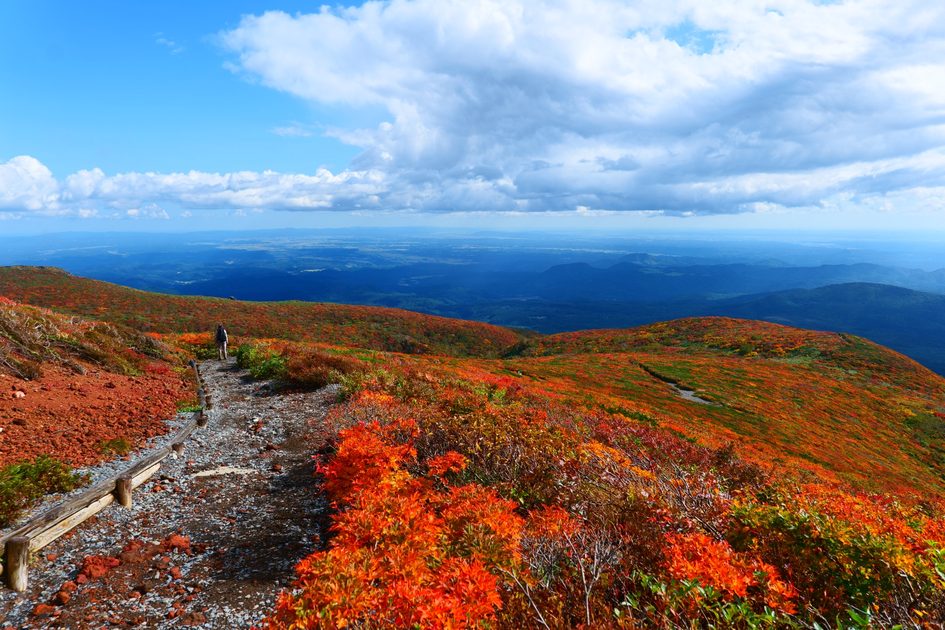
About 3,000 maples along the Tomoe River turn red at once in mid-to-late November, and after sunset the Mount Iimori illumination lights the Taigetsukyo Bridge and its reflection until 21:00. Korankei is, without much argument, Nagoya's best autumn foliage spot. But here is the unglamorous truth first: on peak-foliage weekends, National Route 153 into Asuke is one of Japan's most notorious koyo traffic jams. How good your visit is depends mostly on how — and when — you arrive. This guide covers the peak-timing window (official averages plus current-year forecast), the latest status of the 2026 festival and night illumination, whether to drive or transfer to a bus from Nagoya, the tactics for dodging crowds, and the Asuke old town add-on.
📍 For the full 5-region Japan koyo timing map, see Japan Autumn Foliage 2026. This article is the Chubu (Tokai) deep-dive on Korankei. Settle one thing first: Korankei is in Asuke, Toyota City — it is not inside Nagoya. If what you want is foliage you can reach on foot from central Nagoya (Higashiyama, Tokugawaen, Shirotori Garden, all peaking one to two weeks later than Korankei), read Nagoya autumn foliage 2026: city-garden peak weeks and night viewing instead; for the city year-round, see the Nagoya travel guide.
- 2026 forecast: peak from Nov 22, leaf-fall from Dec 6 (WeatherNews, checked 2026-09-26); the historical average is mid-to-late November
- 71st Momiji Festival: Nov 1 (Sun) – Nov 30 (Mon), 2026, running the whole month
- Illumination: every night in November, sunset to 21:00 — none on Oct 31, none in December
- Free entry — you only pay for parking (¥1,000 per car) and Sanshu Asuke Yashiki admission
- Do not drive on peak weekends — the Yanami Line bus from Toyota-shi Station (~40 min) is the sane route; Route 153 clogs
📖 Table of Contents (click to expand)
Why Korankei is Nagoya's best koyo spot
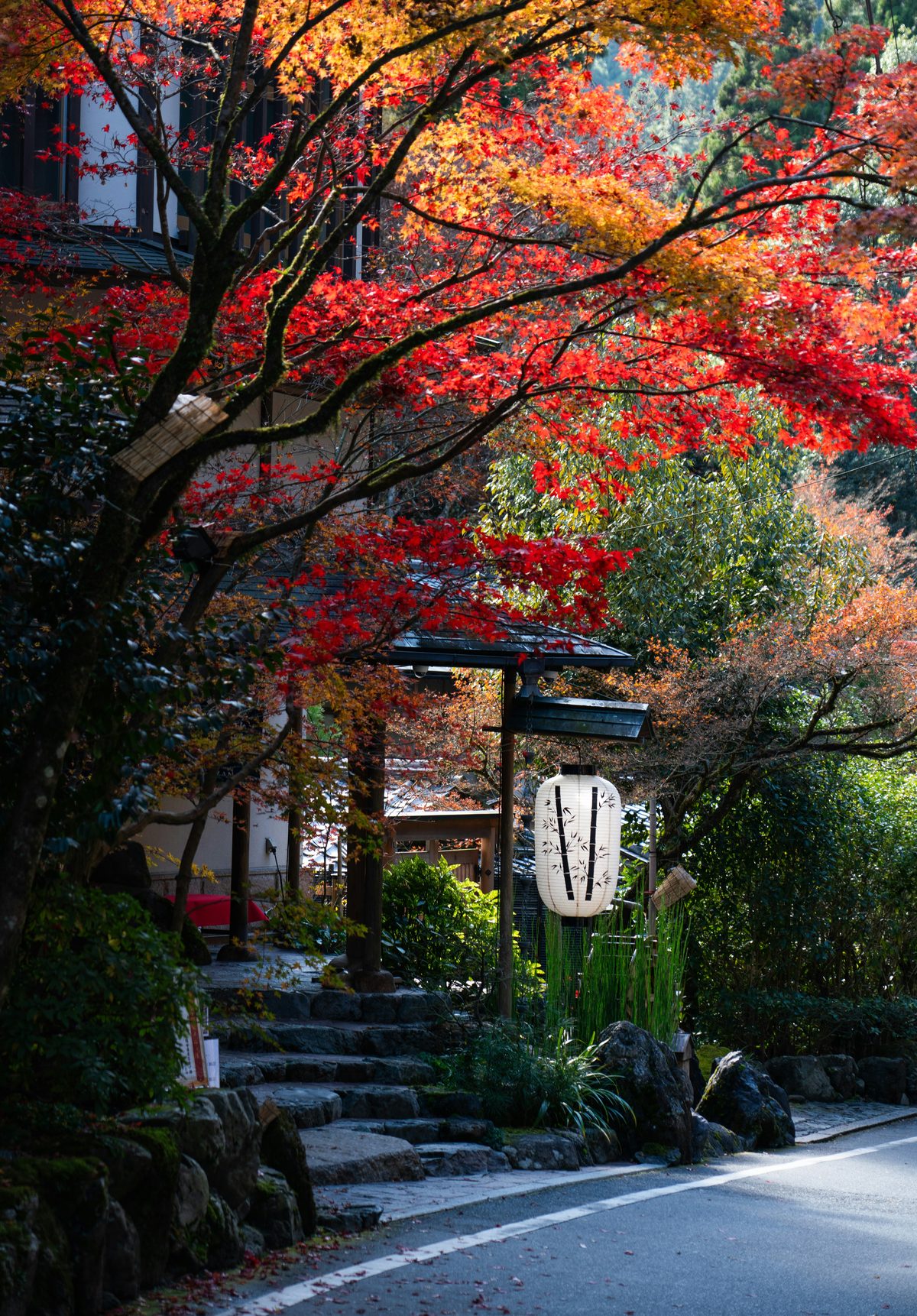
Korankei sits in Asuke, Toyota City, Aichi Prefecture, where the Tomoe River carves a short gorge lined with maples. Three things it does that other Nagoya-area spots struggle to match all at once:
- High-density maples close to Nagoya. About 1.5 hours by train plus bus from the city, yet you get about 3,000 maples across 11 species turning in a single river gorge (per the Asuke Tourism Association) — a scale and density that few day-trip-from-Nagoya spots can rival.
- Water in the frame. The Tomoe River and the vermilion Taigetsukyo Bridge are the visual core of Korankei; foliage mirrored in the water gives you a layered composition that pure hillside koyo cannot.
- Night illumination. During peak, the after-dark lighting turns the daytime foliage into an entirely different picture — a value-add many free foliage spots lack.
The downside is equally blunt: precisely because it is famous and close to Nagoya, peak-weekend crowds and traffic are the real weakness. Half of this guide is about avoiding that weakness.
Peak timing: official averages & the 2026 forecast frame
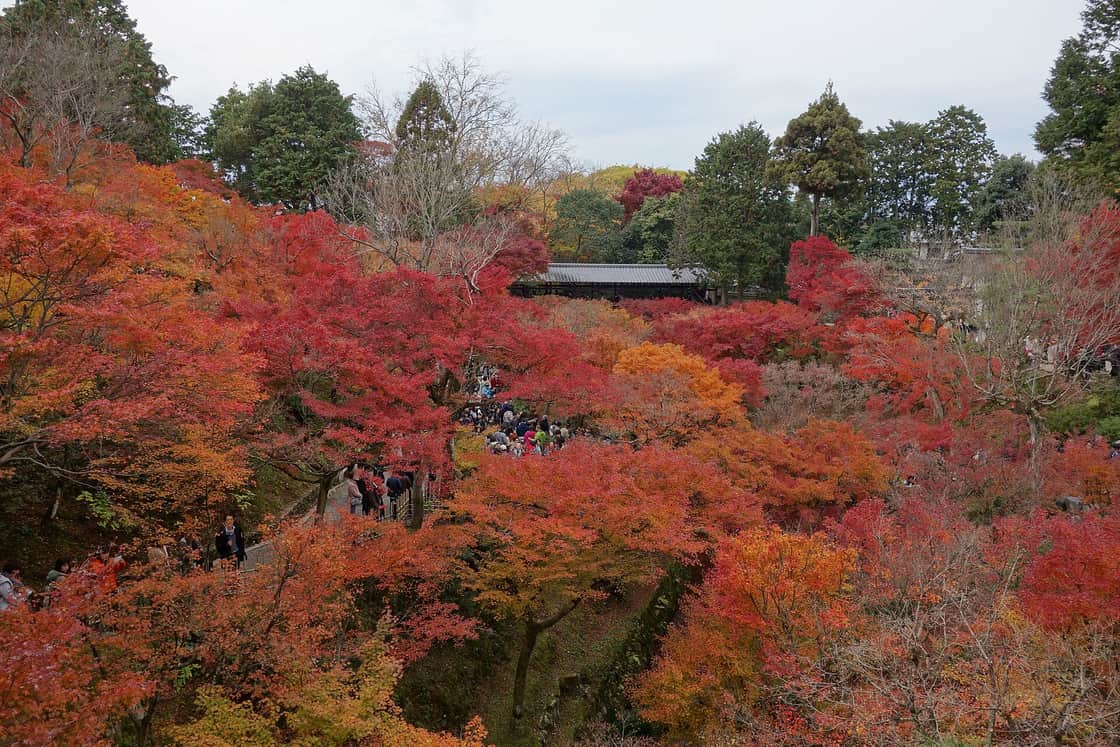
The short version: per the Japan Weather Association (tenki.jp), Korankei foliage peaks in a typical year from mid to late November. That window sits earlier than Kyoto (mostly late November into early December) and slightly earlier than central Tokyo's late ginkgo — conveniently wedged between the Kanto and Kansai koyo seasons, which makes it easy to slot into a wider itinerary.
But that is an average, not a promise. The real peak shifts a few days each year with how early the cold arrives: a warm autumn can push full color to the very end of November, while an early-cold year can hit its best around November 15. The 2026 forecast for Korankei itself is peak from November 22, leaf-fall from December 6 (WeatherNews spot page, checked 2026-09-26); the nationwide conclusion is peak color later than or slightly later than normal, driven by a warm autumn, with leaf condition better than last year everywhere except Kyushu. Check in this order:
- Now: WeatherNews is the only 2026 forecast on the table. For a single spot's forecast date, open its spot page — not the calendar page, which shows 2004–2025 averages rather than this year's forecast. Spot-page dates get revised without notice, so treat what you see on your own check date as current.
- tenki.jp only tells you "has it turned yet": its colour-status report updates daily, but the 2026 peak forecast is not out — open its forecast page today and you get the 2025 third round. There is nothing to cross-check against yet.
- Walkerplus is not a separate forecast: its peak-timing forecast republishes WeatherNews, as its own source line states, and its spot pages give historical averages plus a daily color report — not 2026 per-spot forecast dates.
- Two weeks out: recheck the latest version to fine-tune the date. This is when accuracy is highest — do not book on last year's dates.
⚠️ One more thing to settle before you book: Korankei runs ahead of central Nagoya, by more than most people expect. Nagoya City's official tourism site puts the city's Japanese gardens at mid-November to early December, and Shirotori Garden later still (late November to early December), against Korankei's mid-to-late November — a gap of roughly one to two weeks. So if your trip lands in early December, Korankei has largely dropped its leaves and its illumination ended with November; on those dates switch to the city gardens of Nagoya, which are then at their best. (A related caution: the Japan Meteorological Agency's widely quoted normal of November 28 for Nagoya maples comes from a specimen tree at the Nagoya Local Meteorological Observatory and represents the flat urban area — it cannot be applied to a gorge like Korankei, which turns earlier.)
If you are stitching a full cross-region foliage trip (Hokkaido Daisetsuzan in late September, Tohoku Oirase mid-October, Kyoto late November), start with the nationwide koyo timing map to get the big picture, then slot Korankei's mid-to-late November into the Chubu leg.
Momiji Festival & night illumination (2026 status)
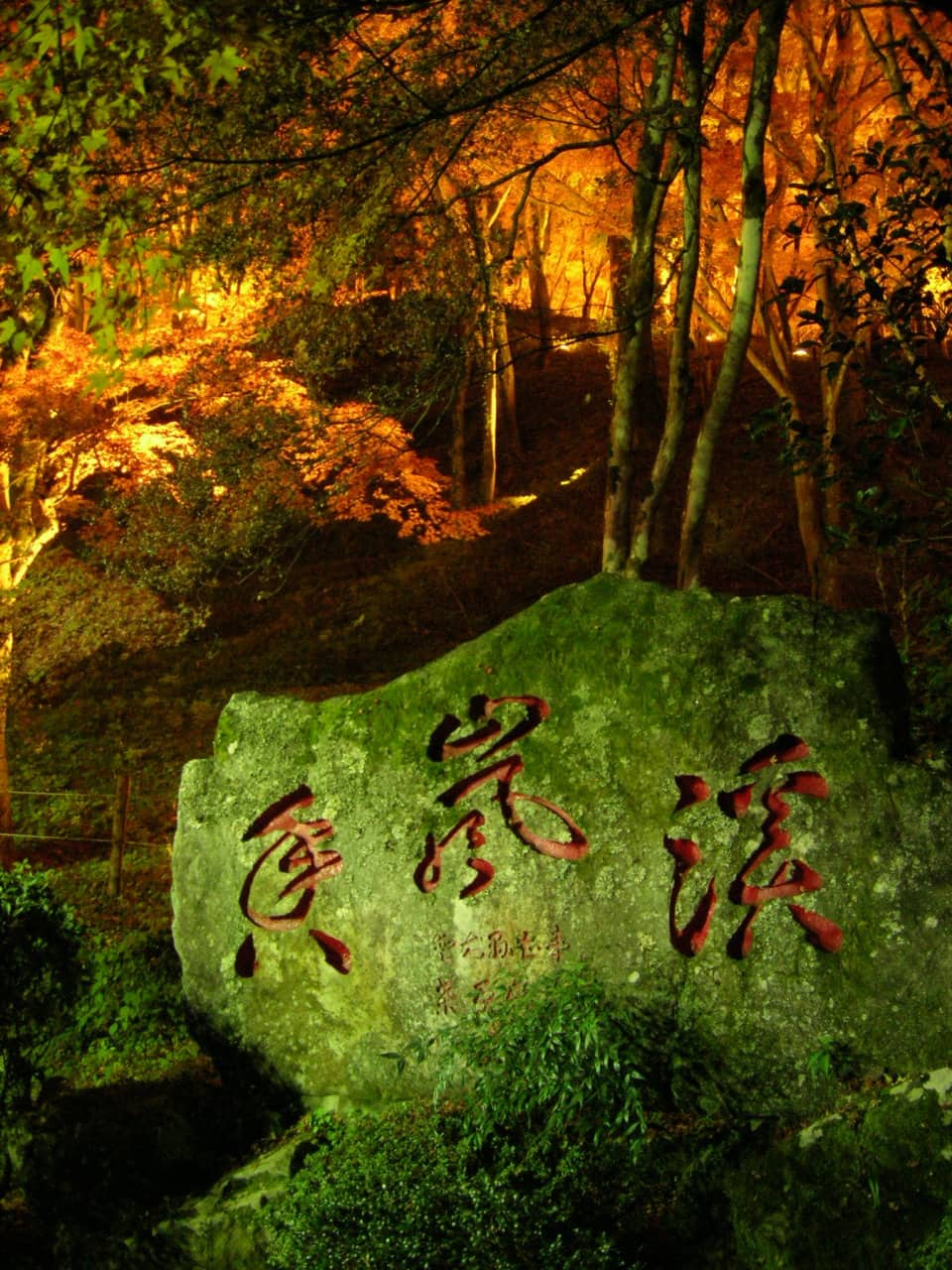
⚠️ There is no illumination on Saturday, October 31.
The Asuke Tourism Association page (asuke.info) states it outright: the lights start on November 1. Driving up on the last Saturday of October for night maples means arriving to a dark hillside.
The 71st Korankei Momiji Festival runs November 1 (Sun) to November 30 (Mon), 2026 — the same full-month window as last year's 70th edition, so any November date has festivities running.
Night illumination: November-only
Korankei's signature image is actually the after-dark illumination. Per the official 2026 notice:
- Illumination: every day in November, sunset to 21:00 — do not expect it to run late into the night.
- Because the official wording is "every day in November", October 31 and December are both out. This trips people up: they show up in early December expecting night maples and find only fallen leaves and dark hillsides. To see the lit foliage, your dates have to land in November.
The lights on the Mount Iimori slope, mirrored in the Tomoe River, are the classic Korankei night composition. It is also the most crowded window of the day — crowd tactics below.
Cost: free entry, parking, and yashiki admission
One genuinely generous thing about Korankei: entry is free. The official pages list no cooperation fee or admission of any kind — walking the trails, crossing Taigetsukyo Bridge, and shooting the river foliage costs nothing. The only two things you pay for are:
| Item | Cost | Notes |
|---|---|---|
| Korankei entry | Free | No cooperation fee on the official site |
| Parking (regular car) | ¥1,000 per visit | Per official; fills early on peak weekends (see access) |
| Parking (tour bus) | ¥3,000 per visit | Per official |
| Sanshu Asuke Yashiki admission | Paid (amount on site) | Amount not listed officially; folk-craft village in Korankei Plaza |
Put another way, aside from parking and the yashiki, Korankei is a place where you see an entire river of maples without paying a viewing fee — a different structure from the many Kyoto temples that charge one. Your budget mostly goes to transport and food, not admission.
The access problem: drive vs bus from Nagoya
This is the section worth reading carefully — access decides most of the Korankei experience. My position up front: on peak weekends, do not drive.
The reason is simple: National Route 153 (the Iida Kaido) into Asuke is a nationally known koyo traffic jam that starts backing up in the morning on peak weekends, and Korankei's car park has limited capacity and often fills early. You could pay the ¥1,000 parking fee and still burn an hour or two in the queue first. The flexibility edge of driving is all but eaten by gridlock on this specific weekend.
Two main public-transit routes
| Departure station | Bus route | Time | Best for |
|---|---|---|---|
| Meitetsu Toyota-shi Station | Meitetsu Bus Yanami Line (toward Asuke) → Korankei stop | ~40 min | Shortest — my first pick |
| Meitetsu Higashi-Okazaki Station | Meitetsu Bus Okazaki-Asuke Line (toward Asuke) → Korankei stop | ~70 min | Coming via Okazaki, or pairing with Okazaki |
| Meitetsu Josui Station | Toyota Oiden Bus Sanage-Asuke Line | ~60 min | Third option / backup when schedules clash |
Treat frequencies as per the official Meitetsu Bus timetable — during peak, the frequency and last-bus times from each station shift with the year's conditions, so check once before you go. This matters most if you are staying for the illumination and need the last bus back — do not stay until the lights go off only to find no bus.
The festival-only direct bus
There is also a peak-season-only direct bus worth noting: between Aichi Loop Railway Yakusa Station and Korankei, operated by Owa Bus, roughly 60 minutes per the official page. For 2026 the official page says only "direct bus planned from mid-November" — it will run, but the exact dates are not given (last year the window was November 15 to 30). If your dates fall in the later part of peak and you want to skip the crowded Meitetsu buses, this is a backup — again, verify against the current-year official notice.
The bottom line is clear: from Nagoya, prioritize the Toyota-shi Station → Yanami Line bus — 40 minutes, no wrestling with the car queue, and a return bus after the illumination. If driving is truly unavoidable (elderly companions, heavy luggage), leave at dawn and beat the post-9 a.m. jam. Checking routes and last-bus times needs data — sort your mobile network before you go; buying a SIM at an airport counter in foliage season means long lines, so set up a compare the five Japan eSIM options online and connect on landing. For how the five main eSIMs compare, see the Japan eSIM guide.
A third way: the Nagoya day tour
The other option is to outsource the transport entirely. GetYourGuide runs a Nagoya-departure autumn day tour (US$70) that meets at 08:00 below the Chubu Electric Power MIRAI TOWER and covers Enakyo Gorge viewpoint (20 min) → Magome-juku (110 min) → Senmi Shikizakura-no-Sato (50 min) → Korankei (30 min) → Koshakuji (50 min) across 10 hours. Its real selling point is not Korankei — it is threading the four-season cherries and Magome-juku into the same day, two places that each need a separate transfer and cannot realistically be combined on public transport.
⚠️ Two hard limits, though — read them before you decide. First, it gives Korankei about 30 minutes (roughly 80 including Koshakuji), while the section above puts an unhurried walk of the highlights at 1.5 to 2 hours. What you get is a stop, not the gorge. Second, it departs at 08:00 and ends after 10 hours, so it never sees the illumination — the lights only come on after sunset, so anyone coming for night maples would be booking themselves out of the thing they came for. It is also new enough to have no reviews yet, and is guided in English and Korean only. So the call stands as written above: if Korankei itself is the trip, or if the illumination is non-negotiable, take the Toyota-shi Station → Yanami Line bus. This tour suits a different traveller — someone who wants several Chubu autumn spots in one day and no transfers to plan.
Routing & beating the crowds
The Korankei trail is short — the highlights (Taigetsukyo Bridge, the Koshakuji temple approach, the Tomoe River banks) take about 1.5 to 2 hours. The problem was never how long it takes; it is how many people you walk it with. Two practical off-peak tactics:
- Come on a weekday if you can. This is the single most effective move. The crowd gap between peak weekdays and weekends is enormous, and the Route 153 jam is concentrated on Saturdays and Sundays. Same maples, completely different experience.
- If it must be a weekend, target the pre-illumination dusk window. Most day-trip tour groups start leaving around 3–4 p.m., while the illumination crowds usually pour in only once it is fully dark and the lights are all on. There is a gap in between — roughly around sunset, as the lights first come up — when the daytime crowd has left and the night crowd has not yet filled in. That half hour is the calmest time to shoot Taigetsukyo Bridge and the water reflection.
Routing suggestion: walk the right bank of the Tomoe River up to the Koshakuji temple approach (the maple tunnel here is the daytime highlight), then loop back to Taigetsukyo Bridge for sunset; if you are staying for the illumination, claim your bridge spot as the lights first come on, then eat dinner and catch the last bus back. Confirm that last-bus time in advance.
Add-on: Asuke old town
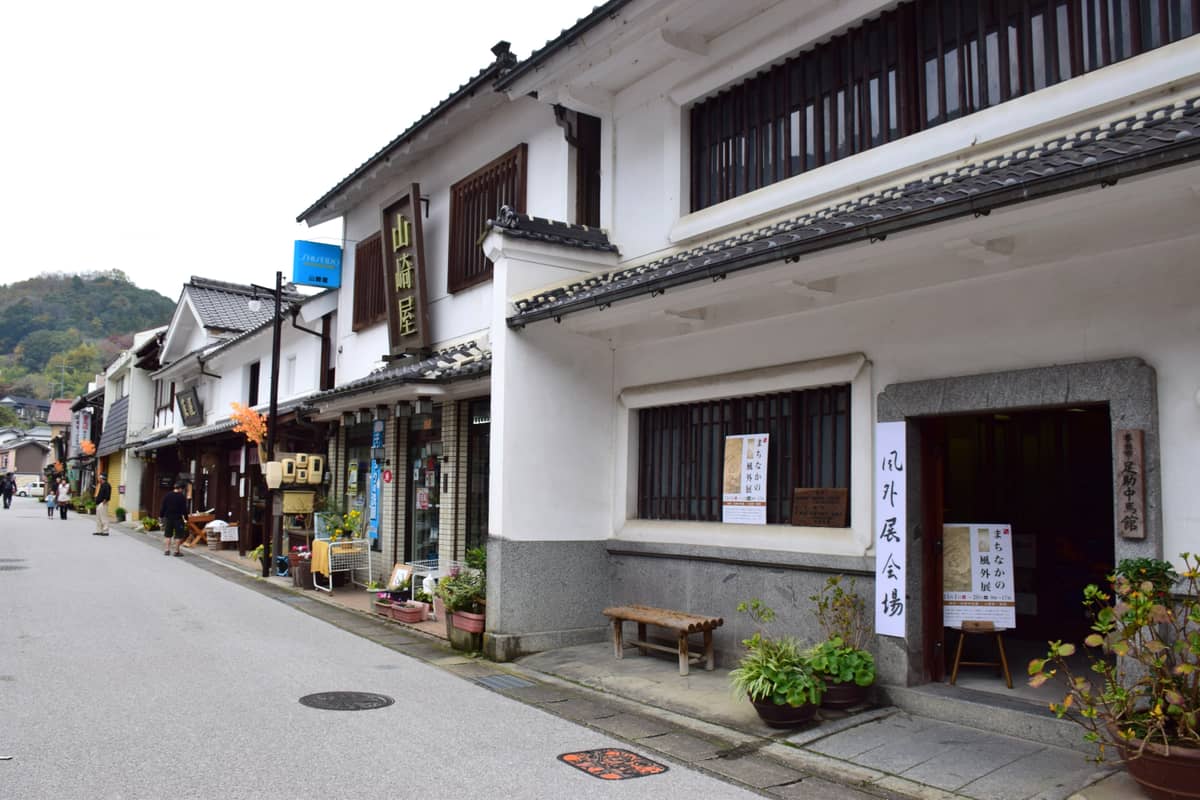
If you treat Korankei as a see-the-leaves-and-leave stop, you waste the old town right next to it. Asuke old town is a nationally designated Important Preservation District for Groups of Traditional Buildings, preserving Edo-to-Meiji merchant townhouses, white-walled storehouses, and nurikome-zukuri architecture along the old Iida Kaido. It pairs with Korankei natural foliage as motion and stillness: after the river gorge, turn into the old town, browse the townhouses, and settle into a local diner — that is what makes the day feel complete.
For planning, half a day at Korankei plus half a day in Asuke old town is a perfect day trip from Nagoya; to slow down, stay a night in Toyota or Asuke and push deeper into Chubu the next day. If you plan to continue into the Hida mountains, read the Takayama (Hida) travel guide next and string Korankei, Asuke, Shirakawa-go, and Takayama into one Chubu foliage-and-old-street route.
Frequently Asked Questions
- Q1:When does Korankei peak in autumn 2026?
- The 2026 forecast is out: WeatherNews gives Korankei peak from November 22, leaf-fall from December 6 (2026 forecast, checked 2026-09-26), with the nationwide conclusion that peak color runs later than or slightly later than normal on a warm autumn. The historical average is mid to late November (tenki.jp). For a single spot's forecast date, open the WeatherNews spot page, not its calendar page (that one shows 2004–2025 averages); tenki.jp currently publishes a daily colour-status report but no 2026 peak forecast. If you want the single best day when the Tomoe River banks and the Taigetsukyo Bridge area are all in full color, aim for the weekend after November 22, and recheck the forecast two weeks out.
- Q2:Are the 2026 Korankei Momiji Festival dates confirmed yet?
- Yes. The 71st Korankei Momiji Festival runs November 1 (Sun) to November 30 (Mon), 2026, across the whole month, with illumination every night in November until 21:00 (Asuke Tourism Association). One date to watch: the official page states there is no illumination on Saturday, October 31, so the earliest night-maple date is November 1. Entry is free; you only pay for parking and Sanshu Asuke Yashiki admission.
- Q3:What are the Korankei night illumination hours? Can I see it in December?
- The official 2026 notice reads "every day in November, until 21:00", with the Mount Iimori floodlights coming up at sunset. There is no illumination on Saturday, October 31, and none in December either. This is a common trap: people show up in early December expecting night maples and find the leaves gone and the lights off. To see the illuminated foliage your dates have to land between November 1 and 30. The illuminated hillside mirrored in the Tomoe River is the signature Korankei shot, but it is also the most crowded time of day, so arrive right as the lights come on rather than after full dark.
- Q4:Is there an entry fee for Korankei? How much is parking?
- Korankei itself is free to enter — the official site lists no cooperation fee or admission of any kind. The only two things you actually pay for are parking (per the official rate, 1,000 yen per regular car, 3,000 yen per tour bus) and admission to the Sanshu Asuke Yashiki folk-craft village inside Korankei Plaza (the official page does not list the amount, so confirm on site). In other words, walking the trails, crossing Taigetsukyo Bridge, and photographing the maples costs nothing — a very different cost structure from the many Kyoto temples that charge a viewing fee.
- Q5:How do I get to Korankei from Nagoya? Should I drive?
- Two main public-transit routes: from Meitetsu Higashi-Okazaki Station take the Meitetsu Bus Okazaki-Asuke Line toward Asuke and get off at the Korankei stop (about 70 minutes per the official page); or from Meitetsu Toyota-shi Station take the Meitetsu Bus Yanami Line to Korankei (about 40 minutes; a third option is the Toyota Oiden Bus Sanage-Asuke Line from Josui Station, about 60 minutes). Treat frequencies as per the official Meitetsu Bus timetable. Honestly, on peak-foliage weekends I would not drive — National Route 153 into Asuke is a notorious koyo traffic jam and the car park fills early. Transferring to the Yanami Line bus from Toyota-shi Station is the least stressful way in.
- Q6:Can I see Korankei in one day, and what can I pair it with?
- The Korankei trail highlights — Taigetsukyo Bridge, the Koshakuji temple approach, and the Tomoe River banks — take about 1.5 to 2 hours, so half a day is plenty. Strongly pair it with the adjacent Asuke old town, a nationally designated Important Preservation District for Groups of Traditional Buildings, with Edo-to-Meiji merchant townhouses and white-walled storehouses. It balances Korankei natural foliage with a quiet townscape. As a day trip from Nagoya, foliage plus old town plus a local meal fills a full day nicely; to slow down, stay a night in Asuke or Toyota.
Read next
Japan Autumn Foliage 2026: Peak Forecast & 5-Region Guide
Region-by-region peak-forecast map from late-September Hokkaido to mid-December Kyushu, with itineraries and booking timing.
Nagoya Travel Guide 2027: Castle, Ghibli Park & Nagoya Meshi
Chubu's gateway and an underrated food city — Nagoya Castle's Honmaru Palace, the Aichi Ghibli Park, Atsuta Shrine and hitsumabushi.
Hida-Takayama Guide 2027: Old Town, Jinya, Hida Beef & Festival
The little Kyoto of Hida — the Sanmachi old streets, Japan's only surviving jinya, the morning market, Hida beef and the Takayama Festival.
📊 See the 2026 Price Index (JR Pass, DPA, eSIM, Airport Transport) →