The single biggest lesson of Kyoto koyo isn't picking the right temple — it's picking the right window of the day. The same Tsutenkyo bridge at Tofukuji is a quiet view of 2,000 maples when you queue 15 minutes before the 8:30am opening, and a wall of tour groups by 10:00. This guide uses the WeatherNews spot-page peak-foliage forecast as checked on 26 September 2026, plus each temple's official opening hours to map Kyoto's 18 major sites onto golden windows, then builds a 3-day plan around the three scarce ones: dawn light, opening hour, and night illumination.
📍 Want to compare other regions' timing? Hokkaido's Daisetsuzan starts in late September, Tohoku peaks mid-October, Kyushu mid-December — see the nationwide five-region map in Japan Autumn Foliage Complete Guide 2026. This article is that guide's Kansai deep dive.
- 2026 forecast: most sites peak Nov 19–29, latest is Kennin-ji on Dec 4 (WeatherNews spot pages, checked Sep 26). Arashiyama and Higashiyama overlap Nov 23–25; nationwide this year runs later than average, or slightly later.
- Best spots and timing: Tofukuji 8:30am opening (Tsutenkyo bridge 2,000 maples — queue at 8:15; 8:30 applies only Nov 14 – Dec 6, otherwise 9:00), Eikando night illumination 5pm queue, Kiyomizu 6:00am opening (empty stage until 7:30).
- Night illuminations need no reservation: Kiyomizu, Eikando, To-ji, Kodai-ji and the rest sell tickets at the gate; Kiyomizu opens at night only Nov 21–30. Dates and prices for 12 temples are in the Kyoto night foliage 2026 table.
- 6:30am strategy pays: Dawn light + temple opening hours beat 10am tour buses by 2+ hours in queue time.
- Ground budget range: ¥131,000–¥166,000 per person for hotels, transit, food, admissions, and two night-illumination tickets (excluding international flights).
- Transit hack: ¥1,100 Bus & Subway day pass or ¥1,800 strategic taxis beat crowded buses during peak week (the ¥700 city-bus pass was discontinued in March 2024).
Peak-week rooms sell out first — compare Kyoto foliage hotels (free cancellation) →
Table of Contents (click to expand)
- When Kyoto turns red in 2026: the Nov 23–25 overlap
- Four things that shifted between 2024 and 2026
- Kyoto night foliage 2026: dates and whether to reserve
- Tofukuji vs Eikando: how to choose if you only have time for one
- The golden 3-day route: Arashiyama → Tofukuji → Kiyomizu
- Five hidden spots where the light is better and the crowds aren't
- Transit reality: bus vs subway vs taxi
- Where to stay: book 12 weeks out
- Add-on experiences: kimono, tea ceremony, night illumination
- Real budget: 3 days in Kyoto during peak koyo
- Ten first-timer mistakes
- Traveling with elders or small kids: three adjustments
- Common Kyoto autumn mistakes — and how to avoid them
- Photography notes: settings that actually work for maples
- Weather and what to pack
- Eating through koyo week: when and where
- If Kyoto is full: three nearby koyo alternatives
- Seven-day pre-departure checklist
When Kyoto turns red in 2026: the Nov 23–25 overlap
This year Kyoto's main sites start peaking with Tenryu-ji on November 19, cluster through late November, and finish with Kennin-ji on December 4. If you want Arashiyama and Higashiyama in a single day, November 23–25 is when both sides are in peak. The table below is the 2026 peak-foliage forecast on WeatherNews' spot pages, as checked on 26 September 2026, with a date for each site. Those day-level values shift without a separate announcement, so check the spot page again before you go.
| Site | 2026 peak begins | 2026 leaf fall begins | Typical year (2004–2025 average) |
|---|---|---|---|
| Tenryu-ji (Arashiyama) | Nov 19 | Dec 7 | late Nov |
| Jojakko-ji (Sagano) | Nov 22 | — | — |
| Arashiyama (Togetsukyo area) | Nov 23 | Dec 9 | late Nov – early Dec |
| Tofukuji | Nov 23 | Dec 10 | mid Nov – early Dec |
| Chion-in / Daigo-ji / Ninna-ji | Nov 23 | — | — |
| Nanzen-ji | Nov 24 | Dec 8 | mid Nov – early Dec |
| Eikando Zenrin-ji | Nov 24 | Dec 6 | mid Nov – late Nov |
| Kodai-ji | Nov 24 | Dec 13 | mid Nov – early Dec |
| Kiyomizu-dera | Nov 25 | Dec 10 | late Nov – early Dec |
| Kitano Tenmangu | Nov 25 | Dec 11 | mid Nov – early Dec |
| Hogon-in (Arashiyama) | Nov 25 | — | — |
| Nijo Castle / Daikaku-ji | Nov 26 | — | — |
| Entoku-in / Kyoto Botanical Gardens | Nov 27 | — | — |
| Ryoan-ji / Gio-ji / Shoren-in | Nov 28 | — | — |
| Taizo-in, Myoshin-ji (Yokoen) | Nov 29 | — | — |
| Kennin-ji | Dec 4 | Dec 18 | late Nov – early Dec |
"Peak foliage" (見頃, migoro) is the window from roughly 70% of a site's leaves having turned to the day leaf fall starts. The date in column two is that first day, not the whole window — for how long a temple holds, read it against the leaf-fall column. The "typical year" column is a 2004–2025 average, not this year's number; don't mix the two.
Nationwide the 2026 call is that peak runs later than average, or slightly later, because average temperatures are forecast above normal from late September in northern Japan and right through autumn in eastern and western Japan — cool air brings colour early, warm air delays it. Leaf condition is better than last year everywhere except Kyushu. Across the Kansai region as a whole, there is foliage to see from late October into mid-December.
Don't pin exact dates on these: they have no day-level 2026 forecast, only a typical-year range — Shinnyo-do (late Nov – early Dec), Ruriko-in (from around Nov 20), Fushimi Inari (mid–late Nov), Kurama-dera (mid–late Nov), Kibune Shrine (early–late Nov), the Eizan Railway maple tunnel (mid–late Nov), the Sagano Scenic Railway (mid Nov – early Dec), Yase Momiji-no-Komichi and Chishaku-in (mid Nov – early Dec).
When to check again
Once a week on the WeatherNews spot pages from October is enough. The Japan Meteorological Association (tenki.jp) so far publishes only daily colour-change reports; its 2026 peak-foliage forecast is not out. Its forecast page opens on the 2025 round, so don't read those dates as this year's. WeatherNews' first round went out on September 3 and will be revised, but none of the services has announced a date for round two, so there is no fixed weekday to refresh. From late October the daily colour-change reports on WeatherNews and Walkerplus beat any forecast.
One thing to settle before you go cross-checking: there is really only one forecast on the table right now. The Walkerplus peak-timing forecast is republished from WeatherNews, credited in its own source line, so the two agreeing tells you nothing. With tenki.jp's 2026 forecast still unpublished, there is no second independent forecast to compare against. For temple-level 2026 dates, use the WeatherNews spot pages — its calendar page shows the 2004–2025 average, not this year — while Walkerplus spot pages carry typical-year ranges plus daily colour reports rather than this year's dates. Still weighing autumn against the other seasons, and whether the foliage-week crowds are worth it? Our best time to visit Japan guide breaks down the trade-offs month by month. For full Kansai autumn clothing strategy — onion-style layering for 10°C daily swings, what to wear when temple stones are wet — see our What to Wear in Japan complete guide; the Honshu shoulder-season chapter has the proven layering combinations.
Four things that shifted between 2024 and 2026
Several drift points between recent autumn seasons are worth confirming before you book:
- The reservation you need is Enko-ji, not the night illuminations. Every 2026 night opening announced so far sells at the gate. Enko-ji's daytime autumn special opening (Nov 10 – Dec 10) is by timed reservation, opening October 20. Eikando has also changed its prices, and its daytime treasure exhibition and night illumination are separate tickets; details in the next section.
- Kyoto City Bus pass discontinued. The ¥700 standalone city-bus pass was retired in March 2024; the city now offers only the ¥1,100 Bus & Subway day pass. Peak-week buses were already brutal — the cheap fallback ticket is gone, so leaning on the subway plus key-segment taxis matters even more.
- Hotel booking windows shifted from 8 weeks to 12+ weeks. Booking and Agoda data show mid-tier central Kyoto hotels for peak-week dates now reach near-major-holiday sell-out rates by the 8-week mark. Book your hotel as soon as your vacation dates are fixed, before the flight.
- This year peaks later than average. WeatherNews' September 3 first round calls it "later than average, or slightly later" nationwide, on the back of above-normal autumn temperatures. Anchor your core week on the Nov 23–25 Arashiyama–Higashiyama overlap and adjust two weeks out from the spot pages; tenki.jp's 2026 forecast is still not published.
⚠️ These shifts reflect 2024-2025 announcements from temples and lodging platforms. Each temple's 2026 official announcements typically appear in September-October — confirm via official sites the week before you travel.
Kyoto night foliage 2026: when Kiyomizu, Eikando, To-ji and Kodai-ji light up, and whether to reserve
No night illumination needs a reservation — buy at the temple gate. The one that needs booking this year is daytime Enko-ji (Nov 10 – Dec 10), with reservations opening October 20. Twelve temples below have announced their 2026 dates; Daigo-ji has not, so its 2025 figures are shown. Kodai-ji and Entoku-in start earliest (Oct 23); Kiyomizu has the shortest run, only the ten nights of Nov 21–30.
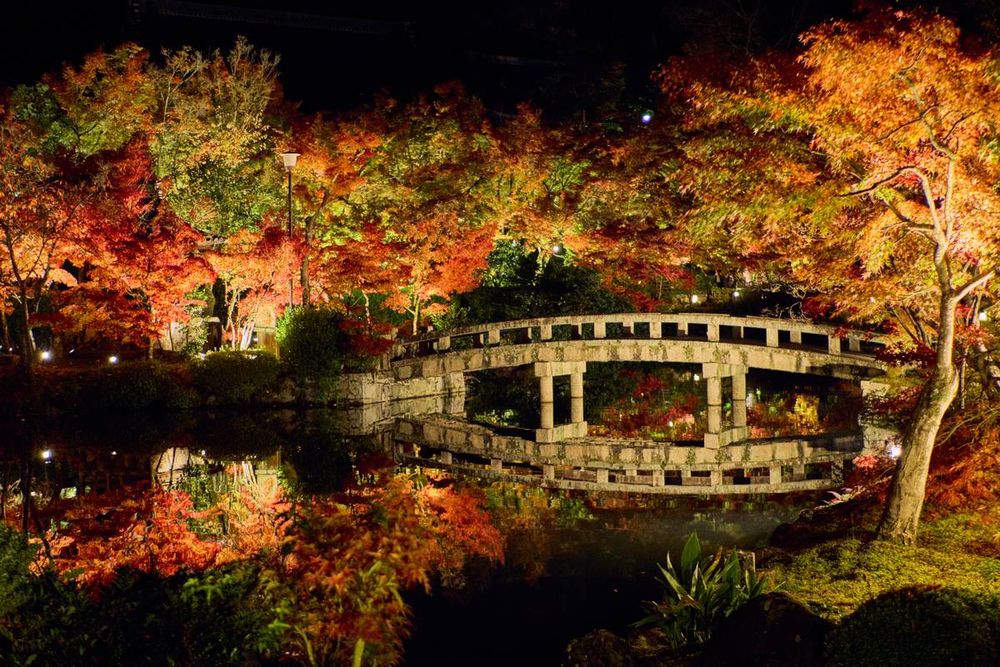
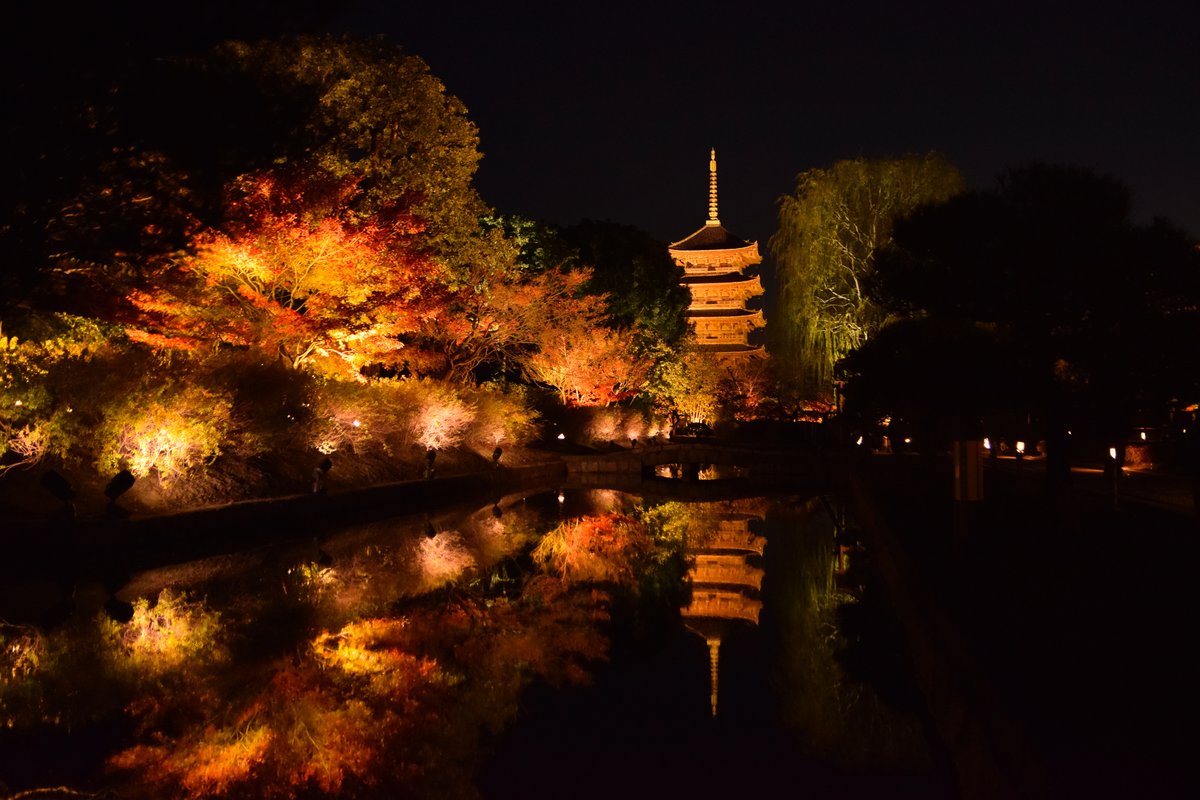
| Temple (area) | 2026 night dates | Hours (last entry) | Adult | Does a day ticket work at night? | Getting there |
|---|---|---|---|---|---|
| Kiyomizu-dera (Higashiyama) | Nov 21–30 | Open 6:00 straight through to 21:30 (21:00) | ¥500 | Yes, no clear-out | City bus 206 or 100 to Gojozaka, 10 min walk |
| Eikando (Okazaki) | Nov 20 – Dec 6 | 17:30–21:00 (20:30) | ¥1,000 | No, day and night cleared separately | Tozai subway to Keage, 15 min walk |
| To-ji (south of Kyoto Station) | Oct 31 – Dec 13, daily | 18:00–21:30 (21:00) | ¥1,000 | Separate night ticket | Kintetsu To-ji Station, 10 min walk |
| Kodai-ji (Higashiyama) | Oct 23 – Dec 13 | Lit from 17:00 until 22:00 (21:30) | ¥800 | Yes, no clear-out (no re-entry once you exit) | City bus to Higashiyama-Yasui, 7 min walk |
| Entoku-in (Higashiyama) | Oct 23 – Dec 13 (closed Dec 11–12) | 17:00–22:00 (21:30) | ¥500 | Yes, no clear-out | City bus 206 to Higashiyama-Yasui |
| Shoren-in (Higashiyama) | Nov 7 – Dec 6 | 18:00–22:00 (21:30) | ¥1,000 | No, day and night cleared separately | City bus 5 to Jingu-michi, 5 min walk |
| Chion-in (Higashiyama) | Nov 17 – Dec 6 | 17:30–21:30 (21:00) | ¥800 | — | City bus 206 to Chion-in-mae, 5 min walk |
| Kitano Tenmangu Momiji-en (Kitano) | Lit from mid-November to Dec 6 | Sunset–20:00 (19:40) | ¥1,500 (tea and sweet included) | Yes, same garden ticket | City bus 50 to Kitano Tenmangu-mae |
| Ninna-ji (Omuro) | Fridays, weekends and public holidays Oct 24 – Dec 13 (none on Nov 8, Nov 28) | 18:30–21:00 (20:30) | ¥2,800 (high-school age and under free) | Night-only ticket | City bus 26 to Omuro Ninnaji, at the gate |
| Hogon-in (Arashiyama) | Nov 13 – Dec 6 | 17:30–20:30 (20:00) | ¥1,000 | — | City bus 28 to Arashiyama Tenryuji-mae, 5 min walk |
| Kifune Shrine (Kibune) | Nov 7–24 | Sunset–20:30 | Free | — | Kyoto Bus 33 to Kibune, 5 min walk |
| Shogunzuka Seiryuden (Higashiyama summit) | Late October to early December (exact dates not announced) | 17:00–21:30 (21:00) | ¥600 | — | — |
| Daigo-ji (Yamashina) | 2026 not announced (2025: Nov 22 – Dec 7) | 2025: 18:00–20:50 (20:10) | 2025: ¥1,300 (junior high and up) | — | — |
"No reservation" means you queue and buy on the spot, not that a ticket is guaranteed — don't cut it close to last entry.
Eikando: day and night are two tickets
From Nov 11 to Dec 6 Eikando runs a daytime treasure exhibition, and it is cleared before the night illumination — you cannot stay on from day into night. Seeing both means queuing and paying twice: the daytime exhibition is ¥1,500 for adults (entry 9:00–16:00), the night illumination ¥1,000 for junior high and up. Outside the exhibition period, ordinary adult admission is ¥1,000.
During the season private cars and tour buses (except minibuses) are not allowed in, and the Nanzenji-Eikandomichi city-bus stop closes at peak times. From Kyoto Station, take the Tozai subway to Keage and walk 15 minutes, or city bus 204 or 93 to Higashi-Tennocho and walk 8.
How many can you do in one night?
The Higashiyama cluster links up on foot; everything else is one per night. Kiyomizu, Kodai-ji, Entoku-in, Chion-in and Shoren-in are all within walking distance, and Kodai-ji plus Entoku-in share a combined ticket at ¥1,200. Kiyomizu and Chion-in stop entry earliest (21:00), so do them first and leave Kodai-ji, Entoku-in and Shoren-in (21:30) for later. Eikando is north in Okazaki, To-ji south of Kyoto Station, Ninna-ji in the northwest and Hogon-in in Arashiyama — none of them combine easily.
- One night only: Kiyomizu (Nov 21–30 only) plus Kodai-ji; outside those ten days, Kodai-ji plus Shoren-in.
- You want the most famous one: Eikando, but don't try to reach To-ji or Arashiyama the same night.
- Staying at Kyoto Station: To-ji is a walk home, the easiest finish.
- Spending the day in Arashiyama: stay for Hogon-in; the Arashiyama Tsukitouro bamboo-grove illumination ends Nov 8 and does not overlap. For planning the Arashiyama day, see our Arashiyama day trip guide.
A few more rules that can change your dates: Ninna-ji's illumination runs only on Fridays, weekends and public holidays, with none on Nov 8 and Nov 28; Entoku-in is closed Dec 11–12; tripods are not allowed in Kitano Tenmangu's Momiji-en.
Tofukuji vs Eikando: how to choose if you only have time for one
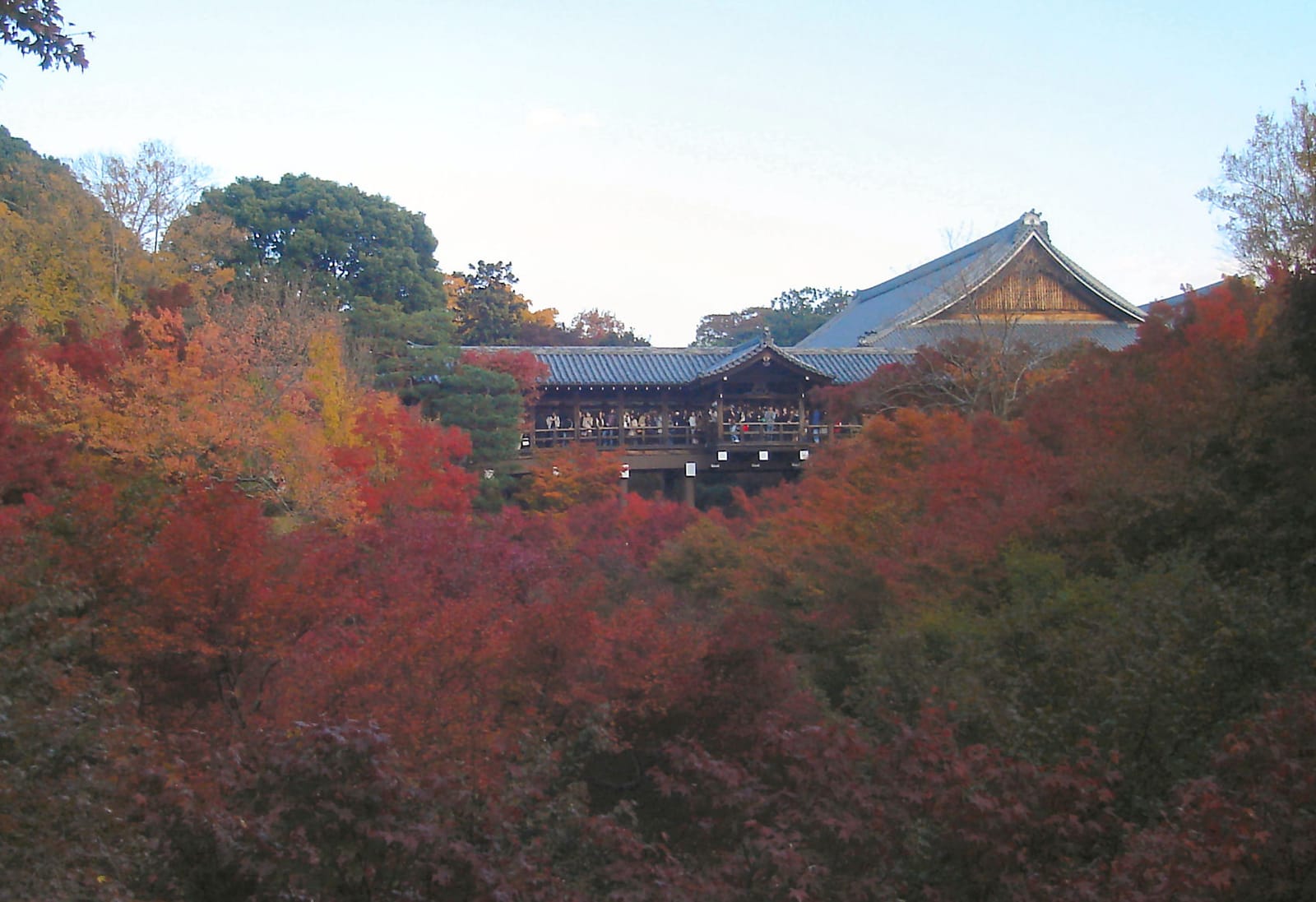
These are Kyoto's two most concentrated foliage experiences — pick the wrong one and you'll regret it for a year. Based on each temple's official opening hours and ticket pricing plus aggregated visitor data from the Kyoto tourism association:
| Dimension | Tofukuji Tsutenkyo Bridge | Eikando Zenrin-ji |
|---|---|---|
| Visual impact | ★★★★★ (2,000-tree maple sea viewed from the bridge) | ★★★★ (multi-layer canopy below the pagoda) |
| Best window | In the autumn period (Nov 14 – Dec 6) Tsutenkyo opens at 8:30 — queue at 8:15. Outside those dates it opens at 9:00. | Night illumination Nov 20 – Dec 6, entry from 5:30pm (skip during daytime) |
| Crowd control | After 10am tour groups arrive — barely walkable | Day and night are cleared separately — seeing both means queuing twice |
| 2026 ticket | Autumn period Nov 14 – Dec 6, Tsutenkyo and Kaisan-do ¥1,000 (ordinary season ¥600) | Daytime during the treasure exhibition (Nov 11 – Dec 6) ¥1,500 (ordinary days ¥1,000) / night ¥1,000 |
| Best photo spot | From the bridge looking north; Kaisan-do hall maple grove | Hojo Pond reflection; pagoda viewed from across the pond |
| Best for | First visit, "the photo you've seen online" | Repeat visitors, night photography enthusiasts |
| Mobility | Mostly flat stone paths, elder-friendly | Stone steps to the pagoda — harder on knees |
The double-header is doable. Tofukuji is in southeast Kyoto, Eikando in the eastern Okazaki district — about 25 minutes by taxi (¥2,200). The ideal flow: Queue at 8:15 for Tofukuji's 8:30 opening → leave by 11am → lunch in Okazaki near Heian Shrine → 2pm Nanzen-ji aqueduct → 5:30pm Eikando night illumination. Both top-tier sights, one day.
⚠️ Three Tofukuji rules that trip people up (checked against the temple's official page on August 21, 2026):
① The autumn viewing period is November 14 to December 6, not "all of November". Inside that window Tsutenkyo opens at 8:30 and adults pay ¥1,000; outside it, opening is 9:00 and adults pay ¥600 (from December 7 to the end of March the day shortens further, 9:00–15:30). The 8:30 early opening applies to Tsutenkyo only — the Hojo garden still opens at 9:00 during the same period.
② The combined ticket is not sold during the autumn period. The temple states it plainly: no combined admission ticket between November 14 and December 6. So seeing both the Hojo garden and Tsutenkyo in peak season means two separate tickets, ¥1,500 in total, against ¥1,000 for the combined ticket in the ordinary season.
③ The Hojo garden goes from ¥500 to ¥600 for adults on November 1, 2026 (already announced; children stay at ¥300) — one month before the foliage peak. No change has been announced on the Tsutenkyo side.
The temple also notes that the autumn dates and hours change every year, so do not copy this window into a later season.
The golden 3-day route: Arashiyama → Tofukuji → Kiyomizu
Here's a 3-day plan you can copy. The structural insight isn't the temples — it's filling three scarce windows: dawn light, opening-hour temple doors, and night illumination. These three windows have limited supply during peak week; miss them and you're stuck with the midday crowd-crush at every site.
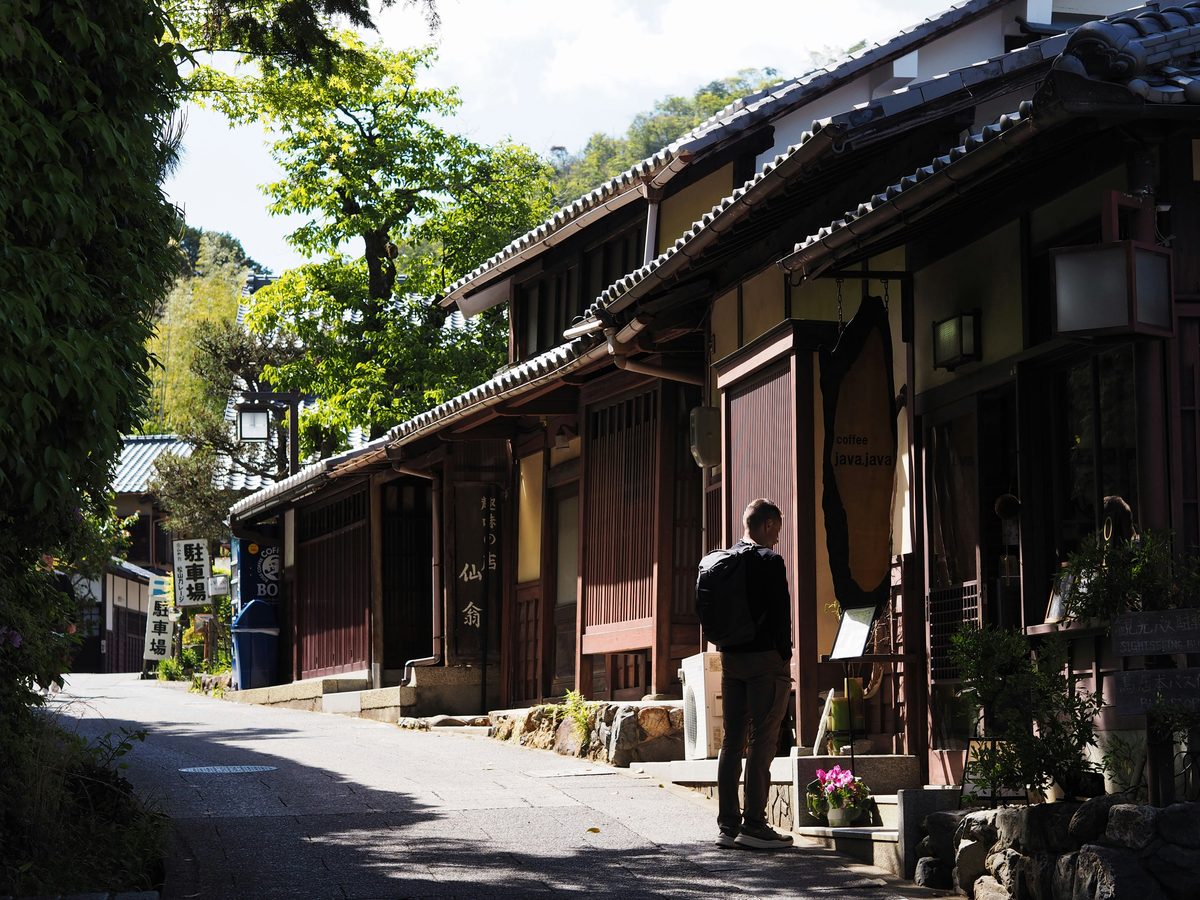
Day 1: Arashiyama at 6:30am (before the 9:00 tour buses)
- 06:00 JR Sagano Line from Kyoto Station to Saga-Arashiyama (16 min, ¥240).
- 06:30–07:30 Togetsukyo bridge mist shots, walk north through the bamboo grove — empty at this hour.
- 07:30–08:30 Jojakko-ji temple (admission ¥600). The Tahoto pagoda maple tunnel is the signature frame.
- 08:30–10:00 Gio-ji and Nison-in. Small crowds, moss-and-maple layering at its best.
- 10:00–11:30 Sagano Scenic Railway (book online, ¥880 one-way). Same-day tickets sell out by 9:00 in November.
- Lunch at Arashiyama Yoshimura for handmade soba with a window view of the bridge.
- Afternoon Tenryu-ji and Hogon-in for night illumination (17:30 start — queue at 16:45).
For non-foliage Arashiyama planning — the four afternoon options, Romantic Train booking, and full hour-by-hour itinerary — see our Kyoto Arashiyama day trip guide.
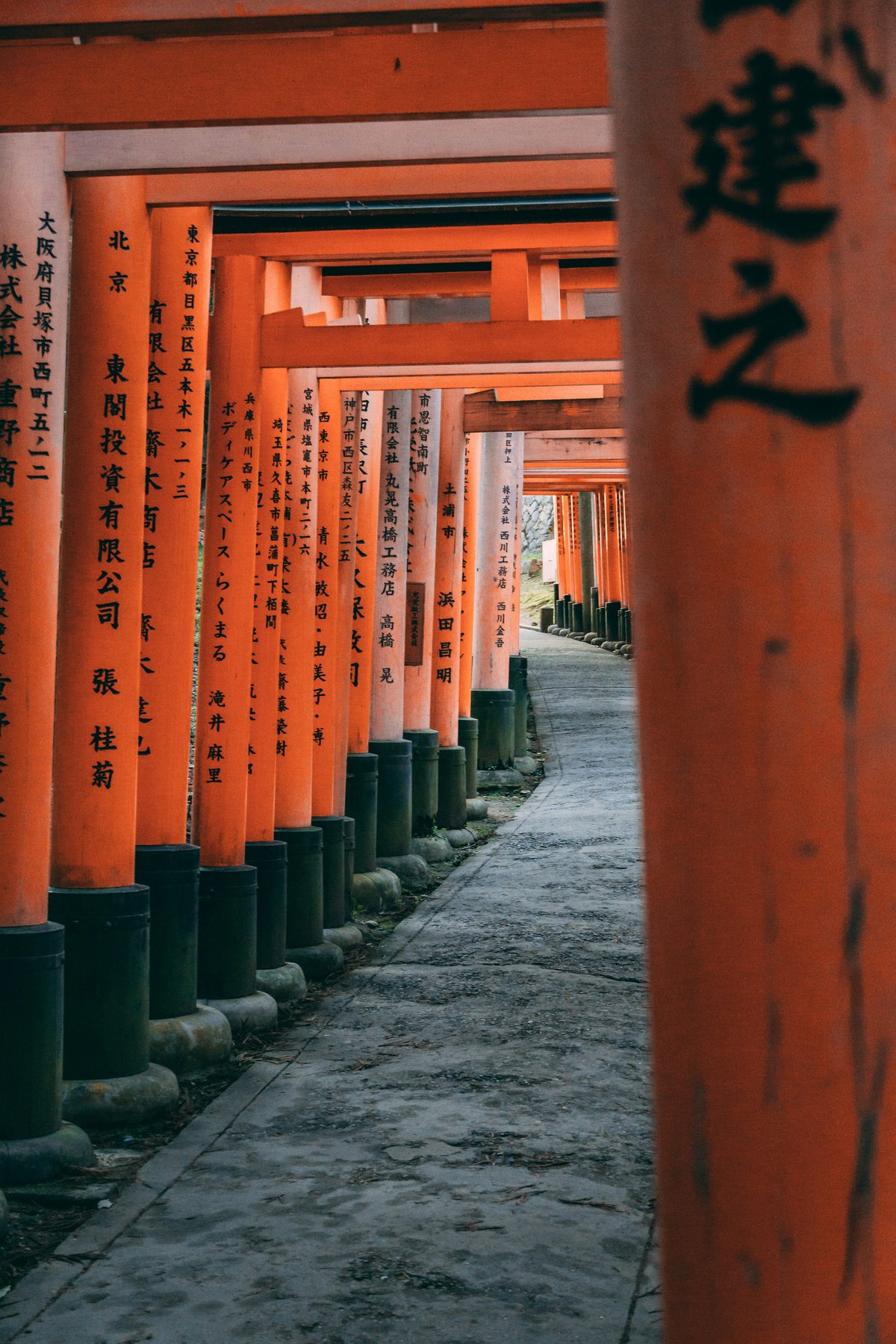
Day 2: Tofukuji morning + Eikando night
- 08:00 JR Nara Line to Tofukuji Station (2 min, ¥150); 10-min walk to the Tsutenkyo viewing entrance to queue.
- 08:30 Tofukuji opens (peak-season Tsutenkyo ticket ¥1,000); climb the bridge over the sea of 2,000 maples. After 10:00 it becomes unwalkable. Note the 8:30 early opening only exists between November 14 and December 6 — arrive on December 7 or later and it reverts to 9:00 at ¥600, which removes the whole "first group in" advantage this route is built on.
- 10:30 Taxi (¥1,500–2,000) to the Okazaki area near Eikando. Lunch around Heian Shrine.
- 14:00 Nanzen-ji (free) and the Suirokaku aqueduct (famous film location). Allow 90 min.
- 17:00 Queue for Eikando night illumination (Nov 20 – Dec 6, night ticket ¥1,000, entry 17:30–20:30, gates close 21:00). The pond reflection of lit maples is a Kyoto signature. The night ticket is sold separately, so skipping the daytime visit costs you nothing.
Day 3: Kiyomizu at 6:00 + hidden gem
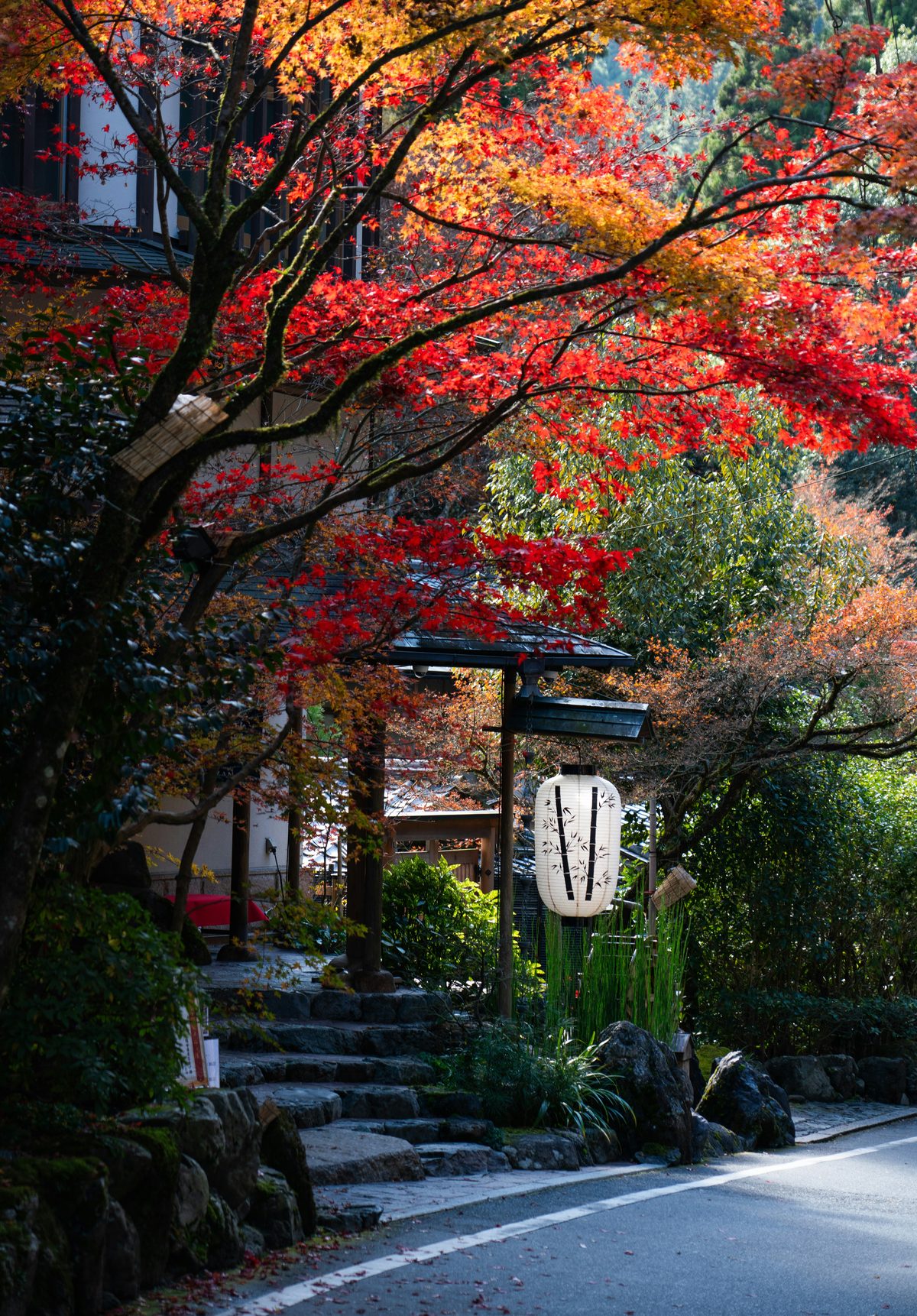
- 05:30 Taxi from Kyoto Station to Kiyomizu (¥1,500), arriving at 5:50.
- 06:00 Kiyomizu first opening — empty pagoda backdrop, soft light on the wooden stage.
- 07:30–09:00 Stroll Ninenzaka, Sannenzaka, and Nene-no-michi before shops open at 10:00. The quiet is the attraction.
- 09:30 JR to Nagaokakyo (30 min) for Komyo-ji — 200-meter maple tunnel, plus a Hankyu bus transfer after the station.
- 13:00 Lunch back at Kyoto Station.
- 15:00 Shimogamo Shrine — Tadasu-no-Mori primeval forest backs the approach with unique foliage-and-ancient-tree layering.
- 17:00 Kyoto Station Porta underground mall for souvenirs: matcha chocolate, Ajari-mochi, yatsuhashi.
Five hidden spots where the light is better and the crowds aren't
Big-name temples queue from opening to closing through peak week. If this is your second Kyoto trip, or you want "Kyoto without the tourists" shots, these five are the highest-ROI hidden options:
- Komyo-ji / Yanagidani-Kannon, Nagaokakyo. 200-meter maple approach, special opening in late November. JR Nagaokakyo + Hankyu bus. Yanagidani special-period ticket ¥1,000 (regular period ¥500).
- Jisso-in, Iwakura. The famous "yuka-momiji" reflection on black lacquered floors — photos forbidden, but you'll remember it. Eizan Line to Iwakura + 25 min walk. ¥500.
- Sanzen-in, Ohara. Moss garden + maples + stream; a true escape. Bus 17 from Kyoto Station, 60 min. ¥700.
- Manshu-in Monzeki. Edo-era shoin architecture framing koyo, almost no foreign tourists. Eizan Line to Shugakuin + 20 min walk. ¥600.
- Ruriko-in. Only open spring and autumn. The lacquered table reflecting foliage went viral on Instagram — reservations required. ¥2,000.
Transit reality: bus vs subway vs taxi
Kyoto transit during foliage week is the trip's biggest pain point. Most temples are bus-served, but peak-week buses regularly run 15–30 minutes late. Working model for peak-week Kyoto transit:
- Bus & Subway one-day pass ¥1,100 — covers subway plus city and Kyoto buses; the subway leg is far more reliable than peak-week buses. The standalone ¥700 city-bus pass was discontinued in March 2024.
- Tozai + Karasuma subway lines — punctual and uncrowded, but don't reach Tofukuji, Arashiyama, or Kiyomizu directly.
- Taxi — best value for two-plus people under time pressure. Kiyomizu → Eikando runs ¥1,800 in 15 minutes, 40 minutes faster than the bus.
- Rental bikes — avoid during peak week. Too many hills, pedestrians, and illegal-parking fines.
Best combo: Bus & Subway pass + strategic taxi. You'll spend an extra ¥3,000 but save three hours of waiting. For the non-peak-season version — which bus serves which temple, how the lines connect, and which pass to buy — see our Kyoto transport guide. For wider-Kansai transit options and whether a JR Pass makes sense, see our JR Pass 2026 analysis.
Where to stay: book 12 weeks out
Kyoto lodging during foliage week (Nov 15 – Dec 10) is priced higher than during cherry blossom season. During peak foliage week, mid-tier central Kyoto hotels (Mitsui Garden Karasuma, Daiwa Roynet, Sotetsu Fresa Inn class) typically run ¥30,000–¥50,000 per night against ¥12,000–¥18,000 off-peak, and most 3-star-plus rooms in central Kyoto are sold out 12 weeks ahead. Practical picks:
- Best: Karasuma Oike / Shijo. Both subway lines meet here; 30 min to every major koyo site.
- Runner-up: Kyoto Station. JR + Shinkansen + bus terminal, unbeatable logistics but heavy tourist feel.
- Budget trick: stay in Osaka Umeda. Highway bus ¥600, 1 hour to Kyoto; weekday rates run clearly lower.
- Gion / Higashiyama depends on your plan. If your days are in Arashiyama and Tofukuji, the narrow roads, scarce taxis and tiny rooms make it the slowest base. If your trip centres on the Higashiyama night illuminations (Kiyomizu, Kodai-ji and Shoren-in take last entry as late as 21:30), you can walk home.
Match the area to the temple you are visiting at night (the listing pages default to today's date, so change it to yours):
| Night visit | Area | Hotel listings |
|---|---|---|
| Kiyomizu, Kodai-ji, Entoku-in, Chion-in, Shoren-in | Higashiyama | Booking.com Higashiyama |
| Same (Higashiyama walking loop) | Gion | Booking.com Gion |
| To-ji | Shimogyo (Kyoto Station area) | Booking.com Shimogyo |
| Hogon-in (gates close 20:30) | Arashiyama | Booking.com Arashiyama |
| Not decided yet | All of Kyoto | Booking.com Kyoto / Agoda Kyoto |
For Karasuma hotels with free cancellation during the peak foliage week: Trip.com Kyoto hotels; or browse our top picks at Japan Hotel Picks (includes Hoshinoya Kyoto's Arashiyama boat-arrival ryokan).
Add-on experiences: kimono, tea ceremony, night illumination
Three experiences worth stacking onto a foliage trip:
- Kimono rental. Kiyomizu, Yasaka Shrine, and Arashiyama are the three hot shoot zones. Full-day rental ¥3,500–6,000; shops cluster around Shijo-Kawaramachi and Kiyomizu-zaka.
- Tea ceremony. 90 minutes of matcha + wagashi + tatami, ¥3,000–5,500. Pick a machiya-based studio in Karasuma or Gion.
- Night special openings. Dates, hours and prices differ a lot by temple — see the Kyoto night foliage 2026 table above.
To do the kimono and the tea ceremony in one sitting, Orizuruya in Gion bundles both into a single booking, 1.5–2 hours, about US$49 — a timed session rather than a full-day rental, and check the hosting language on the option page before you book: Gion kimono & tea ceremony →
One more add-on sits outside the foliage circuit while overlapping it exactly in time: the 62nd Kyoto Non-Public Cultural Property Special Opening, 30 October to 6 December 2026, covering 32 normally closed buildings across Kyoto Prefecture at ¥1,000 per site, with doors from 9:00. Many are not maple destinations at all, which makes it a parallel route away from the foliage crowds. It is run by a different body from the winter Kyo no Fuyu no Tabi programme, at a different price and different hours — see how Kyoto's special openings actually work.
Ground budget: 3 days in Kyoto during peak koyo
Typical peak-week (Nov 19 – Dec 4) per-person ground budget for two people sharing, based on published peak-week rates from each supplier:
- Karasuma mid-tier hotel, 2 nights (per person, double occupancy): ¥80,000–¥100,000
- JR + Bus & Subway day pass + key-segment taxis: ¥7,000–¥9,000
- Admissions (Arashiyama trio + Tofukuji + Eikando night + Kiyomizu + Komyo-ji): ¥6,000–¥7,000
- Meals for 3 days, incl. one mid-tier kaiseki dinner: ¥18,000–¥22,000
- Kimono rental + tea ceremony: ¥12,000–¥16,000
- Souvenirs allowance: ¥8,000–¥12,000
- Subtotal ¥131,000–¥166,000 per person (excluding international flights).
Round-trip international flights vary widely by origin and season — peak Kyoto koyo dates draw the highest fares. Book at least 12 weeks ahead to lock in cabin class and slot; don't wait for the peak-foliage forecast to firm up before buying tickets.
Ten first-timer mistakes
- Arriving Nov 15 expecting peak — most temples are still green.
- Scheduling Kiyomizu for the afternoon — by 14:00 you're photographing heads.
- Arashiyama after 10:00 — tour buses have arrived, bamboo photos need a 20-minute queue.
- Assuming an Eikando daytime ticket works at night — the treasure exhibition and the illumination are cleared separately, so you queue and pay again.
- Renting a bike during peak week — hills, crowds, and ¥5,000 illegal-parking fines.
- Stuffing six temples into one day — you'll rush past everything.
- Staying in Gion while spending your days all over Kyoto — beautiful but transit hell.
- Writing off overcast days — cloudy and post-rain skies boost saturation dramatically.
- No spare battery — all-day photos + maps drain your phone by 16:00.
- Not booking the Sagano Scenic Railway online — same-day tickets evaporate by 9:00.
Traveling with elders or small kids: three adjustments
Kyoto peak week is crowded, hilly, and cold at dawn. If your party includes someone over 65 or under 10, adapt:
- Skip the 6:00 Kiyomizu run. The long stone stairs hurt older knees. Substitute a 9:00 Tofukuji visit (mostly flat) or Sanzen-in in Ohara (shuttle to the gate).
- Pick one night illumination, not two. Outdoor queues at Eikando on cold November nights wear everyone down fast. A daytime walk up Kodai-ji's Ishibe-koji lane captures the same atmosphere.
- Lock in restaurants that take reservations. Famous soba shops run 40-minute queues. Book via Tabelog or Google Maps a week out so tired travelers sit down immediately.
With infants under three, cap the trip at two full days, one headline temple plus one secondary site per day, and always return to the hotel for an afternoon nap.
Three timing mistakes that ruin Kyoto koyo trips
Three patterns repeatedly surface in Kyoto autumn reviews and reader reports. First, arriving mid-November (Nov 15–18) expecting peak — most temples are still 70% green and you've paid peak-week prices for spring-colored photos. Second, staying in Gion "for the atmosphere" and losing 45 minutes daily to taxi shortages because drivers avoid the narrow Gion lanes during rush periods. Third, trying to save money on the Sagano Scenic Railway by going for same-day tickets — they evaporate by 9:30 and you watch the empty train run past at 10:30. Each of these costs roughly half a day. Timing the foliage, picking the right lodging area, and reserving the scenic railway in advance are the three non-negotiables; everything else is recoverable. One small habit worth borrowing from regular visitors: carry a thermos of hot tea at dawn. Standing on the Togetsukyo bridge at 6:30 waiting for the mist to lift is unforgettable, but November cold quickly turns it into something you want to leave.
Photography notes: settings that actually work for maples
Default smartphone or mirrorless "auto" settings tend to mute Kyoto's reds into a muddy brown. The correction is small but changes every photo:
- White balance: shift toward "cloudy" (roughly 6,000–6,500K). Auto white balance reads the warm orange tones as a color cast and cancels them out. Locking the balance manually keeps the reds rich.
- Exposure compensation: dial -0.3 to -0.7 EV. Foliage photos blow out easily because the sky peeks through; slight underexposure saturates the reds beautifully.
- Best hours: 06:30–08:00 and 15:30–16:30 give a 45-degree sun that rakes through the leaves instead of flattening them. Midday (11:00–14:00) is the worst window for koyo photos even on clear days.
- Polarizer: a circular polarizer cuts glare on leaves and deepens sky blue. For ¥3,000 it transforms every shot at Tofukuji and Komyo-ji.
- Tripod at night: Eikando and Kiyomizu night illumination need 1/4–1/2 second exposures at ISO 400 to keep detail. Most temples allow monopods; actual tripods are sometimes banned, so check before you unfold.
If you're shooting on phone only, the Pro/RAW mode in iPhone and Pixel cameras lets you tweak the same three levers. Worth the 10-minute learning curve on Day 1.
Weather and what to pack
Late-November Kyoto is colder than most first-time visitors expect. Per Kyoto Local Meteorological Office historical averages, here's what to expect at 06:00, 13:00, and 19:00 during peak foliage week:
- Dawn (06:00): 3–5°C. Add wind-chill along the river in Arashiyama and it feels closer to 0°C. Hands go numb without gloves.
- Midday (13:00): 12–15°C. If the sun is out, a light sweater is enough.
- Night illumination (19:00): 5–7°C. Standing in a 30-minute queue with no movement is the coldest you'll feel all day.
Reliable packing list: a packable light down jacket (worn dawn and night, stuffed in bag at midday), merino wool base layer, thin gloves with touchscreen fingertips, disposable hand warmers (konbini ¥100 for two), and waterproof shoes with grip (the Kiyomizu slope is treacherous wet). For other months and regions, see our Japan weather by month quick reference.
Eating through koyo week: when and where
Peak foliage week pushes every popular restaurant to capacity. Three rules that save hours of waiting:
- Eat early lunch (11:15) or late lunch (14:00), never 12:00. A 12:00 arrival at any famous soba or udon shop means 45 minutes in line. 11:15 is empty; 14:00 is a second window before kitchens close.
- Book kaiseki dinners three months out. Peak week sells out the mid-tier ¥10,000 kaiseki restaurants by September. TableCheck and Pocket Concierge are the two booking platforms that actually work for foreign visitors.
- Nishiki Market by 10:00 or after 16:30. The middle of the day is unwalkable during koyo. Morning gets you fresh tamagoyaki; late afternoon often sees 10–20% discount on sushi.
Signature meals worth prioritizing: obanzai (Kyoto home cooking, try Menami near Pontocho), yudofu (hot tofu pot, most famous near Nanzen-ji), and matcha parfait (Tsujiri and Ippodo are the benchmark). Skip the "kyo-kaiseki" lunch sets marketed to tour groups — they tend to cost ¥6,000 for a ¥2,500 experience.
If Kyoto is full: three nearby koyo alternatives
If every Kyoto hotel is booked, or you simply want a break from crowds, three Kansai day trips deliver real foliage without the cost:
- Minoh Park (north Osaka). 45 minutes from Umeda by train, a 3-km riverside walking trail peaks mid-to-late November. Free. Famous for "momiji tempura" — deep-fried maple-leaf snacks that sound odd and taste great. Full Minoo-plus-Katsuoji routing (and the Nara deer-and-maple combo) is in our Osaka & Nara autumn guide.
- Nara Park. The deer + pagoda + maples combination is unique. Nara Park peaks from Nov 23, with leaf fall from Dec 12. Combine with Todai-ji and Kasuga Taisha. Kintetsu line from Kyoto, 45 minutes.
- Kobe Sumadera + Arima Onsen. Hot spring day trip with morning koyo at Zuihoji Park in Arima. Bus from Osaka or direct train from Kyoto.
- Hikone & Lake Biwa (Shiga). About 50 minutes by JR from Kyoto Station, with maples at Hikone Castle and Genkyu-en garden against the lake — and far thinner late-November crowds than central Kyoto.
These also work as "buffer days" if Kyoto rain forecasts turn bad on your peak day — shift Kyoto's temple day to the dry slot and fill the rain day with Minoh or Arima instead.
Seven-day pre-departure checklist
- [ ] Latest WeatherNews round checked on your temple's spot page (tenki.jp's 2026 forecast is not out; its forecast page still shows the 2025 round)
- [ ] Sagano railway, Ruriko-in, and Enko-ji (booking opens Oct 20) reserved; night illuminations need no booking
- [ ] Hotel and restaurant reservations screenshotted offline
- [ ] Japan eSIM purchased and tested (peak-week shops sell out)
- [ ] Waterproof shoes + hand warmers + light down jacket (3°C at dawn)
- [ ] 20,000 mAh power bank charged
- [ ] Visit Japan Web completed
For eSIM selection tested inside the Arashiyama ridge (where some networks drop), see the best Japan eSIM for 2026.
Read next
Osaka & Kyoto 5-day itinerary
Dotonbori, Kiyomizu, Arashiyama — full tested route.
JR Pass 2026: Is It Still Worth It?
Four real routes calculated, six alternatives that may beat the Pass.
Best eSIM for Japan 2026: 5 Brands Compared
Airalo, Ubigi, KKday, Holafly and Jetfi compared on coverage, price and speed. Honest ranking.