Thirty minutes on the Hankyu line from Osaka Umeda gets you to Minoo Station, where the trail begins right outside the ticket gates. Walk 2.7 km along the gorge — about 40 minutes — and you are standing before the 33-metre Minoo Falls, and none of this waterfall-and-maple walk costs anything to enter — the Insect Museum is the only place inside Minoo Park that charges. It is one of the best-value autumn strolls near Osaka. First, clear one thing up: the closure caused by the late-2025 fire in front of the falls was lifted on August 7, 2026, and the full length of the trail is open again — the "last 200 metres closed, right-bank detour" picture no longer applies. From here the guide covers which weeks the foliage actually reaches the falls, where the night illumination now stands, the six days Ryuan-ji opens its special viewing in November, how not to miss out on momiji tempura, and whether to hike or bus over to Katsuo-ji.
📍 Minoo is one corner of the Osaka-Nara autumn map — for a five-spot comparison of peak timing, admission, and access difficulty, see the Osaka & Nara autumn guide; to slot a Minoo half-day into a full Kansai trip, see the Osaka & Kyoto 5-day itinerary.
- Minoo Park charges no admission; the trail runs 2.7 km / ~40 min from Hankyu Minoo Station to the 33m falls
- Trail fully open: since Aug 7, 2026 you walk straight to the falls — paved, no steps, stroller-friendly (one steep stretch partway up); only the rest-house second floor stays shut
- Foliage comes in two waves: the park peaks mid-November to early December, but the falls area only peaks from late November — do not book too early for the waterfall-and-maple shot
- Night illumination: 2026 already ran summer (Jul 26–Aug 31) and Respect-for-the-Aged week (Sep 19–23, sunset to 21:00); the autumn dates are unannounced
- Ryuan-ji autumn special viewing: Nov 20–23 and Nov 27–29, ¥500, no reservation, about 30 minutes
- What to eat/buy: 20+ shops fry momiji tempura along the trail, each at its own price and often sold out in foliage season; Minoh Beer's taproom is at Makiochi Station, not on the trail
- Katsuo-ji combo: a 1–1.5 hr Tokai Nature Trail hike, or the route 30 bus direct from Minoo-Kayano (¥800 one way); ¥500 admission for the hillside of daruma dolls
📖 Table of Contents (click to expand)
- A free waterfall: what Minoo Falls and Minoo Park are
- Can you walk to the falls now? Trail status & illumination
- Trail logistics: distance, grade, Insect Museum & Ryuan-ji
- Ryuan-ji autumn special viewing: six days in November
- Seasonal calendar & the monkey ordinance
- Access: Hankyu Minoo Line vs Minoo-Kayano Station
- Local eats: momiji tempura & Minoh Beer
- Combining with Katsuo-ji: hike vs bus
- Crowds & is it worth a special trip
- FAQ
A free waterfall: what Minoo Falls and Minoo Park are
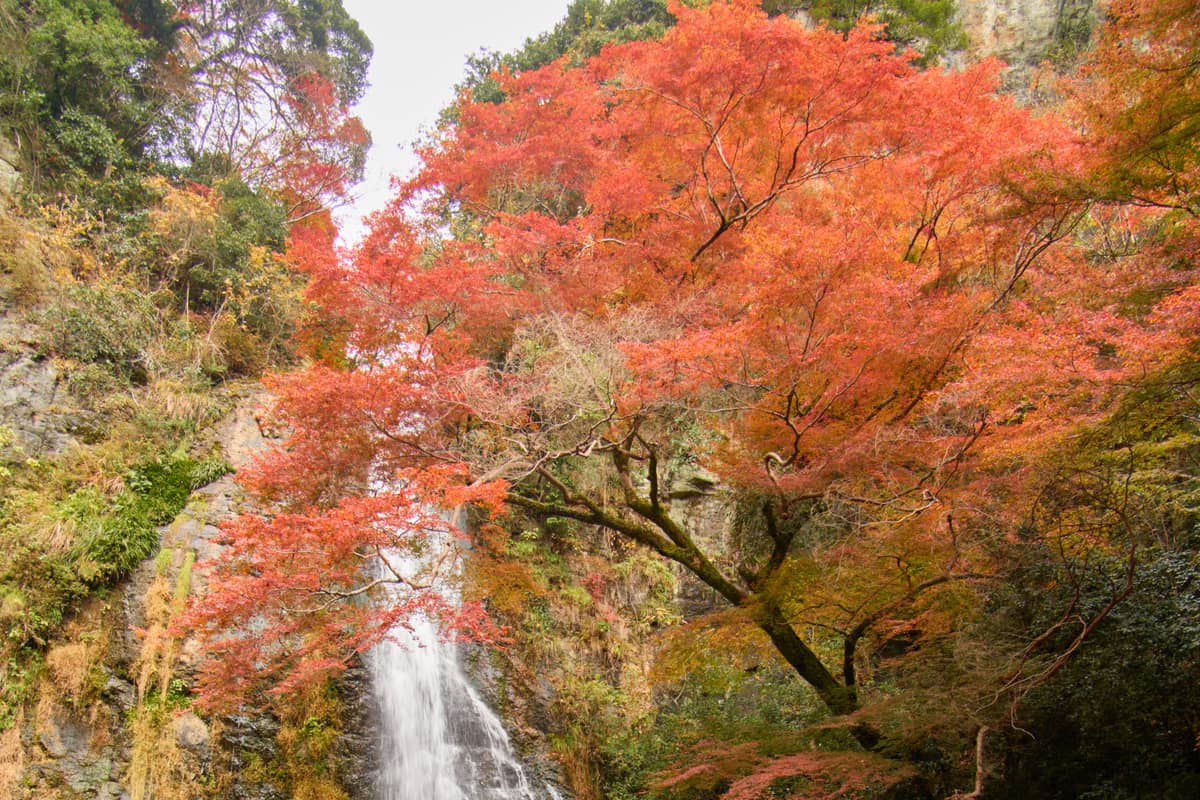
Minoo Falls sits in Minoo City, Osaka Prefecture, and is one of Japan's "100 Notable Waterfalls." It drops 33 metres in a single sheet down the cliff, and the name comes from its resemblance to a farming winnowing basket (mino). It lies within the roughly 83.8-hectare prefectural Minoo Park, which in turn sits inside the Meiji-no-Mori Minoo Quasi-National Park — designated in 1967 (Showa 42) to mark the centenary of the Meiji era, at the same time as Tokyo's Takao, covering the low mountains of 100 to 600 metres elevation in northern Minoo City.
For travelers, Minoo's most concrete advantage is one word: free. Walking the trail, viewing the falls and enjoying the foliage costs nothing. Exactly one place inside Minoo Park sells a ticket — the Insect Museum — and Katsuo-ji up the mountain is a separate charge. That is a different cost structure from the many Kyoto temples that levy a viewing fee: at Minoo, your money goes to transport and food, not admission. And it is close to central Osaka — about 30 minutes from Umeda on the Hankyu Minoo Line — which makes it one of the top "half-day into the mountains for a waterfall and maples" options near the city.
Can you walk to the falls now? Trail status & illumination
Yes, and on the normal trail the whole way. The closure caused by the November 2025 shop fire in front of the falls was lifted on the afternoon of August 7, 2026, and the full length of the trail is open again. Three things differ from before the fire:
- One short stretch is narrower. A temporary barrier fence now stands in front of the burn site. It feels tight, but you walk through it normally.
- The rest house by the falls has its second floor closed. The stairs were damaged in the fire; the ground floor is in normal use.
- More work is coming. The block wall and retaining wall on the slope behind the burn site are due to be removed, which may bring fresh restrictions on that stretch — a glance at the official Minoo Park site the day before you go covers it.
Searching for Minoo foliage tends to land you on the park's foliage-information page, and that page was last updated on April 28, 2026: it still opens with the closure 200 m before the falls, and the color report for the falls area is marked as discontinued. Read the news section for trail status, not the foliage page.
Strollers and wheelchairs are fine on the main trail: the park itself says it is paved with no steps and rolls easily, with one steep stretch partway up to watch for. What not to push up is the Senbon-enro path from the prefectural road above the falls — the park calls that one steep and very dangerous for wheelchairs.
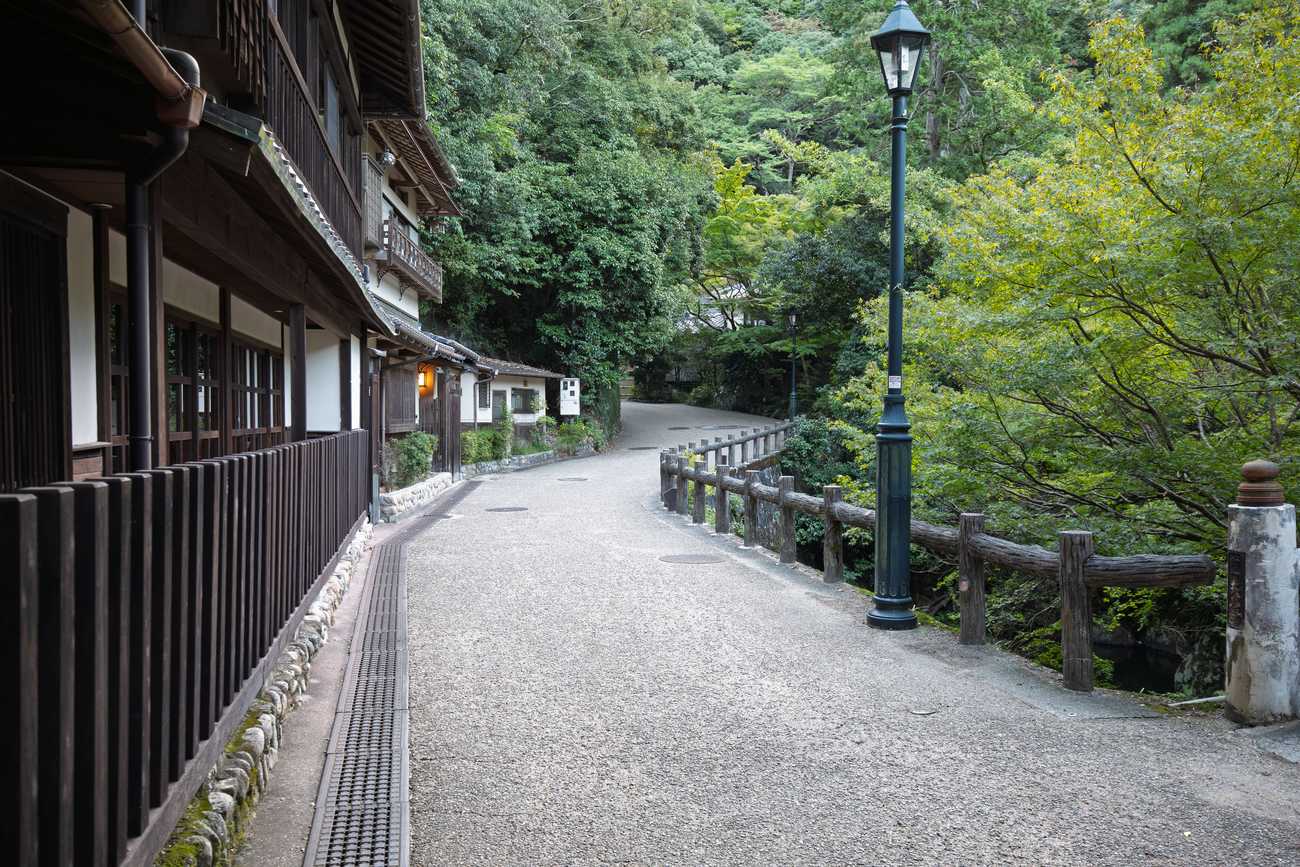
The night illumination is back, but the autumn dates are not out. Two runs already happened in 2026: summer from July 26 to August 31, and Respect-for-the-Aged week from September 19 to 23, sunset to 21:00. The autumn run waits on an official announcement, and any run is called off when a weather warning is issued or the river runs high, so if night maples are the point, confirm that year's dates the day before. To look up official pages and bus timetables the moment you land, set your mobile data up online first — buying a SIM at an airport counter in foliage season means long queues, so a KKday Japan eSIM that connects on arrival makes it easy to check a notice or replan on the fly. For how the five main eSIMs compare, see the Japan eSIM guide.
Do not come on Sunday, September 27, 2026. Unexploded-ordnance removal work in Minoo City restricts entry toward the falls from 7:00 and shuts the Ichi-no-hashi park entrance at 9:00, with no announced reopening time. Hankyu Minoo Station closes and the Minoo Line stops running, some Hankyu bus sections are suspended, and the tourist information office and the Insect Museum are shut for the day. Ryuan-ji cannot be visited at all that day.
Trail logistics: distance, grade, Insect Museum & Ryuan-ji
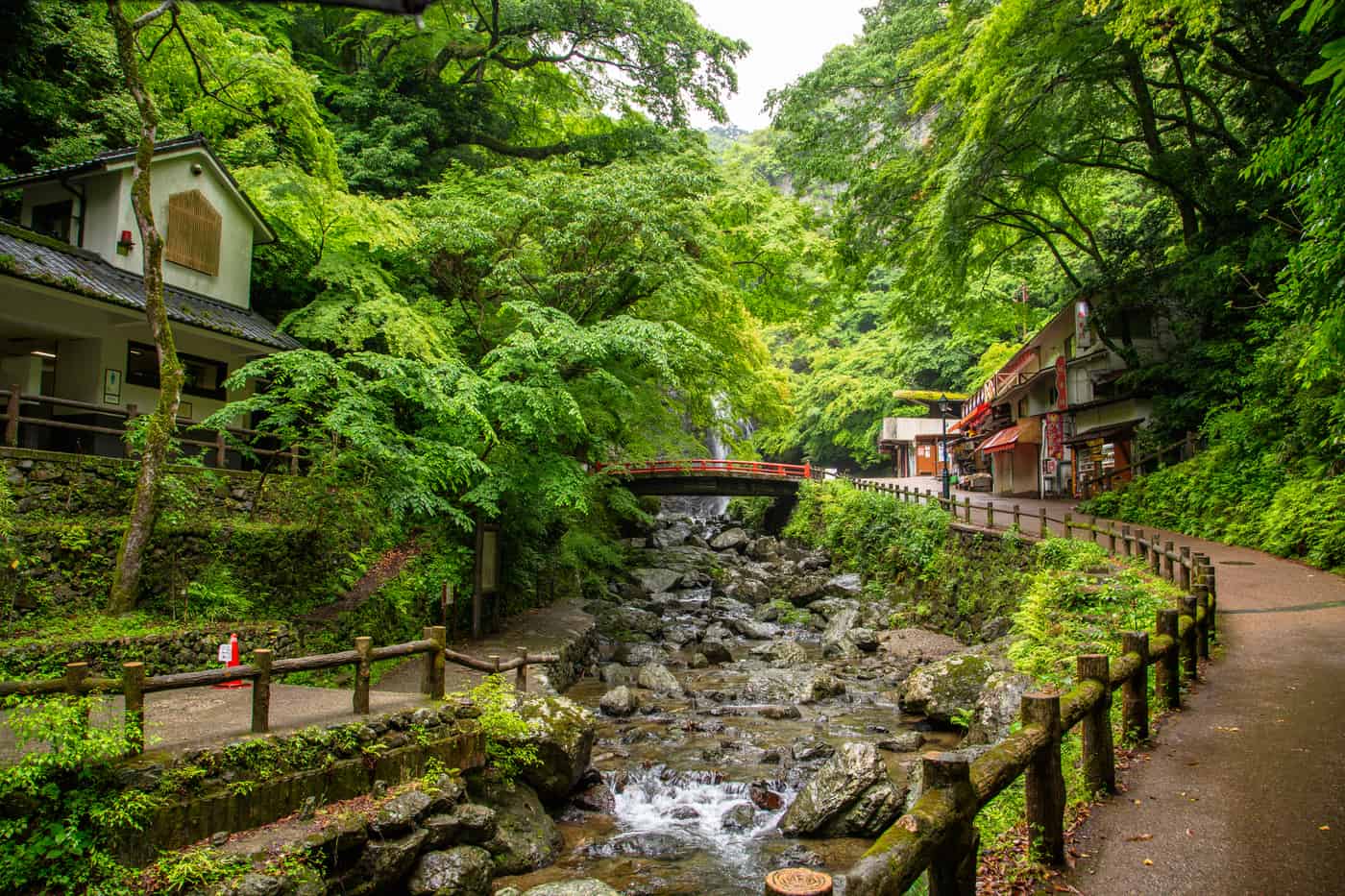
The numbers first: per the official page, the trail starts right outside the Hankyu Minoo Station gates, and the falls are 2.7 km away — about 40 to 50 minutes on foot (roughly 5 minutes to Ichi-no-hashi, 15 minutes to the Insect Museum). The main trail is a promenade built along the river gorge — gentle, well-surfaced, with restrooms and shops — an easy stroll. There is no car park inside the park or along the trail, and general vehicles (including motorbikes and bicycles) are banned from the grounds, so walking in is the only way.
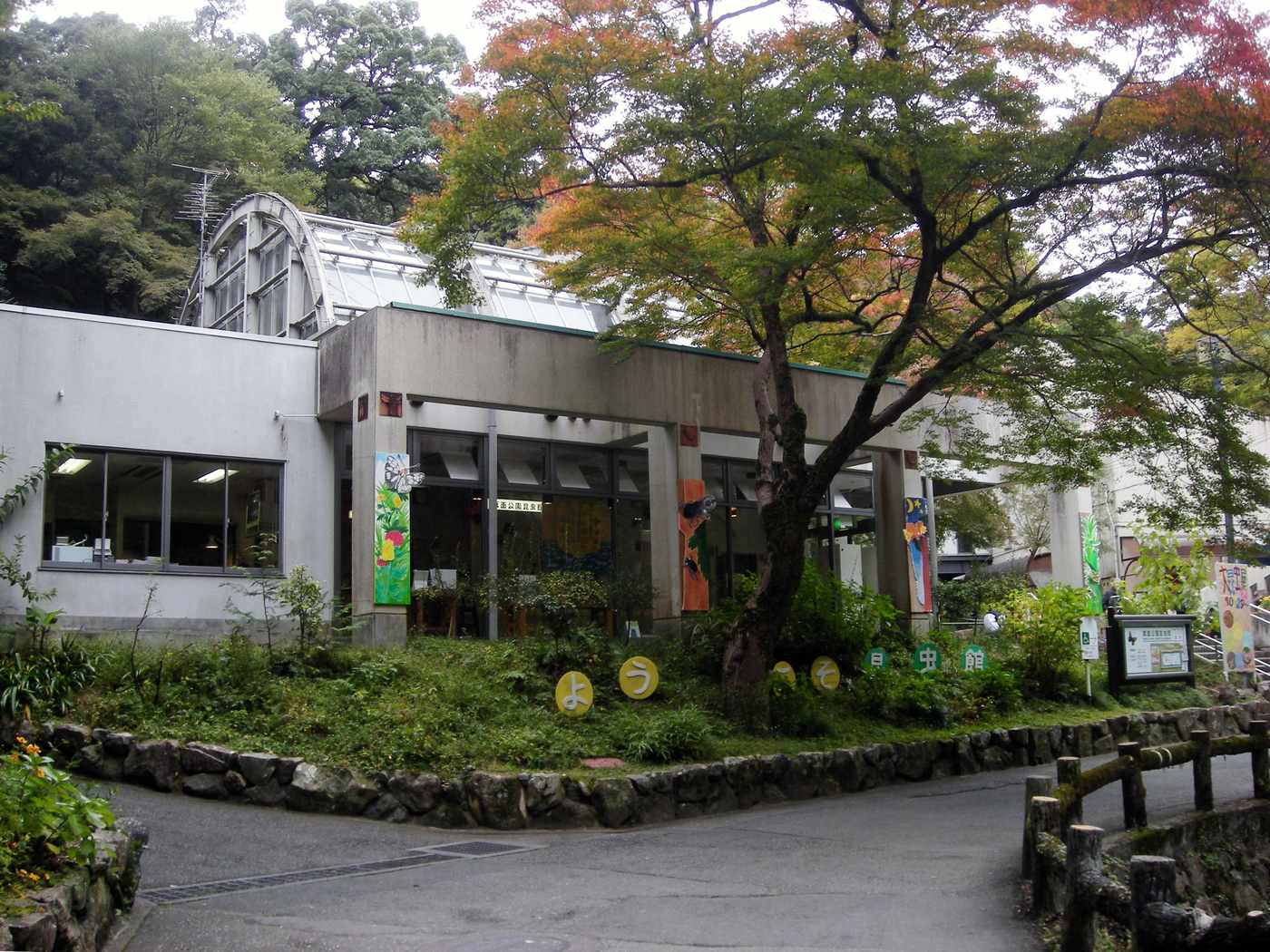
Two facilities worth a stop along the way:
- Minoo Park Insect Museum. About 15 minutes from Minoo Station, open 10:00 to 17:00 (last entry 16:30), closed Tuesdays (open on public holidays, closed the next weekday) and over New Year. Admission is ¥280 for adults, free for junior-high and younger, ¥200 each for groups of 30 or more. One rule to plan around: children in the third grade of elementary school or younger must be accompanied by an adult. There is free Wi-Fi inside, but neither the museum nor Minoo Park has any parking.
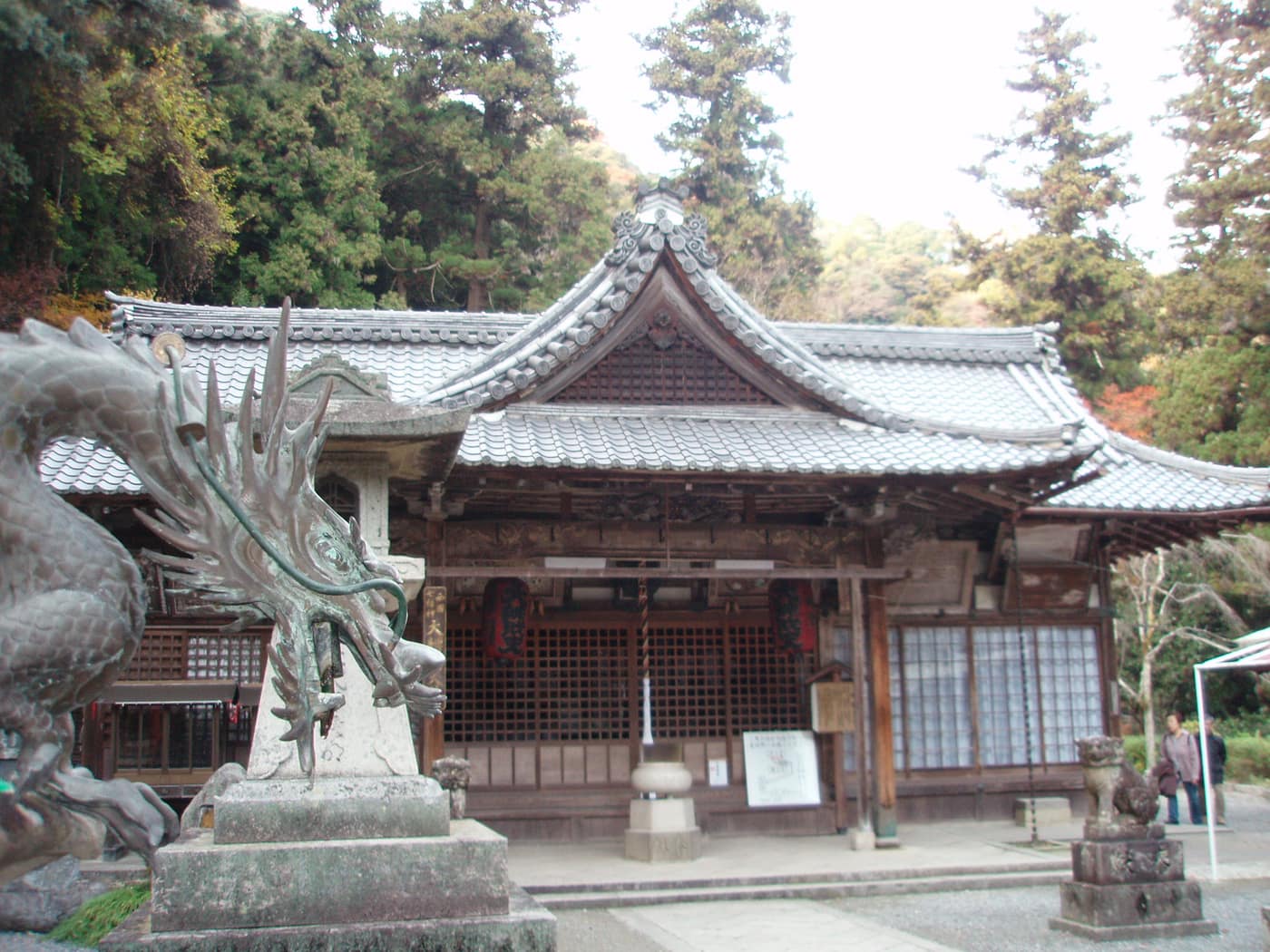
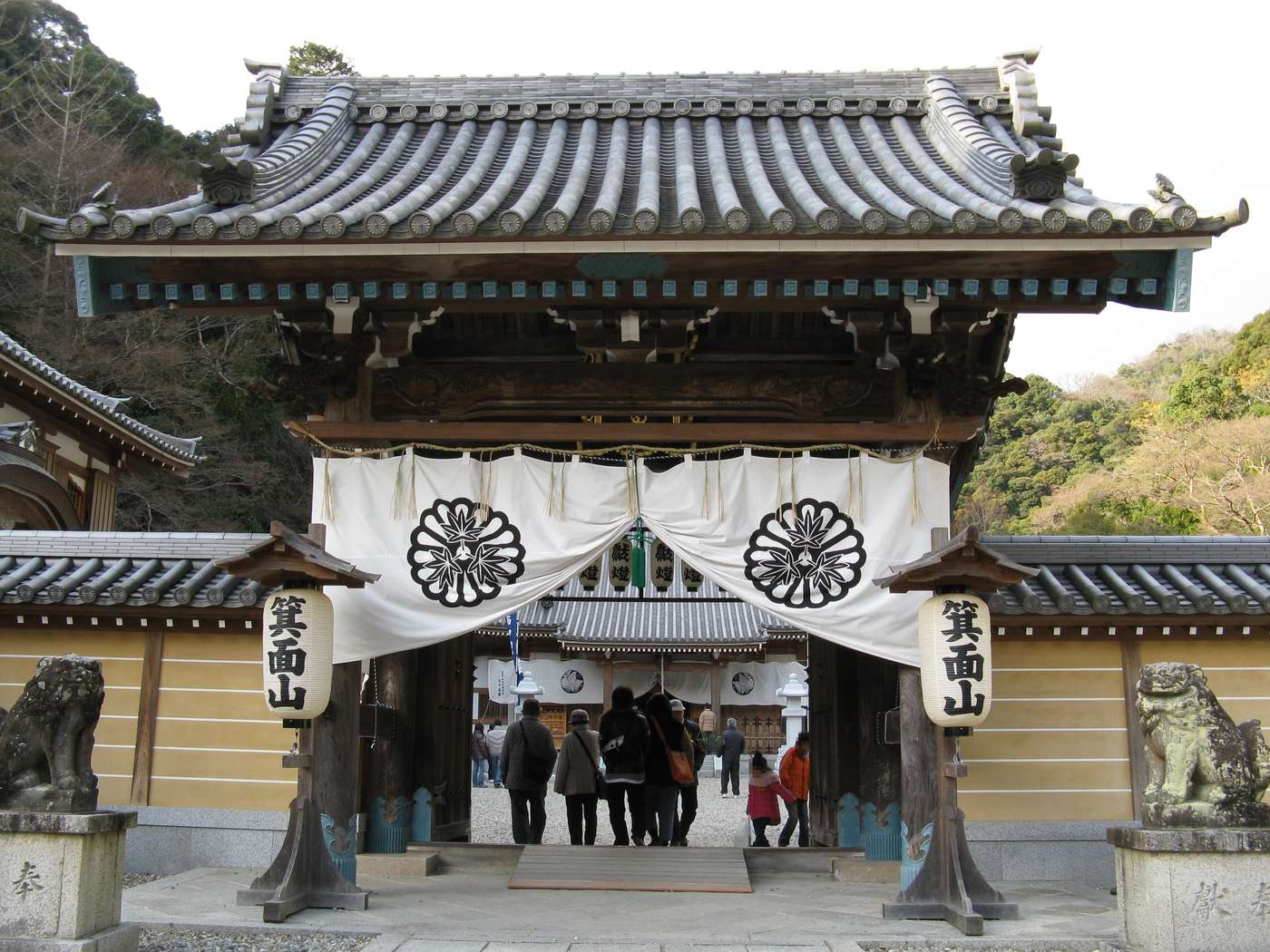
- Ryuan-ji temple. At the foot of the trail, free to enter the grounds, with the temple office open 10:00 to 16:00 year-round. Ryuan-ji is traditionally said to have been founded in 658, when En no Gyoja, the founder of Shugendo, trained at the Minoo falls, and it is regarded as one of the origins of Japan's tomikuji (lottery) culture — the "Minoo tomi" is still held each October 10 at the Benzaiten autumn festival. Ryuan-ji also offers goshuin (a hand-written "Hoju-den" stamp), though the scroll-type cannot be issued when the head priest is absent; the fee is posted on site. If you want to learn the etiquette before you go, start with the Japan goshuin guide.
Ryuan-ji autumn special viewing: six days in November
Walk past Ryuan-ji on a normal day and you only see the grounds; the guest hall and the Hoo-kaku pavilion open six days a year, and in 2026 those days land in foliage season. What opens is the Edo-period guest hall (a large hall of painted sliding screens), the Hoo-kaku designed by Takeda Goichi (a Registered Tangible Cultural Property), and an early-Showa dry landscape garden. On display inside is the tomi-bako, the box used for the "tomikuji" lottery that the temple is credited with originating (an Osaka Prefecture designated cultural property). The view over the Minoo river gorge from the Hoo-kaku is off limits the rest of the year.
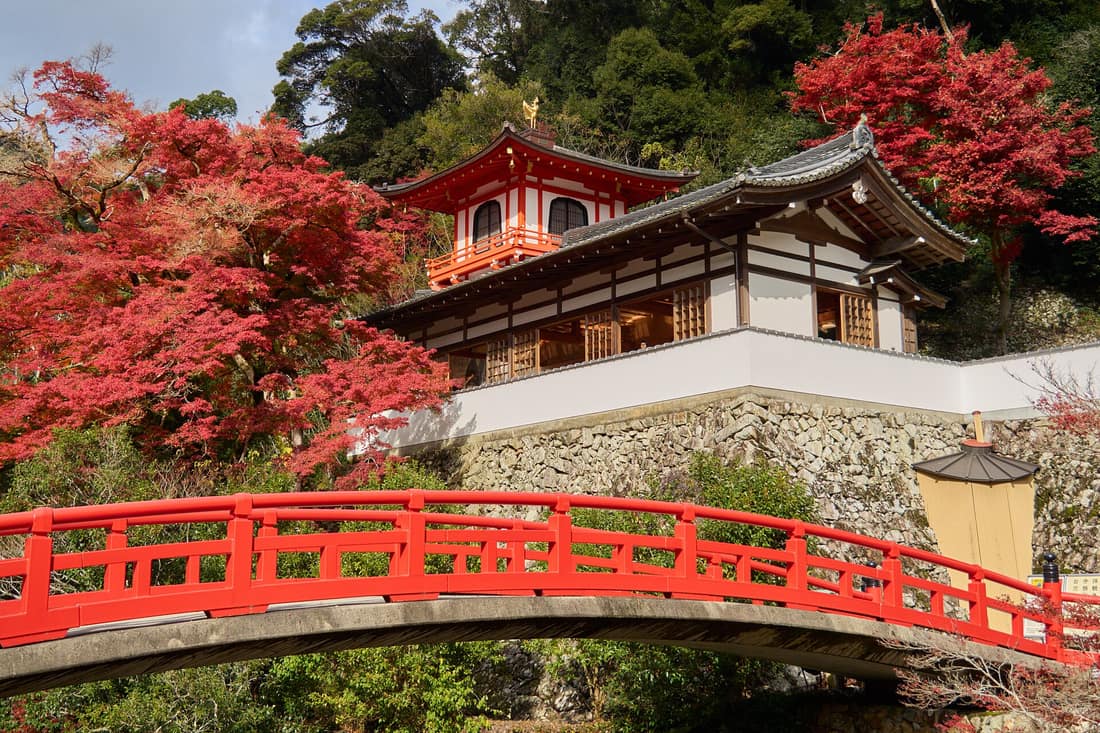
To slot it in, take it on the way up or back along the trail — Ryuan-ji sits at the foot of the gorge, about 15 minutes on foot from Minoo Station, and the visit runs about 30 minutes. No reservation: pay at the temple office to the left of the main gate and walk in.
| 2026 dates | Nov 20 (Fri) – Nov 23 (Mon, holiday), Nov 27 (Fri) – Nov 29 (Sun) |
|---|---|
| Admission | ¥500; free under elementary-school age, no group or disability discount |
| Reception | Temple office to the left of the main gate |
| Reservation | Not required |
| Time needed | About 30 minutes |
| What you see | Guest hall screens, the Hoo-kaku, the dry landscape garden, the tomi-bako |
| When it falls through | In rain the Hoo-kaku interior is closed (the guest hall still opens); the whole viewing is suspended if a storm, heavy-rain or flood warning is issued |
| Accessibility | The guest hall and Hoo-kaku are tatami rooms — wheelchairs cannot enter |
| Official site | ryuanji.org |
Photography is allowed, but no eating or drinking, no smoking, no monopods, tripods or selfie sticks, no pets, and no entry if you have been drinking. The temple is short-staffed and does not take phone enquiries.
Seasonal calendar & the monkey ordinance
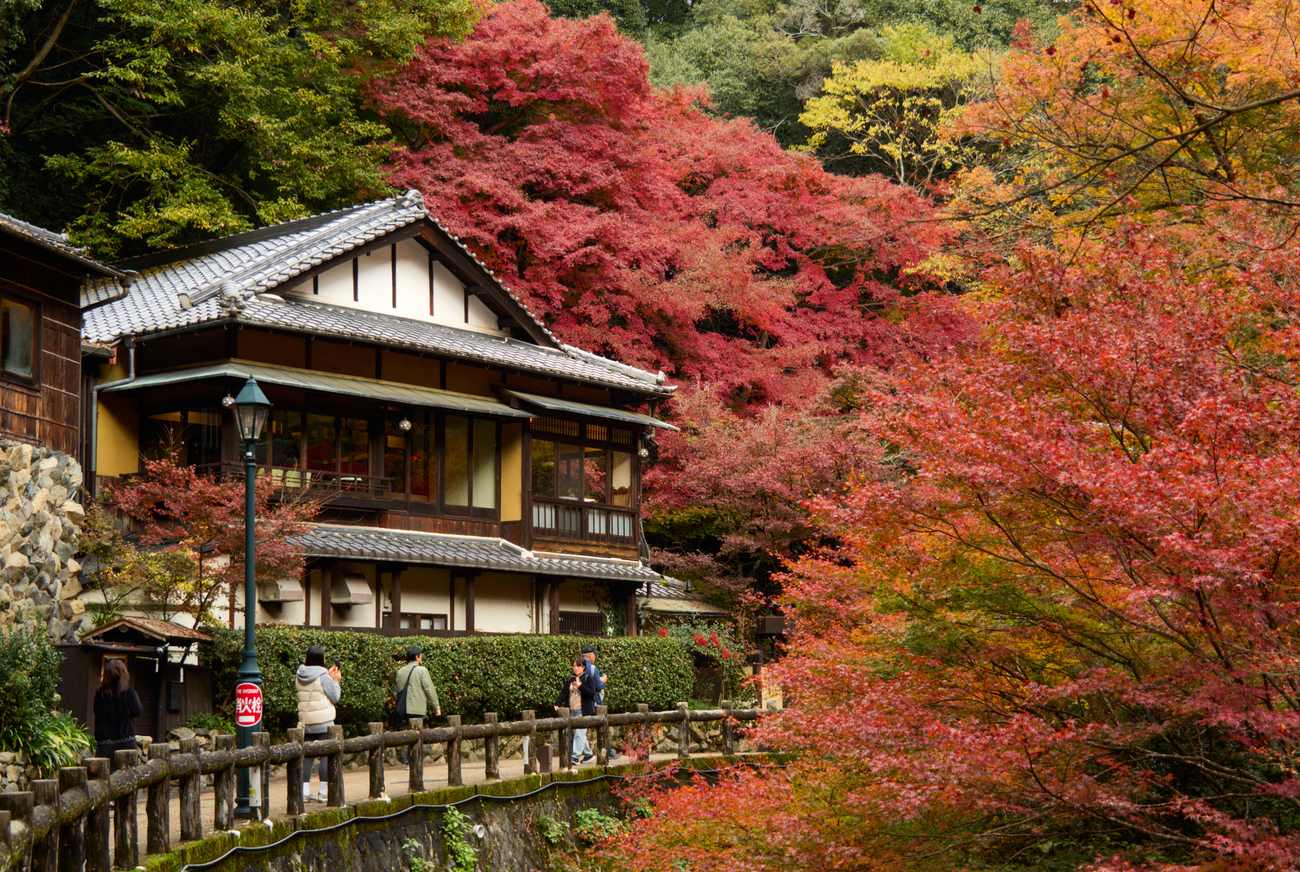
Minoo is best known for autumn, but it works year-round:
- Autumn foliage (the headline). The park's own figure for a typical year is mid-November to early December, but the progression differs within the same park: the area around the falls only peaks from late November and holds into early December. So do not book mid-November for the waterfall-and-maple shot — at that point the color is mostly up on the ridges. That is a typical-year range, not a 2026 forecast, so re-check the current-year forecast about two weeks out.
- Fresh green and summer. The fresh green of April–May and the deep green of high summer are just as walkable, and the gorge trail is markedly cooler than the city in summer. Minoo also has the summer "Minoo kawadoko" riverside dining, and a few shops along and around the trail serve shaved ice.
- Winter. Winter here mainly means snow scenery. Do not expect a frozen-waterfall shot — Minoo Falls is not an ice-fall spot.
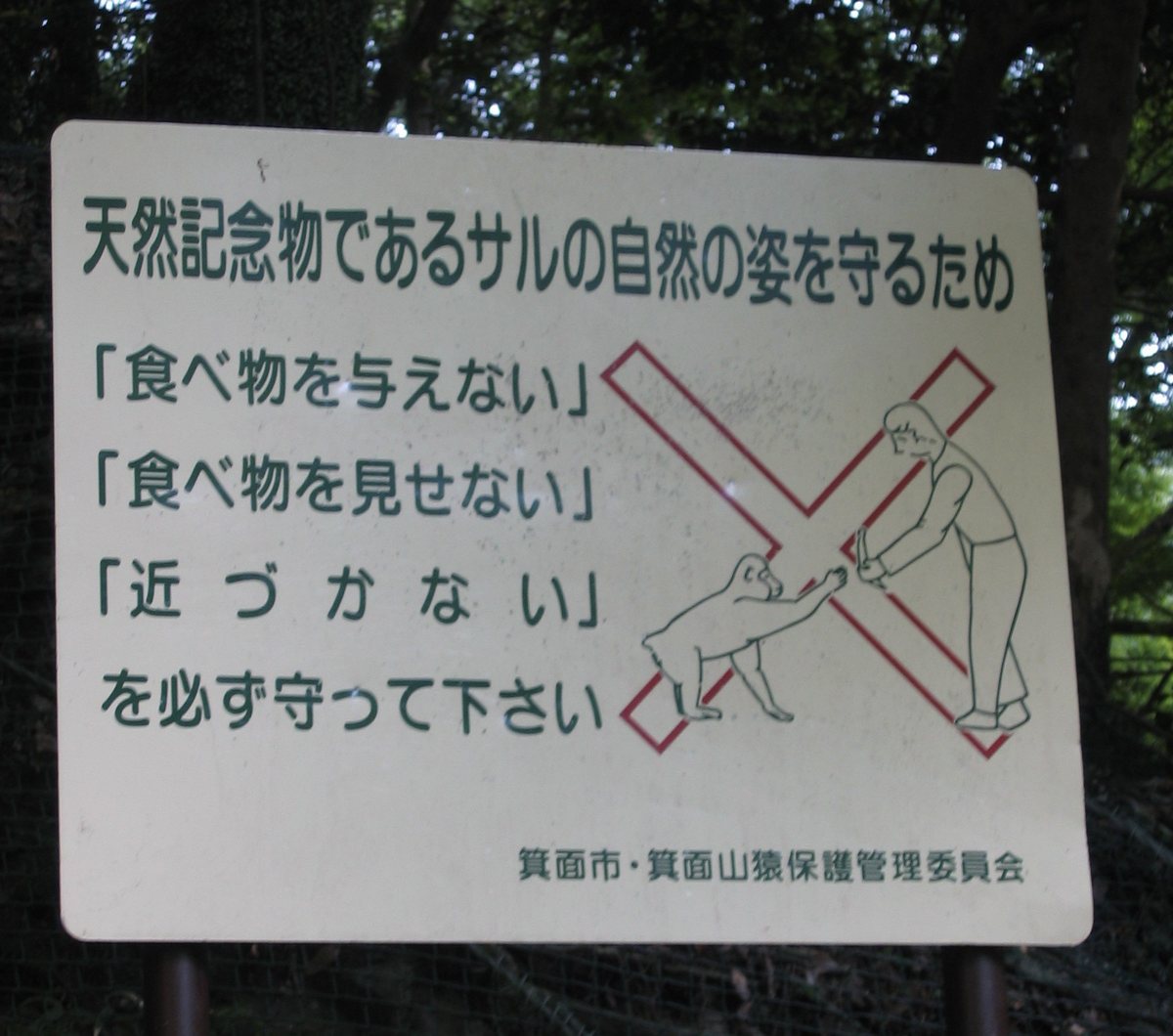
The monkey ordinance (important): Minoo mountain is famous for its wild Japanese macaques, but feeding them is illegal. Minoo City has enforced a no-feeding ordinance since April 1, 2010 (Heisei 22); offenders are first guided, then warned, then ordered to stop, and continued violations can draw a fine of up to 10,000 yen (confirmed verbatim by Minoo City). There is history behind it — in 1954 researchers first successfully fed wild macaques near Ryuan-ji for study, and later human feeding habituated the troop to grabbing food, prompting the ban. In practice: keep food out of sight, keep your bag zipped, do not make eye contact, and do not approach young monkeys. Walk relaxed — no need to be nervous, just stow the snacks.
Access: Hankyu Minoo Line vs Minoo-Kayano Station
The simplest way to the trail is still the Hankyu Minoo Line: from Osaka Umeda take the Hankyu Takarazuka Line, change at Ishibashi-handai-mae for the Minoo Line, and ride to the Minoo terminus — about 30 minutes total, roughly ¥280 one way (confirm at the station on the day). From Minoo Station it is about 5 minutes on foot to Ichi-no-hashi, where the trail officially begins.
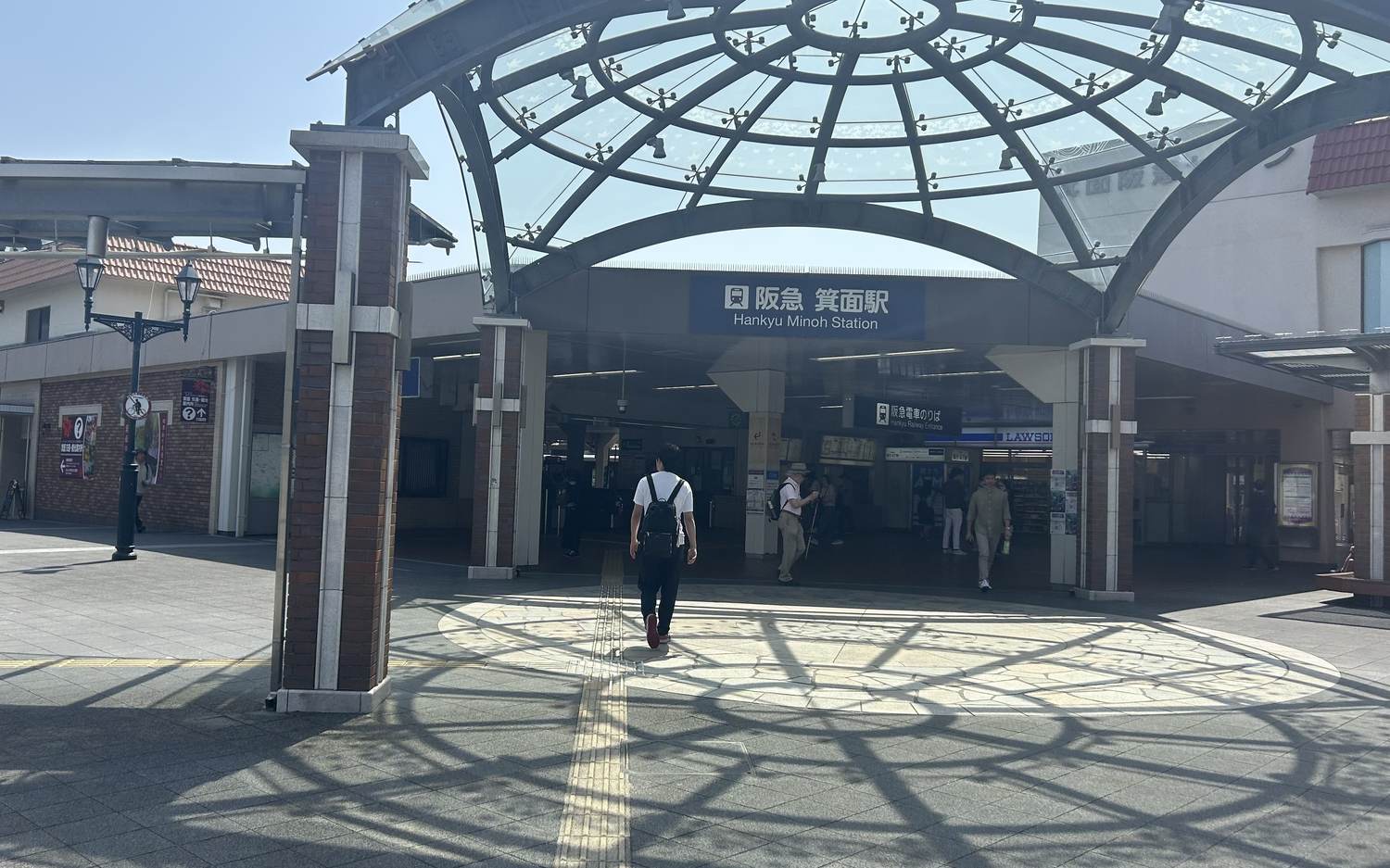
The Kita-Osaka Kyuko Minoo-Kayano Station, opened in March 2024, often leaves people assuming there is now a faster route. Here is the point that trips people up:
| Route | To the trail / falls | To Katsuo-ji | Notes |
|---|---|---|---|
| Hankyu Minoo Line → Minoo Station | 5 min walk to Ichi-no-hashi; 40–50 min to the falls | Needs a further bus transfer | The standard way to the trail |
| Kita-Osaka Kyuko → Minoo-Kayano Station (opened 2024) | Not a shortcut: still transfer to a Hankyu bus to Minoo Station, then the usual trail | Route 30 direct bus, twice an hour weekdays / every 20 min weekends | Handy for Katsuo-ji; no faster to the trail |
Plainly: Minoo-Kayano Station is not a shortcut to the trail. It sits some distance from the trailhead — walking to Minoo Station takes 30-plus minutes over a not-especially-pleasant stretch — so in practice you still take a Hankyu bus (routes 21/36, etc.) to the Minoo Station area and walk the usual trail. Kayano's real value is getting to Katsuo-ji: from here the Hankyu Bus route 30 runs direct to Katsuo-ji for ¥800 one way, on the hour and half-hour on weekdays and every 20 minutes from 9:00 to 12:00 on weekends and holidays, with the last outbound run at 15:00 and extra unscheduled departures when it is busy. Note that return times are not published — check the stop and write the time down before you head back. Which station you choose depends on whether your day's focus is the trail or Katsuo-ji.
If you drive, there is no car park inside the park or along the trail: leave the car at the municipal car park south of Minoo Station and walk in (about 20 minutes). There is the Otaki-ue (Dainichi) car park above the falls, but on peak-foliage weekends the Minoo Driveway runs one-way traffic control and the surrounding roads jam badly. On peak weekends I would not drive up — any flexibility you gain is eaten by the jam and the hunt for a space.
Local eats: momiji tempura & Minoh Beer
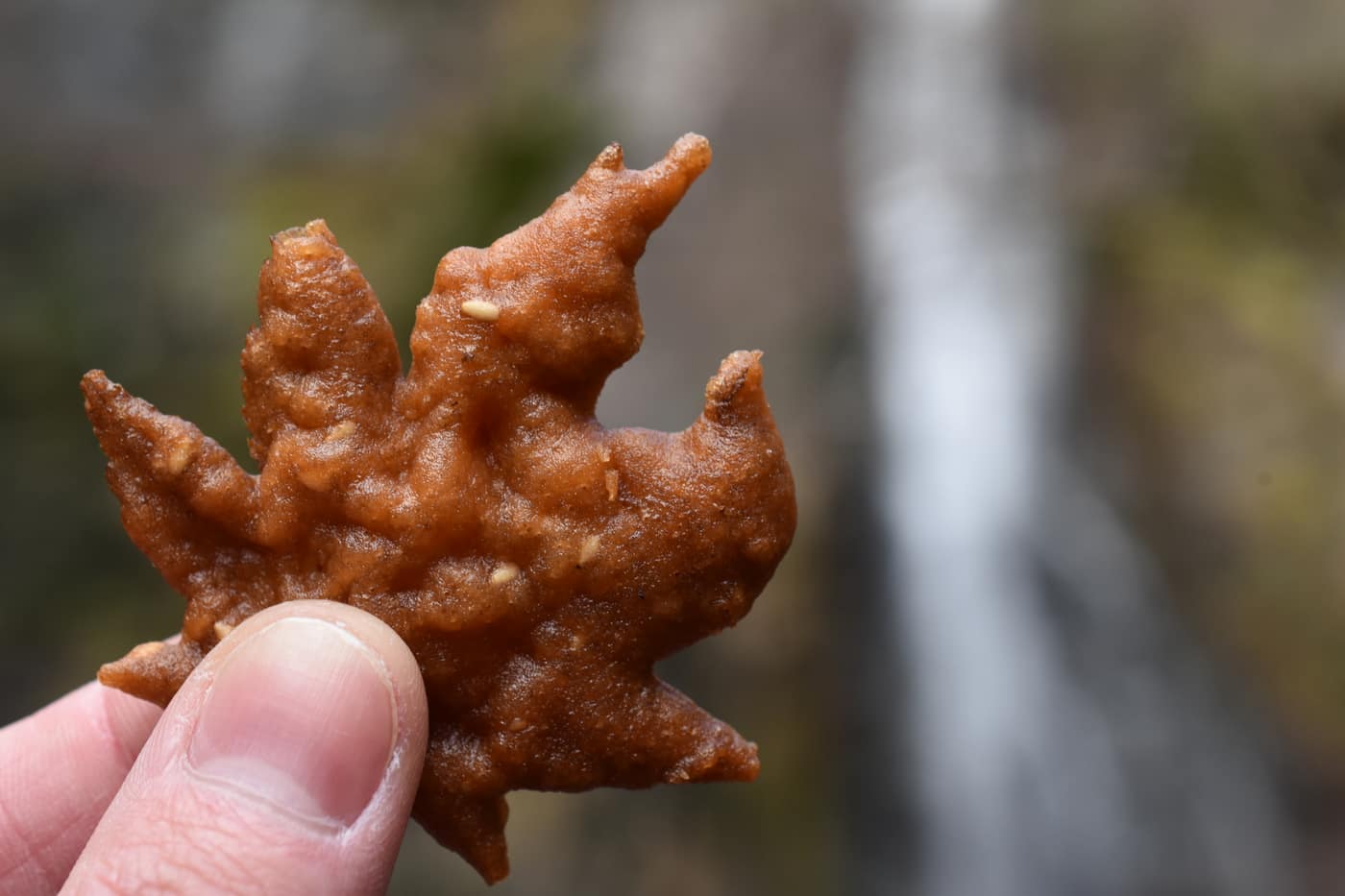
Along the Minoo trail there is really one star snack: momiji no tempura (maple-leaf tempura) — edible-variety maple leaves dipped in a sweetened batter and deep-fried into thin crisps. By the makers' own handed-down story, the snack supposedly began about 1,300 years ago when En no Gyoja, training on Minoo mountain, fried maple leaves in lamp oil to offer travelers — a shop tradition with a folklore flavor, not verified history, so enjoy it as background. In reality, 20-plus shops sell it along the trail, mostly freshly fried, and each shop sets its own price. Two things will stop you buying any: most shops along the trail close on irregular days, and in foliage season they often sell out during the day — buy when you see it, do not save it for the way back. The ones with opening hours on record with the tourism association: Hisakuni Kosendo 9:00–18:00 (closed Thu), Momijiya 10:00–17:30 (closed Fri), Kamikyu Takido 10:00–17:00 (closed Tue); Inazumi Seifudo and Sugi-no-chaya keep irregular days. Sweet and crunchy, it works as a fresh-from-the-fryer snack to enjoy beside the shop, or as a bring-home gift for coworkers.
One thing to clear up about Minoh Beer, often listed as a Minoo "must-drink": its taproom is in Makiochi, not on the trail. The taproom is in the Makiochi area of Minoo City, about 12 minutes on foot from Makiochi Station on the Hankyu Minoo Line — a different direction from Minoo Station and the trail, not a place you pass on the walk. The taproom is open 11:00 to 21:00 (pub last orders 20:30; Sundays to 20:00, last orders 19:30), closed Thursdays, 52 seats. 330ml bottles: Osaru IPA ¥484; the pilsner, pale ale, stout and weizen are ¥451 each; W-IPA ¥653 (tax included). So if you are a craft-beer fan set on the taproom, plan a separate trip to Makiochi Station — do not assume you can grab a pint right off the trail, or you will be disappointed.
Combining with Katsuo-ji: hike vs bus
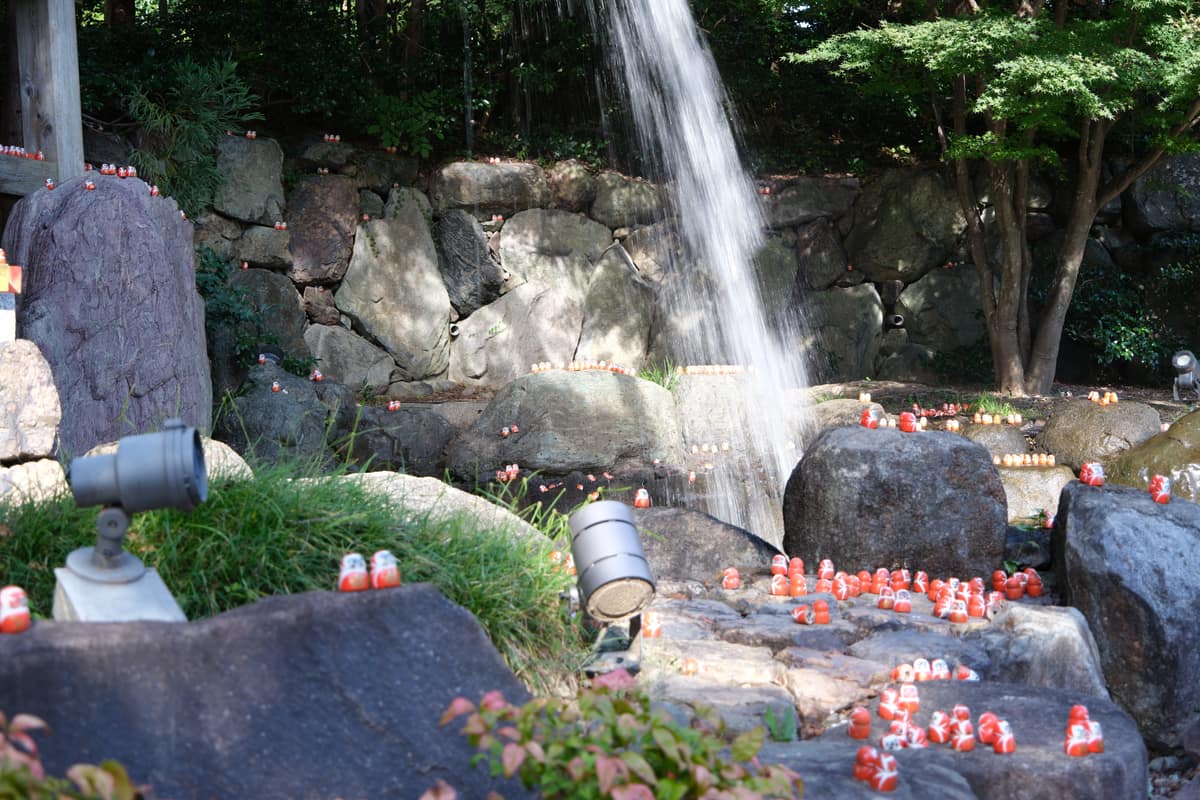
Minoo Falls and Katsuo-ji are both in Minoo, making an easy day pairing near Osaka. Katsuo-ji is famous for its hillside of prayer daruma dolls set against the foliage, with adult admission of ¥500. There are two very different ways to connect from Minoo, and the trade-off is worth thinking through first:
- On foot: the Tokai Nature Trail hike. A Tokai Nature Trail links Minoo Falls and Katsuo-ji in roughly 1 to 1.5 hours (records vary between sites, with some closer to 2 hours). But it is an unpaved mountain path with no official paved-grade rating, needs proper shoes, and is hiking-grade, not a stroll. Great for the fit who want to add a mountain leg — walking from the waterfall up to the daruma temple is a complete experience.
- By bus: the roundabout connection. If you would rather not hike, take the bus — most conveniently, from Minoo-Kayano Station the Hankyu Bus route 30 runs direct to Katsuo-ji for ¥800 one way, with the last outbound departure at 15:00. Best for those with older relatives, heavy luggage, or who just want an easier day.
For sequencing I would suggest Katsuo-ji in the morning, Minoo Falls in the afternoon: the last bus up to Katsuo-ji leaves at 15:00 and return times are not published, so going early is the safe play; then come down around midday and finish on the free Minoo trail, wrapping up near Hankyu Minoo Station at dusk. For the Katsuo-ji hillside of daruma, admission, and detailed routing, see the Katsuo-ji temple & daruma guide.
Crowds & is it worth a special trip
On crowds first: the Minoo trail itself is short and easy to walk; the issue, as usual, is peak-weekend crowds and road traffic. Practical advice: come on a weekday if you can take the leave — the gap between a peak weekday and weekend is large. If it has to be a weekend, get there in the morning; the trail only gets tighter through the afternoon. Drivers especially should avoid weekends — the Minoo Driveway one-way control and surrounding jams will eat your time.
So is Minoo Falls worth a special trip? That splits by who you are:
- Already in Osaka and after a free, close-to-the-city half-day that still puts you in the mountains for a waterfall and maples: very much worth it. The 2.7 km gorge trail, the momiji tempura, Ryuan-ji, the Insect Museum and the free entry fill a half-day neatly.
- Coming across from Kyoto or Kobe purely for the head-on falls photo: pick your date. The area around the falls only colors from late November, so arrive earlier and the maples flanking the waterfall are still green; the autumn illumination dates are not out either. String Minoo together with Katsuo-ji or central Osaka into one day and the trip holds up even if the light does not.
Minoo's baseline is solid — free, close, easy, with something to eat — and November 2026 adds one more card: the six days Ryuan-ji opens its guest hall and Hoo-kaku land right at the front edge of the falls-area peak. To string Minoo with Katsuo-ji, Nara Park, and the Midosuji ginkgo into a full Kansai foliage run, the five-spot comparison in the Osaka & Nara autumn guide is the easiest starting point. And if your afternoon swings back into central Osaka for paid sights like the castle keep, Tsutenkaku, or a Dotonbori cruise, it is worth weighing a KKday Osaka Amazing Pass to bundle transport and admission (note: the Hankyu line Minoo uses is outside the pass's subway coverage, so do not buy it for Minoo alone).
Frequently Asked Questions
- Q1:Is Minoo Falls open again after the late-2025 fire?
- Yes — and you walk the normal trail all the way. The closure caused by the November 2025 shop fire in front of the falls was lifted on the afternoon of August 7, 2026, and the whole trail is open again. Only two things differ from before: a temporary barrier fence in front of the burn site narrows the path slightly, and the second floor of the rest house by the falls stays shut because the stairs were damaged. One thing to watch: the park's own foliage-information page was last updated in April 2026 and still carries the closure line, so do not read it as the current status.
- Q2:Is there a night illumination at Minoo Falls in autumn 2026?
- Yes, but the autumn dates are not out yet. Two trail illuminations already ran in 2026: the summer one from July 26 to August 31, and Respect-for-the-Aged week from September 19 to 23 (sunset to 21:00). The autumn run waits on an official announcement, and any illumination is called off when a weather warning is issued or the river runs high.
- Q3:How long is the walk to Minoo Falls, and can you push a stroller?
- It is 2.7 km and about 40 to 50 minutes on foot (roughly 5 minutes to Ichi-no-hashi and 15 to the Insect Museum). The trail is paved along the gorge with no steps, and the park itself says wheelchairs and strollers roll fine, though one stretch partway up is steep. What you should not push up is the Senbon-enro path from the prefectural road above the falls — the park calls that one steep and very dangerous for wheelchairs.
- Q4:Are the Minoo monkeys a problem, and what should I know?
- Yes, they are around, and feeding them is illegal. Minoo mountain is famous for its wild Japanese macaques, but Minoo City has enforced a no-feeding ordinance since April 1, 2010. Offenders are first guided, then warned, then ordered to stop, and continued violations can draw a fine of up to 10,000 yen. Practical advice: do not hold food out in your hand, keep your bag zipped, and do not make eye contact with or approach young monkeys. They grab food because people habituated them by feeding in the past, so not feeding is both the law and self-protection. Walk the trail relaxed — no need to be nervous, just keep snacks out of sight.
- Q5:What is momiji tempura, and where do you buy it?
- Momiji no tempura (maple-leaf tempura) is Minoo signature souvenir — edible-variety maple leaves dipped in a sweetened batter and deep-fried into crisps. By the makers own handed-down story, the snack supposedly began about 1,300 years ago when En no Gyoja, the founder of Shugendo, was training on Minoo mountain and fried maple leaves in lamp oil to offer travelers. That is a shop tradition with a folklore flavor, not verified history, so take it as fun background. In practice, more than 20 shops sell it along the trail, mostly freshly fried, and every shop sets its own price — there is no standard one. Two things to know: most shops along the trail close on irregular days, and in foliage season they often sell out during the day, so buy when you see it rather than saving it for the walk back. It is sweet and crunchy, good as a walking snack or to bring back for coworkers.
- Q6:Can you combine Minoo Falls and Katsuo-ji temple in one day?
- Yes — both are in Minoo and make an easy day pairing near Osaka, but pick the right transport. On foot, the Tokai Nature Trail links Minoo Falls and Katsuo-ji in roughly 1 to 1.5 hours (records vary), but it is an unpaved mountain path that needs proper shoes — hiking-grade, not a stroll. If you would rather not hike, take the bus: from Minoo-Kayano Station (opened March 2024 on the Kita-Osaka Kyuko line) the Hankyu Bus route 30 runs direct to Katsuo-ji for 800 yen one way, twice an hour on weekdays and every 20 minutes on weekends and holidays, with the last outbound departure at 15:00 and extra unscheduled runs when it is busy. Return times are not published, so check the stop before you head down. My suggestion is to do Katsuo-ji first in the morning, then finish on the free Minoo trail in the afternoon. For Katsuo-ji hillside of daruma dolls, admission, and full details, see the dedicated Katsuo-ji guide.
Read next
Osaka & Nara Autumn 2026: Minoo Falls, Katsuoji & Deer Park
Kyoto crowds got you down? Minoo Falls, Katsuoji daruma slopes, and deer-and-maple Nara — routes and fees decoded.
Japan Autumn Foliage 2026: Peak Forecast & 5-Region Guide
Region-by-region peak-forecast map from late-September Hokkaido to mid-December Kyushu, with itineraries and booking timing.
Osaka & Kyoto 5-day itinerary
Dotonbori, Kiyomizu, Arashiyama — full tested route.
📊 See the 2026 Price Index (JR Pass, DPA, eSIM, Airport Transport) →