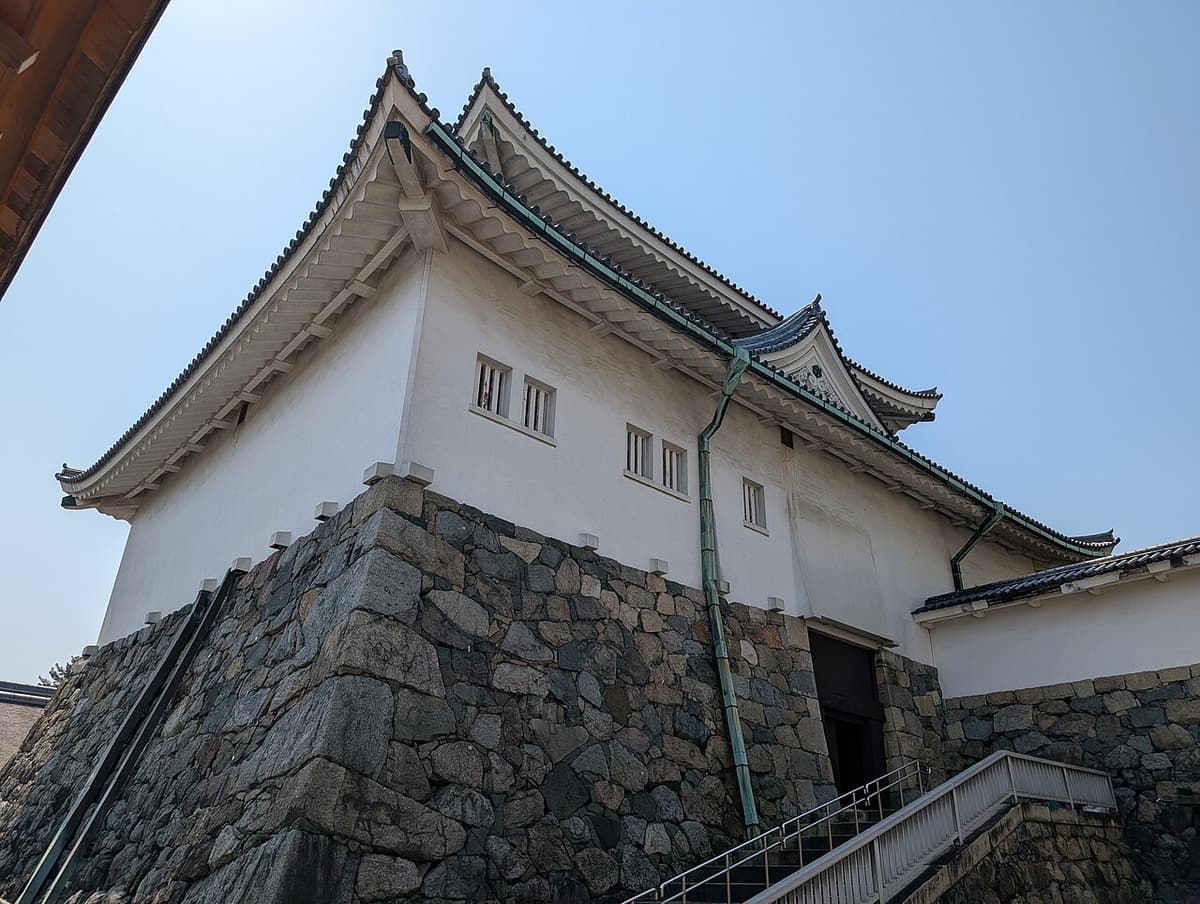
Straight answer to the question everyone types into Google: yes, you can go inside Nagoya Castle — but no, you cannot go inside the keep tower. The 1959 concrete reconstruction has been shut since May 2018 over inadequate seismic resistance, and the city no longer publishes a target year for reopening it. The other thing worth knowing before you book anything: adult admission is ¥500 right now and doubles to ¥1,000 on October 1, 2026. This guide works through what is open and what is not, how to play the price change, why the Honmaru Palace is the real headline act, the blunt answer on castle seals, and how to eat at Kinshachi Yokocho — all from the castle's own official notices.
📍 The castle usually fills half a day; for how it fits with Atsuta Shrine, Osu and Ghibli Park, see the full Nagoya travel guide. Visiting in autumn? The best foliage day trip from the city is Korankei Gorge.
- Grounds open, keep tower closed — Honmaru Palace, gardens, stone walls, turrets and the shachihoko exterior are all accessible
- Adult admission ¥500, rising to ¥1,000 on October 1, 2026; junior-high age and under stay free
- The Honmaru Palace is included, not an add-on — but last entry is 16:00 and the walk from the gate takes 10 minutes
- No official timeline for the wooden reconstruction — the current official pages list no start date and no completion year
- No regularly sold gojoin; the only official one is a free, not-for-sale Castle Day giveaway on April 6 (first 460 people)
📖 Table of Contents (click to expand)
- "Can you go inside?" — the three-part answer
- Why the keep is closed, and when it might reopen
- Tickets: the October 1, 2026 doubling
- Honmaru Palace: the actual headline act
- The golden shachihoko: 1612, 1945, 1959, 2021
- Gojoin castle seals: an honest no
- Summer Festival and the rest of 2026
- Access: the station that changed its name
- Is it worth a special trip? Nagoya vs Osaka Castle
- Kinshachi Yokocho: Yoshinao vs Muneharu
- FAQ
"Can you go inside?" — the three-part answer
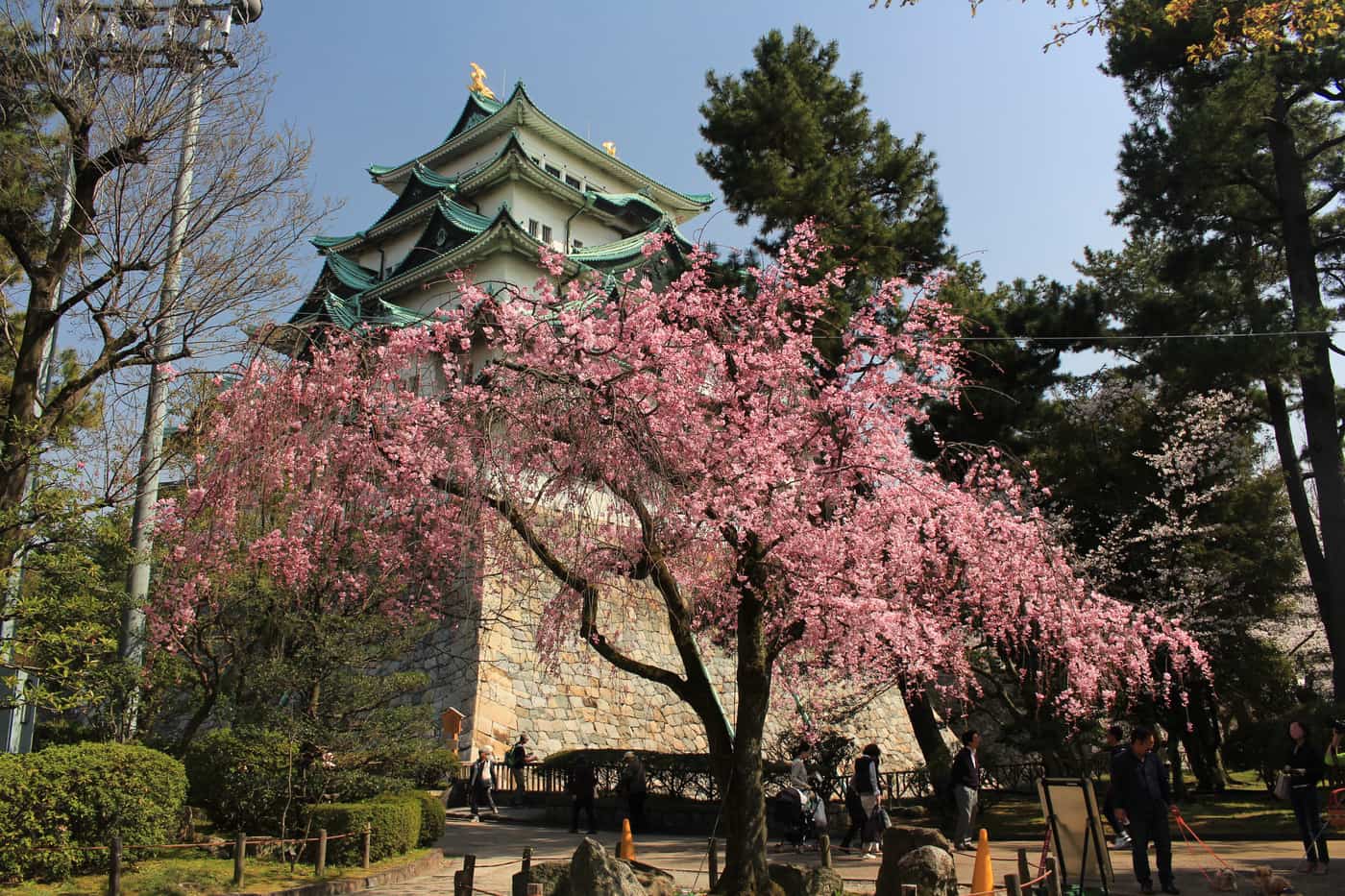
The reason this question generates so much contradictory advice online is that it compresses three separate facts into one sentence. Some sites say the castle is shut and not worth the trip; others post galleries full of photos taken inside. Both are describing something real. Here is the unpacked version.
- Layer one: the grounds are open. Buy a ticket and you walk in. The official FAQ says so in as many words, then lists what there is to see besides the keep — the Honmaru Palace, described as the finest surviving example of early-modern castle palace architecture, the Important Cultural Property structures, the gardens, the stone ramparts, and the seasonal flowers and trees.
- Layer two: the keep tower interior is off limits. The official page on the keep currently states that it is closed, and gives the reason as inadequate earthquake resistance. You can stand directly in front of it and photograph the whole thing, golden shachihoko included. You just cannot walk in, and you certainly cannot go up.
- Layer three: the best thing here is not inside the keep anyway. The Honmaru Palace opened in its completed reconstructed form in 2018, is covered by the same ticket at no extra cost, and would be a headline attraction even if the tower were open. The closure has, if anything, pushed visitors to finally look at it properly.
So the advice is simple: plan Nagoya Castle as "fortress plus palace," not as "climb a keep." Set that expectation and it delivers. Set the wrong one and you will feel you paid to look at a building from outside.
Why the keep is closed, and when it might reopen
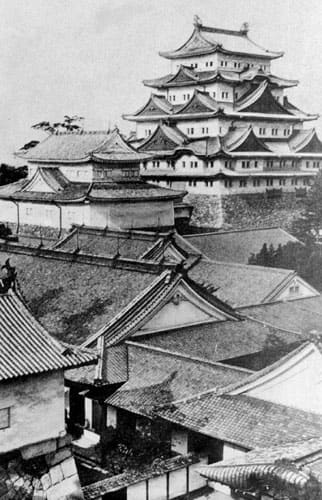
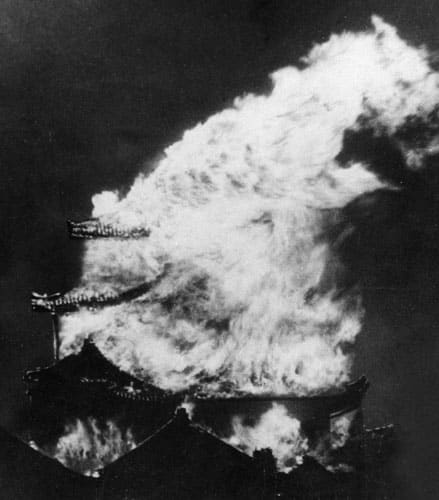
The backstory rhymes with Osaka Castle without repeating it. Nagoya's keep was completed in 1612 under Tokugawa Ieyasu, built as a statement of the Owari Tokugawa house's authority. In May 1945, an air raid burned the keep and its golden shachihoko together. After the war, funded by substantial donations from the city's residents, it was rebuilt in 1959 as a steel-frame reinforced-concrete structure — the building you photograph today.
That construction is exactly where the current problem comes from. The official explanation is blunt: roughly 60 years on from the rebuild, ageing equipment and the need to secure earthquake resistance became pressing, and the keep was closed in response to its low seismic resistance. The closure began on May 7, 2018 — the prefecture's official tourism channel announced that date at the time, though the castle's own current pages no longer carry it. Rather than retrofit the concrete building, the city decided on a wooden reconstruction, and the official site states that this project is now under way.
Here comes the part that requires honesty rather than confidence. The current official website carries no groundbreaking date and no target completion year. What the progress page actually publishes is preparatory work: stone-wall survey and preservation measures, advance milling of timber, and a run of accessibility roundtable meetings, the most recent entries dated February, May and July 2026. Nothing on those pages says when construction starts, let alone when it ends.
You will find years quoted all over the internet, from an early published completion target that has long since passed to various figures attributed to officials and reported in the press. They change every year or two. The reading worth adopting is this: when the body running a project stops publishing a target date on its own website, no third-party date belongs in your travel plan. If you are visiting between now and 2027, assume the keep stays shut. The official progress page at nagoyajo.city.nagoya.jp will be the first place any real news lands.
One more 2026 change on the ground: the castle's volunteer guide tours are suspended from June 22 to September 23, 2026. If you are visiting over the summer, drop the assumption that a free English- or Japanese-language guide will be circulating, and come with your own reading done — which is what this guide is for.
Tickets: the October 1, 2026 doubling
This is the most time-sensitive section here and the one most existing write-ups have not caught up with. Nagoya Castle has published a revision of its admission fees taking effect October 1, 2026 (Reiwa 8), and adult admission goes from ¥500 to ¥1,000. Not a nudge — a doubling.
| Ticket type | Through Sept 30, 2026 | From Oct 1, 2026 |
|---|---|---|
| Adult (individual) | ¥500 | ¥1,000 |
| Adult (group of 30+) | ¥450 | ¥900 |
| Adult (group of 100+) | ¥400 | ¥800 |
| Annual pass | ¥2,000 | ¥4,000 |
| Tokugawaen combined ticket | ¥640 | ¥1,040 |
| Nagoya-city senior (65+) | ¥100 | ¥300 |
| Junior-high age and under | Free | Free (unchanged) |
Four practical consequences, stated plainly:
- Going before September 30 halves this line item. If you were already weighing an autumn versus winter trip to Nagoya in 2026, the earlier window costs half here. One ticket should not decide a whole itinerary, but for a family of four the gap is real money.
- Tickets bought at the old price stay valid. The notice states that admission tickets purchased before the revision can still be used, so buying in September for an October visit works.
- The annual pass transition is the sleeper deal. An annual pass purchased by September 30, 2026 can have a first-entry date as late as September 30, 2027 — old price, validity running well past the change. Short-trip visitors will never use this, but residents and long-stay travelers should know it exists.
- Children under high-school age are unaffected, so families absorb the increase only on the adult tickets.
If you are driving, note that parking already went up ahead of the admission change: the Main Gate and Ninomaru East car parks moved from ¥180 to ¥250 per 30 minutes for standard cars on June 1, 2026, and motorcycles from ¥100 to ¥150. There are 308 standard-car spaces at the Main Gate lot and 123 at Ninomaru East, and both fill up on weekends. For most visitors the subway is simply the better call — it removes both the parking fee and the hunt for a space.
Payment at the ticket window covers cash, credit cards, transit IC cards and barcode payments, so there is no need to hoard coins for this one. Opening hours are 9:00 to 16:30, and the castle closes only December 29 to January 1 — four days a year, subject to event-related changes. Effectively, apart from the New Year window, it is always open.
Honmaru Palace: the actual headline act
If there is one reason to still put this castle on your list, it is the Honmaru Palace. It served as both residence and seat of government for Tokugawa Yoshinao, the first lord of the Owari domain; construction began in 1612 and finished in 1615, with the Jorakuden and Yudono Shoin added in 1634 ahead of a visit by the third shogun, Iemitsu. The complex burned in the war and was reconstructed from surviving measured drawings, photographs and salvaged painted screens, reaching completed public opening in 2018.
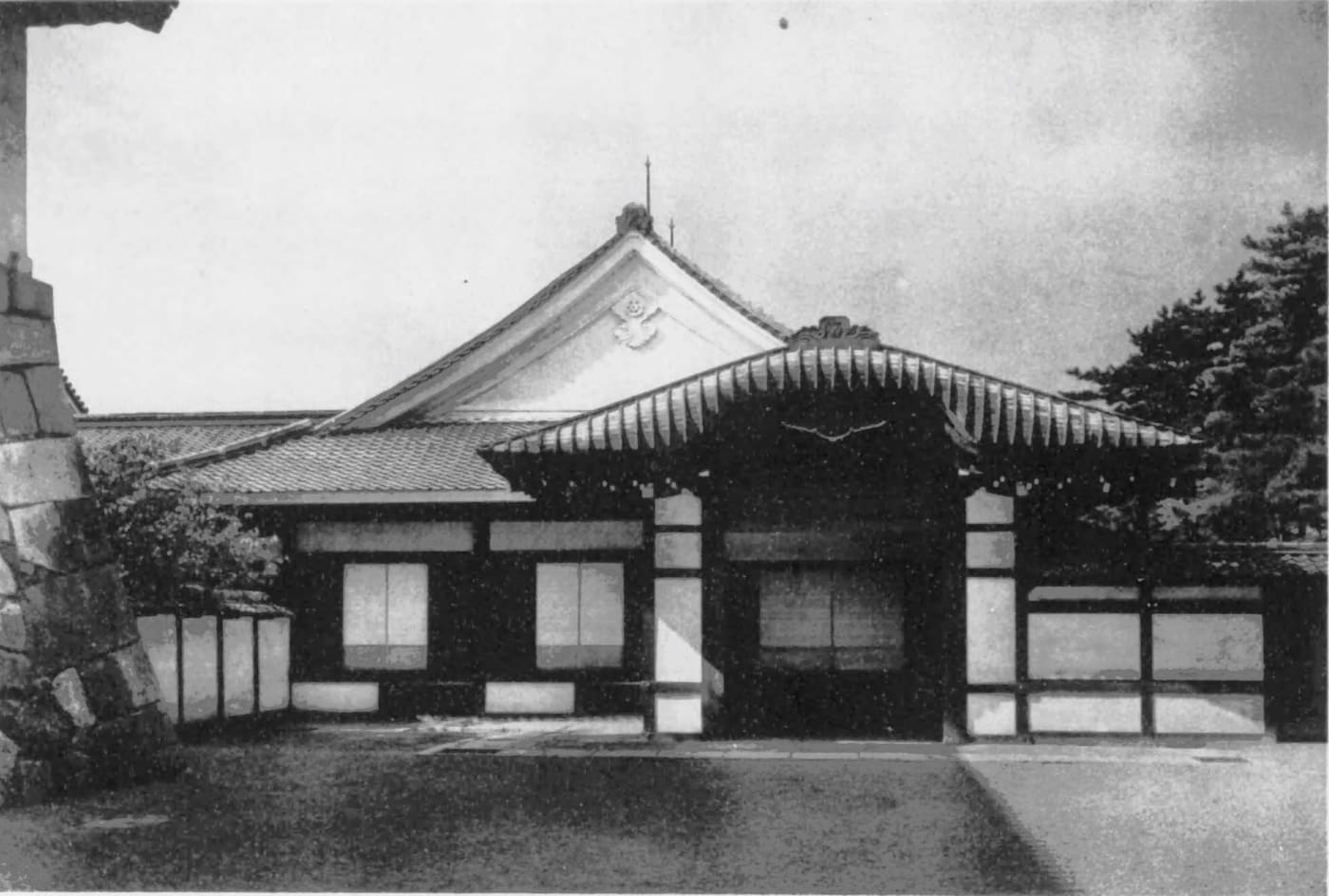
Worth stating clearly because it is so often misunderstood: the palace is not a separate ticket. The official fee page confirms no additional charge, and the same goes for the Nishinomaru Okura Josaikan treasure hall. At the current admission price, getting into a reconstruction of this quality without a supplement is genuinely good value.
Four rooms, four different pleasures
- Genkan (entrance hall) — the first space you enter, its sliding doors and walls painted with the gold-ground screen work known as the Bamboo Grove, Leopards and Tigers, which gives the room its other name, the Tiger Room. Gold leaf and big cats: the message about who receives guests here needs no translation.
- Omote Shoin — the lord's formal audience hall, complete with a raised upper-level chamber. If you want to understand how Edo-period rank was literally built into architecture, this is the clearest lesson in the building: the floor level is the hierarchy.
- Taimenjo — the more private banqueting space, its screens painted with the seasonal scenery of Kyoto and Wakayama beneath a coffered, raised-and-folded ceiling. Those locations are not decorative whim; they are the home landscapes tied to the household. Details like that carry more than any amount of praise about atmosphere.
- Jorakuden — the section the castle's own materials call the most sumptuous, added in 1634 for the shogun's visit, with screen paintings by Kano Tanyu. Short on time and want to look properly at exactly one room? Make it this one.
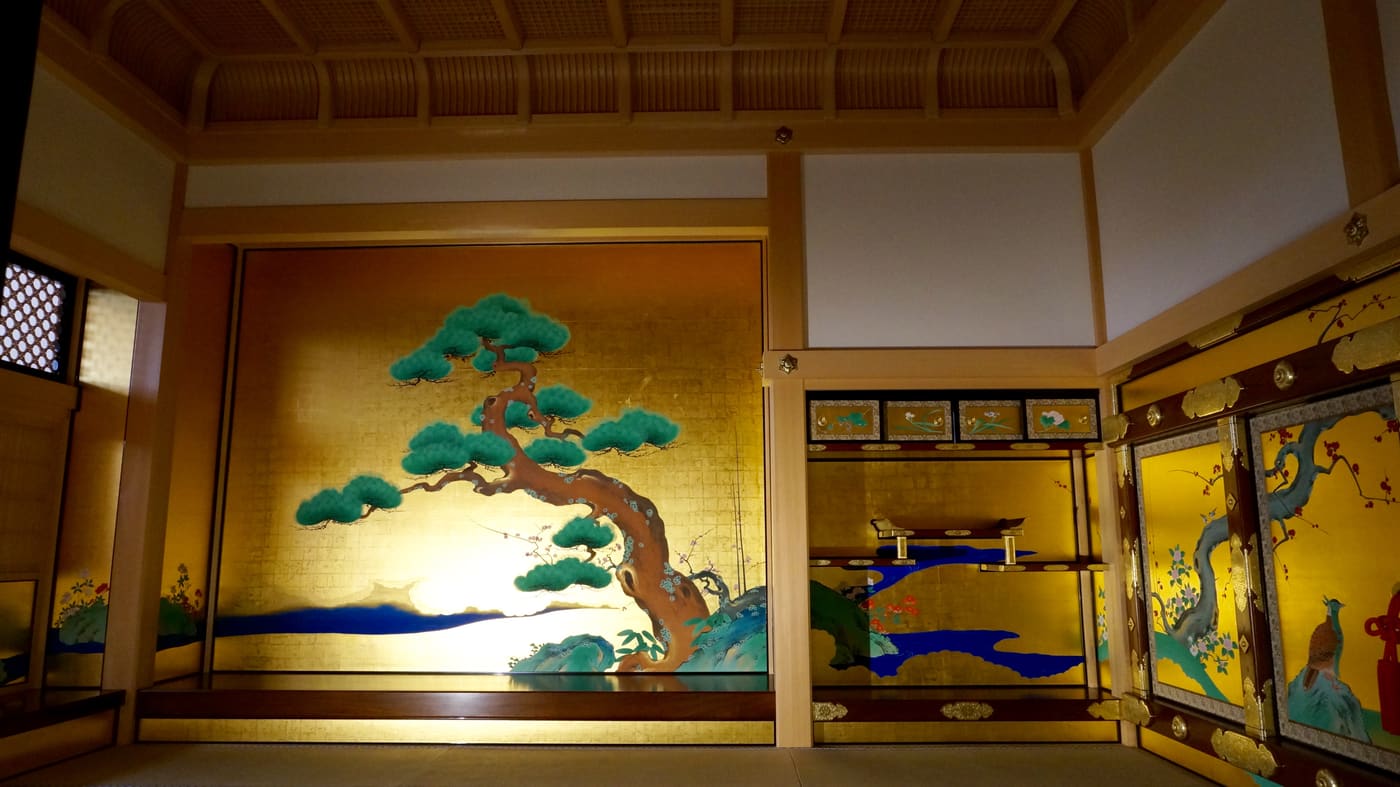
Two more spaces get skipped by most visitors: the Yudono Shoin, a steam-bath suite built for the shogun's exclusive use, and the Kuroki Shoin, traditionally held to have been relocated from Ieyasu's lodging at Kiyosu Castle.
Two entrances, two different routes
Here is a genuinely useful detail almost no English guide mentions: the palace has two entrances, and which one you use determines which rooms you see. The entrance beside the Nakanokuchi rooms is the main route, running Genkan, Omote Shoin, Taimenjo, Jorakuden. The entrance in front of the Yudono Shoin serves the Yudono Shoin and Kuroki Shoin. If you want the whole thing, do not walk out after the Jorakuden.
The time trap: 15:45 is the real deadline
The grounds close at 16:30, but the last admission to the Honmaru Palace is 16:00, and the castle's own guidance flags that it takes about 10 minutes to walk from the Main Gate or East Gate to the palace. Stack those two facts and the practical cutoff is being through the castle gate by roughly 15:45. Otherwise you will hold a valid ticket and still miss the best part. This is the single most common way to get Nagoya Castle wrong.
Rules inside: shoes off (free lockers are provided), no flash, no touching the screens or fabric of the building, no food or drink. In winter, wear thicker socks than you think you need.
The golden shachihoko: 1612, 1945, 1959, 2021
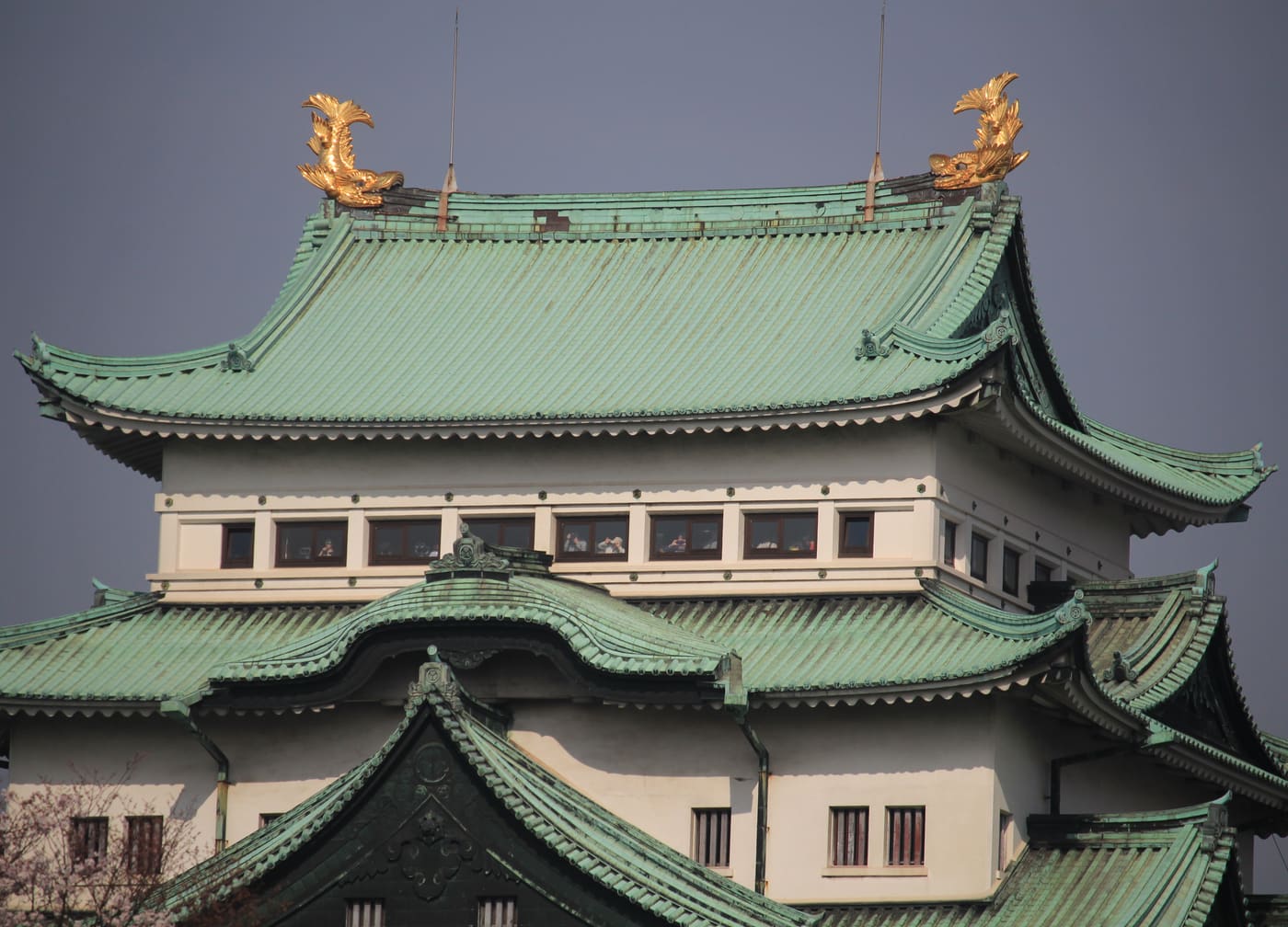
The pair of golden shachihoko on the roof are not ornament — they are the emblem of the whole city, and their story fits neatly into four dates.
1612. The first pair went up when the keep was completed. The official wording about their purpose is refreshingly unsentimental: they were there to display the power of Tokugawa Ieyasu and the authority of the Owari Tokugawa house. That is not aesthetics, it is a political broadcast. The originals sat up there for 333 years.
May 1945. An air raid during the Pacific War destroyed the keep and the shachihoko together. Three and a third centuries ended in a night.
1959. The shachihoko were recreated when the keep was rebuilt, and those are the ones on the roof now — male to the north, female to the south. The official specifications are detailed enough to be worth carrying in your head: the male stands 2.621 m and weighs 1,272 kg, the female 2.579 m and 1,215 kg; both are surfaced in 18-karat gold plate 0.15 mm thick; the gold used comes to 44.69 kg for the male and 43.39 kg for the female; and the scale counts are 112 for the male against 126 for the female. The smaller one carries more scales — look up at the roof holding that fact and the view changes.
2021. The shachihoko came down to ground level for a public exhibition in the Ninomaru Plaza, the first time in 16 years they could be seen up close at eye level, with a companion display in front of the Sakae Mitsukoshi. This is emphatically not an annual event. If the castle ever announces another one, it is worth rearranging a trip for.
One thing left deliberately vague: there is a full-size replica on the grounds that people pose with, but the official pages do not state where it stands, so no invented location here — check the site map or ask at the ticket office when you arrive.
Gojoin castle seals: an honest no
If seal collecting is what brings you here, read this section before you build the day around it, because the answer differs from the vague hedging you will find elsewhere.
Nagoya Castle does not regularly sell a gojoin. Going item by item through the official fee page, visitor guide and FAQ turns up no gojoin, no commemorative seal, nothing. The only official record of one is an event giveaway: a special gojoin distributed on Castle Day, April 6, explicitly marked not for sale and limited to the first 460 people, starting at 9:00 on April 6, 2026.
So the call is clear: take Nagoya Castle off your seal-collecting list and leave it on your castle-architecture list. Come for the seal and you may go home empty-handed and annoyed; come for the painted screens in the Honmaru Palace and you get far more than a sheet of paper. For which castles reliably sell seals and how the pre-written versus hand-brushed distinction works, see our gojoin collecting guide, which also covers reconstructed keeps like Nagoya and Kumamoto.
Summer Festival and the rest of 2026
The castle runs events year-round, but for the second half of 2026 there is exactly one set of confirmed official dates — and it happens to be a useful one.
Nagoya Castle Summer Festival 2026: August 8 (Sat) to August 16 (Sun). During the festival the grounds open at 9:00 and closing extends to 20:30, with the gates shutting at 21:00 — one of the few chances all year to walk the castle grounds after dark. The official notice specifically lists a grand bon-odori dance event.
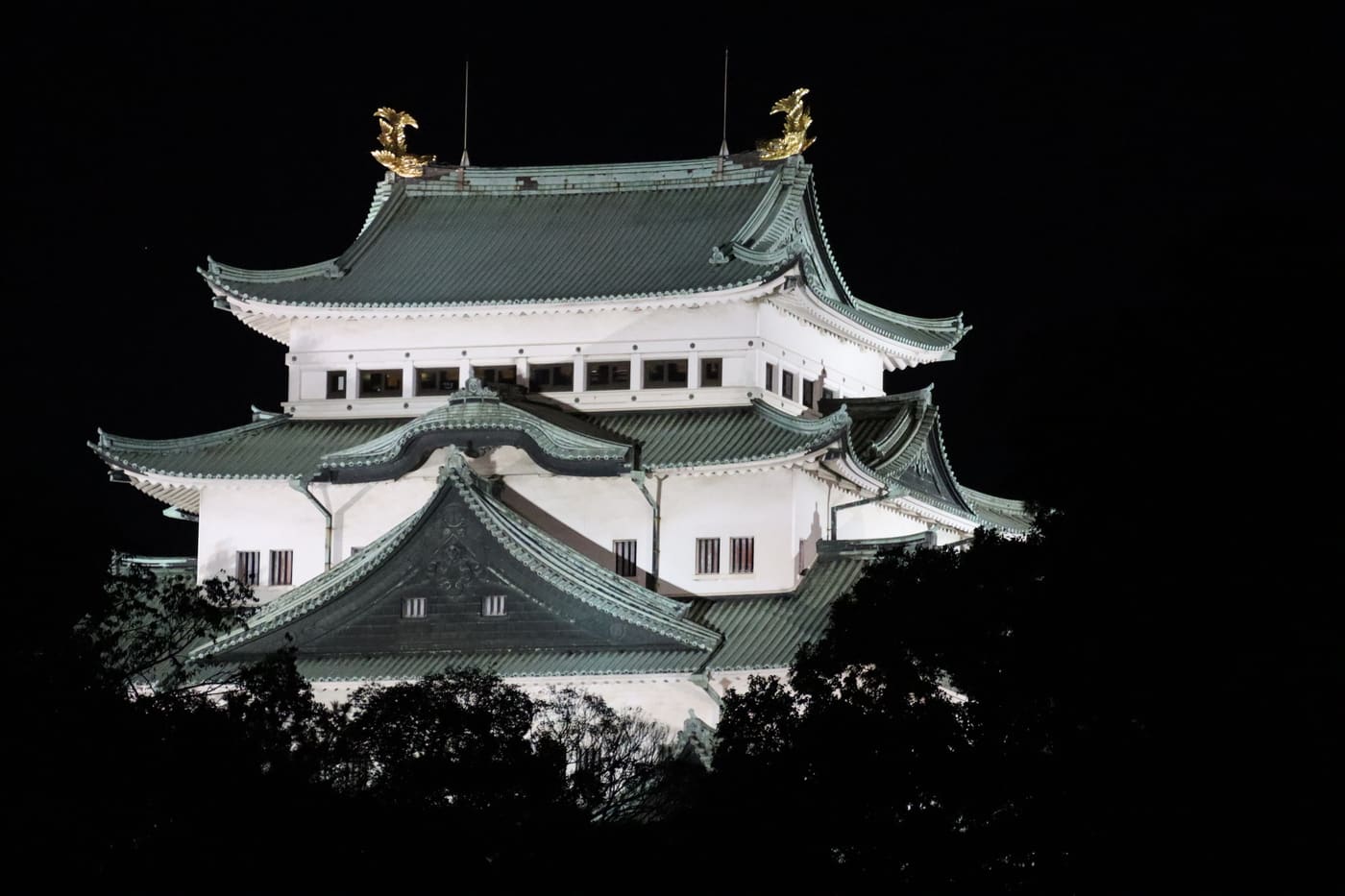
Now the trap, stated up front: extended evening opening does not extend everything. Last admission to the Honmaru Palace, the specially opened Southwest Turret and the Nishinomaru treasure hall stays at 16:00. Turn up at seven in the evening and you get illuminated ramparts, the keep's silhouette and festival atmosphere — but no palace interiors. To have both, the sequence is enter before three in the afternoon for the palace, step out to eat, then come back for the evening. Same day, yes; reverse order, no.
On two Asian Games mornings, the streets outside the main gate are shut
What changes how you reach the castle is not the sport. It is the road. The 20th Asian Games Aichi-Nagoya 2026 runs September 19 to October 4, and the race-walk course is laid out "around the Aichi Prefectural Office and Nagoya City Hall" — the block immediately outside the castle's main gate. Aichi Prefectural Police and the organisers give the restriction as Wednesday September 23 (public holiday) 4:30–11:00 planned, and Sunday September 27 4:30–13:00 planned, within Nagoya's Naka Ward, with an official note that weather may change those hours.
Add one more day: Saturday September 26, approximately 6:45–11:20 is the marathon, two laps of a loop from Mizuho Undojo-nishi to the Meijo-koen intersection. The first published block, Meijo-koen-kita to Sakura-dori-Otsu, runs approximately 6:45–10:30 — that is the castle's east side.
What to actually do: take the Meijo subway line to Nagoya Castle station, exit 7, exactly as you would any other day. The subway runs below the closures and is unaffected. Change three other things instead. On those mornings, skip the taxi, skip the car and keep the car parks out of your plan — access to both the main-gate and Ninomaru-higashi car parks sits inside the restricted zone. Some city bus routes will be diverted, which the official race-walk notice states in so many words. And the one people miss: pedestrians are restricted from crossing the course too, so if you are walking over from Sakae, plan on a footbridge or a subway underpass.
Is it worth shifting your date? Yes, and traffic is only half the reason. Lay the closures over the October 1 price doubling: the last published closure day is September 27, and admission becomes ¥1,000 from October 1. That makes September 28, 29 and 30 the only window with the roads open and the old price still standing. One caveat: as of September 3, 2026 no traffic restrictions have been published for the closing ceremony (October 4) or for the Asian Para Games of October 18–24, so check again yourself if you are coming on those dates.
The good news is that the castle is not closing. There is no Games-related closure or entry restriction anywhere on the official events page, and the Nagoya Castle Autumn Festival runs September 19 to November 23, 2026 — its opening day is the Games' opening day.
As for the rest of autumn: the 2026 chrysanthemum show has not been given its own dates, only the autumn festival's overall September 19 to November 23 span. Historically the chrysanthemum competition runs from roughly mid-October to late November, but last year's dates are not this year's dates, and repeating them is the single most common source of bad information about this castle. If you are coming in autumn, check the official events page at nagoyajo.city.nagoya.jp/event/ before you commit.
Access: the station that changed its name
Conclusion first: almost everyone should take the Meijo Line subway to Nagoya-jo Station and walk 5 minutes from Exit 7. That is the route the official access page spells out.
Then a piece of trivia with real practical value: that station was only renamed on January 4, 2023, from Shiyakusho (City Hall) to Nagoya-jo. If your guidebook, offline map or a three-year-old blog post tells you to get off at Shiyakusho, it is the same platform. On the same day the Meijo Line renamed Jingu-nishi to Atsuta-Jingu-nishi and Tenmacho to Atsuta-Jingu-Tenmacho, and the Sakura-dori Line turned Nakamura-kuyakusho into Taikodori. Nagoya renamed a batch of stations after the landmarks travelers actually search for, which is a small gift to visitors.
| Mode | Line / stop | Journey time | Best for |
|---|---|---|---|
| Subway | Meijo Line, Nagoya-jo Station, Exit 7 | About 15 min from Nagoya Station (1 transfer) | Nearly everyone — frequent and traffic-proof |
| Meguru loop bus | Stop 4 "Nagoya Castle" / stops 5 and 8 "Nagoya Castle East, City Hall" | About 20 min from Nagoya Station | Days that also cover Tokugawaen or the maglev museum; no service Mondays |
| Meitetsu | Seto Line, Higashi-ote Station | 15 min walk | Arriving along the Meitetsu network |
| City bus | Sakae 13 to "Nagoya Castle Main Gate" / Kikan 2 to "Shiyakusho" | 5 min walk from Kikan 2 | Coming across from the Sakae district |
| Car | Main Gate lot (308 spaces) / Ninomaru East (123) | About 15 min from Nagoya Station | Travelling with elderly relatives or bulky luggage; ¥250 per 30 min |
On the subway fare, a deliberate hedge: Nagoya's municipal subway uses a distance-banded fare structure, ¥210 for band 1 (within 3 km) and ¥240 for band 2 (within 7 km), and there is no official station-by-station table showing which band the Nagoya Station to Nagoya-jo trip falls into. So budget ¥210 to ¥240 and treat any source quoting one exact figure with caution. Tapping in with a transit IC card is the easiest way to avoid thinking about it at all.
The Meguru loop bus deserves a paragraph of its own, because it is heavily promoted and has a few catches. Single rides are ¥210 for adults and ¥100 for children; the day pass is ¥500 adult and ¥250 child, and it earns discounts at attractions along the route. It does not run on Mondays (Tuesday through Sunday only), which is the classic mistake — plenty of people build a Monday around the castle plus Tokugawaen and find no bus. Frequency runs roughly every 30 to 60 minutes on weekdays and every 20 to 40 minutes on weekends and holidays, with the Obon period (August 13 to 15) running to the holiday timetable. The call: if the castle is your only stop, skip the day pass — the subway is faster and cheaper. The pass only pays off if you are hitting at least three stops on the loop.
Checking routes, last trains and whether a shop is open all needs data. Sorting mobile internet before you land saves the most hassle — airport SIM counters queue badly in peak season, so activating a KKday Japan eSIM in advance means you are connected the moment you arrive.
Is it worth a special trip? Nagoya vs Osaka Castle
Time to take a position: yes, it is worth it — provided you frame it correctly. If your idea of a castle visit is climbing a keep, it is not.
Break down what the current ¥500 actually buys: a complete early-modern fortress with its stone walls, moats and Important Cultural Property turrets and gates; a reconstructed palace at the top of its class in Japan; gardens with genuine seasonal interest; and the keep's exterior with the golden shachihoko. The Honmaru Palace alone justifies the price. The useful way to think about it is that you are not buying a ticket to climb a tower — you are buying a ticket to a reconstructed palace, with a castle around it.
After October 1 the same experience costs ¥1,000, and the calculation gets more finely balanced, because at that price it sits alongside major castles that do let you climb the keep. So the split becomes: if you care about palace architecture, early-Edo screen painting or castle construction, 1,000 yen still earns its keep. If you mainly want a photograph of a castle, the moat and Main Gate area outside the paid zone give you a perfectly good shot for free, and that 1,000 yen is better spent on a proper bowl of hitsumabushi. Blunt, but true.
Choosing between this and Osaka Castle? People often treat them as interchangeable. They are not:
| Comparison | Nagoya Castle | Osaka Castle |
|---|---|---|
| Can you enter the keep? | No (closed since 2018, no reopening date published) | Yes (modern museum inside) |
| Adult admission | ¥500 / ¥1,000 from Oct 1, 2026 | ¥1,200 |
| Main draw | Honmaru Palace, included in admission | Landmark exterior, city view from the top, massive stone walls |
| Gojoin (castle seal) | None sold regularly (Castle Day giveaway only) | Limited runs, most now discontinued |
| Goshuin on site | Nothing listed officially | Hokoku Shrine issues them as standard |
| Building history | 1959 concrete rebuild, wooden reconstruction in progress | 1931 citizen-funded third-generation rebuild |
The one-line summary: want to climb a castle, go to Osaka; want to understand one, go to Nagoya. Osaka sells the landmark and the view from the top; Nagoya sells the paintings, the ceilings and the way power was designed into a floor plan. For the full picture on the Osaka side, see our Osaka Castle guide. And if what you want is a keep that was never burned down and never rebuilt in concrete, neither of these is it — Himeji still has its original wooden donjon, at ¥2,500 since March 2026 with last entry at 16:00.
How long to allow? An hour covers the grounds and photographs; 2 to 2.5 hours does the Honmaru Palace justice; add a meal at Kinshachi Yokocho and it is a comfortable half day. Atsuta Shrine and Osu are both a short subway hop away, so a full city day slots together neatly — the routing is in our Nagoya travel guide.
Kinshachi Yokocho: Yoshinao vs Muneharu
Eating and shopping cluster in Kinshachi Yokocho beside the castle, split into two zones with genuinely different personalities. Pick the wrong one and you get the wrong meal.
- Yoshinao Zone (beside the Main Gate) — the official framing is tradition at the main gate, gathering the classic and long-established Nagoya specialists. Come here for the orthodox versions.
- Muneharu Zone (beside the East Gate) — described officially as a new wind at the east gate, home to up-and-coming operators. Creative and modern takes live here.
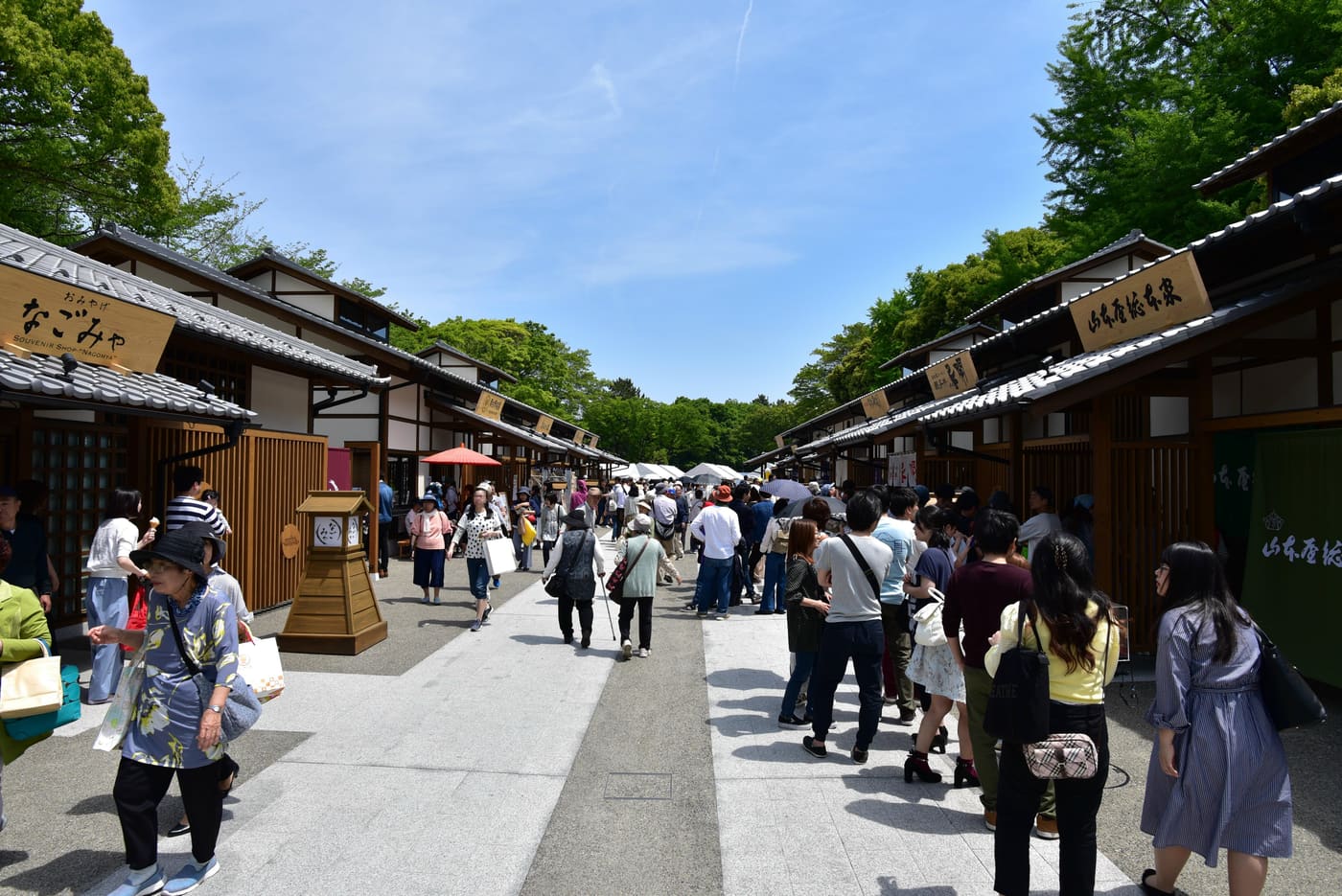
Names worth knowing on the Yoshinao side (hours as published officially; confirm on site):
- Yamamotoya Sohonke — miso-nikomi udon from a house founded in 1925. The firm-to-the-bite noodles in thick Hatcho miso broth are one of the defining Nagoya flavours; first-timers are often startled by how firm the noodles are, and that is exactly right. 10:30–17:30. Map
- Yabaton — the standard-bearer for miso katsu, officially described as crisply fried pork cutlet with a secret miso sauce. The obvious first stop for the dish. 10:30–17:30. Map
- Hitsumabushi Nagoya Binchou — grilled eel over rice done over binchotan charcoal. The three-stage ritual (plain, then with spring onion and wasabi, then as tea-soaked rice) is the point as much as the eel. 10:30–17:30. Map
- Torikai Sohonke — Nagoya Cochin chicken oyakodon and tebasaki wings. The efficient way to cover two Nagoya chicken dishes in one sitting. 10:30–17:30. Map
- Nagono Chaya — a tea house run by Futatsuiya Seishin, confectioners to the Owari domain. After the palace, sitting down with tea and wagashi from a house with that lineage makes narrative sense. 10:30–17:30. Map
- Ebisen specialist — prawn crackers from the Chita Peninsula, the obvious thing to carry home. 10:00–17:30. Map
No price figures here on purpose — the official site does not publish them, and dishes like miso-nikomi udon and hitsumabushi are full-meal pricing, not street-snack pricing anyway. Grilled eel in particular runs expensive everywhere in Japan, so calibrate expectations before you sit down.
On the handheld items — kinshachi-yaki, prawn crackers and the like — one piece of etiquette: eat it standing at the shop before you move on. The lanes here are narrow and busy, walking while eating means bumping people, and dropped sauce and crumbs are the shops' biggest headache; plenty of Japanese shopping streets now discourage it outright. Stand, finish, wipe your hands, bin the wrapper at the shop, then carry on. It is both easier and better manners.
Finally, a timing detail that ties straight back to the festival section: most Yoshinao-side shops close at 17:30, while the Muneharu side has places open into the evening — the modern ankake spaghetti specialist Ankake Taro (11:00–22:00), Fujiyama 55 (11:00–15:00 and 17:00–22:00) and Kinshachi Sushi among them. So during the Summer Festival's extended 20:30 opening, eat on the East Gate side. Yoshinao by day, Muneharu by night — remember that and you will not find shutters down.
Frequently Asked Questions
- Q1:Can you go inside Nagoya Castle?
- Yes and no, and the distinction matters. You can go inside the castle grounds — buy an admission ticket and you can walk the site, enter the Honmaru Palace, see the gardens, stone walls, the Important Cultural Property turrets and gates, and the seasonal planting. The official FAQ answers this directly, saying visitors can enter and listing everything worth seeing besides the keep. What you cannot enter is the keep tower itself — the 1959 reinforced-concrete reconstruction is closed because its seismic resistance is inadequate, and the official page still reads "currently closed." So set the expectation correctly: exterior, golden shachihoko, ramparts and palace, yes; climbing the keep, no.
- Q2:How much is Nagoya Castle admission, and is it going up in 2026?
- It is going up, and it doubles. Per the official fee-revision notice, adult admission is 500 yen through the end of September 2026 and 1,000 yen from October 1, 2026. The same revision moves group rates from 450 to 900 yen (30 or more) and 400 to 800 yen (100 or more), the annual pass from 2,000 to 4,000 yen, the combined Tokugawaen ticket from 640 to 1,040 yen, and the Nagoya-city senior rate (65 and over) from 100 to 300 yen. Junior-high age and under stay free. Tickets bought before the revision remain valid afterward, which the notice states explicitly.
- Q3:When will the Nagoya Castle keep reopen? When is the wooden reconstruction finished?
- Honestly: nobody can give you a date, and the city no longer publishes one. The official site confirms the wooden-reconstruction project is under way, and the progress page lists stone-wall survey and preservation works, advance timber milling, and a series of accessibility roundtable meetings held in February, May and July 2026 — but no groundbreaking date and no target completion year appear anywhere on the current official pages. This project has slipped repeatedly and an earlier published completion target came and went. Plan your trip on the assumption that you will not climb the keep, and treat any "finished by year X" claim you read elsewhere as unofficial.
- Q4:Does the Honmaru Palace cost extra, and when does it stop admitting visitors?
- No extra charge — the Honmaru Palace and the Nishinomaru Okura Josaikan are both included in the standard admission, which the official fee page states outright. The timing is the trap worth memorizing: the grounds are open 9:00 to 16:30, but last admission to the Honmaru Palace is 16:00, and the official guidance notes it takes about 10 minutes to walk from the Main Gate or East Gate to the palace. In practice you need to be through the gate by around 15:45. Inside, you remove your shoes (free lockers provided), and flash photography, touching the painted screens and eating or drinking are all prohibited.
- Q5:Does Nagoya Castle sell a gojoin (castle seal)?
- The honest answer is no — there is no regularly sold gojoin at Nagoya Castle. The fee page, visitor guide and FAQ on the official site carry no gojoin listing at all. The one official record is an event giveaway: a special gojoin handed out on Castle Day, April 6, explicitly marked as not for sale and limited to the first 460 people (9:00 start on April 6, 2026). If collecting seals is your reason for coming, redirect that energy — the painted screens in the Honmaru Palace are the real prize here. Our gojoin collecting guide covers which castles reliably sell them.
- Q6:How do you get from Nagoya Station to Nagoya Castle?
- Take the subway: Higashiyama Line to Sakae, transfer to the Meijo Line, and get off at Nagoya-jo Station, then it is a 5-minute walk from Exit 7. The official FAQ puts the journey at about 15 minutes with one transfer. Worth flagging: this station was renamed from Shiyakusho to Nagoya-jo on January 4, 2023, so if your map or an old blog says Shiyakusho, it is the same station. The alternative is the Meguru sightseeing loop bus, about 20 minutes from Nagoya Station with a 500 yen day pass — but it does not run on Mondays, which catches people out.
Read next
Nagoya Travel Guide 2027: Castle, Ghibli Park & Nagoya Meshi
Chubu's gateway and an underrated food city — Nagoya Castle's Honmaru Palace, the Aichi Ghibli Park, Atsuta Shrine and hitsumabushi.
Is Osaka Castle worth visiting? Tickets & honest tips
A 1931 citizen-funded reconstruction — whether the ¥1,200 tower is worth it, the gojoin trap, and which station to use.
Gojoin Castle Stamps: 12 Original Keeps Guide
What gojoin are, how they differ from goshuin, plus all 12 original castle keeps mapped.
📊 See the 2026 Price Index (JR Pass, DPA, eSIM, Airport Transport) →