Nagoya is Japan's fourth-largest city and the gateway to central Japan, yet travelers often treat it as just "a place to change trains" — and it's badly underrated. Nagoya Castle with its glittering golden shachihoko, the nearby Aichi Ghibli Park, the thousand-year-old Atsuta Shrine, the lively Osu shopping district, and a food culture all its own ("Nagoya meshi") all reward a proper stop. This guide covers the Nagoya Castle keep-rebuild status, Ghibli Park's ticketing, the city sights and Nagoya meshi, plus access and day-trip vs overnight. It's the gateway-city deep-dive for Chubu; the winter extension is in our Shirakawa-go winter illumination guide; for an illumination trip much closer to the city, Kuwana is just 20 minutes away by Kintetsu train — see the full Nabana no Sato illumination guide.
- Asian Games Sep 19 – Oct 4, 2026: central roads close on the mornings of Sep 23, 26 and 27; the subway is unaffected. Sep 28–30 is the only window with the closures over and admission prices not yet raised
- Chubu's gateway and an underrated food city: the best base for Takayama, Shirakawa-go and Tateyama-Kurobe
- Nagoya Castle keep is closed for rebuilding: the Honmaru Palace is open, admission ¥500 (¥1,000 from Oct 1, 2026) — don't expect to climb the keep
- Ghibli Park is date-specific reservation: Premium pass ¥7,300 weekday; sales open 14:00 Japan time on the 10th, two months before your entry month, first-come-first-served
- Nagoya meshi is its own genre: hitsumabushi, miso katsu, tebasaki
- Transport hub: ~1h40 from Tokyo by shinkansen, ~50 min from Osaka
📖 Table of contents
What kind of city Nagoya is
Nagoya sits midway between Tokyo and Osaka as the central hub of the Tokaido Shinkansen, and it's an industrial powerhouse, home to Toyota. For travelers, its most underrated trait is that despite having a famous castle, a great shrine and a food culture unmatched anywhere in Japan, it gets skipped as a transfer station. In fact the city core is compact and well-linked by subway, so you can see the highlights in half a day to a day — excellent value.
Use Nagoya in two roles for the best fit: as a city worth visiting in itself — the castle, Atsuta Shrine, Osu, Nagoya meshi — and as a base for a Chubu trip — north to Takayama and Shirakawa-go, east into the Kiso valley and Matsumoto, and a common launch point for Tateyama-Kurobe. Below, the city first, then how to extend.
Asian Games (Sep 19 – Oct 4): which mornings not to drive
The subway runs normally. What gets cut is the street. The 20th Asian Games Aichi-Nagoya 2026 runs Saturday September 19 to Sunday October 4, 2026 — 43 sports across 54 venues, and the venues are not all in Aichi: there are sessions in Tokyo, Shizuoka, Gifu and Osaka. The competition itself is not your problem as an independent traveler. One thing is: on a few mornings the city-centre roads shut, and you cannot even walk across them.
Everything in the table below comes from the traffic-restriction notices published by Aichi Prefectural Police and the organising committee. Two of the three windows are directly outside Nagoya Castle's main gate.
| Date | Restricted hours | Where | What it means for you |
|---|---|---|---|
| Sat Sep 19 Sun Sep 20 | Hours not published | Opening ceremony and related events, parts of Nagoya City | The police notice says only "temporary traffic restrictions" and gives a map, no times. Check again before you go |
| Wed Sep 23 (holiday) | 4:30–11:00 (planned) | Around the Aichi Prefectural Office and Nagoya City Hall — the streets outside Nagoya Castle's main gate | Don't take a taxi or a rental car to the castle that morning. Take the subway |
| Sat Sep 26 | approx. 6:45–11:20 | Two laps of a loop from Mizuho Undojo-nishi to Meijo-koen, taking in Otsu-dori, Sakura-dori and the Hisaya-odori axis | The north–south avenues between Sakae, Hisaya-odori and Nagoya Castle are severed all morning. Nagoya Expressway's Harugaoka exit closes 6:40–11:05 |
| Sun Sep 27 | 4:30–13:00 (planned) | Same course as Sep 23, running four hours later | Those four extra hours matter. Keep the whole morning free of city-centre driving |
The Sep 26 marathon is published in five blocks, reopening progressively later as you go south: Meijo-koen-kita to Sakura-dori-Otsu approx. 6:45–10:30, Sakura-dori-Otsu to Uchiyama-cho 6:45–10:50, Uchiyama-cho to Gokiso-dori 6:45–11:00, Gokiso-dori to Mizuho Undojo-nishi 6:45–11:15, Mizuho Undojo-nishi to Mizuho Kyogijo-mae 6:45–11:20. If the castle is your morning plan, only the first block concerns you: that area loosens up after roughly 10:30.
Here is the part most people don't expect: it is not only cars. The official notice states that pedestrians, cyclists and electric scooters are all restricted from crossing the course, and that pedestrians should use footbridges or subway entrances instead (Japanese original in the appendix at the end of this section). So on those mornings, move underground — the Meijo, Sakura-dori and Tsurumai lines all run below the closures.
Buses are a different story. The race-walk notice states plainly that some city bus routes will be diverted. As for extra subway services, I could find no announcement of any on the Nagoya City Transportation Bureau site, so I am not going to tell you there will be more trains. What the bureau has confirmed is a different thing: a commemorative all-line bus and subway one-day ticket at ¥870, the same price as the ordinary one-day ticket, on sale August 10 to December 31, 2026 while stocks last, at all 87 subway stations and the Nagoya, Sakae and Kanayama service centres — not from ticket machines. If you were buying a one-day ticket anyway, take this one; it costs no more.
One gap is worth stating flatly: as of September 3, 2026, no traffic restrictions have been published for the closing ceremony (Oct 4) or for the opening and closing ceremonies of the 5th Asian Para Games, October 18–24. The Nagoya City traffic page still says those will be posted "from September 1 onward," and they are not up yet. If you need to be in the city centre on October 4, check again yourself before the day.
Will the sights close? Almost entirely, no
Checked one official page at a time, the answer is cleaner than you'd guess:
- Nagoya Castle: no closure or entry restriction related to the Games appears on the official events page, and the Nagoya Castle Autumn Festival runs September 19 to November 23, 2026 — its first day is the Games' opening day.
- Higashiyama Zoo and Botanical Gardens: the Higashiyama Park Tennis Center is a competition venue, but that is a separate facility in the same park. The zoo itself has published no closure and no change of opening hours.
- Atsuta Shrine: nothing about the Games on the official site.
- Nagoya Port: the aquarium is open as usual, but the Antarctic research ship Fuji is currently closed (aquarium's official Garden Pier status page, checked September 3, 2026). Aichi Prefecture has also announced parking changes around Garden Pier because the athletes' accommodation base is being built there, but I could not retrieve an official version giving the exact period and detail — if you drive, follow the on-site signage.
- Aichi International Arena (IG Arena): two minutes from Meijo-koen station exit 2 on the Meijo subway line, capacity around 17,000, hosting basketball and judo during the Games. It is one stop from Nagoya Castle station, so factor that into the day you pick for the castle.
Booking and picking dates: the good window is three days long
Put two facts side by side. The last published city-centre road closure is September 27. Admission at Nagoya Castle and Higashiyama Zoo rises on October 1, from ¥500 to ¥1,000 and ¥800 respectively. That leaves September 28, 29 and 30 as the only window with the closures finished and the old prices still in force. If your dates can move, move them there.
If your trip straddles October 1, Higashiyama states that tickets bought by September 30 stay valid afterwards with no top-up to pay. That only helps if you are already in Nagoya in late September, though — it is not something you can stockpile online.
I am not going to write about room rates. I could find no auditable official or published figures for what Nagoya hotels actually cost or how full they are during those two weeks, and "prices will definitely spike" is not a claim I should be making for you. What I can describe is the shape of the demand: the Asian Games run Sep 19 – Oct 4 and the Asian Para Games October 18–24, which leaves the 13 days from October 5 to 17 with no competition at all. If your dates are flexible, put your Nagoya nights in there.
Official Japanese text (traffic restrictions)
- Aichi Prefectural Police (opening ceremony): 「令和8年9月19日(土曜日)、20日(日曜日)の2日間、アジア競技大会開会式及び関連行事の開催に伴い一時的な交通規制を実施します。」
- Marathon notice: 「歩行者、自転車、電動キックボード等についてもコース横断が制限されます。歩行者は歩道橋・地下鉄出入口等をご利用ください。」/「瑞穂運動場西交差点から名城公園交差点までの周回コースを2周します。」
- Race-walk notice: 「市バスの一部路線についてう回運行が実施されます。」/「※気象状況により、規制時間を変更する場合がございます。」
- Organising committee congestion leaflet: 「大会期間中は、選手やチームスタッフ、審判、報道陣など、多くの関係者が貸切バスを利用して関係施設間を移動します。」
Nagoya Castle: the rebuild status
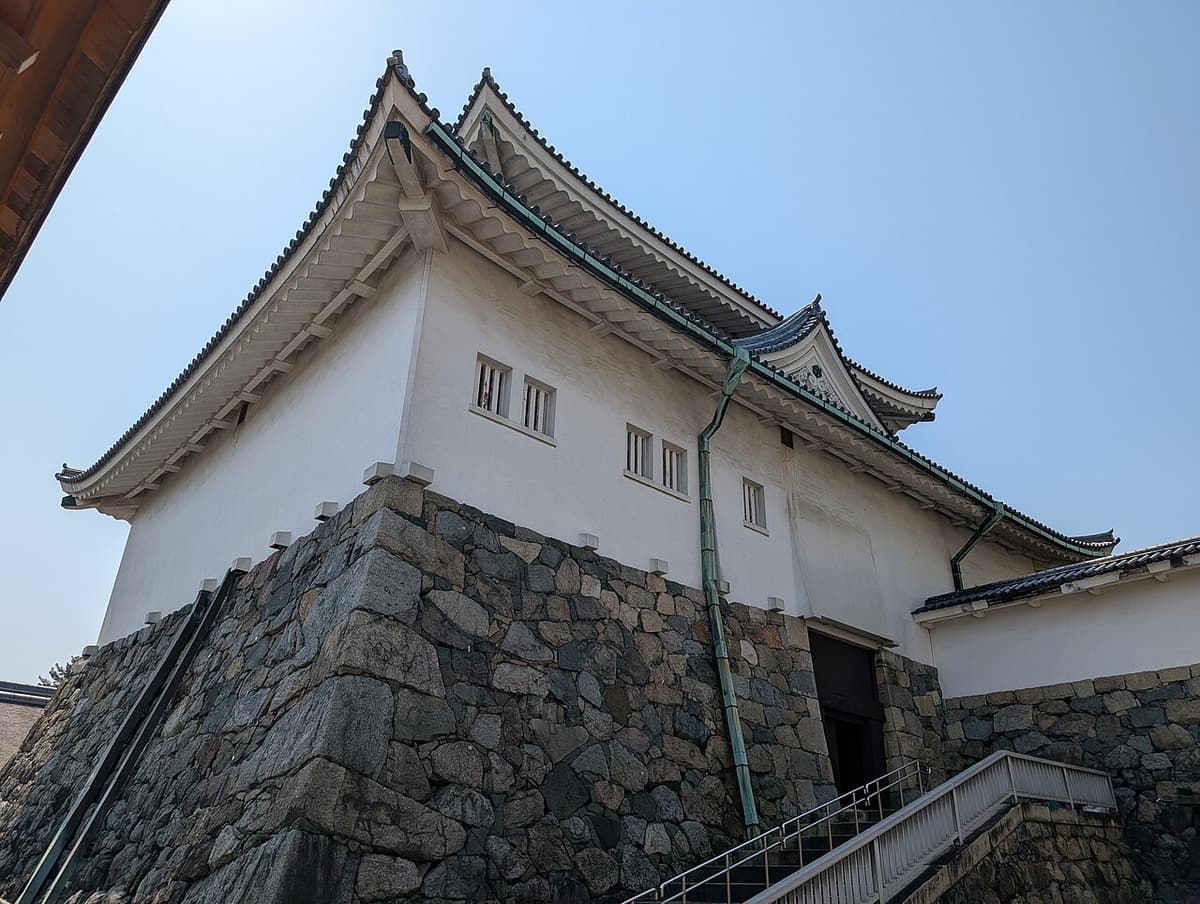
Nagoya Castle ranks with Osaka and Kumamoto among Japan's three great castles, and the pair of glittering golden shachihoko on its roof are the city's emblem. The key status first: the current keep, rebuilt in reinforced concrete in 1959, is closed for failing seismic standards and cannot be entered; the city is pursuing a wooden reconstruction, but the current official pages publish no groundbreaking date and no target completion year — the project has slipped repeatedly, and the years quoted around the internet are not official. In other words, you can't climb the keep right now, don't expect that to change soon, but that doesn't make the castle off-limits. For the closure status in full, the October ticket doubling and how to route the Honmaru Palace, see our Nagoya Castle keep status and ticket guide.
The highlight inside is the Honmaru Palace — the lord's residence faithfully reconstructed from Edo-era plans in 2018, with gold-leaf screen paintings, the scent of hinoki cypress and exquisite joinery beautifully restored, and it's free with admission. With the stone walls, gardens, corner turrets and the golden-shachihoko keep seen from below, it makes a full half day. Adult admission is ¥500, but note it rises to ¥1,000 on October 1, 2026 (junior-high age and under stay free); grounds open 9:00-16:30 with Honmaru Palace last entry at 16:00. Come for the palace and grounds, with the right expectations, and you won't be disappointed. A note if you collect gojoin: Nagoya Castle's own website lists no regularly sold gojoin at all — the only official record is a not-for-sale giveaway on Castle Day, April 6, so don't assume you'll find one to buy. For a full collecting primer and how the other keeps handle theirs, see our complete gojoin collecting guide.
Ghibli Park ticketing
Just outside Nagoya, the Aichi Ghibli Park (inside Nagakute's Expo 2005 Commemorative Park) has been Chubu's biggest new draw of recent years. It isn't a roller-coaster theme park but a walking-style park weaving the Ghibli world into forest and buildings, in five areas (Hill of Youth, Ghibli's Grand Warehouse, Dondoko Forest, Valley of Witches, Mononoke Village).
Three things to grasp about tickets. One, it's entirely date-specific reservation and nothing is sold inside the park — the only exception is same-day tickets for the three special buildings in Valley of Witches, which now need a numbered queue ticket collected at opening — and purchases cannot be changed or refunded. Two, sales open at 14:00 Japan time on the 10th of the month two months before your entry month, first-come-first-served rather than a lottery. Three, different ticket types reach different areas: seven of them since July 2026 entry. Premium (all five areas plus every interior) is ¥7,300 weekday / ¥7,800 weekend for adults; Standard is ¥3,300 / ¥3,800; the five newer area tickets start at ¥1,000 for Hill of Youth or Dondoko Forest and ¥2,000 for the Grand Warehouse, all at the same price every day. From the city it's 41 minutes and ¥670 by subway plus the Linimo maglev.
Which ticket? Decide why you are going, because you cannot change it on the day. What the Standard pass leaves out is not building interiors — it is two whole areas, including Dondoko Forest, where Satsuki and Mei's House from My Neighbour Totoro stands. Come for Totoro on a Standard pass and you have wasted the trip; buy the ¥1,000 Dondoko Forest ticket or go Premium. For Howl's Castle, note that the identically priced ¥3,300 Valley of Witches & Mononoke Village ticket includes all three special buildings outright, while Standard means a dawn queue plus ¥1,800. Either way, treat Ghibli Park as a full day: the areas sit across a large former-Expo site, and it is 1.3 km from the station to Dondoko Forest alone. Full ticket comparison, on-sale rules and overseas buying options in our Ghibli Park guide.
The city: Atsuta Shrine, Osu, the TV Tower
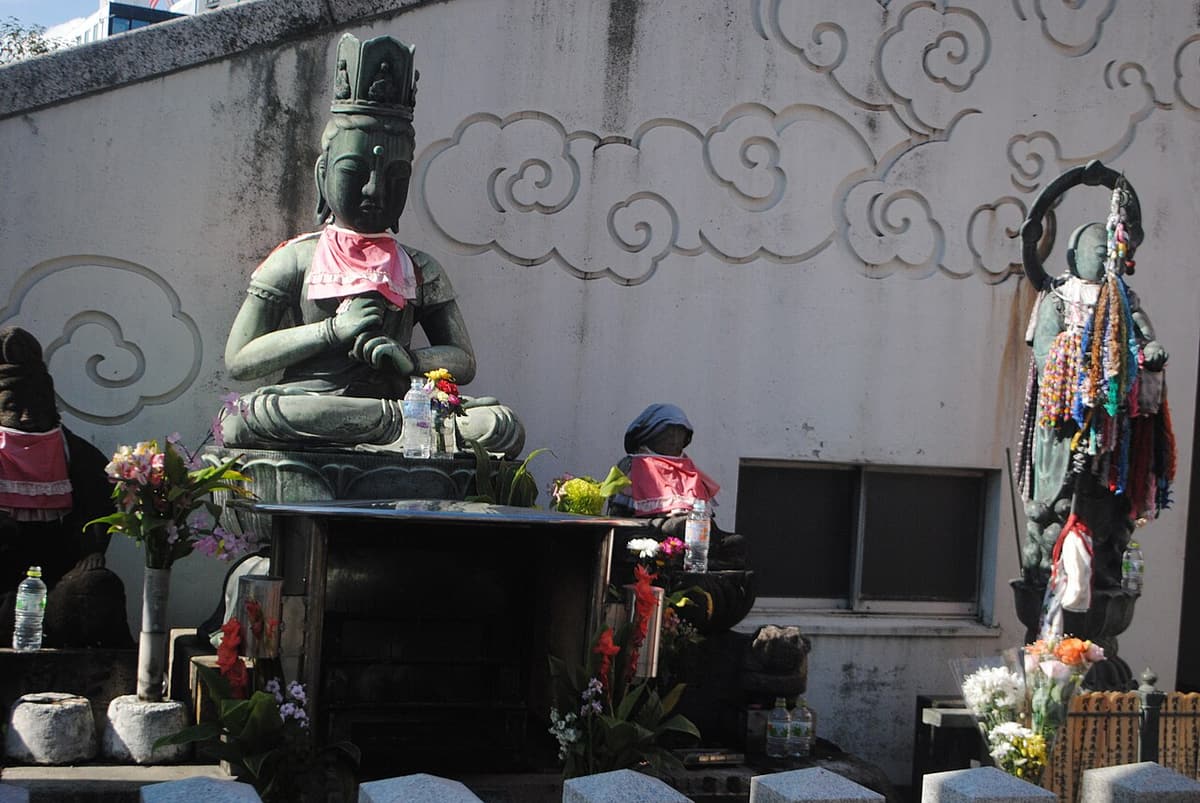
Beyond the castle, the city has a few more stops worth your time. Atsuta Shrine is the great shrine of the Tokai region, second only to Ise, said to enshrine one of the three sacred regalia, the Kusanagi sword; its forested approach is serene, a fine place to feel old Japan, and it's free. Osu is Nagoya's most energetic shopping quarter, centered on Osu Kannon, where electronics, secondhand clothes, food and subculture shops mingle — fun to browse and a good base for eating Nagoya meshi.
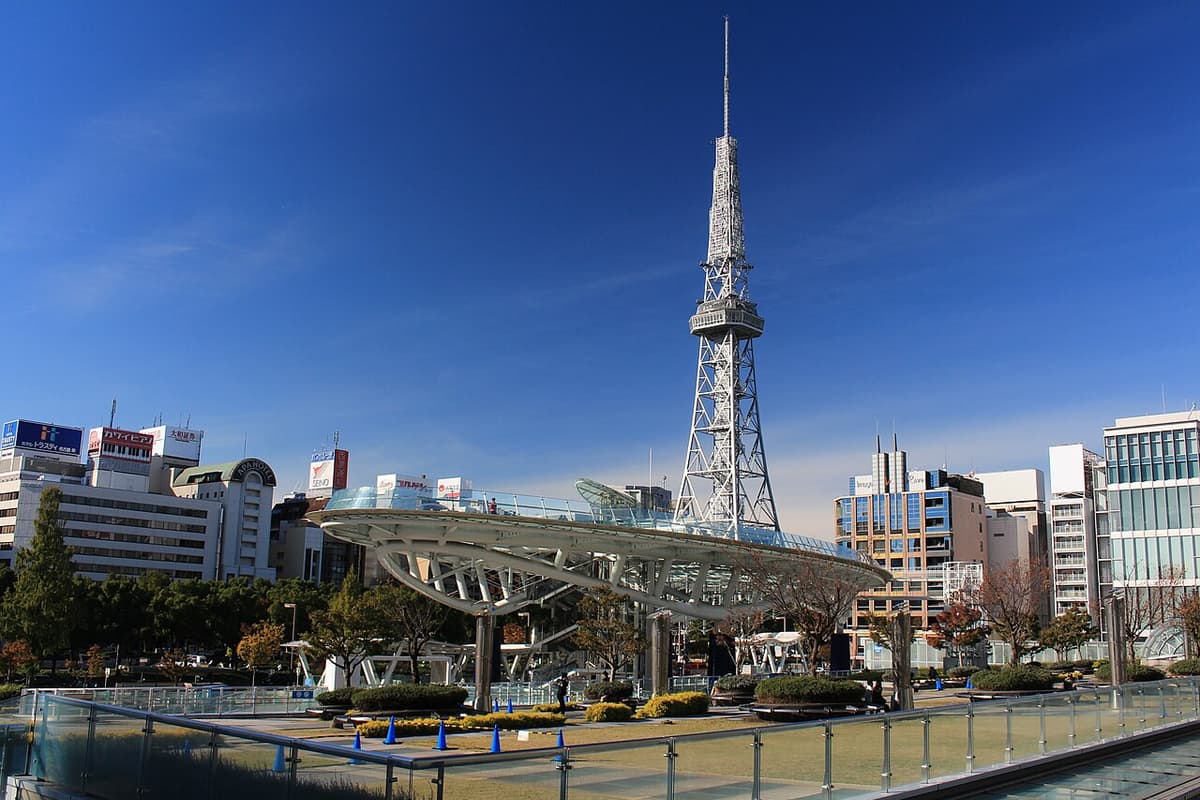
In the center, the Nagoya TV Tower (Chubu Electric Power MIRAI TOWER) is Japan's oldest consolidated radio tower, and together with the floating glass "Spaceship-Aqua" of Oasis 21 it forms the landmark of Hisaya-odori Park, beautifully lit after dark, with a city view from the deck. If you like industry and tech, the Toyota Commemorative Museum of Industry and Technology and the SCMaglev and Railway Park are worth a special trip — the other face of Nagoya as an industrial capital.
Nagoya meshi
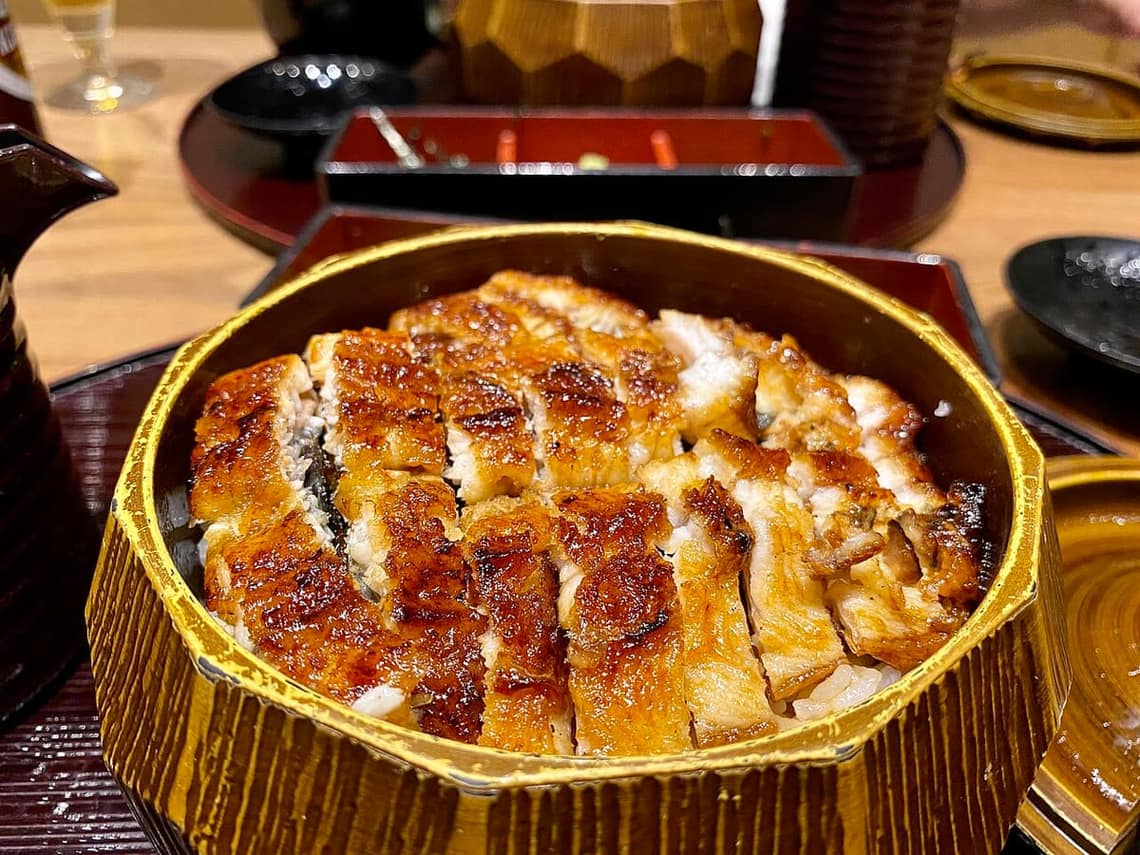
"Nagoya meshi" is its own genre — bold-flavored and highly recognizable, and the part of the trip not to skimp on:
- Hitsumabushi: Nagoya's top specialty. Crisp-grilled eel chopped over rice, eaten in three stages — plain first, then with scallion, wasabi and nori, and finally as ochazuke with broth poured over; one bowl, three pleasures.
- Miso katsu: a pork cutlet under a rich Hatcho-miso sauce, sweet-savory and heavy — the icon of Nagoya's bold palate.
- Tebasaki: crispy chicken wings brushed with a sweet-salty glaze and pepper; famous chains like "Sekai no Yama-chan" and "Furaibo" pair them perfectly with beer.
Others — miso-nikomi udon (firm noodles in a miso broth), Taiwan ramen (a spicy ramen invented in Nagoya) and ogura toast (red-bean paste and butter for breakfast) — are all Nagoya originals, so foodies can run a whole "Nagoya meshi crawl."
One more thing worth planning a morning around: Nagoya's famous "morning" coffee-shop culture. At traditional kissaten (coffee shops) across the city and Aichi, ordering a morning coffee gets you toast, a boiled egg and often more thrown in free with the drink — a genuinely local ritual that says a lot about Nagoya's value-loving character. Pair it with ogura toast at an old-school kissaten and you've had a very Nagoya start to the day before the castle even opens.
Access and day-trip vs overnight
Access: Nagoya is the central hub of the Tokaido Shinkansen — about 1 hour 40 minutes from Tokyo, 50 minutes from Shin-Osaka, 35 minutes from Kyoto; from Chubu Centrair (NGO) airport it's about 30-40 minutes by Meitetsu. Around town the subway is easy. For a multi-leg Chubu or Tokaido rail loop, compare whether a nationwide JR Pass pays off; set up a KKday Japan eSIM first to check Ghibli Park and Meitetsu routes on the fly.
Day-trip vs overnight: the city core (Nagoya Castle + Atsuta Shrine + Osu + Nagoya meshi) fits a tight day, even a same-day round trip from Tokyo or Osaka; but adding Ghibli Park (a full day) or using Nagoya as a base for Takayama and Shirakawa-go means at least two days. The smoothest flow: day one the city and Nagoya meshi, day two a full day at Ghibli Park, or the Takayama line out to Hida-Takayama and Shirakawa-go. Before you go, see our Japan packing & weather guide — the Chubu mountains run much colder than the city.
A few sample plans depending on your style: for a one-day city visit, do Nagoya Castle and the Honmaru Palace in the morning, hitsumabushi for lunch, Atsuta Shrine and Osu in the afternoon, and the TV Tower and Oasis 21 lit up at dusk — or, if the Dragons are at home that night, swap the evening for Vantelin Dome Nagoya on the Meijo subway line at Nagoya Dome-mae Yada; we cover how to buy NPB tickets and which sections you must not wander into separately. For a two-day trip with Ghibli Park, give day one to the city as above and the whole of day two to the park (booked weeks ahead). To use Nagoya as a Chubu base, spend day one in the city, then take the Hida limited express north for Hida-Takayama (about 2.5 hours) and on to Shirakawa-go, or the Chuo line east into the Kiso valley (the Nakasendo post-town walk between Magome and Tsumago — see our Kiso valley Magome-Tsumago walk) and Matsumoto. In autumn, split the plan in two: the city gardens — Shirotori, Tokugawaen and the Higashiyama botanical section — peak one to two weeks after Korankei (the JMA normal for Nagoya maples is November 28), so December arrivals should read which Nagoya garden is worth it and when, while anyone here in mid-to-late November with a full day to spare should pair the city with our Korankei autumn foliage guide. Whichever you pick, book the Ghibli tickets and any peak-season ryokan first and build the rest of the days around those fixed points.
Frequently Asked Questions
- Q1:Can I go inside the Nagoya Castle keep?
- Not at present — the 1959 reinforced-concrete keep is closed for failing earthquake standards and cannot be entered; the city is pursuing a wooden reconstruction, but no groundbreaking date and no target completion year appear on the current official pages, so any completion year you read elsewhere is unofficial. That does not mean the castle is off-limits: the reconstructed Honmaru Palace (fully opened 2018) is open and its gilded screen paintings are worth seeing; the stone walls, gardens and the golden shachihoko on the keep's roof are all viewable too. Adult admission is 500 yen through the end of September 2026 and 1,000 yen from October 1, 2026, free for junior-high age and under, 9:00-16:30 (Honmaru Palace last entry 16:00). Plan it as "see the palace and grounds, not the keep tower" — our dedicated Nagoya Castle guide has the full detail.
- Q2:How do I buy tickets for Ghibli Park?
- Ghibli Park is in Aichi (Nagakute) just outside Nagoya, and is entirely date-specific reservation — no tickets are sold anywhere inside the park (the one exception being same-day tickets for the three special buildings in Valley of Witches), with no date changes and no refunds after purchase. Since July 2026 entry there are seven ticket types. The most complete is the O-Sanpo Day Pass Premium (all five areas plus every building interior), ¥7,300 weekday / ¥7,800 weekend for adults; the Standard is ¥3,300 / ¥3,800 but covers only three areas and excludes Dondoko Forest, where Satsuki and Mei's House is. Five single- and two-area tickets were added in July 2026 — if you only want the Grand Warehouse, that area ticket is ¥2,000. Sales open at 14:00 Japan time on the 10th of the month two months before entry, first-come-first-served rather than a lottery. Full breakdown in our Ghibli Park ticket guide.
- Q3:How many days does Nagoya need?
- The city core (Nagoya Castle, Atsuta Shrine, Osu, the TV Tower area) fits a tight single day; adding Ghibli Park (a full day) or Legoland or the SCMaglev museum needs two. More often, Nagoya is used as a base for a Chubu trip — in and out here, then extending to Takayama, Shirakawa-go, the Kiso valley or Tateyama-Kurobe. One day for the city, two with Ghibli or the surroundings, is a sensible rule.
- Q4:What should I eat in Nagoya?
- Nagoya meshi is its own genre — bold-flavored and distinctive: hitsumabushi — grilled eel chopped over rice, eaten three ways (plain / with scallion and wasabi / as ochazuke with broth), Nagoya's top specialty; miso katsu — pork cutlet under a rich Hatcho-miso sauce; and tebasaki — crispy sweet-savory chicken wings, perfect with beer. There's also miso-nikomi udon, Taiwan ramen (a Nagoya invention) and ogura toast — all Nagoya originals.
- Q5:How do I get to Nagoya from Tokyo or Osaka?
- Nagoya is the central hub of the Tokaido Shinkansen, so access is excellent: about 1 hour 40 minutes from Tokyo, 50 minutes from Shin-Osaka, 35 minutes from Kyoto. From Chubu Centrair (NGO) airport it's about 30-40 minutes to the city by Meitetsu. Around town the subway is easy. For a multi-leg rail loop, compare whether a JR Pass pays off.
- Q6:Is Nagoya a good base for a Chubu trip?
- Very much. Nagoya is Chubu's gateway and transport core — north via the Takayama line to Hida-Takayama and Shirakawa-go, east via the Chuo line to the Kiso valley and Matsumoto, and a common start for Tateyama-Kurobe. Make Nagoya your in-and-out point, spend 1-2 days in the city, then extend to the mountains and old towns — the routing flows nicely. Deep dives for those extensions are being added to the Chubu guides.