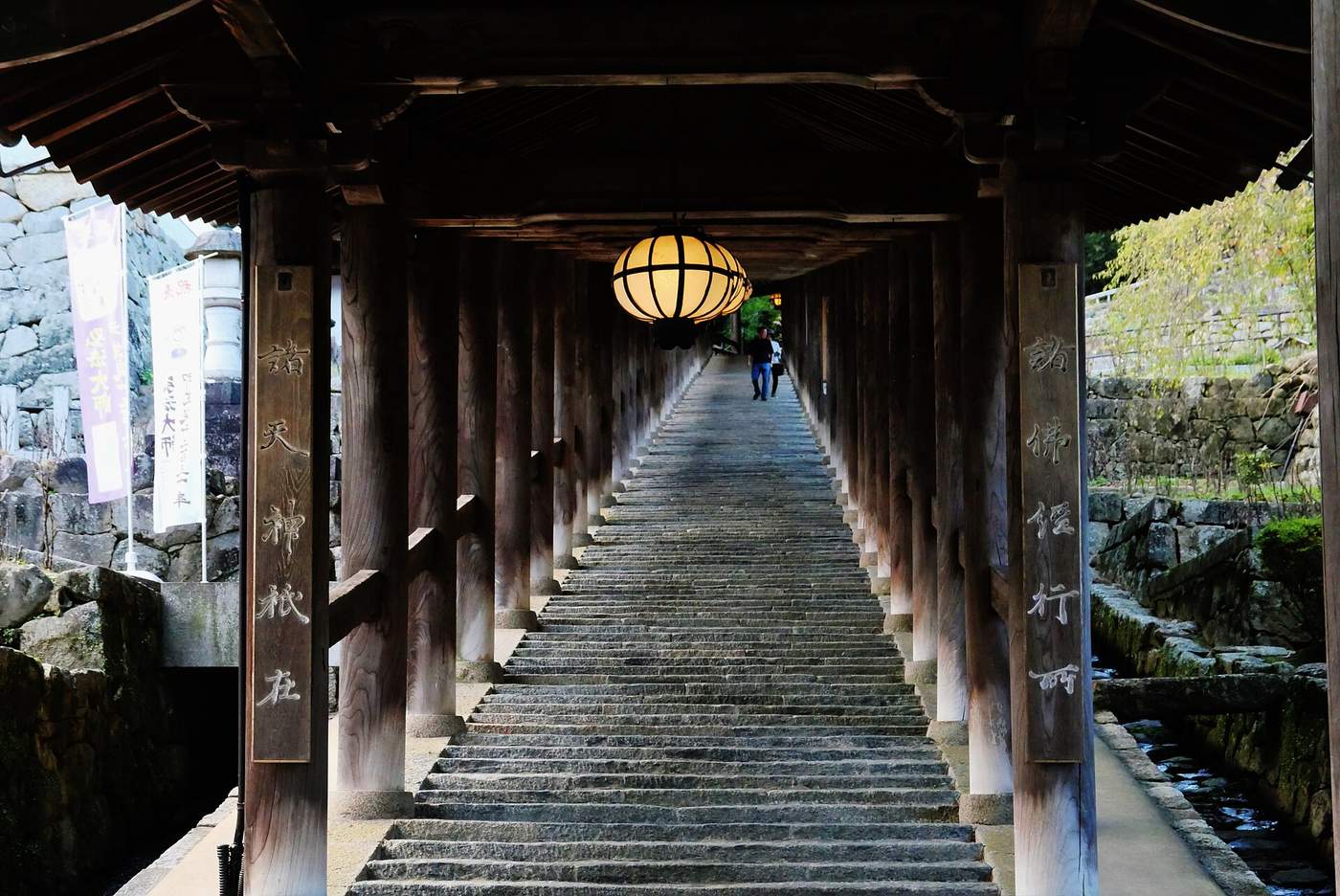
First, the thing most likely to trip you up: Japan has two famous Hase-dera temples. The one in Kamakura is a Kanto hydrangea spot; the one in this guide is in Hase, Sakurai City, Nara — the eighth temple of the Saigoku 33 pilgrimage, the peony-famous "Temple of Flowers." It holds about 150 varieties and 7,000 peony plants, a lantern-hung 399-step covered stairway (the noborirō), and at its top a National Treasure main hall built as a suspended "stage," enshrining an Eleven-Headed Kannon over 10 meters tall — one of the largest surviving wooden Buddhist images in Japan. And 2026 marks its 1300th anniversary. Access-wise it is far easier than nearby Tanzan Shrine: a Kintetsu Osaka Line express runs straight to Hasedera Station, about 50 minutes from Osaka Uehonmachi, and admission is just ¥500 (yes — a famous peony temple for that price). This guide uses verified sources to cover the same-name mix-up, the 1300-year history, the 399 steps and National Treasure hall, the year-round flower calendar, goshuin, the express-direct access, and what to eat at the gate — and answers plainly whether Hase-dera Nara is worth a special trip.
📍 To pair Hase-dera with nearby Tanzan Shrine in the same Sakurai City, or compare its peak window and access in autumn against Nara Park, see the Osaka and Nara autumn guide. And the identically named Kamakura Hase-dera (the hydrangea temple) is a completely different place — don't confuse them; that one is covered in the Kamakura day-trip guide.
- Two same-name temples: this is Hase-dera in Nara (peonies, Saigoku 8) — not the Kamakura hydrangea one
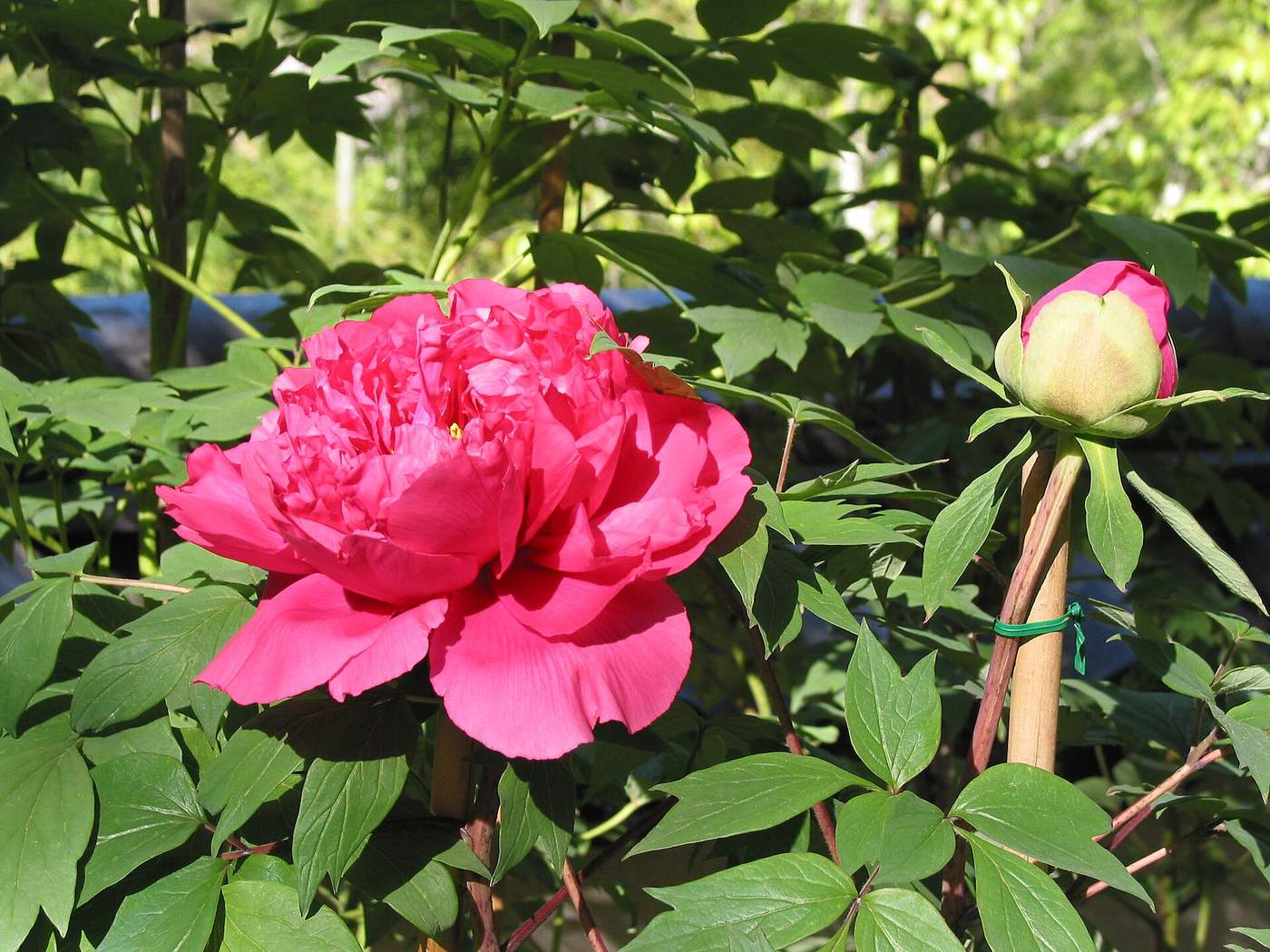
- Temple of Flowers, peony signature: ~150 varieties, 7,000 peony plants, peaking late April to early May; blooms year-round
- 399-step stairway + National Treasure hall: the main hall is a National Treasure; the Kannon image is an Important Cultural Property (do not swap them)
- Adult admission ¥500, child ¥250; special interior viewing adds ¥1,000 to touch the Kannon's feet
- Easy access: Kintetsu express direct to Hasedera Station — ~50 min ¥910 from Osaka Uehonmachi, 6 min ¥240 from Sakurai — far easier than Tanzan Shrine
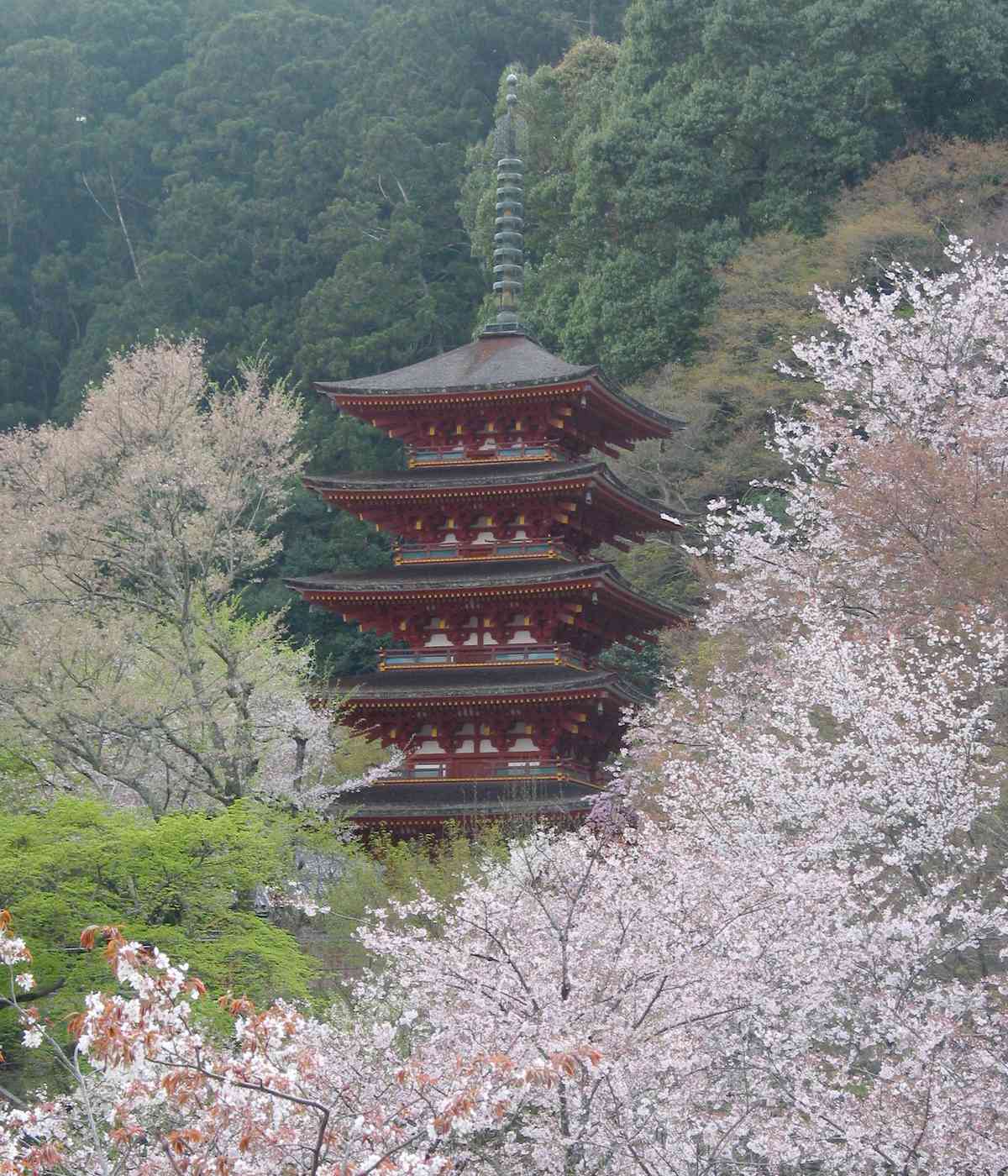
- 2026 = 1300th anniversary; the five-story pagoda is under restoration (2025-04 to 2028-03), possibly sheeted
📖 Table of Contents (click to expand)
- Same name, two temples: which Hase-dera you want
- History: the "Temple of Flowers" at its 1300th year
- The 399-step stairway and the National Treasure hall
- Admission, hours, and the special interior viewing
- Year-round flower calendar
- Goshuin: Saigoku 33 temple no. 8
- Access: the "easy-mode Sakurai temple"
- At the gate: the official sweets pilgrimage
- Is it worth a special trip? How to pair it
- FAQ
Same name, two temples: which Hase-dera you want
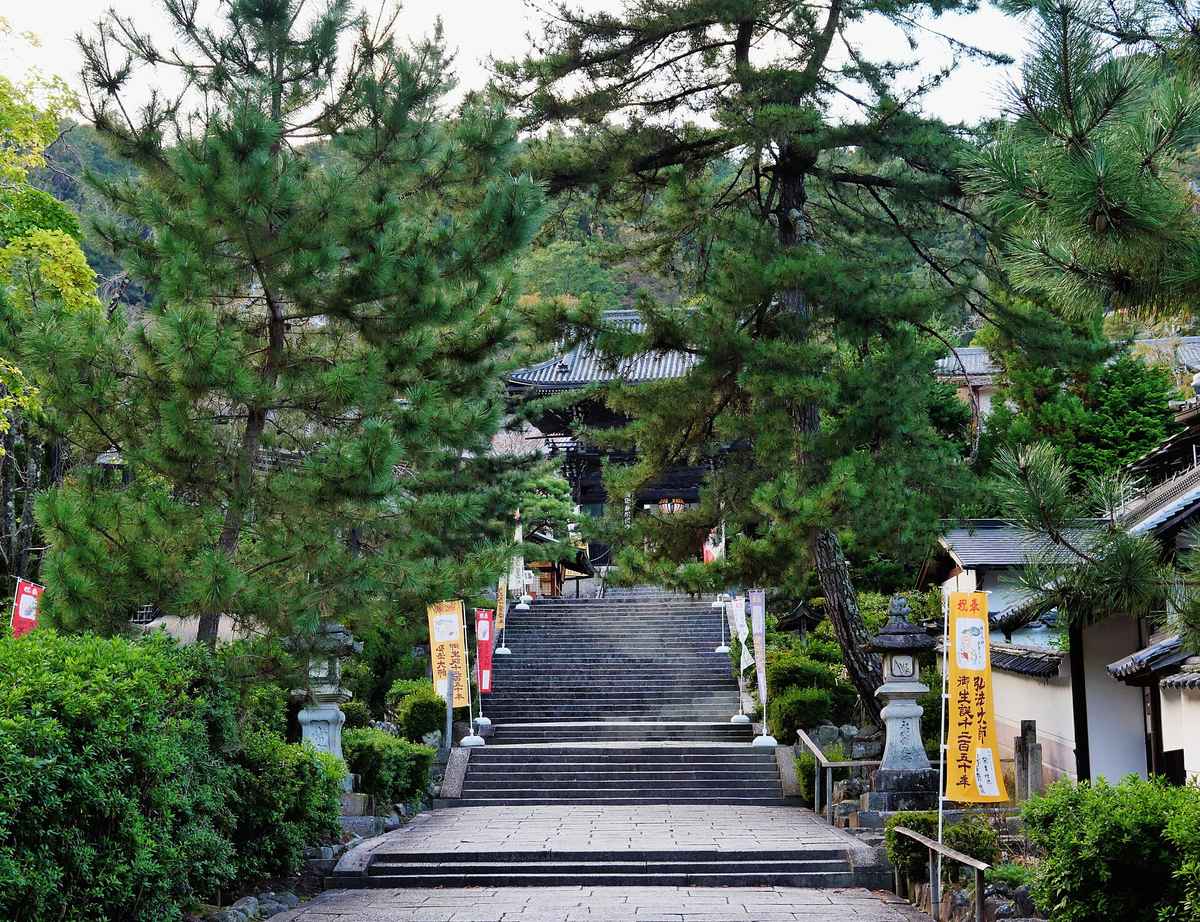
Before the highlights, let's fill the pothole that gets people onto the wrong train: there are at least two well-known "Hase-dera" temples in Japan. One is in Kamakura, Kanagawa — a Kanto hydrangea landmark whose stairways drown in blooms during the rainy season. The other is the subject of this guide, in Hase, Sakurai City, Nara: the head temple of the Buzan school of Shingon Buddhism, the eighth temple of the Saigoku 33 pilgrimage, famous for peonies and four-season flowers, self-styled the "Temple of Flowers."
They share only a name — no institutional link. Both enshrine an Eleven-Headed Kannon, but they are different images at different temples, with different access, admission, and highlights. So when you research, watch the keywords: "Hase-dera peonies," "Hase-dera Saigoku 8," "Hase-dera Nara," "Hase-dera stairway" all mean the Nara one; "Hase-dera hydrangea" or "Hase-dera Kamakura" means the Kanto one. Keep the two apart in your planning. If you actually want the Kamakura temple, the Kamakura day-trip guide is the right read.
Confirmed you want the Nara one? Then let's go.
History: the "Temple of Flowers" at its 1300th year
Hase-dera's history is the first hook here — because 2026 is exactly its "1300th anniversary of founding," a phrase the temple uses verbatim across this year's commemorative works. It's worth explaining where that number comes from.
Per temple tradition (a monastery lore, not recorded in official histories — the temple is candid about this), Hase-dera's beginning came in two steps: in 686 (Shucho 1), the monk Domyo built a three-story pagoda on the west hill and enshrined a bronze plaque, praying for the ailing Emperor Tenmu; then in 727 (Jinki 4), the monk Tokudo, at Emperor Shomu's command, carved an Eleven-Headed Kannon from sacred driftwood and built the main hall on the east hill (where the current hall stands). That second step is the formal starting point of Hase-dera's "founding." Counting from 727, 2026 lands on the official 1300th anniversary — matching the restoration notice's own wording, "Reiwa 8 (2026), 1300th year since founding."
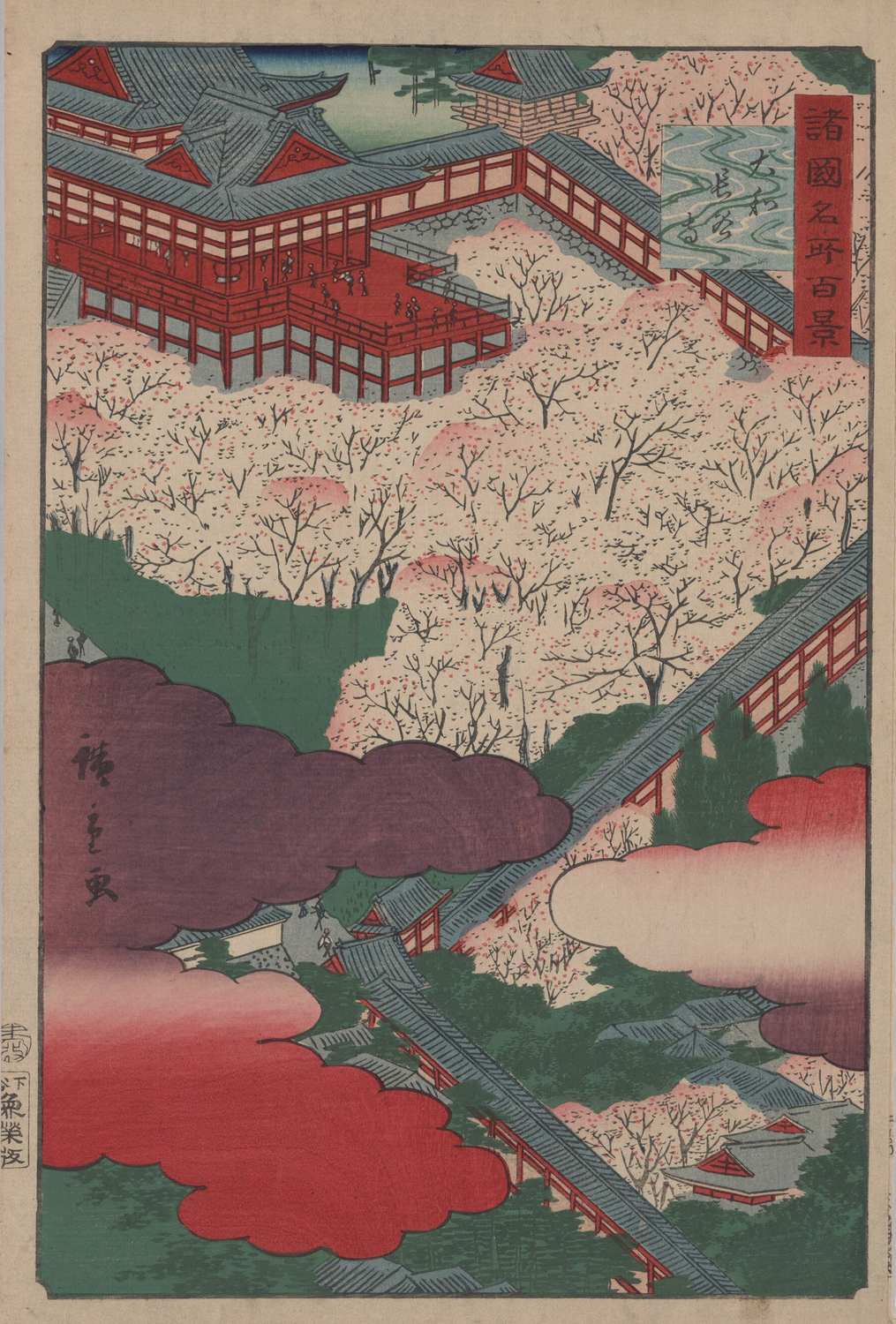
In other words, visiting in 2026 puts you on a once-in-thirteen-centuries marker. This year the temple ran several 1300th-anniversary specials in spring — including a special viewing of the Important Cultural Property lecture hall (with a giant hanging scroll of the principal image, billed as one of the world's largest, "a scroll too big to hang") and a spring treasure exhibition gathering National Treasures from around Sakurai. Most of those spring-limited runs ended in early July, but the "1300th anniversary" narrative gives 2026 an extra layer of meaning; for any autumn continuation, defer to the official notice.
The principal Eleven-Headed Kannon: an Important Cultural Property
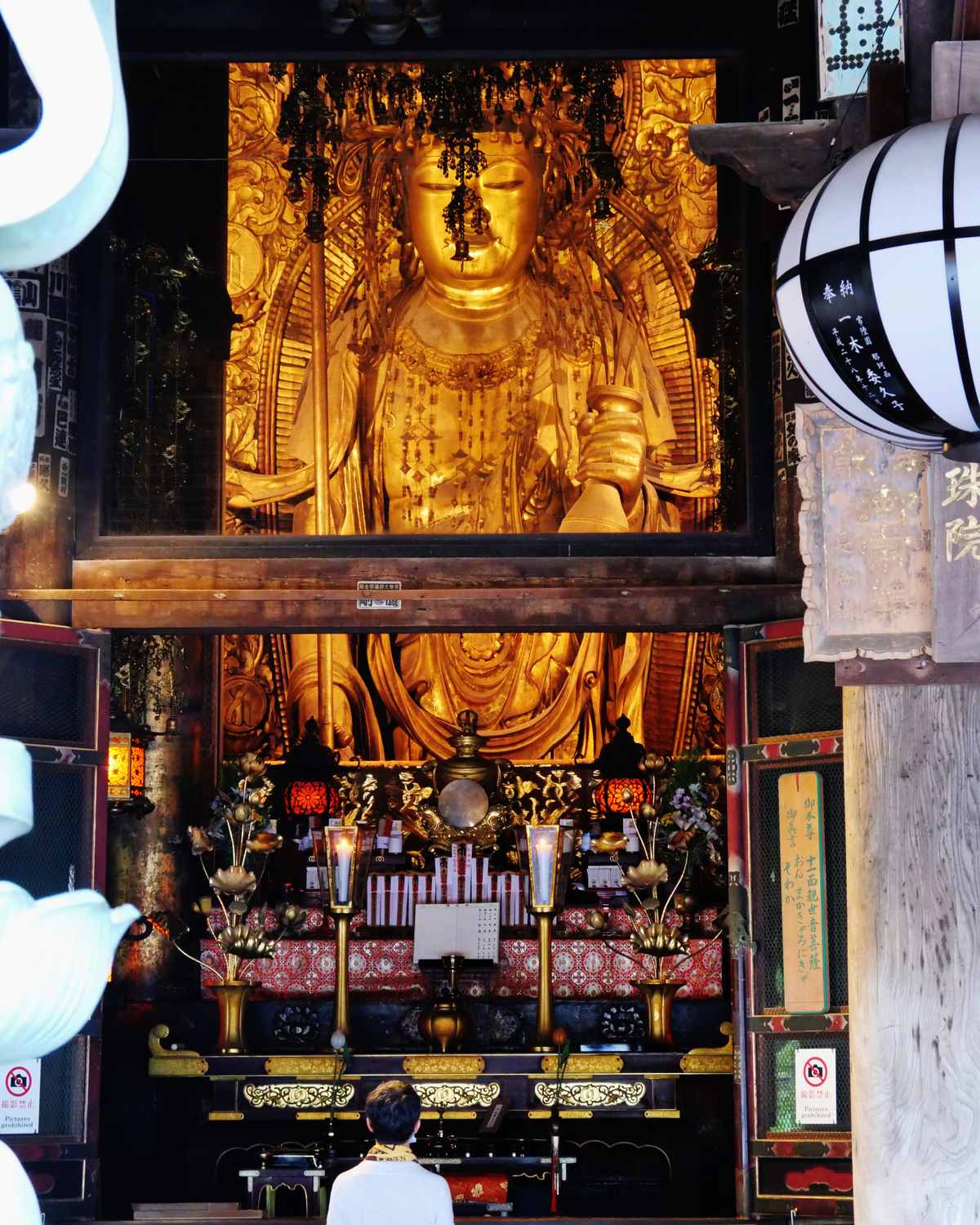
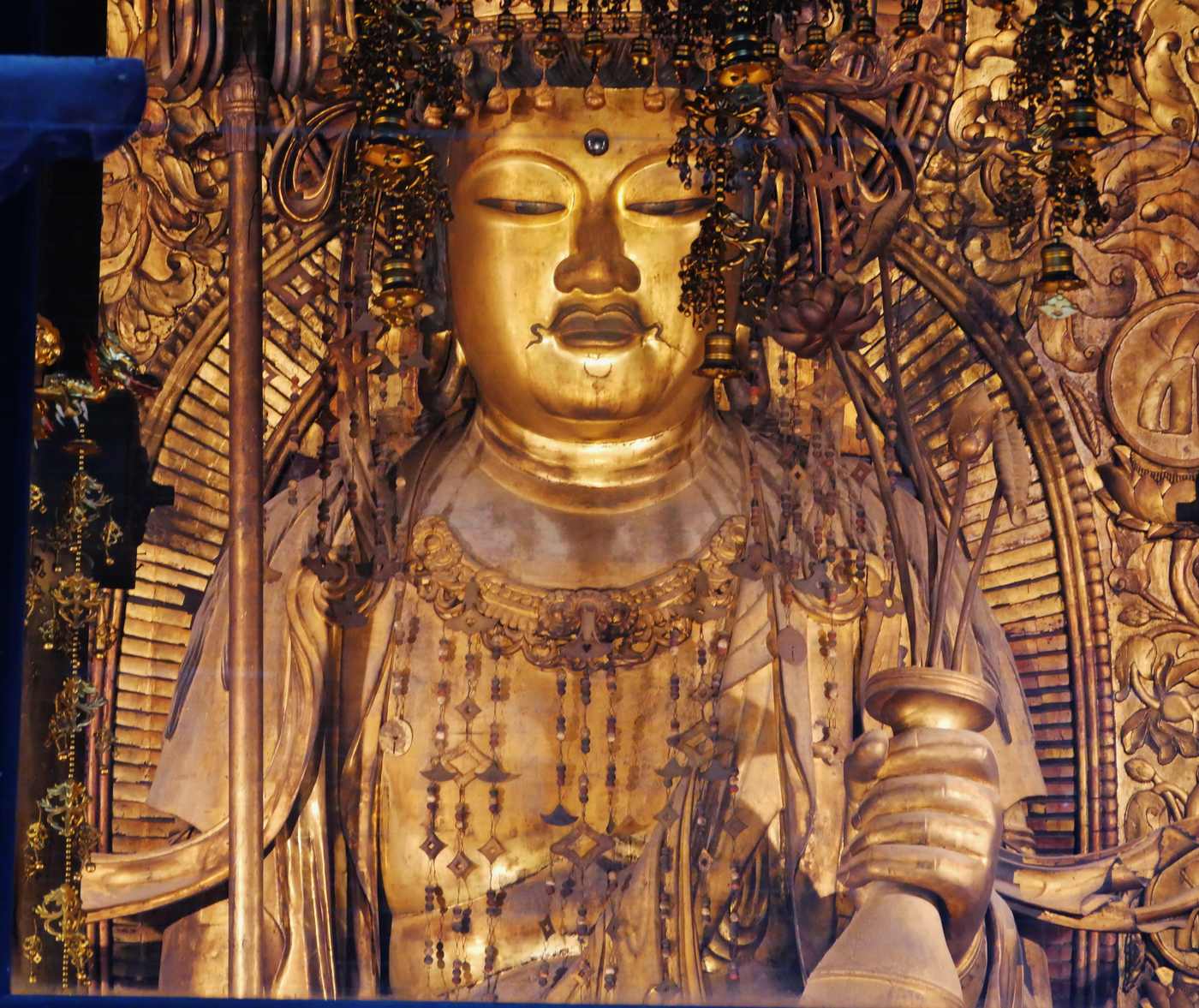
The soul of Hase-dera is that colossal principal image. A few facts cross-checked between the temple and cultural-property databases: the Eleven-Headed Kannon stands 10.18 meters tall, one of the largest surviving wooden Buddhist images in Japan; the current figure was re-carved in 1538 (Tenmon 7) by the sculptor Unso Hoin and others, and is designated an Important Cultural Property. It holds a flower vase in its left hand and a pilgrim's staff and beads in its right — the signature "Hase-dera-style Kannon" pose, blending the virtues of Kannon and Jizo.
Here's a point worth keeping straight: the main hall building is a "National Treasure," while the Eleven-Headed Kannon image is an "Important Cultural Property" — different grades, don't swap them.
The 399-step stairway and the National Treasure hall
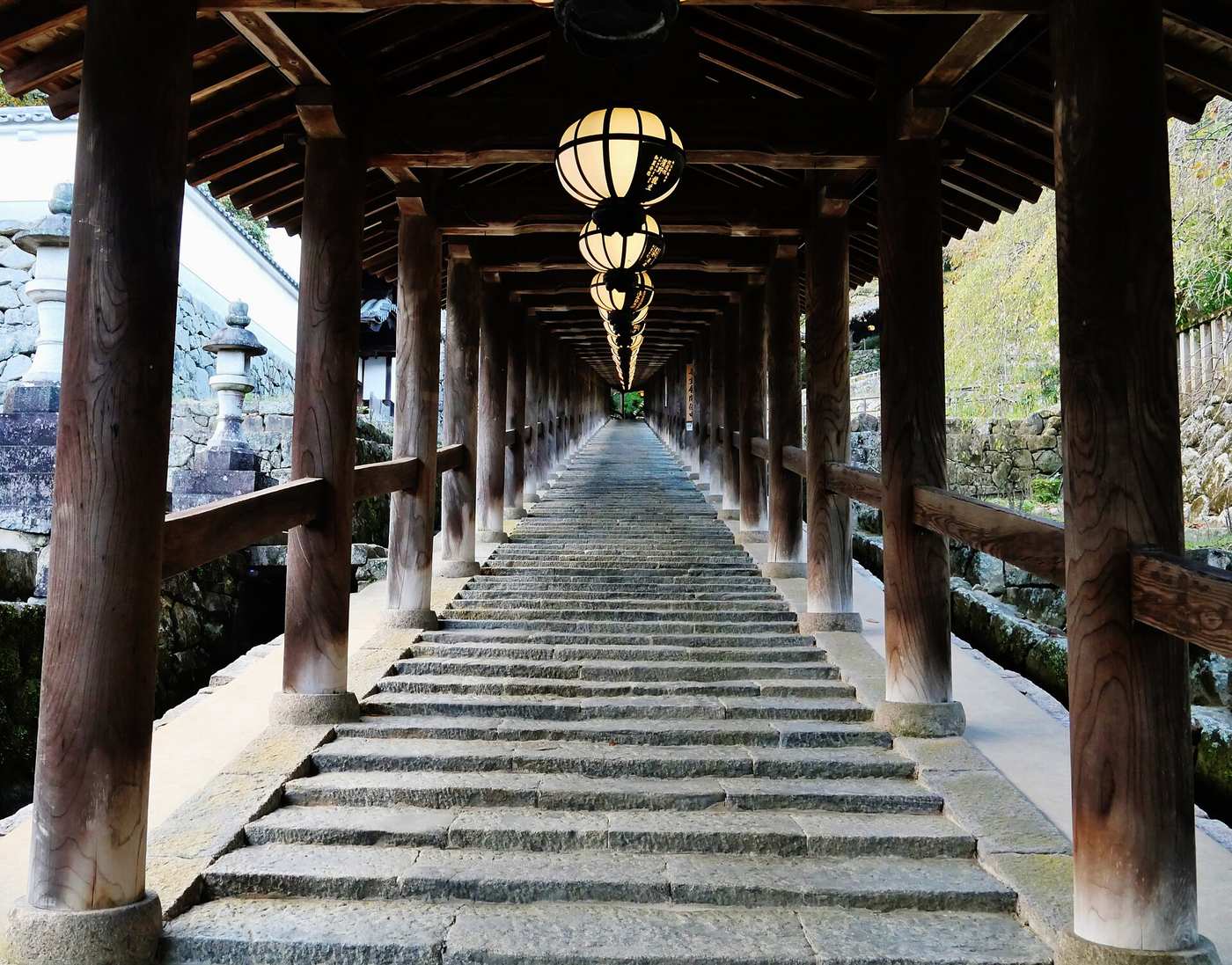
If peonies are Hase-dera's flowers, the noborirō (covered stairway) is its skeleton. From the Niomon gate, the path to the main hall is not ordinary steps but a covered corridor the temple describes verbatim as "a stone stairway of 399 steps," its ceiling hung with a row of oval lanterns and its sides flowering by season. When peonies peak from late April to early May, the stairway is lined with them — Hase-dera's most iconic composition and the one the official homepage leads with. The 399 steps leave you a little breathless, but that climb is exactly what turns arrival into a ritual, opening up as you reach the top.
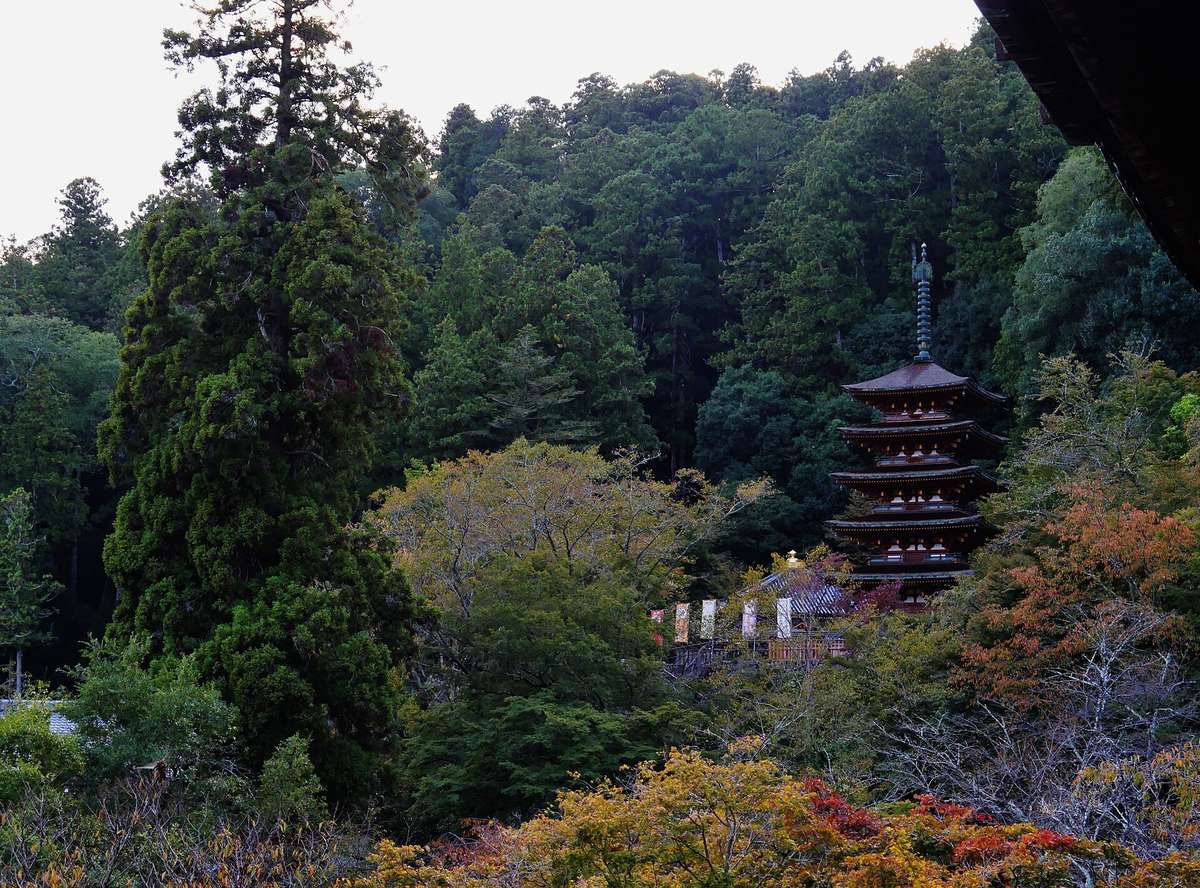
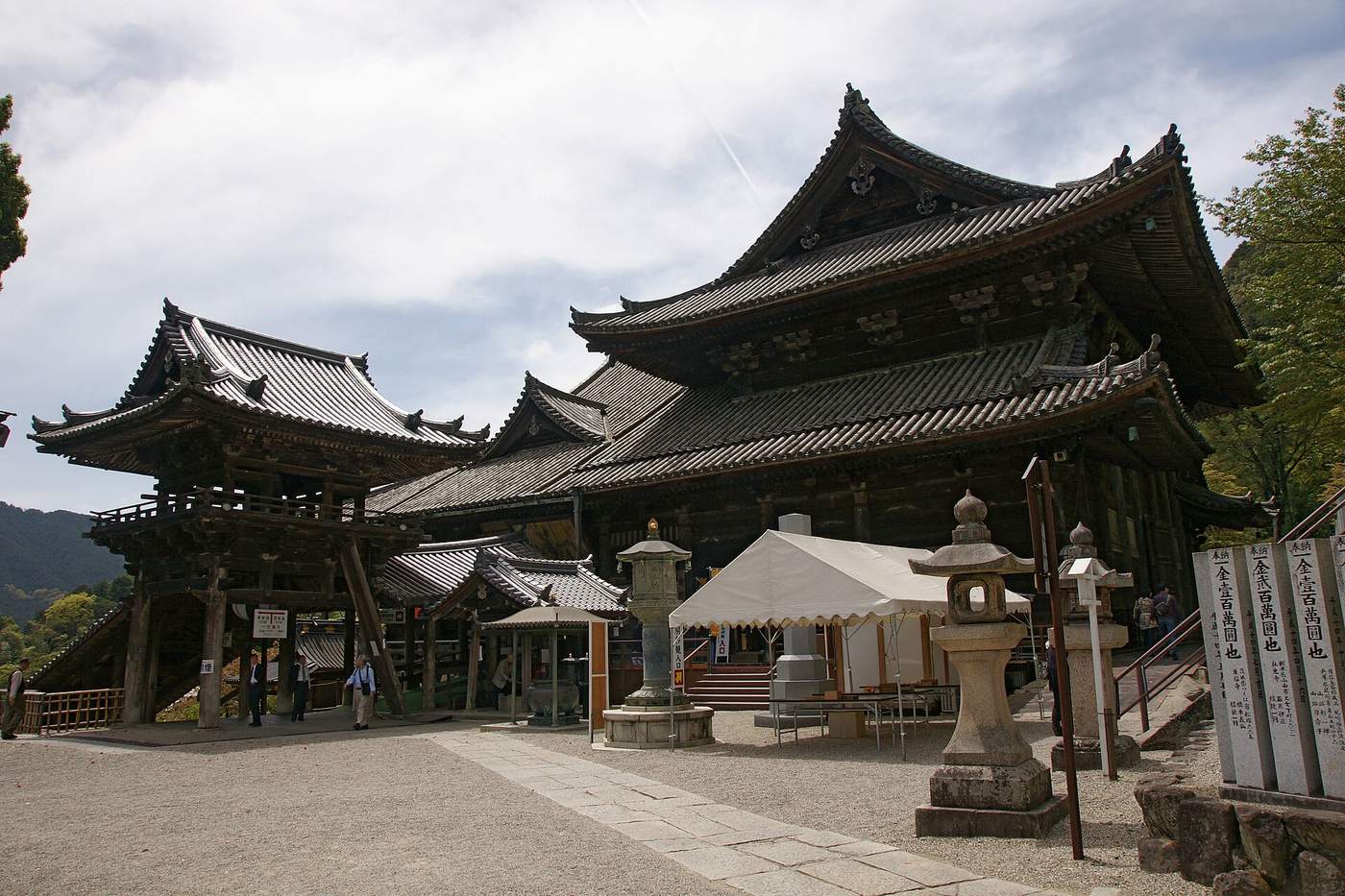
At the top of the stairway is the National Treasure main hall, built in the "stage" style (the same suspended-platform construction as Kyoto's Kiyomizu-dera). The current building is commonly said to have been rebuilt by Tokugawa Iemitsu in 1650 (Keian 3) — the specific year is a common secondary-source figure, with the temple homepage confirming the Iemitsu rebuild. From the hall's stage you can look out over the whole temple grounds — a hillside of cherry and peony in spring, a sweep of maples in autumn — one of the temple's signature views and, for many, the most memorable moment after the climb.
The hall's interior is normally off-limits, but during the spring and autumn "Special Viewing of the Principal Kannon" it opens up, letting you step inside the National Treasure hall and touch the Kannon's feet (o-ashi-mairi) — a Hase-dera experience found nowhere else. Costs are covered in the next section.
Admission, hours, and the special interior viewing
Hase-dera's admission is surprisingly gentle: adult ¥500, elementary-school child ¥250, free for preschoolers. Groups of 30+ pay ¥450 (adult) and ¥200 (child); a holder of a disability certificate pays ¥250 (one companion admitted free). If you drive, parking is ¥200 for motorcycles, ¥500 for cars, and ¥2,000 for large buses (per the official admission-info page). For a temple with 7,000 peonies, that ticket price is genuinely generous.
Opening hours run in three seasonal bands — check yours before you go:
| Season | Opening hours |
|---|---|
| April–September | 8:30–17:00 |
| October–November, March | 9:00–17:00 |
| December–February | 9:00–16:30 |
The temple also notes that hours are extended during the peony festival and similar events, but does not state the exact extended times, so check the official notice for the period if you go in peony season.
Special Viewing of the Principal Kannon (o-ashi-mairi)
This is the experience most worth adding beyond basic admission. The normally off-limits National Treasure main hall interior opens for special viewing in spring and autumn, letting you walk to the base of the image and touch the feet of that 10-meter-plus Eleven-Headed Kannon (o-ashi-mairi), feeling its scale up close.
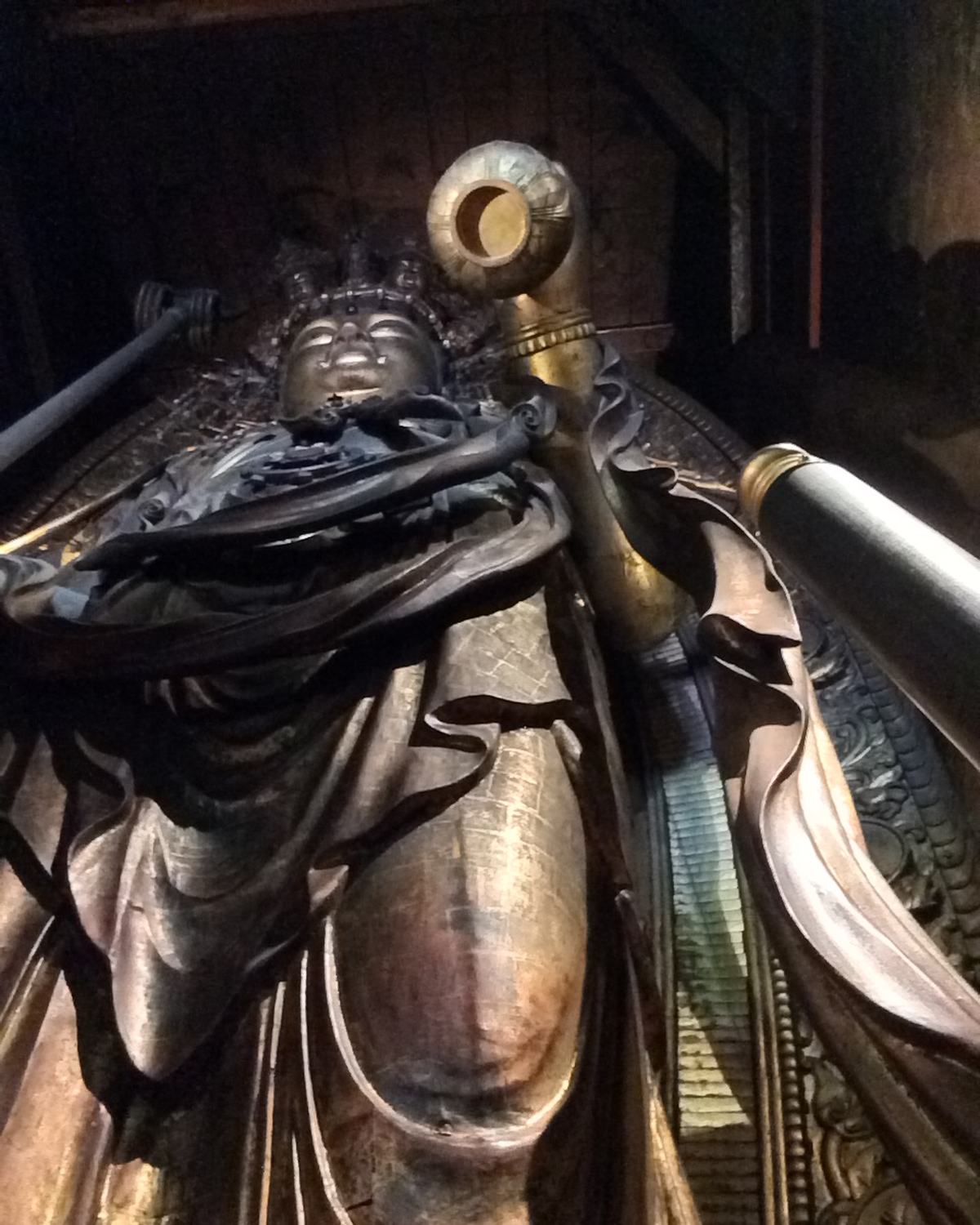
- Cost: ¥1,000 for the special viewing, separate from the ¥500 admission (¥1,500 total).
- Period: spring is typically mid-March to early July (in 2026, March 14 to July 5, now ended); autumn is typically early October to early December (recent years October 5 to December 8, but the 2026 autumn page has not been updated — defer to the official notice).
- Times: March 9:30–16:00, from April 9:00–16:00 (autumn 9:30–16:00).
Worth adding? My take: if you have the time and hit an open period, add it — this is an experience no other temple gives. If you're purely there for the flowers and the pagoda and short on time, skipping it costs you nothing.
One annual festival for the curious: Dadaoshi (February 14, 16:00–18:30), the fire-and-demon rite closing the Shuni-e — red, blue, and green demons bearing great torches are driven off in the main hall, with a talisman offered at ¥3,000 per person (letting you join the inner stage up close). It's one of Hase-dera's biggest annual events; the hall's surroundings fill with worshippers and photographers that afternoon — a "worth doing once, but don't expect a leisurely temple stroll" occasion.
Year-round flower calendar
"Temple of Flowers" is not just a slogan — Hase-dera has something in bloom in every season, and that's its core draw. Here's the year at a glance to help you time a visit (peaks are long-term averages; actual timing shifts with the year's weather and the official notice):
| Flower | Peak (average) | Highlight |
|---|---|---|
| Peony (top draw) | Late April–early May | ~150 varieties, ~7,000 plants lining the stairway; the year's signature scene |
| Cherry | Late March–late April | Mixed varieties; the hall's stage overlooks a hillside of blossom |
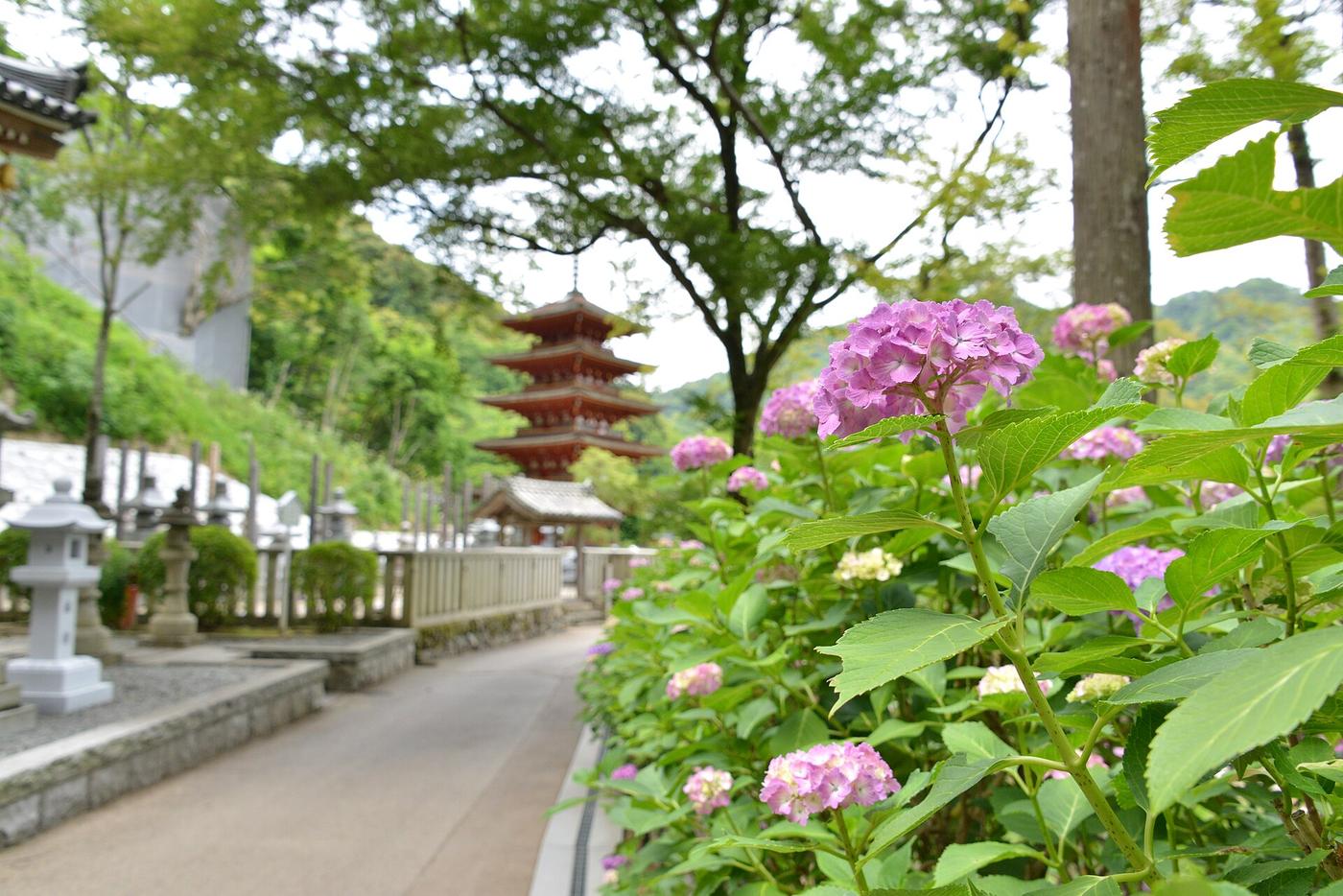
| Hydrangea | Early June–early July | ~3,000 plants |
| Autumn foliage | Early October–early December※ | The stage overlooks a sweep of maples across the grounds |
| Cold-weather peony | Early December–late January | Sheltered under straw covers (warabocchi); a winter-only scene |
※ Recent-year foliage runs mostly fall October 5 to December 8, but the 2026 autumn official page has not been updated — defer to the official notice and do not reuse prior-year dates.
A few practical notes:
- Peonies (150 varieties, 7,000 plants) are the top draw and the busiest window; temple tradition says they descend from peonies offered by a Tang-dynasty consort in gratitude for Kannon's blessing. To shoot the classic stairway-and-peony composition, dodge weekends and arrive at opening.
- Cherry blossoms are many varieties, mixed; no official count is published. Either way, the stage overlooking a hillside of blossom is one of the temple's headline scenes.
- Cold-weather peonies under woven straw covers are a Hase-dera winter exclusive; January is the safest time to catch them.
To time the blooms and catch current official notices (especially with the autumn foliage dates still unposted), being able to check the official page and Google Maps on the go matters. Sort out an unlimited-data eSIM before you fly and scan the QR on landing, so you can check peak timing and open periods anytime: KKday Japan eSIM.
Goshuin: Saigoku 33 temple no. 8
Hase-dera is the eighth temple of the Saigoku 33 pilgrimage, and its goshuin are a point pilgrims come for. The price and reception hours are not published, so read the notice on site and bring coins.
Reception is at the nokyosho across from the main hall, with hours roughly matching viewing hours. Beyond the principal-image goshuin (Saigoku no. 8), there are the goeika (pilgrim verse), the Nara Yamato Four-Temple pilgrimage (Hase-dera / Muro-ji / Abe Monju-in / Oka-dera) and the Yamato-ji 88-face Kannon pilgrimage, among others. The price is not published, so read the notice on site and bring coins.
The Saigoku no. 8 pilgrim verse is a widely cited traditional text worth noting if you collect goeika goshuin:
Ikutabi mo / mairu kokoro wa / Hatsuse-dera / yama mo chikai mo / fukaki tanigawa
One more note: limited kirie and Edo-revival goshuin change design and price every year. In spring 2026 there were 1300th-anniversary and lecture-hall special-viewing limited editions, but those largely ended with the spring runs — don't treat any single year's limited edition as a permanently stocked product.
After the main Hase-dera goshuin, don't rush off: Hoki-in, just off the approach, is a Saigoku 33 "bangai" (extra) temple (the hermitage and mausoleum of Tokudo, the founder), free to visit, 9:00–16:30, offering bangai goshuin and limited kirie editions within walking distance — a natural add-on for pilgrims.
If you're collecting, or want to start, a pilgrimage temple like this is a great entry point. For how to choose a goshuin book, the etiquette, and the worship order, read our Japan goshuin collecting guide first — the concepts make the visit land better.
Access: the "easy-mode Sakurai temple"
This section is Hase-dera's biggest edge over the other Sakurai temples (Tanzan Shrine especially) and a key reason it earns a slot in your itinerary: access is easy. No community-bus transfer, no last-bus trap, because the Kintetsu Osaka Line express stops right at "Hasedera Station," which the temple states verbatim.
| From | Route | Time | Fare | Transfers |
|---|---|---|---|---|
| Osaka Uehonmachi | Kintetsu Osaka Line express / semi-express, direct | ~48–51 min | ¥910 | None |
| Kyoto | Kintetsu Kyoto Line express → change at Yamato-Yagi to Osaka Line express | ~1 hr 23 min | ¥1,210 | 1 |
| Sakurai | Kintetsu Osaka Line, 2 stops | 6–8 min | ¥240 | None |
Times and fares are July 2026 Kintetsu lookups; confirm on the day with a transit app (Yahoo! Transit, Jorudan, etc.).
From Hasedera Station it's about a 15-minute walk (down to the river, then up the approach street) to the Niomon gate. An alternative is to alight at Sakurai Station (Kintetsu Osaka Line / JR Manyo-Mahoroba Line) and take a Nara Kotsu bus to "Hasedera Sando-guchi," then walk about 10 minutes — but since the express goes straight to Hasedera Station, most people don't need to route via Sakurai.
Versus Tanzan Shrine: how to build a one-day route
Set against the "one day in Sakurai" frame, Hase-dera's transit edge stands out. Nearby Tanzan Shrine, in the same Sakurai City, has only a community bus running about once an hour (¥570 one-way), and its last bus is 17:52 — being stranded after the night foliage is its biggest pain point. Hase-dera is the opposite: frequent express service, direct, with flexible hours. Link the two by the Kintetsu Osaka Line (Sakurai to Hasedera is one stop apart, 6 min, ¥240) for a smooth day:
- Morning: do Tanzan Shrine first (catch an early community bus up, beat the afternoon crowds) — it's the "heavier" transit stop, so clear it while you're fresh.
- Midday: come down, back to Sakurai Station, lunch.
- Afternoon: take the Kintetsu express to Hasedera Station (direct, 6 min); do the stairway, the hall's stage, and the season's flowers — Hase-dera is open to 17:00, so an afternoon arrival has slack and you're not chased by a last bus.
In one line: Hase-dera is the "easy-mode Sakurai temple." If Tanzan Shrine's bus timetable put you off, Hase-dera is a far lower-friction alternative — or add-on — in the same area.
At the gate: the official sweets pilgrimage
This is another Hase-dera advantage over Tanzan Shrine: Hase-dera has an approach street with actual food. The temple even publishes its own "Saigoku no. 8 Hase-dera Sweets Pilgrimage" list — something impossible at Tanzan Shrine (barely any snacks at its gate). The shop names below are confirmed to exist on the official sweets page; addresses and items are secondary-source additions, and the official page gives no hours, so go by each shop's on-site notice:
| Shop | Signature items | Notes |
|---|---|---|
| Hoendo | Kusa-mochi (mugwort rice cake), Mizu-no-shizuku | Official sweets-pilgrimage list |
| Yamatobito-no-Kokoro | Meoto-manju, kuzu-mochi, Yamatobito-no-Kokoro candy | Official sweets-pilgrimage list |
| Tenpyoan | Hatsuse-shigure, Asukagawa | Official sweets-pilgrimage list |
| Inside Hase-dera | Chawan-soft (soft-serve, grounds-only) | Grounds exclusive |
| Sohonpo Shirozakaya | Kusa-mochi (freshly pounded, heavy mugwort), Nara-zuke | 746 Hase; tel 0744-47-7988 |
| Meibutsu Kusa-mochi Inoue Botando | Kusa-mochi (domestic mugwort, no added sugar) | At the Hoki-in gate; centenarian shop |
You'll notice the signature specialty at the gate is kusa-mochi (mugwort rice cake) — several old shops here trade on freshly pounded, heavy-mugwort versions. A hot kusa-mochi after climbing the 399 steps is a very local way to finish. Check each shop's exact hours and closing days on Google Maps (the official sweets page gives none) — another moment the eSIM earns its keep.
Is it worth a special trip? How to pair it
Now the real question: is Hase-dera Nara worth a special trip? My take is direct.
First, when it's a strong yes. If you're a flower person — especially chasing peonies (late April to early May), hydrangea, or foliage — Hase-dera is close to essential; 7,000 peonies framing 399 steps is a scene you won't find twice in Kansai, and that's its strongest reason for a special trip. If you collect goshuin or are walking the Saigoku 33, temple no. 8 plus the bangai Hoki-in nets you two stamps in one visit — efficient. And if Tanzan Shrine's mountain bus already put you off but you still want a temple of real depth in Sakurai, Hase-dera is far lower-friction: express-direct, and fine to do in the afternoon.
Now, when it can wait. If this is your first time in Kansai, you're short on time, and you happen to hit a gap between flowers (high summer, or after the peonies drop but before the maples turn), Hase-dera's value dips — a flowerless Hase-dera is still beautiful, but the case for a "special trip" weakens; do Nara Park, Todai-ji, and Kasuga Taisha properly instead, and save Hase-dera for a future flower season.
How to pair it (clear trade-offs):
- Tanzan Shrine (smoothest, same area and line): as above, "Tanzan in the morning, Hase-dera in the afternoon" works, with the Kintetsu Osaka Line linking the two Sakurai temples — the most natural combination.
- Autumn routing: in fall, to weigh spots across Osaka and Nara and decide which days to do Kyoto, the Osaka and Nara autumn guide compares peak windows and access difficulty across the region — handy for planning the whole autumn trip.
- Muro-ji (better on its own day): Muro-ji is farther east on the same Kintetsu Osaka Line (alight at Murouguchi-ono, then a bus); it's in the same direction as Hase-dera but a good stretch beyond, so forcing both plus Tanzan Shrine into one day gets very tight — give Muro-ji its own day if you really want it.
The bottom line: Hase-dera Nara is a "go on purpose — for the flowers, the goshuin, that stairway" spot, not a casual drop-in. Find your reason — peonies, Saigoku no. 8, or that National Treasure stage overlooking the whole hillside — pick the right flower season, remember the five-story pagoda is under restoration and may be sheeted, and ride the Kintetsu express straight in. It'll be well worth it. And 2026 happens to be its 1300th anniversary — a rarer moment still.
Frequently Asked Questions
- Q1:Is Hase-dera in Nara the same as the Hase-dera in Kamakura?
- No — they are two completely different temples that happen to share a name. The Hase-dera in this guide is in Hase, Sakurai City, Nara Prefecture: the eighth temple of the Saigoku 33 pilgrimage, famous for peonies, and known as the "Temple of Flowers," enshrining an Eleven-Headed Kannon over 10 meters tall. The Kamakura Hase-dera is in Kanagawa and is the Kanto region's celebrated hydrangea temple, enshrining a different Kannon. They have no institutional link, and their access, admission, and highlights are all different. If you searched "Hase-dera peonies," "Hase-dera Saigoku 8," or "Hase-dera Nara," you want this one; "Hase-dera hydrangea" or "Hase-dera Kamakura" is the other. Do not mix up the transit details between the two.
- Q2:How do I get to Hase-dera in Nara, and how long from Osaka and Kyoto?
- This is Hase-dera's biggest advantage: the Kintetsu Osaka Line express stops right at "Hasedera Station," no transfer needed. From Osaka Uehonmachi, a Kintetsu Osaka Line express runs direct to Hasedera Station in about 48 to 51 minutes for ¥910 with zero transfers. From Kyoto, take a Kintetsu Kyoto Line express to Yamato-Yagi and change to an Osaka Line express — about 1 hour 23 minutes, ¥1,210, one transfer. If you are already in Sakurai (for example coming down from Tanzan Shrine), Sakurai to Hasedera is just 2 stops, 6 to 8 minutes, ¥240. From Hasedera Station it is about a 15-minute walk (including a slope and the approach street) to the Niomon gate. Times and fares are July 2026 Kintetsu lookups; confirm on the day with a transit app.
- Q3:When is the best time to visit Hase-dera, and when do the peonies bloom?
- It depends on which flowers you want. Hase-dera calls itself the "Temple of Flowers" and has blooms year-round: about 150 varieties and 7,000 peony plants peak late April to early May — the signature and busiest season; roughly 3,000 hydrangeas bloom early June to early July; autumn foliage runs roughly early October to early December (recent years October 5 to December 8, but the official 2026 autumn page has not been updated yet, so defer to the official notice); and in winter, cold-weather peonies sheltered under straw covers show from early December to late January. To dodge the worst crowds, avoid peony and foliage-season weekends; if you must go in those peaks, arriving 15 to 20 minutes before opening to queue at the covered stairway is the common advice.
- Q4:How much is admission, and is the special interior viewing worth adding?
- Admission is ¥500 for an adult, ¥250 for an elementary-school child, free for preschoolers (groups of 30+: ¥450 / ¥200). Parking is ¥200 for motorcycles, ¥500 for cars, ¥2,000 for large buses. Beyond admission, Hase-dera opens a "Special Viewing of the Principal Kannon" in spring and autumn, letting you enter the normally off-limits National Treasure main hall and touch the feet (o-ashi-mairi) of the Eleven-Headed Kannon that stands over 10 meters tall. It costs ¥1,000, separate from the ¥500 admission (¥1,500 total). It is one of Hase-dera's most distinctive experiences — well worth adding if you have time and hit an open period (spring roughly mid-March to early July, autumn roughly early October to early December). If you are only there for the flowers and the pagoda, skipping it is fine.
- Q5:Does Hase-dera have goshuin, and how much are they?
- Yes — Hase-dera is the eighth temple of the Saigoku 33 pilgrimage, and its goshuin are a draw for pilgrims. The price and reception hours are not published, so read the notice on site and bring coins; reception is at the nokyosho across from the main hall. Beyond the principal-image goshuin there are the goeika (pilgrim verse), the Nara Yamato Four-Temple pilgrimage, and more. After the main goshuin, walk to nearby Hoki-in (a Saigoku "bangai" extra temple) for its goshuin too. Limited kirie designs change yearly, so do not treat any single year's edition as a permanent product.
- Q6:What is special about visiting in 2026, and can I see the five-story pagoda?
- 2026 is exactly Hase-dera's "1300th anniversary of its founding" (counted from 727, when the priest Tokudo built the main hall at imperial command). The temple ran several 1300th-anniversary special viewings and treasure exhibitions in spring 2026 — the special meaning of visiting this particular year (most spring-limited runs ended in early July; check the official notice for any autumn continuation). As for the five-story pagoda — built in 1954 (Showa 29), it is currently undergoing a "Reiwa Great Restoration," officially scheduled April 1, 2025 to March 31, 2028, tied to the 1300th-anniversary works. The official page does not state whether scaffolding or sheeting obscures the pagoda during the work, so check the official notice or recent photos before you go — do not assume you will get a clear shot of the full pagoda.
Read next
Tanzan Shrine: pagoda, goshuin & is it worth the trip?
Where the Taika coup was plotted, with the world's only wooden 13-story pagoda — fees, the one-bus-an-hour access, and the 17:52 trap.
Osaka & Nara Autumn 2026: Minoo Falls, Katsuoji & Deer Park
Kyoto crowds got you down? Minoo Falls, Katsuoji daruma slopes, and deer-and-maple Nara — routes and fees decoded.
Goshuin Guide: Collecting Japan Shrine Stamps
How to start collecting goshuin: books, etiquette, fees, and a first-timer route.