Tower admission is ¥1,200 for adults and the tower is open until 18:00 — those are the two easiest facts to look up. But the thing worth saying first is what most visitors only realize on site, or never realize at all: the gleaming tower you photograph is not the one Toyotomi Hideyoshi built in 1583, nor an Edo-era wooden castle — it is a third-generation concrete structure that Osaka citizens rebuilt with donations in 1931. Knowing that changes how you see the place entirely. Its value is not "old architecture" — it is the story of a city rebuilding its own castle. This guide covers tickets and hours, whether the Osaka Amazing Pass actually includes the tower, goshuin versus gojoin, cherry blossoms at Nishinomaru Garden, which of the four stations to use, and — bluntly — whether it is worth a special trip.
📍 Osaka Castle usually fills half a day of a Kansai trip; for how to thread it with Kyoto and Nara, see the Osaka-Kyoto 5-day itinerary. Visiting in autumn? Pair the castle with Minoo and Katsuo-ji in the Osaka-Nara autumn guide.
- Adult tower admission ¥1,200 (doubled from ¥600 in April 2025), students ¥600, free under high-school; open 9:00–18:00 (last entry 17:30), closed Dec 28–Jan 1
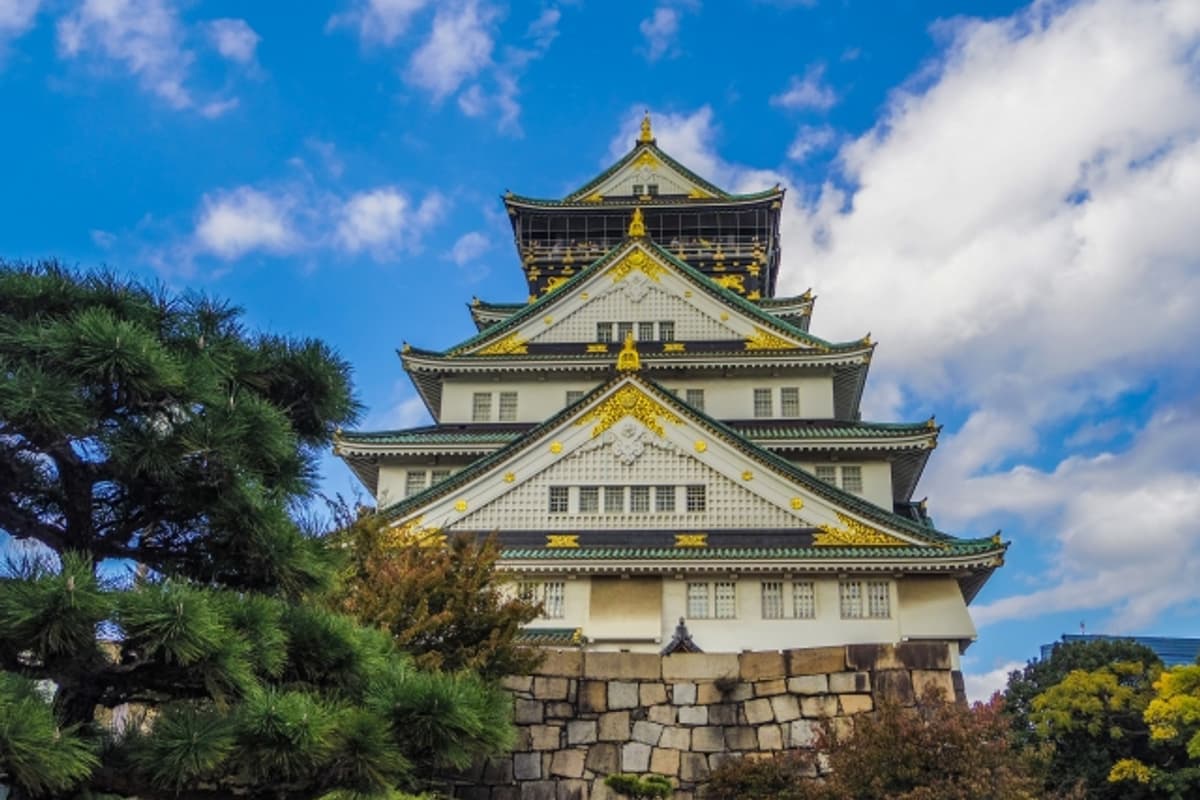
- The current tower is a 1931 citizen-funded concrete reconstruction — a modern museum with elevators inside, not a Toyotomi- or Edo-era original
- The Osaka Amazing Pass officially covers the tower and the Gozabune boat — great value on a multi-attraction city day, useless if you only walk the free park
- Goshuin at Hokoku Shrine (¥300, reliable); gojoin castle seals are limited-run and mostly discontinued — do not conflate the two
- Nishinomaru Garden is a separate ¥300 (from April 2026, was ¥200) — the best spot for the tower-with-cherry-blossoms shot
📖 Table of Contents (click to expand)
- First, a myth to bust: this is the "third" tower
- Tickets & hours: ¥1,200 and the 2025 doubling
- Is the Osaka Amazing Pass worth it?
- Goshuin vs gojoin: the easy trap
- Nishinomaru Garden: the tower-and-blossom shot
- Four seasons: cherry, plum, peach, autumn
- Access: which of the four stations to use
- Crowds & the honest "is it worth it" call
- Eat & shop: JO-TERRACE and Hokoku Shrine
- FAQ
First, a myth to bust: this is the "third" tower
Here is a slightly deflating but important line up front: the tower you photograph at Osaka Castle is a steel-reinforced concrete building completed in 1931 — not the historic original. It has been through three generations, and that history is worth a few paragraphs, because it is the most interesting thing about the place.
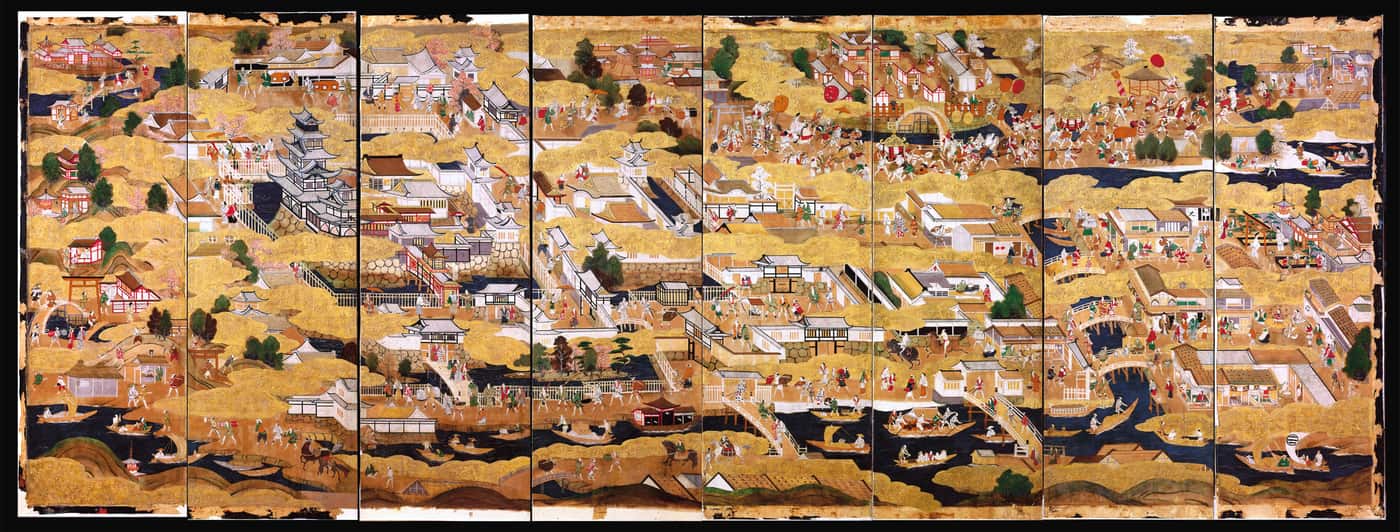
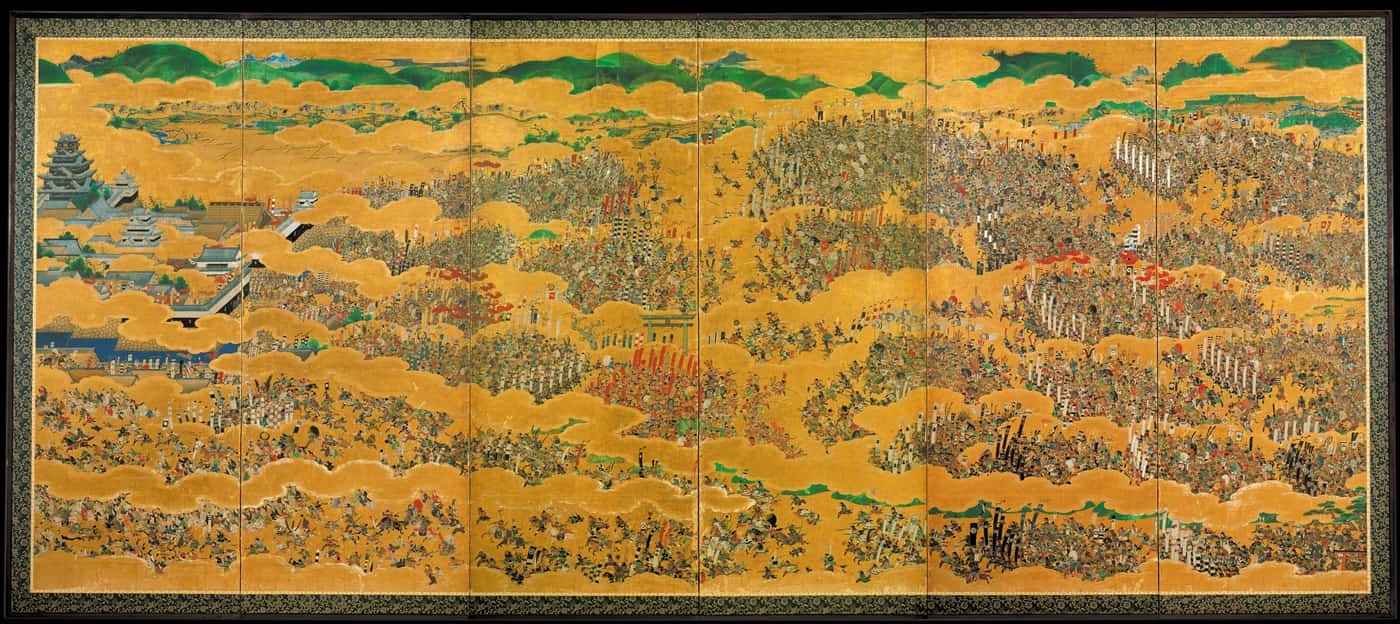
The first tower was built by Toyotomi Hideyoshi in 1583, the most lavish castle of the era around his unification of Japan. But in 1615, at the Summer Siege of Osaka, the Toyotomi were destroyed and the tower burned. The Tokugawa shogunate rebuilt a second, taller tower on the site — burying Hideyoshi's original stonework entirely underneath — only for a lightning strike in 1665 to burn that one down too. For nearly 275 years after that, Osaka Castle had no tower at all. Per the official pages, the stone walls, moats, Otemon gate, Tamon and Sengan turrets you see today "all date from the Tokugawa era onward" — in other words, almost nothing above ground survives from Hideyoshi's time.
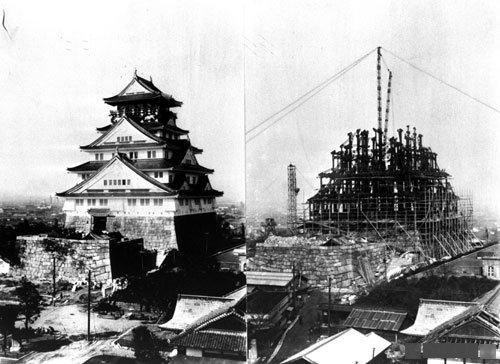
So where did the third — the current — tower come from? In 1931, the City of Osaka ran a public fundraising drive, and citizen donations paid to rebuild the tower. That is the key point: this is not a symbol of shogun or daimyo power, but a castle the citizens of early-Showa Osaka paid to raise themselves. The exterior is a reproduction (blending the Toyotomi and Tokugawa tower imagery), but the interior is fully a modern museum — elevators, exhibition floors, air conditioning. In 1997 it was listed as a Nationally Registered Tangible Cultural Property; more recently, in July 2025, it was further designated an Osaka City Designated Tangible Cultural Property, now alongside the 1997 national registration. A concrete building itself becoming a cultural property says it all: its value lies not in "looking like an old castle" but in nearly a century of civic memory.
So this is how I put it to friends: don't come expecting an Edo-era wooden castle — you'll be let down; come to see a landmark a city raised for itself — and it grows on you. If a genuine wooden keep is what you're after, it is one Shinkansen stop west: Himeji is the one that never burned and never got rebuilt in concrete, though entry rose to ¥2,500 in March 2026. One aside for anniversary-watchers: the 1931 reconstruction turns 100 in 2031. The city ran a dedicated 90th-anniversary website in 2021, so 2031 is a round number to note (there is no official announcement yet on whether anything special is planned — this is just an early heads-up).
Tickets & hours: ¥1,200 and the 2025 doubling
Let's pin the numbers down. Per the official guide page, tower admission is ¥1,200 for adults, ¥600 for university and high-school students (student ID required), and free for junior-high age and younger (ID required). Groups of 15+ get a discount (¥1,080 adult). Osaka-city residents aged 65+ and holders of a disability certificate enter free with the right ID.
Here is the change many people miss: on April 1, 2025, the adult ticket went from ¥600 straight to ¥1,200 — it doubled. If the travel info you're reading still says ¥600, that's the pre-hike price. This is exactly why I use a price component that auto-syncs to the official value rather than hard-coding a number — ticket prices move, and a frozen number only misleads.
| Item | Price (2026) | Notes |
|---|---|---|
| Adult | ¥1,200 | Doubled from ¥600 on April 1, 2025 |
| University / high-school student | ¥600 | Student ID required |
| Junior-high age and younger | Free | ID required |
| Group (15+) | Adult ¥1,080 | Students ¥540 |
Opening hours: 9:00 to 18:00, last admission 17:30; closed December 28 to January 1 — so if you are in the city that week, the tower is simply shut, and hatsumode, Toka Ebisu and the last-train problem are what the days are actually made of. In peak seasons the operator has extended hours before, but watch a trap here — the base closing time is already 18:00 now, so the old "extended to 18:00 in peak season" line effectively means nothing under the current baseline. Whether 2026 pushes closing later depends on the current-year notice, so check osakacastle.net before you go.
Is the Osaka Amazing Pass worth it?
This is the pre-trip dilemma for a lot of visitors. The bottom line first: the Osaka Amazing Pass officially includes Osaka Castle Main Tower, and the Osaka Castle Gozabune boat is on the free list too — I checked the official facilities page word for word, this isn't a guess, so you can treat it as a genuine selling point. The 1-day pass is ¥3,500, the 2-day ¥5,000, covering unlimited Osaka Metro and some buses plus free entry to 30-plus attractions.
When it pays off and when it doesn't, plainly:
- Worth it: you're spending the day inside central Osaka and stringing together paid spots — the tower (¥1,200), the Gozabune boat, Tsutenkaku, a Dotonbori cruise. The tower plus the boat alone already approach half a pass; add one or two more and it clears break-even, transit free on top.
- Not worth it: your day runs out along the Hankyu line (Minoo, Katsuo-ji — outside the pass's subway coverage), or you just want to wander the free Osaka Castle Park. Forcing extra stops to "justify" the pass gets it backward.
The official free-facility list shifts slightly each year, so verify the current version before you travel. If you genuinely fit the multi-attraction city-day profile, a pass bundles transit and admission in one: KKday Osaka Amazing Pass. For the full break-even math and 1-day vs 2-day choice, see the Osaka Amazing Pass guide.
Goshuin vs gojoin: the easy trap
This is the section I most want to flag, because even seasoned guides get it muddled. The Osaka Castle "gojoin" (castle seal) and the "goshuin" from Hokoku Shrine inside the park are two completely different things — different issuers, different availability, and wildly different odds of actually getting one.
Hokoku Shrine goshuin: standard, reliable, get it whenever
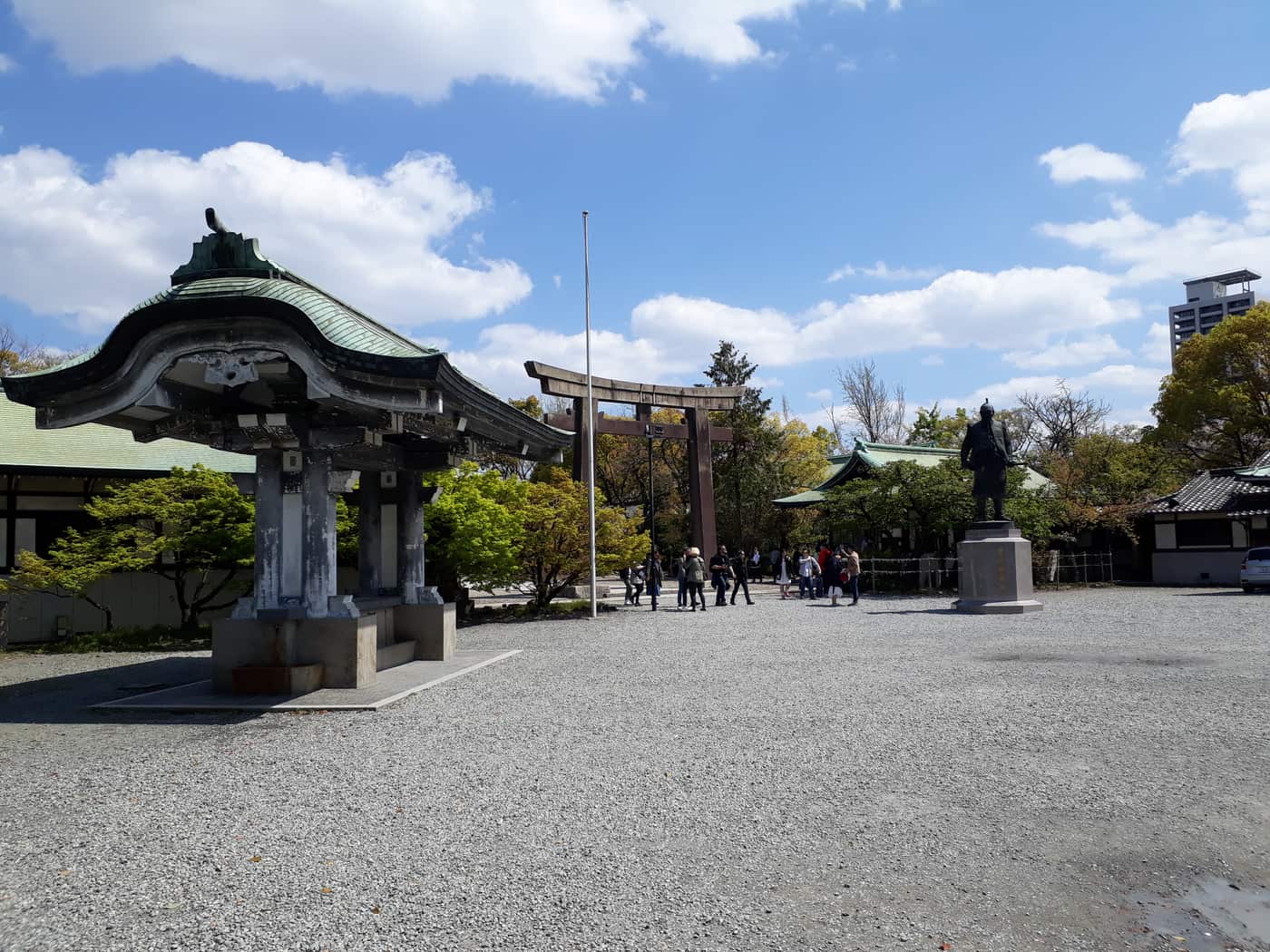
Inside the castle grounds sits Hokoku Shrine, whose enshrined deity is Toyotomi Hideyoshi himself. Because Hideyoshi rose from foot soldier to ruler of Japan, the shrine has long been a faith spot for shusse-kaiun (career advancement and success). Its goshuin is issued as standard: the regular version is ¥300 (brushwork reading "Hokoku Jinja" in the center, "Osaka-jo" to the right, plus the shrine seal), and the counter hours are officially 9:00 to 16:50. There are limited editions for the New Year's first three days and the Taiko Festival on August 18 each year. Note the official page states no mail service — you can't have it sent if you can't visit — so leave time in your route to walk to the shrine. For how goshuin work and how to prepare a stamp book, see the Japan goshuin guide.
Osaka Castle gojoin: limited runs, mostly discontinued
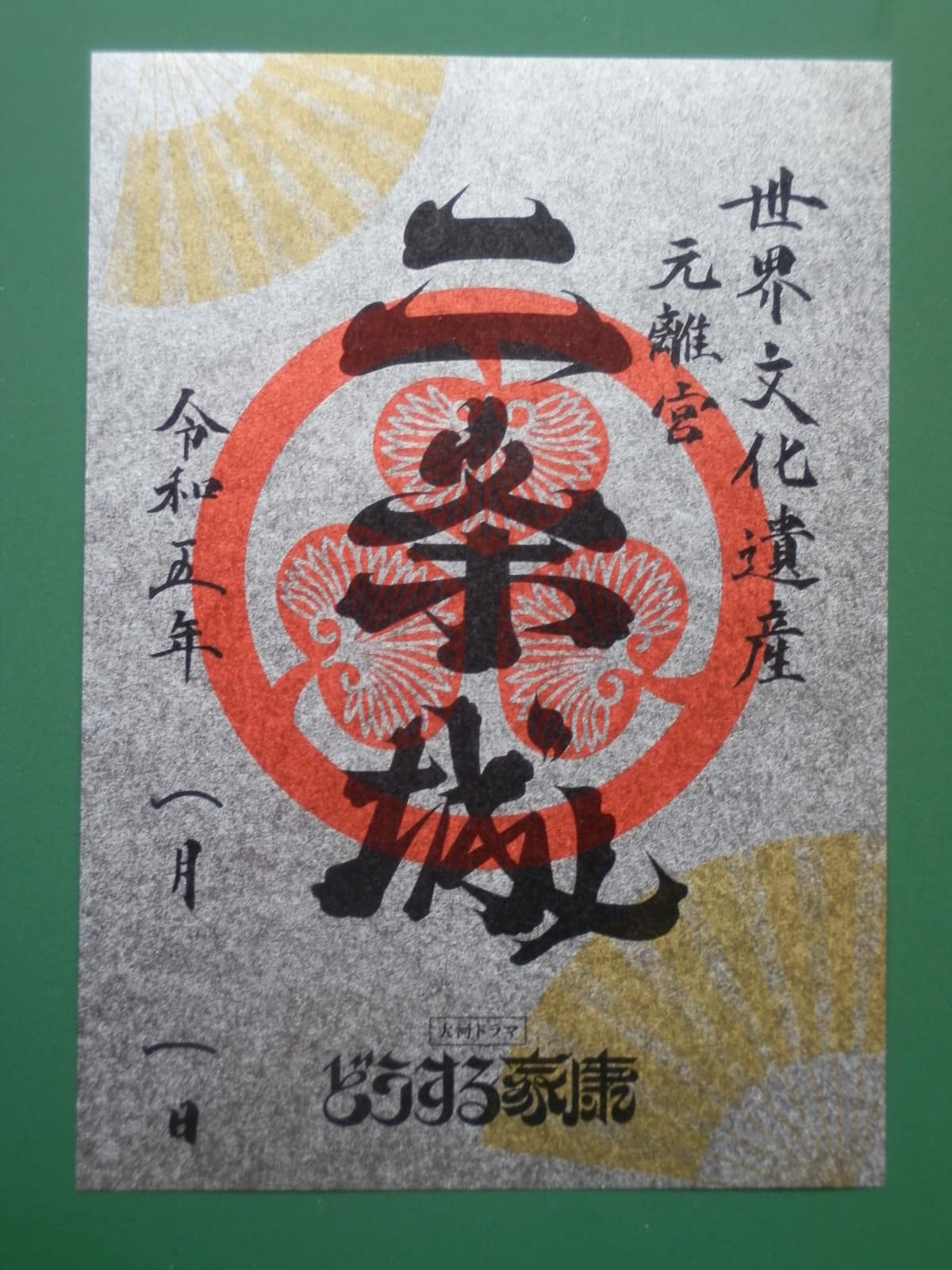
The tower's own "gojoin / tokanpu" is another matter. From verification, Osaka Castle gojoin have historically been limited-run commemorative editions — things like a "first Reiwa edition" or a "90th reconstruction anniversary" version, listed one by one on collector sites and mostly marked "sold out (discontinued)." Whether any standard version is on sale in 2026 honestly can't be confirmed, and there's no gojoin page on the official site.
So hold this principle: want a goshuin? Hokoku Shrine is dependable. Want an Osaka Castle gojoin? It's a gamble on whatever the museum shop on the tower's first floor happens to have that day. Don't lump the two together and assume both are always available. For how castle seals differ from shrine goshuin and how to collect them, see the Japan gojoin guide.
Nishinomaru Garden: the tower-and-blossom shot
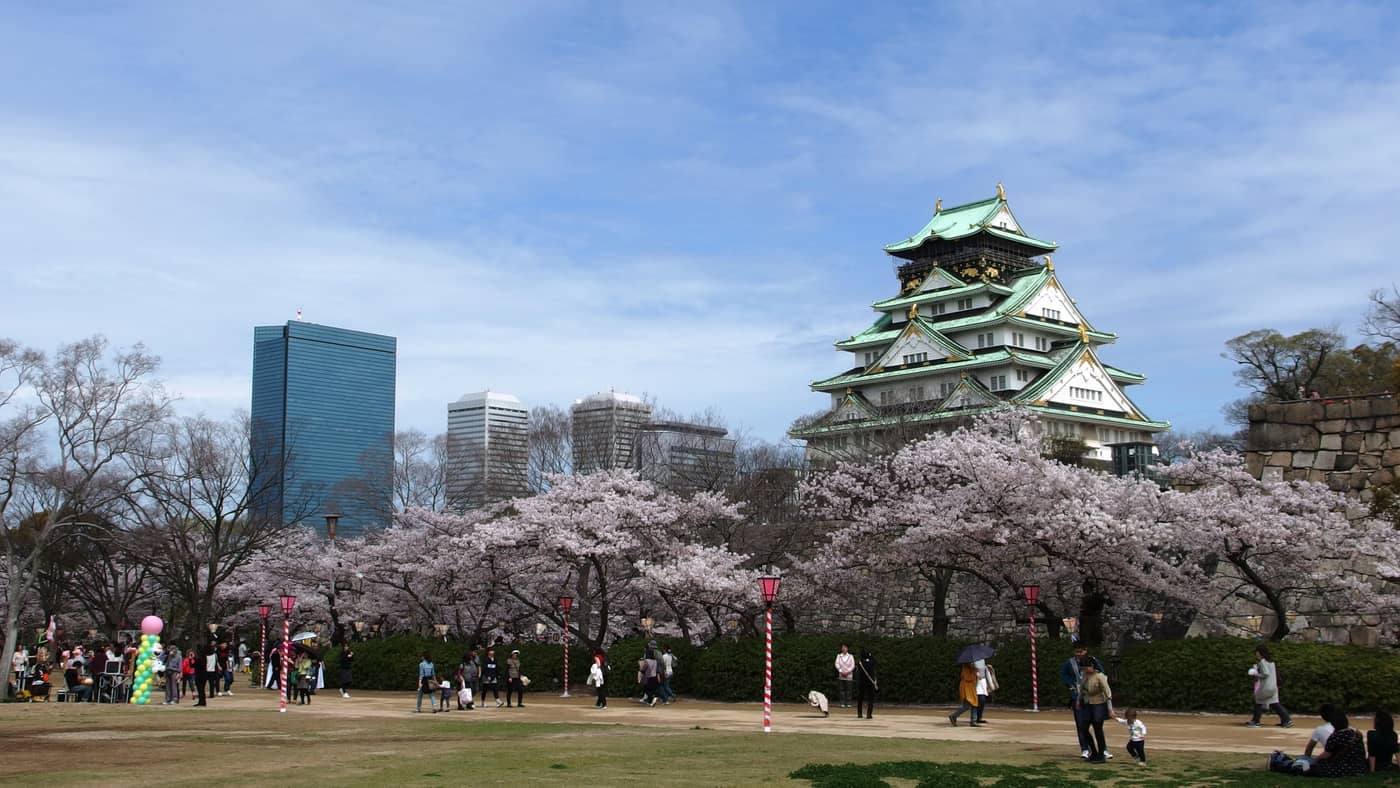
Osaka Castle Park is free, but the southwest corner holds a separately ticketed Nishinomaru Garden, worth calling out on its own because it's the classic spot for the "tower framed by cherry blossoms" shot. The roughly 6.5-hectare garden holds about 300 cherry trees, an open lawn sweeping right up toward the tower's base — a far better composition than any other corner of the park.
Mind the recent price bump: adult entry is ¥300, the new rate from April 1, 2026 (it was ¥200), free for junior-high age and younger. During the evening cherry-blossom opening (Kanreki Nighter, roughly late March to early April, announced yearly), the special rate is ¥350, held unchanged through the price change. The garden opens 9:00 to 17:00 (last entry 16:30), closed Mondays (rolled to the next day if a holiday).
Is it worth entering? My call is blunt: very much in cherry-blossom season, take-it-or-leave-it otherwise. In full bloom, Nishinomaru is one of Osaka's finest cherry-and-tower compositions — daytime blossoms against the castle, and illuminated tower at the evening Nighter, each with its own appeal; off-season it's just a lawn, and you can save the ticket for something else. For how the rest of Osaka's cherry-blossom spots fit together, see the Osaka cherry blossom guide.
Four seasons: cherry, plum, peach, autumn
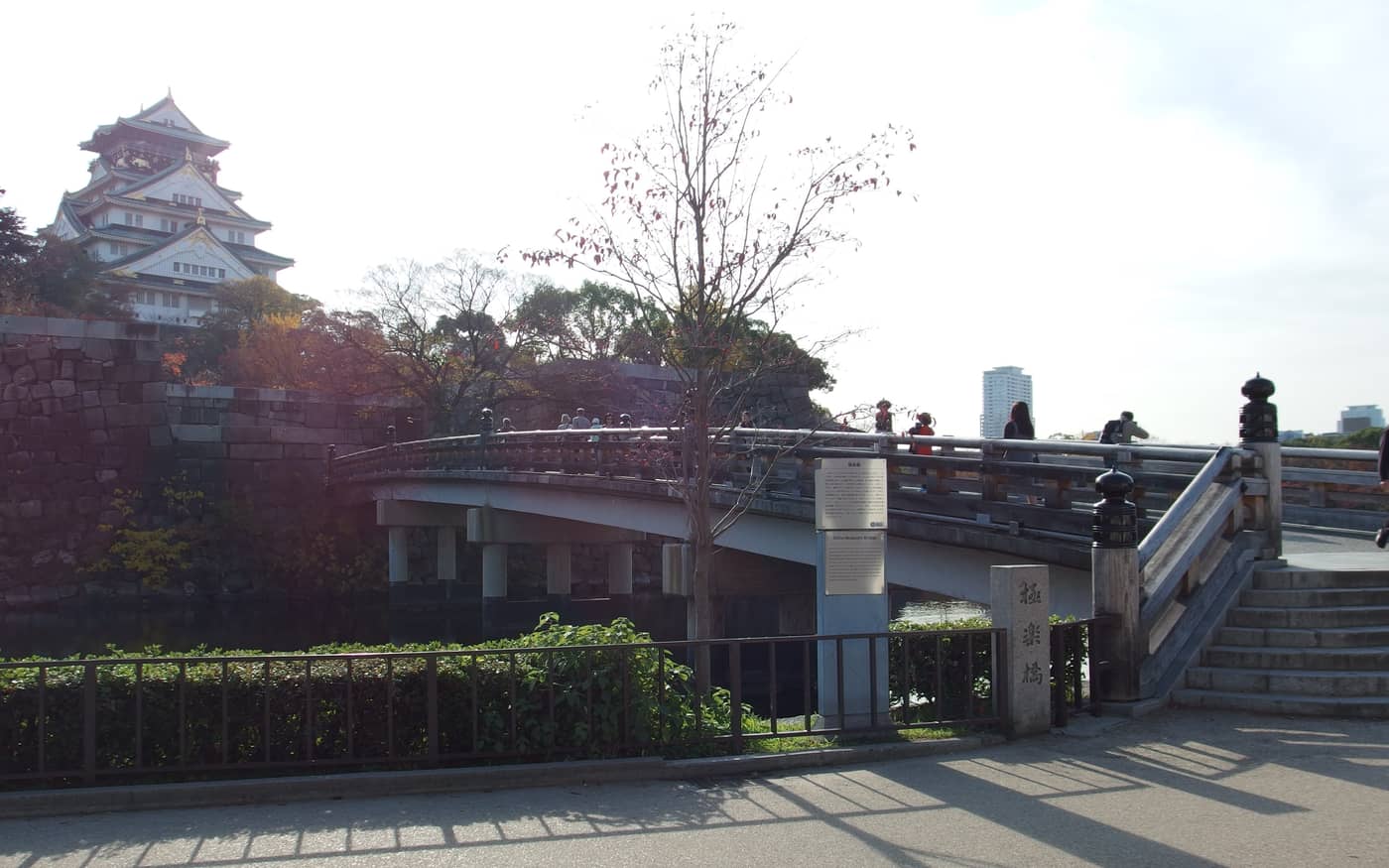
Osaka Castle Park has flowers year-round, not just cherry. One honest caveat, though: the official pages' word-for-word peak dates for the plum grove, peach garden, and in-park autumn color couldn't be reliably retrieved during verification, so the timings below are broad references — confirm the current-year notice with the park before you go.
- Cherry (late March–early April): the ~300 trees at Nishinomaru Garden are the headline, with plenty more Somei-Yoshino across the park; this is the castle's busiest season by far.
- Plum (early spring): the well-known plum grove east of the inner moat holds about 1,245 trees across 105 cultivars over roughly 1.7 hectares per the official site, and it is free to enter. It is the year's earliest bloom here, roughly late January to early March, with the actual peak drifting by temperature each year. That many cultivars means finely staggered early, mid and late waves — how to time it is covered in the Japan plum blossom guide.
- Peach (spring): a peach garden blooms roughly after the plum and before the cherry — a transitional-spring highlight.
- Autumn color (late November–early December): ginkgo and maples in the park turn, with the moat and tower for atmosphere, but it isn't Osaka's top koyo spot by scale — for a serious autumn trip, Minoo and Katsuo-ji are worth the special trip; see the Osaka-Nara autumn guide.
Access: which of the four stations to use
Osaka Castle Park is huge, ringed by four-plus stations, and picking the wrong one adds a real walk. A practical bottom line first: heading straight for the tower, enter via Tanimachi 4-chome or Morinomiya; want to browse the JO-TERRACE mall first, use Osakajokoen Station.
| Station | Line | Exit | Best for |
|---|---|---|---|
| Morinomiya | JR Osaka Loop / Osaka Metro Chuo | Chuo Line exits 1 & 3-B | Coming via the Loop line; close to both tower and Hokoku Shrine |
| Osakajokoen | JR Osaka Loop | Park exit | Browsing JO-TERRACE and eating before entering |
| Tanimachi 4-chome | Osaka Metro Tanimachi / Chuo | Tanimachi Line exit 1-B (toward the tower) | Most direct to the tower and Hokoku Shrine |
| Temmabashi | Keihan Main / Osaka Metro Tanimachi | Tanimachi Line exit 3 | Arriving via the Keihan line or the castle's north side |
To be straight with you: the official access page lists station names and exit numbers but no walking times to the tower, so I won't invent a precise number. All four are within walking range; the grounds are large, and from any of them it's a walk of a good ten-plus minutes to the tower's base — factor that in if you're with older travelers or pushing a stroller. The exit numbers are officially confirmed, so follow those with confidence.
Crowds & the honest "is it worth it" call
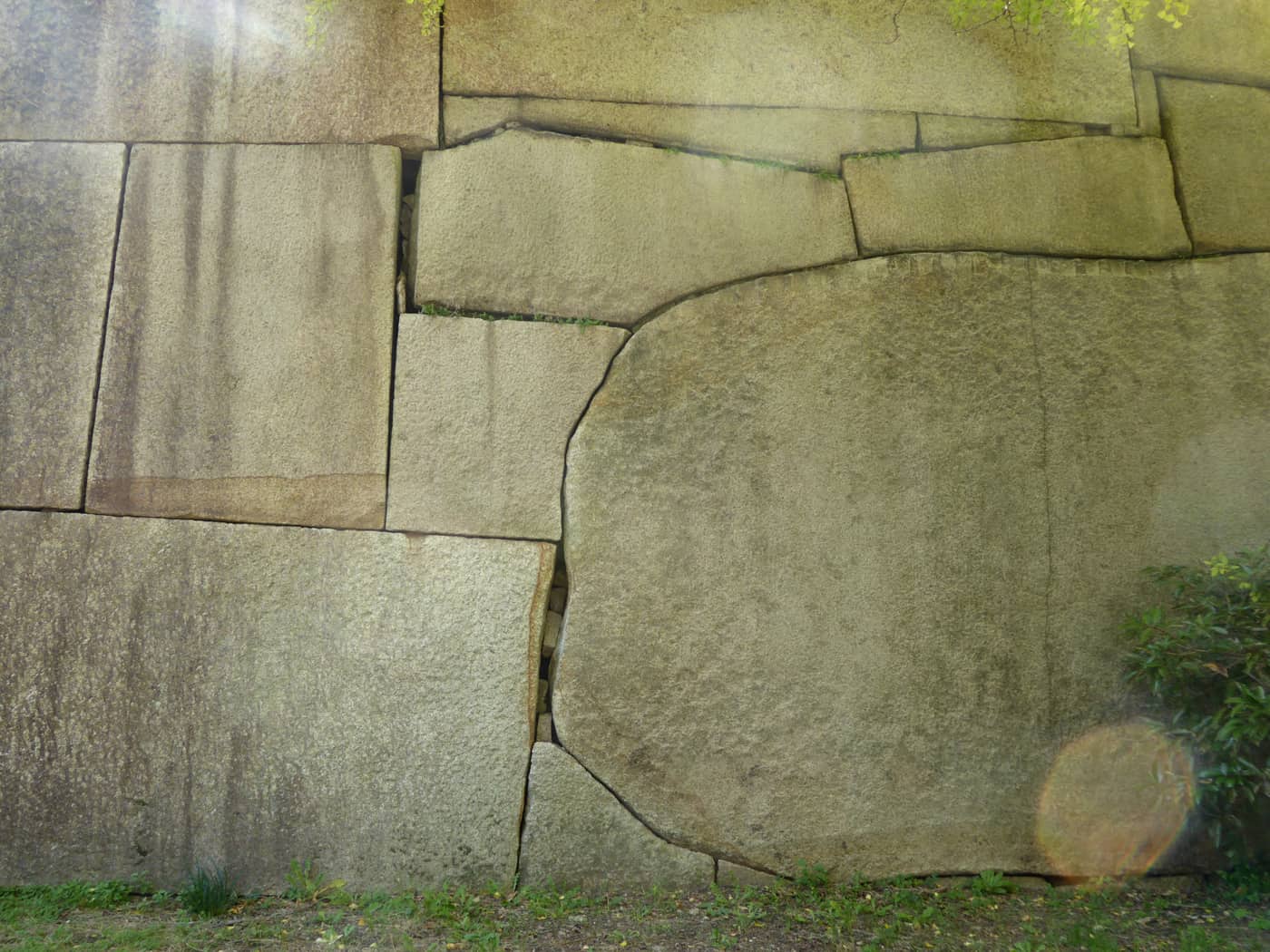
Crowds first. The tower is one of Osaka's busiest indoor attractions, and at peak times just queuing for the elevator eats time. Two useful windows:
- Arrive right at the 9:00 opening. This is the single most effective move — wait times are near zero at opening, whereas weekend 10 a.m. to 3 p.m. sees the crowds and elevator lines stretch out.
- After about 4 p.m. near closing. Daytime tour groups thin out, and the run-up to last admission is comparatively relaxed.
About the tower's interior elevator: the official FAQ says the building has elevators that can carry you to the top floor. Which floors they actually serve, and how they are managed at peak times, follows the notices posted on the day — so if you have limited mobility, a stroller, or a wheelchair, ask staff at the entrance rather than assuming you can ride all the way up. Buying tickets online also skips the ticket-window queue.
So — is Osaka Castle worth a special trip? Here's how I split it: the free park (moat, giant stone walls, tower exterior) is exceptional value that almost everyone should see; but paying ¥1,200 to climb the tower for the indoor museum is worth-it-for-some. If you're into Toyotomi Hideyoshi and the Osaka campaigns, or want the city view from the top, the ¥1,200 is well spent; if the museum exhibits leave you cold and you just want the castle in a photo, standing in the free park shooting the exterior and circling the moat and stone walls already gets you about 80% of Osaka Castle. Here's the line I'd give a friend straight: the exterior is free and it's the most jaw-dropping part; the interior is a bonus, not a requirement.
Eat & shop: JO-TERRACE and Hokoku Shrine
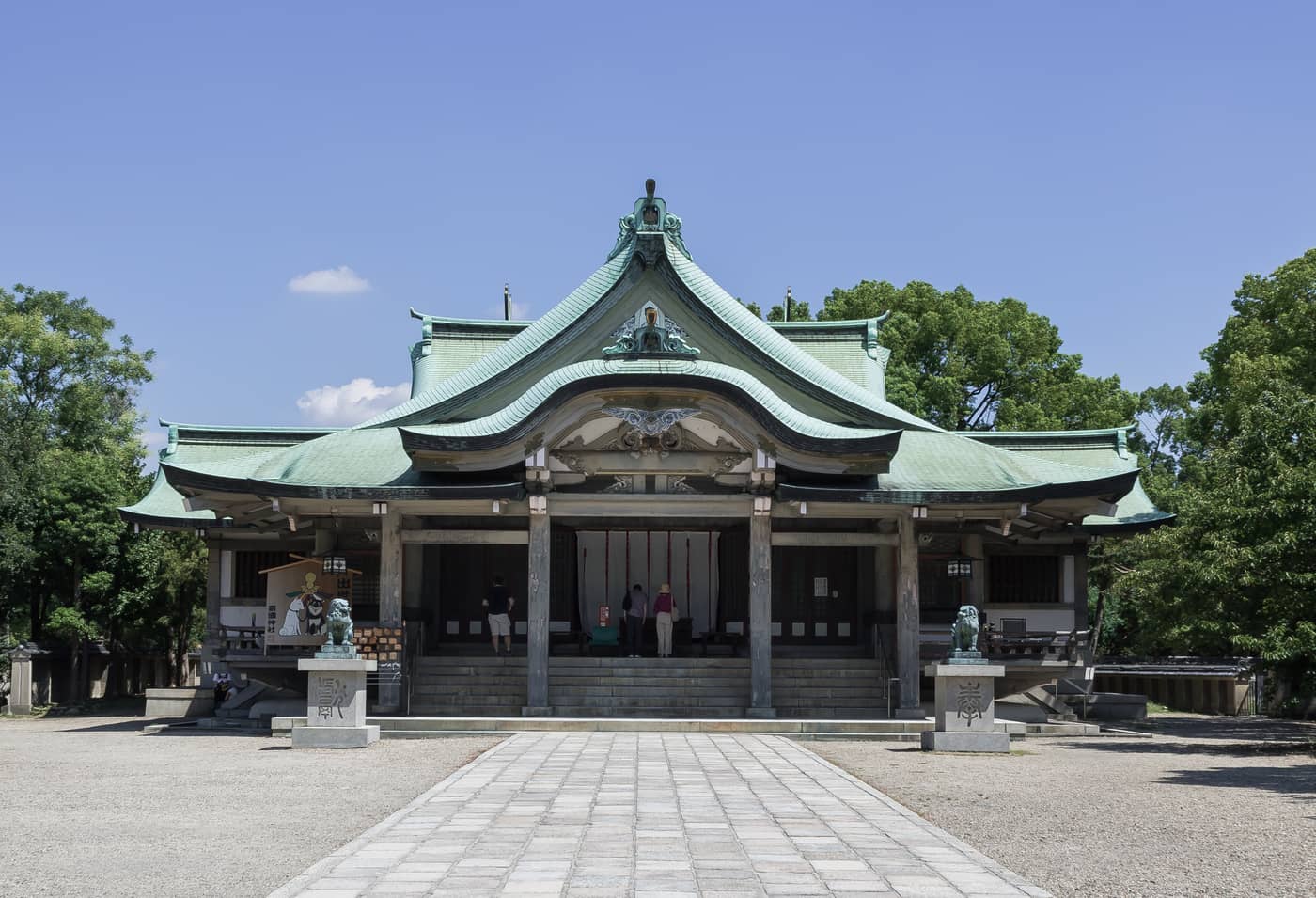
Once you've toured the castle, eating and shopping cluster at JO-TERRACE OSAKA beside Osakajokoen Station — a row of dining right at the park exit, spanning okonomiyaki, cafes, Korean food and more, the most convenient refuel point in and out of the grounds. Below are representative venues with verified names and addresses (verified July 21, 2026; hours and closures can change, so confirm the venue's latest notice before you go):
- Chibo JO-TERRACE OSAKA — a branch of the well-known okonomiyaki chain Chibo; teppan-grilled okonomiyaki suits a castle-view stroll. Weekdays 11:00–18:00, weekends/holidays 11:00–20:00 (last order roughly one hour before close; some sources also note a Monday closure — confirm on site). Osaka-shi Chuo-ku Osaka-jo 3-1, E TERRACE 1F (map)
- Saikabo JO-TERRACE OSAKA — Korean seasonal cuisine; bibimbap and hot-pot dishes are a good sit-down after a long walk. 11:00–22:00. Osaka-shi Chuo-ku Osaka-jo 3-1, F TERRACE 105 (map)
- good spoon (All Day Brunch & Dinner & BBQ Terrace) — an all-day cafe-restaurant with a terrace BBQ, good if you want to linger and shoot photos. 11:00–22:00. Osaka-shi Chuo-ku Osaka-jo 3-1, F TERRACE 2F (map)
For shopping, Hokoku Shrine — beyond the goshuin above — sells protective charms themed on Hideyoshi's shusse-kaiun (success and advancement), a nicely on-theme souvenir if you're after career, promotion, or exam luck; the shrine sits inside the honmaru. As for "Osaka Castle limited sweets" (things like shiro-monaka), verification turned up no reliably in-stock shop name or product, so I won't name one for the sake of it — ask at the JO-TERRACE souvenir shop on the day for the current lineup.
One practical note: checking routes, last trains, and venue hours on castle day all need data, so sort your mobile network in advance — buying a SIM at an airport counter in cherry-blossom or holiday season means long lines, so set up a KKday Japan eSIM online and connect on landing.
Frequently Asked Questions
- Q1:How much is Osaka Castle Main Tower admission in 2026?
- Per the official guide page, tower admission is ¥1,200 for adults, ¥600 for university and high-school students (ID required), and free for junior-high age and younger (ID required). This is the price after the April 1, 2025 change — before that, adults paid just ¥600, so the fee literally doubled. If your guidebook or a blog still says ¥600, that is the old price. Groups of 15 or more get a discount (¥1,080 adult), and Osaka-city residents aged 65+ or holders of a disability certificate enter free with the right ID. To double-check before you go, the official page is osakacastle.net.
- Q2:What are Osaka Castle opening hours? Is it closed over New Year?
- The tower is open 9:00 to 18:00, with last admission at 17:30, and it closes for the New Year period from December 28 to January 1. In peak seasons (Golden Week, summer) the operator has historically extended hours, but note the base closing time is already 18:00 now, so older "extended to 18:00" notes may no longer mean anything — check osakacastle.net for the current-year notice. To dodge crowds, arrive right at the 9:00 opening or after about 4 p.m. near closing; both beat the weekend midday queue.
- Q3:Does the Osaka Amazing Pass include Osaka Castle Main Tower?
- Yes. Per the official Osaka Amazing Pass facilities list, both the Main Tower and the Osaka Castle Gozabune river boat are on the free-entry list — this is confirmed on the official page, not an assumption. So if your day strings together the tower, Tsutenkaku, and a Dotonbori cruise inside central Osaka, a pass (1-day ¥3,500) usually pays for itself fast. But if your day runs out to the Hankyu line (Minoo, Katsuo-ji) or you only want to stroll the free park, the pass earns little. See our dedicated pass guide for the break-even math.
- Q4:Is the Osaka Castle goshuin the same as the gojoin (castle seal)?
- No, and this is the most common mix-up. The goshuin is issued by Hokoku Shrine inside the castle grounds — typically ¥300, with the counter open 9:00 to 16:50; it is a standard, reliably available stamp. The gojoin (tokanpu, castle seal) is the tower own commemorative item, historically issued in limited runs, many now discontinued, and whether any standard version is on sale in 2026 could not be confirmed — check the museum shop on the tower first floor on the day. In short: the shrine goshuin is dependable; the castle gojoin is hit-or-miss.
- Q5:Does Nishinomaru Garden cost extra? Is it worth it?
- Yes — Nishinomaru Garden is a separately ticketed area, not included in tower admission. Adult entry is ¥300 (from April 1, 2026; it was ¥200 before), free for junior-high age and younger, with a special ¥350 rate during the cherry-blossom evening opening (Kanreki Nighter). Worth it depends on the season: the roughly 6.5-hectare garden holds about 300 cherry trees and is the classic spot for shooting the tower framed by blossoms, so it is very much worth it in sakura season (late March to early April); off-season it is just an open lawn you can skip.
- Q6:Is Osaka Castle worth a special trip? Is half a day enough?
- It depends what you expect. If you picture an Edo-era wooden castle, reset that — the current tower is a 1931 citizen-funded concrete reconstruction with a modern museum inside. But if what you want is the gleaming, monumental landmark exterior over the moat and giant stone walls, plus a city view from the top, it delivers. On timing: the free park, moat, and tower exterior for photos take 2 to 3 hours comfortably; add the full museum inside plus the Gozabune boat or Nishinomaru Garden and half a day is about right.
Read next
Osaka & Kyoto 5-day itinerary
Dotonbori, Kiyomizu, Arashiyama — full tested route.
Osaka Amazing Pass 2026: Is It Worth It? 1-Day vs 2-Day Math
Five worked-out routes: the 1-day pass at ¥3,500 pays back on three attractions, the 2-day at ¥5,000 — plus who should skip it entirely.
Osaka & Nara Autumn 2026: Minoo Falls, Katsuoji & Deer Park
Kyoto crowds got you down? Minoo Falls, Katsuoji daruma slopes, and deer-and-maple Nara — routes and fees decoded.
📊 See the 2026 Price Index (JR Pass, DPA, eSIM, Airport Transport) →