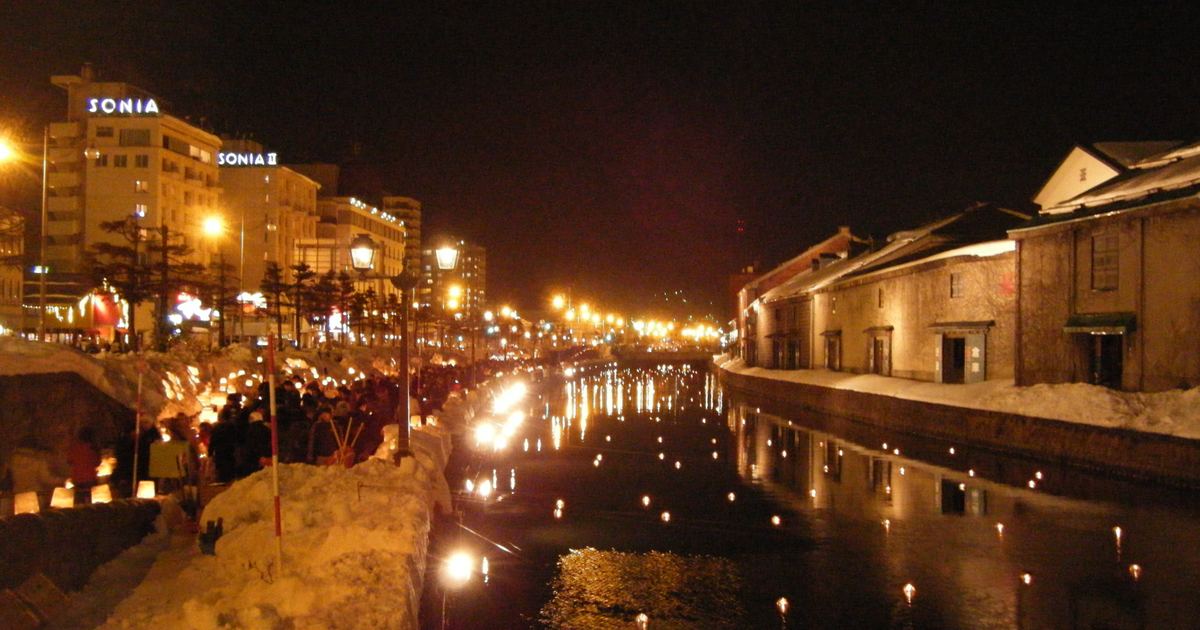
The Otaru Snow Light Path is one of Hokkaido's most overlooked free events — no admission fee at all, yet it delivers the one scene most of Hokkaido's winter itineraries miss: a candlelit canal with the reflections to match. It usually runs close to the much bigger Sapporo Snow Festival, and plenty of travelers pack their whole trip around Sapporo without realizing Otaru's evening walk is sitting 30 minutes away. This guide covers which of the two main venues to prioritize, when to go for the best light, and how to pair it cleanly with Sapporo. The 2027 edition runs February 6-13.
- 2027 dates: Feb 6 (Sat) – Feb 13 (Sat): eight days; 2027 lighting hours not yet published (past years roughly 17:00-21:00)
- It's entirely free: both main venues have no admission fee; the only spend is food stalls
- There are canal lights outside those eight days: the Blue Canal light-up covers the same stretch from Nov 1, 2026 to Jan 31, 2027, sunset to 22:30 — the two events do not overlap
- Canal vs Temiya Line: the Canal venue (candlelit reflections, the postcard shot) paired with Temiya Line (lanterns and food stalls, thinner crowds) — 10-15 minutes apart on foot
- Best timing: lights run roughly 17:00-21:00 by past-year pattern; 17:00-18:00 has the fewest people
- Pairs naturally with Sapporo: about 30 minutes by JR, with dates often overlapping the Snow Festival's window — set up a KKday Japan eSIM to check official updates on the go
Table of Contents (click to expand)
When is it in 2027?
February 6 (Sat) to February 13 (Sat), 2027 — eight days, as announced by the Otaru Tourism Association. Lighting hours and venue details come later; check the Otaru Tourism Association winter events page before you go.
That follows the same shape as the last two years, starting on the first or second Saturday of February: February 8-15 in 2025 (27th edition) and February 7-14 in 2026 (28th edition).
| Year / Edition | Official dates | Length | Status |
|---|---|---|---|
| 2025 (27th) | Feb 8 (Sat) – Feb 15 (Sat) | 8 days | Concluded |
| 2026 (28th) | Feb 7 (Sat) – Feb 14 (Sat) | 8 days | Officially confirmed |
| 2027 | Feb 6 (Sat) – Feb 13 (Sat) | 8 days | Officially confirmed |
The event's roots trace back to 1999, when local residents involved in a movement to preserve Otaru Canal set out a few hundred snow lanterns along the waterfront. It has since grown to include the Temiya Line and Mt. Tenguyama venues, becoming one of Otaru's signature winter community events. That background matters practically: this isn't a large corporate-run festival with a fixed annual template — much of the lantern-making and placement is done by volunteers, and weather or turnout that season can shift the exact venue footprint or hours slightly. That's exactly why checking the official site before you travel matters more here than for a standard tourist attraction.
Worth noting: Japan's other signature winter light-up — the Shirakawa-go gassho village illumination — runs on the opposite system. Its four 2027 dates are already confirmed (Jan 11, 17, 24, 31, 17:30–19:30) and entry is fully reservation-only with no walk-ups, while Otaru's Snow Light Path is free to wander into. If you want both in one winter, lock in Shirakawa-go first; Otaru can be slotted in last.
Not there in February? The canal is still lit
Yes, and on the same stretch of water. The Otaru Tourism Association runs a second winter light-up, Ao no Unga (the Blue Canal), from early November to the end of January, covering the Asakusabashi-to-Chuobashi section — the same stretch the Snow Light Path uses for its Canal venue. So a December trip, or a January Hokkaido itinerary, still gets a lit canal in the evening without rebooking flights around eight days in February.
| Dates | November 1, 2026 (Sun) – January 31, 2027 (Sun) |
|---|---|
| Venue | Otaru Canal (Asakusabashi – Chuobashi) |
| Lit | Sunset – 22:30 |
| Ticket | None — the venue is the canal promenade itself |
| Enquiries | 0134-33-2510 |
One thing to work into your dates: the two events do not overlap. The Blue Canal ends January 31 and the Snow Light Path starts February 6, so February 1-5 catches neither. If the handmade snow lanterns and candles are what you came for, you need those eight days in February; if you just want the canal lit at night, any evening from November to January works.
Canal venue vs Temiya Line venue: which to see
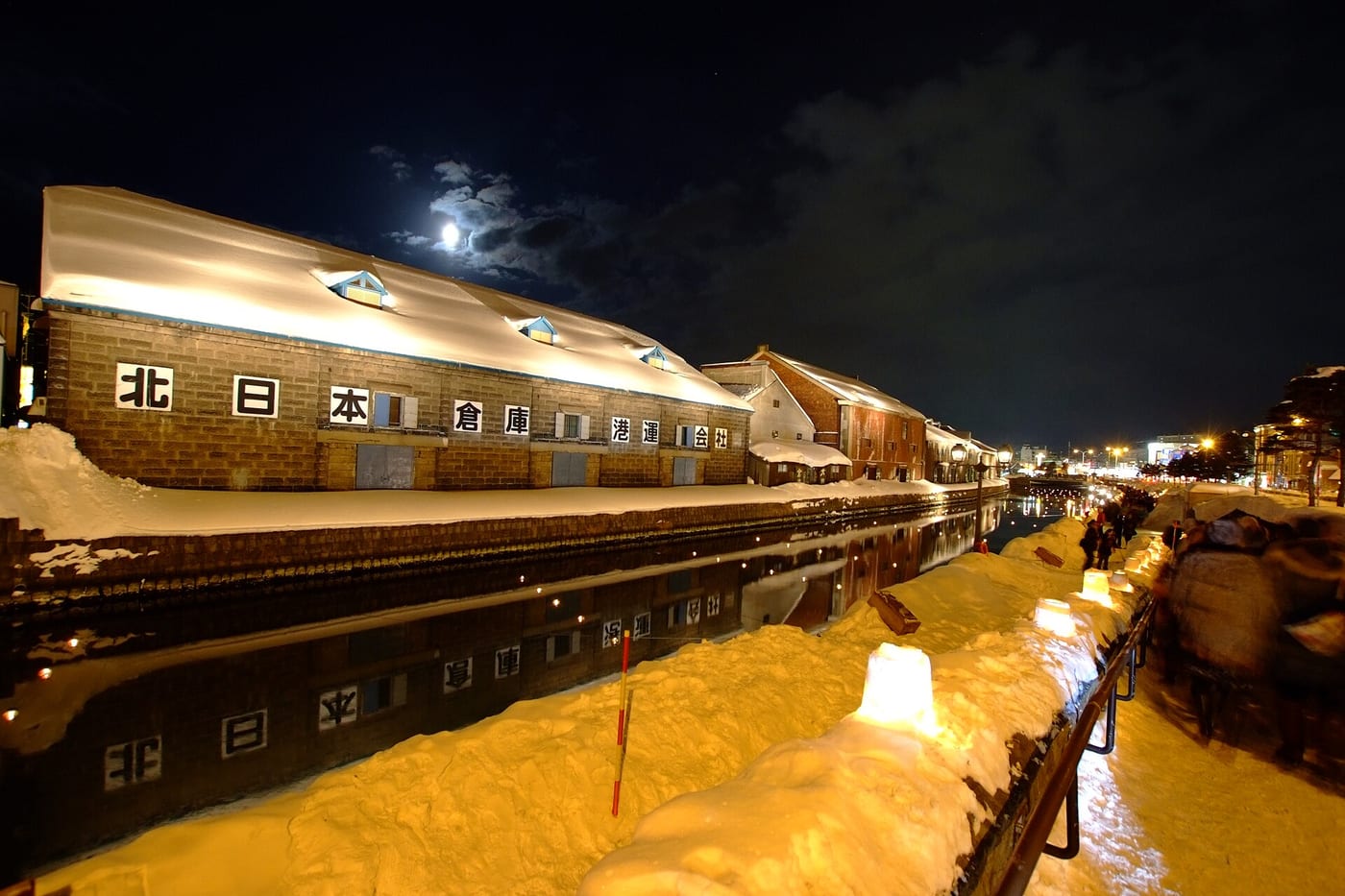
If you only have time for one, my honest take: go to the Canal venue first. It's the strongest visual and the shot that shows up in nearly every piece of official promotion — roughly 300 meters of canal lined with candles and lanterns floating on the water, framed by the historic warehouses. This isn't a "both are equally great" non-answer; the Canal venue simply wins on visual impact if you're comparing the two head to head.
If you have more time and want to escape the busiest stretch, the Temiya Line venue is worth the extra walk. It runs about half a kilometer along a decommissioned rail bed, with snow lanterns, lit statues and food stalls creating a more relaxed, neighborhood feel — and the crowds are generally thinner than at the canal. The two venues are a 10-15 minute walk apart, so with time to spare, the natural order is Canal first, then Temiya Line, which also happens to match a north-bound walk from JR Otaru Station.
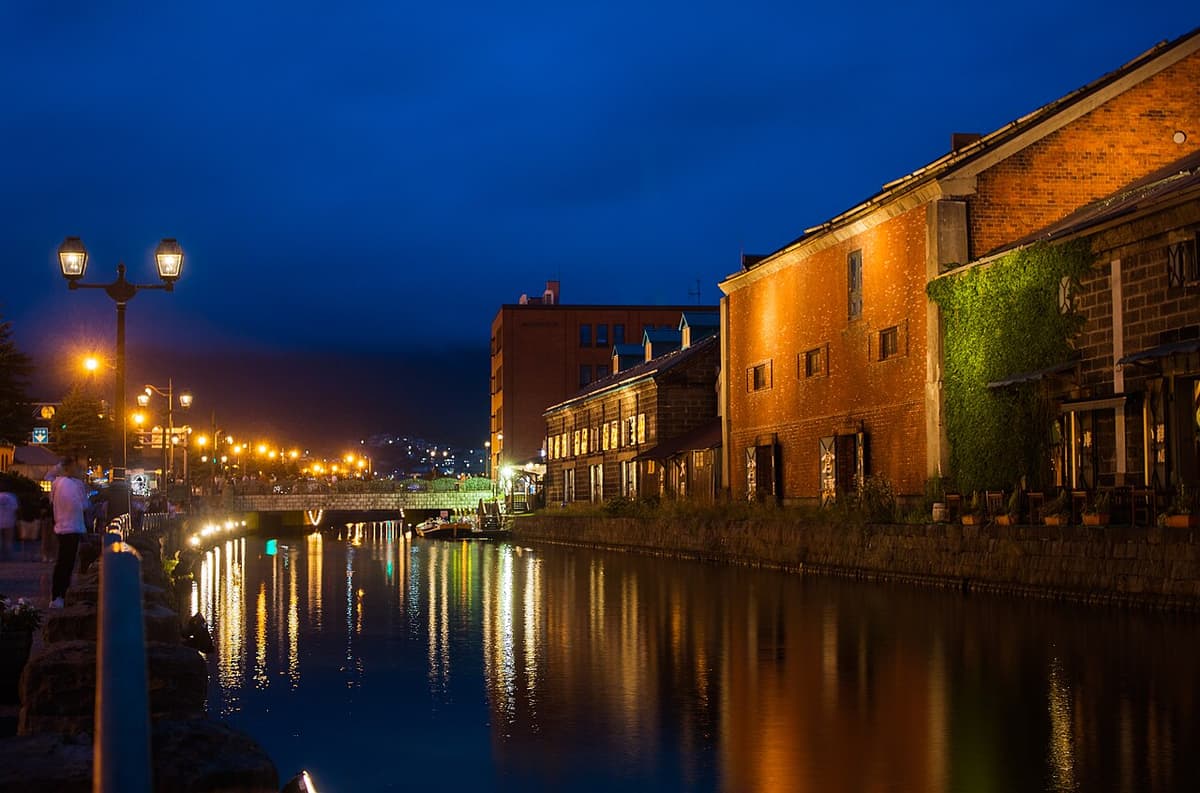
| Venue | What it's known for | Length | Crowds | Time to budget |
|---|---|---|---|---|
| Canal venue | Candlelit reflections, floating snow lanterns, warehouse backdrop — the strongest visual | ~300 m | Main venue, more crowded | 30-45 minutes |
| Temiya Line venue | Lanterns and lit statues along a former rail line, plus food stalls; more relaxed feel | ~500 m | Thinner than the Canal venue | 30-45 minutes |
Best time to go, and dodging crowds
Going by past years, both main venues run roughly 17:00 to 21:00, with the exact 2027 hours still pending official confirmation — check the official site before you travel rather than assuming the schedule above carries over.
Which window to pick depends on the shot you want: 17:00-18:00, right after the candles are lit, is the quietest window and still holds a trace of blue-hour daylight, which makes for richer canal reflections than full darkness. After 19:00 the crowds thicken, especially on weekends, but the deeper darkness makes the candlelight itself pop harder and more dramatically. Neither is objectively better — pick the quiet-and-soft option or the darker-and-more-dramatic one depending on what you're after.
Same as with the Sapporo Snow Festival, weekends during the event window tend to draw noticeably bigger crowds than weekdays. If your schedule allows it, building the Otaru evening around a weekday makes the whole walk considerably easier.
Pairing it with the Sapporo Snow Festival
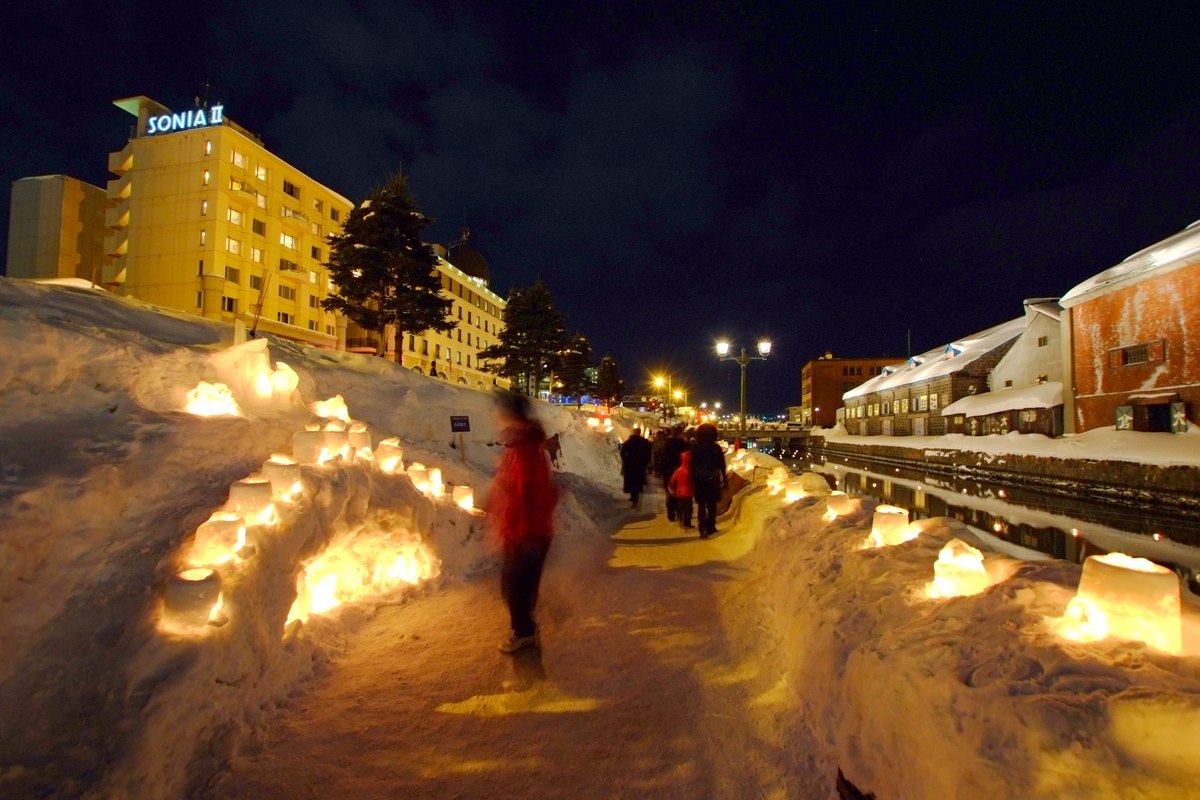
The most common way travelers build this trip is pairing it with the Sapporo Snow Festival — Otaru is about a 30-minute JR ride from Sapporo, so the transit cost is minimal. In 2027 the Sapporo Snow Festival runs Feb 4-11 and Otaru runs Feb 6-13, so both events are on from Feb 6 (Sat) to Feb 11 (Thu, National Foundation Day) — put your dates inside that window if you want both.
A workable split: spend a day in Sapporo touring the city, then head to Odori Park and Susukino at dusk for the festival's snow and ice sculptures, and either the same night (if the timing works) or the next day, take the JR out to Otaru specifically for the Canal venue after dark. The reverse order works just as well — a night in Otaru for the lights first, then a full day into Sapporo for the festival and the city's core sights. Either way, the one thing I'd avoid is cramming both into the same evening: a proper Odori-plus-Susukino evening in Sapporo already fills a night on its own, and adding a round trip to Otaru on top of that usually means rushing both and losing photo quality on each. Splitting them across two separate evenings, each with its own full attention, is the better trade.
Getting around, cold-weather gear, and event notes
The Canal venue is about a 10-minute walk from JR Otaru Station, and the Temiya Line venue extends north from there along the old rail bed — the two are a 10-15 minute walk apart, so you can string them together on foot without booking anything or working around a scheduled tour slot. The whole event is a free, self-guided walk-through; there's no ticketing, timed entry, or headcount limit to plan around.
Dress warmer than you would for a daytime itinerary: early-February nights in Otaru commonly sit around −5°C, and standing or slow-walking through an outdoor lantern display feels colder than active sightseeing. A thermal base layer, fleece, and windproof-waterproof shell are the baseline, with gloves, a beanie and hand warmers rounding it out. Grip-soled snow boots matter here specifically — the stone paving along the canal and the old rail bed at Temiya Line both get slick once snow starts melting and refreezing, and ordinary sneakers are a real fall risk on these surfaces. See the Hokkaido section of our Japan climate and clothing pillar guide for the full packing list.
According to the official event background, most of the snow lanterns and candle holders across the venues are hand-made and placed by local volunteers, with part of the canal-side lighting floating directly on the water. The organizers occasionally run public lantern-lighting sessions during the event window; check the official site for the current schedule and any participation details. If you're extending beyond Otaru and Sapporo into Asahikawa or Hakodate, it's worth comparing whether a Hokkaido Rail Pass pays off for your route.
Other venues and daytime Otaru
Beyond the Canal and Temiya Line venues, recent editions have also included the Otaru Art Base venue (a plaza with a snow slide and stage events) and the Mt. Tenguyama venue (ropeway access up to a hilltop view over the city), plus roughly 20 smaller neighborhood venues run by local residents scattered around town. If your time is tight, the Canal and Temiya Line venues are the most concentrated and easiest to combine on a single route; with time to spare, Tenguyama's elevated view is a solid way to see the city lights from above and skip the densest crowds at the core venues.
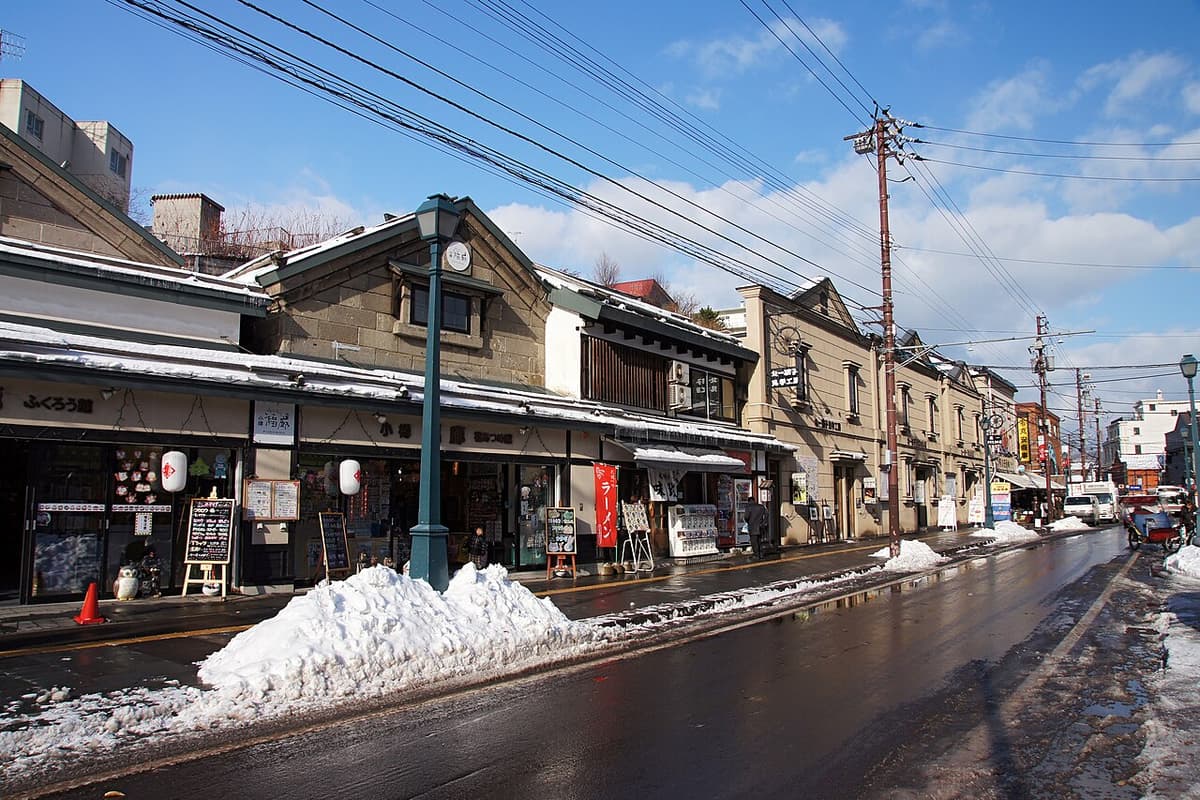
The Snow Light Path is strictly an after-dark event, so daytime is a good fit for the canal-side Sakaimachi shopping street, Kitaichi Glass, the Otaru Music Box Museum, or a sushi lunch — then loop back to the Canal venue once it gets dark. Full daytime routing and shop picks are in our Otaru travel guide. To fold Otaru and Sapporo into one complete Hokkaido winter trip, see our Hokkaido winter 7-day itinerary, or start with our Sapporo travel guide for the city's core sights.
Otaru Snow Light Path FAQ
- Q1:When is the Otaru Snow Light Path in 2027?
- February 6 (Sat) to February 13 (Sat), 2027 — eight days, as announced by the Otaru Tourism Association. Lighting hours and venue details for 2027 have not been published yet; check the Otaru Tourism Association winter events page before you go.
- Q2:If I am not in Otaru in February, are the canal lights on at all?
- Yes. The Otaru Tourism Association runs a separate light-up called Ao no Unga (the Blue Canal) from November 1, 2026 (Sun) through January 31, 2027 (Sun), along the Asakusabashi-to-Chuobashi stretch of Otaru Canal, lit from sunset until 22:30. It is a different event from the Snow Light Path and the dates do not overlap — arrive between February 1 and 5 and you catch neither.
- Q3:What is the difference between the Canal venue and the Temiya Line venue?
- The Canal venue runs about 300 meters along Otaru Canal, with candles and snow lanterns floating on the water in front of the historic warehouses — the classic postcard shot most people picture. The Temiya Line venue stretches roughly half a kilometer along a former railway right-of-way, with snow lanterns, lit statues and food stalls, and generally fewer crowds than the canal. If you only have time for one, the Canal venue delivers the stronger visual; with more time, walk both — they are 10-15 minutes apart on foot.
- Q4:Do I need to buy a ticket for the Snow Light Path?
- No. Both main venues are entirely free and open to walk through — there is no admission fee at either site. The only spending you'll do is on food stalls (hot cocoa or roasted sweet potato runs roughly ¥300-500) and transit to and from Otaru.
- Q5:What time does it run, and when is the best time to go for photos?
- Going by recent years, both main venues light up roughly from 17:00 to 21:00, though the exact 2027 hours are pending official confirmation. The 17:00-18:00 window, right after the candles are lit, has the fewest people and still holds a trace of daylight for canal reflections. After 19:00 the crowds pick up, especially on weekends, but the darker sky makes the candlelight pop more. Neither window is objectively better — pick based on whether you want a quiet frame or deeper contrast.
- Q6:Can I combine this with the Sapporo Snow Festival?
- Yes, and that is how most visitors build the trip. Otaru is about 30 minutes from Sapporo by JR. In 2027 the Sapporo Snow Festival runs Feb 4-11 and the Otaru Snow Light Path runs Feb 6-13, so both are on from Feb 6 to Feb 11.
- Q7:How do I get between the venues? Do I need reservations?
- No reservations are needed for either venue — it's a free, self-guided walking event. The Canal venue is about a 10-minute walk from JR Otaru Station, and the Temiya Line venue extends north from there along the old rail bed. The two are a 10-15 minute walk apart, so you can string them together on foot without booking anything in advance.
- Q8:How should I dress for the cold at the venues?
- Early-February nights in Otaru commonly sit around −5°C, and standing or slow-walking through an outdoor lantern display feels colder than an active daytime itinerary. Plan on an extra layer beyond your daytime gear: thermal base layer, fleece, and a windproof-waterproof shell, plus gloves, a beanie and hand warmers. Grip-soled snow boots matter here — the canal-side stone paving and the old rail bed both get slick once snow starts melting and refreezing. See the Hokkaido section of our Japan climate and clothing pillar guide for the full packing list.
- Q9:How are the candle lanterns actually made and placed?
- According to the official event background, most of the snow lanterns and candle holders across the venues are hand-made and placed by local volunteers, with part of the canal-side lighting floating directly on the water. That is also why the scene varies slightly year to year — the exact density and layout of lanterns depends on volunteer turnout and weather that season. The organizers occasionally run public lantern-lighting sessions during the event; check the official site for the current schedule.
- Q10:Are there venues besides the Canal and Temiya Line?
- Yes. In recent years the event has also included the Otaru Art Base venue (a plaza with a snow slide and stage events) and the Mt. Tenguyama venue (ropeway access with a hilltop view over the city), plus around 20 smaller neighborhood venues run by local residents around town. If your time is limited, the Canal and Temiya Line venues are the most concentrated and easiest to combine on one route.
- Q11:What can I do in Otaru during the day before the lights come on?
- The Snow Light Path is an evening event, so daytime works well for the canal-side Sakaimachi shopping street, Kitaichi Glass, the Otaru Music Box Museum, or a sushi lunch, then loop back to the Canal venue once it gets dark — see our Otaru travel guide for the full daytime route. To fold Otaru into a complete Hokkaido winter trip alongside Sapporo, see our Hokkaido winter 7-day itinerary, or start with our Sapporo travel guide for the city's core sights.
Read next
Sapporo Snow Festival 2027: Which of the 3 Sites Is Worth It?
Official 2027 dates: Feb 4–11 across three sites. One evening only covers two — which to pick, when to dodge crowds, and why lodging needs booking now.
Otaru Travel Guide 2027: Otaru Canal, Sakaimachi, Glass & Music Boxes
A canal port town near Sapporo — the gas-lamp-lit Otaru Canal, Sakaimachi glass and music boxes, the steam clock, sushi street and LeTAO cheesecake.
Hokkaido Winter 7-Day Itinerary 2026
Sapporo → Otaru → Biei → Hakodate over 7 days, with JR Pass math, ski-shuttle reality, and a real two-person budget.