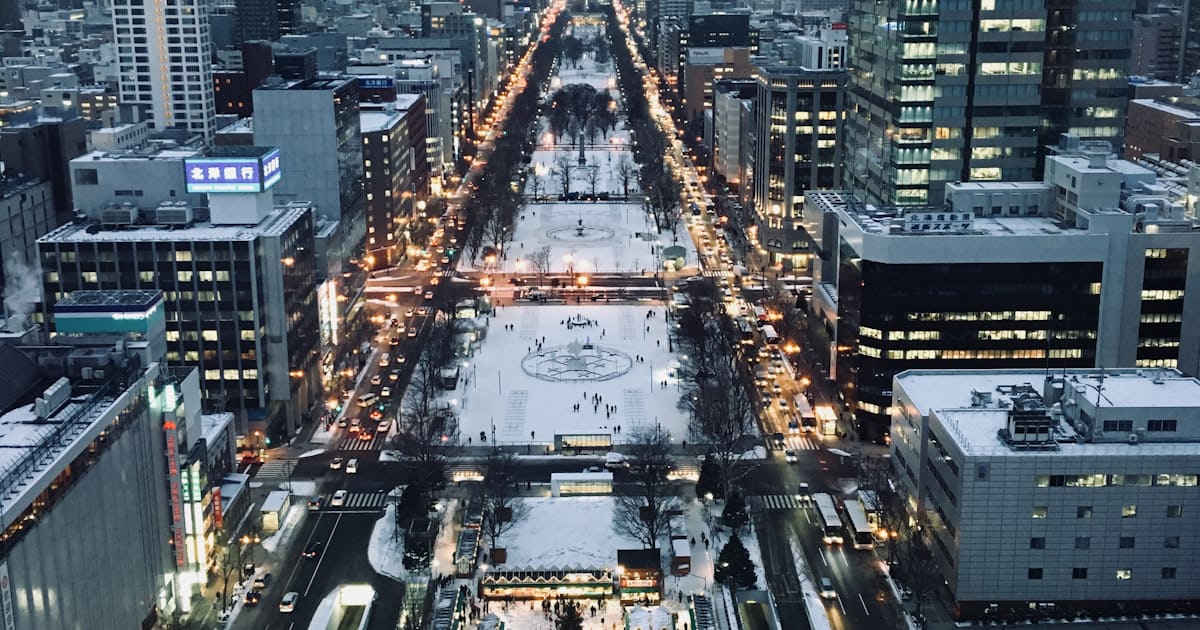
The Sapporo Snow Festival is Hokkaido's biggest winter event, and the dates are now official: the 77th edition runs February 4 (Thu) through February 11 (Thu, holiday) in 2027, eight days across three sites — Odori, Susukino and Tsudome — all open over the same dates and all free to enter. Here's a reality most first-timers miss: one evening is usually only enough to see two of the three sites properly. Pick the wrong site or the wrong time slot, and a flight to Hokkaido can turn into a rushed walk-through with cold feet to show for it. This guide covers which sites are actually worth your time, when to go to dodge the crowds, why lodging needs booking now, and the cold-weather and inter-venue logistics that trip people up.
- 2027 dates: Feb 4 (Thu) through Feb 11 (Thu, holiday), Odori, Susukino and Tsudome over the same dates, all free to enter
- Hours: Odori lit until 22:00, Susukino until 23:00 (22:00 on the last day), Tsudome 10:00–16:00 only
- One evening covers two sites, not three: Odori (five large snow sculptures + projection mapping) paired with Susukino (ice carvings) is the winning combo; skip Tsudome unless you have kids
- Lodging is the real urgency right now: downtown Sapporo sells out fast during festival week — book as soon as your travel window is set
- Don't arrive late: sculptures come down the morning after closing, so nothing is left from Feb 12
- Cold-weather non-negotiable: February normal low about −6°C, daytime around freezing, icy sidewalks — snow boots and layering are required
Table of Contents (click to expand)
- 2027 dates and the 3 sites at a glance
- Is the Sapporo Snow Festival worth it?
- Do you need tickets for the Sapporo Snow Festival?
- Odori vs Susukino vs Tsudome: which is worth it
- Best time to go, and how to dodge the crowds
- A one-evening route that actually works
- The lodging scramble: why book now
- Cold-weather gear and getting between sites
- Side trips: Otaru, Asahiyama Zoo, Lake Shikotsu, Noboribetsu
- FAQ
2027 dates and the 3 sites at a glance
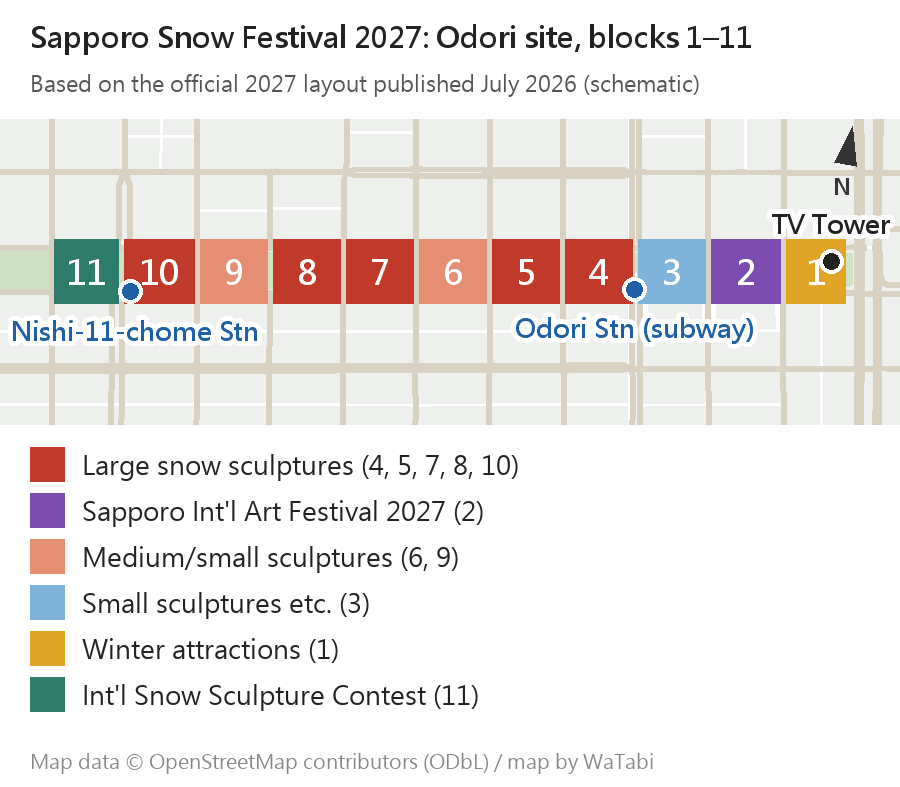
The 2027 Sapporo Snow Festival runs February 4 (Thu) through February 11 (Thu, holiday), eight days, with all three sites open over the same dates. The organizer, the Sapporo Snow Festival Executive Committee, published the layout in July: the Odori site covers Odori Park from West 1-chome to West 11-chome, about 1.1 km, and the five large snow sculptures stand in blocks 4, 5, 7, 8 and 10. In 2027 block 2 becomes a venue for the Sapporo International Art Festival 2027 (SIAF2027), so that stretch won't be snow sculptures. Sculpture themes, the projection schedule, Tsudome ride prices and the shuttle bus are updated on the official site from mid-December.
| Odori block | 2027 content |
|---|---|
| 1 | Winter attractions |
| 2 | Sapporo International Art Festival 2027 |
| 3 | Small snow sculptures, etc. (a paid skating rink in 2026; whether it returns in 2027 is not yet announced) |
| 4, 5, 7, 8, 10 | Large snow sculptures |
| 6, 9 | Medium and small snow sculptures |
| 11 | International Snow Sculpture Contest |
The same announcement also scheduled a linked event, Sapporo Snow Sports Park 2027 at the Daiwa House Premist Dome, February 12 (Fri) to 14 (Sun) — the three days immediately after the festival closes. Practically it solves exactly one problem: if your flight home is on or after February 12, you are not left with nothing to do (the 2026 edition was free and centered on ski and snowboard try-outs; 2027 content is not out yet). It is not an extension of the festival — different venue, and no snow sculptures. The snow and ice sculptures start coming down the morning after closing, so do not treat this as a reason to arrive a few days later.
The festival began in 1950, when local junior-high and high-school students displayed six snow statues in Odori Park; it has since grown into a three-site event drawing visitors from across Japan and abroad, with 2027 marking the 77th edition. That history matters practically: the sculpture themes and projection content change every year, so even if you've been before, 2027 won't repeat what you saw last time.
| Site | What it's known for | Hours | Time to budget | Best time | Admission |
|---|---|---|---|---|---|
| Odori Park | Five large snow sculptures, medium and small sculptures, projection mapping, the international contest; blocks 1–11, about 1.1 km | Open any time, lit until 22:00 | 1.5–2 hours | Dusk through evening | Free |
| Susukino | Ice sculptures, an ice-carving contest, the signature fish-frozen-in-ice pieces; 60 works in 2026, a smaller footprint | Open any time, lit until 23:00 (22:00 on Feb 11) | 30–45 minutes | After dark | Free |
| Tsudome | Tube slides, snow rafting, an indoor kids' play area; family-oriented, out in the suburbs | 10:00–16:00 | 1.5–2 hours | Daytime | Free entry, some rides charge |
Tsudome closes at 16:00, and on busy days some rides stop taking people earlier — don't plan it for the evening.
Is the Sapporo Snow Festival worth it?
Yes, if you can handle standing outdoors below freezing at night with big crowds. In 2026 Odori plus Tsudome drew about 2.54 million visits and Susukino about 1.38 million; Odori had 135 snow and ice sculptures, Tsudome 14 and Susukino 60, making it the largest winter festival in Japan. It is all outdoors, all free, and best after dark, so whether it's worth it comes down to whether you can spend two or three hours outside on a February night in Sapporo.
Good fit
- First winter trip to Hokkaido, and you want to see large snow and ice sculptures in one go
- You like night photography and don't mind waiting for the lights and projection shows
- Families with kids who can give Tsudome a daytime slot
You can skip it
- Travelers who can't manage icy sidewalks — at most, pick a quiet weekday and see one stretch
- Trips built around indoor shopping and dining — there is no indoor main venue
- Anyone who can only arrive on or after Feb 12: the sculptures are already gone
Do you need tickets for the Sapporo Snow Festival?
No — all three sites are free to enter. The only things that cost money are some rides at Tsudome: in 2026 snow rafting, the indoor kids' play area (paid with points) and luggage storage were extra; 2027 prices are published from mid-December.
Tsudome's most popular tube slide switched to numbered tickets on weekends and holidays in 2026, valid that day only: 1,500 handed out at 10:00 and 500 at 12:00. If you're bringing kids on a weekend, arriving at opening is the safer call. The block 3 skating rink at Odori ran in 2026 with its own ticket; for 2027 the official layout only lists "small snow sculptures, etc.", so wait for the December update to see whether the rink returns.
Odori vs Susukino vs Tsudome: which is worth it
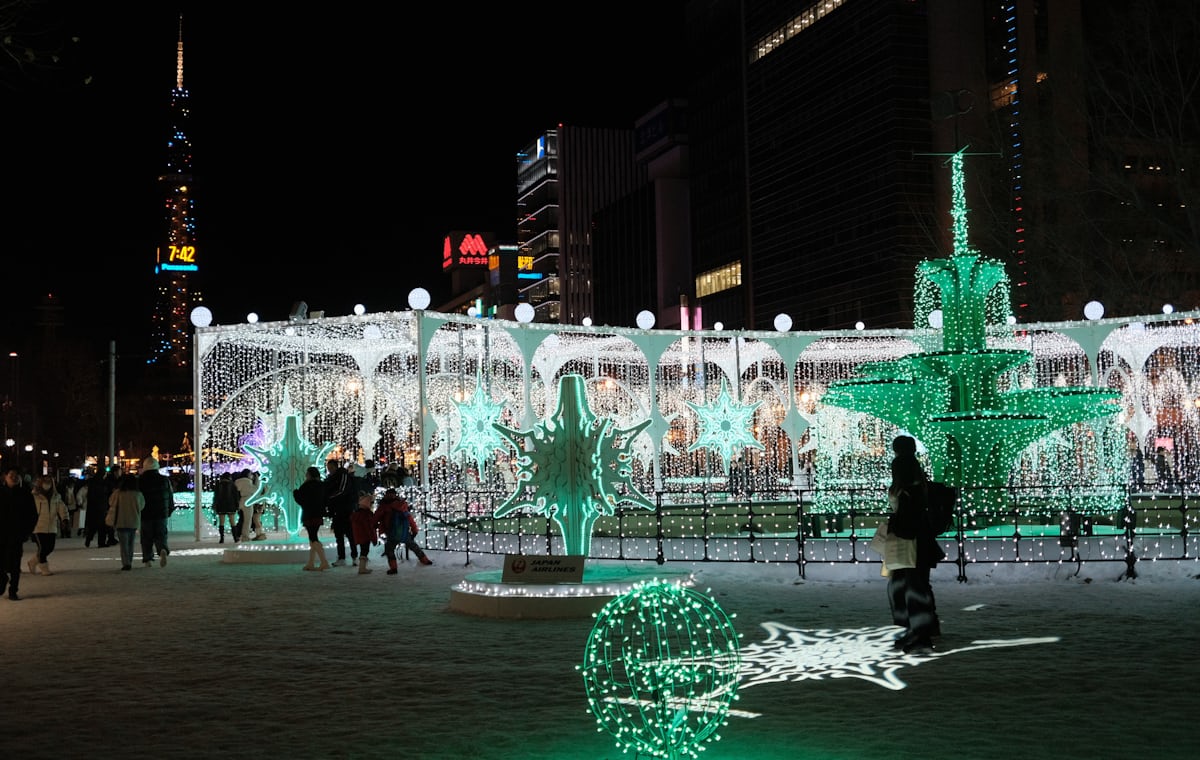
If you only have one evening, here's my honest take: Odori paired with Susukino is worth it; Tsudome usually isn't, unless kids are involved. That's not a "they're all great, depends on you" non-answer — the three sites serve genuinely different purposes, and trying to cram all three into one night means rushing every one of them.
Odori is the headline show: large-scale snow sculptures plus a projection-mapping light display, and it's the shot most people expect from a Snow Festival trip. But because it stretches about 1.1 km across 11 blocks, walking it properly with photo stops usually eats more time than people plan for. Susukino covers far less ground, but plenty of visitors find it more striking than Odori — ice has a translucency under lighting that packed snow doesn't, and the fish-frozen-in-ice blocks are Susukino's signature. It looks its best after dark. Odori to Susukino is a 10–15 minute walk, which makes the natural flow easy: watch the lighting and projection show at Odori first, then walk to Susukino to close out the night on the ice carvings.
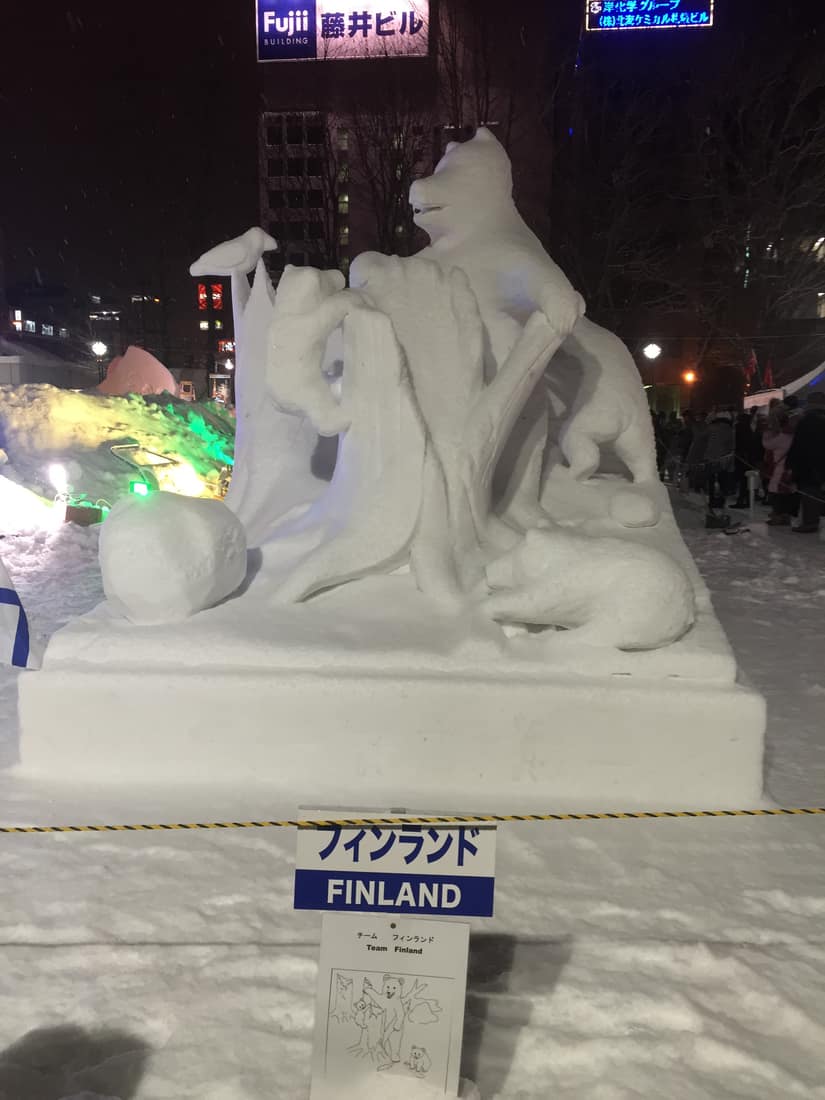
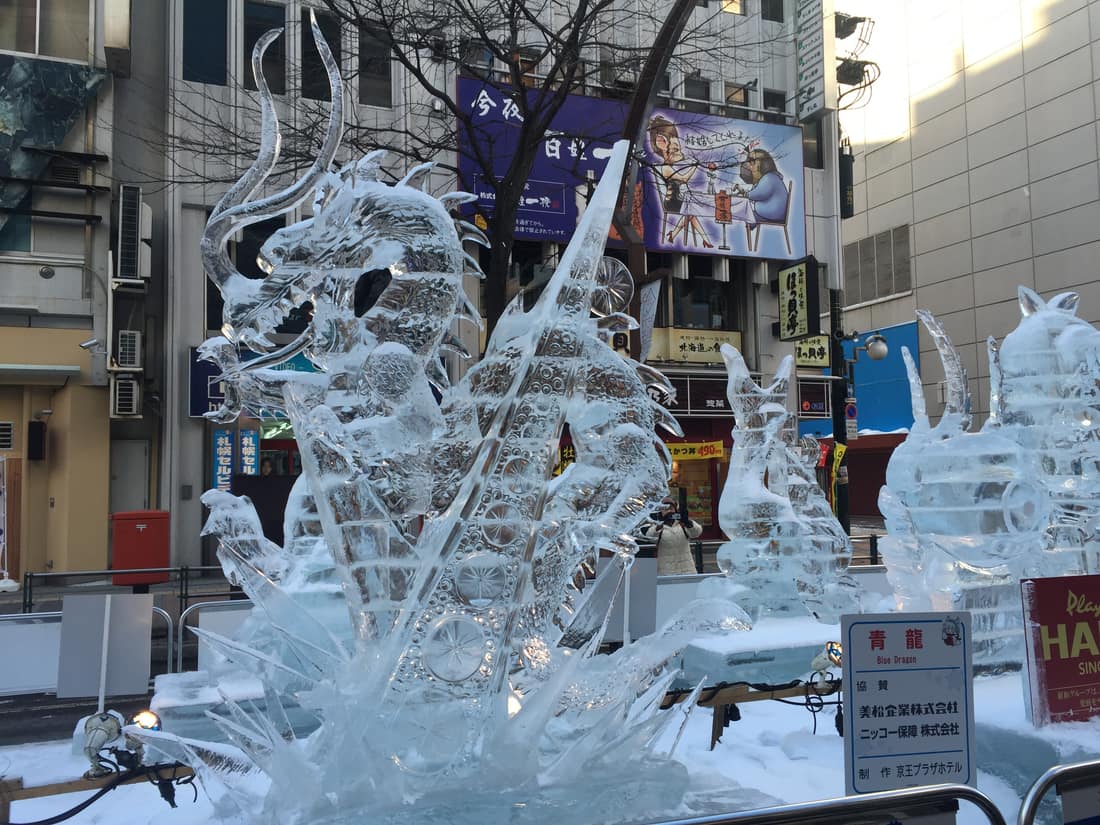
Tsudome serves an entirely different crowd — snow-tube slides, snow rafting and an indoor food hall, deliberately sited out in the suburbs to keep its crowds separate from the other two sites. If you don't have kids and only have one evening, I'd cut it outright: the travel time it costs doesn't pay off against what Odori and Susukino deliver for the same hours. If you do have kids, or you have two or more evenings in Sapporo, a daytime trip to Tsudome is actually a solid call — the indoor setup is far friendlier for small children in sub-zero weather, and it keeps them out of the adult-heavy evening crowds at the other two sites.
One more honest note on expectations: first-timers often assume Odori's scale automatically makes it the "better" site and treat Susukino as an afterthought squeezed in on the walk back to a hotel. That undersells it. Susukino's carvers work in clear ice rather than compacted snow, and the way that ice catches colored light after dark is a genuinely different visual experience from Odori's projection-mapped snow sculptures — not a lesser version of the same thing. If your trip only allows for one site because of time, don't default to Odori purely on the assumption that "bigger" means "better"; if you're chasing atmosphere and photography over scale, Susukino alone can be worth the trip.
Best time to go, and how to dodge the crowds
Go on a weekday if you can: in 2027 those are Feb 4, 5, 8, 9 and 10. Feb 6 (Sat) and 7 (Sun) are the weekend, and Feb 11 (Thu) is National Foundation Day — a single-day holiday, with Feb 12 a normal working Friday, so no long weekend — and on those three days locals can come too, so expect more people. On peak days it's not just more walking around people; even a clean photo of a sculpture without a stranger walking through it takes patience.
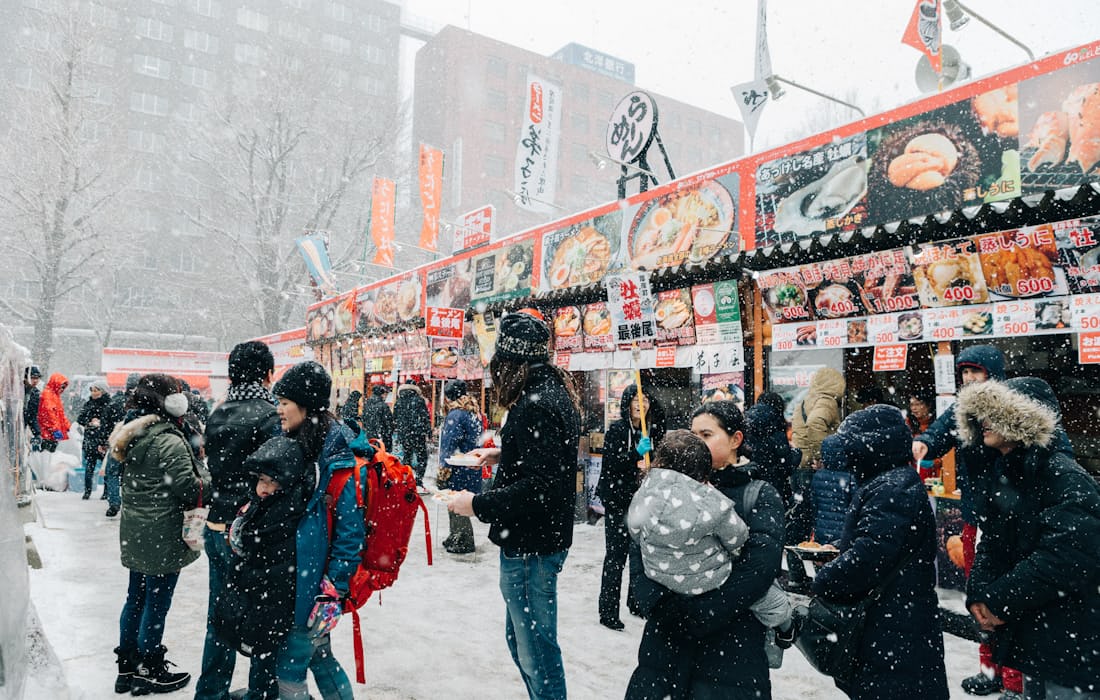
On timing for photos: daylight suits the fine carving detail, but the real character of Odori and Susukino shows up once the lights are on — dusk into evening is the strongest window, In 2026 the projection mapping ran every day from 17:30 on the large sculptures in blocks 5 and 8; 2027 sessions are published from mid-December. If you want emptier frames, try going later than the average visitor — most tour groups peel off for dinner between 18:00 and 19:30, and Odori often has a genuine lull after 19:30, a window that isn't competing with the tour-bus crowd.
A one-evening route that actually works
If you only have one evening, how do you fit Odori and Susukino in without rushing either? Here's a loosely paced reference route — adjust up or down depending on how much time you spend on photos:
- 16:30 — start at Odori block 4 and head west. The large 2027 sculptures stand in blocks 4, 5, 7, 8 and 10; shoot the daytime detail in blocks 4 and 5 while there's still light.
- 17:30 — back to block 5 or 8 for the projection show. In 2026 it started from 17:30 (go by the 2027 schedule once it's out in December); the window when the sky still holds a trace of blue gives far richer color than full dark.
- 17:45–18:15 — walk the remaining blocks. Shoot as you go, and skip sculptures with a photo queue — circle back later rather than standing in line and losing the whole evening to one shot.
- 18:15 — grab dinner from a food stall. Festival-only stalls around Odori sell hot soup, grilled corn and hot cocoa; eating right beside the stall is faster than a sit-down restaurant, and a hot snack plus a drink runs roughly ¥1,000.
- 18:45 — walk 10–15 minutes to Susukino. Most tour groups are at dinner around now, so Susukino usually hasn't hit its peak yet.
- 19:00–20:00 — tour the Susukino ice sculptures. The footprint is small enough that even a slow walk takes only 30–45 minutes, leaving time to check out the ice-carving competition entries and loop back for the best angle on the fish-in-ice pieces.
- 20:00 — head back, or stay for a late dinner. Susukino is itself a late-night dining district, so finishing with a bowl of ramen nearby fits the evening naturally.
This route covers both the daytime sculpture detail and the after-dark atmosphere, and it deliberately avoids moving through the crowds at dinner peak — the part of the evening that actually eats your time is never the sculptures themselves, it's getting stuck at the same intersection as everyone else.
The lodging scramble: why book now
Festival week is the single tightest lodging week in Hokkaido, full stop — downtown Sapporo hotels selling out months ahead and prices climbing noticeably that week is the norm, not the exception. If you've already settled on traveling in the Feb 4–11 window, right now — with the dates confirmed — is the best time to book. Waiting means worse rates at best and a sold-out downtown at worst. The same book-when-dates-drop logic applies even more brutally to the Shirakawa-go illumination 2027 — four confirmed dates, fully reservation-only, where even entry tickets sell out and farmhouse stays inside the village book up a year ahead.
The fallback plan: if downtown Sapporo won't work, look at stations one or two stops out along the subway (the Namboku or Toho lines, where a short extra ride usually means noticeably easier pricing), base in Otaru instead (about 30 minutes by JR, with the bonus of catching its own Snow Light Path if the dates overlap), or stay near New Chitose Airport, which has a fast JR link straight into Sapporo for an early-out, late-back day. None of these fallbacks cost you much in practice — Sapporo's subway and JR service both run frequently enough that an extra stop or two rarely adds more than 10–15 minutes each way, and it can be the difference between paying a reasonable rate and paying a festival-week surcharge for the exact same room type. The number to look at isn't which site is cheapest — it's how far the same room moves between an ordinary week and Feb 4–11. Run the downtown blocks through whichever booking site you use first (Sapporo city listings on Booking.com, Agoda, Rakuten Travel and Trip.com; each listing opens on today's date, so switch it to Feb 4–11 before you read anything), fix that gap in your head, then price the stations further out and see whether the extra commute actually buys anything back. A reasonable cutoff: if you're not saving about a third, stay downtown — after a night out in the snow you will not want one more transfer. Sculpture themes and the projection schedule are only updated on the official site from mid-December, so check back then once you've booked.
Cold-weather gear and getting between sites
Sapporo's February normals (1991–2020) are a daily high of about 0.4°C and a daily low of about −6.2°C, so even daytime hovers around freezing and standing outside at night feels colder, with icy, slick sidewalks — ordinary sneakers are asking for a fall on festival nights. Grip-soled snow boots are essential, layered with a thermal base layer, fleece, and a windproof-waterproof shell, plus a beanie, gloves, and hand warmers. For the complete Hokkaido winter strategy and a four-season packing list, see the Hokkaido section of our Japan climate and clothing pillar guide.
Forgot hand warmers? Don't worry — Sapporo's convenience stores and drugstores stock them everywhere, usually around ¥300–500 for a pack of five to ten; festival-side stalls sometimes sell single warmers too, but at a markup, so it's cheaper to stock up near your hotel before heading out. Phones drain fast in sub-zero cold — tucking a hand warmer into the same pocket as your phone does more for battery life than carrying a spare power bank.
Getting between sites: Odori to Susukino is about a 10–15 minute walk, or one stop on the Namboku subway line (Odori Station to Susukino Station) if you'd rather save your legs. Tsudome is at Sakaemachi, the end of the Toho subway line: walk about 15 minutes or take the shuttle bus (cash only in 2026; 2027 details from mid-December). There is no public parking and no drop-off stopping nearby, so drivers should switch to the subway or a taxi. It's considerably farther than the other two, so budget extra time and don't try to squeeze it in on the same trip as an Odori-Susukino evening. If you're extending beyond Sapporo for the festival — Otaru, Asahikawa, Hakodate — it's worth comparing whether a Hokkaido Rail Pass pays off; see our Hokkaido JR Pass complete guide for the route-by-route math.
Side trips: Otaru, Asahiyama Zoo, Lake Shikotsu, Noboribetsu
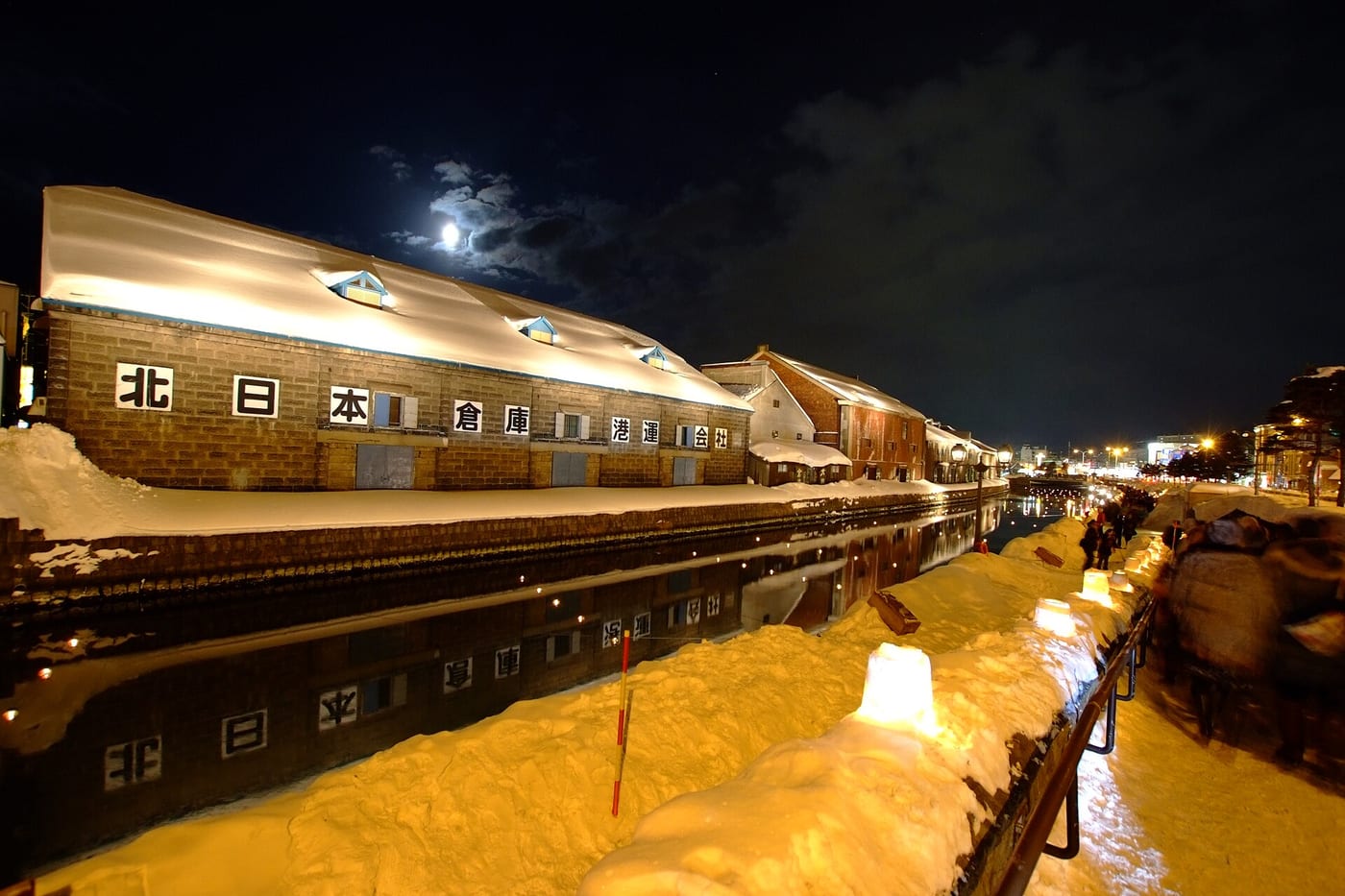
Beyond the festival, Hokkaido winter has a few strong add-ons worth the extra day. Otaru is about 30 minutes by JR from Sapporo, and the canal in winter light is worth a half-day on its own; if your dates overlap the Otaru Snow Light Path (timing is close to the festival's but announced separately each year — don't reuse last year's dates), the candlelit canal is one of Hokkaido's most romantic winter scenes — see our Otaru guide. Asahiyama Zoo's winter-only Penguin Walk is a classic pick for families, about 1.5 hours by limited express to Asahikawa plus a bus transfer; admission is ¥1,000 (free under middle-school age) — buy it at the gate, no reservation needed — with full transit details in our Asahiyama Zoo guide.
If you want to skip the festival crowds entirely and still catch a winter spectacle, the Chitose-Lake Shikotsu Ice Festival runs 30 January to 23 February in 2027, so the whole snow festival week falls inside it, and the lake is about 55 minutes by bus from New Chitose Airport. From 2027, admission (junior high school age and up) is ¥1,000 on weekdays but ¥3,000 on weekends and national holidays, so pick a weekday if you can, and give it its own day rather than squeezing it in alongside the festival. Noboribetsu Onsen is a good way to close out the trip with an overnight — Hell Valley's snow scenery paired with a hot spring soak is one of the better endings to a Hokkaido winter trip; see our Noboribetsu and Lake Toya guide. None of these side trips need to share a day with the festival itself — spreading them across the days before or after actually helps you dodge downtown Sapporo's most congested week. To fit all of this into one complete trip, our Hokkaido winter 7-day itinerary lays out the route, or start with our Sapporo travel guide for the city's core sights. And for everything winter Japan offers beyond the festival — Shirakawa-go light-ups, drift ice, snow monsters, each with its official dates — our Japan winter overview puts the whole 2026-27 season on one timeline.
Sapporo Snow Festival 2027 FAQ
- Q1:When is the Sapporo Snow Festival in 2027?
- The 77th Sapporo Snow Festival runs February 4 (Thu) through February 11 (Thu, holiday) in 2027, eight days, with Odori, Susukino and Tsudome all open over the same dates. Sculpture themes and the projection schedule are updated on the official site from mid-December.
- Q2:Is the Sapporo Snow Festival worth it?
- Yes, if you can handle standing outdoors below freezing at night with big crowds. All three sites are free, and in 2026 Odori plus Tsudome drew about 2.54 million visits and Susukino about 1.38 million. If you hate the cold or want an indoor trip, you can skip it.
- Q3:Is it worth visiting all three sites?
- No, and you probably can't anyway. One evening is usually only enough for two sites. Odori paired with Susukino is the classic combo — big snow sculptures and projection mapping, then the ice carvings that look their best after dark. Tsudome is the odd one out: it sits farther from downtown and is built for families. Skip it unless you have kids or more than one evening in town.
- Q4:What time do Odori and Susukino close?
- Odori is lit until 22:00 and Susukino until 23:00 (22:00 on the final day, Feb 11); both sites are open-air and you can walk in any time. Tsudome is only open 10:00–16:00, so it cannot go in your evening plan.
- Q5:Does Tsudome cost anything, and how do I get there?
- Tsudome is free to enter; only some rides and play areas charge (2027 prices are published from mid-December). Take the Toho subway line to its terminus, Sakaemachi, then walk about 15 minutes or take the shuttle bus (cash only in 2026). There is no public parking. If you're bringing kids for the snow-tube slides and food hall, plan it as a separate daytime outing rather than squeezing it into the same evening as the other two sites.
- Q6:How early should I book lodging for the festival?
- As early as you can. Festival week is the single tightest lodging week in Hokkaido all year — downtown Sapporo hotels routinely sell out months ahead and prices climb noticeably. With the 2027 dates now confirmed, book as soon as you've locked in your travel window. If downtown Sapporo is sold out, look one or two subway stops out, base in Otaru instead, or stay near New Chitose Airport.
- Q7:How cold does it get, and what should I wear?
- Sapporo's February normals are a daily high of about 0.4°C and a daily low of about −6.2°C, so even daytime hovers around freezing, and sidewalks are usually icy. Grip-soled snow boots are non-negotiable for festival nights, layered with thermal base layers, fleece and a windproof-waterproof shell, plus a beanie, gloves and hand warmers. See the Hokkaido section of our Japan climate and clothing pillar guide for the full gear list.
- Q8:What is the best time to go for photos, and how do I avoid crowds?
- Go on a weekday if you can: Feb 4, 5, 8, 9 or 10. Feb 6 (Sat), Feb 7 (Sun) and the Feb 11 (Thu) holiday are days off for locals too. For photos, dusk into evening is best — in 2026 the Odori projection shows started at 17:30 every day; if you want fewer people in frame, try heading out after 19:30, once most tour groups have gone to dinner — Odori often has a genuine lull right around then.
- Q9:Can I combine the festival with Otaru or Asahiyama Zoo?
- Yes, easily. Otaru is about 30 minutes by JR, and the canal in winter is worth a half-day on its own — more so if your dates overlap the Otaru Snow Light Path (dates are announced separately each year, so don't reuse last year's). Asahiyama Zoo's winter-only Penguin Walk is a classic add-on for families, roughly 1.5 hours by limited express to Asahikawa plus a bus transfer. Both slot neatly into the same Hokkaido winter trip as the festival.
- Q10:What should I know about bringing elders or kids to the festival?
- Every site is outdoors, and sidewalks ice over easily. For elders, skip the long walk out to the Tsudome shuttle and instead stay put around blocks 4–8 of Odori Park for photos (four of the five large 2027 sculptures stand in blocks 4, 5, 7 and 8) rather than pushing through the full 1.1 km stretch. For kids, Tsudome's indoor setup is the friendlier option — evening crowds at Odori and Susukino combined with the temperature drop wear small children out fast, so plan to head back to the hotel early rather than pushing through to closing time.
- Q11:Do I need to buy tickets, and roughly what does an evening cost?
- No tickets needed — Odori, Susukino and Tsudome are all free to enter; only some Tsudome rides charge. Your real evening cost is incidentals: hot food and drinks from festival stalls run roughly ¥1,000–1,500 per person, hand warmers are ¥300–500 for a pack if you didn't bring your own, and local transit (subway between Odori and Susukino, or the Tsudome shuttle) adds a few hundred yen. Budget for the small stuff rather than a big-ticket entry fee.
- Q12:Can I still see the sculptures if I arrive on or after Feb 12?
- No. The snow and ice sculptures start coming down the morning after the festival closes. Sapporo Snow Sports Park 2027 runs Feb 12–14 at the Daiwa House Premist Dome, but it is not a sculpture show.
Read next
Hokkaido Winter 7-Day Itinerary 2026
Sapporo → Otaru → Biei → Hakodate over 7 days, with JR Pass math, ski-shuttle reality, and a real two-person budget.
Sapporo Travel Guide 2027: Odori Park, Snow Festival & Mt. Moiwa
Hokkaido's gateway and food capital — Odori Park and the Snow Festival, the Clock Tower, Mt. Moiwa's night view, miso ramen, Genghis Khan and soup curry.
What to Wear in Japan 2026: 4 Regions × 4 Seasons Packing Guide
A 4,500-word pillar: climate physics, region-by-region clothing strategy, four-season packing lists.