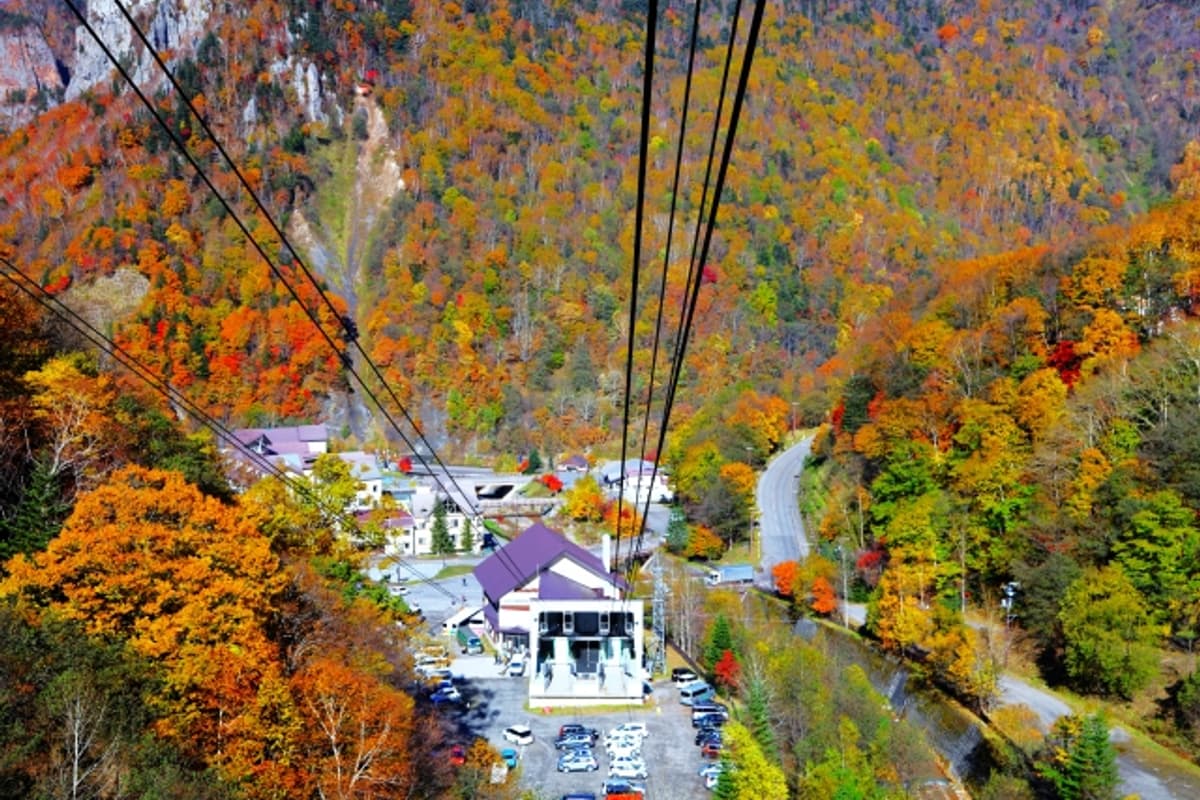
The Sounkyo Tourist Association has already posted the dates for the 52nd Ice Waterfall Festival: January 23 to March 7, 2027, announced roughly six months ahead of most Japanese winter events, which means a 2027 Hokkaido trip can be pinned down now. But the harder question about this place is not when the festival runs. It is that the ropeway shuts down completely for 22 days every November, the best-value ticket exists only in summer, and the last direct bus out leaves at 17:00 — and those three facts decide whether your visit works or falls apart. This is a season-by-season operating manual for Sounkyo: the winter festival and ski area, the 6:00 first ropeway car that is the single best tactic here in summer, the limitations worth accepting in spring, and the free-to-enter Ginga and Ryusei Falls and Obako cliffs that run all year. Fares and hours below are current as of July 2026.
📍 Autumn foliage is covered separately. For peak timing across the Daisetsuzan range, the summit-to-valley colour gap, peak-week booking and a four-day route, see the Hokkaido Daisetsuzan autumn guide.
- 2027 ice festival dates are confirmed: the 52nd edition runs Jan 23 – Mar 7, 2027. The cooperation fee was ¥1,000 in 2026; the 2027 fee and hours are not yet published
- 22 days with no way up the mountain: the Kurodake Ropeway closes for maintenance Nov 9–30, weather irrelevant
- Ropeway fares: ¥3,000 return, chairlift ¥1,200 return, summer-only combo ¥3,900; children half price
- No overnight stay needed to bathe: town-run Kurodake-no-Yu, ¥800 adults, ¥400 children, open daily
- The 17:00 bus rules your day: Asahikawa to Sounkyo is ¥2,140 one way and takes about two hours, and 17:00 is the last direct service back
📖 Table of Contents (click to expand)
- Season by season: what is open, what is not
- Winter is the main event: the 2027 ice festival and Kurodake ski area
- Kurodake Ropeway: fares, monthly hours and the November trap
- Day-use hot springs: Kurodake-no-Yu and seven hotels
- Ginga and Ryusei Falls, and Obako
- Why the gorge looks like this: columnar jointing over 24 km
- Getting there: fares, timetable and the last-bus trap
- Sounkyo Visitor Center
- Where to eat: seven places in town
- Is Sounkyo worth the detour?
- FAQ
Season by season: what is open, what is not
The difficult thing about Sounkyo is that its operating status changes several times a year. The ropeway runs five different sets of hours, the chairlift is summer-only, the discounted combo ticket is summer-only, the day-use bath switches between winter and summer schedules, and even the bus to Taisetsu Lake only exists between July and October. Read the table first; everything after it is the detail.
| Season | What you come for | What you have to accept |
|---|---|---|
| Jan–Mar | Ice Waterfall Festival (Jan 23 – Mar 7, 2027), Kurodake ski area, deep-winter gorge | Shortened winter ropeway hours (Jan–May not published officially — check before travel); serious cold-weather gear needed |
| Apr–May | Residual-snow gorge, the emptiest months, easiest bookings | Jan–May ropeway hours unpublished; the bath stays on winter hours to Apr 30; high trails not open |
| Jun 27 – Sep 30 | Ropeway from 6:00, chairlift from 6:30, summer-only combo ticket, the twin-falls viewpoint walk, Taisetsu Lake bus from Jul 1 | Queues for the first cars on summer weekends; large temperature gap between town and summit |
| October | Chairlift still runs Oct 1–15 (summer season ends Oct 15); Taisetsu Lake bus until Oct 31 | Autumn timing is in the Daisetsuzan autumn guide |
| Nov 9–30 | — | Ropeway closed for maintenance, all 22 days |
| December | Ropeway reopens 8:00–16:00 with the ski season; quiet before the holidays | The ice festival has not started yet — it opens in late January |
If I had to pick one window it would be July and August: the ropeway opens at 6:00, the chairlift runs alongside it, the combo ticket is only sold then, and the Taisetsu Lake extension bus exists only from July to October. That is the maximum-open configuration of the whole year. Second choice is February, for one reason: the ice festival has no substitute. It exists for six weeks a year and that is it.
Winter is the main event: the 2027 ice festival and Kurodake ski area
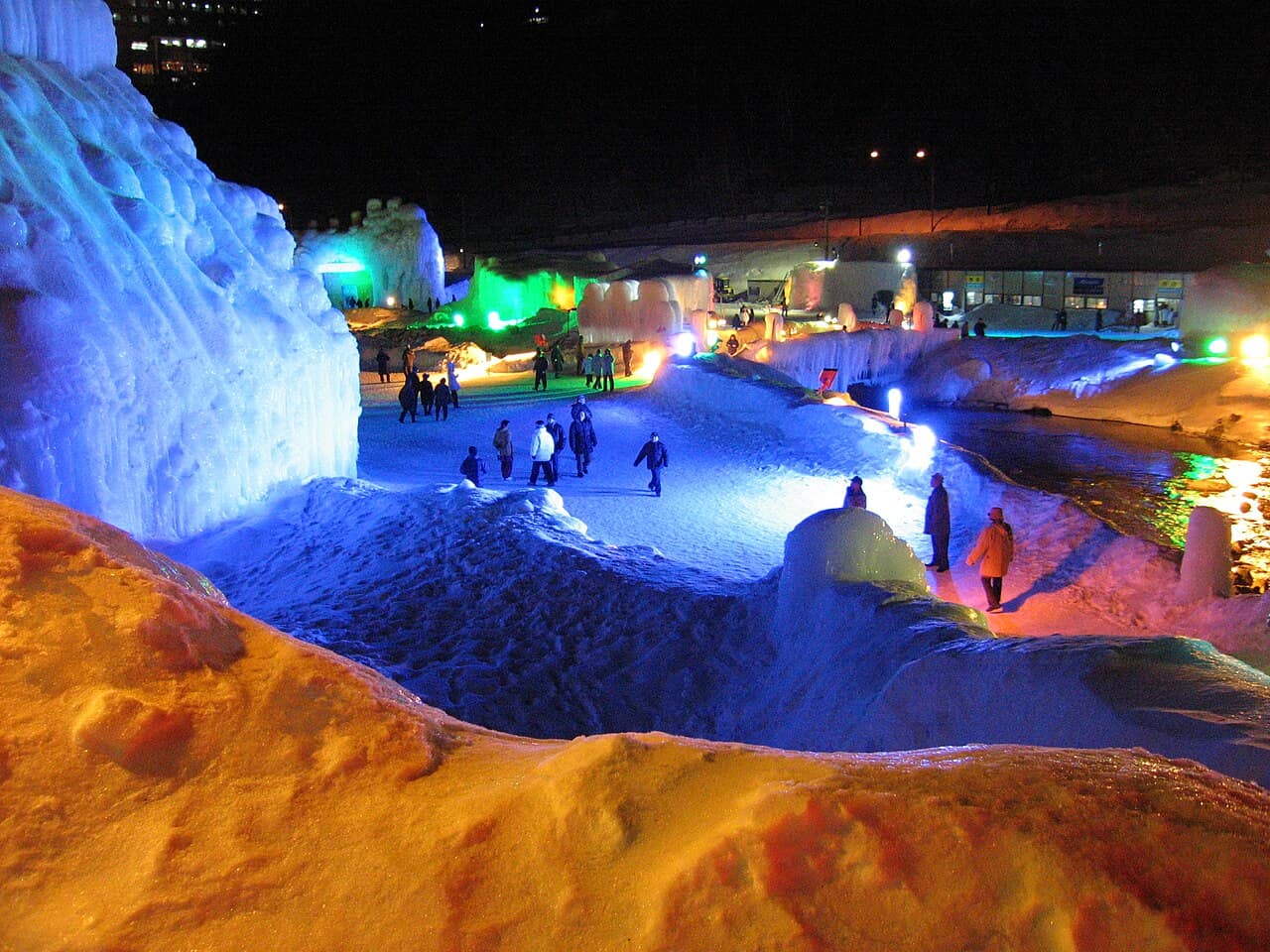
The Sounkyo Onsen Hyobaku Matsuri, literally the frozen waterfall festival, is what this town is known for, and as of July 2026 it comes with something genuinely useful for trip planning: the next edition already has published dates.
❄️ Official announcement (Sounkyo Tourist Association): the 52nd Hyobaku Matsuri will run January 23 (Sat) to March 7 (Sun), 2027.
Those dates are safe to book flights and rooms around, and Hokkaido winter accommodation in that window moves fast.
What the 2026 edition looked like, and why you should not copy its numbers
The 51st edition, which ran January 24 to March 8, 2026, is fully documented and is the best guide to how the event operates in practice.
| Detail | 51st edition (2026, actual) | 52nd edition (2027) |
|---|---|---|
| Dates | Jan 24 (Sat) – Mar 8 (Sun), 2026 | Jan 23 (Sat) – Mar 7 (Sun), 2027 (published) |
| Weekday hours | 17:00–21:30 | Not yet published |
| Weekend and holiday hours | 11:00–21:30 | Not yet published |
| Last entry | 21:15 | Not yet published |
| Cooperation fee | ¥1,000 | Not yet published |
The 2027 fee and hours have not been announced. If you see a page quoting 1,000 yen as the 2027 price, that is the 2026 figure being carried forward, not official information. The association's page also lists no nightly fireworks or similar scheduled performances, so do not build an evening around one.
The 2026 schedule does reveal one pattern that matters for planning: weekdays are evening-only, opening at 17:00, while weekends and public holidays open at 11:00. If your trip lands midweek, the afternoon before the festival is effectively free time, which is exactly when a long bath or a walk to the falls fits. If you go at a weekend you get both the daytime and the illuminated versions of the ice sculptures, which look nothing alike — but that is also when rooms are hardest to get.
On clothing, take the location seriously. This is an inland mountain valley in Hokkaido, and January and February evenings here are not comparable to central Sapporo. Gloves, chemical hand warmers and a hat that covers the ears are baseline, and a spare camera battery kept warm inside your coat will save you an hour of frustration.
Kurodake ski area: a 5,200 yen day pass, and a long season
Winter here is not only ice sculptures. The Kurodake ski area is run by Rinyu Kanko, the same operator as the ropeway, and an adult day pass costs ¥5,200, 2,600 yen for children. Set expectations correctly: this is not Niseko or Rusutsu. It is a small area whose selling points are natural snow and an unusually long season, which makes it a good add-on for people already passing through Sounkyo rather than a destination in its own right. If skiing is the reason for the whole trip, start with our Japan ski resort comparison instead.
One caveat about winter timing: the ropeway runs 8:00 to 16:00 through December, and the operator's page publishes no hours for January through May. Ski-season hours are routinely adjusted for snow and weather anyway, so confirm on the Rinyu Kanko site the day before you go.
The other winter reality is connectivity. You will want to check weather, bus times and opening status from the festival site, the ropeway base and the gorge road — and all three of the numbers this guide turns on (whether the ropeway is running today, the 17:00 last bus, whether weather has shut anything down) have to be confirmed on the day, in a valley where mobile coverage is not uniformly good. Setting up an unlimited-data eSIM before you fly means scanning a QR on landing and nothing else; our Japan eSIM comparison weighs up five providers.
Kurodake Ropeway: fares, monthly hours and the November trap
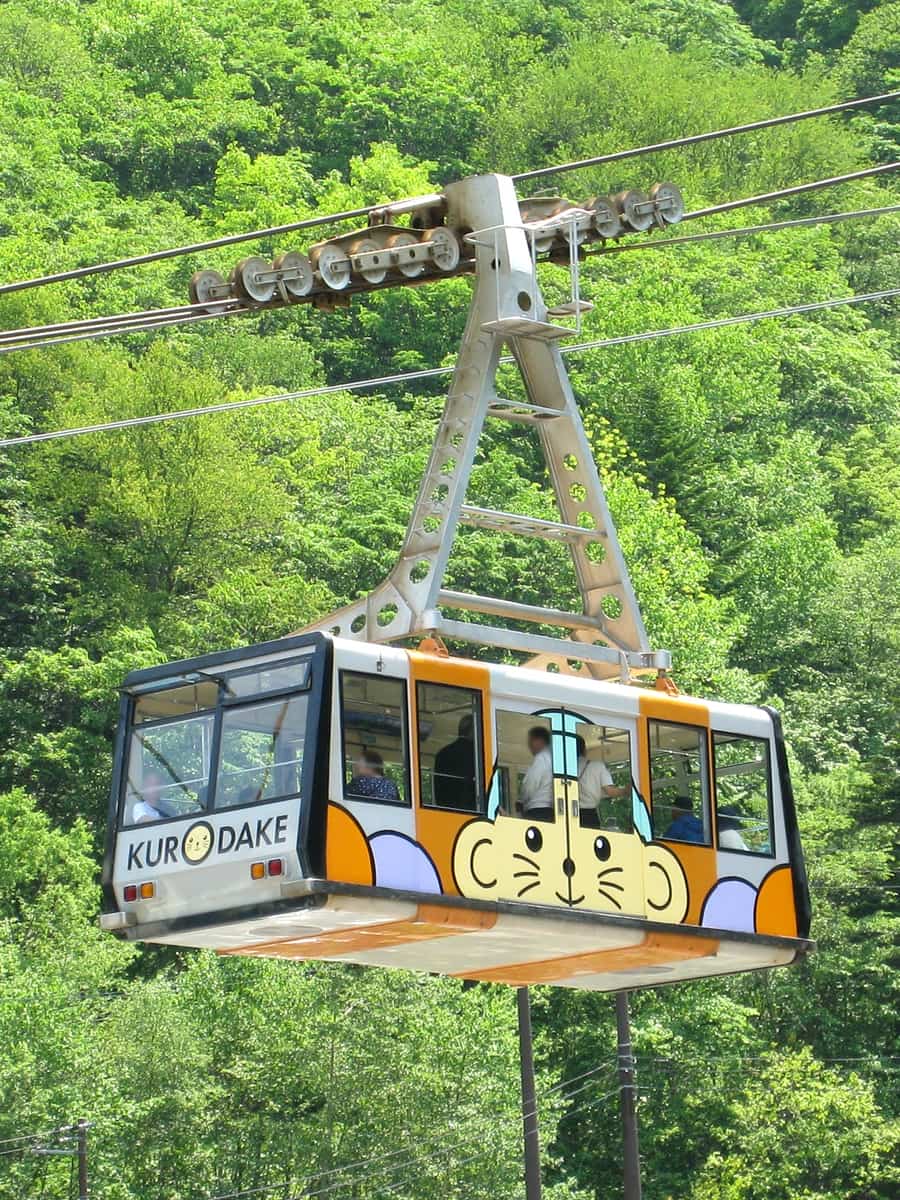
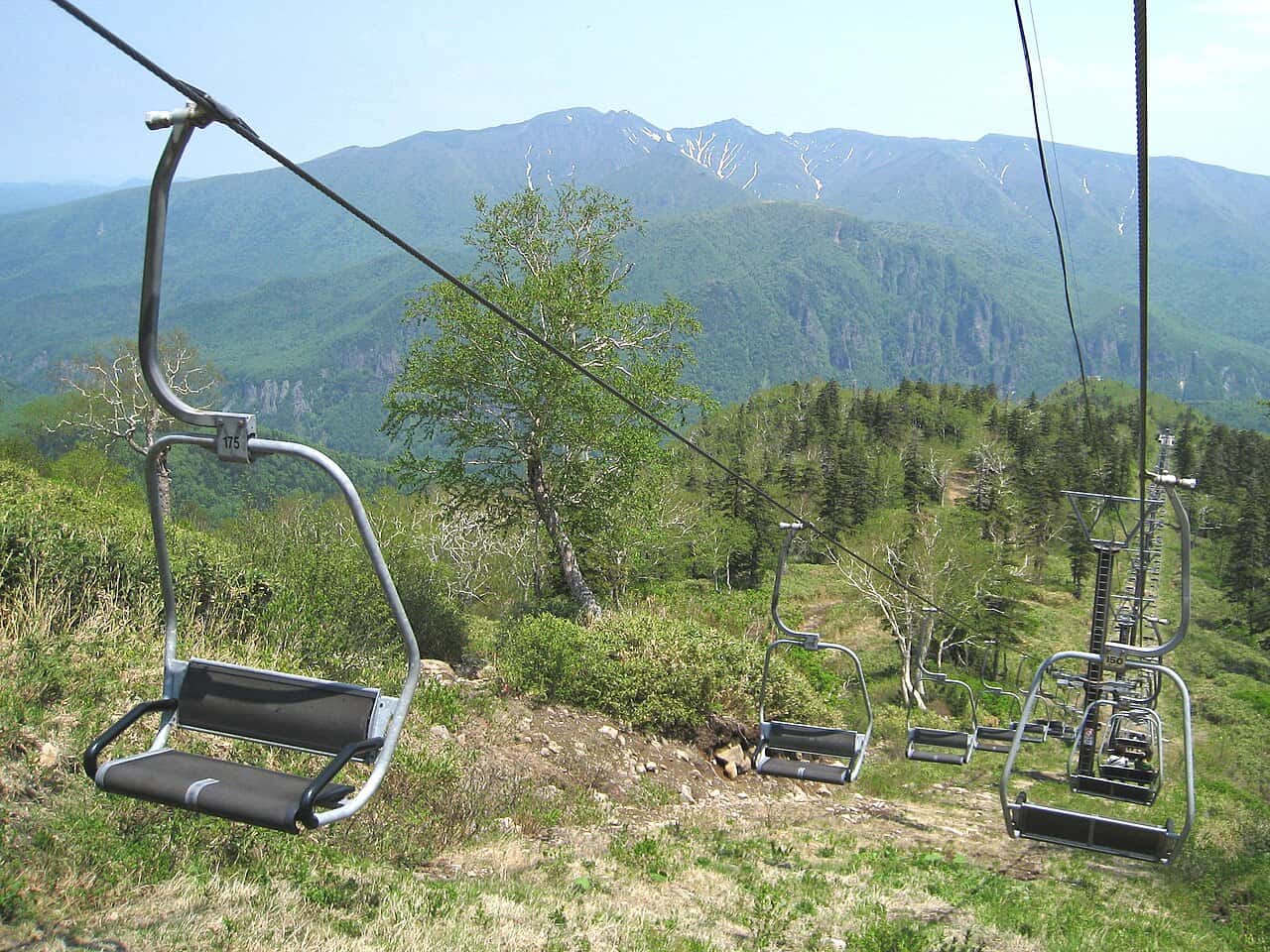
Going up Kurodake happens in two stages. The ropeway climbs from Sounkyo at roughly 670 m to the 5th station at 1,300 m in seven minutes, and a chairlift continues for fifteen minutes to the 7th station at 1,520 m. They are ticketed separately, which is the detail first-time visitors most often get wrong.
| Ticket (adult) | Return | One way |
|---|---|---|
| Ropeway (Sounkyo ↔ 5th station) | ¥3,000 | ¥1,800 |
| Chairlift (5th ↔ 7th station) | ¥1,200 | ¥800 |
| Ropeway + chairlift combo (summer only) | ¥3,900 | ¥2,400 |
| Elementary school children | Half price throughout (group and accessibility rates quoted separately) | |
🟢 There is also a discount the ticket window will never show you: JTB sells a "purchase by the day before" return ticket at 3,000 yen → 2,700 yen, 300 yen under the gate price (still listed on jtb.co.jp as of August 2026). The catch is exactly what the name says: you must buy it at the latest the day before you ride; there is no same-day version. The ropeway sells tickets at the window with no reservation needed, so this is only worth the trouble if your dates are already fixed and you don't mind ordering a day ahead.
The arithmetic is simple: buying both returns separately costs 4,200 yen against 3,900 yen for the combo, so the combo saves 300 yen and is the default in summer if you plan to reach the 7th station. The condition people miss is that the combo is sold in summer only — outside that window you cannot buy it even on days the chairlift is turning.
2026 operating hours by month — the table that matters more than the fares
| Period | Ropeway | Chairlift |
|---|---|---|
| Jun 27 – Sep 30 | 6:00–18:00 | 6:30–17:30 |
| Oct 1–15 | 7:00–17:00 | 7:30–16:30 (summer season ends Oct 15) |
| Oct 16 – Nov 8 | 8:00–16:00 | Closed |
| Nov 9–30 | Closed for maintenance | Closed |
| Dec 1–31 | 8:00–16:00 (ski season) | Closed |
| Jan–May | ⚠️ Not published on the official page — confirm before you travel | |
The row to memorise is November 9 to 30. Those 22 days are a scheduled maintenance shutdown, entirely independent of weather, and travellers who miss the notice arrive at the base station to find it shut. It is the most avoidable mistake at this destination. The first week of November still works, but on the shortened 8:00 to 16:00 schedule, and since the chairlift has been closed since October 16 you can only reach the 5th station anyway.
The second row to note is the 6:00 summer opening, which is remarkably early for a Japanese ropeway and is not a gimmick. Cloud over the range is generally thinner in the early morning than in the afternoon, the wind is steadier, and coach groups and casual visitors almost all arrive after 9:00. The gap between the first and second cars is the emptiest, clearest window of the day. If you are willing to get up for it, this is the single most effective tactic at Sounkyo — and it works best if you sleep in the onsen street the night before, since the base station is walkable and you avoid depending on the bus.
One more decision to make in advance: are you here for the view or for the climb? Riding to the 7th station is a sightseeing trip, with a view over the gorge and the Daisetsuzan ridgeline, and it needs no mountaineering equipment. Continuing from the 7th station to the 1,984 m summit is genuine mountain walking that requires proper boots, insulating layers and an honest assessment of your fitness, on terrain where the weather turns quickly. Follow the on-site guidance and the Daisetsuzan National Park information, and file a climbing plan.
Day-use hot springs: Kurodake-no-Yu and seven hotels
Sounkyo Onsen has twelve lodging establishments according to the tourist association's accommodation list, but this section is about bathing without staying the night — an underused resource here, and the one activity that barely changes with the season, which makes it the natural fallback on days the ropeway is not running.
The short answer: when in doubt, go to Kurodake-no-Yu
If you simply want somewhere that will definitely be open, with a published price and long hours, the answer is Kurodake-no-Yu, the town-run day-use bathhouse. Because it is a standalone public facility rather than a hotel bath, it is not subject to being closed off for hotel guests or private bookings.
| Detail | Information |
|---|---|
| Admission | ¥800 adults / ¥400 children |
| May 1 – Oct 31 | 10:00–22:30 (last reception 21:30) |
| Nov 1 – Apr 30 | 11:00–21:30 (last reception 21:00) |
| New Year (Dec 31 – Jan 3) | 11:00–18:00 |
| Closing days | None, apart from maintenance days |
| Facilities | Two large baths, third-floor open-air bath, sauna, cold plunge |
| Spring type | Hypotonic weakly alkaline hot spring |
Two things worth knowing. First, the 22:30 summer closing is its real advantage — you can ride the ropeway in the morning, see the falls at dusk and still bathe afterwards without rushing. In winter it closes at 21:30, which is tight if you are coming straight from the festival. Second, a pricing caveat: the town's general day-use onsen summary page still lists 600 and 300 yen, and those figures are out of date. The facility's own official page and the tourist association listing both give 800 and 400 yen. Carry cash either way — a bathhouse in a small Hokkaido town may not take cards.
Hotel day-use baths (from the municipal summary — reconfirm before you go)
If you would rather try a hotel bath, this is the list, with one important caveat about its reliability: it comes from Kamikawa Town's day-use onsen summary page, and the Kurodake-no-Yu entry on that same page has already been shown to be out of date. Treat every row as indicative rather than guaranteed. Towel rental charges in particular are the kind of detail that changes quietly.
| Facility | Day-use rate | Hours | Notes |
|---|---|---|---|
| Sounkaku MOUNTAIN RESORT 1923 | ¥4,000 adult / ¥2,000 child | 15:00–20:00 | Preschoolers free; lounge service and towel included |
| Choyo Resort Hotel | ¥1,200 / ¥600 | 13:30–19:00 | Towel rental ¥300 |
| Choyo-tei | ¥1,200 / ¥600 | 13:00–19:00 | Towel rental ¥250 |
| Hotel Taisetsu ONSEN&CANYON RESORT | ¥1,000 / ¥800 | 11:00–17:00 | Towel rental ¥330; the earliest opening |
| Sounkyo Mount View Hotel | ¥600 junior-high and up / ¥300 elementary | 13:00–20:00 | Preschoolers free; towel included |
| Yumoto Ginsenkaku | ¥600 / ¥300 | 14:00–20:00 | Preschoolers free; towel rental ¥500 |
| Sounkyo Kanko Hotel | ¥1,000 | 12:00–18:00 (reception to 17:00) | Towel set included |
Read that table for the hours rather than the prices. The seven openings are staggered dramatically: only Hotel Taisetsu opens before noon, Choyo-tei and Mount View start in the early afternoon, and Sounkaku does not admit day visitors until 15:00. If you arrive on the 9:55 or 10:55 bus and leave in mid-afternoon, your realistic choices are two or three of these, not seven.
On value, Sounkyo Mount View Hotel at 600 yen with a towel included is the best deal on the list, while Sounkaku at 4,000 yen is clearly a different product — you are buying a half-day of lounge access, not a wash. Whichever you pick, phone ahead on the day. Hotel day-use bathing is regularly suspended at short notice for cleaning, private bookings or heavy guest occupancy, especially in peak season.
No official spring-water analysis is published for the individual hotels. Only Kurodake-no-Yu has a published spring type, so treat any per-hotel claim about the water as unverified.
Ginga and Ryusei Falls, and Obako
The two best things in Sounkyo cost nothing, which is not something you can say about many Japanese destinations.
Ginga and Ryusei Falls: free parking for 150 cars, open all year
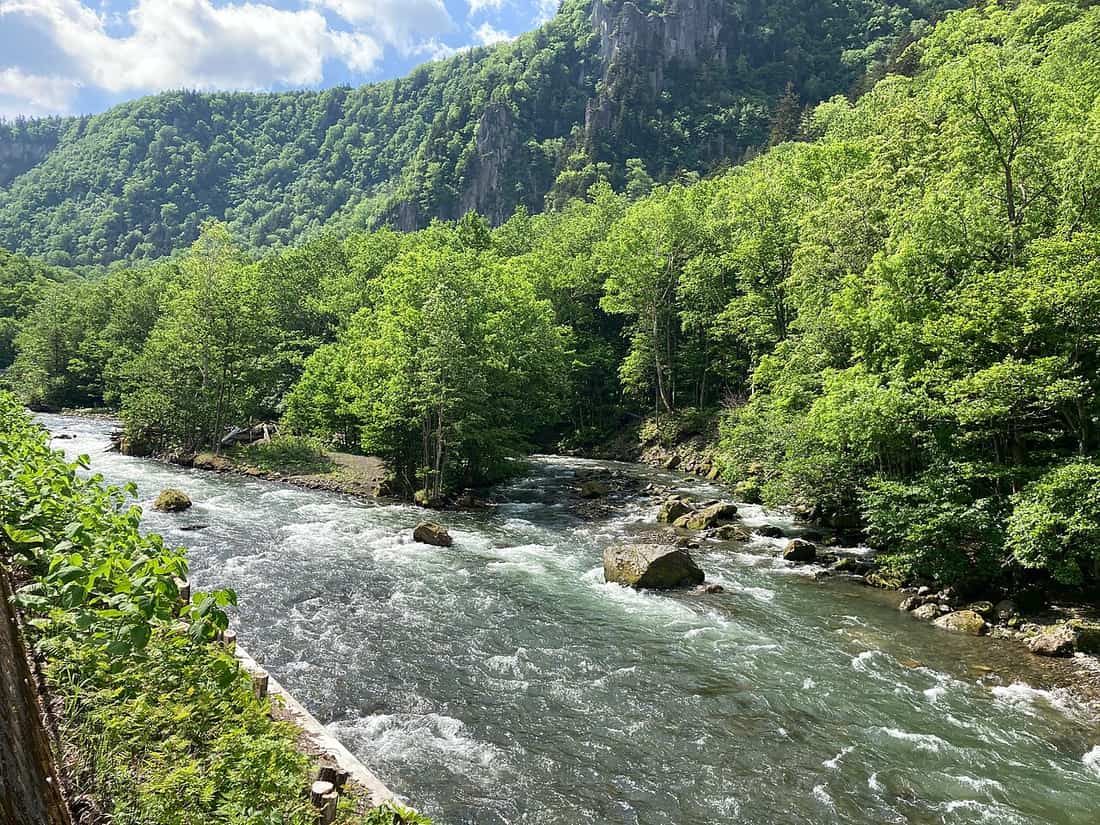
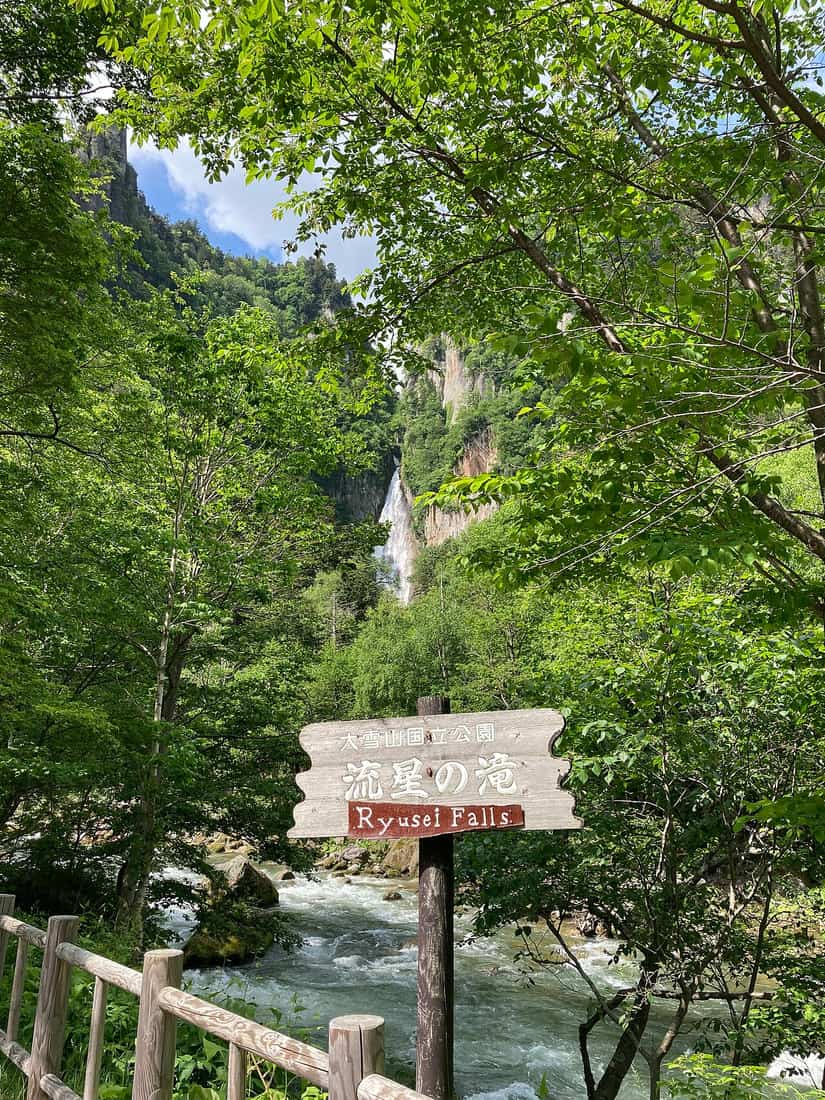
Two waterfalls drop side by side down the same cliff face, and the traditional names are more precise than any tourist brochure: Ginga, the Milky Way falls, is the female falls, and Ryusei, the shooting star, is the male falls — one thin and dispersed, the other concentrated and forceful. Both are listed among Japan's 100 finest waterfalls, both are free, both are accessible year-round, and the car park is free with space for about 150 vehicles. The drop figures usually quoted, roughly 90 m for Ryusei and 120 m for Ginga, appear consistently on Hokkaido's semi-official tourism sites but are not stated on the Sounkyo association's own page, so treat them as approximate.
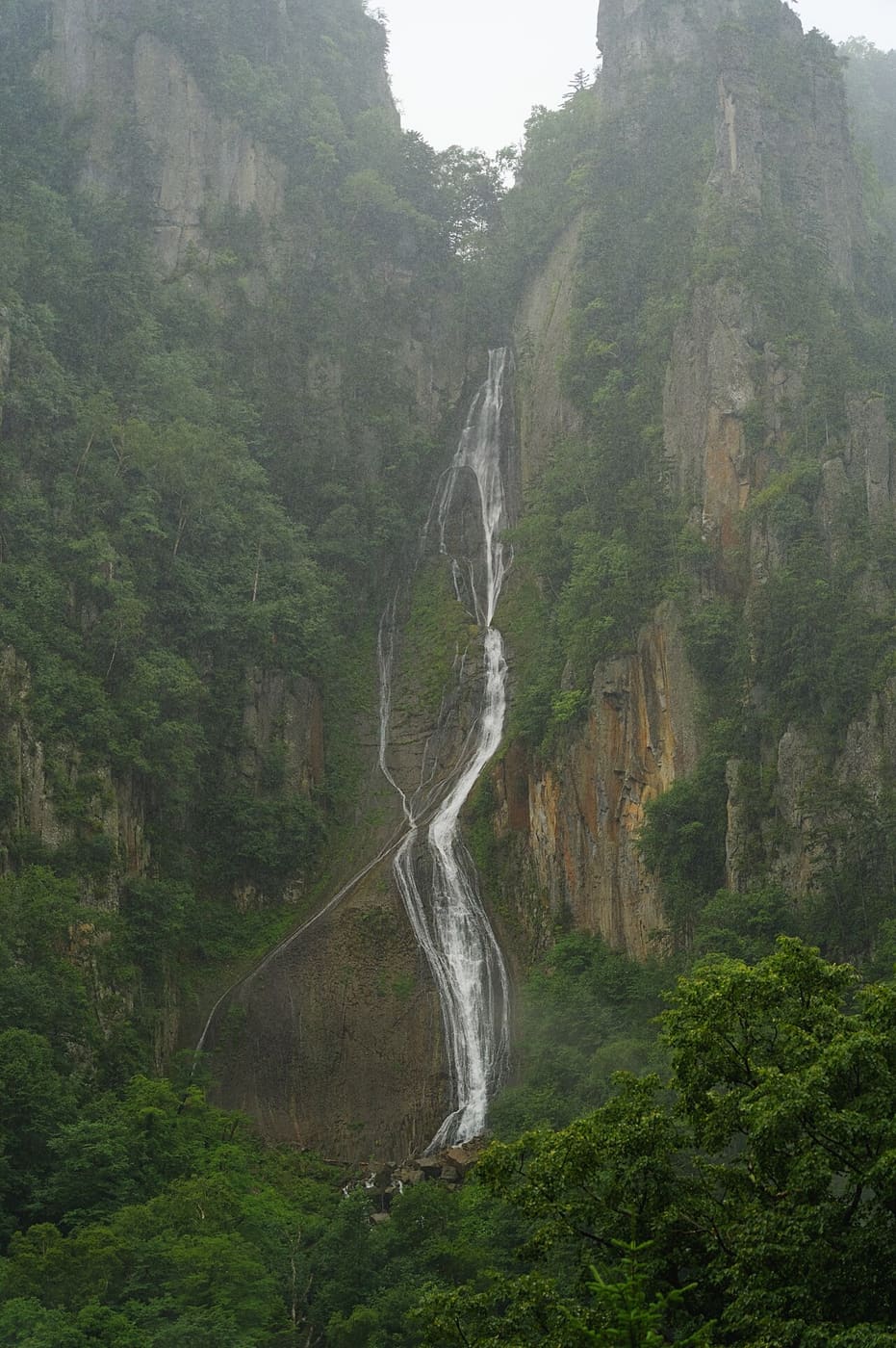
The part worth planning for is the Sobakudai twin-falls viewpoint. An uphill path from the car park takes about 20 minutes and reaches a platform where both waterfalls fit into one frame, separated by the rock buttress known as Fudo-iwa. That 20 minutes is uphill, not a stroll, so wear something better than sandals — but it is the only place in Sounkyo where you can see both falls together, since from the car park they must be viewed one at a time. It is worth the climb precisely because most visitors photograph both from below in fifteen minutes and leave; spending an extra forty minutes buys you a picture nobody else has.
Obako: the best wall of columns, and the hardest to reach
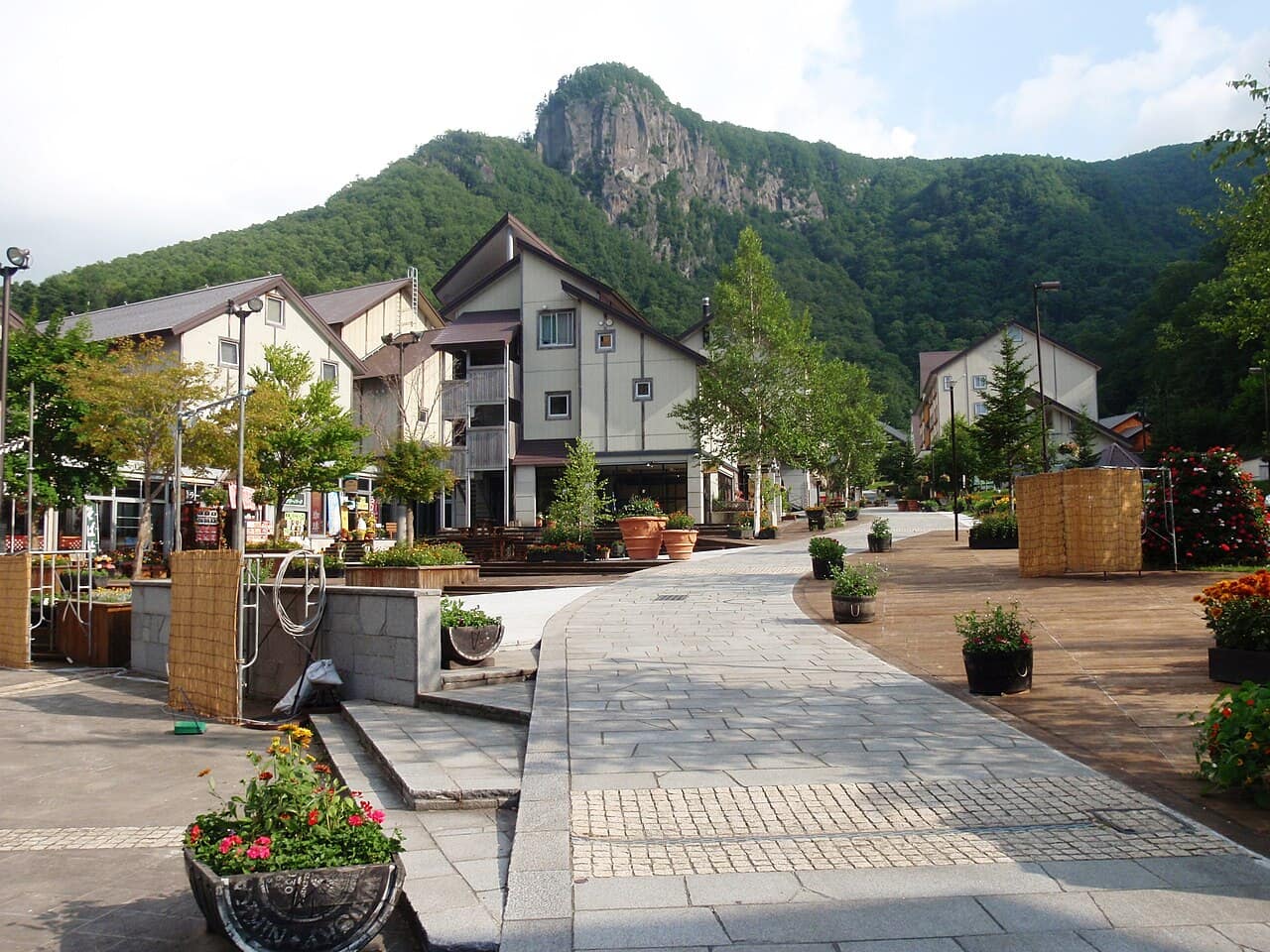
Obako lies about 6 km north of the onsen street, on the left as you emerge from the New Obako Tunnel, and is likewise free, open year-round and free to park, with space for around 50 cars. The draw is a wall of columnar jointing standing up like a folding screen, on a larger scale than anything near the town — the signature geological view of the gorge.
⚠️ The Kobako walking trail is closed. The path at Kobako, next to Obako, is off limits because of rockfall danger, as stated on the Sounkyo Tourist Association site.
Access is the sticking point. The only bus that serves this stretch is the seasonal Taisetsu Lake extension, one round trip daily from July 1 to October 31: Sounkyo 12:50, Obako entrance 13:15, Taisetsu Lake 13:23, returning 13:38 and back in Sounkyo at 14:00. That gives you about 25 minutes on site — enough for photographs and nothing else. So the honest recommendation is to drive or take a taxi to Obako; Sounkyo Taxi (01658-5-3221) covers the area, and if you have a rental car it is barely a ten-minute drive, which makes it the best-value piece of driving in the whole valley.
There is a third option if you have no car and Obako is non-negotiable: GetYourGuide runs a Daisetsuzan National Park autumn foliage day tour (ten hours door to door; check the fare on the product page — it is priced in US dollars and moves with the exchange rate and platform promotions) that schedules 20 minutes at Obako, 25 minutes at the falls and two hours on Kurodake — which is exactly the 25-minute bus problem solved. Three conditions before you book:
- 🔴 It departs from Sapporo, not from Sounkyo. The listing URL and its location tag both say "sounkyo", which is genuinely misleading; the stated meeting point is the group bus boarding area at the North Exit of JR Sapporo Station, and the round-trip coach fare from Sapporo is what the price covers. If you are already staying on the Sounkyo onsen street, this tour cannot pick you up.
- 🔴 The ropeway portion goes only to the 5th station at roughly 1,320 m — the chairlift is not included. The page states an ascent to the 5th station observation area, and the inclusions list only a Kurodake Ropeway ticket. That means the 7th station at 1,520 m in the fare table above is out of reach, and the combo ticket is not part of this. Reaching the 7th station means buying the chairlift separately, and only in summer.
- ⚠️ The live guiding is in Chinese and Japanese; English is handled by translation devices, per the operator's own wording. If you want a guide speaking English to you directly, this is not it. Also note the listing currently has zero reviews — the 4.54 rating displayed on the page is the supplier's overall score, not this tour's.
It is also a foliage-season-only product, so departure dates disappear outside autumn. Peak timing and how to build the wider trip are in our Daisetsuzan autumn guide.
Why the gorge looks like this: columnar jointing over 24 km
The cliffs at Sounkyo are not ordinary rock walls. The entire face is made of regularly spaced columns, a structure called columnar jointing, and how it formed explains why the gorge runs as far as it does. The sequence was roughly this:
- About 30,000 years ago, a major eruption around the Ohachidaira caldera in the Daisetsuzan range sent pyroclastic flows across this area.
- The deposits settled to a thickness of roughly 150 to 200 m and, compacted by their own heat, welded into dense welded tuff as they cooled.
- Cooling contraction cracked the rock into regular four- to six-sided columns — the vertical pillars visible in the cliff face today.
- The Ishikari River then cut down through the plateau over a long period, carving a canyon of cliffs running about 24 km, with walls reaching around 200 m near Obako.
If you have seen these cliffs called columnar basalt, the rock hosting the columns is in fact welded tuff formed from cooled pyroclastic flow, not basalt lava. Columnar jointing occurs in both, which is why they look alike, but the origin is different. The figures above are approximations, which is why each carries an "about" — for the formal explanation and a three-dimensional model of the terrain, the visitor centre in the next section is the fastest route.
Knowing this changes how the gorge reads: you are not looking at a valley carved by water alone, but at a cross-section through a layer of volcanic ash that was compressed into stone and then sliced open by a river. Sounkyo also lies inside Daisetsuzan National Park, the largest national park in Japan.
Getting there: fares, timetable and the last-bus trap
There is no railway to Sounkyo, so everyone arrives on the Dohoku Bus Sounkyo and Kamikawa line (routes 81 and 83). The timetable below is the version revised on July 1, 2026, printed as valid through October 31, so recheck fares and departures from November.
| Section | One-way fare |
|---|---|
| Asahikawa ⇔ Sounkyo | ¥2,140 |
| Kamikawa ⇔ Sounkyo | ¥890 |
| Asahikawa ⇔ Kamikawa | ¥1,280 |
| Sounkyo ⇔ Taisetsu Lake | ¥450 |
| Sounkyo ⇔ Takimidai | ¥220 |
Seven departures each way, and why 17:00 decides your day
Direct services leave from stop 8 in front of Asahikawa Station seven times daily: 6:55, 9:55, 10:55, 13:25, 14:25, 16:35 and 18:25, taking about 1 hour 59 minutes (the 6:55 arrives at 8:54). Note that figure carefully — it is not 90 minutes. The official timetable puts it close to two hours, and that missing half hour is enough to break a tight itinerary.
Returning, seven direct departures leave Sounkyo at 6:20, 7:30, 10:10, 11:30, 13:30, 14:40 and 17:00, reaching Asahikawa Station at 8:15, 9:25, 12:05, 13:25, 15:25, 16:35 and 18:55 respectively. The last direct bus to Asahikawa leaves at 17:00; later services terminate at Kamikawa. For day-trippers that is the number that governs everything: once 17:00 goes, you are staying in Sounkyo or Kamikawa.
There are also shorter runs from Kamikawa's Mori no Terrace at 9:30, 10:50 and 14:00, reaching Sounkyo in about 30 minutes. Taking the JR Sekihoku Main Line to Kamikawa and switching to the bus is the alternative for anyone unwilling to sit on a bus for two hours; check JR Hokkaido for the current Asahikawa–Kamikawa fare. Whether a rail pass makes sense in this part of the country is covered in our Hokkaido JR Pass guide.
Other access notes
- There is no direct bus from Asahikawa Airport to Sounkyo, which surprises a lot of visitors. Sounkyo Taxi (01658-5-3221) handles airport and station transfers.
- Driving: about 66 km from Asahikawa along National Route 39. In winter that is a snow road, so be honest about your experience level.
- Mobile tickets: the Kamikawa and Sounkyo web ticket can be bought online with no membership and no app download, which saves fumbling for coins on board.
- The Taisetsu Lake extension runs only July 1 to October 31, one round trip a day (see the Obako section above).
⚠️ The Akadake (Ginsendai) climbers' bus is suspended from July to the end of September 2026, as stated in the Dohoku Bus timetable. Between September 12 and 23 Kamikawa Town arranges a reservation-only chartered service instead; enquiries go to the town office on 01658-2-1211. There is currently no scheduled bus to Ginsendai.
Put together, the transport picture is clear: Sounkyo is easy to get into and clock-dependent to get out of. Without a car, build the day backwards from the 17:00 departure. With a car you also pick up Obako and the viewpoints along the gorge road, and the gap in freedom between the two is unusually wide here. For how Sounkyo fits into a longer cold-season route, see our Hokkaido winter 7-day itinerary.
Sounkyo Visitor Center
The visitor centre is Daisetsuzan National Park's interpretive base here, with nature exhibits, four-season footage and a relief model of the terrain. Its value is not as an attraction but as a twenty-minute briefing on the landscape you are about to walk into — the columnar jointing story above lands far faster off a physical model than off a page. It is also the official desk to ask about current trail and road conditions.
| Period | Hours | Closed |
|---|---|---|
| June–October | 8:00–17:30 | Open daily |
| November–May | 9:00–17:00 | Mondays (following day if a public holiday) |
| New Year | Closed Dec 31 – Jan 5 | |
This table follows the Kamikawa Town official page, which gives the full seasonal breakdown; the centre's own homepage states 9:00 to 17:00 instead. Both are official, so use the table for planning and defer to the notice on the door on the day. The telephone number is 01658-9-4400. The town page does not state admission, though several semi-official sources describe entry as free.
Where to eat: seven places in town
Sounkyo has a thin restaurant scene, and the official listing does not publish opening hours, while seasonal closures are common in mountain onsen towns, so call ahead or read the notice on the door. The places below come from the tourist association's official dining page.
- Tozanken — Asahikawa-style ramen, described by the association as founded in 1930 and now run by the fourth generation. The oldest business on the street; it may close in winter, so check first.
- Daisetsuzan Shokudo — ramen, officially described as using a broth simmered hard for 16 hours and local ingredients.
- Tree Bird — pork bowls and Genghis Khan lamb set meals, the pick for Hokkaido-style meat dishes.
- Beer Grill Canyon — Italian and Western dishes, one of the few non-Japanese options in town.
- BLACK MOUNTAIN COFFEE by Columbia — on the third floor of the Kurodake Ropeway base station, which makes it genuinely useful: coffee while waiting for a car, or straight after coming down, without walking back into town.
- Tomo-chan Shokudo Kurodake — opened in April 2021, one of the newer places on the street.
- Taisetsu Bakery Café & Bar — bread and coffee, the obvious stop for supplies before an early ropeway ride.
If you are changing buses at Kamikawa, Hakusen, Miso Ramen Yoshino Kamikawa and Asahi Shokudo are all near the station, and a connection gap is usually just long enough for a bowl.
One point of etiquette: the street is short and the shops are few, so finish what you buy in front of the shop before moving on rather than eating as you walk or carrying food onto the bus. It is basic manners in Japan, and the mountain buses here are often full enough that standing with a hot container is a nuisance to everyone around you.
Is Sounkyo worth the detour?
Short answer: worth a night, not worth forcing into a day trip. The reason is arithmetic. Asahikawa is close to two hours each way and the last direct bus back leaves at 17:00, so a day-tripper has roughly five to six usable hours after subtracting four hours of travel. Filling that with the ropeway (two and a half hours minimum with time at the top), the twin-falls viewpoint (forty minutes plus) and a bath (an hour) already leaves nothing spare, and Obako does not fit at all. Stay one night and all of it becomes unhurried, plus you gain two things day-trippers never get: the 6:00 first ropeway car, and the onsen street after dark.
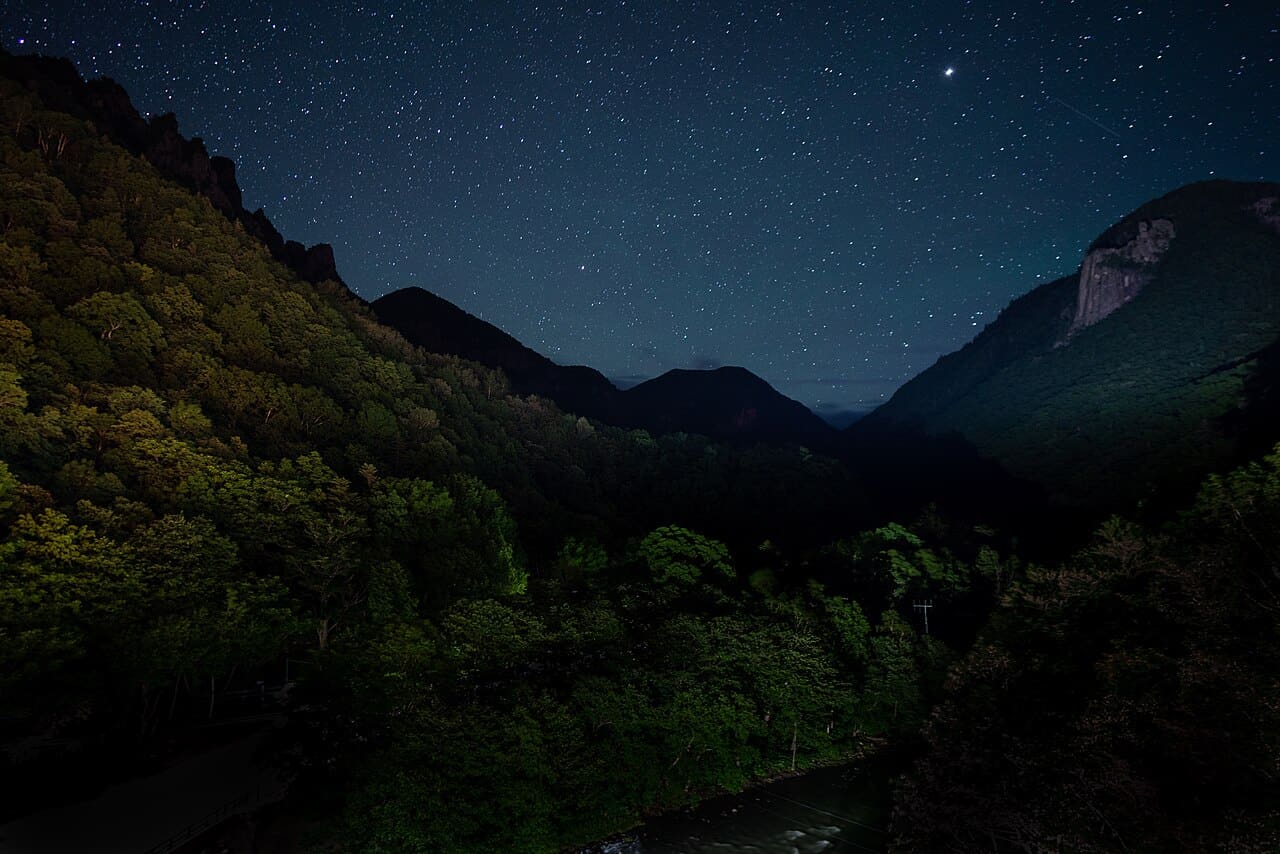
Season by season, bluntly:
- Best overall: July and August. Ropeway from 6:00, chairlift running, the combo ticket on sale, the Taisetsu Lake bus operating. Maximum facilities open, and Hokkaido summers are cool to begin with — more so at this altitude.
- Excellent if that is why you came: late January to early March. The ice festival has no equivalent elsewhere, and the 2027 window of Jan 23 to Mar 7 is confirmed. The price is severe cold, daytime access only at weekends, and mountain activities at the mercy of the weather.
- Good value: April and May. Fewest visitors, easiest bookings, falls and baths unaffected. But the ropeway's hours for these months are not published officially, so confirm before you commit, and the high trails in the residual-snow period are not for casual visitors.
- Avoid: November 9 to 30. The ropeway is shut for all 22 days and you are left with the falls and a bath. Unless bathing was the whole plan, spend that fortnight somewhere else.
- Autumn: covered elsewhere. It is the season Sounkyo is famous for, but peak timing, booking windows and viewpoints live in the Daisetsuzan autumn guide.
The practical shape I would recommend is Asahikawa in and out, two days and one night: up in the afternoon, bath and onsen street on day one; first ropeway car on day two, down before noon, twin-falls viewpoint, then the afternoon bus back. Asahikawa itself supports another full day at Asahiyama Zoo, and both buses leave from the same station forecourt, so the two link without any backtracking. Buy zoo admission at the ticket window — the queue is rarely a problem; booking ahead only earns its keep on Golden Week and summer-holiday peak days, or if you would rather not spend ten minutes in line. For everything else in the region, browse the Hokkaido section.
So what if this trip genuinely cannot spare a night? Foliage season does have coach tours from Sapporo that compress Kurodake and Asahiyama Zoo into one day — but look at the cost first: they give Sounkyo about 90 minutes, up the ropeway, one look around, back down and gone. No bath, no twin-falls viewpoint, no onsen street, and they are foliage-season only, with no equivalent during the ice festival. They solve exactly one problem: a trip locked into Sapporo that still wants the Daisetsuzan foliage, and the Daisetsuzan autumn guide covers that shape of trip. If a night is genuinely possible, Asahikawa in and out is the better deal. If you are not touring, nothing changes: buy the Kurodake Ropeway ticket at the window, using the fare and monthly-hours table above.
What makes Sounkyo worth going out of your way for is not the label of Hokkaido's most famous gorge. It is that 24 km of columnar cliffs, two free waterfalls on Japan's official list of 100, a ropeway that climbs to 1,300 m in seven minutes and an onsen street you can bathe in without booking a room are all packed into walking distance of each other. You do not need mountaineering skills, and you can cover about seventy per cent of it without a car — as long as you remember those 22 closed days, and that 17:00 bus.
Frequently Asked Questions
- Q1:When is the Sounkyo Ice Waterfall Festival in 2027?
- The Sounkyo Tourist Association has already announced the 52nd edition: January 23 through March 7, 2027. That is unusually early notice for a Japanese winter event, so if you are building a 2027 Hokkaido trip you can lock those dates in now. Entry works through a cooperation fee rather than a conventional ticket, and for the 51st edition in 2026 that fee was 1,000 yen. The fee and the daily opening hours for 2027 have not been published yet, so do not budget using the 2026 figure. As a guide to how the event runs, the 2026 edition operated from January 24 to March 8, with weekday hours of 17:00 to 21:30 and weekend and public holiday hours of 11:00 to 21:30, last entry 21:15. Weekdays were evening-only, and daytime access existed only at weekends.
- Q2:How much is the Kurodake Ropeway, and is the combo ticket worth it?
- Adult individual fares are 3,000 yen return on the ropeway, 1,200 yen return on the chairlift, and 3,900 yen return for the ropeway plus chairlift combo, with elementary school children paying half price across the board. The combo saves 300 yen against buying both separately, so in summer it is the obvious choice if you intend to reach the 7th station. The catch is that the combo is sold in summer only, so the decision is really made by the calendar rather than by you. The chairlift also runs a shorter season than the ropeway: in 2026 it finished its summer operation on October 15, after which only the ropeway runs and only as far as the 5th station. Winter is a different product entirely, with the Kurodake ski area selling a 5,200 yen adult day pass, 2,600 yen for children.
- Q3:Is November a bad time to visit Sounkyo?
- The first week and the rest of the month are two completely different propositions, and this is the single most common trap here. The Kurodake Ropeway shuts down for scheduled maintenance from November 9 to November 30, 2026 — a full 22 days when it does not run regardless of how good the weather is. From November 1 to 8 it still operates, on shortened hours of 8:00 to 16:00, and it reopens on December 1 for the ski season, again 8:00 to 16:00. So if your trip lands in mid or late November, shift the focus from the mountain to the gorge and the hot springs: Ginga and Ryusei Falls are free and open year-round, the town-run Kurodake-no-Yu day-use bath keeps normal hours, and the onsen street itself is unaffected. What you should not do is travel to Sounkyo in mid-November specifically to ride the ropeway.
- Q4:Can I use the hot springs in Sounkyo without staying overnight?
- Yes, and Sounkyo is better set up for this than most onsen towns. The most reliable option is Kurodake-no-Yu, a town-run day-use bathhouse rather than a hotel facility, so it is not subject to sudden closures for hotel guests or group bookings. Admission is 800 yen for adults and 400 yen for children, and the official listing states no regular closing days apart from maintenance. Hours run 10:00 to 22:30 from May 1 to October 31 with last reception at 21:30, and 11:00 to 21:30 from November 1 to April 30 with last reception at 21:00; over New Year, December 31 to January 3, it runs 11:00 to 18:00. Inside there are two large baths plus a third-floor open-air bath, a sauna and a cold plunge, and the water is classified as a hypotonic weakly alkaline hot spring. Seven hotels along the street also open their baths to day visitors at rates from 600 to 4,000 yen, but that list comes from a municipal summary page rather than live hotel notices, so phone ahead.
- Q5:How do I get from Asahikawa to Sounkyo, and how long does it take?
- The practical route is the Dohoku Bus Sounkyo and Kamikawa line from stop 8 in front of Asahikawa Station. The one-way fare is 2,140 yen and the journey takes about 1 hour 59 minutes — close to two hours, not 90 minutes. Under the timetable revised on July 1, 2026, seven direct departures run daily from Asahikawa, the first at 6:55 and the last at 18:25, with seven return departures from Sounkyo. The critical number is the last direct service back to Asahikawa, which leaves Sounkyo at 17:00; later buses only run as far as Kamikawa. A day trip is technically possible, but that 17:00 departure will dictate your entire afternoon. If all you want is the waterfalls and a bath, a day trip works. If you want the ropeway, stay a night, because the mountain is at its best in the early morning.
- Q6:How do I reach Obako, and can I walk the Kobako trail?
- Obako sits about 6 km north of the Sounkyo onsen street, on the left as you exit the New Obako Tunnel. It is free, open year-round, and has a free car park for around 50 vehicles, and it offers the most dramatic wall of columnar jointing in the gorge. Access is the problem. The only bus that passes it is the seasonal Taisetsu Lake extension service, which runs one round trip a day from July 1 to October 31: departing Sounkyo at 12:50, passing the Obako entrance at 13:15 and reaching Taisetsu Lake at 13:23, then returning at 13:38 and arriving back in Sounkyo at 14:00. That leaves roughly 25 minutes on the ground, which is enough for photographs and nothing more, so driving or taking a taxi is the realistic answer. As for Kobako, the walking trail there is closed to the public because of rockfall danger, as stated on the tourist association site.
Read next
Hokkaido Daisetsuzan Autumn 2026: Japan’s Earliest Foliage
Mt. Kurodake ropeway, Sounkyo basalt gorge, Jozankei — chase Japan’s earliest foliage in late September.
Asahiyama Zoo Guide 2026: Penguin Walk & Behavioural Exhibits
Japan's northernmost zoo, famous for behavioural exhibits — the winter penguin walk, the seal column tank and diving polar bears — plus Asahikawa ramen and a Biei combo, 1h25 from Sapporo.
Hokkaido Winter 7-Day Itinerary 2026
Sapporo → Otaru → Biei → Hakodate over 7 days, with JR Pass math, ski-shuttle reality, and a real two-person budget.
📊 See the 2026 Price Index (JR Pass, DPA, eSIM, Airport Transport) →