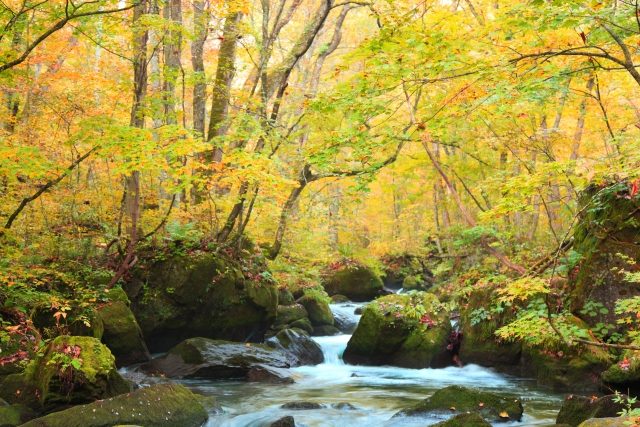
The Oirase Stream's 14 km trail is a perennial winner on Japan's "100 Best Foliage Spots" list — but the reason isn't one signature viewpoint. It's that the stream itself walks the foliage: yellow-green-red reflections shifting along the water, Ashura Rapids exploding around mossy rocks, Kumoi Falls dropping vertically through a maple frame. This is landscape you have to walk to see. This guide is for travelers willing to put miles on their boots and chase Japan's deepest autumn — covering the reverse-walk strategy (Nenokuchi → Yakeyama), the Lake Towada cruise pairing, a 5-day Sendai-loop itinerary, and the JR East Pass math.
📍 Want the full nationwide foliage timeline (Hokkaido Sept 25, Kyoto Nov 22, Kyushu Dec 5)? See Japan Autumn Foliage Complete Guide 2026. This article is that guide's Tohoku deep dive.
- 2026 forecast peak: stream from Oct 31, Lake Towada shore from Oct 27 (WeatherNews, checked Sept 26 — a week later than the historical average, so shift your booking week)
- Reverse walk: Nenokuchi start → Ashura Rapids → Ishigedo (7 km, 3 hours, best light direction)
- Don't skip the Lake Towada cruise: Nenokuchi → Yasumiya, about 50 min, ¥1,760 (from Oct 10 the last Nenokuchi departure is 13:30)
- JR EAST PASS, 5 consecutive days, ¥35,000 covers Sendai ↔ Aomori shinkansen + Hachinohe-Oirase bus (the Tohoku-area version was withdrawn March 13, 2026)
- 5-day budget: NTD 38,000–48,000 for two sharing (flights + 4 nights included)
📖 Article contents (click to expand)
Why is Oirase a "100 Best" perennial winner?
Oirase is the only stream draining Lake Towada. It runs 14 km from Nenokuchi (the lake outlet) to Yakeyama (downstream), with only 200m of elevation change — almost flat. The trail follows the entire length on a paved-and-gravel path. Three irreplaceable qualities:
- Water variety. 14 km contains 14 named waterfalls and 9 named rapids. The famous Ashura Rapids and Choshi Otaki (the largest fall, 7m drop) are landmarks, but every 500 meters offers a different water composition.
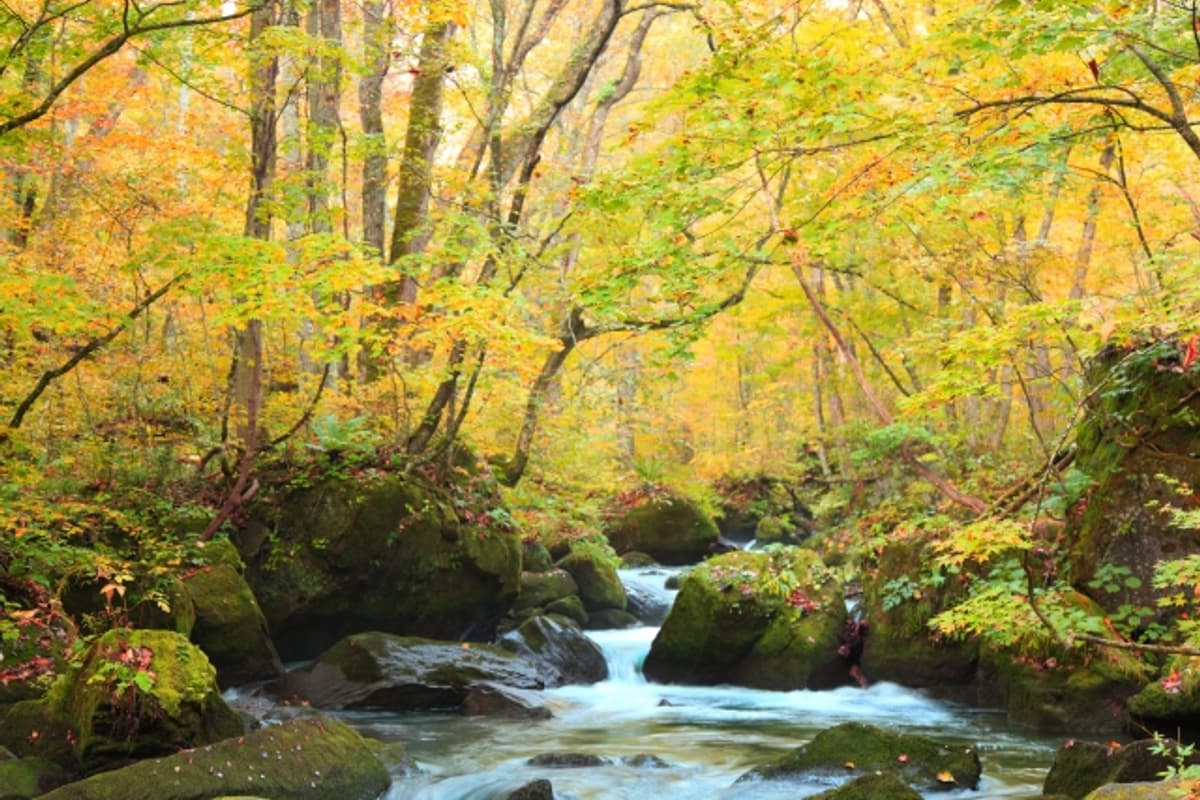
- Forest layering. Red maple + yellow beech + green moss on river stones — three layers in one frame. Pure red-maple destinations like Kyoto can't replicate this depth.
- Light filtering. The canopy covers about 70% of the trail; sunlight reaches the stream as scattered patches through the leaves. Photographers chase this dappled light specifically — it's a different image than open-sky photography.
That's why, despite the 4.5-hour journey from Tokyo, peak week pulls in roughly 500,000 visitors annually. It's far, but the trip is uniquely earned.
14 km trail: the reverse-walk strategy
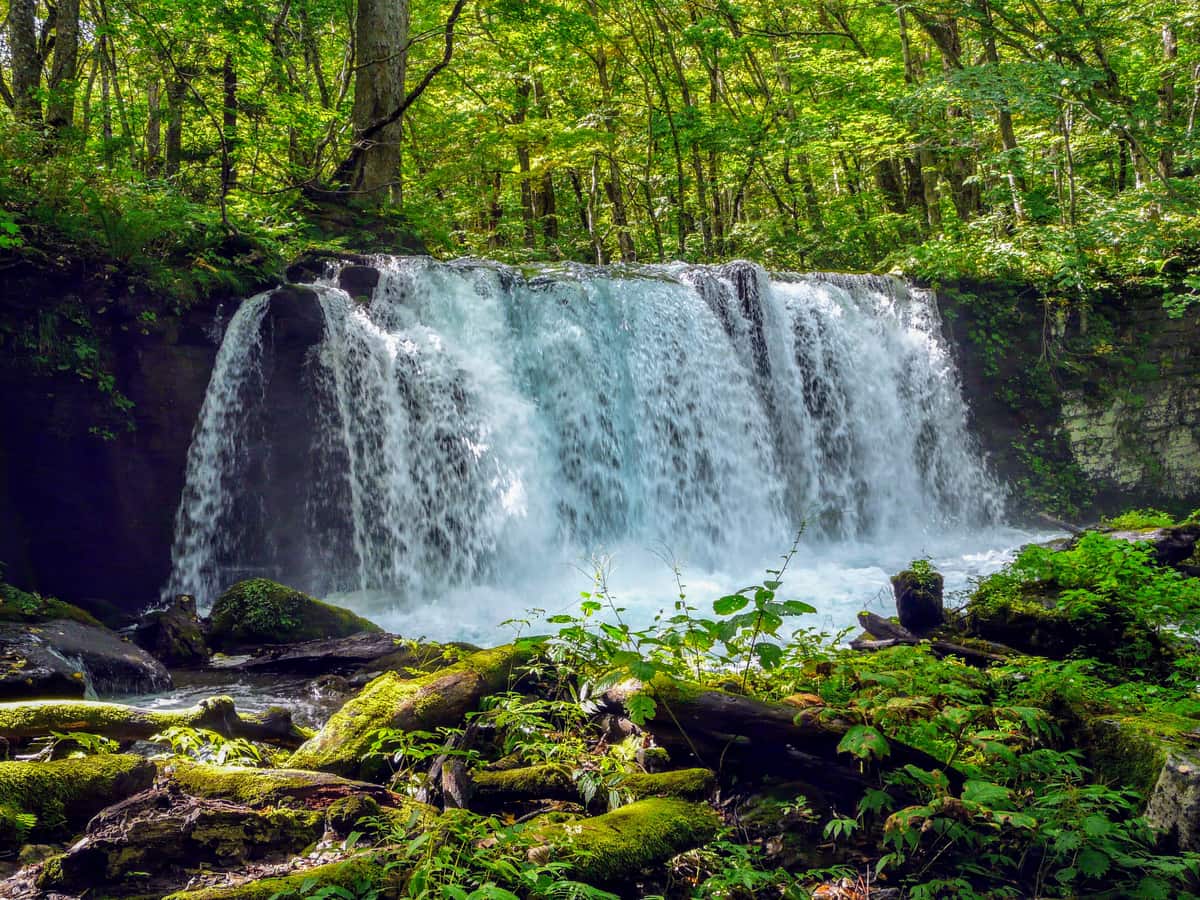
My recommended route: Nenokuchi → Kumoi Falls → Ashura Rapids → Ishigedo (7 km, 3 hours).
Three sections, each a distinct visual movement:
- Nenokuchi → Kumoi Falls (2 km, 45 min). Start at the lake outlet — you watch placid lake water transition into rushing stream. First must-shoot: Choshi Otaki, Oirase's largest waterfall (7m drop, broad face). It sits literally at the trailhead, so don't blow past it.
- Kumoi Falls → Ashura Rapids (3 km, 1 hr 15 min). The core stretch. Kumoi-no-Taki is the second-largest fall (think bridal-veil silhouette), Shiraito-no-Taki cascades through narrow rocks like white silk, and Ashura Rapids is the climax — multi-angle splashes hitting boulders. Plan an unhurried hour here, not the 30 minutes most groups allocate.
- Ashura Rapids → Ishigedo (2 km, 45 min). Water calms, forest thickens. Ishigedo itself is a natural rock shelter — a single 9m-wide, 2m-thick boulder forming a roof. There's a rest house here selling onigiri and the bus stop for the return trip.
Bus schedule (official timetable for September 18 to November 17, 2026): the gorge is served by JR Bus Tohoku's Lake Towada line, under two names — the Mizuumi-go from Aomori and Shin-Aomori, and the Oirase-go from Hachinohe. English sources mix these up constantly. The useful inbound services are Mizuumi-go 102 (an extra foliage-season service, September 18 to November 11 only: Aomori 7:30, Ishigedo 9:39, Nenokuchi 10:00), Mizuumi-go 2 (Aomori 8:10, Ishigedo 10:19, Nenokuchi 10:40) and Oirase-go 21 (Hachinohe West 10:00, Ishigedo 11:44, Nenokuchi 12:05). Returns from Nenokuchi run at roughly 8:15, 9:15, 10:15, 11:15, 12:15, 13:05, 14:00, 14:45, 15:15, 15:45 and 16:15 (the 11:15 and 14:45 run September 18 to November 11 only) — but Aomori-bound and Hachinohe-bound are different services, so check which city each one serves. You can also buy single in-gorge hops (Ishigedo to Nenokuchi is ¥550). Watch the closing dates at the tail of the season: the Mizuumi-go from Aomori runs until November 11, the Oirase-go from Hachinohe until November 17 (service 23 until November 16), and the winter timetable from November 18 has no services into the gorge at all. From November 12 there is no bus into the gorge from Aomori, and returns from Nenokuchi drop to four — 8:15, 10:15, 12:15 and 16:15, of which only the 10:15 and 16:15 go to Hachinohe. If you are chasing the last of the foliage, come in from Hachinohe, and check the times once more on the JR Bus Tohoku site before you go.
⚠️ Drivers: the car restriction dates have changed. Oirase's private-car restriction fell on October 21–27 in 2024 and October 27 – November 2 in 2025, both at the tail of the foliage season — but in 2026 it moved forward to September 7–13, with September 13 closed to every vehicle class for the first time ever. In other words the 2026 foliage peak is not affected by it. Full detail on the restriction, the shuttle and its fares is in our Oirase Gorge year-round guide.
Gear checklist
- Waterproof hiking shoes — path has wet sections and post-rain rocks get slippery
- Light down jacket + windbreaker — late-October Oirase is 5°C at dawn, 12–15°C midday
- Rain poncho (not umbrella) — keeps both hands free for camera
- 20,000 mAh power bank — full day of camera + navigation drains phones fast
- Snacks: no restaurants between Nenokuchi and Ishigedo; stock up at the convenience stores at either trailhead
Lake Towada: the second highlight
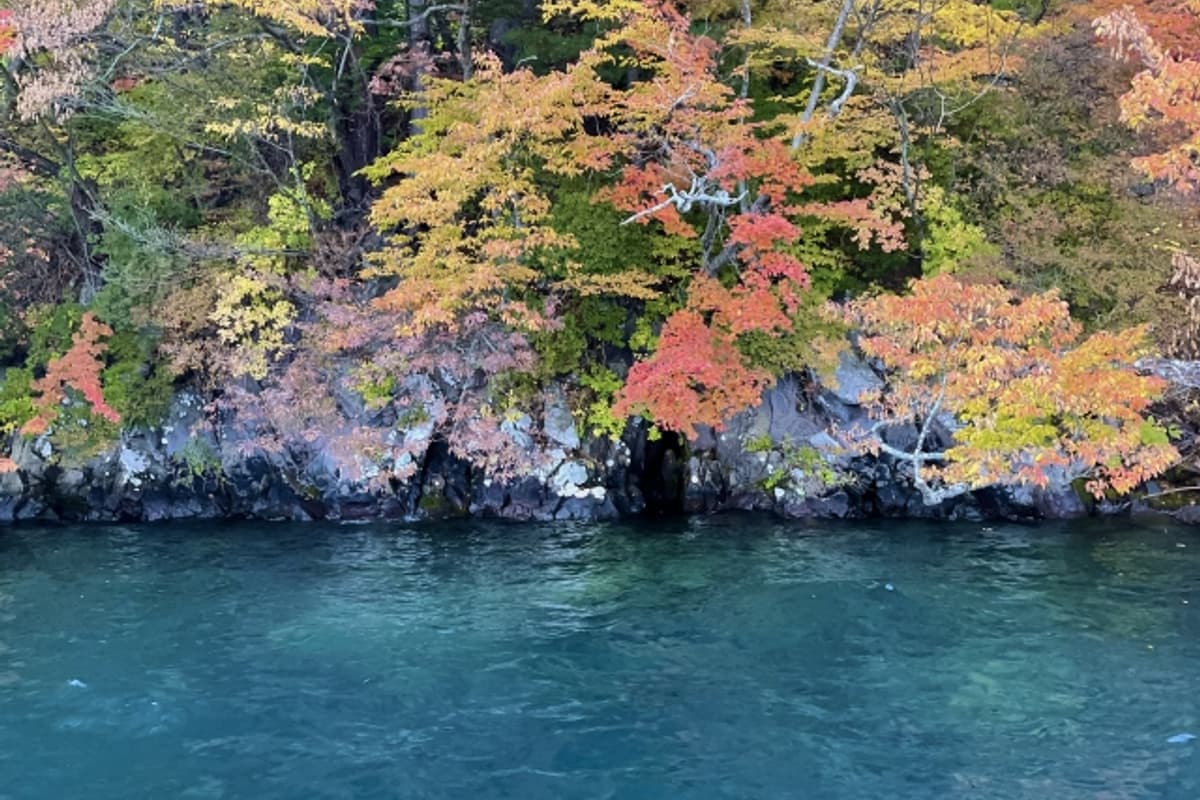
Lake Towada is a volcanic caldera lake (327m deep, 46 km perimeter). Two foliage-week must-dos:
- Nenokuchi → Yasumiya cruise (about 50 min, adults ¥1,760). From the boat you see the Nakayama and Ogura peninsulas framing the inner "Naka-no-Umi" zone — the entire ringing autumn forest is visible in a single panorama. Timing trap: Nenokuchi departures are 11:00 and 13:30, and the 16:00 sailing only runs until October 9 — so during peak foliage in late October the last boat out of Nenokuchi is 13:30. Build the morning walk backwards from that.
- Kankodai overlook (drive-only). The Kankodai observation point on Mt. Ohanabe is Lake Towada's premier overhead view — a 5-minute walk from the parking lot delivers the full caldera-with-foliage frame. If you're renting a car, this is non-negotiable.
Hachimantai + Kakunodate: Tohoku autumn extensions
Hachimantai Aspite Line (peak Oct 5–15). 1.5-hour drive from Morioka up the mountain. The road itself is the attraction — a foliage tunnel framed by red and yellow walls. Top of the line: Hachimantai observatory + Kagamiike, where the lake creates a famous "dragon's eye" reflection when fall fog rolls in.
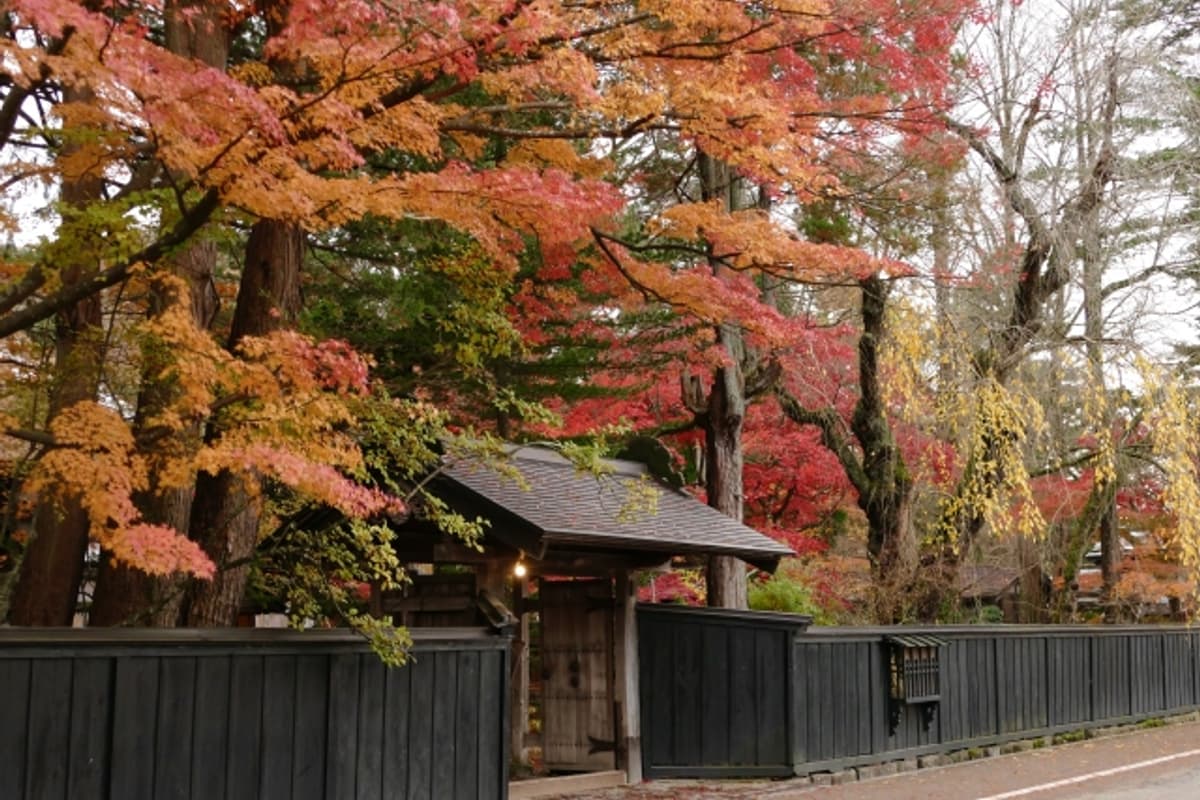
Kakunodate samurai district (peak Oct 25 – Nov 5). Edo-period samurai residences lined with weeping cherries and maple trees. When autumn turns the trees deep red against the black wooden samurai walls, it's one of the most photographable streetscapes in Japan. Sendai → Kakunodate by shinkansen is 1.5 hours; doable as a day trip.
5-day Sendai-loop itinerary
| Day | Plan | Stay |
|---|---|---|
| Day 1 | Arrive Sendai, gyutan dinner, walk Ichibancho | Sendai, ¥10,000 |
| Day 2 | Shinkansen to Hachinohe → bus to Oirase, scout walk near hotel | Oirase Stream Hotel, ¥35,000/person |
| Day 3 | Oirase trail 7 km reverse + Lake Towada cruise | Lake Towada Yasumiya, ¥22,000/person |
| Day 4 | Hakkoda Ropeway + Lake Towada loop, sleep Aomori | Aomori Station area, ¥9,000 |
| Day 5 | Aomori → Morioka → Kakunodate half-day → Sendai out | — |
For Sendai lodging, compare via Trip.com Sendai hotels — station-area business hotels run ¥8,000–12,000 with breakfast included.
JR East Pass + bus: real cost math
KKday JR East Pass — the current product is the all-JR-East JR EAST PASS at ¥35,000 for five consecutive days. Coverage:
- Tokyo ↔ Sendai ↔ Aomori full shinkansen segment
- Sendai ↔ Yamagata, Sendai ↔ Kakunodate, Hachinohe ↔ Oirase bus
- 5 consecutive days, reserve seats at any window or vending machine
Real math: Sendai-Hachinohe single ¥7,000 + Hachinohe-Oirase bus (Oirase-go) ¥3,050 + Aomori-Morioka shinkansen ¥6,400 + Morioka-Kakunodate ¥3,400 + Kakunodate-Sendai ¥7,500 = about ¥27,350 in single tickets alone. That verdict flipped in March 2026. The Tohoku-area pass was withdrawn and the current JR EAST PASS costs ¥35,000 for five consecutive days, so this core route alone no longer pays it back. It wins only if you add more intra-region hops — or route your Tokyo arrival and departure through it, which the wider coverage now allows. Full Pass comparison: JR Pass complete guide 2026.
If that timetable already put you off planning it yourself, there is a ready-made alternative: GetYourGuide sells an Oirase, Lake Towada and Hakkoda Ropeway day tour from Aomori Station (US$145) — 09:00 out, 18:00 back, capped at nine people, Lake Towada cruise fare included, running Mondays, Wednesdays, Fridays and Sundays. Be clear that it is the opposite of what this article teaches. The operator states outright that the 9 km from Ishigedo to Nenokuchi is covered by vehicle, with short photo stops at the main waterfalls. If the reverse-direction 14 km walk above is why you are going, this is the wrong purchase; it is for people with one day who would rather not fight the JR bus timetable.
Stay: Oirase vs Lake Towada vs Hachinohe
| Area | Price (per person) | Best for |
|---|---|---|
| Hoshino Oirase Stream Hotel | ¥35,000–55,000 | 5-min walk to stream, ideal for dawn photography, premium budget |
| Lake Towada Yasumiya | ¥18,000–30,000 | Lake view + onsen, balanced price tier |
| Hachinohe Station area | ¥7,000–10,000 | Business hotel, tight budget, OK with 75-min daily bus commute |
The Oirase stream and Lake Towada's Yasumiya both sit inside Towada City, so if you want to sleep by the stream or the lake, start from these lists: stays near Yakeyama on Booking.com (the lower end of the trail), Towada City on Rakuten Travel, and Towada on Agoda. ⚠️ The last two cover the whole city, including business hotels in central Towada that are nowhere near the stream — check the location before you book. All three open on today's date, not foliage season, so change the dates first.
For Tohoku trip extensions — especially if you want a Taisho-era gas-lamp atmosphere — Ginzan Onsen is a one-day-trip-friendly target. Full breakdown: Ginzan Onsen Day Trip vs Overnight Stay. If your Tohoku trip lands in summer rather than foliage season, the strongest thing to build the same JR East Pass route around is early August in Aomori — how Hirosaki Neputa's schedule and seating work is entirely separate from Aomori Nebuta and Goshogawara Tachineputa, and August 7 is the one day you can catch two of them, though only one or the other.
Frequently Asked Questions
- Q1:When is the Oirase Stream's autumn peak?
- The historical peak is October 20–30, but the 2026 forecast runs a week later: WeatherNews gives the Oirase Stream peak from October 31, leaf-fall from November 10, and the Lake Towada shore (Yasumiya area) peak from October 27, leaf-fall from November 6 (2026 forecast, checked 2026-09-26). Within the gorge the higher north end near Nenokuchi (around 400m) still turns before the south end (Yakeyama, Ishigedo at ~250m) by a few days. So book flights and rooms around late October into the first week of November, and recheck the forecast two weeks out.
- Q2:Can I walk the full 14 km?
- Yes, but it takes 5–6 hours and you'll be exhausted. Don't do this. The realistic move: bus to Nenokuchi (the upstream end) and walk reverse from Nenokuchi → Kumoi Falls → Ashura Rapids → Ishigedo — that's 7 km, 3 hours, and covers the most photogenic stretch. Then catch a bus from Ishigedo back to your starting point. The trail is flat with no climbing, friendly to seniors and kids.
- Q3:Why walk reverse (north → south)?
- Three reasons. (1) You walk downstream — the water visual motion matches your direction, which feels more natural. (2) Morning light (9–12 AM) hits the western bank canopy from the east, so walking south means the light falls toward your camera angle, not against it. (3) Bus scheduling: starting at Nenokuchi and ending at Ishigedo gives you a wider return-bus window, and lets you catch the last Lake Towada cruise back to Yasumiya.
- Q4:Is the Lake Towada cruise worth it?
- Strongly recommended. The Nenokuchi-to-Yasumiya crossing (Route A) takes about 50 minutes and costs ¥1,760 for adults, ¥880 for elementary school children. The lake is a 327m-deep volcanic caldera ringed by maples — the deep blue water against red foliage is the second highlight of the trip after Oirase itself. There is a timing trap you need to know: in 2026, departures from Nenokuchi are 11:00 and 13:30, plus a 16:00 sailing that only operates until October 9. From October 10 the last boat from Nenokuchi is 13:30, which means the "walk in the morning, cruise in the afternoon" plan does not work during peak foliage in late October. Either be at Nenokuchi before 13:30, or reverse the day and take the 9:30 from Yasumiya (Yasumiya departures are 9:30, 12:15 and 14:45, running to November 5). If you miss the boat, the bus from Nenokuchi to Yasumiya costs ¥720.
- Q5:Where should I stay: Oirase, Lake Towada, or Hachinohe?
- Depends on the experience you want. Hoshino Resorts Oirase Stream Hotel is a 5-minute walk to the stream — best for dawn photography — at ¥35,000–55,000/person. Yasumiya inns by Lake Towada offer lake-view rooms and onsen at ¥18,000–30,000/person, the balanced choice. For budget, base at Hachinohe (¥7,000–10,000/night business hotel) and ride the 75-minute bus each way.
- Q6:How do I get to Oirase from Sendai without a car?
- JR Shinkansen Hayabusa from Sendai to Hachinohe is 1.5 hours, ¥7,000. Out of Hachinohe station, take the JR Bus Tohoku "Oirase-go" direct to Oirase and Lake Towada. Get the service name right: the Hachinohe service is the Oirase-go, not the Mizuumi-go, which departs from Aomori and Shin-Aomori instead. Hachinohe to Lake Towada (Yasumiya) takes about 2 hours 20 minutes and costs ¥3,050, or ¥2,600 to Nenokuchi. Note that Oirase-go services 21 and 23 require a reservation to board at Hachinohe Station West Exit, at ¥300 per seat. The current JR EAST PASS, 5 consecutive days, covers the Sendai to Aomori shinkansen legs (the older Tohoku Area version was withdrawn on 2026-03-13, so guides still naming it are out of date). For the full fare table, the timetable and the private-car restriction, see our Oirase Gorge year-round guide.
- Q7:Is Oirase worth it on a rainy day?
- Counterintuitively, yes. Rain deepens the foliage colour, increases water volume, and turns Ashura Rapids into a louder, more dramatic frame. Downside: stone path gets slippery, and you'll want a rain shell over an umbrella (free hands for photography). October rain probability in Tohoku is about 30%, so plan for it: pack a poncho and waterproof shoes.
Read next
Japan Autumn Foliage 2026: Peak Forecast & 5-Region Guide
Region-by-region peak-forecast map from late-September Hokkaido to mid-December Kyushu, with itineraries and booking timing.
Ginzan Onsen Day Trip vs Overnight Stay 2026
By day it is crowded; the gaslight magic happens after sunset — day trip or overnight, and is the extra night worth it?
JR Pass 2026: Is It Still Worth It?
Four real routes calculated, six alternatives that may beat the Pass.
📊 See the 2026 Price Index (JR Pass, DPA, eSIM, Airport Transport) →