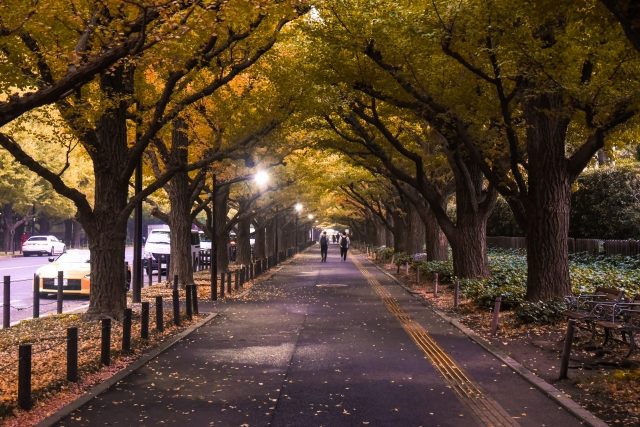
Meiji Jingu Gaien's ginkgo avenue, Thursday 10:00 AM late November: the entire 300-meter golden corridor is photographable, crowds haven't arrived yet. Same spot, Saturday 11:00 AM: you can't move, can't set up a frame, can't see anything but heads. The real truth about Tokyo autumn is that weekdays decide everything. This guide is for travelers who can take leave during late-November weekdays — covering Tokyo's 8 must-visit ginkgo and foliage spots (city center plus suburban Mount Takao), the crowd-avoidance windows that actually work, and the Tokyo Subway Pass math.
📍 Want the full nationwide foliage timing map? See Japan Autumn Foliage Complete Guide 2026. For Tokyo's neighboring mountain foliage (Lake Chuzenji + Kegon Falls), the Nikko complete guide covers a high-altitude day trip option.
- 2026 estimated peak: Ginkgo Nov 25 – Dec 5, red maples Nov 22 – Dec 10, Mount Takao Nov 15 – 25
- 4 must-visit spots: Meiji Jingu Gaien (ginkgo avenue), Rikugien (night maples), Showa Memorial Park (ginkgo + maples + garden), Mount Takao
- Crowd-avoidance rule: Weekday mornings 9–11, avoid weekends 10–15
- Tokyo Subway 72h Pass ¥2,000 pays off if you ride the subway 4+ times per day (post-2026-03-14 fare hike)
- 4-day budget: NTD 25,000–35,000 for two sharing (flights + 3 nights + Pass included)
📖 Article contents (click to expand)
- Meiji Jingu Gaien: 300m ginkgo avenue
- Rikugien: water-mirror night illumination
- Showa Memorial Park: ginkgo + maples + flower beds
- Mount Takao: Tokyo's top suburban autumn spot
- 4 more spots: Shinjuku Gyoen, Ueno Park, Todai ginkgo, Imperial Palace
- 4-day Tokyo ginkgo + foliage route
- Tokyo Subway Pass + JR cost math
- FAQ
Meiji Jingu Gaien: 300m ginkgo avenue
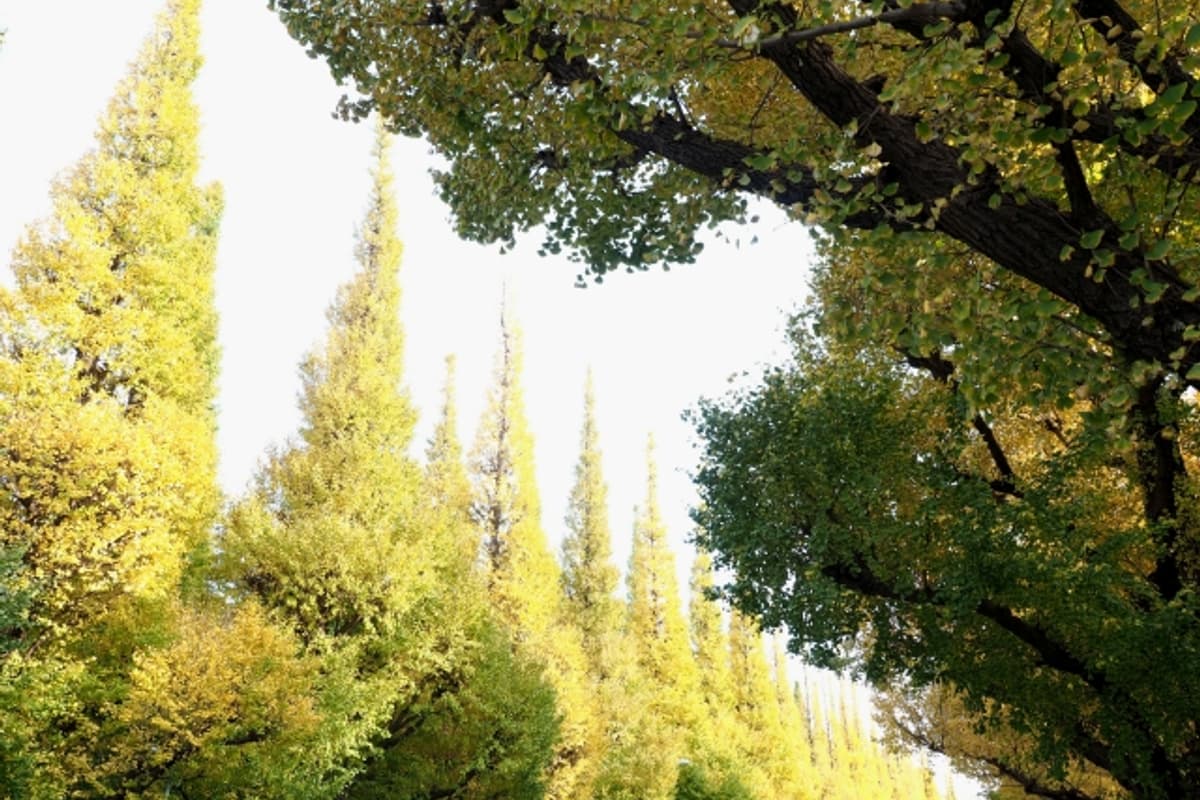
Tokyo's most iconic autumn image. 146 ginkgo trees, planted in 1923, line a 300-meter symmetrical avenue from Aoyama-dori up to the Memorial Picture Gallery. Late November peaks deliver a full golden tunnel — visually arresting from any angle.
Tactics
- Best time: Weekday 9:00–11:00 and 14:00–15:30. Avoid weekends or holidays — the path becomes a wall of people.
- Best frame: Stand in the middle of the avenue facing the Memorial Picture Gallery. The architecture-plus-ginkgo symmetry is the postcard composition.
- Ginkgo Festival (Icho Namiki Matsuri): Mid-November to early December. Food stalls sell oden and roasted chestnuts — atmospheric but adds even more crowd.
- Access: 5-minute walk from Aoyama-itchome, Gaien-mae, or Shinanomachi stations.
Rikugien: water-mirror night illumination
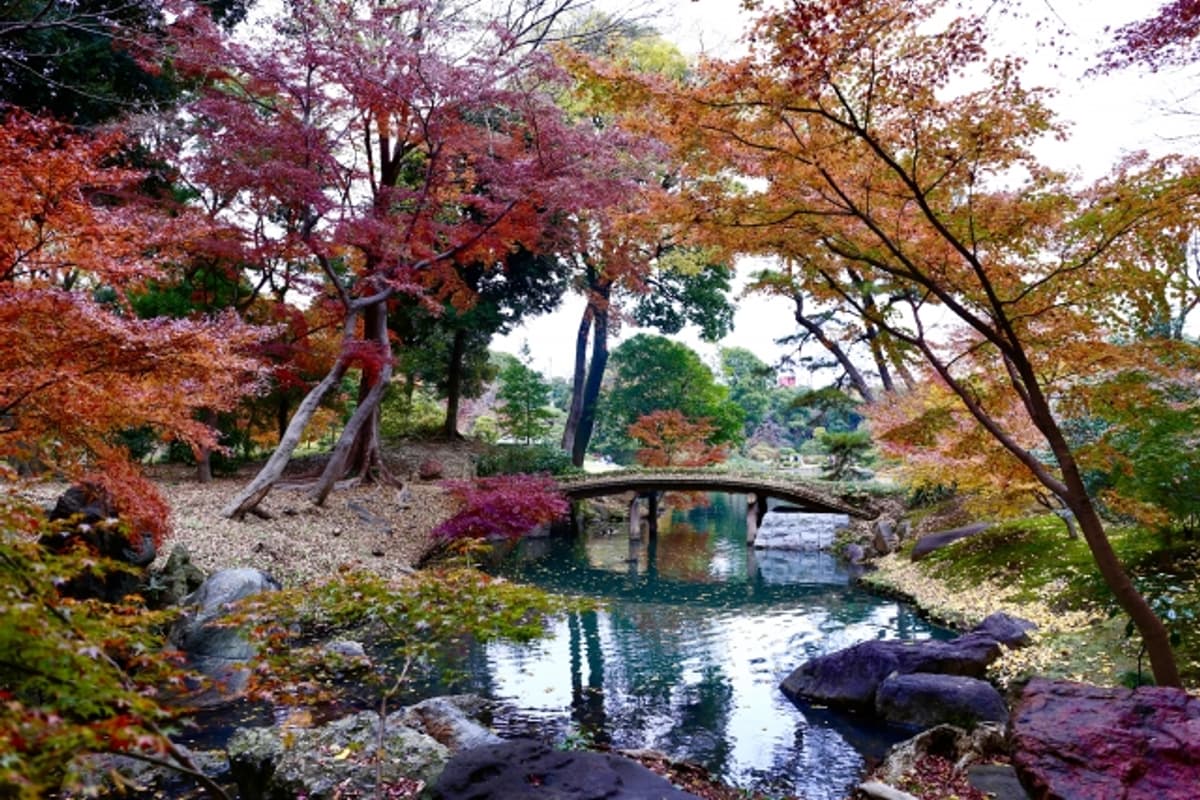
An Edo-period stroll garden built by Yanagisawa Yoshiyasu (close advisor to the 5th shogun Tsunayoshi), designated a National Special Place of Scenic Beauty. The autumn highlight is the annual night-illumination period (mid-November to early December).
Tactics
- Night ticket: ¥500 (includes daytime entry). Daytime only: ¥300.
- Best time: 19:00–20:30. Queues from 18:00 opening are long; crowds thin after 20:00.
- Signature frame: Daisensui pond edge — lit maples on the shore reflecting in the water is Rikugien's defining shot.
- Access: 7-minute walk from JR Yamanote Komagome Station or Tokyo Metro Namboku Komagome Station.
Showa Memorial Park: ginkgo + maples + flower beds
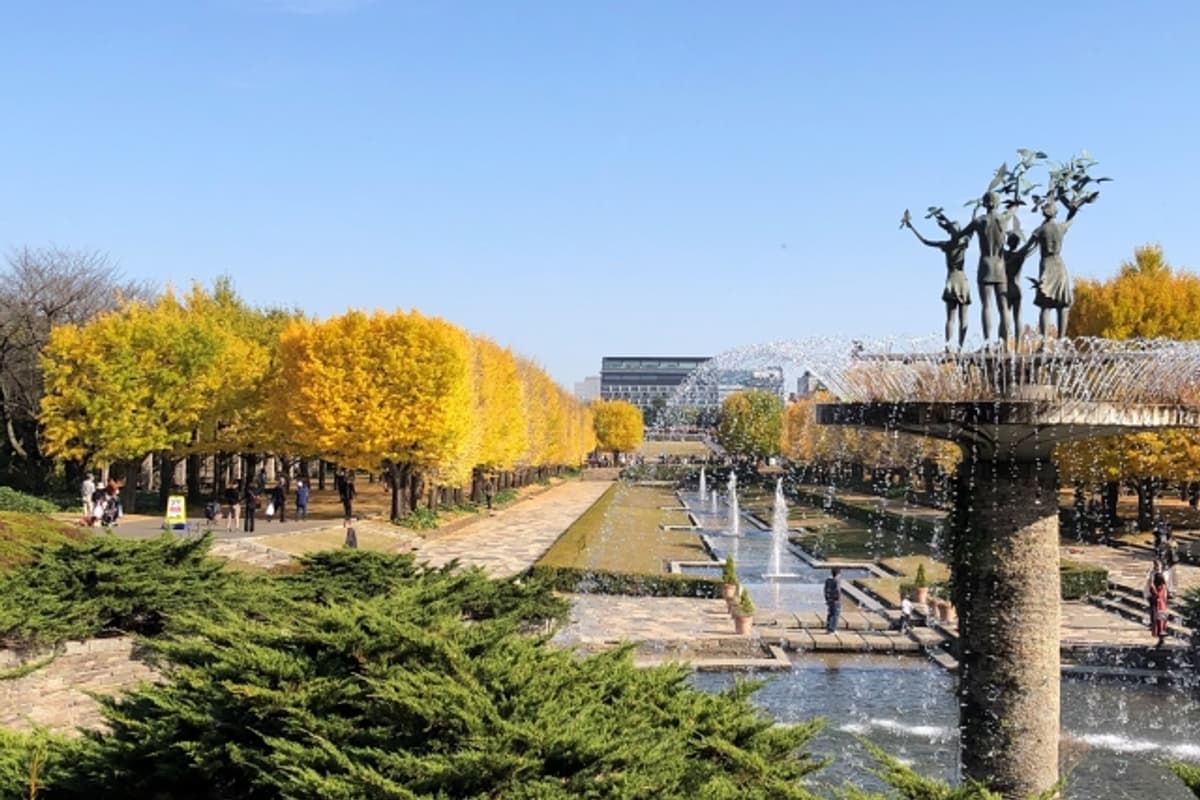
National park in Tachikawa, western Tokyo suburbs — 165 hectares (35× the size of Tokyo Dome). Tokyo's largest comprehensive autumn destination. Three must-walk zones:
- Kanal Waterway ginkgo avenue: Two rows of ginkgo trees reflecting in a symmetrical canal — the park's signature composition.
- Japanese Garden: Stroll-style garden with maple-lined ponds. The "Utagoe-an" tea house serves matcha if you need a break.
- Flower beds: Autumn zinnias and cosmos plus yellow zelkova trees framing wide picnic lawns.
Allocate 4–5 hours. Pack a bento and picnic. Admission ¥450, parking ¥840 (just take the train). Chuo Line from Shinjuku to Tachikawa is 30 minutes, ¥530 paper ticket / ¥528 IC (post 2026-03-14 JR East fare revision; it was ¥490 before), then 13-minute walk to the Tachikawa Gate.
Mount Takao: Tokyo's top suburban autumn spot
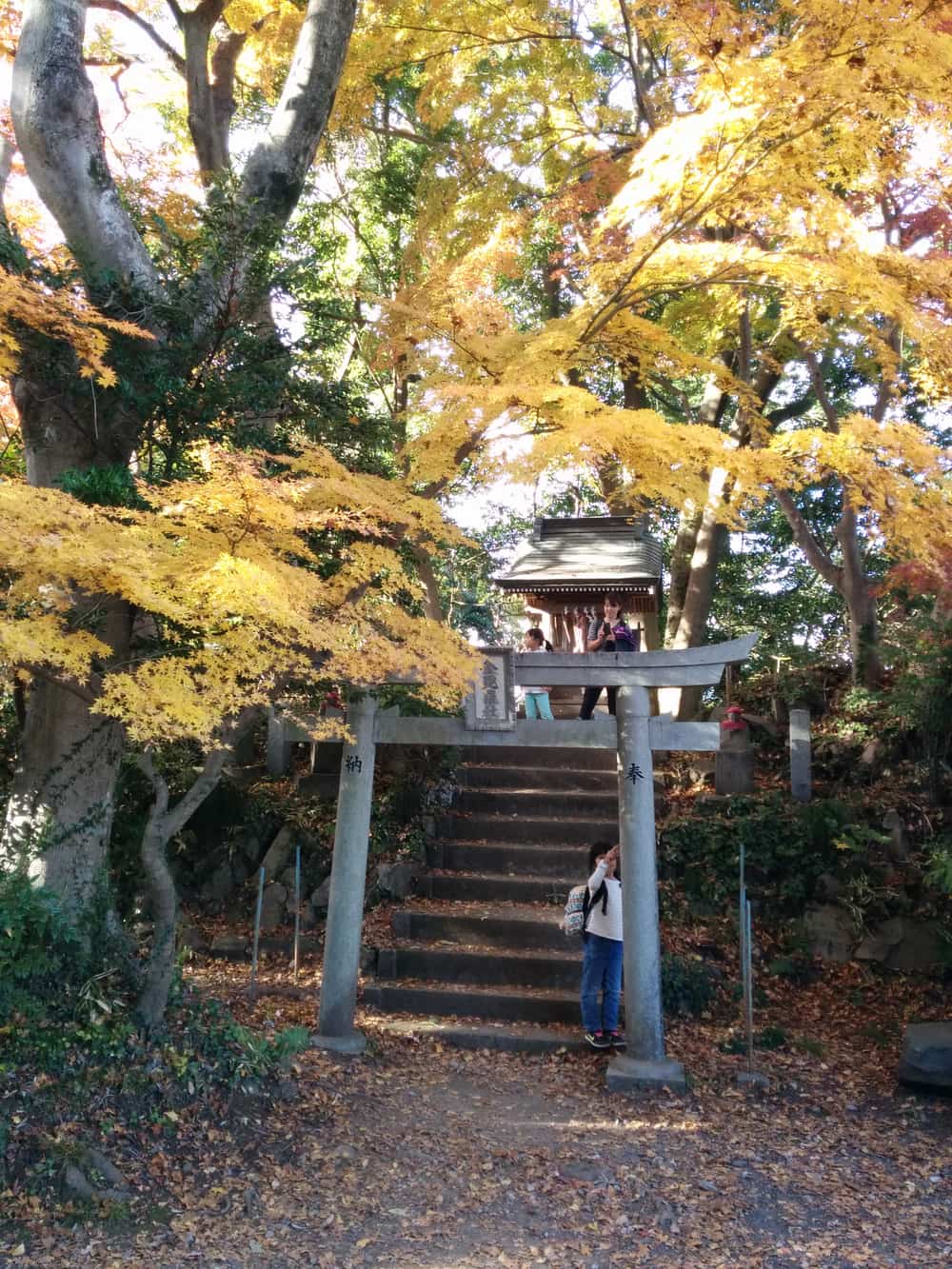
Mt Takao — Tokyo's easiest autumn hike: cable car up to a koyo-framed shrine. — Photo: Pocsywe / CC0 / Wikimedia Commons
599m peak, 50 minutes from Shinjuku via Keio Line — the most accessible high-altitude foliage spot near Tokyo. Annual visitors: 2.5 million (the world's most-climbed mountain). The early November color comes from the higher elevation.
Tactics
- Trail choice: Trail 1 (most popular, fully paved, 1.5-hour ascent); Trail 6 (along a stream, densest foliage, hidden gem, 2 hours); Cable car (one-way ¥490 / round-trip ¥980 — most relaxed).
- Peak window: Nov 15–25 (1–2 weeks earlier than central Tokyo due to elevation).
- Crowd avoidance: Go weekday. Weekends require leaving home by 6:30 to catch the 8:00 first cable car.
- Summit view: Clear November air (low humidity) often gives a Mt. Fuji view from the observation deck.
4 more spots
| Spot | Peak | Highlight | Admission |
|---|---|---|---|
| Shinjuku Gyoen | Nov 25 – Dec 15 | 1,500 maples + 100 ginkgo trees across Western + Japanese + French garden styles | ¥500 |
| Ueno Park | Nov 20 – Dec 5 | Shinobazu Pond ginkgo, Tokyo National Museum ginkgo, Kiyomizu Kannondo maples | Free |
| University of Tokyo ginkgo avenue | Nov 25 – Dec 5 | 50 mature ginkgo trees in front of Yasuda Auditorium (Hongo Campus) — unique academic atmosphere | Free |
| Imperial Palace + Chidorigafuchi | Nov 22 – Dec 5 | Palace front plaza ginkgo + Chidorigafuchi maples, free and accessible | Free |
4-day Tokyo ginkgo + foliage route
| Day | Theme | Plan |
|---|---|---|
| Day 1 | City highlights | Meiji Jingu Gaien (morning) → Omotesando lunch → Shibuya Sky observatory |
| Day 2 | Night maples + garden | Rikugien daytime → Ueno Park → Rikugien night illumination (19:00–20:30) |
| Day 3 | Suburban park | Showa Memorial Park, full day with picnic |
| Day 4 | Mount Takao day trip | Shinjuku Keio Line to Takaosanguchi, Trail 1 + summit observation (cable car included) |
Compare Tokyo hotels via Trip.com Tokyo hotels. Asakusa, Ueno, and Shinjuku are all subway hubs putting any of these spots within 30 minutes.
Tokyo Subway Pass + JR cost math
For Tokyo autumn, the optimal transit combo is:
- KKday Tokyo Subway 72h Pass (¥2,000): Covers Tokyo Metro + Toei Subway entire network. 3 days of the 4-day trip = enough for all city-center spots.
- JR single ticket: Shinjuku–Tachikawa (Showa Memorial Park) ¥530 / ¥528 IC, post 2026-03-14 revision. No JR Pass needed.
- Keio Line single ticket: Shinjuku–Takaosanguchi ¥430 (post 2023-10-01 Keio revision, same price on paper and IC) — this leg is not JR, so no rail pass covers it.
- Pasmo or Suica: Required for Keio Line (Mount Takao) and other private rails — keep one loaded for non-subway segments.
Real math: 4-day trip uses subway ~12 times (avg ¥250 = ¥3,000) + JR 4 times (¥2,500) = ¥5,500. Buy 72h Pass ¥2,000 + JR ¥2,500 = ~¥4,500. Saves about ¥1,000 plus mental overhead.
Full Tokyo vs JR Pass comparison: JR Pass complete guide 2026. Full Tokyo 5-day itinerary planning: Tokyo 5-Day Itinerary.
Frequently Asked Questions
- Q1:When do Tokyo's ginkgo and autumn leaves peak?
- Tokyo's low elevation (30–40m) makes it one of Japan's latest foliage destinations. Ginkgo (Meiji Jingu Gaien, Showa Memorial Park) historically peaks November 20–30; red maples (Rikugien, Shinjuku Gyoen) run from late November into early December. The official 2026 forecast isn't published until around September, and the actual peak can run a few days earlier or later than the historical average — check tenki.jp, Walkerplus, or WeatherNews about two weeks out before targeting your "ginkgo week."
- Q2:When should I visit Meiji Jingu Gaien ginkgo avenue?
- Weekday morning 9:00–10:30 is the sweet spot — the 300m avenue is photogenic and walkable. From 10:00 on weekends the entire path becomes impassable with crowds. Best light: 10:00 AM (sun hits the left side of the ginkgo from the east) or 15:00 (golden afternoon light). 7:00–8:00 weekdays clears the crowd but the light is too sideways for clean composition.
- Q3:Do I need to reserve for Rikugien's night illumination?
- No reservation — walk-up tickets only. But during peak week (Nov 22 – Dec 5), weekend queues from 18:00 onwards run 30–60 minutes — and in 2026 that window opens on the 21-23 November long weekend, the first one with no non-reserved Nozomi seats at all. Better strategy: go on a weekday after 20:00 when the crowd thins. Ticket: ¥300 normally, ¥500 during the special night-illumination period. The signature shot is the "water mirror" — Daisensui Pond reflecting the lit maples along the shore.
- Q4:Showa Memorial Park vs Meiji Jingu Gaien — which one?
- Both, ideally on different days. Meiji Jingu Gaien is a "golden tunnel" experience — 300m avenue, 30 minutes to walk through. Showa Memorial Park (in Tachikawa, western Tokyo suburbs) is 165 hectares of "ginkgo avenue + Japanese garden foliage + flower beds" — needs 4–5 hours to do properly. If your budget allows, hit both on separate days; if you must pick one, Meiji Jingu Gaien is more iconic and accessible.
- Q5:How do I get to Mount Takao for autumn?
- Keio Line Limited Express from Shinjuku Station to "Takaosanguchi" station — 50 minutes, ¥430 (post October 2023 revision). Walk 5 minutes to the cable car base. Cable car one-way ¥490 / round-trip ¥980 to the Trail 1 entrance (the ¥950 return fare still quoted widely online predates the October 2023 revision). The summit trail network has multiple foliage routes: Trail 1 is the popular 1-hour loop; Trail 6 is the hidden foliage path along a stream (2 hours). Peak: Nov 15–25 (1–2 weeks earlier than central Tokyo because of elevation).
- Q6:Is the Tokyo Subway 24/48/72h Pass worth it?
- Yes, if you ride the subway 4+ times per day. Single rides are ¥180–330; the 24h Pass is ¥1,000, 48h is ¥1,500, 72h is ¥2,000 (all post-2026-03-14 fare hike). Foliage itineraries typically hit 4–6 spots per day, so the 72h Pass averages out to ¥670/day — strong value. Exception: if your only out-of-city trip is Mount Takao (Keio Line, not subway), single-buy is cheaper.
Read next
Japan Autumn Foliage 2026: Peak Forecast & 5-Region Guide
Region-by-region peak-forecast map from late-September Hokkaido to mid-December Kyushu, with itineraries and booking timing.
Tokyo 5-day itinerary 2026
A clear 5-day plan: Shinjuku base, two zones per day, honest budget.
Tokyo to Mt. Fuji day trip guide
Kawaguchiko, Oshino Hakkai, Arakurayama — bus times, prices, must-knows.
📊 See the 2026 Price Index (JR Pass, DPA, eSIM, Airport Transport) →