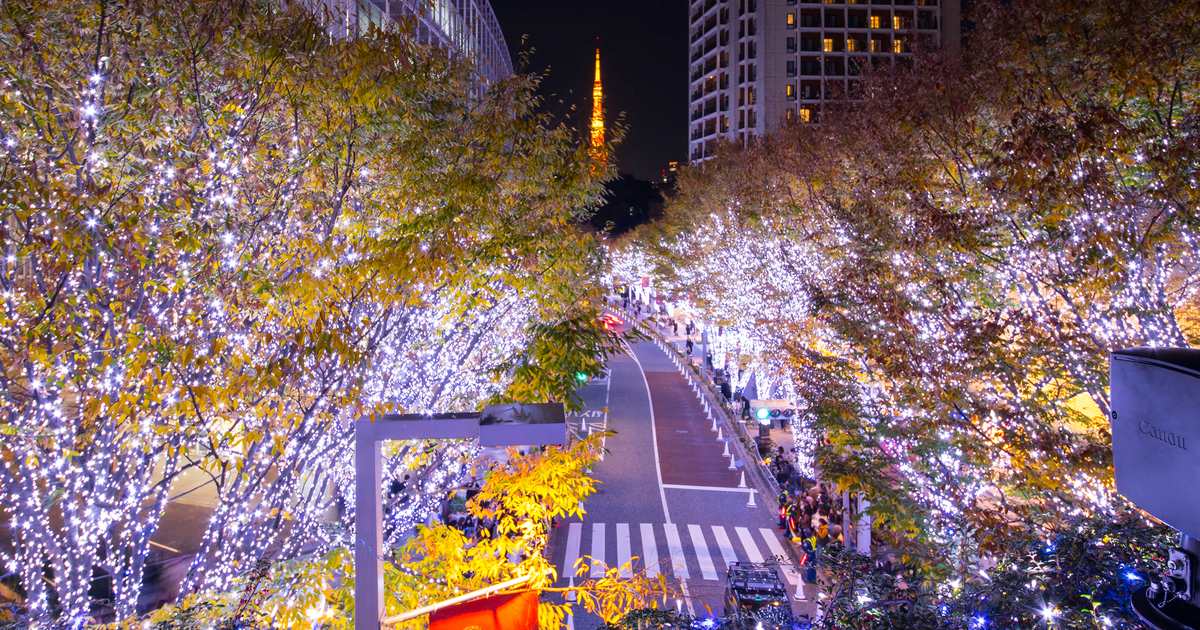
Tokyo's most underrated free winter activity is its illumination season — Marunouchi, Roppongi Hills, Tokyo Midtown and Omotesando are all free to walk through, yet plenty of visitors assume you need an expensive theme-park ticket to see anything worth photographing. The reality: these venues sit within a 20-minute subway ride of each other, and pairing two of them into one evening with dinner in between often beats the value of a paid attraction. This guide breaks down each venue's dates, vibe, and whether it's free or paid, plus the one venue that does charge — Yomiuriland's Jewellumination — so you don't mix up "free street illumination" with "paid theme-park illumination" when you're building your itinerary.
- Marunouchi, Roppongi Hills, Tokyo Midtown and Omotesando are all free — walk through, no ticket or reservation needed
- Yomiuriland Jewellumination is the one paid venue — the 2026-2027 season opens October 29 (Thu); a One Day Pass runs ¥5,900 for adults, or ¥3,100 for the After Pass (entry from 15:00) — ¥400 and ¥300 less on the official site
- One evening covers two venues realistically: Marunouchi paired with Roppongi or Midtown works best; give Omotesando its own night with Harajuku
- Venues start in early-to-mid November, and the lights don't stop at December 25: Keyakizaka and Marunouchi ran into mid-to-late February, Midtown's entrance light path to late February — 2026-27 official dates typically post from late September into October
- No need for Hokkaido-level gear — layers, a scarf and gloves are enough
Table of Contents (click to expand)
- Five venues at a glance
- Marunouchi Illumination: champagne-gold in the business district
- Roppongi Hills / Keyakizaka: the biggest of the five
- Tokyo Midtown: a music-synced light show, go before Dec 18
- Omotesando: December-only, pairs with Harajuku
- Yomiuriland Jewellumination: the one paid venue
- Two routes for stringing venues into one night
- What to wear, lodging, and getting around
- FAQ
Five venues at a glance
Tokyo has no shortage of illumination spots, but the ones actually worth building an itinerary around come down to this shortlist. Here's the overview before the venue-by-venue detail:
| Venue | Typical period (recent-year pattern) | Free or paid | Nearest station | Vibe |
|---|---|---|---|---|
| Marunouchi Illumination | Mid-Nov through mid-Feb | Free | Tokyo Station / Nijubashimae | Business district, elegant champagne-gold |
| Roppongi Hills / Keyakizaka | Early Nov through mid/late Feb (renamed Winter Illumination from Dec 26) | Free (Keyakizaka street) | Roppongi Station, Exit 1C direct | Biggest of the five, close to a million LEDs |
| Tokyo Midtown | Mid-Nov through Dec 25 (entrance light path to late Feb) | Free | Roppongi Station Exit 8 direct / Nogizaka Station | Intimate, music-synced light show |
| Omotesando | December only | Free | Omotesando Station / Meiji-Jingumae | Smaller scale, boutique-street charm |
| Yomiuriland Jewellumination | 2026-27 season opens Oct 29; end date not yet posted (last season ran to early Apr) | Paid (admission / After Pass required) | Shuttle from Keio-Yomiuriland Station | Theme-park scale, rides plus light displays |
One detail that's easy to overlook: all four free venues cluster inside the Yamanote loop or around Roppongi, none of them more than a 20-minute ride apart, which makes this one of the best-value free evening itineraries Tokyo winter offers. The only venue that actually costs money is Yomiuriland — it's a theme park's after-dark program, not a street display, and getting that distinction straight upfront is what keeps your budget from being off.
Marunouchi Illumination: champagne-gold in the business district
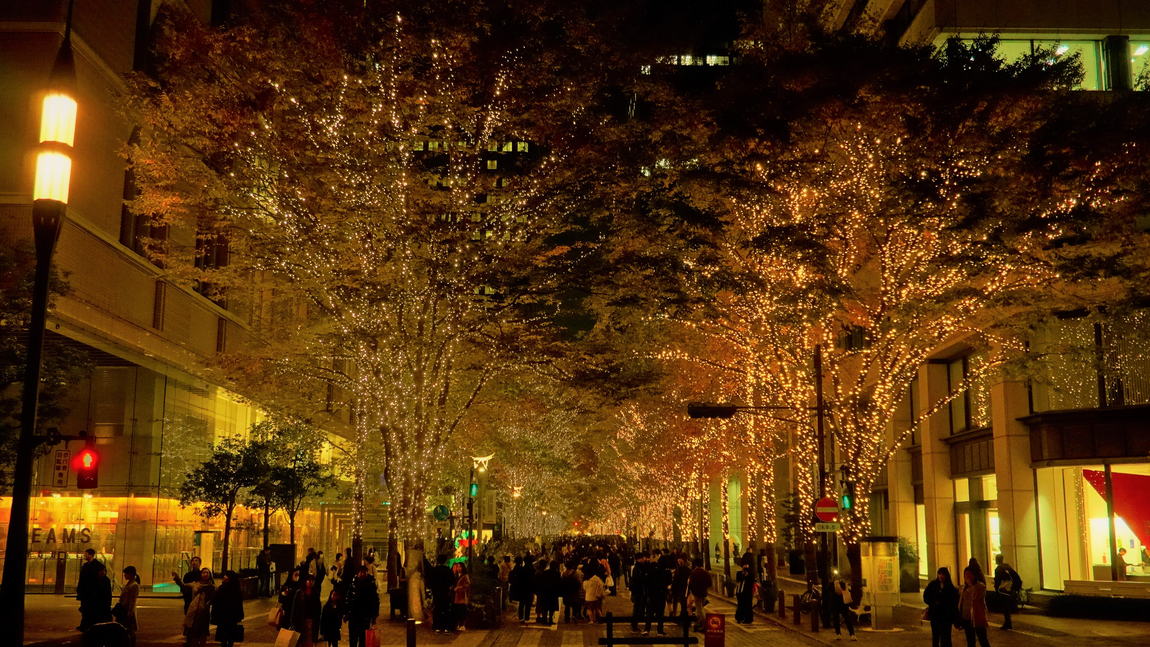
The Marunouchi Illumination is the signature display around Tokyo Station, running mainly along Marunouchi Naka-dori and extending to the Tokyo Kotsu Kaikan building near Yurakucho Station and Otemachi Naka-dori. Around 250 street trees within that stretch light up in a matched champagne gold, giving the whole street an understated, elegant feel rather than a flashy one — a good match if you prefer refined over over-the-top. Per the confirmed 2025-26 season, the display runs from November 13, 2025 through February 15, 2026 — the longest run of the four free venues, stretching all the way into mid-February, so it's still lit even if your Tokyo trip lands around Valentine's Day. Lighting hours for that season are 16:00-23:00, extended to 24:00 through December.
The 2026-27 season's official dates typically aren't announced until September or October; this guide will update once they post. Check marunouchi.com before you travel rather than assuming last year's window carries over. Marunouchi sits right across from Tokyo Station, which makes it an easy add-on to the tail end of a Tokyo sightseeing day — spend the day around the Imperial Palace and Tokyo Station, then walk the illuminated street once the lights come on at dusk, with no extra detour required. It slots in cleanly with the city day in our Tokyo 5-day itinerary.
Roppongi Hills / Keyakizaka: the biggest of the five
If you can only pick one "must-see" venue, it's Roppongi Hills' Keyakizaka illumination — the biggest and most visually dramatic of the four free venues. The roughly 400-meter Keyakizaka-dori street is lined with close to a million LED lights (about 930,000 per the 2025 season figures), and walking that stretch at night is what most people picture when they think "Tokyo illumination." The 2025 color scheme was blue-and-white "SNOW & BLUE."
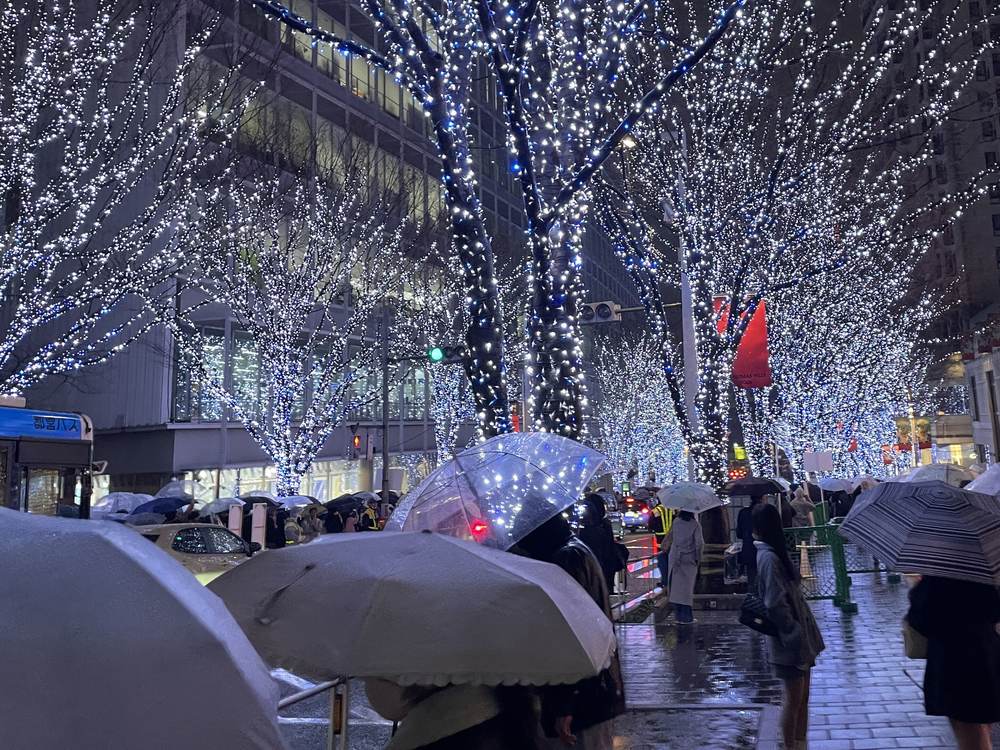
You can still see it after December 25. In 2025-26 the Christmas run was November 4 to December 25, 2025, then from December 26 it continued as the "Keyakizaka Winter Illumination" until February 22, 2026; the season before, 2024-25, ran straight from November 7 to Valentine's Day, February 14, 2025. Lights are on 17:00-23:00 (on opening night they came on around 17:40), and the street is free — no ticket needed. 2026-27 dates haven't been announced; last year's came at the end of September, so expect late September to early October. Two extended seasons in a row don't guarantee a third, so check roppongihills.com for the season's announcement.
During the Christmas period Roppongi Hills has three more spots nearby: the Christmas market at O-yane Plaza (last year November 22 to December 25, 11:00-21:00), the bouquet-shaped "Luminous Bouquet" lights at 66 Plaza (last year through December 25), and the Christmas tree at West Walk. Don't step into the roadway for photos of Keyakizaka — the organizers also ask visitors to come by public transport.
Getting there: Hibiya Line Roppongi Station Exit 1C connects directly; Oedo Line Roppongi Station Exit 3 is about a 4-minute walk, or Oedo Line Azabu-juban Station Exit 7 about 5 minutes.
If a Tokyo Tower or Skytree night-view stop is already on your itinerary, Roppongi is roughly on the way — see the lights first, then continue to your night-view plan or wrap up the evening there. Our Tokyo Tower vs Skytree comparison breaks down which night view is worth the ticket.
Tokyo Midtown: a music-synced light show, go before Dec 18
Tokyo Midtown plays a different note entirely — instead of Keyakizaka's near-million-LED scale, the main event is a light show in Midtown Garden where the lights change with original music, about three minutes per run. In 2025 it added bubbles (every 3 minutes) and falling snow (every 12 minutes), which rewards visitors who prefer "curated" over "overwhelming." The 2025 "MIDTOWN CHRISTMAS" main show ran November 13 through December 25, 2025, 17:00-23:00, with free admission; the golden entrance light path, "Hikari no Sanpomichi," stayed lit longer, until February 23, 2026. The theme changes each season; 2026-27 dates haven't been announced (last year's came at the end of September) — check tokyo-midtown.com.
For the bubbles and snow, go by December 12; for the light show alone, go by December 18. Last year the bubble and snow effects ended December 12, and Midtown warned that from December 19 the venue gets very crowded, with waits of two hours or more, plus crowd control on December 20-21 and 24-25. Midtown also runs a paid ice rink over the same period, handy if you have kids along.
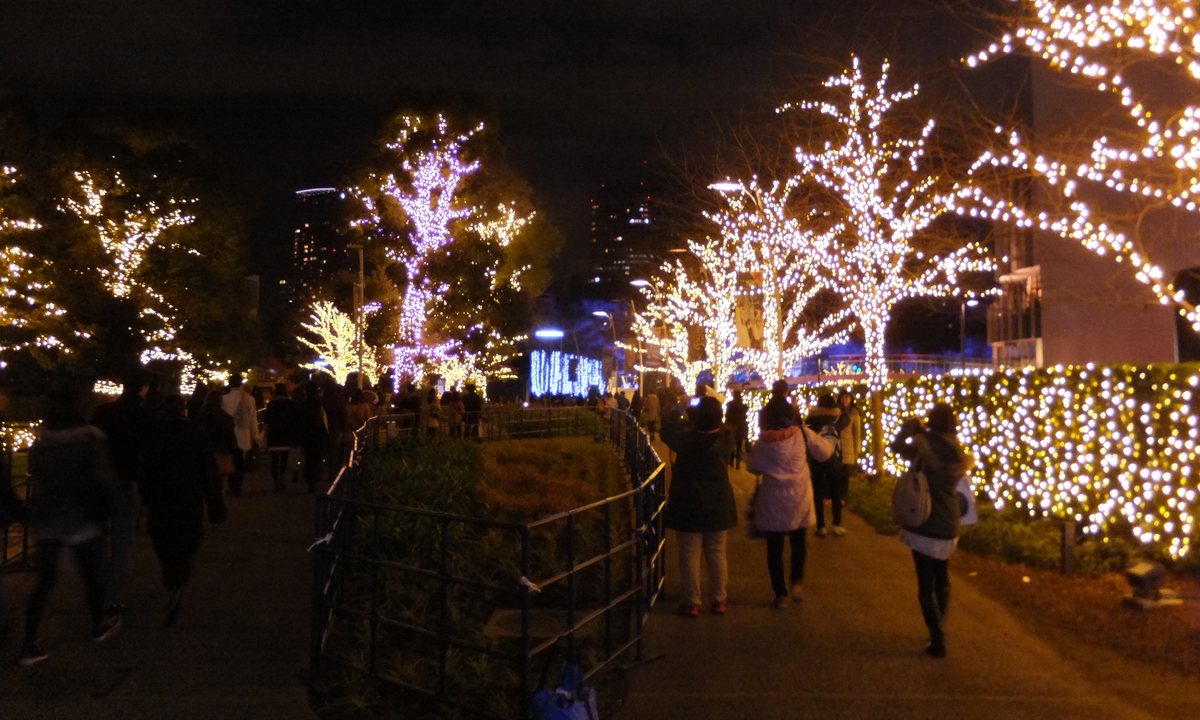
Getting there: Oedo Line Roppongi Station Exit 8 connects directly; the Hibiya Line Roppongi Station underground passage also connects, but it has stairs partway, so with a stroller or wheelchair use the Oedo Line side; Chiyoda Line Nogizaka Station Exit 3 is about a 3-minute walk.
Both venues sit within the Roppongi Station area, so they pair naturally in one evening — take in Keyakizaka's scale first, then Midtown's light show. The shift in pace makes for a more layered evening than either one alone.
Omotesando: December-only, pairs with Harajuku
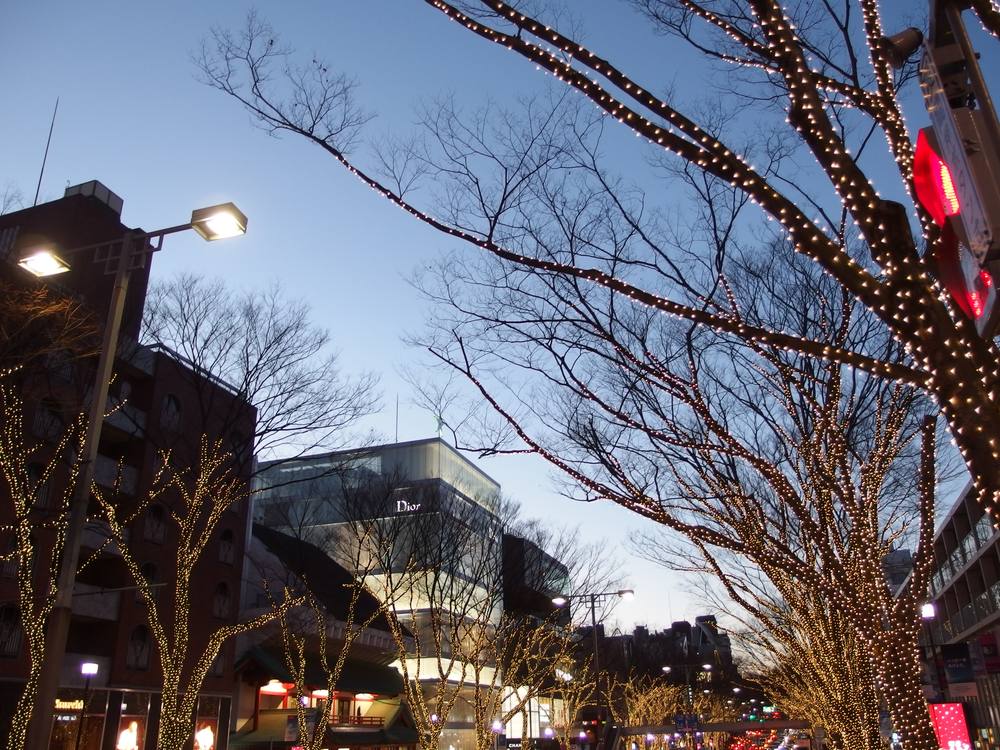
Omotesando's illumination is noticeably smaller-scale than the previous three, but its strength isn't LED count — it's that the boutique storefronts and the tree-lined avenue itself carry the atmosphere, and the walk is short enough to fold into a Harajuku or Aoyama shopping day rather than being a destination on its own. Going by recent years, the branded version of the display (recent seasons have run under a luxury-brand sponsorship) typically runs as a December-only event — the 2025 season ran December 1 through 28, lit from sunset until 22:00 (with only the low shrubs staying lit from December 29 through January 5). Separately, a broader area-wide illumination around Omotesando and Harajuku typically runs on a longer window — the 2025-26 season stretched roughly from early November into mid-February, lit 18:00-24:00 — but it's a different scope and organizer, so check the official Harajuku-Omotesando tourism site for that year's exact stretch before you go.
If Harajuku or Shibuya was already on your itinerary, staying on for the lights afterward costs you almost nothing; if you're making a dedicated trip purely to see illuminations, Roppongi or Marunouchi will reward the travel time more. If you're routing a family day through this area, our Tokyo family travel guide covers stroller-friendly routes through Harajuku and Omotesando.
Yomiuriland Jewellumination: the one paid venue
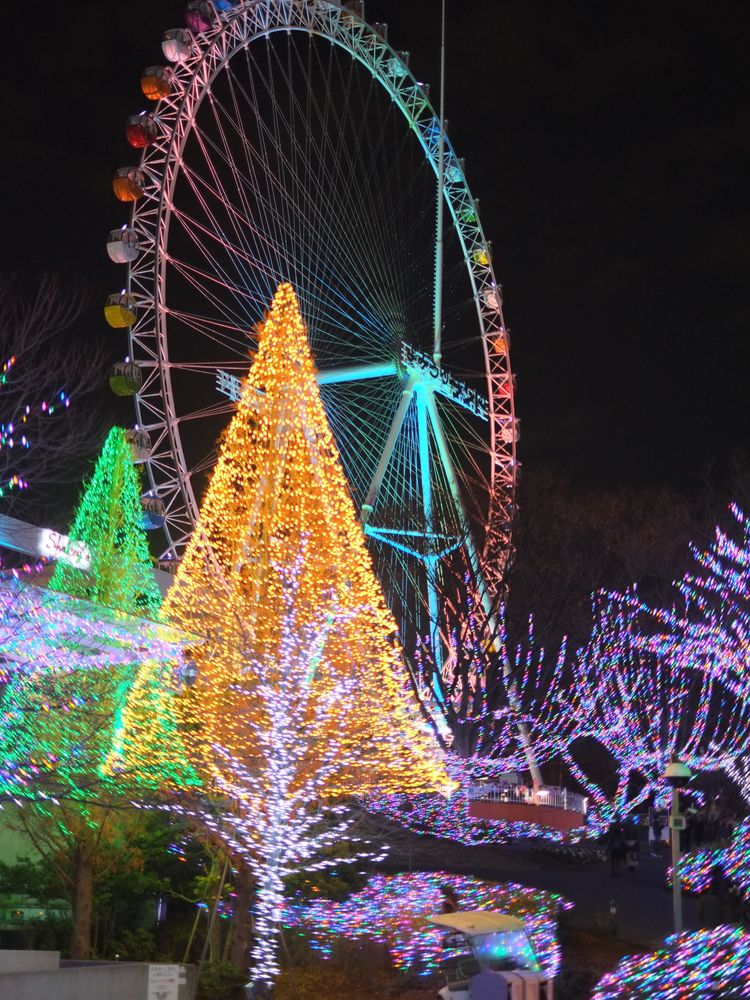
Every venue above is a free street display — Yomiuriland's "Jewellumination" is the only one in this guide that requires payment, because it's a theme park's after-dark program rather than a plain street illumination. You need a park ticket to get in and see the lights, something first-time Tokyo-winter planners often overlook, assuming it works the same way as Marunouchi or Roppongi — walk in free.
The 2026-2027 opening date is set: October 29, 2026 (Thu). That is the only date on the official page so far — as of September 26, 2026 the closing date and the nightly lighting hours have not been posted. Use last season for a sense of the length: 2025-26 ran October 23 through April 5, 2026, lit 16:00-20:30 (excluding closure days; weekdays from March 2-13, 2026 were daytime-only, with evening lights paused). Pricing breaks down as:
- One Day Pass (admission plus unlimited rides): ¥5,900 adults (18-64), ¥4,700 middle/high schoolers, ¥4,100 elementary schoolers/seniors (65+), ¥2,500 preschoolers (age 3+)
- After Pass (enter from 15:00, unlimited rides, some attractions excluded): ¥3,100 adults, ¥2,500 middle/high schoolers, ¥2,200 elementary schoolers/seniors, ¥1,500 preschoolers
- Admission only, no rides: ¥1,800 adults, ¥1,500 middle/high schoolers, ¥1,000 elementary schoolers/seniors/preschoolers — middle and high schoolers are their own tier here, not the cheaper one
The official site sells the same tickets cheaper than the gate. The official price table lists a second "online price" column: ¥5,500 for the One Day Pass, ¥2,800 for the After Pass and ¥1,600 for admission only (adult rates) — ¥400, ¥300 and ¥200 off respectively.
If you're mainly there for the lights and not planning to ride much, the After Pass is usually the better value — entering from 15:00 lines up almost exactly with when the lights come on, at roughly half the One Day Pass price. The park also opened a separate illumination-season After Pass on sale from October 29, described as admission from 15:00 on Jewellumination days plus unlimited rides, at the same ¥3,100 for adults. Confirm the figure on the official price page before you budget.
If you plan to go in during the day for the rides and stay on for the lights, the One Day Pass is also sold on travel platforms: GetYourGuide's Yomiuriland One Day Pass (the listing says it is for overseas customers only and valid only on the date you pick) and KKday's Yomiuriland One Day Pass (an e-ticket; you show a QR code at the gate). Both sell only the One Day Pass — the lights-only After Pass isn't on either platform, so buy that one from the official site or at the gate.
Two routes for stringing venues into one night
Turning the venues above into an actual evening, here are two practical routes — adjust the order based on where you're staying:
- Route 1 (Marunouchi + Tokyo Station area): Shop or grab dinner around Tokyo Station in the early evening, then walk Marunouchi Naka-dori once the lights come on at 17:00. You can head straight back to your hotel afterward with no cross-town travel — a good fit for your arrival or departure evening in Tokyo, with station lockers nearby for luggage.
- Route 2 (Roppongi + Midtown): Start at Roppongi Hills' Keyakizaka around 17:00 for the dramatic lights, then walk over to Tokyo Midtown for the light show. Both are in the Roppongi Station area, so you can finish with dinner in Roppongi or extend into a Tokyo Tower night-view stop nearby. This is the strongest combo in this guide — complementary pacing, zero travel friction.
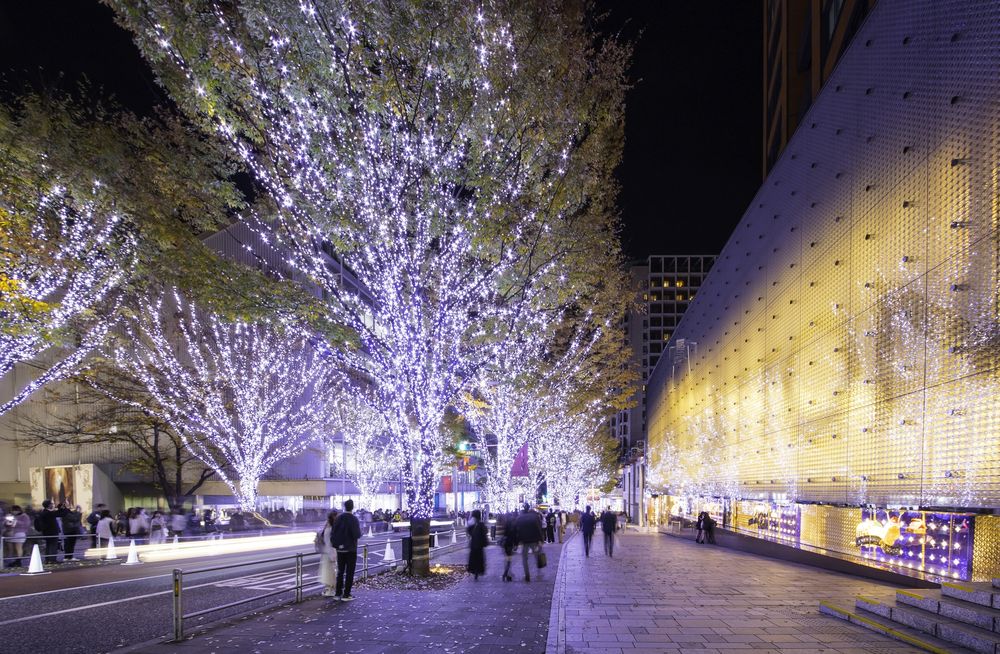
Omotesando sits far enough from the first two clusters that it's worth its own evening, paired with Harajuku shopping or an Aoyama café stop. Yomiuriland, being paid admission and set farther out in the suburbs, works better as its own half-day or full-day plan rather than squeezed into the same night as the free venues. And if Tokyo's walk-right-in venues leave you wanting a higher-stakes light-up, Japan's hardest ticket is the Shirakawa-go winter illumination — four 2027 dates, reservation-only — which most travelers fold into a Hokuriku itinerary rather than forcing a same-day round trip from Tokyo.
What to wear, lodging, and getting around
Tokyo evenings in December often hover around 5-10°C, far milder than Hokkaido, but standing outside for photos over an extended stretch feels noticeably colder than the walking in between. Simple layering covers it: a thermal base layer under a sweater or fleece, a windproof coat on top, plus a scarf and gloves — nothing close to snow-boot-level gear is required. For the full seasonal breakdown and a four-season packing list, see the Tokyo section of our Japan climate and clothing pillar guide.
Lodging-wise, illumination season isn't on the scale of New Year's Eve or cherry blossom season, but downtown hotels do run pricier and can sell out sooner from mid-December through Christmas, especially right around Christmas Eve and New Year's Eve. If a holiday-season Tokyo trip is already on your calendar, book alongside your main itinerary rather than waiting until November — pricing and availability both get worse the closer you get.
Getting between venues: Tokyo Station to Roppongi Station runs about 15 minutes (Marunouchi Line to Hibiya Line), and Roppongi Station to Omotesando Station is about 10 minutes (Hibiya Line to Ginza Line, or a walking transfer), which gives you plenty of flexibility for planning.
Tokyo Winter Illuminations FAQ
- Q1:When do Tokyo's winter illuminations usually run?
- Roppongi Hills' Keyakizaka lit up in early November in each of the last two seasons (Nov 4, 2025 and Nov 7, 2024) and stayed lit into mid-to-late February. Tokyo Midtown and Marunouchi start around mid-November; Midtown's main light show ends December 25, but its entrance light path runs to late February, and Marunouchi runs to mid-February. Omotesando is December-only. These are last season's dates — 2026-27 dates haven't been announced yet; both Roppongi venues announced at the end of September last year.
- Q2:Can I still see the Roppongi illumination after December 25?
- Yes. In 2025-26, Keyakizaka's Christmas run ended December 25, then continued from December 26 as the "Keyakizaka Winter Illumination" until February 22, 2026, 17:00-23:00. Tokyo Midtown's entrance light path ran to February 23. Whether 2026-27 repeats this depends on the official announcement.
- Q3:When is Tokyo Midtown's Christmas illumination least crowded?
- Before December 18. Last season Midtown warned the venue gets very crowded from December 19, with waits of two hours or more, and crowd control on December 20-21 and 24-25. If you want the bubble and snow effects, go even earlier — last year they ran only through December 12.
- Q4:Do any of these illuminations require a ticket?
- No, not for the street displays. Marunouchi, Roppongi Hills (Keyakizaka), Tokyo Midtown and Omotesando are all free to walk through — no advance ticket or reservation needed. The one exception is Yomiuriland's "Jewellumination", which sits inside a theme park — you need a park admission ticket or an after-hours pass to get in and see it. Keeping "free street illumination" separate from "paid theme-park illumination" is the first thing to sort out when planning your evening.
- Q5:How many venues can I realistically fit into one evening?
- Pairing Marunouchi with either Roppongi Hills or Tokyo Midtown is the most workable combo for a single evening — all three sit within a 10-20 minute subway ride of each other, and trying to cram in all three usually means most of your evening goes to commuting rather than looking at lights. Omotesando sits farther out in Shibuya ward, so it's worth giving it its own evening paired with Harajuku shopping or a Skytree visit.
- Q6:What's the difference in vibe between Marunouchi, Roppongi and Midtown?
- Marunouchi is a champagne-gold display along a business district's main street, elegant and understated — good if you like a refined, quintessentially Japanese look. Roppongi Hills' Keyakizaka is the biggest of the three, roughly 400 meters of street lined with close to a million LEDs, making it the most dramatic and the strongest photo op. Tokyo Midtown goes for a more intimate feel, with a roughly three-minute light show set to original music. There's no universally "best" pick — go big at Roppongi, go elegant at Marunouchi, go for surprise and detail at Midtown.
- Q7:How much does Yomiuriland Jewellumination cost?
- A One Day Pass (park admission plus unlimited rides) runs ¥5,900 for adults. If you're mainly there for the lights and don't plan to ride much, the After Pass, which lets you enter from 15:00 with unlimited rides (some attractions excluded), is ¥3,100 for adults and is the better value. Admission-only, with no rides included, is ¥1,800 for adults and ¥1,500 for middle and high schoolers — those are two different tiers. Buying on the official site is ¥200-400 cheaper on all three (¥5,500 / ¥2,800 / ¥1,600, adult rates).
- Q8:Is Omotesando's illumination much smaller than Roppongi or Marunouchi?
- Yes, noticeably — but Omotesando's draw isn't scale, it's that the walk pairs seamlessly with Harajuku shopping or an Aoyama café stop you were probably doing anyway. Going by recent years, the branded illumination along the avenue typically runs as a December-only event, lit from sunset until around 22:00. If Harajuku and Omotesando were already on your itinerary, staying on for the lights costs you almost nothing extra; if you're making a dedicated trip purely for illuminations, Roppongi or Marunouchi will pay off the travel time better.
- Q9:What should I wear for evening illuminations in Tokyo winter?
- Tokyo evenings in December often sit around 5–10°C, far milder than Hokkaido, but standing still outdoors for photos feels noticeably colder than walking. Layering is enough: a thermal base layer, a sweater or fleece, and a windproof coat on top, plus a scarf and gloves — nothing close to snow-boot-level gear is needed. See the Tokyo section of our Japan climate and clothing pillar guide for the full seasonal breakdown.
- Q10:Is lodging harder to book during illumination season?
- Not on the scale of New Year's Eve or cherry blossom season, but downtown hotels do run pricier and popular areas can sell out sooner from mid-December through Christmas, especially around Christmas Eve and New Year's Eve. If Tokyo winter is already on your calendar around the holidays, book your stay alongside your main itinerary rather than waiting until November.
- Q11:What should I know about bringing kids or elders to see the lights?
- Roppongi Hills' Keyakizaka and Marunouchi's main street are both flat, easy-to-walk sidewalks, fine for strollers or a slower pace; Tokyo Midtown's footprint is compact and simple too. The thing to plan around is weekend evening crowds — arriving right as the lights come on (around 17:00) beats fighting peak crowds later, then finding a place to sit down for dinner once the initial rush has passed.
- Q12:Are there other illumination spots in Tokyo besides these five?
- Yes — Odaiba, Ebisu Garden Place and Hibiya each have their own displays, among others. But for name recognition and how efficiently they slot into a multi-day itinerary, Marunouchi, Roppongi Hills, Tokyo Midtown and Omotesando as the free venues, plus Yomiuriland as the paid one, cover the mainstream combinations most visitors need. If your route already passes through Odaiba or the Skytree area, add one of those on the way rather than carving out a separate evening for a niche venue.
Read next
Tokyo 5-day itinerary 2026
A clear 5-day plan: Shinjuku base, two zones per day, honest budget.
Osaka Winter Illuminations 2026-27: The 15-Day Problem
One name, three completely different runs: 90 days overall, 59 nights on Midosuji, and just 15 for the Nakanoshima headliner. Kobe does not start until 29 January, leaving Kansai four weeks dark.
Tokyo Tower vs Skytree 2026: Which Is Worth It?
Tokyo Tower (333m) or Skytree (634m)? For the classic red-tower night skyline one wins; to stand at Japan's highest deck, the other. Deck height, tickets, views and crowds compared, with a verdict.
What to Wear in Japan 2026: 4 Regions × 4 Seasons Packing Guide
A 4,500-word pillar: climate physics, region-by-region clothing strategy, four-season packing lists.