Unzen Onsen has been drawing bathers for over 1,300 years, sits inside Japan's very first designated national park (1934), and is more or less the byword for Kyushu's milky-white sulfur springs. It was a place of mountain faith and healing baths in ancient times, and a foreigners' summer resort from the Meiji into the early Showa era. This guide skips the geothermal hell walk and the ropeway — those "regional itinerary" pieces are covered in full in our Unzen and Shimabara trip guide — and focuses on what people actually need but rarely see laid out: the 12 day-trip baths with prices and hours, why Unzen's pH can't be pinned to one number, the communal-bath culture, the cultural-property inn Unzen Kanko Hotel, and how to walk the onsen town. Then I answer the real question, honestly: is Unzen Onsen worth a special overnight stay?
♨️ Want the Unzen Jigoku hell walk, the Nita Pass ropeway and Mount Heisei-Shinzan, or how to work in Shimabara Castle? That is "regional itinerary" territory — the full version is in the Unzen and Shimabara trip guide. This piece stays on the onsen town itself.
- A rich day-trip bath scene: about 12 official facilities, from ¥200 communal baths to ¥1,800 inn bathhouses — you can soak without staying
- One pH number won't do: Kojigoku is pH4.3 weak acid, Yokayu pH2.3 strong acid — each source spring differs
- Kojigoku Onsen-kan is the top pick: ¥500, a 51.1°C milky-white simple sulfur bath, closed Wednesdays, run by Seiunso
- Unzen Kanko Hotel: a 1935 Swiss-chalet-style landmark, registered as a tangible cultural property in 2003
- Two springs in one trip: highland Unzen sulfur vs. coastal Obama chloride spring, just 5 km apart with a 700 m elevation drop
📖 Table of Contents (click to expand)
- What Unzen Onsen is: 1,300 years of sulfur and Japan's first national park
- Water quality: why one pH number won't do
- The day-trip bath table: 12 facilities, prices and hours
- Kojigoku Onsen-kan: a milky-white secret bath
- Communal-bath culture: the locals' everyday soak
- Inns: Unzen Kanko Hotel and the price bands
- Walking the town: the hells, onsen eggs, night lights
- Eat and shop: Tohtomiya and yu-senpei
- Access: getting up to Unzen from Nagasaki/Isahaya
- Seasons: azaleas, foliage, rime frost
- Is it worth staying the night?
- FAQ
What Unzen Onsen is: 1,300 years of sulfur and Japan's first national park
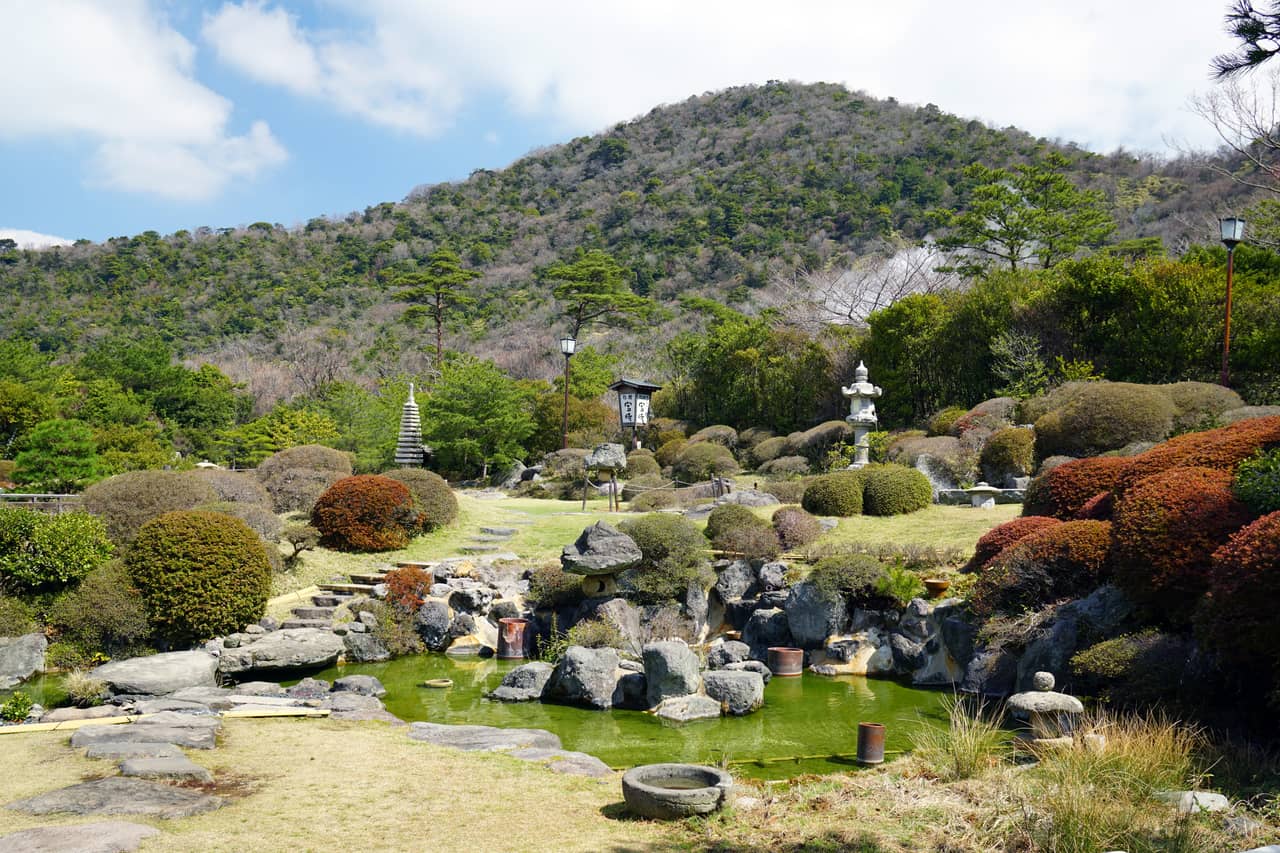
Unzen Onsen sits on a highland in the center of Nagasaki's Shimabara Peninsula, around 700 meters up, a mountain spa town wrapped in year-round sulfur steam. Its history carries real weight: bathing here is said to go back more than 1,300 years, first as a site of mountain faith and toji (hot-spring convalescence). By the Meiji and early Showa eras its cool climate made it a summer resort for foreign residents, leaving a legacy of Western-style buildings and a holiday feel. In 1934, Unzen — alongside the Seto Inland Sea and Kirishima — was designated one of Japan's first national parks. That "first" is the hardest credential Unzen carries on the country's onsen map.
Officially, Unzen's water is a milky-white sulfur spring, and the town is careful in how it phrases the benefits — "a sulfur spring said to help with skin conditions." That "said to" (to iwareru) hedging is worth copying: spring benefits vary by person, and writing them as guaranteed cures would be dishonest. I follow the same frame below — official claims, no exaggeration.
There is also a geographic quirk unique to Unzen: drop about 5 km and 700 meters from the highland down to the coast and you reach Obama Onsen — a completely different water, a chloride spring whose source runs as hot as 105°C, with among the highest heat output and spring temperatures in Japan. The official pitch is exactly this: soaking in two utterly different springs on one trip. So when you plan Unzen, don't forget Obama below can slot in on the way (but the two are separate onsen towns — a point I flag again in the eat-and-shop section, because a famous shop gets miscredited constantly).
Water quality: why one pH number won't do
This is the most important — and most commonly mis-written — part of the whole guide. You may have seen a one-line verdict like "Unzen Onsen is a strong acid spring of pH such-and-such." That is inaccurate. Beneath the onsen town run multiple source springs, and different inns and day-trip baths draw from different ones, with pH varying widely. No single number represents all of Unzen.
Two examples, both with official figures, show how wide the gap is:
| Facility | Official spring type | pH | Temp |
|---|---|---|---|
| Kojigoku Onsen-kan | Simple sulfur spring (hydrogen-sulfide type) | pH4.3, weakly acidic | 51.1°C |
| Unzen Yokayu | Sulphur spring (facility describes it as "100% free-flowing source water") | pH2.3, strongly acidic | not listed |
Same onsen town, one bath in the mid-4s (weak acid), another in the low-2s (strong acid) — a meaningful difference in how sharp the water feels. So the right way to read Unzen is: the water ranges from low-2s strong acid to mid-4s weak acid, and each bath is not the same. Just glance at the spring-analysis notice each facility posts, and don't agonize over "what pH is Unzen." As for the common line comparing Unzen's acidity to Kusatsu or Zao — that is travel-media framing, not an official verbatim comparison, so treat it as color, not data.
Three practical notes for sulfur baths: first, sulfur will tarnish silver and white-gold jewelry black, so take it off before bathing; second, whether to rinse afterwards is not a matter of taste — the 2014 Ministry of the Environment posting standard defaults to leaving the minerals on, but writes in an exception: for strongly stimulating water, naming acidic and sulphur springs, or where chlorine disinfection is used, people with delicate skin should rinse with warm water. Unzen sits inside that exception. Related: acidic and sulphur springs are the only two spring types in Japan carrying statutory bathing contraindications (sensitive skin or mucous membranes, and dry skin in the elderly) — see our guide to onsen disclosure notices; third, the sulfur smell clings to towels and clothes — part of the experience, but the fastidious can pack a dedicated towel. Official listed benefits include neuralgia, poor circulation, frozen shoulder, and fatigue recovery — same "said to" frame applies.
The day-trip bath table: 12 facilities, prices and hours
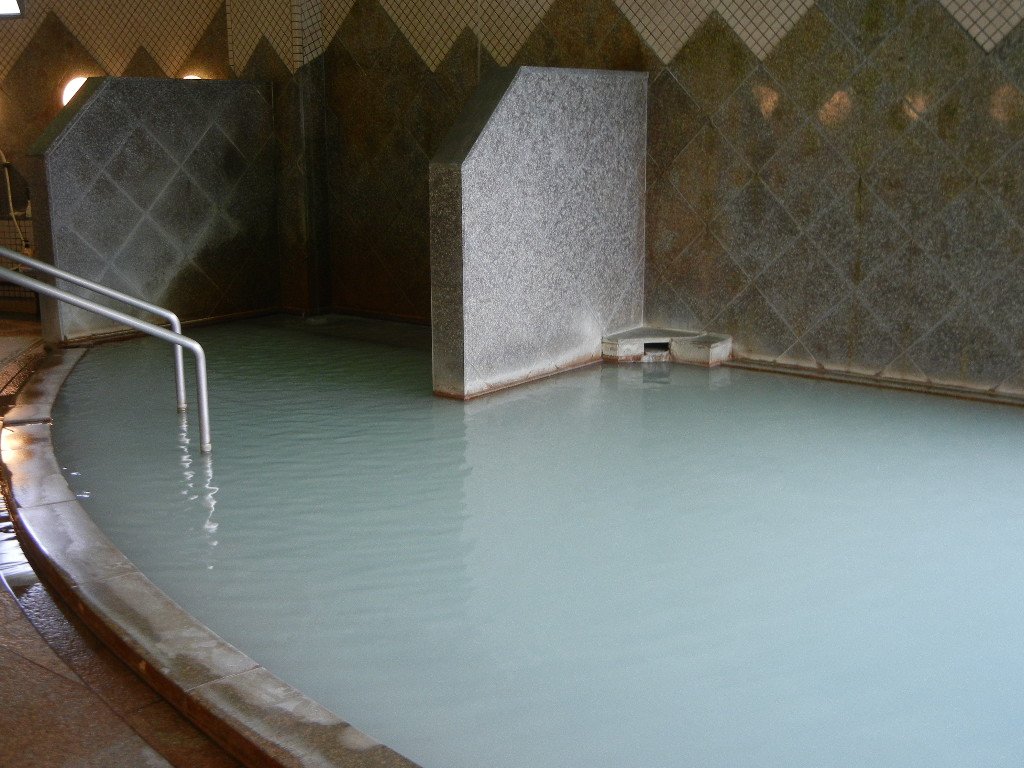
This is Unzen's biggest edge over other spa towns, and the most useful table in this guide: Unzen has an unusually rich choice of day-trip (higaeri) bathing — soaking without an overnight stay. Many people assume a hot spring means booking an inn, but at Unzen you can come for the day, or stay elsewhere, and still pick a bath to enjoy fully. Below is the list per the official Unzen tourism day-trip page (adult / child fares):
| Facility | Adult / Child | Hours | Closed |
|---|---|---|---|
| Unzen Shinyu Onsen-kan | ¥200 / ¥100 | 9:00–22:00 | Wed |
| Yunosato Communal Bath (Dankyu-buro) | ¥200 / ¥100 | 9:00–22:00 | Tue |
| Minshuku Marutoya | ¥300 / ¥200 | 10:00–16:00 | not listed |
| Condominium Unzen Yokayu | ¥450 / ¥230 | 9:00–20:00 | none |
| Kojigoku Onsen-kan | ¥500 / ¥250 | 9:30–19:00 | Wed |
| Yukai Resort Unzen Toyokan | ¥500–¥1,000 / ¥450 | 9:00–23:00 | not listed |
| Unzen Sky Hotel | ¥700 / ¥400 | 11:00–21:00 | not listed |
| Ariake Hotel | ¥700 / ¥350 | 15:00–20:00 | not listed |
| Seiunso | ¥880 / ¥440 | 11:00–18:00 | not listed |
| Unzen Fukudaya | ¥1,000 / ¥500 | 12:00–15:00 | not listed |
| Toen | ¥1,800 / ¥900 | 12:00–15:00 (reservation) | — |
| Kaseya Cafe | ¥1,650 / group | 9:00–15:30 | Wed, Thu |
※ The official page notes hours and closing days may change without notice — always contact each facility directly before use.
How to choose? My split is this: to save money and get the local vibe, go to a ¥200 communal bath (Unzen Shinyu, Yunosato); for a characterful, milky-white secret bath, Kojigoku Onsen-kan first (¥500, detailed next); to relax in a handsome inn bathhouse, pick the day-trip slot at Unzen Sky Hotel or Seiunso. Watch the narrow "12:00–15:00" windows at places like Toen and Unzen Fukudaya — that means the inn opens the bath only in the midday gap after checkout and before the next guests, so it is tightly timed and often needs a reservation; showing up on a whim can easily miss it. That is why "contact before use" is not boilerplate — it genuinely trips people up.
Kojigoku Onsen-kan: a milky-white secret bath
If I could recommend only one day-trip bath at Unzen, it would be Kojigoku Onsen-kan. Set a little away from the main town, tucked in the forest, it is run by the inn Seiunso (about a 5-minute walk from Seiunso) and officially bills itself as "a secret spring that even onsen buffs rave about." That pot of milky-white cloudy water is exactly what many picture when they think "how an Unzen sulfur spring should look."
The key facts in one place (per the facility's own official page):
- Fees: adults ¥500, elementary-age and under ¥250, under-3s free (tax included); Seiunso guests can buy a half-price ticket at the desk.
- Hours: 9:30 to 19:00 (the official page notes these may change without notice).
- Closed: Wednesdays — but if a public holiday falls on a Wednesday, it opens as usual. This matters: of the two official sources, only the facility's own page clearly states the Wednesday closure, so don't plan a wasted trip.
- Spring: simple sulfur spring (hydrogen-sulfide type), hypotonic, weakly acidic, high-temperature; pH4.3, spring temp 51.1°C, milky-white; listed benefits include neuralgia, poor circulation, frozen shoulder, and fatigue recovery.
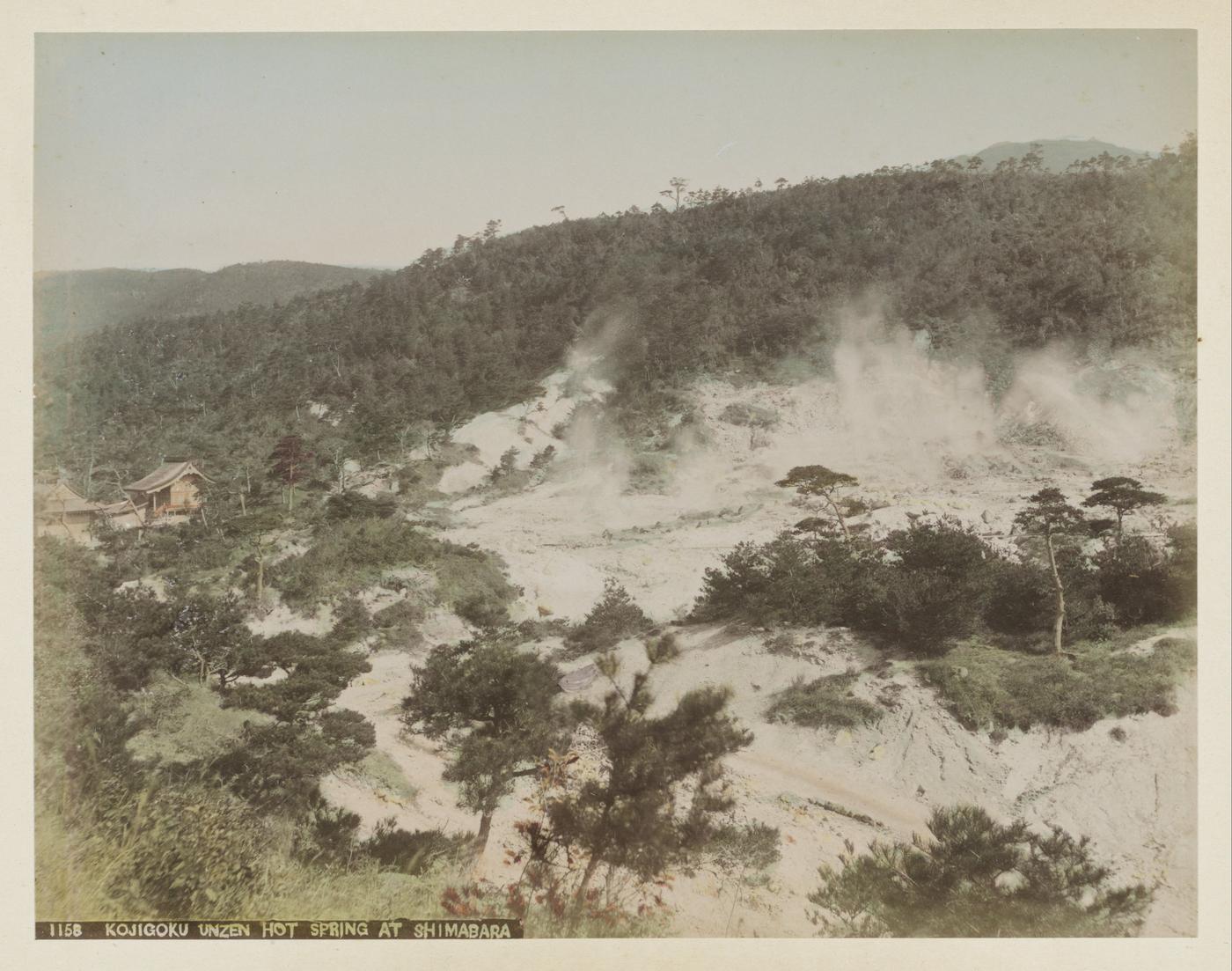
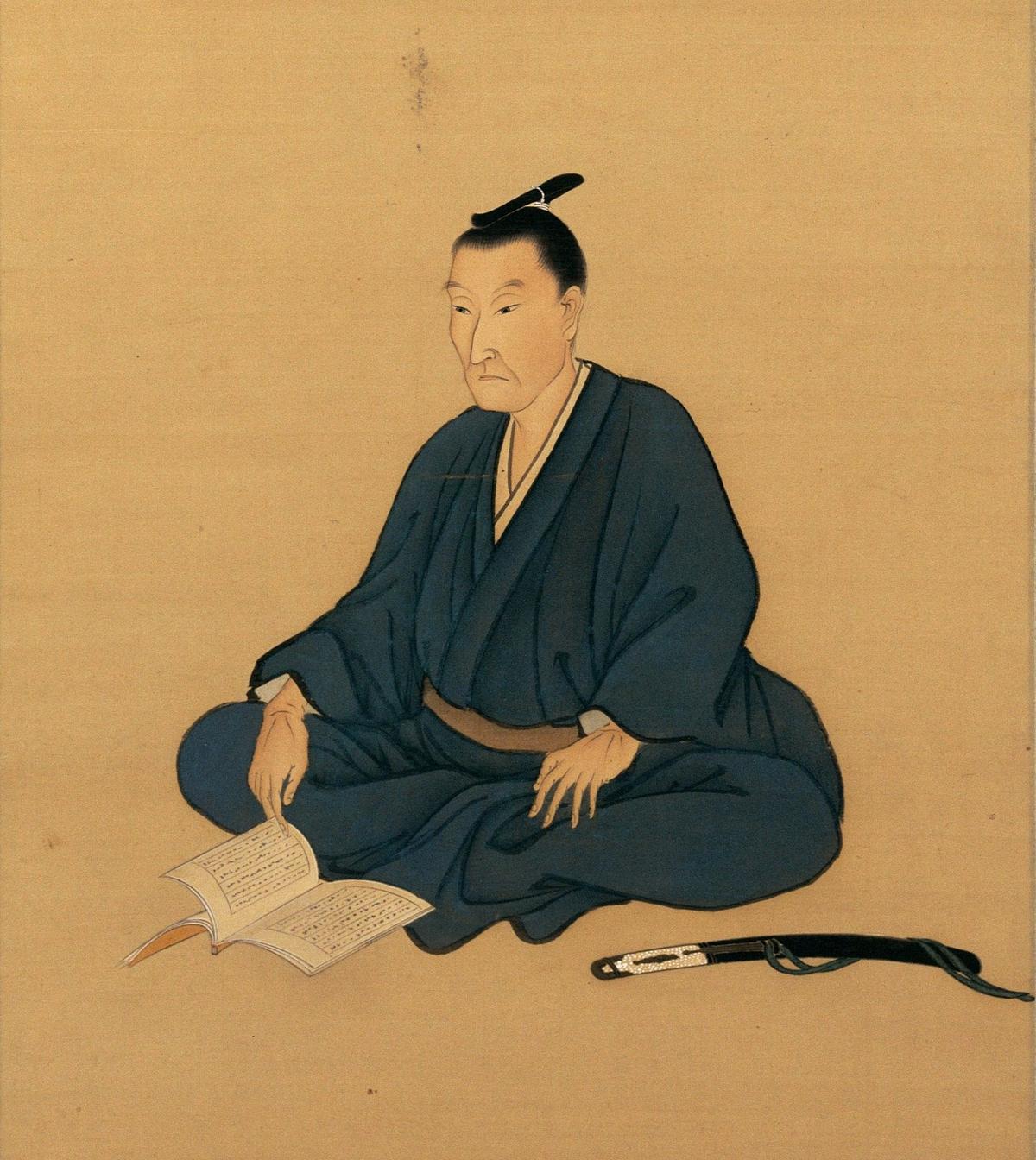
It also carries an intriguing history: this spot opened as a toji (healing-bath) site as far back as 1731 (Kyoho 16), and legend has it that the late-Edo thinker Yoshida Shoin bathed here; the current building is a communal bathhouse opened in 1919 (Taisho 8), later rebuilt in wood in 1993 (Heisei 5). Soaking in water where people came to convalesce nearly three centuries ago gives a depth no newly built facility can. One thing to note: the facility's own page lists 9:30–19:00 year-round, while the tourism-board page lists seasonal hours (May–Oct 9:00–20:00 / Nov–Apr 9:00–19:00) — both are official pages yet not identical, so call ahead to confirm the day's operation.
Communal-bath culture: the locals' everyday soak
The Unzen tourism board lists the communal baths (kyodo-yoku) as an official key to understanding Unzen — because these baths are not just tourist facilities but places where local residents bathe daily and mingle. That is the most flavorful part of onsen-town culture: pay ¥200 to step into the Unzen Shinyu or Yunosato communal bath and the person beside you may well be a local grandparent who comes every day, a sense of ordinary life no grand hotel bathhouse can offer.
The Yunosato Communal Bath deserves a special mention: it is the oldest communal bath in the Unzen town, nicknamed "Dankyu-buro" because locals originally used a wooden barrel from pickling rakkyo (Japanese scallion) as the tub. Its water is genuine free-flowing source (uncirculated, fresh spring straight in and out). To use a communal bath, follow basic Japanese onsen etiquette: rinse your body at the washing area first, keep your towel out of the water, and stay quiet in the bathing area. For the full etiquette, see our best onsen ryokan guide — going in with the concepts makes it easier.
Inns: Unzen Kanko Hotel and the price bands
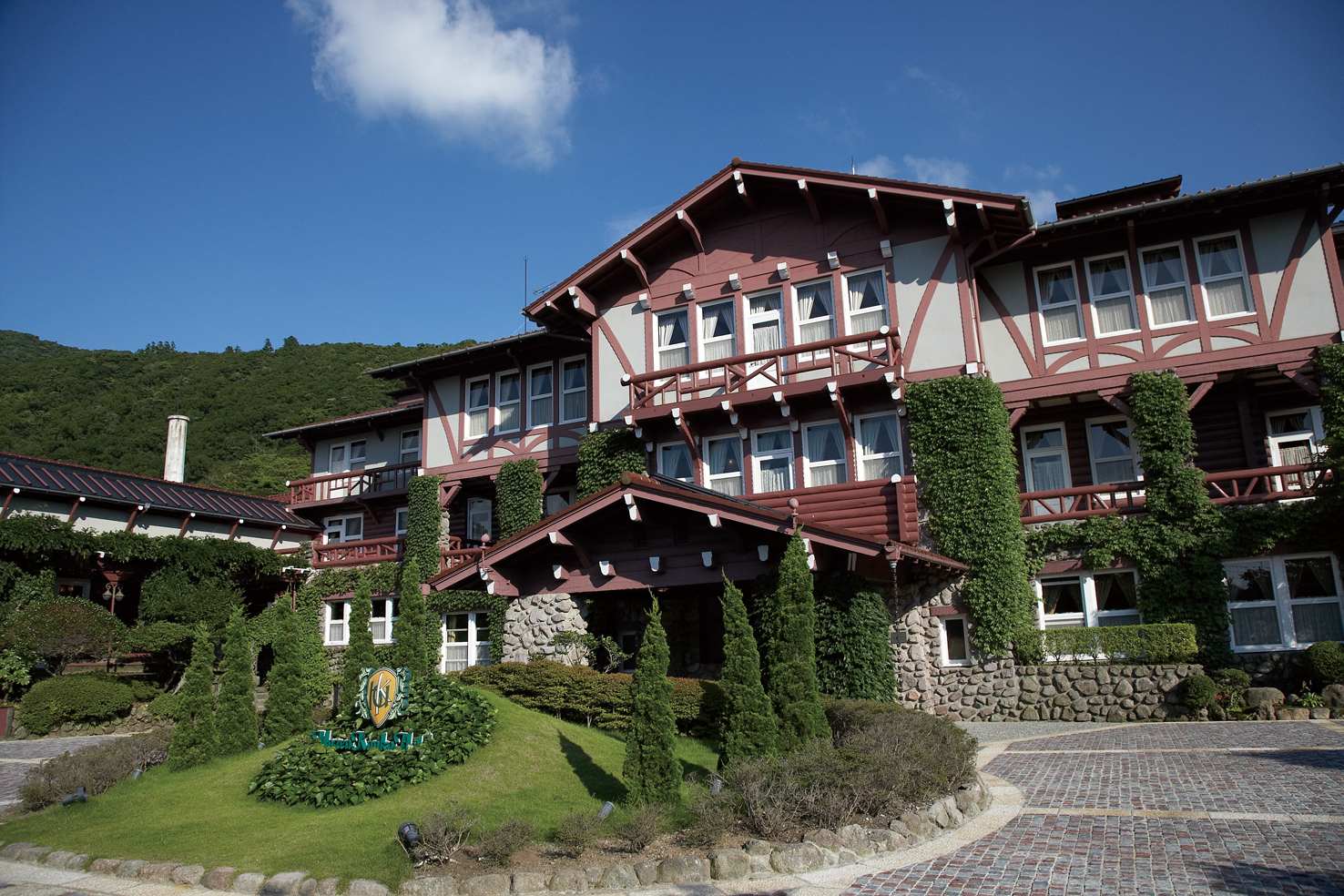
Unzen's most representative inn — and the one with the highest cultural-property status — is Unzen Kanko Hotel. Built in 1935 (Showa 10) by Takenaka Corporation, it is an Alpine-chalet (Swiss chalet) style wooden building (partly reinforced concrete), three floors above ground and one below, with a facade of about 65 meters and a building area of roughly 1,772 square meters. On January 31, 2003, it was registered as a national tangible cultural property (structure) — meaning you are not just staying in an inn but in a building the state has deemed worth preserving. That "sleep inside history" experience is Unzen Kanko Hotel's most irreplaceable draw.
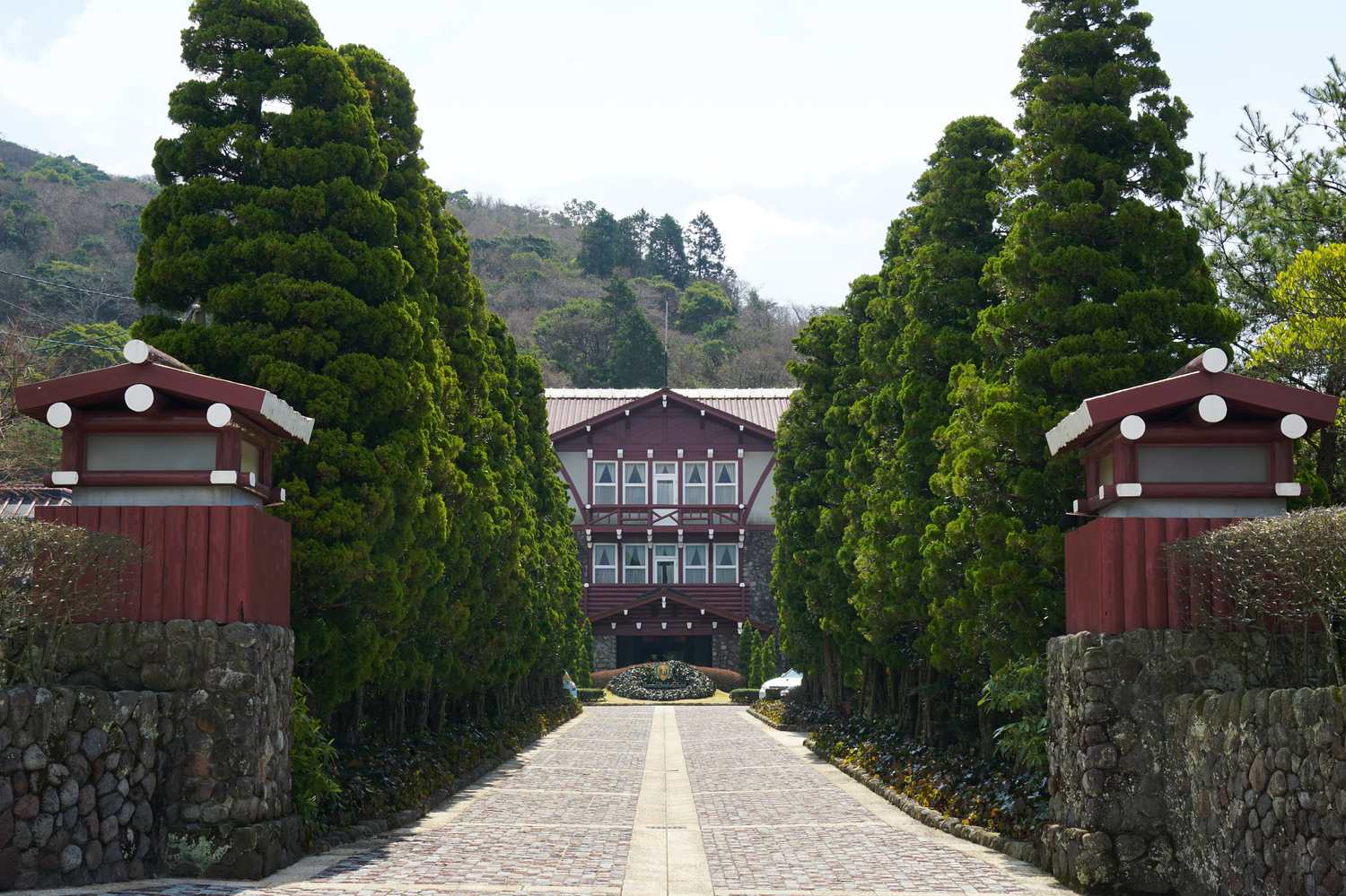
On price, the official one-night-two-meals standard plan runs from about ¥33,000 per person (varying by plan and season, higher in peak), putting it in the upper-mid band. One honest note: Unzen Kanko Hotel is not on the official day-trip bathing list, so to soak in its baths you essentially need to book a room — don't assume that just because it's famous you can drop in for a single visit.
On a tighter budget, the town has plenty of options: Unzen Sky Hotel, Unzen Fukudaya, Yukai Resort Unzen Toyokan, Ariake Hotel, Seiunso and more span value to upper-mid pricing (Toyokan is a Yukai Resort property with value one-night-two-meals plans), and as the table above shows, most of these also offer day-trip bathing — good for "soak first, then decide whether to stay." Specific two-meal rates float by plan and season, so go by the official same-day quote before booking. (Our onsen ryokan picks do not yet include an Unzen inn, so this section is a text roundup.)
Walking the town: the hells, onsen eggs, night lights
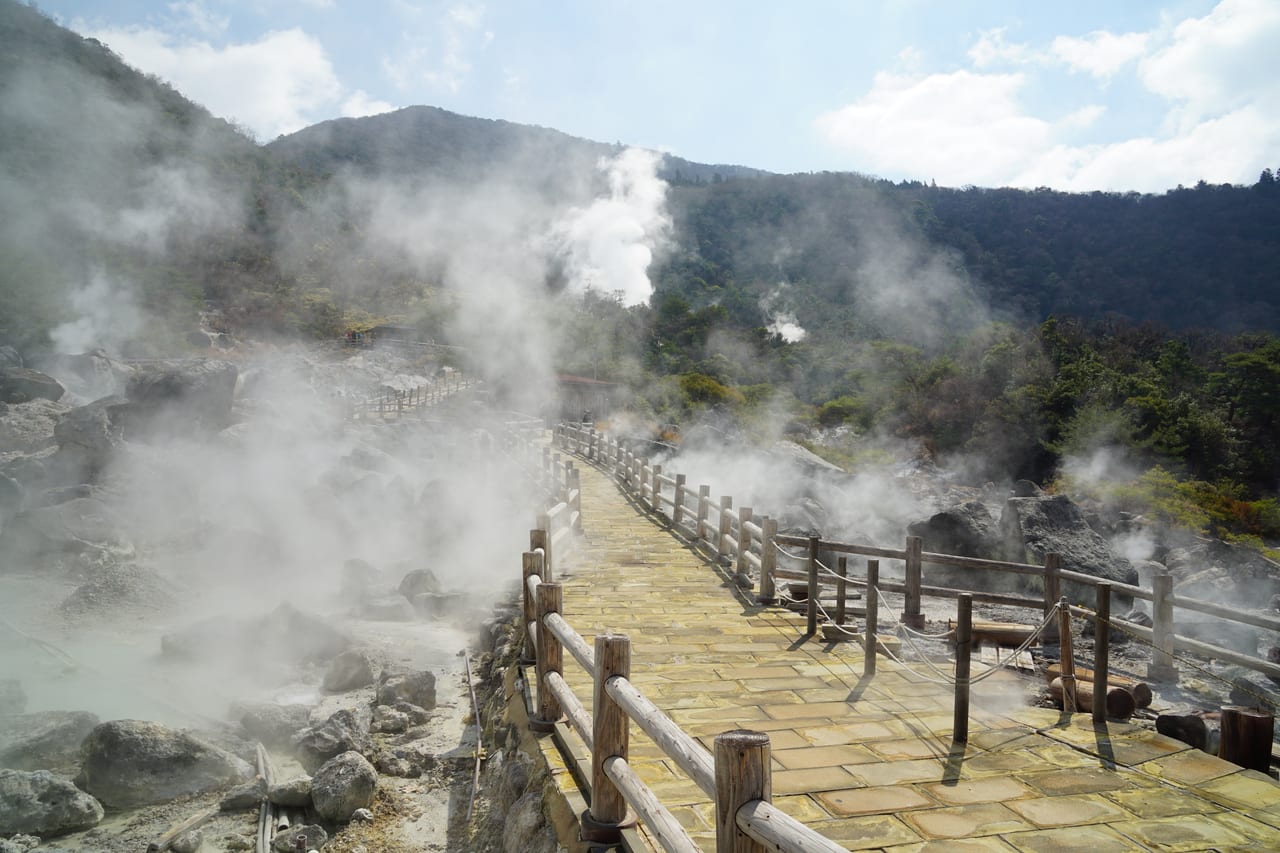
The Unzen town is compact — the hells, communal baths, inns and souvenir shops all fall within a 10-to-15-minute walk — perfect for a slow post-bath amble in a yukata. A few highlights while you stroll:
- Unzen Jigoku (free to walk): right beside the town, around 30 geothermal patches venting white sulfur steam, with boardwalks to wander, a loop of about 30 to 60 minutes. How to walk the hells, the martyrdom history, and how to string them with the Nita Pass ropeway and Mount Heisei-Shinzan are all covered in full in the Unzen and Shimabara trip guide, so I won't repeat them here.
- Onsen eggs: the hells' specialty, steamed over the geothermal vents, roughly ¥200 for two per official info; cracking one open on the spot beside the steaming vents is atmospheric, and locals say each one adds a year to your life.
- Evening stroll: in summer 2026, Unzen Jigoku holds a night illumination event, "Unzen Ryoka-to — Jigoku no Yomode." The daytime sulfur hells take on a different mood lit up at night. For the exact dates and times, check the official notice at the Unzen Onsen Tourism Association site — this article invents no dates.
A minor social-media talking point lately is the "jigoku cats" — the geothermal ground around Unzen Jigoku stays warm, so cats gather to sun themselves and warm up on the heated rock near the onsen-egg stalls, jokingly called their "rock-bed spa." This is a fun phenomenon per visitor discussion, not an official count, and neither the number nor daily appearance is guaranteed — a bonus if you catch it.
Eat and shop: Tohtomiya and yu-senpei
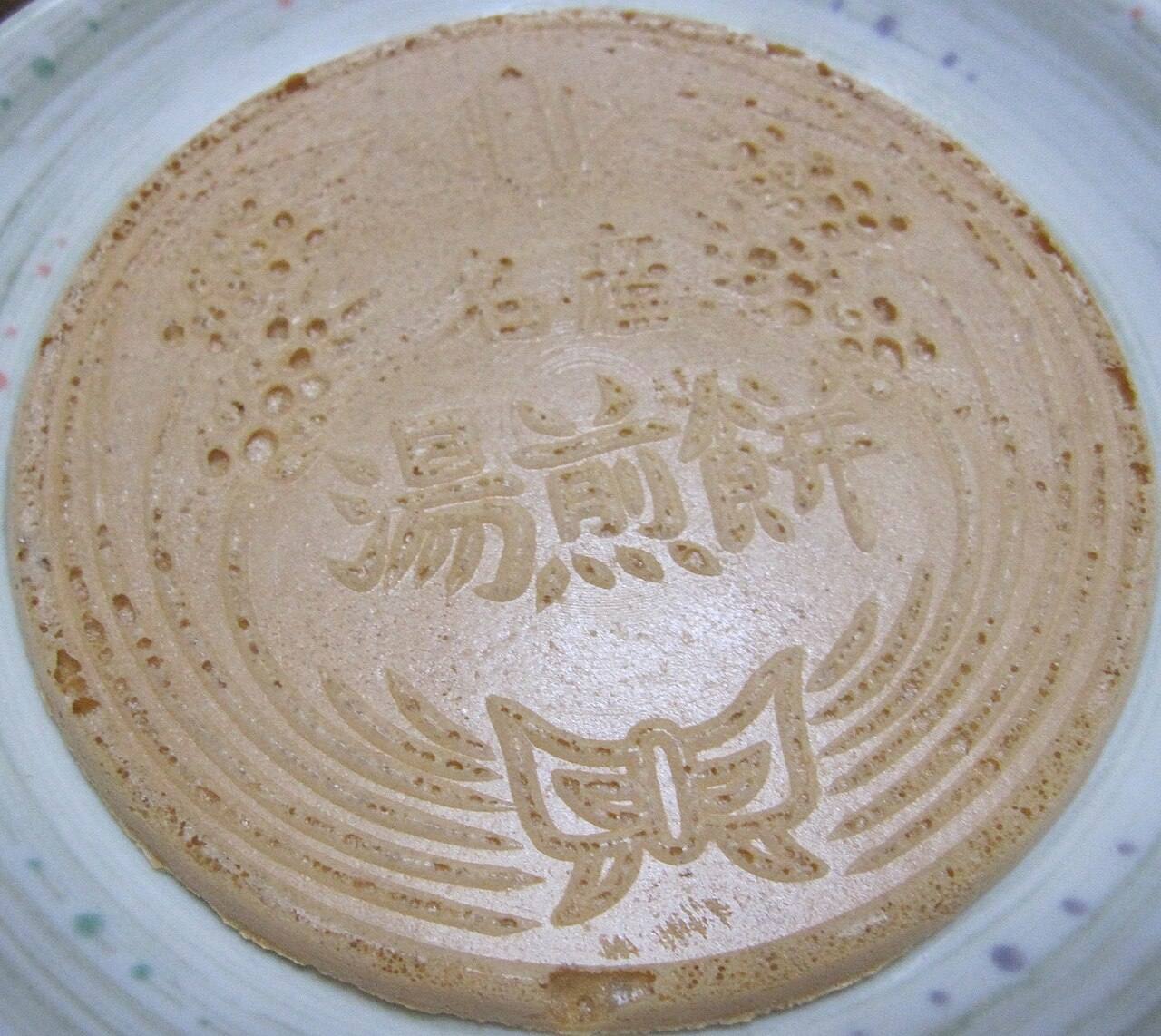
The town's signature confection is yu-senpei — a crisp thin wafer made by kneading hot-spring water into flour and baking it, said to have originated in the early Meiji era as an offering to the former Shimabara-domain lord Matsudaira, a keen bather. To buy yu-senpei, the shop with the most story on the onsen town's street is Tohtomiya Honpo:
- Location: 317 Unzen, Obama-cho, Unzen City, Nagasaki (〒854-0621), which the shop describes as "directly opposite the Onsen Shrine" — searchable on Google Maps as "Tohtomiya." Tel 0957-73-2155.
- History: founded in the Meiji era as a kichin-yado (budget lodging) for travelers and itinerant traders near Unzen Jigoku, later a diner, then a souvenir shop from the 1940s–50s when it began making yu-senpei.
- The highlight: it sticks to fully hand-baked single wafers — one at a time in a 3-kilogram cast mold — which the shop says makes it one of the few places still keeping this method, its biggest difference from mass-produced yu-senpei.
- Hours and prices: go by the shopfront on the day (the site does not list fixed hours or prices, and this article cites no unverified figures).
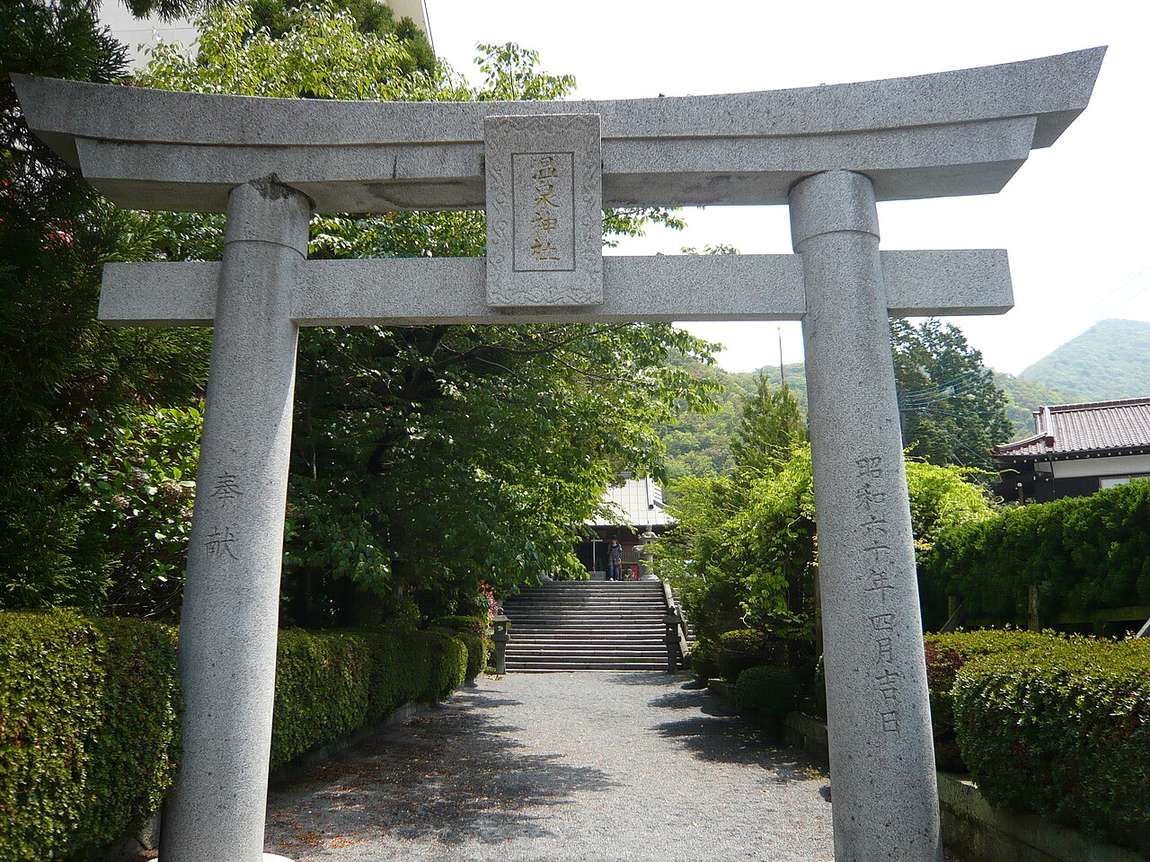
One easy trap to flag: Unzen City contains two different spa towns — the highland Unzen Onsen (this article's subject) and the coastal Obama Onsen below it (about 9 km apart). The well-known yu-senpei shop "Miyake Shoten" is actually in Obama Onsen, belongs to the Obama Onsen inn association, and is not on the Unzen town street — so if you are walking Unzen Onsen, don't go looking for Miyake Shoten there. On the Unzen street, the address-verified representative is Tohtomiya Honpo; for other souvenir and food shops, confirm on site or via Google Maps that they're open before heading in.
Access: getting up to Unzen from Nagasaki/Isahaya
Unzen sits on a highland in the center of the Shimabara Peninsula with no direct rail, so buses are the main way in — work out which gateway suits you first.
From Nagasaki (recommended)
Most direct is the Nagasaki Kenei Bus "Nagasaki–Obama/Unzen (limited express)" line. There is an official app-based (myroute / STLOCAL) digital round-trip ticket at attractive prices:
| Segment (digital round-trip) | Fare |
|---|---|
| Nagasaki Station ⇄ Unzen | ¥3,420 |
| Nagasaki Station ⇄ Obama | ¥2,790 |
Note these are round-trip discount fares, not one-way cash rates. Seating is first-come, no reservation, and you can pay cash or use nationwide IC cards (nimoca, ICOCA, Suica, etc.). For one-way cash fares and exact timetables, the official tool is a JS-driven page I can't quote verbatim, so use the official fare/time search for the current day's data — see the Nagasaki Kenei Bus site. I won't cite an unverified one-way figure and have you find it doesn't match on site.
From Isahaya
Coming in via JR Isahaya Station, take a Shimatetsu bus (Shimabara Railway) up to Unzen via Obama, about 80 minutes. Confirm exact times and fares via the official Shimabara Railway bus search (choose the "Obama / Unzen / Arie direction" route), as the current 2026 timetable may differ from third-party roundups.
Up to the Nita Pass ropeway
To ride the ropeway up Nita Pass for Mount Heisei-Shinzan, transfer to a Nita Pass-bound service at the Unzen bus terminal (about 15 minutes) or take a taxi. The ropeway currently costs ¥1,500 round trip for adults, ¥830 one way, running every 12 minutes — but the detailed timetable, Mount Heisei-Shinzan's story, and the four-season views are all "regional itinerary" material, covered in full in the Unzen and Shimabara trip guide, so I won't expand here.
Seasons: azaleas, foliage, rime frost
Unzen rewards every season, but with timing. The windows below are "typical-year" frames, not a precise guarantee for any single year:
| Season | Draw | Typical peak |
|---|---|---|
| Spring (May) | Nita Pass / Mt. Myoken Miyama Kirishima azaleas in full bloom | mid–late May |
| Autumn (Oct–Nov) | Nita Pass foliage (among Kyushu's earliest) | late Oct–early Nov |
| Autumn (Nov) | Onsen-town foliage (later than Nita Pass) | early–mid Nov |
| Winter (Dec–Feb) | Muhyo (rime frost, "hana-boro") | most likely Jan–Feb |
The classic is the Miyama Kirishima in May — azaleas blanketing the Nita Pass and Mount Myoken, Unzen's signature bloom. Autumn foliage comes in two stages: the higher Nita Pass colors first (from late October, one of the earliest spots in Kyushu), while the town itself is later, around early to mid November. Winter's muhyo (hana-boro) is the advanced-player's target — frost on the branches like white blossoms, most likely in January and February, but needing sub-zero temperatures plus wind and fog at once, never a daily thing. For the Nita Pass foliage peak and ropeway detail, the Kyushu autumn guide and the regional article have fuller roundups.
Is it worth staying the night?
So, the real question: is Unzen Onsen worth a special overnight stay? My take is direct.
If you just want to soak in Unzen's sulfur spring and walk the hells, a day trip is genuinely enough — Unzen's day-trip choice is so rich (¥200 gets you a communal bath, ¥500 the milky-white secret bath at Kojigoku) that you can slot it in as one stop on a Nagasaki or Unzen-Shimabara day out: soak, eat an onsen egg, buy a pack of yu-senpei, and head back down without an extra night's lodging.
But if what you want is the atmosphere rather than just "having soaked," an overnight pays off — Unzen's depth as Japan's first national park and a foreigners' summer resort only reveals itself in the evening, when the day crowds thin and staying guests drift through the sulfur steam in yukata; and if you stay in a 1935 cultural-property inn like Unzen Kanko Hotel, that "sleeping inside history" is itself the point of the trip, not just a place to spend the night. So my advice: if you're on a tight schedule and here to bathe, a day trip is fine; if you want to slow down and treat the onsen town as a stay rather than a sight, it's worth a night — and lean toward an old inn with a story. The highland nights are cool and the air is clean; that resort evening is exactly what drew foreigners up the mountain 90 years ago.
Frequently Asked Questions
- Q1:Can I visit Unzen Onsen for a day trip only (no overnight)?
- Yes — Unzen is one of the few onsen towns in Kyushu with a genuinely rich day-trip (higaeri) bathing scene. Per the official Unzen tourism day-trip page, about 12 facilities open for single-visit bathing, from the ¥200 communal baths (Unzen Shinyu, Yunosato) up to ¥700 to ¥1,800 for inn bathhouses. The pick I would push is Kojigoku Onsen-kan (adults ¥500, open 9:30 to 19:00, closed Wednesdays except when a public holiday falls on one) — a milky-white, 51.1°C simple sulfur spring run by the Seiunso inn. Note that hours and closing days can change without notice, so call ahead before you go.
- Q2:What kind of spring is Unzen Onsen, and what is the pH?
- Officially Unzen is a milky-white sulfur spring, and the town describes it (carefully) as "a sulfur spring said to help with skin conditions." It was a foreigners' summer resort from the Meiji into the early Showa era. But one thing to correct that gets written wrong constantly: there are multiple source springs beneath Unzen, and the pH varies a lot by facility, so no single number represents the whole town. Kojigoku Onsen-kan is officially pH4.3 (weakly acidic), while Unzen Yokayu describes itself as pH2.3 (strongly acidic) — both official, both different. So read it as "Unzen ranges from low-2s strong acid to mid-4s weak acid, and each bath differs." Sulfur will tarnish silver jewelry black, so take it off before bathing.
- Q3:How do I get to Unzen Onsen from Nagasaki or Isahaya?
- Unzen sits on a highland in the center of the Shimabara Peninsula with no direct rail, so buses are the way in. From Nagasaki, the Nagasaki Kenei Bus "Nagasaki–Obama/Unzen" line is most direct, and there is an official app-based digital round-trip ticket: Nagasaki Station to Unzen ¥3,420 round trip, to Obama ¥2,790 (these are discounted round-trip fares, not one-way cash rates). Seating is first-come, no reservation, and you can pay cash or use nationwide IC cards. For one-way cash fares and exact timetables, use the official fare/time search rather than any unverified figure. From Isahaya, take a Shimatetsu bus via Obama, about 80 minutes.
- Q4:Where should I stay in Unzen Onsen? Which inns stand out?
- The signature inn is Unzen Kanko Hotel — an Alpine-chalet (Swiss chalet) style wooden building completed in 1935 and registered as a national tangible cultural property in January 2003. It is Unzen's landmark stay, with an official one-night-two-meals standard plan from around ¥33,000 per person (varies by plan and season). For tighter budgets, the town also has Unzen Sky Hotel, Unzen Fukudaya, Yukai Resort Unzen Toyokan, Ariake Hotel, Seiunso and more, spanning value to upper-mid pricing, and most of these also offer day-trip bathing. One caveat: Unzen Kanko Hotel is not on the official day-trip list, so to soak in its baths you generally need to book a room.
- Q5:What is the best season to visit Unzen Onsen?
- Unzen rewards every season, but with timing. Mid-to-late May, the Miyama Kirishima azaleas blanket the Nita Pass and Mount Myoken area — Unzen's signature bloom. Late October to early November, the higher-elevation Nita Pass colors first, one of the earliest foliage spots in Kyushu; the onsen town itself turns a bit later, around early to mid November. December to February can produce muhyo (rime frost, "hana-boro") on the mountain, most likely in January and February, but it needs sub-zero temperatures plus wind and fog at once, so it is never guaranteed. These are natural phenomena with no official peak date — check the current-year forecast before you go.
Read next
Unzen & Shimabara Guide 2026: Jigoku Hells, Ropeway & Castle
Japan's first national park — the free steaming Unzen Jigoku, the ¥1,500 ropeway to view the Heisei-Shinzan lava dome, plus Shimabara Castle's Christian-rebellion history and a spring-water carp town. The Shimabara–Kumamoto ferry is a smart route.
Kyushu Autumn 2026: Mifuneyama, Unzen & Yabakei Guide
Mifuneyama 2026 illumination dates are out — Kyushu foliage is scattered, so here is the drive-vs-rail verdict.
Nagasaki Travel Guide 2027: Inasa Night View, Glover Garden & Gunkanjima
Japan's closed-country window to the world — Mt. Inasa's night view, the World Heritage Glover Garden and Oura Church, Dejima, Peace Park and Gunkanjima.
📊 See the 2026 Price Index (JR Pass, DPA, eSIM, Airport Transport) →